Category Archives: Clandestine

SWRA to end shortwave broadcasts

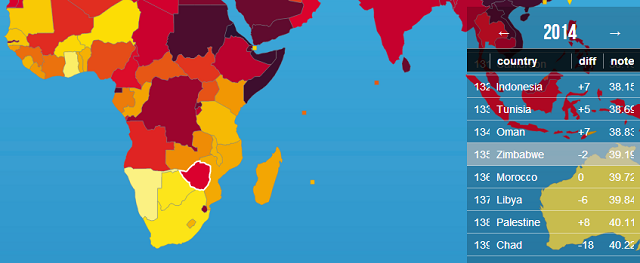
Zimbabwe ranks 135 out of a possible 180 countries on the World Press Freedom Index.

Zimbabwe ranks 135 out of a possible 180 countries on the World Press Freedom Index.

The clandestine station, Shortwave Radio Africa, announced today that it will end shortwave radio broadcasts to Zimbabwe. As we’ve posted before, Zimbabwe is a country that does not exactly embrace free press. Indeed, Mugabe has even been known to order the confiscation of self-powered shortwave radios from citizens.

I have a hunch this closure is due to financial constraints. I’ve pasted SWRA’s announcement below:

SWRA shortwave broadcasts to end

Gerry Jackson
SW Radio Africa
17th July 2014

It is with regret that SW Radio Africa announces that after 13 years, our shortwave broadcasts are to end on Friday 18th July.

You have welcomed us into your homes since our first shortwave broadcast on 19th December 2001.

Our broadcasts will continue on our website, via Channel Zim through TV decoders, and by various other forms of new media.

We know how much these shortwave broadcasts have meant to our listeners in more remote areas who have so little access to news and information, and we sincerely regret that we will no longer be able to provide this service.

We would like to thank our listeners who have been such loyal supporters for so many years and also for their willingness to share the stories of their lives with us on our Callback program. This has allowed people all over the world to have a better understanding of the many crises that Zimbabweans continue to face.

We can only hope that one day, sooner rather than later, there is real media freedom that allows Zimbabweans, wherever they are in the country, easy access to what is a basic human right – freedom of information and expression.
Radio Erena would like to reach a broader audience with shortwave

This is a fascinating video about how one Paris based clandestine radio station gets an independent voice into the only country in the world that rivals North Korea for a lack of press freedom: Eritrea. Radio Erena currently uses satellite to reach its audience, but would like funding to broadcast over shortwave:

Radio Erena (English version) by rsf_internet

Shortwave radio: the secret item found in many North Korean homes

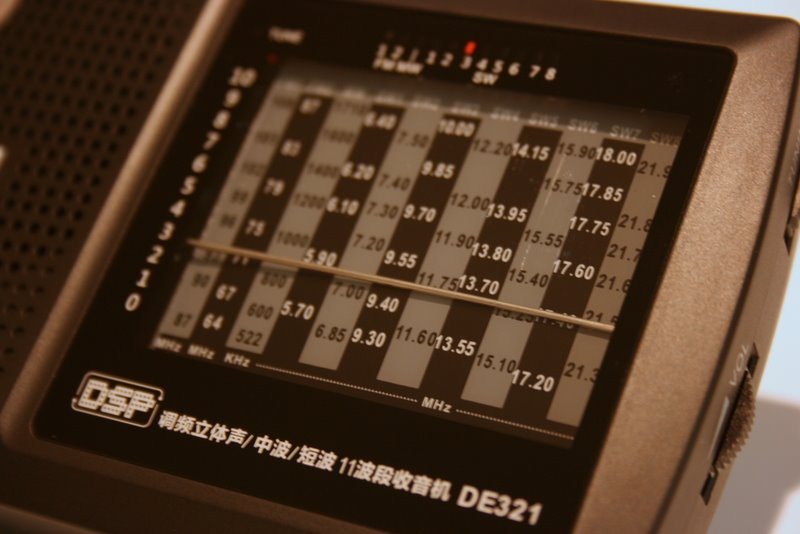
de321dialI’m not surprised to find that North Korean families hide shortwave radios. After all, if it’s well hidden, and listened to privately, there is no way the government can monitor what is heard on shortwave, nor trace it back to the family listening. This is what separates radio from the Internet and mobile devices:

(Source: New Focus International)

Many North Korean families keep a secret item at home, whose discovery may lead to harsh punishment. Away from prying eyes and in the privacy of their homes, North Koreans enjoy using items forbidden by the state, according to North Koreans who have recently escaped from the country.

“In every North Korean home, there is at least one secret item” says Jung Young-chul* (age 34), who left Korea in 2012. He had a short-wave radio in the house and the family would secretly listen to South Korean broadcasts. To avoid being caught, they kept the radio hidden under a container for keeping rice.

They were not the only ones with a hidden radio. Jung explains, “Once, a friend described a story that I had heard the night before while listening to a South Korean broadcast. I brought it up with him one night in drink, and he confided that his family too had a radio. We laughed about it together.”

[Continue reading]

If you want to hear North Korean propaganda on shortwave radio (via the Voice of Korea), check here for the latest schedule or even listen to this recent recording.

This post tagged in the category: Why shortwave radio?

Radio Free Sarawak is back on the air!

RadioFreeSarawakThanks to Rob Wagner’s blog, The Mount Evelyn DX Report, I just learned that the clandestine station, Radio Free Sarawak, is back on the air after declaring a break on May 8, 2013 (see our previous post).

Radio Free Sarawak will broadcast daily from 11:00-12:30 UTC on 15,420 kHz.

The following is the press release from Radio Free Sarawak‘s website (via their Facebook page):

AUGUST 11, 2013: Press release, Radio Free Sarawak back on air from Monday

Sarawak’s independent radio station Radio Free Sarawak is back on air Monday 12th August following its holiday recess.

The rural radio station, which broadcasts mainly in Iban, but also in Malay has received numerous enquiries from listeners eager for information about pressing issues in the state, including the on-going plans to dam key rivers and evict thousands of native people from their lands.

“The state government has moved swiftly to try and take advantage of its dubious election wins by tripling Ministers’ own salaries (back-dating the increase by a whole year and a half) and pushing through further land grabs in native territories, including the proposed Baram Dam region” points out the UK based station head, Clare Rewcastle Brown. “Ordinary folk want to be heard on these issues and it seems their opinions may often be different from the propaganda put out on the state controlled licensed media, which only promotes the narrow interests of the super-wealthy and politically powerful”.

Radio Free Sarawak is the 2013 winner of the prestigious Pioneer of Free Media Award by the International Press Institute, which applauded the station’s efforts to bring freedom of information and freedom of speech to the isolated communities in Malaysia’s Borneo rainforest state.

The station’s call-in facility also provides an opportunity for longhouse dwellers to express their own views and concerns about the effects of deforestation, oil palm plantation, rural poverty and endemic political corruption. The radio station is linked to the online portal, Sarawak Report, which shares the same agenda to shine light on these and related issues.

Radio Free Sarawak is transmitted from London and its familiar team of DJs will be broadcasting from Monday on Short Wave 15420kHz from 7pm-8.30pm local time Monday-Saturday.

It is also available via podcast online www.radiofreesarawak.org , from where it can be downloaded via smart phone for mobile listeners or onto UBS sticks for car radio.

The local call-in line is 082-237191 and listeners are invited to get in touch with their comments and issues.

Radio Free Sarawak takes a break

RadioFreeSarawakThe clandestine station Radio Free Sarawakwho we most recently mentioned in connection with the Malaysian elections–has announced that they are going off the air.  There is a note of finality in their announcement (below), yet they do leave some ambiguity by declaring, “We will be taking a break until further notice.”

[UPDATE: Radio Free Sarawak back on the air 12 August 2013]

Listen to their final broadcast (studio copy) embedded below:

(Source: Radio Free Sarawak)

While most PR supporters are still reeling from the results of the GE13 amidst widespread rigging that are essentially acts of treason, activists and ordinary people alike are not giving up on booting out the BN government The have set their sights on the 11th state election that will have to be conducted latest by early 2016.

Meanwhile, take a listen to the analysis of Dr Mohd Faisal Syam Abdol Hazis from the Universiti Malaysia Sarawak of the results in the state.

Last but not least, we hear the sadness, anger, frustration and nevertheless, determination of RFS and PR supporters to realise the dream of changing the government in the near future.

p/s Today’s show will be our last. We will be taking a break until further notice. Thank you for your support. It will be a memorable 18 months! We hope you had enjoyed the experience as much as we did.

All Africa: Digital Did Not Kill the Radio Star

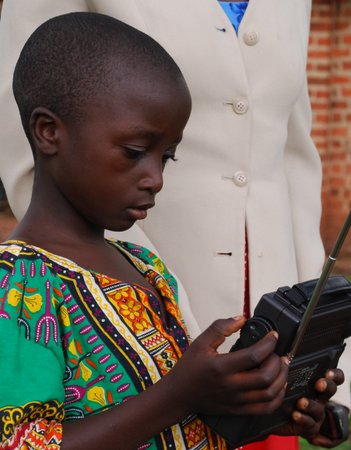
ChildSWRadioUgandaThis is a brilliant article on the importance and relevance of radio by David Smith with All Africa.  Below you’ll find some quotes, but it must be read in its entirety:

(Source: All Africa)

By David Smith

Radio threatens many of Africa’s big men.

Thugs working for Zimbabwe’s President Robert Mugabe have recently been confiscating and destroying receivers. Eritrea’s President Isaias Afewerki stopped issuing import licenses. Other iron-fisted rulers such as Swaziland’s King Mswati III and Sudan’s President Omar al-Bashir rarely hand out frequencies, thus reducing the range of independent radio.

The actions taken by these big men merely confirm radio’s supremacy in Africa. It may be old technology, but it is still relevant and appropriate. While not everybody owns a radio, most people have access to one.

[…]A number of radio stations based outside of Zimbabwe’s borders rely on reports from in-country correspondents who use mobile phones and the internet, particularly social media, to send their reports to distant studios.

[S]hort-wave has the advantage of sending signals over vast distances, irrespective of borders and local broadcasting restrictions.

[…]Zimbabwe is not the only country where short-wave is used to bypass restrictive broadcast legislation. Pirate, or clandestine short-wave stations, often staffed by members of the target country’s diaspora, use high-frequency transmitters to send uncensored programming to dozens of countries, including Libya, Madagascar, Sudan, Western Sahara and all the states in the Horn of Africa.

[…]Radios no longer simply transmit. They also receive. The convergence between these two communications devices has created a new community and international platform for lone, isolated voices.

The list of radio stations that do not have an SMS or social network relationship with their listeners, despite their location, is getting increasingly shorter. Any station that fails to interact with its public risks going the way of the dodo.

[…]Video and digital did not kill the radio star. Radio is stronger than ever in Africa, thanks largely to its ability to absorb and adapt to changing technology.[…]

Thanks to author David Smith and All Africa.

Just one more article filed under: Why Shortwave Radio?