Category Archives: Ham Radio

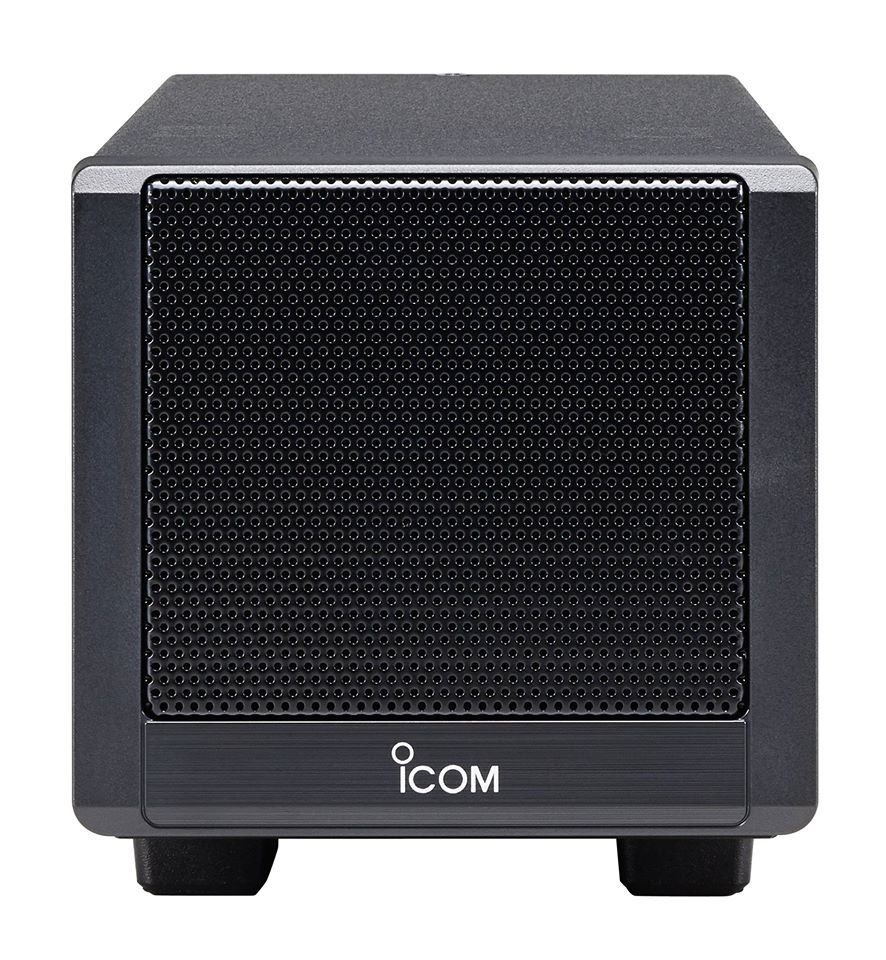
The Icom SP-38: A matching external speaker for the IC-7300

icom-ic-7300-speaker

(Source: Southgate ARC)

Icom are introducing a new external speaker for its revolutionary IC-7300 Software Designed Radio.

The new SP-38 complements the appearance of the IC-7300 as well as improving the listening experience from its large diameter speaker.

The SP-38 external speaker will be available in October with a suggested retail price of £156.00 inc.VAT from all Icom Authorised Amateur radio dealers.

Specifications about this new external speaker can be downloaded from the SP-38 data sheet.

Click here to view this article on the Southgate ARC site.

Datawake: Steven’s new “floating lab”

stephen-roberts-datawake

Photo: Steven K. Roberts

Many thanks to SWLing Post contributor, Steven Roberts, who shares the following update:

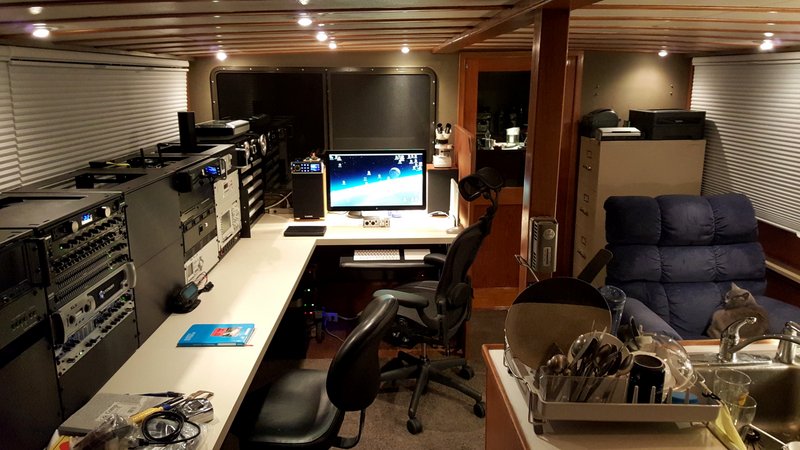
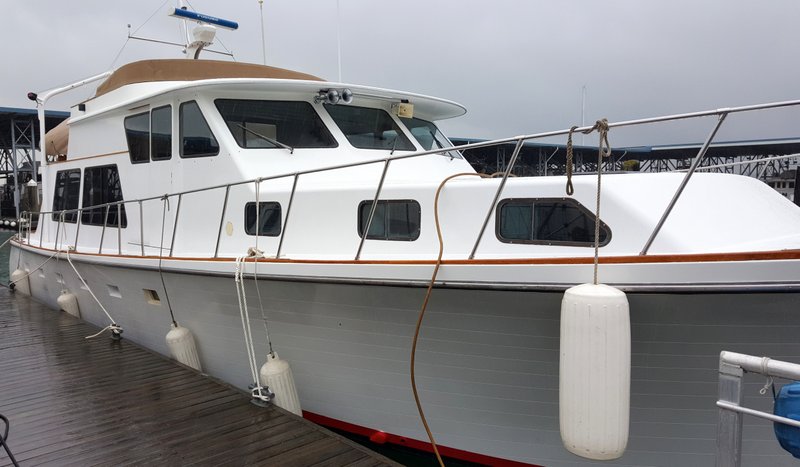
Hi, Thomas!! Thought I’d send an update… I did in fact find a buyer for Nomadness, and have since gone to the Dark Side… for 8 months, I have been living aboard my Delta 50 named Datawake. The sale of Nomadness was via the geek grapevine… last Spring I built a power cart named Shacktopus, and West Mountain Radio used my story about it as their quarterly newsletter. A fellow on the East Coast read that, followed the links, recognized my bike, saw the Amazon 44, and bought it… and he is now preparing to head down the Pacific Coast.

Photo: Steven K. Roberts

Photo: Steven K. Roberts

Here’s the new ship, and the console now includes four HF rigs, D-Star, a few SDR devices, crosspoint audio routing with web interface, electronics lab, and networking goodies. Nice to be back on the air after a year without a proper skyhook!

http://microship.com/meet-datawake/

Amazing, Steven! You have a super power in your ability to turn boats, bikes and pretty much anything into mobile techno-wonders! What craftsmanship!

I love Datawake and appreciate the tour with photos and details you’ve posted. I noticed the Icom IC-7300–perhaps we can have a QSO someday on the air? I’ll look forward to any report you may have about the IC-7300 as a maritime mobile station.

We look forward to future updates!

Recap of Great Smoky Mountains NPOTA activations

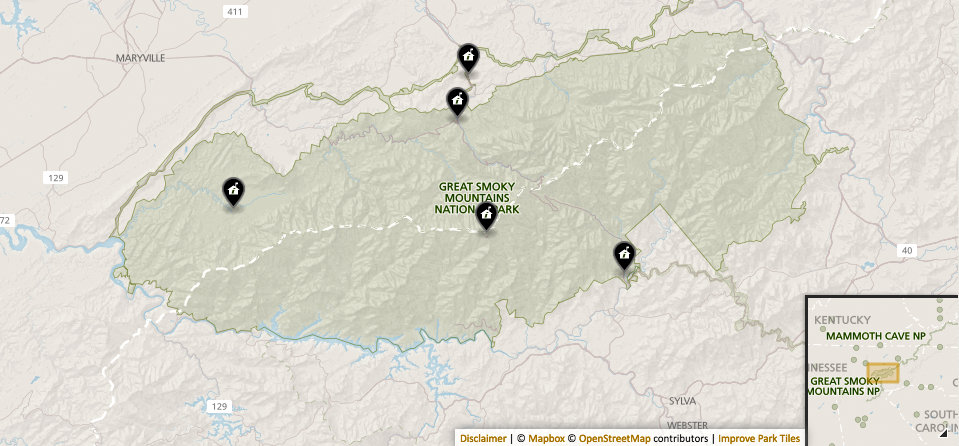
gsmnp-map

Last week, I attended the W4DXCC convention in Sevierville, Tennessee. The road trip afforded me several opportunities to make NPOTA activations through the Great Smoky Mountains National Park.
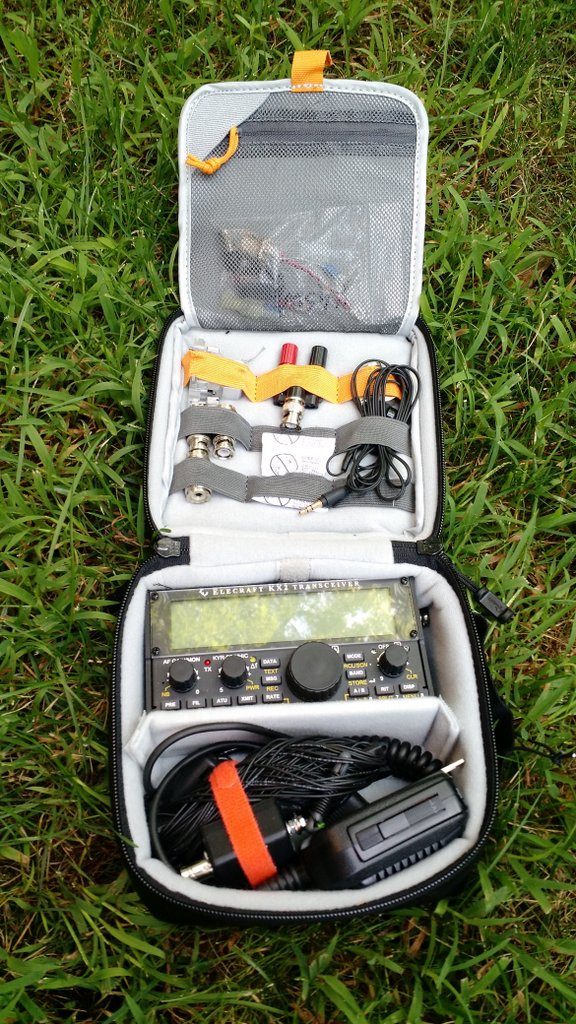
LowePro CS 60 Closed

I took my field kit which included the Elecraft KX2, QRP Ranger battery pack (not pictured), and EFT Trail-Friendly antenna.

Thursday, September 22, 2016
img_20160922_125928781_hdr

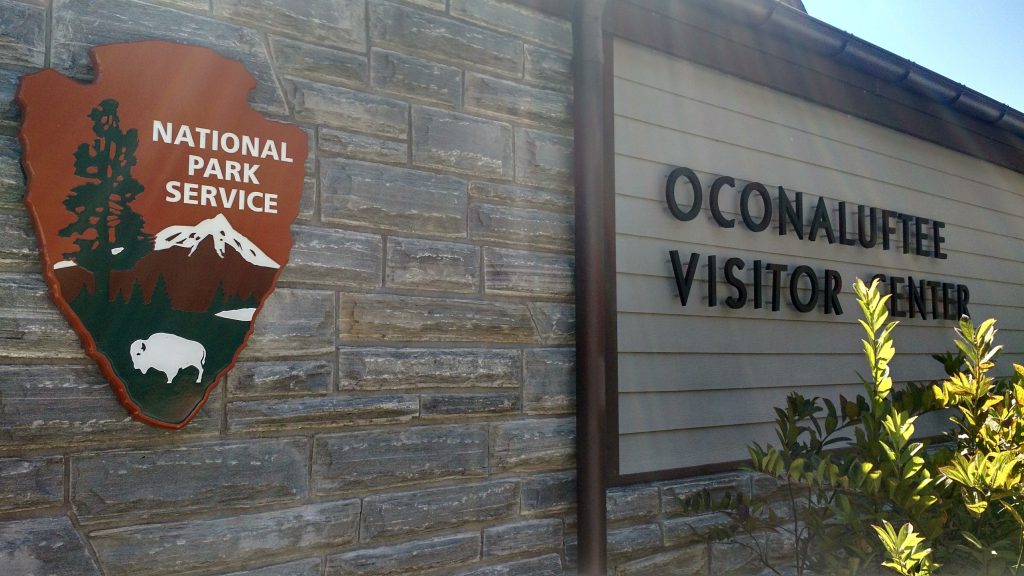
My first stop was the Ocunaluftee Visitor Center in Cherokee, NC, where I had planned the “two-fer” activation of the Great Smoky Mountains (NP26) and the Blue Ridge Parkway (PK01).

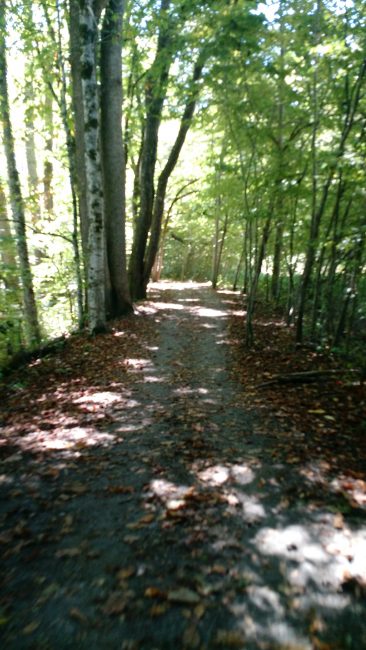
First thing I did was ask the park ranger on duty how I could find the footpath to the point where the two parks overlap. Turns out, I had at least a one mile hike ahead of me.

PK01  and NP26
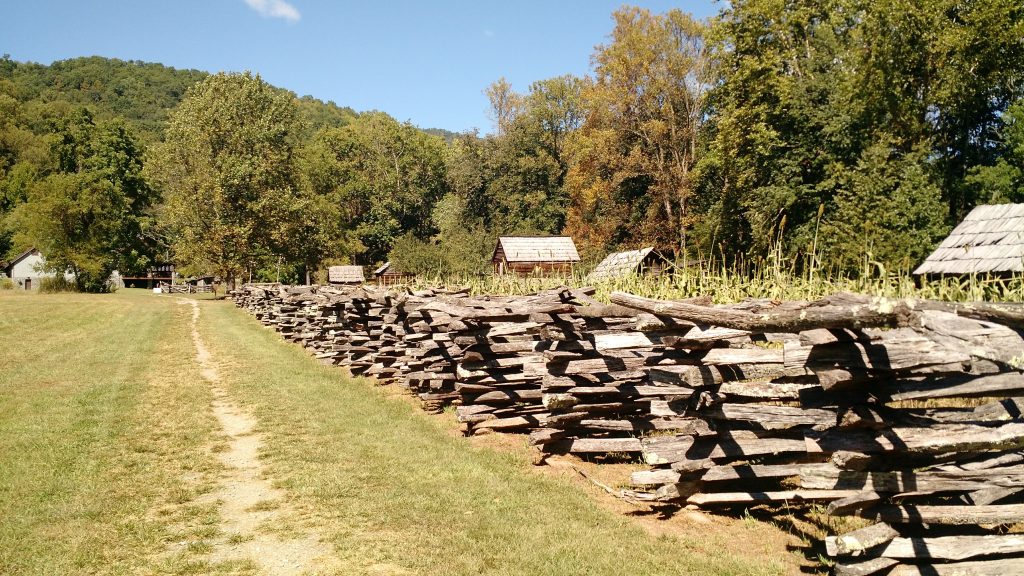
img_20160922_130239063

I love hiking, so that wasn’t a problem.
img_20160922_130429145_top

The only problem was I hadn’t accounted for the hike in my plans, so I knew I would be a little late for the scheduled activation time.

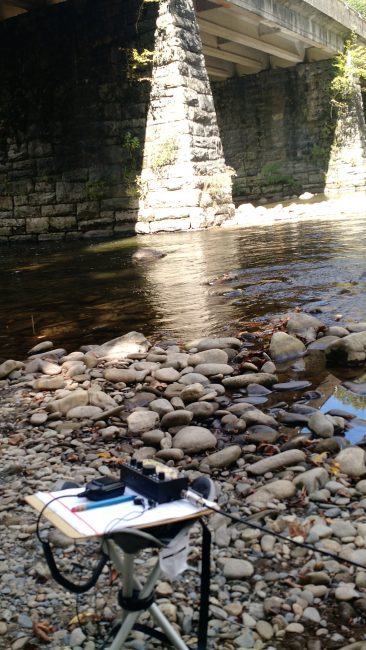
When I reached the Blue Ridge Parkway, I ventured down to the river where I found an excellent spot to set up my field kit.
img_20160922_140821652

Thankfully, within thirty minutes, I had logged 15 contacts. I quickly packed up and attempted to catch back up with my schedule.
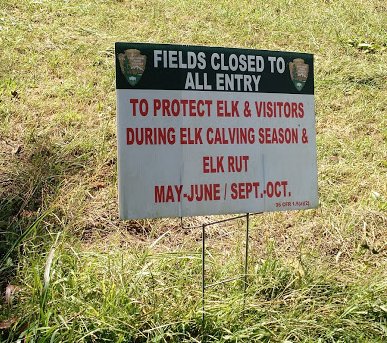
Thankfully, the Elk were elsewhere today!

I was grateful the Elk were elsewhere Thursday!

Back at the ranger’s station, I learned that the Ocunaluftee Visitor Center is also another National Park entity: the Trail Of Tears (TR12). I had no time to deploy my station once more, but made a mental note to add it to activations on my return trip.

NP26 and TR01

Next, I hopped in my car and drove to the Newfound Gap parking area where the Appalachian Trail (TR01) crosses the Great Smoky Mountains Park (NP26).

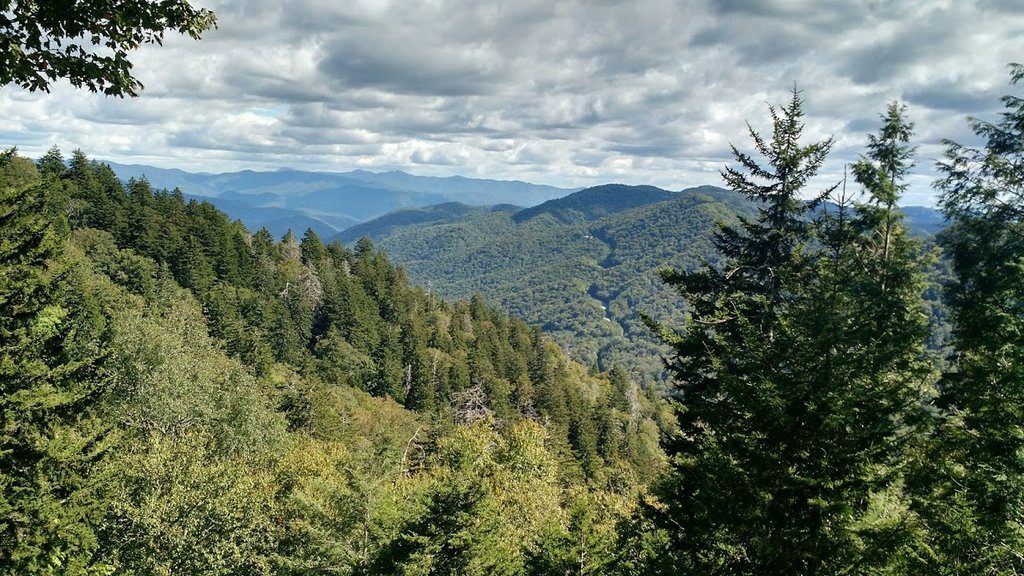
The view there was/is amazing:
img_20160922_150244733_hdr

The area was packed with tourists, so I decided to hike up the Appalachian Trail (AT) to escape the bulk of the crowd.
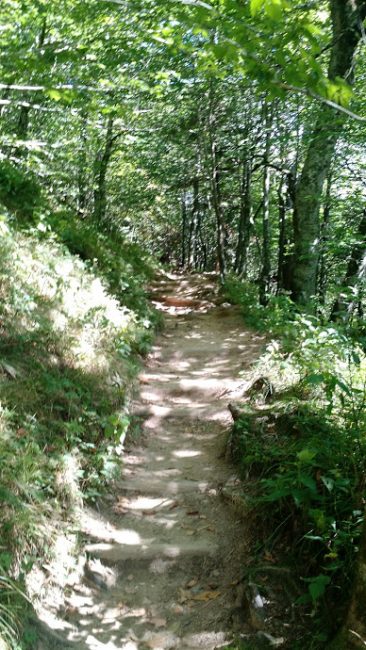
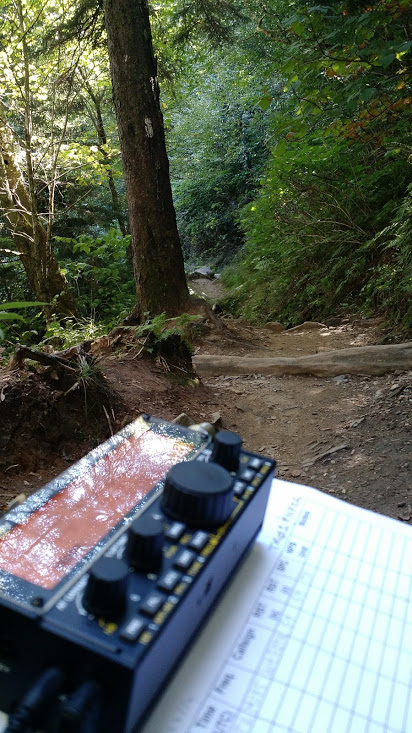
img_20160922_150632201I hiked at least one mile up the narrow and steep AT before finding a suitable spot to set up my gear. It was a tight operating spot, but I managed to hang the antenna and position myself in a way that wouldn’t block foot traffic on the AT.
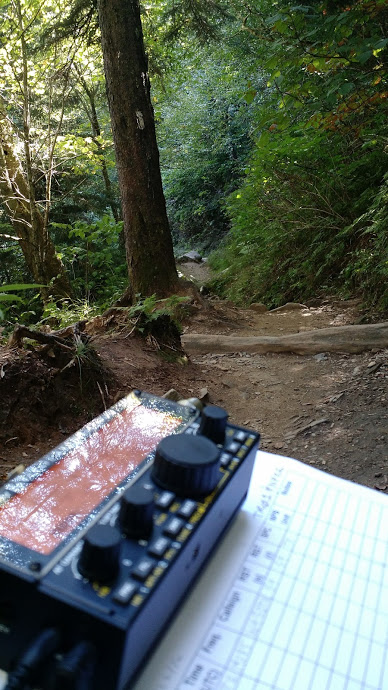
img_20160922_153601700_top-1

I logged 18 stations in the span of about 45 minutes.

I also took several breaks to answer questions about ham radio from hikers.  I was particularly happy that one family took sincere interest in what I was doing and their young kids were fascinated that I was making contacts across the globe where there was no cell phone coverage nor Internet.

I packed up at 20:30 UTC, hiked back to my car and  managed to arrive at the conference center in Sevierville in time for dinner with my friends.

Sunday, September 25, 2016

My activations on the return trip, Sunday, included the same locations as Thursday.
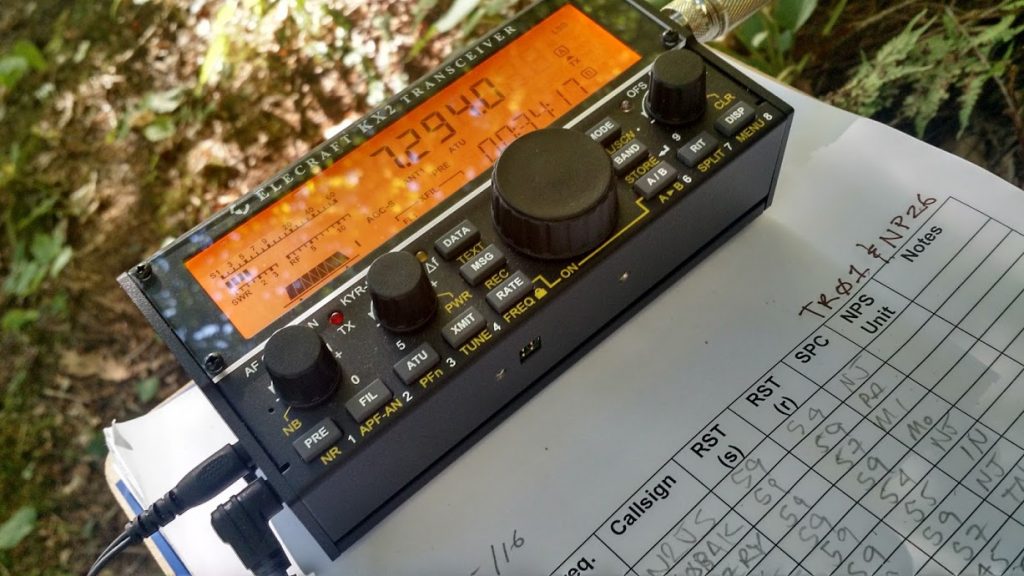
elecraft-kx2-appalachaintrail

TR01 and NP26

Instead of heading north on the Appalachian Trail, I decided to head south. I was running late to activate the site and knew if I headed north I’d have a long hike ahead of me. Once again, there were a lot of visitors at the site–many were there for a Sunday morning hike and were making their way (quite slowly) north. The southern route had no foot traffic at all, so I headed south.
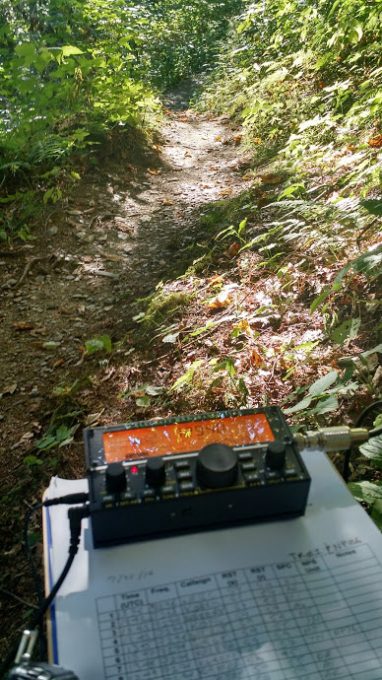
at-and-elecraft-kx2

I found a suitable site to set up radio, but only because the trail was so quiet I could sit in the middle of it. The entire time I operated, I only encountered one hiker who was absolutely amazed I was making contacts across the continent when he hadn’t had cell phone reception in days.

I logged 14 contacts in 45 minutes.

NP26 and PK01

Next, I headed back down the mountain to the Ocunaluftee Visitor Center to the same site where I set up before.
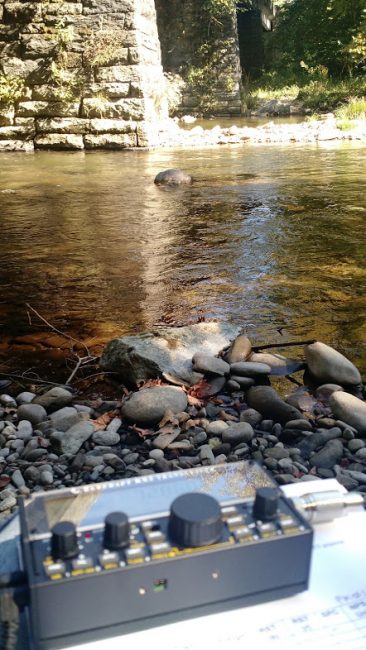
img_20160925_111251786

Unlike my Thursday activation, contacts trickled in very slowly. It took over one hour to log 11 contacts. Propagation was very strange: the only stations I worked on the 20 meter band–a total of four–were located in Idaho and Slovenia.
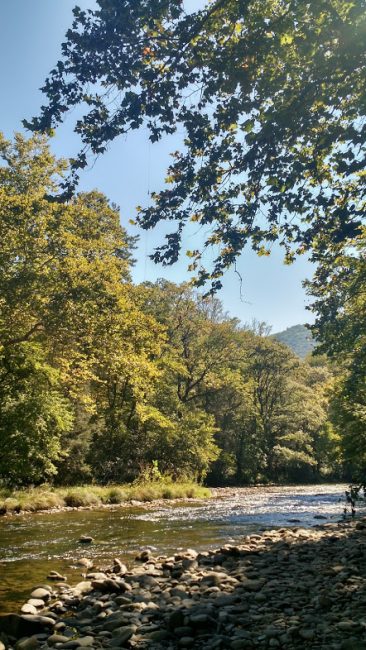
img_20160925_111448716_hdr

You can *almost* see my antenna hanging from its first location.

Once, I even re-deployed my antenna, thinking that may help. I managed to raise the entire 35′ length into an ideal tree on the bank of the river. It was completely vertical with no slope. That did, perhaps, help snag my final two contacts.

TR12
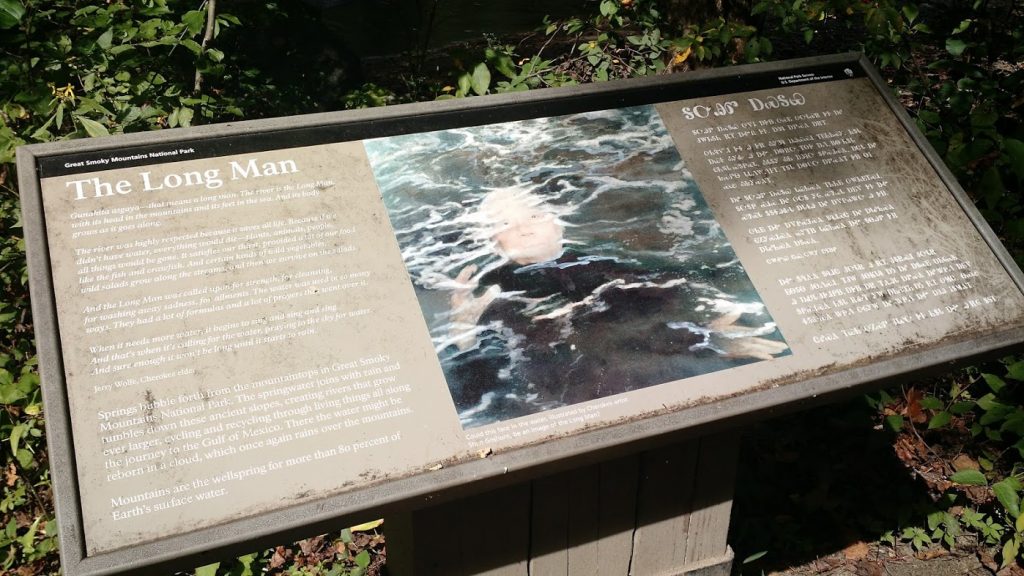
img_20160922_141838425

Despite the fact I was running late and I had struggled to make the minimum ten QSOs required for the NP26/PK01 activation, I decided to also attempt TR12 (Trail of Tears).

I hiked back to the Ocunaluftee Visitor’s Center and found a quiet spot, once again, near the river. I was happy with my operating location and the fact the antenna deployed with no problem.

Sadly, though, this activation was not meant to be. Even with multiple spots on the DX Cluster, I stopped operating after having only worked four stations in 45 minutes. If I hadn’t been on a schedule, perhaps I would have stayed another hour.

I didn’t let this bother me, though. I knew the TR12 activation would be a gamble and I was happy to have provided four NPOTA chasers with another NPOTA catch for the day!

All in all, I worked a total of 64 stations en route to and return from the W4DXCC conference. I call that a success, especially since I was able to enjoy some excellent hiking, scenery, weather and I even had a few opportunities to promote ham radio to the public. Of course, I feel like each time I do one of these activations, it also hones my emergency communication skills.

W4DXCC

Speaking of the W4DXCC, the conference was amazing as always and I’m happy to have been a part of it. For the second year in a row, we hosted a “Ham Radio Bootcamp”–a day-long tutorial on all aspects of ham radio. Once again, it drew a large crowd.
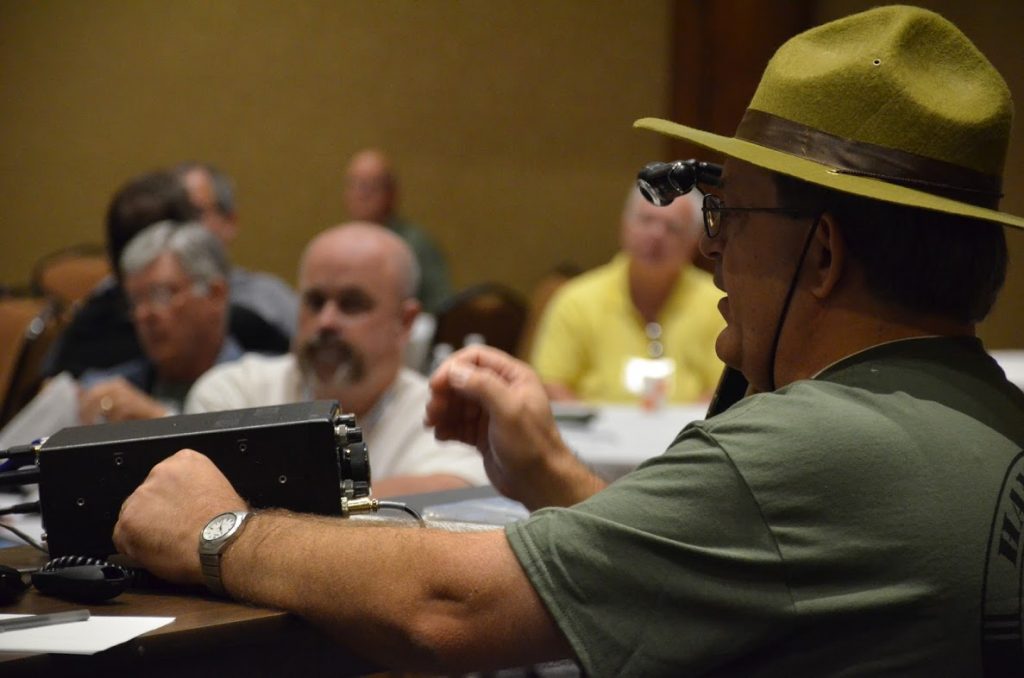
Vlado (N3CZ) demonstrating the IC-7300 functions and features at the Ham Radio Bootcamp.
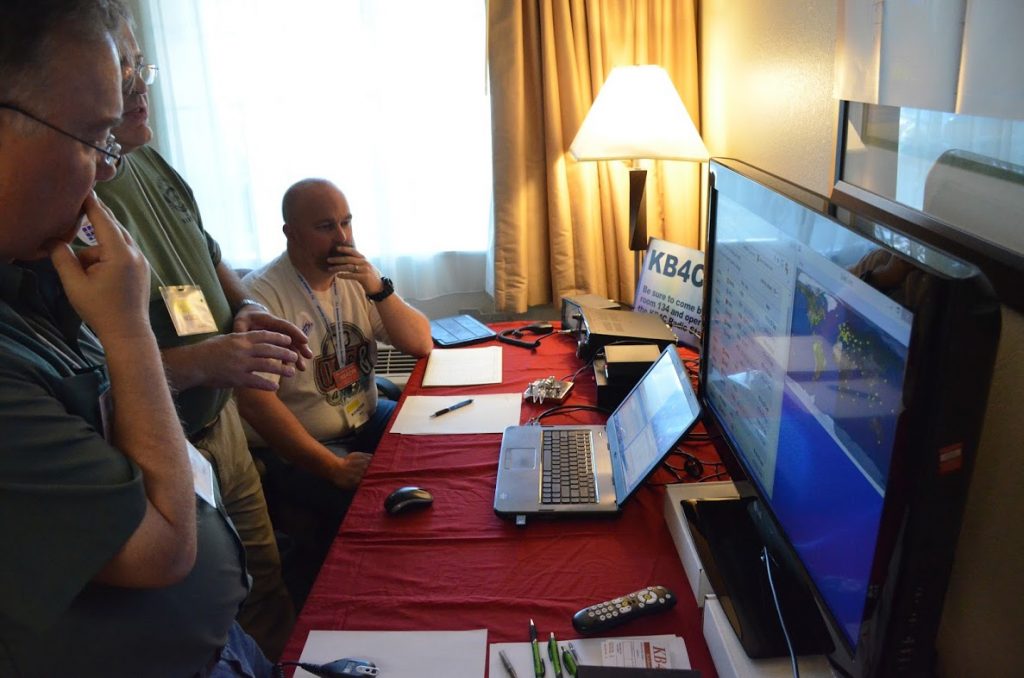
Vlado (N3CZ) demonstrating the IC-7300 functions and features at the Ham Radio Bootcamp.

Each year, the convention operates as KB4C in a dedicated radio room. This year, we had two IC-7300 transceivers on the air.

Each year, the convention operates as KB4C in a dedicated radio room. This year, we had two IC-7300 transceivers on the air simultaneously.
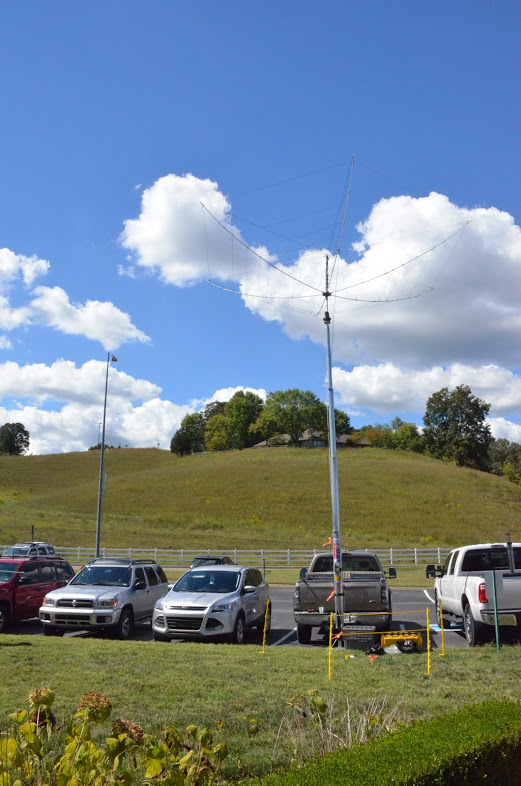
hex-beam

We had at least three antennas available including this excellent hex beam.

If you’re into DXing, contesting, or you’d simply like to make some new friends in the community, I would encourage you to put the W4DXCC conference in your calendar for 2017!

NPOTA Activations this morning!

elecraft-kx2-appalachaintrail-npota-tr01

If you’re around the radio this morning (Sunday, Sep 25), and you’d like to make some NPOTA contacts, note that I plan activate:

Look for me around 14,286 kHz and 7286 kHz +/- 6 kHz.

Once again, I’ll operate the lightweight Elecraft KX2/EFT Trail-Friendly combo–and that’s a good thing. To activate these sites, I’ll log at least 1 hour 15 minutes of hiking (the AT portion over steep terrain). Having a small radio package makes the experience much more enjoyable!

I hope to hear you on the air or, perhaps, you’ll hear me. I expect there will be a lot of NPOTA activators in the field today.  Should be a lot of fun!

NPOTA: Photos from weekend “two-fer” activation

npota-tr10-pk01-qrp-encampmentview

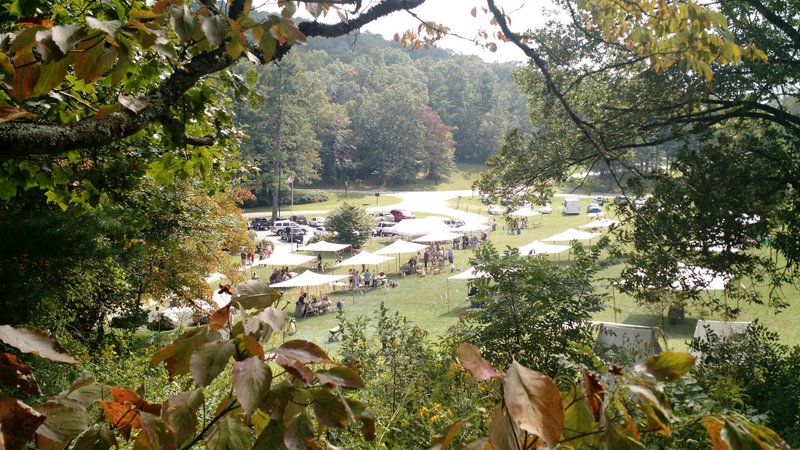
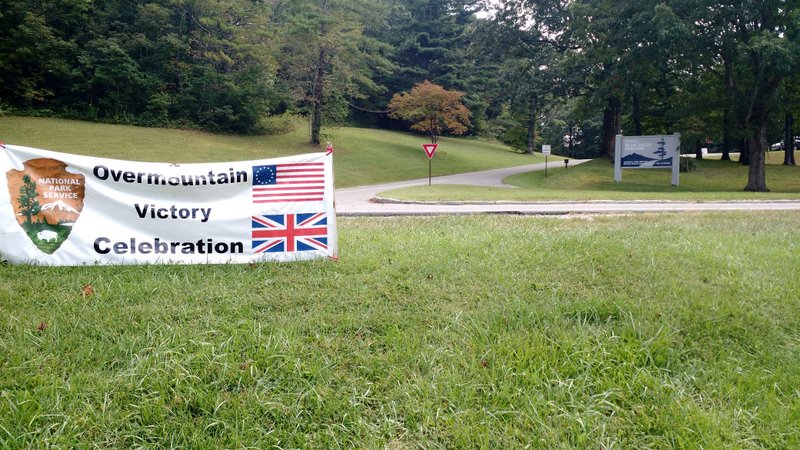
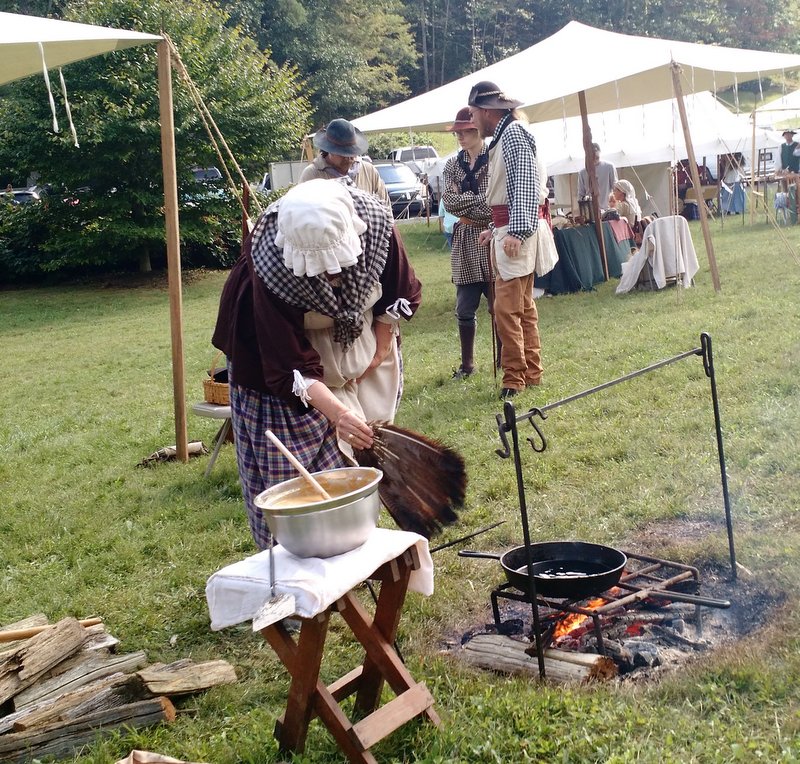
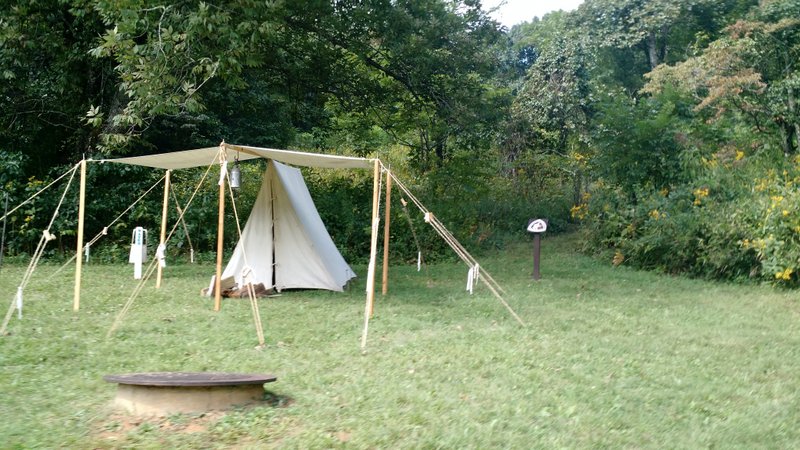
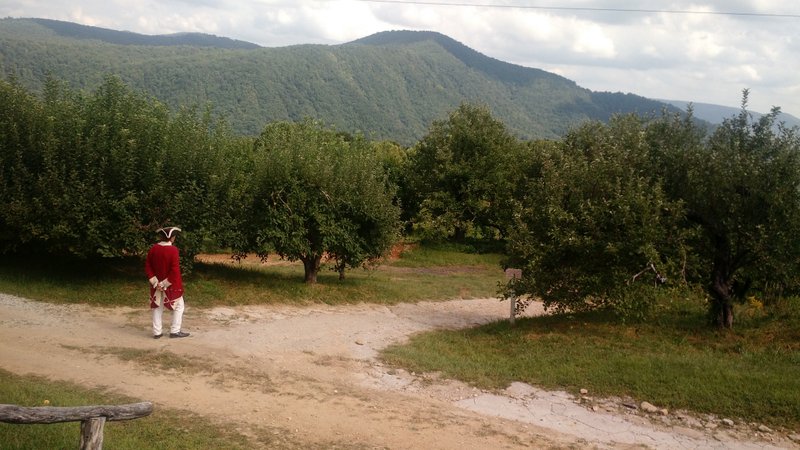
As seen from the Overmountain Victory Trail: The Revolutionary War encampment at the Museum of North Carolina Minerals.

As I mentioned in a previous post, what I love about the National Parks On The Air program is that it combines two of my favorite things: national parks and ham radio. My family visits national parks regularly, so it’s easy for me to pack a small radio, do a quick NPOTA activation all while incorporating non-radio activities that the family loves.

npota-tr10-pk01-qrp-2

On Saturday, I activated both the Blue Ridge Parkway (PK01) and Overmountain Victory National Historic Trail (TR10)–a “two-fer” activation.

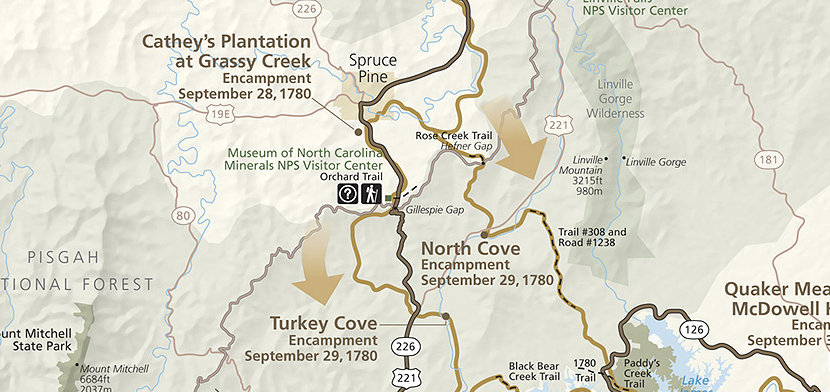
Normally, I would set up my station somewhere close to the Museum of North Carolina Minerals which is situated at the junction of these two National Park entities. Saturday, however, was a special event at the museum: a Revolutionary War Encampment.

Blue Ridge Natural Heritage describes the annual event:

The Museum is located at Gillespie Gap, an important stop for Revolutionary War fighters on their way to the Battle of Kings Mountain. Each September the Museum hosts an encampment of re-enactors who assume the role of the Overmountain Men, primarily Scots-Irish settlers from Eastern Tennessee and Western North Carolina who came “over the mountains” and ultimately defeated the left wing of Cornwallis’ army at Kings Mountain, South Carolina. Many historians mark this victory as the turning point in the Southern Campaign of the Revolutionary War.

npota-tr10-pk01-qrp-encampment2 npota-tr10-pk01-qrp-encampment

My family loves living history events.

Radio time!

The Park Ranger kindly gave me permission to do the NPOTA activation, but not at the museum itself.  She was trying to keep the site set in the Revolutionary War period–a ham radio operator using a portable transceiver doesn’t exactly fit that description. Instead, around 15:30 UTC, I hiked up the Overmountain Victory Trail in search of an operation site near the Blue Ridge Parkway road.

npota-tr10-pk01-qrp-overmountain-trail-head

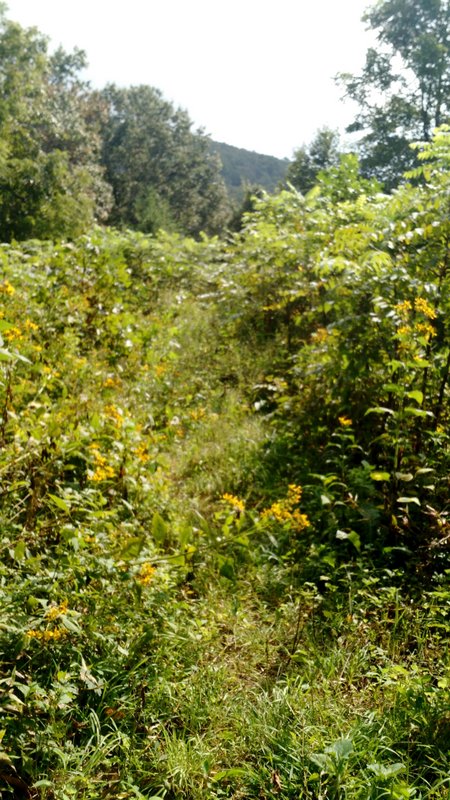
The trailhead was a little rough and overgrown. I didn’t have to trail-blaze, but I did have to wade through a lot of weeds with my gear and my canine companion, Hazel, on leash. It’s times like this I truly appreciate such a compact, lightweight, and packable station.

npota-tr10-pk01-qrp-trail-messy

Can you find the trail in this photo?

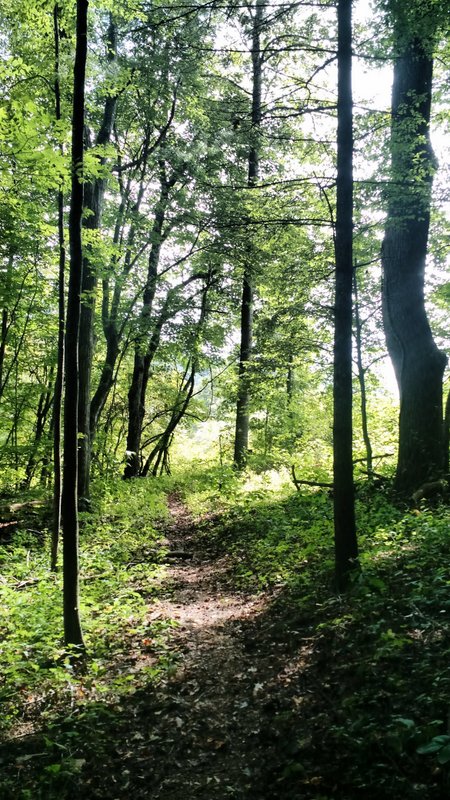
Once we entered the woods, though, the trail improved. I found a fantastic spot to operate between the museum and the parkway.

npota-tr10-pk01-qrp-7

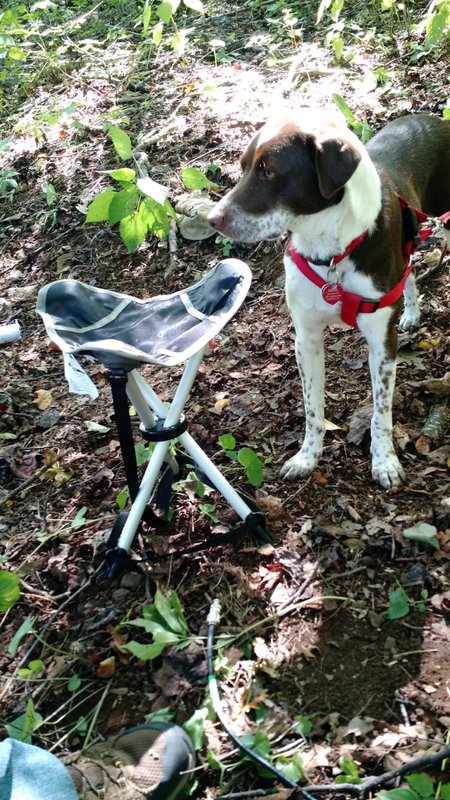
Hazel the dog is a welcome companion does a wonderful job keeping my site free of black bears. She’s patient, too. I typically tie her leash to a small stake or tree next to me and she promptly takes a nap. Here she is admiring my new REI Camping Stool:

npota-tr10-pk01-qrp-rei-trail-stool

npota-tr10-pk01-qrp-antenna

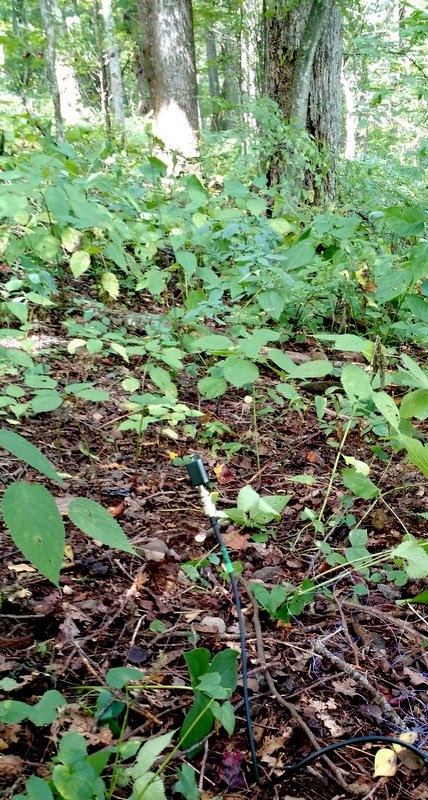
You can see part of the EFT Trail-Friendly antenna hanging in this photo.

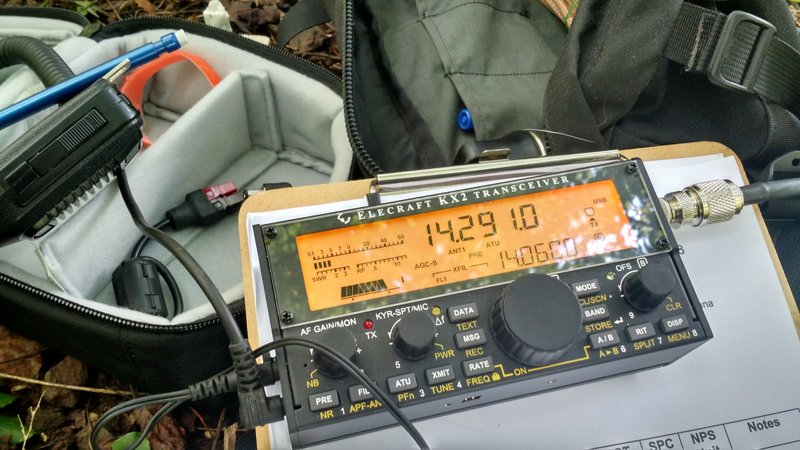
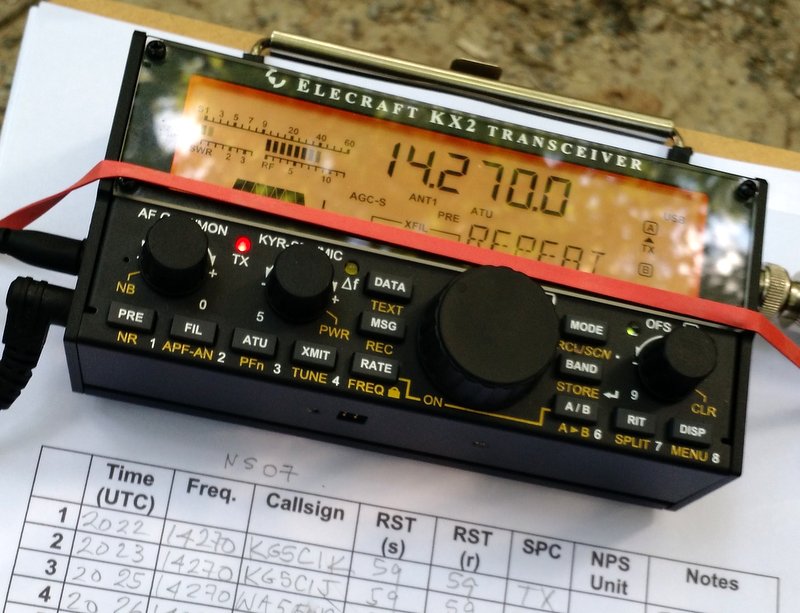
Setup was quick. I managed to raise the EFT Trail-Friendly antenna in record time. I connected the antenna to the Elecraft KX2 and was on the air, calling CQ on 20 meters in a matter of minutes. npota-tr10-pk01-qrp-elecraft-kx2-clipboardIn the space of 15-20 minutes, I only managed to work a few stations on the 20 meter band even though I had been spotted several times on the DX Cluster.npota-tr10-pk01-qrp-elecraft-kx2-logs
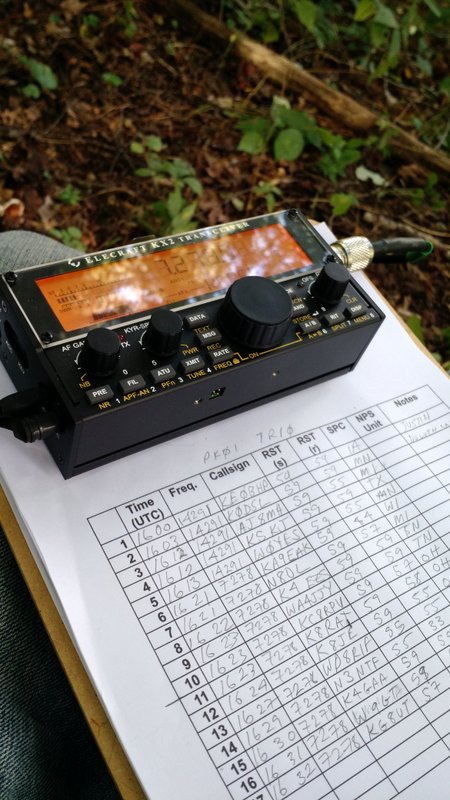
I moved to the 40 meter band and logged contacts quickly, however.

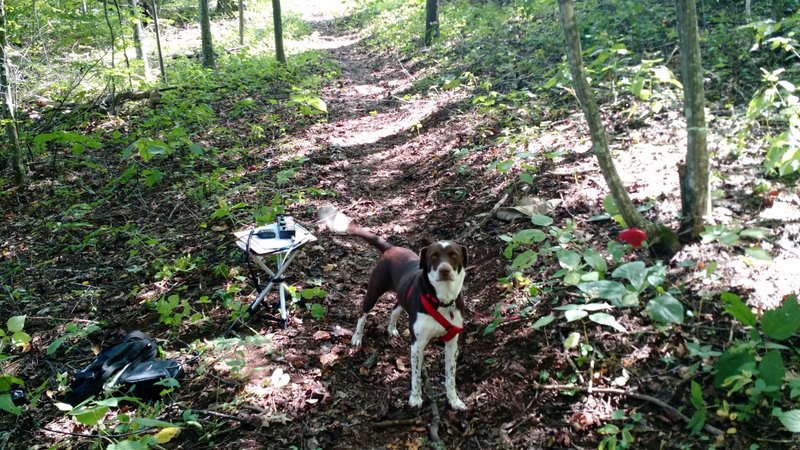
npota-tr10-pk01-qrp-hazel-and-station

My full station and my ferocious guard dog, Hazel.

Hazel, as I mentioned, is a great companion that’s sweet to everyone she meets. She’s happy to hang with me even if I’m just sitting there operating radio for an hour. She’s quiet and doesn’t bark unless she notices a true disturbance.

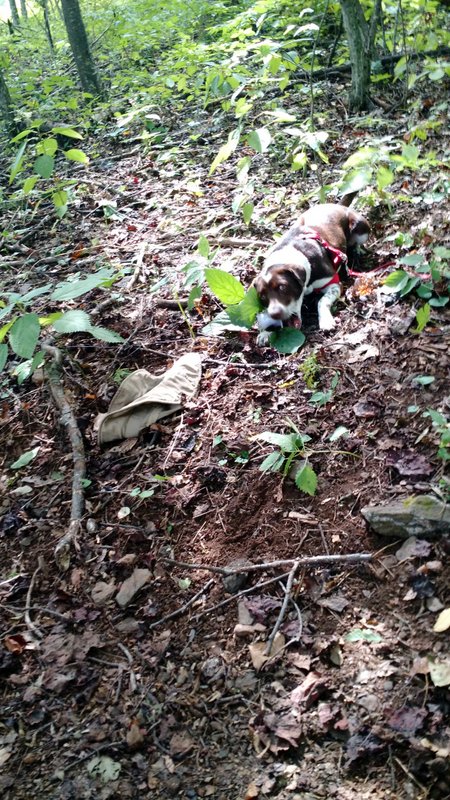
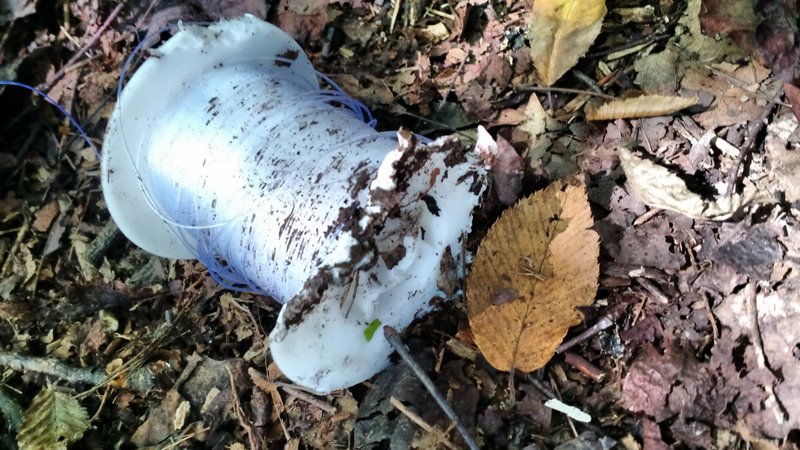
Still, Hazel does get bored. After I had logged about 20 stations, I heard her gnawing on something. I turned around and discovered that she found the reel of fishing line I use to hang my antennas.

npota-tr10-pk01-qrp-4

npota-tr10-pk01-qrp-fishing-line-hazel

Note to self: next time pack Hazel a bone.

She didn’t even look apologetic or guilty! Oh well…fishing line is pretty cheap to replace and I’m sure she assumed it was a chew toy I had placed there for her.

All in all, it was a very successful activation. In less than one hour, I put 22 stations in the log. The weather was perfect and the whole family had a blast.

npota-tr10-pk01-qrp-1

A photo I took prior to watching a reenactment of the Battle of King’s Mountain.

What a wonderful day to play radio, take in our national parks and re-live some of our history!

The Ham Radio Parity Act passes U.S. House of Representatives

SX-99-Dial

Many thanks to SWLing Post contributor, A. Black, who shares the following article from Slashdot:

This week the U.S. House of Representatives unanimously passed “The Ham Radio Parity Act” — a huge victory for grass-roots advocates of amateur radio. Slashdot readerbobbied reports:

This will allow for the reasonable accommodation of amateur radio antennas in many places where they are currently prohibited by homeowner associations or private land use restrictions… If this bill passes the Senate, we will be one step closer to allowing amateur radio operators, who provide emergency communications services, the right to erect reasonable antenna structures in places where they cannot do so now.

The national ham radio association is now urging supporters to contact their Senators through a special web page. “This is not just a feel-good bill,” said representative Joe Courtney, remembering how Hurricane Sandy brought down the power grid, and “we saw all the advanced communications we take for granted…completely fall by the wayside.”

Earlier this week, I used the ARRL application mentioned to contact my senators regarding this bill–it took perhaps two minutes to complete. I had also previously contacted our representative regarding the bill.

Thanks for reminding me to post this news!

National Parks On The Air: Activating two sites simultaneously today

I'll hike to the point where the Overmountain Victory Trail meets the Blue Ridge Parkway.

I’ll hike to the point where the Overmountain Victory Trail meets the Blue Ridge Parkway.

Today, I plan to activate both the Blue Ridge Parkway (PK01) and Overmountain Victory National Historic Trail (TR10) two-fer for the National Parks on the Air (NPOTA).

I should go on the air sometime between 16:00-17:00 UTC (12:00-13:00 EDT), weather permitting.

I’ll plan to start on the 20 meter band (14286 kHz) then move to the 40 meter band (7286 kHz). If I can’t operate on those frequencies, I’ll move to something clear +/- 6 kHz or so.

elecraft-kx2-in-field-npota-ns07

I’ll be operating SSB, using the Elecraft KX2 transceiver and EFT Trail friendly antenna combo once again. Since I’m hiking to my operating site, this pair will offer the lightest multi-band option.

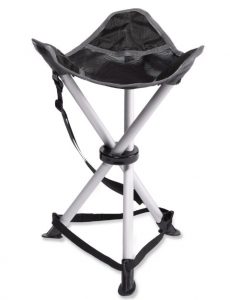
The REI Trail Stool

The REI Trail Stool

Side note: yesterday, I picked up an REI Trail Stool to replace my foldable camping chair.

The camping chair is fantastic if you don’t have to lug it very far, but on long hikes it becomes heavy and cumbersome. This stool will get me off the ground and hopefully allow me to operate with the clipboard and transceiver on my lap. The REI Trail Stool weighs next to nothing.

If you’re an SWL and hear me (K4SWL) on the air, please comment! Note that I’ll be transmitting a max of 10 watts–so pretty much “flea power.” Still, in the past, I’ve worked all corners of North America and into Europe with this same transceiver/antenna combo.

Propagation conditions are pretty favorable today as well. I just hope we have no pop-up thunderstorms–I’ll most likely be near a ridge line and can’t take any chances.

If you’re a ham radio operator, I hope to log you for this activation!