Shortwave listening and everything radio including reviews, broadcasting, ham radio, field operation, DXing, maker kits, travel, emergency gear, events, and more
Many thanks to SWLing Post contributor Frank, who notes that he’s just published a post exploring the world of virtual amateur radio via HamSphere 5.0—a platform that simulates real-world radio propagation using the internet and VoIP. He shares his experiences since 2012, highlighting thousands of contacts, numerous awards, and how the platform has deepened his appreciation for radio.
Many thanks to SWLing Post contributor, Frank, who notes that he has added a new post to his blog where he shares a simple method for tuning in to radio amateurs using the KiwiSDR network. He wrote this for anyone curious about exploring ham radio activity online. You can check it out here: How to Easily Listen to Radio Amateurs.
Jeff and Joe Geerling provide a quick but insightful overview of the FCC’s “DELETE, DELETE, DELETE” docket, offering their thoughts on its implications—especially from Joe’s perspective as a broadcast engineer. Their discussion is a great starting point for understanding how these regulatory changes could impact radio and wireless communications.
I should note that a couple weeks ago I submitted a public comment on the FCC site regarding the importance of the amateur radio service—while this isn’t specifically about deregulating the amateur radio service, I believe it’s always worth reinforcing the value of maintaining our spectrum allocations. Click here for more information on the FCC website.
Many thanks to SWLing Post contributor Michael (BD4AAQ), who shares the following announcement:
Notice from Shanghai Coast Radio Station (XSG) on Hosting the Global Amateur Radio Communication Event
Dear Amateur Radio Enthusiasts,
To celebrate World Radio Day and foster communication and interaction with amateur radio operators worldwide, Shanghai Coast Radio Station (XSG) is pleased to announce a global amateur radio communication event. The event will take place from 12 to 13 February 2025, using the station’s long-standing callsign, XSG.
Established in 1905, Shanghai Coast Radio Station celebrates its 120th anniversary this year. The station has used the callsign XSG ever since and, apart from the Global Maritime Distress and Safety System (GMDSS), has maintained Morse code telegraph services, preserving its historic significance and operational excellence.
Event Schedule:
The scheduled period will be from 00:00 UTC on 12 February 2025 to 24:00 UTC on 13 February 2025.
XSG Transmission Frequencies and Modes:
4105 KHz CW/A1A
6780 KHz CW/A1A
8502 KHz CW/A1A
12871.5 KHz CW/A1A
17103.2 KHz CW/A1A
Prior to the official event, intermittent schedule announcements will also be broadcast on the above frequencies.
XSG Receive Frequencies and Modes:
3521.3 KHz – 3526.3 KHz CW/A1A
7021.3 KHz – 7026.3 KHz CW/A1A
10121.3 KHz – 10126.3 KHz CW/A1A
14021.3 KHz – 14026.3 KHz CW/A1A
21021.3 KHz – 21026.3 KHz CW/A1A
QSL Confirmation:
Due to differing regulations set by amateur radio licensing authorities across the globe, XSG will only confirm amateur radio QSOs and SWL reports via paper QSL cards delivered by mail. If you wish to receive an XSG QSL card, please send your card to: No. 1 Diantai Road, Zhangjiang Town, Pudong New Area, Shanghai 201206, PR China. Email: [email protected].
Important Reminder:
To be clear, contacts with XSG will be cross-band contacts where XSG will operate on its authorized frequencies outside of the amateur radio bands, and any amateur radio operator making contact will operate within their own allocated amateur frequencies as listed above. Operators should exercise caution when operating split cross-band, ensuring they do not accidentally transmit on top of another station within the amateur bands. It’s a good practice to regularly monitor your transmit frequency.
Please note that amateur radio operators are not permitted to transmit on XSG’s dedicated frequencies. Operators must adhere to the transmission requirements in their respective licenses. It is recommended that amateur radio enthusiasts consult their national licensing authorities regarding applicable regulations before engaging in communications with XSG.
We warmly invite amateur radio operators worldwide to participate in this event and look forward to celebrating this milestone together.
Shanghai Coast Radio Station (XSG) 19 January 2025
Information provided by BD4AAQ (Michael Ye) and BH4BFS (Xusheng Niu)
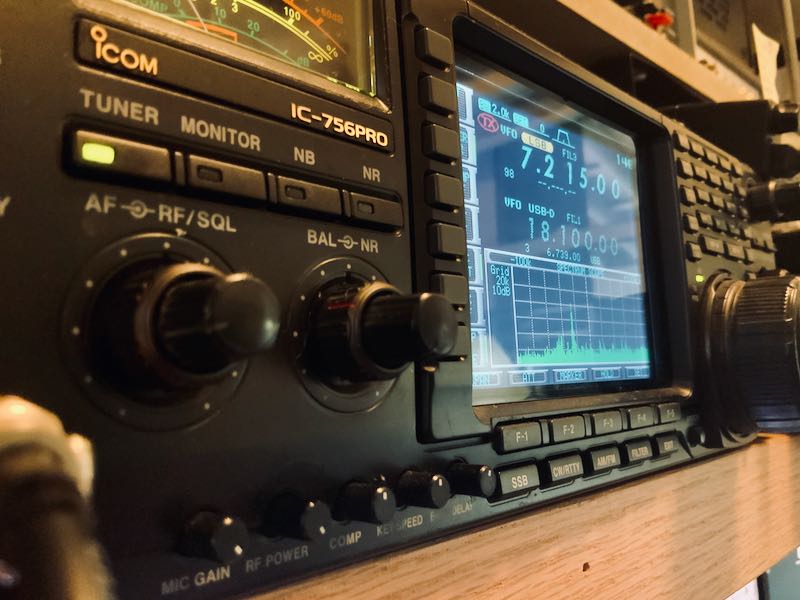
Many of us who are also amateur radio operators, got their start in the hobby through simply listening to shortwave radio, or perhaps, to stations in the AM or FM broadcast bands. I suppose it is then inevitable that these two hobbies are bound to connect with each other from time to time. Here are a few examples of this that relate to my experiences.
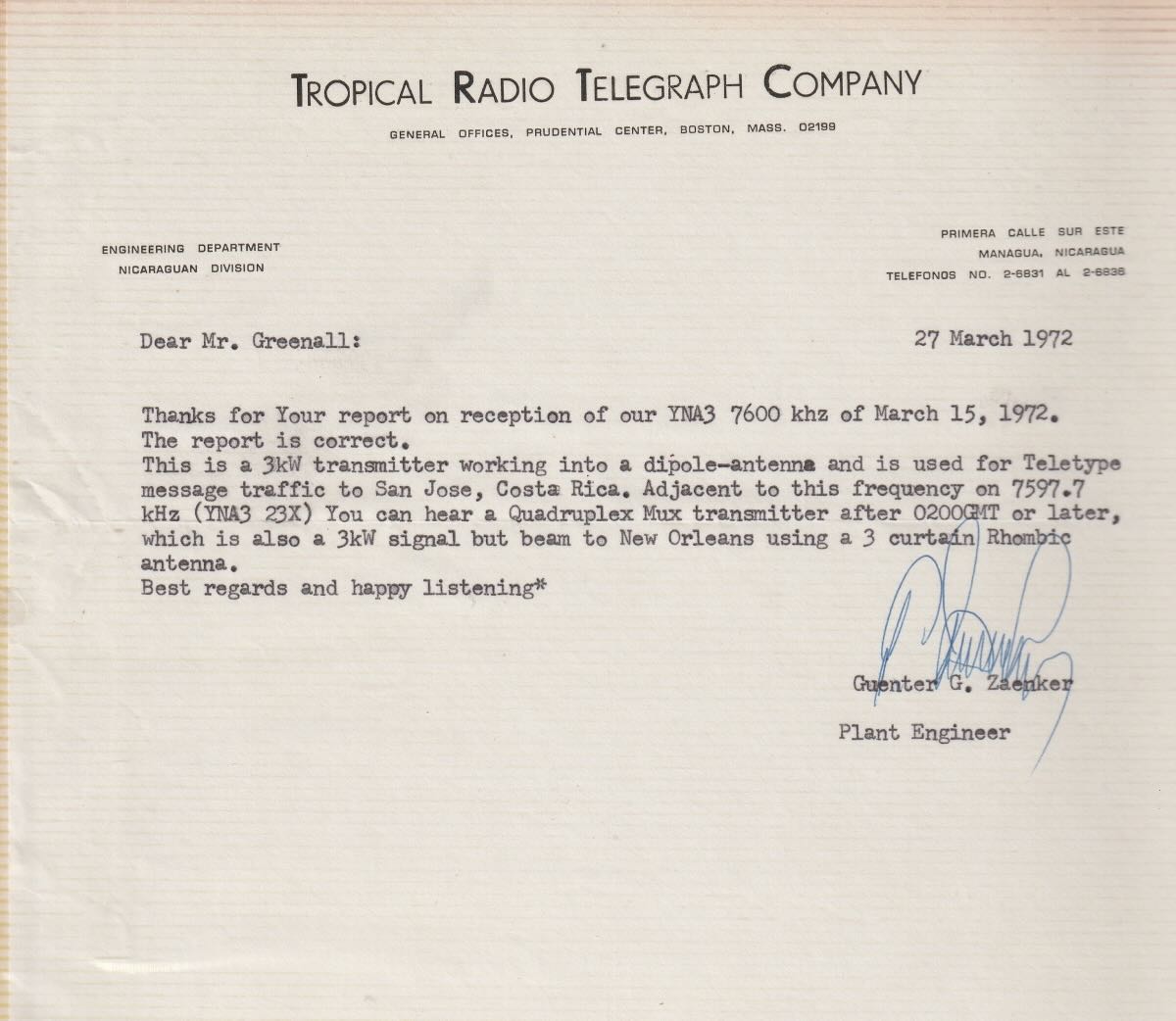
In 1972, while doing a random band scan on shortwave, I came across a point-to-point radio station from Managua, Nicaragua that was transmitting a repeating test message (recording attached below):
The station was operated by the Tropical Radio Telegraph Company and I sent off a reception report in hopes of receiving a QSL from them. As luck would have it, the Plant Engineer, Guenter G. Zaenker, responded with a friendly letter including some details about their transmitter power and antennas used.
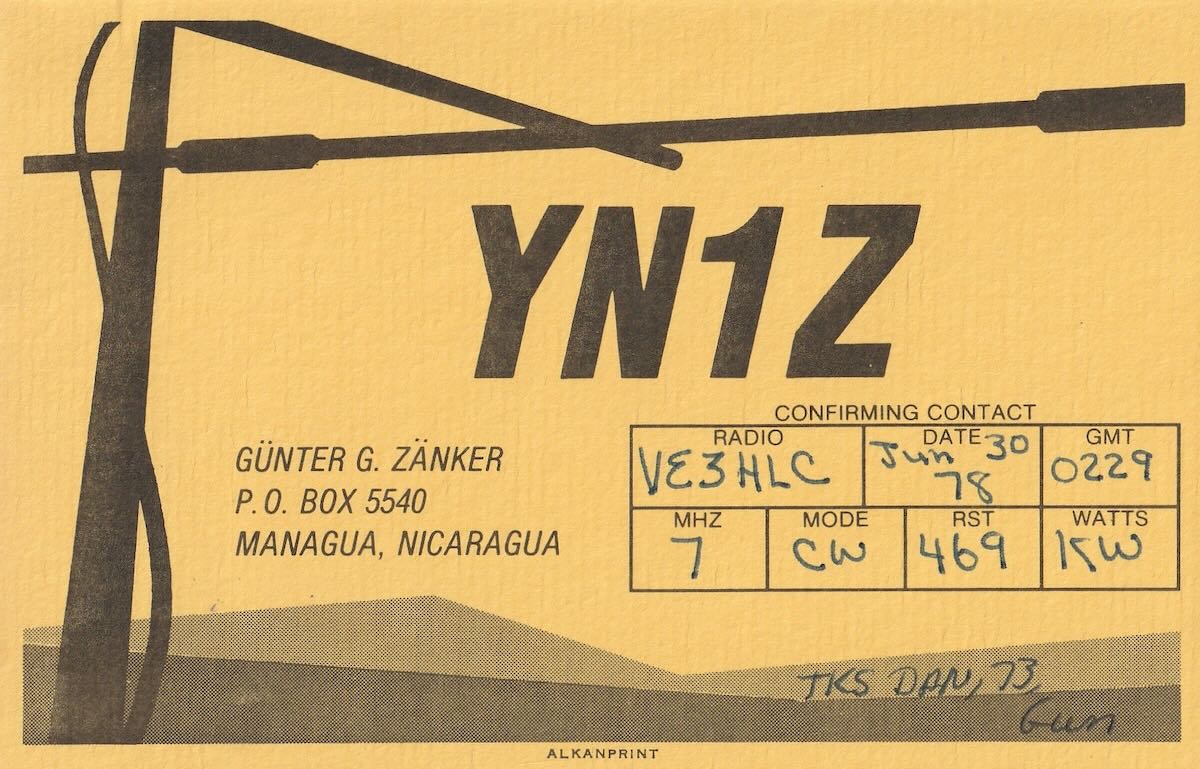
A couple of years later, when I got my amateur radio licence (VE3HLC), my SWL activities took a back seat to ham radio for a while. In 1978, I received a QSL for a contact with station YN1Z in Managua who turned out to be none other than Guenther G. Zaenker.
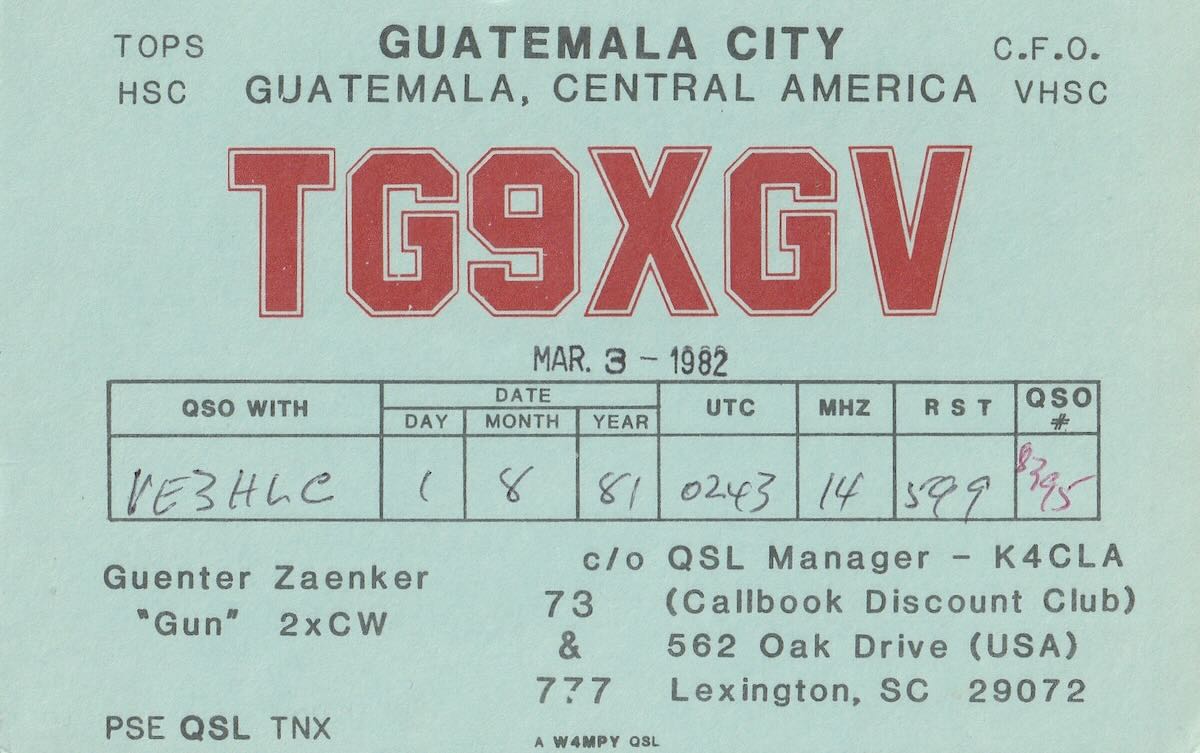
I worked Guenter for a final time as TG9XGV in Guatemala City, Guatemala. How is that for completing a hat trick!
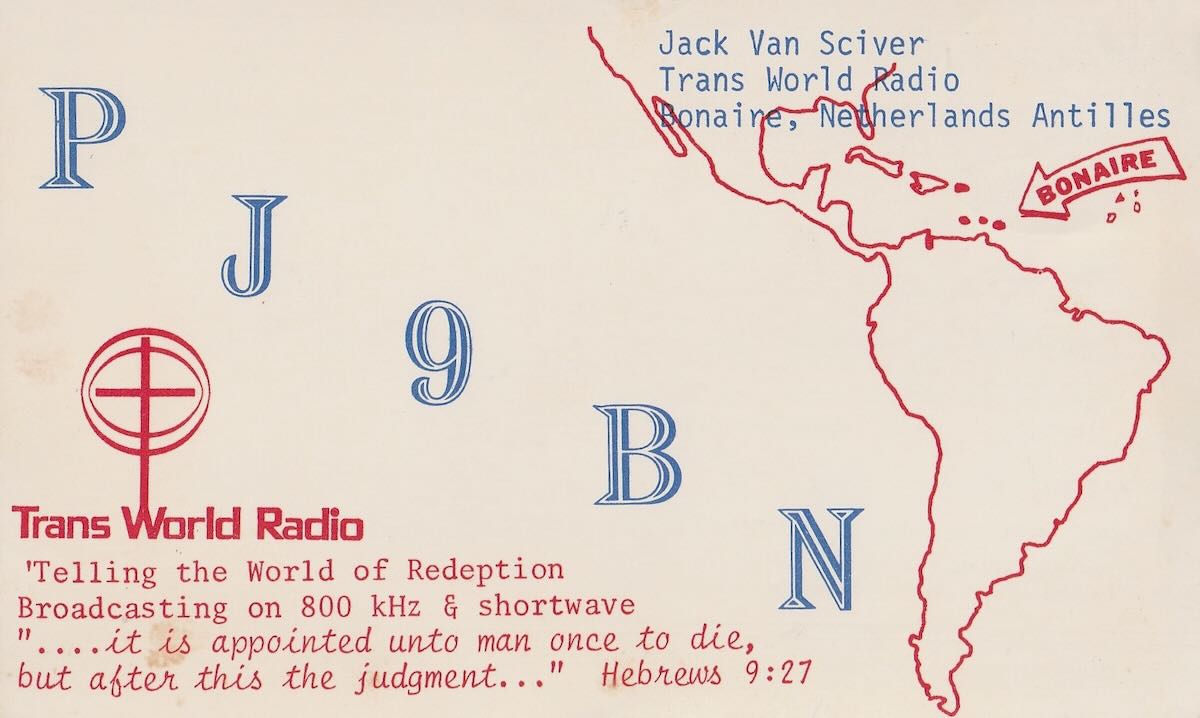
Shortly after receiving my amateur radio ticket in 1974, I made a contact with station PJ9BN, Jack Van Sciver on the island of Bonaire in the Netherlands Antilles.
It turns out he worked at Trans World Radio, a broadcaster I had listened to regularly on the SWBC bands and it was quite exciting to discover this connection. Attached is a link to a recording I made of this station that same year as they were concluding a segment of their popular DX Special program:
It seems that Jack is still going strong as I recently found this link to his current amateur callsign NA3F: https://www.qrz.com/db/NA3F
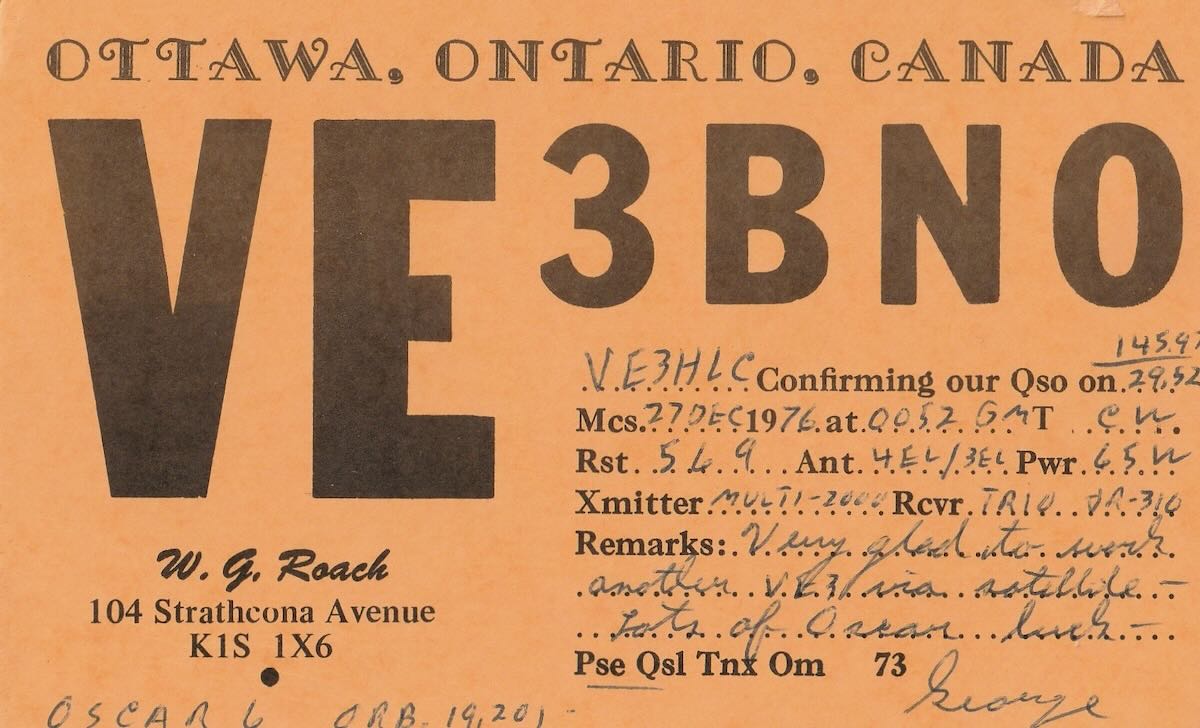
A final note, I had made a 2-way contact through the Oscar 6 amateur radio satellite (uplink on 2 metres, downlink on 10 metres) in 1976 with W.G. “George” Roach in Ottawa, Ontario.
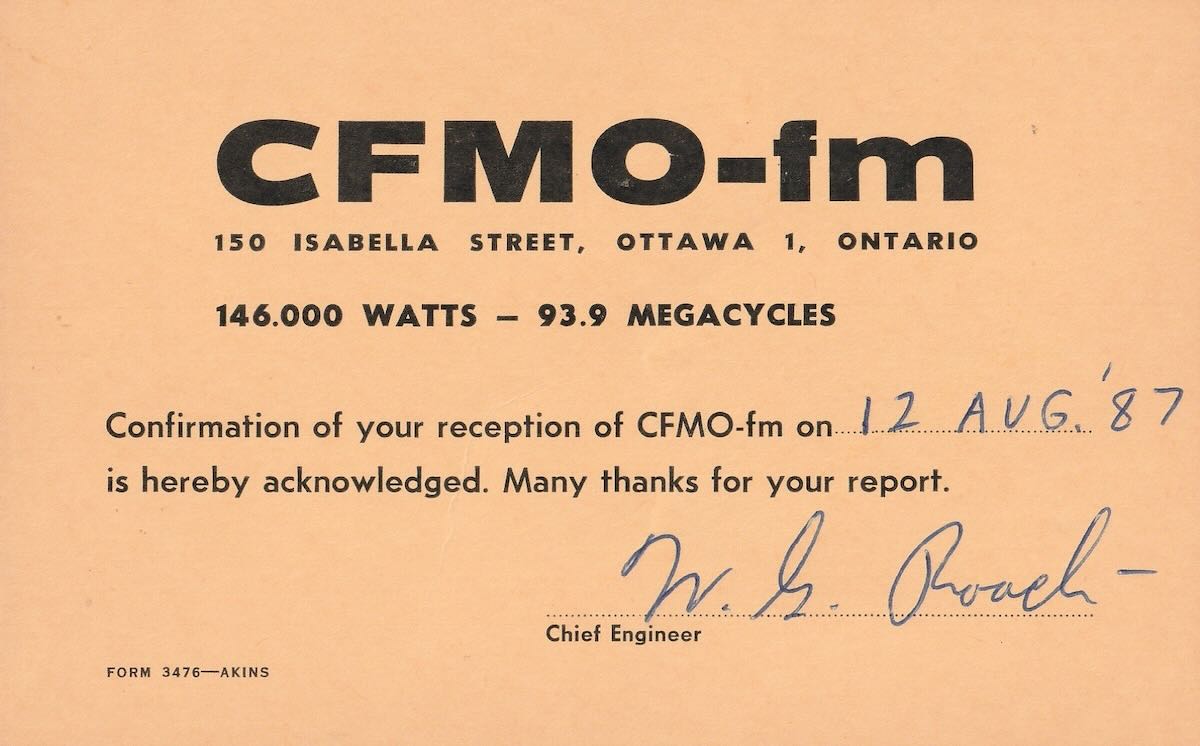
Some 11 years later, I was able to pick up station CFMO FM on 93.9 MHz, over 300 miles away, through some great ducting conditions. When I received a QSL from the station, it was signed by W.G. Roach who was the chief engineer at CFMO FM.
It certainly is a small world! I wonder how many others out there have experiences similar to mine?
Many thanks to SWLing Post contributor Giuseppe Morlè, who writes:
Dear Thomas and Friends of the SWLing Post,
I am Giuseppe Morlè, IZ0GZW, writing to you from Formia, in central Italy, on the Tyrrhenian Sea.
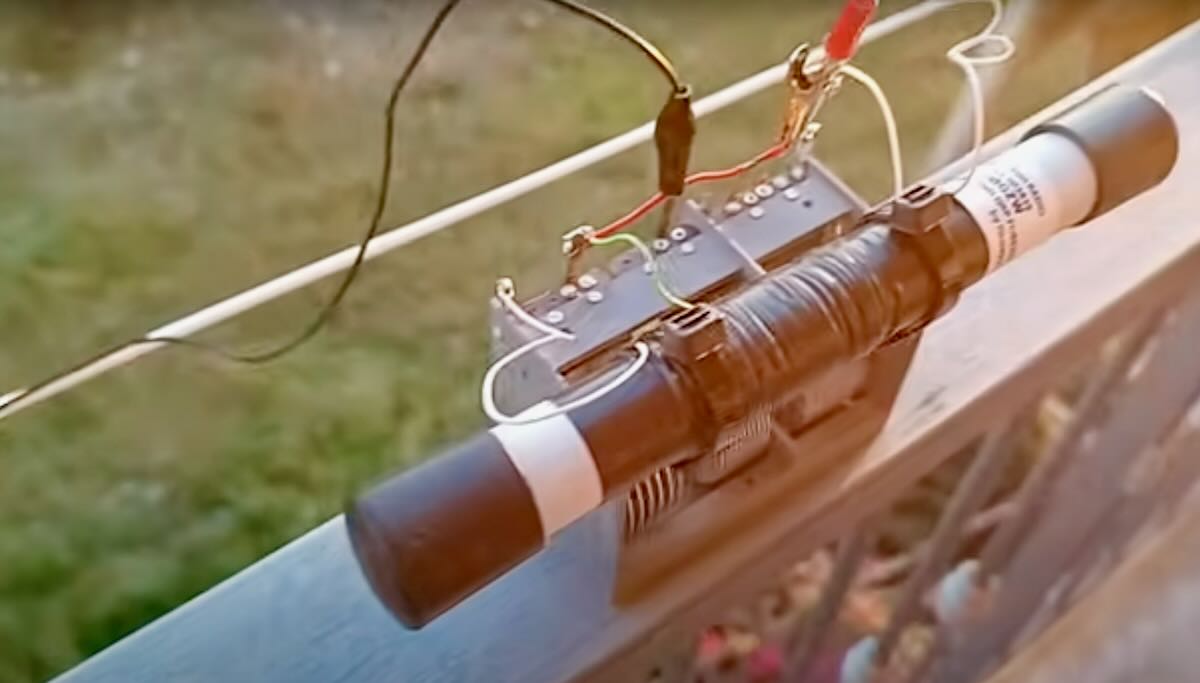
Do you remember the DICA 2 antenna? It was a small, shortened antenna with three ferrite cores inside, capable of tuning across all shortwave bands. Unfortunately, it no longer exists in its original form.
I have completely reworked the windings to enable the ferrites to also function for medium wave (MW) reception. Now, the antenna features:
• 35 turns for medium waves,
• 4 turns for shortwaves, and
• the same variable capacitor of over 1000 pF remains in use.
For medium waves, the antenna works wonderfully by induction. You simply place the ferrite core near the tube and turn the variable capacitor to achieve perfect tuning across the entire MW range.
I was genuinely amazed by its performance on shortwaves. Despite its small size, the antenna provides excellent gain, especially when a ground cable is connected to the variable capacitor’s casing.
I conducted several tests on my balcony. Initially, I thought the random ground wire simply improved the rotor’s tuning capability, but I discovered the antenna works equally well even when placed on a metal surface.
During a recent outing to Monte Orlando Park in Gaeta, I observed how the ground cable significantly enhanced both the signal strength and audio modulation. You can see this in my latest video, where I received Australian operators Greg and Grant on 20 meters with excellent signals.
The antenna’s two windings are separated and connected to the stator and rotor of the variable capacitor. On one end of the shortwave winding (the 4 turns), I’ve added a crocodile clip that can be attached or detached to switch between shortwave and medium wave operation. All of this functionality is achieved with a single variable capacitor.
I will soon share videos demonstrating all of these details and performances.
Thank you, Thomas, for your incredible activations—I follow them regularly on your channel, and they are a constant source of inspiration for me.
Greetings to you and all the Friends of SWLing Post!

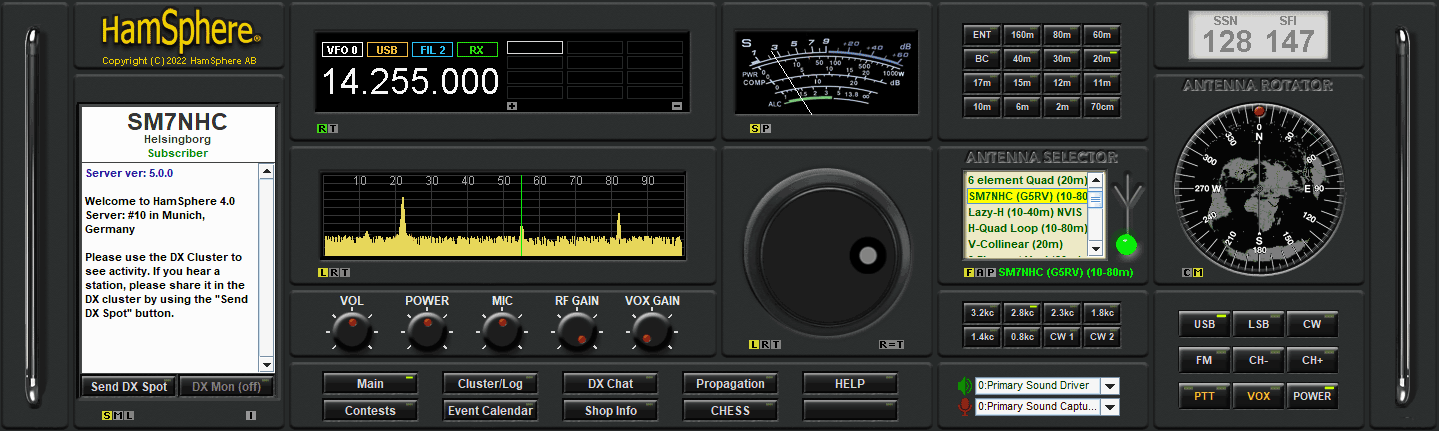 Many thanks to SWLing Post contributor Frank, who notes that he’s just published a post exploring the world of virtual amateur radio via HamSphere 5.0—a platform that simulates real-world radio propagation using the internet and VoIP. He shares his experiences since 2012, highlighting thousands of contacts, numerous awards, and how the platform has deepened his appreciation for radio.