Category Archives: Ham Radio

Hamvention 2020 has been cancelled

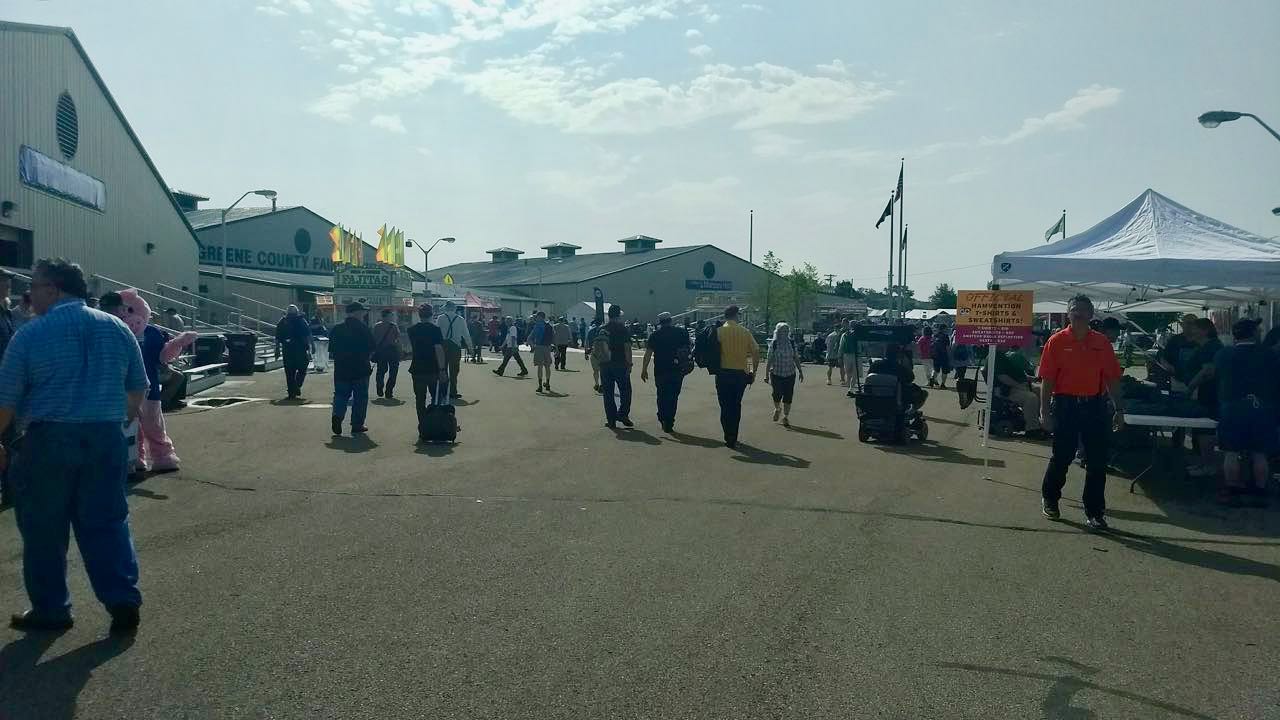
The Begali booth at the 2019 Hamvention

Many thanks to SWLing Post contributor, Robert Gulley, who shares the following announcement from the 2020 Hamvention Chairman:

The Hamvention Executive Committee has been monitoring the COVID19 pandemic. We have worked very closely with our local and state health Departments.

It is with a very heavy heart the Hamvention Executive Committee has decided to cancel Hamvention for this year.

This decision is extremely difficult for us but with around two months until the Great Gathering we felt this action necessary.

More specific details regarding the closure will soon be posted on our website www.hamvention.org.

Thank you for your understanding in this time of International Crisis.

Jack Gerbs
General Chairman HV2020

Click here to read the announcement at the Hamvention website.

No doubt, all other Hamvention associated events like FDIM (Four Days In May), Contest University, and the 2020 DX Dinner will soon follow suit.

Social Distancing: Nothing new to us radio geeks

by Victor Rodriguez

Photo by Victor Rodriguez

Let’s face it: COVID-19 is certainly disrupting “business as usual” across the planet. It’s hurting economies, and of greater concern, hurting people.

Besides washing our hands frequently and not touching our faces, one of the most effective means of slowing/halting the spread of the Coronavirus is by exercising social distancing.

Simply staying home, and if you must go out, keeping your distance from others, makes sense––and since contact between people is how the virus spreads, it will help slow the spread of it. Many in our radio community are older now, so we want to be sure they are not subject to the lung damage or hospitalization (or worse) that can come from contracting the highly-contagious virus, especially among those over 65 or those with other health issues.

But there’s an adjustment we have to make to do this.  All around us, large gatherings are being canceled, universities and schools and suspending in-person classes, and business are closing their doors. Many governments and companies are making their employees telecommute from home. Airlines are cancelling flights and some country-to-country travel has even been banned. This is temporary, but nonetheless these are changes to which we must adapt.

Covid-19 global cases (Source: Johns Hopkins University)

Cancellations due to the coronavirus have even hit our radio world: almost every radio convention and gathering on the horizon has been cancelled or rescheduled for a later date. I was looking forward to attending and presenting at my first Ozarkcon QRP conference in early April, but it, too, has been canceled. To help keep track of event cancellations, the ARRL has even created a dedicated page to list all of the canceled ham radio events.

One very conspicuous omission (at time of posting) is the 2020 Hamvention in Xenia, Ohio. I suspect it will eventually cancel as well along with all of the various associated meetings held in conjunction with Hamvention. Frankly, even if Hamvention does manage to weather the COVID-19-prevention closures, I would expect attendance to be dismal this year. [Update: Hamvention cancelled several hours after this post was published]

Part of the Hamvention Food Court area.

Hamvention attracts a large group of international attendees and vendors and the average age of those at Hamvention is Covid-19’s target demographic (60+). True, it’s two months out yet, but most large vendors have to make flight plans now while things are very much in flux. We’ll see how it all plays out in the coming days.

But why temporary social distancing and exercising a little preparedness triggers some individuals to go to extremes or (worse) try to profit from the panic, I’ll never know.  I have been witness to some pretty wacky behaviors recently, like the couple I saw Thursday who were buying twenty jugs of Chlorine Bleach. Since a simple 10% bleach solution is recommended for virus disinfection, unless they own an Olympic-sized swimming pool with an algae overgrowth, or are trying to disinfect an entire hospital, what could they want with so much of it?

Social DX

Meanwhile, social distancing, for us radio geeks, is less a form of restriction and isolation or  than it is an opportunity. 

Those of you who know me well know that I can be quite talkative when I’m with others, especially those who share my love of radio. Many might even assume I’m an extrovert.  But if anything, I’m perhaps a socially-comfortable introvert. And in truth, it’s easy for me to adjust to staying in.  Like so many SWLs, I enjoy the chance to escape to my radio to tune out the fuss…and tune in the world. A cheerful chat, or listen, over a distance, is my idea of a good time. This is true”social DXing,” if you ask me!

For the next few weeks, here’s what my Social DX Bucket List includes (completed items have a strike through)…

  • Clean the sticky residue off the rest of my radios
  • Explore Weather Fax a bit more
  • Activate and chase a few parks in the Parks On The Air program
  • Tinker with my uBITX V6 code
  • Learn more Linux command line
  • Chase more HF pirates (since many of them will also have more free time!)
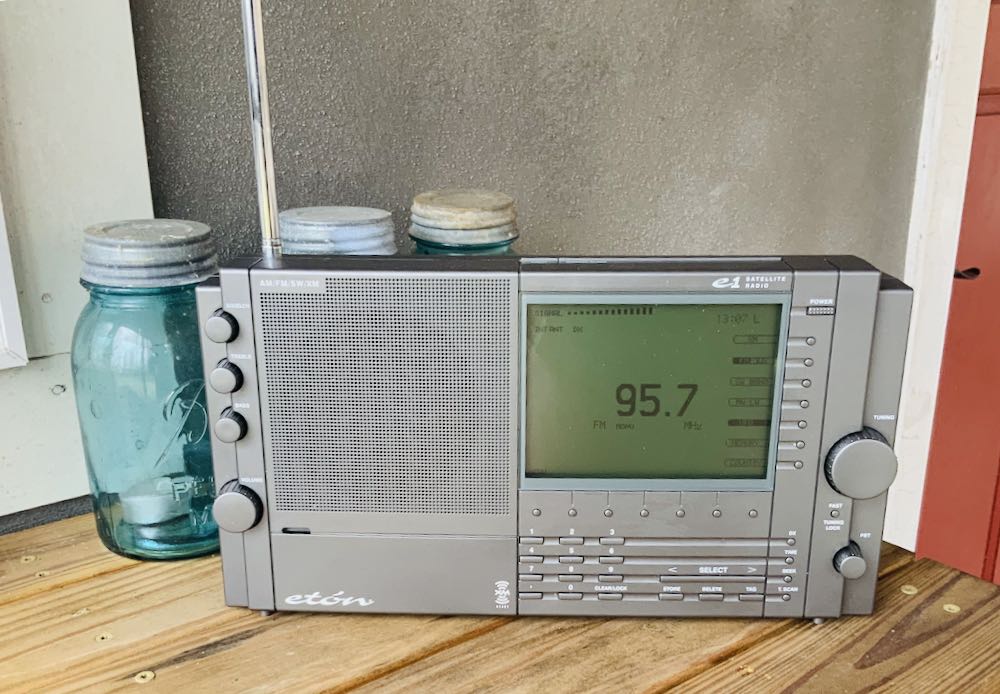
  • Take my recently-acquired Eton E1 to the field
  • And perhaps add a few ATNOs (All-Time New Ones) to the logs
  • Deploy a loop on ground (LOG) antenna
  • Make a CW only Parks On The Air activation
  • Start piecing together a QRP EME station

Yes, I definitely welcome a little social DX!

Are you under quarantine or self-imposed social distancing to avoid COVID-19? What are your plans during this time? Please comment!


Do you enjoy the SWLing Post?

Please consider supporting us via Patreon or our Coffee Fund!

Your support makes articles like this one possible. Thank you!

Radio Waves: B&W to Color, Antenna Wins, Hearing Voices in the Walls, and Beached Whales

Radio Waves:  Stories Making Waves in the World of Radio

Because I keep my ear to the waves, as well as receive many tips from others who do the same, I find myself privy to radio-related stories that might interest SWLing Post readers.  To that end: Welcome to the SWLing Post’sRadio Waves, a collection of links to interesting stories making waves in the world of radio. Enjoy!

Many thanks to SWLing Post contributors Ron, Paul Walker, and Troy Riedel for the following tips:


Colorizing black and white photos (Antique Radio Forum)

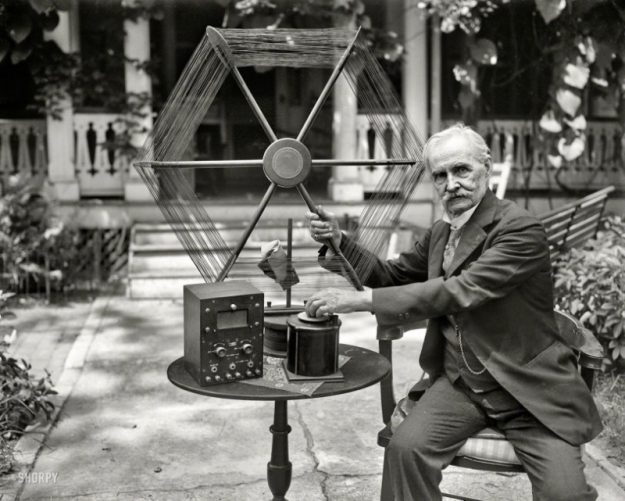
Ron shares this link to a discussion about vintage black and white photos that have been auto-colorized.[]

State law protects ham radio operator, frustrates neighbors in Windsor Twp. (York Dispatch)

A Windsor Township resident whose neighbors are upset over her amateur radio tower is within her rights to have the antenna on her property, township officials confirmed Monday.

An engineer went out to the site in the 400 block of White Rose Lane to inspect the 40-foot tower and ensure it didn’t pose a safety threat to neighbors, township engineer Chris Kraft told the board of supervisors at a meeting Monday.

“Based on that review, we feel the tower is structurally safe,” he said.

Lindsey Fowler is the homeowner who built the tower on her property last September. Fowler is a licensed amateur radio operator, according to Federal Communications Commission records, and her license is valid through December 2021.

[…]Marc McClure, one of the neighbors who lives near Fowler, told the board in October that he and several other neighbors were opposed to the tower and said it should be removed, according to minutes from the Oct. 21 board meeting.

McClure said the tower was an eyesore in the neighborhood and that he and others were concerned about the structural safety of the tower were it to fall, as well as the potential unknown health hazards from exposure to radio frequencies.

The neighbors were also worried about a decrease in their property values, McClure said.

[…]In Pennsylvania, amateur radio operators’ rights are protected by state statute, and municipalities are not allowed to unreasonably restrict the installation of towers fewer than 65-feet high.

And now that the township has confirmed there’s no safety risk to Fowler’s neighbors, township officials said the dispute is outside of their purview.[]

Lockport family says mysterious voices, music come from house’s walls; local radio station may be source (ABC 7)

LOCKPORT, Ill. (WLS) — A family in Lockport said strange sounds, including music and talk radio, has been coming out of their walls and keeping them up at night off and on for about six years.

“There are voices in the wall and I don’t know what it is,” said 9-year-old Brianna Smith.

It may sound like an episode of the popular Netflix show “Stranger Things,” but the mysterious sounds Brianna is hearing are real.

“It has been waking me up at night,” she said.

The sounds are coming from the bedroom walls of her home in the middle of the night.

“It kind of keeps us up at night,” explained Brianna’s father Richard.

Richard said the family doesn’t have any speakers in their walls. He captured some of the late night noise on his phone and sent it to the ABC7 I-Team. The music was faint, but the I-Team could hear it.

“It’s one of our favorite songs, but not at 10 o’clock at night,” Richard said.

Richard Smith called Lockport police, who took two detailed reports about the bizarre problem. In one, the officer noted that he could hear “voices and music” and “talking about Christ.” Then the officer said he heard a commercial for the Christian radio station AM 1160.[]

The Surprising Way Solar Storms Can Beach Whales (Spaceweater.com)

Space weather isn’t just for humans. Whales are experiencing it, too. A new study published this week in the research journal Current Biology shows that solar storms can confuse whales and cause them to strand on beaches–and the mechanism is surprising. Get the full story on Spaceweather.com.[]


Do you enjoy the SWLing Post?

Please consider supporting us via Patreon or our Coffee Fund!

Your support makes articles like this one possible. Thank you!

Radio Waves: Birmingham Museum (BBRM), Si4730 Radio, Ham Radio at Camp Lejeune, and the Oakland A’s Leave Radio

Radio Waves:  Stories Making Waves in the World of Radio

Because I keep my ear to the waves, as well as receive many tips from others who do the same, I find myself privy to radio-related stories that might interest SWLing Post readers.  To that end: Welcome to the SWLing Post’sRadio Waves, a collection of links to interesting stories making waves in the world of radio. Enjoy!

Many thanks to SWLing Post contributors Pete Eaton and Bill Patalon for the following tips:


The Rich History of Birmingham’s Black Radio Museum (Birmingham Times)

The Birmingham Black Radio Museum (BBRM) began as a project for Bob Friedman in 1992 to commemorate the first 50 years of a single radio station, 1400 WJLD-AM, and it grew to chronicle black radio in the Magic City.

After moving to Birmingham from his native New York City, N.Y., in 1987, Friedman worked at WJLD, where he started a 1950s vocal-group harmony show in April 1989 and later began a Saturday morning talk show, “Sound Off.” About two and a half years into his 22-year tenure at WJLD, he asked to produce a retrospective about the station’s first half century.

“I put together a pamphlet [about the station] and got people to buy ad space in it,” he recalled. “I also had a Saturday morning show, so I could promote it.”

Friedman, BBRM Founder and Director, recorded interviews with on-air personalities, including Ed “Johnny Jive” McClure, Jesse Champion Sr., and Lewis White.

“I started learning about this unbelievable history of black radio in Birmingham,” Friedman said. “And that sent me on a track, so that even though I left WJLD in 2011, I had already incorporated the BBRM.”

The museum, largely based online at www.bbrm.org, tells of stations that include WJLD, WENN, WAGG, WSGN, and Bessemer’s WBCO. Personalities include but are not limited to legends Dr. Shelley Stewart, Paul “Tall Paul” White, Willie McKinstry, the Rev. Dr. Erskine Faush, and Roy Wood Sr. The physical home is inside the Alabama Jazz Hall of Fame in the Carver Theater, which is currently closed for repairs.[]

All Band Radio Uses Arduino and SI4730 (Hackaday)

It is getting harder and harder to tell homemade projects from commercial ones. A good case in point is [Mirko’s] all band radio which you can see in the video below the break. On the outside, it has a good looking case. On the inside, it uses a Si4730 radio which has excellent performance that would be hard to get with discrete components.

The chip contains two RF strips with AGC, built-in converters to go from analog to digital and back and also has a DSP onboard. The chip will do FM 64 to 108 MHz and can demodulate AM signals ranging from 153 kHz to 279 kHz, 520 kHz to 1.71 MHz, and 2.3 MHz to 26.1 MHz. It can even read RDS and RBDS for station information. The output can be digital (in several formats) or analog.

The radio takes serial (I2C) commands, and the Arduino converts the user interface so that you can control it. The chip comes in several flavors, each with slightly different features. For example, the Si4731 and Si4735 have the RDS/RBDS decoder, and the shortwave mode is available on Si4734 and Si4735.[]

Fitting 19th Century technology into 21st Century warfighting (DVIDS)

CAMP LEJEUNE, N.C. (Feb. 7, 2020)— U.S. Marines with Information Group, II Marine Expeditionary Force (II MIG) participated in a HAM Amateur Radio General Licensing Course as part of the group’s High Frequency Auxiliary Initiative on base, Jan. 27-31, 2020.

The course, taught by members of the Brightleaf Amateur Radio Club, out of Greenville, N.C., helps Marines learn the principles of high frequency radio operations as a contingency against a peer-to-peer adversary in real-world operations.

Throughout the duration of the course, Marines learned HAM radio frequency and propagation theory, frequency band allocation, conventional and field-expedient antenna theory in addition to HAM radio operations and control.

U.S. Marine Corps Col. Jordan Walzer, commanding officer of II MIG, created the High Frequency Auxiliary Initiative after recognizing the need for utilizing more options in a combat environment. He wanted the Marines to familiarize themselves with older technology to ensure their lethality in any situation.

“Embracing technology is great but overreliance leaves us vulnerable,” Walzer said. “In a peer-to-peer conflict, our space-based capabilities will be attacked. The next war will look less like ‘Saving Private Ryan’ and a lot more like ‘Ghost Fleet’.”

Contrary to Saving Private Ryan, which was fought utilizing traditional land-based maneuver warfare, Ghost Fleet is a book set in the near future and includes the addition of space and cyber warfare.

So wars of the past were fought in the air, on land and at sea, whereas future wars will likely include the addition of space warfare, explained Walzer. U.S. forces need to create a cohesion of modern technology and analog throwbacks to mitigate hackers and drones.

HAM radios make effective alternate communication because they do not rely on satellites or internet, but instead, radio waves. They can travel directly or indirectly, along the ground or by bouncing the radio waves off of the ionosphere or troposphere layers of the atmosphere to communicate.

“Right now, our adversaries are aggressively pursuing counter-space weapons to target our satellites and ground stations,” Walzer said. “If our satellites get knocked out, what do we do then? [High Frequency] radio has been around for well over a century and is still used today. Why? Because it’s a reliable, low-cost alternative to satellite communications. With the right training and education, a Marine with a radio and some slash wire can communicate over-the-horizon for long distances, even between continents.”

HAM radios, also known as amateur radios, are communication devices created in the late 1800s. Depending how much an individual is willing to spend on equipment, someone can talk to others across town or across the world, all without the need for an internet connection. Although most people use HAM radios as a hobby, II MIG views them as potential lifelines in a highly contested environment.

There are three courses taught on HAM radios by the Brightleaf Amateur Radio Club. The entry level class is called the technicians course, which gives people frequency privileges in very high frequency (VHF) and ultra-high frequency (UHF) bands and some privileges in the high frequency range. A frequency privilege is just another meaning for permission to use a specific frequency. The HAM Amateur Radio General Licensing Course is the intermediate level course, which allows spectrum privileges on almost all spectrums that the government gives amateur radio operators. The expert class license, also called Extra Class, gives users full privilege on any frequencies allocated to HAM radios.

“I think the course was very informative,” said Sgt. Matthew Griffith, an intelligence surveillance reconnaissance systems engineer with 2nd Radio Battalion, II MIG. “It’s good to learn the things that make our equipment work. In my area of this field we use the equipment but don’t [always] know how the equipment works on the inside, which sometimes makes it harder to troubleshoot if a problem arises. Leaving the course with this knowledge will be invaluable for my Marines and me in the future.”

Dave Wood, the president of the Brightleaf Amateur Radio Club and instructor of the course, plans to conduct the first expert level course in the future after enough Marines have graduated from the intermediate course. The club plans to host the next entry level course during the summer of 2020 and train more Marines.

“The volunteers who make up our High Frequency Auxiliary are absolutely vital to us building a world-class capability,” Walzer said. “We’re drastically improving our skill by pairing experts with Marines who have a passion for HAM radio. They may not wear the uniform, but they’re American patriots serving our country in a different way.”

Whether the next conflict is fought in air, on land, at sea, or in space, one thing is clear; Marines will adapt to face those threats whether it is with the technology of today or equipment of the past.[]

Oakland Athletics off the radio waves in the Bay Area, commit to A’s Cast stream (The Mercury News)

The Oakland Athletics will not broadcast games over radio

The Oakland Athletics, who have led a nomadic existence on the Bay Area airwaves, pulled the plug on radio Tuesday, announcing that games will be available only online.

The A’s could have returned to KTRB, the station they teamed with just before the start of last season after an ugly split with 95.7 The Game, but instead chose to expand their use of a streaming service called TuneIn. The team launched A’s Cast on the service last season

Though the method of delivery is different, the voices are not. Ken Korach will return for his 25th season in the broadcast booth alongside Vince Cotroneo. (The team will continue to carry Spanish-language broadcasts on KIQI AND KATD.)

“There’s going to be some frustration because it’s something new,” said Cotroneo, who will mark his 15th season with the A’s. “It involves an education, downloading, and an additional step in what they are accustomed to basically their entire lives. Hopefully, it’s not difficult to get the product.”

The A’s say they are betting on a more tech-savvy generation. They planned to pursue an all-digital approach last season before the KTRB deal emerged . KTRB was the team’s 12th radio home since its arrival in 1968, and the fifth since 2000.[]


Do you enjoy the SWLing Post?

Please consider supporting us via Patreon or our Coffee Fund!

Your support makes articles like this one possible. Thank you!

Radio Waves: BBC lifeline, NZ Concert FM, Band Planning Group, and SETI VLA search

Radio Waves:  Stories Making Waves in the World of Radio

Because I keep my ear to the waves, as well as receive many tips from others who do the same, I find myself privy to radio-related stories that might interest SWLing Post readers.  To that end: Welcome to the SWLing Post’sRadio Waves, a collection of links to interesting stories making waves in the world of radio. Enjoy!

Many thanks to SWLing Post contributors Howard, Mark Hirst, Micheal Bird, Pete Eaton, andTroy Riedel for the following tips:


The BBC gave me a lifeline as a child. It must be kept public (The Guardian)

Those who lobby against the corporation’s service remit fail to understand its unique relationship with its audience

ou’re mistaken if you think you can hand Margaret Thatcher a pearl-handled revolver and expect her to do the right thing. She’d shoot you with it.” As memory serves me, those were the words of a member of parliament being interviewed on the BBC World Service in November 1990. The programme was Newshour, and the presenter was Owen Bennett-Jones. I recall these details because the ousting of Thatcher was the first political event I tuned into properly as a child with an interest in politics living in a sub-Saharan African country with no access to media that covered current events.

Satellite dishes were prohibitively expensive, and apart from a short news bulletin on state-controlled TV there was no other source of news, let alone analysis – until I found the BBC World Service on shortwave radio. I started to haul the only portable radio in the house, a large battery-powered contraption with a long-bent aerial, everywhere I went, becoming aware of the dead zones in the house where the signal was weak, and making note of the times when the signal was strongest. Night-times were the worst. I would heave the radio into the bed and painstakingly tease the dial to find the crackling transmission from Bush House, able only to fall asleep when I managed to find the faint voices fading in and out of the crackle of white noise.[]

NZ’s Concert FM may be safe (RadioInfo)

The future of New Zealand’s Concert FM seems to have been assured after NZ Prime Minister, Jacinda Ardern said her Cabinet was looking at an unused FM frequency as a solution to keeping the station on air.

There has been public outcry since the announcement of Concert FM’s proposed closure late last week with ex PM, Helen Clark going public to condemn the move.

RNZ’s breakfast king, Mike Hosking, says that the government is out of touch replacing it with a youth station, “The fact they’re calling it “youth” immediately shows how out of touch they already are, and hopefully they can hire someone who’s pants aren’t pulled up quite as high who can put them straight.”

Under the proposed changes, the classical station would lose its FM frequency, presenters, interviews and live programmes, become fully automated and move to the AM band.[]

New HF Band Planning Discussion Group (Southgate ARC)

The ARRL has created a new HF Band Planning Discussion Group which is open to both members and non-members

The ARRL say:

HF Band Planning Committee Chair Mike Raisbeck, K1TWF, will moderate the group, which will focus on the ARRL HF Band Planning Committee’s recommendations and other band-planning activities.

Earlier this month, the ARRL HF Band Planning Committee invited comments and suggestions from the Amateur Radio community on its report to the ARRL Board. At the Board’s January meeting, the committee presented its specific recommendations in graphical form for each HF band and each US license class, with the goal of increasing harmony on the HF bands, particularly between CW and digital users. Those responding to the initial call for comments and suggestions are encouraged to cross-post their remarks to the new HF Band Planning Discussion Group.

The discussion group is at
https://groups.arrl.org/g/ARRL-HF-Band-Planning/

Other discussion groups are at
https://groups.arrl.org/g/ARRL-Groups/subgroups

Source ARRL
http://www.arrl.org/news/arrl-creates-new-hf-band-planning-discussion-group

Astronomers to sweep entire sky for signs of extraterrestrial life (The Guardian)

Project is collaboration between privately-funded firm and New Mexico observatory

Astronomers will sweep the entire sky for signs of extraterrestrial life for the first time, using 28 giant radio telescopes in an unprecedented hunt for alien civilisations.

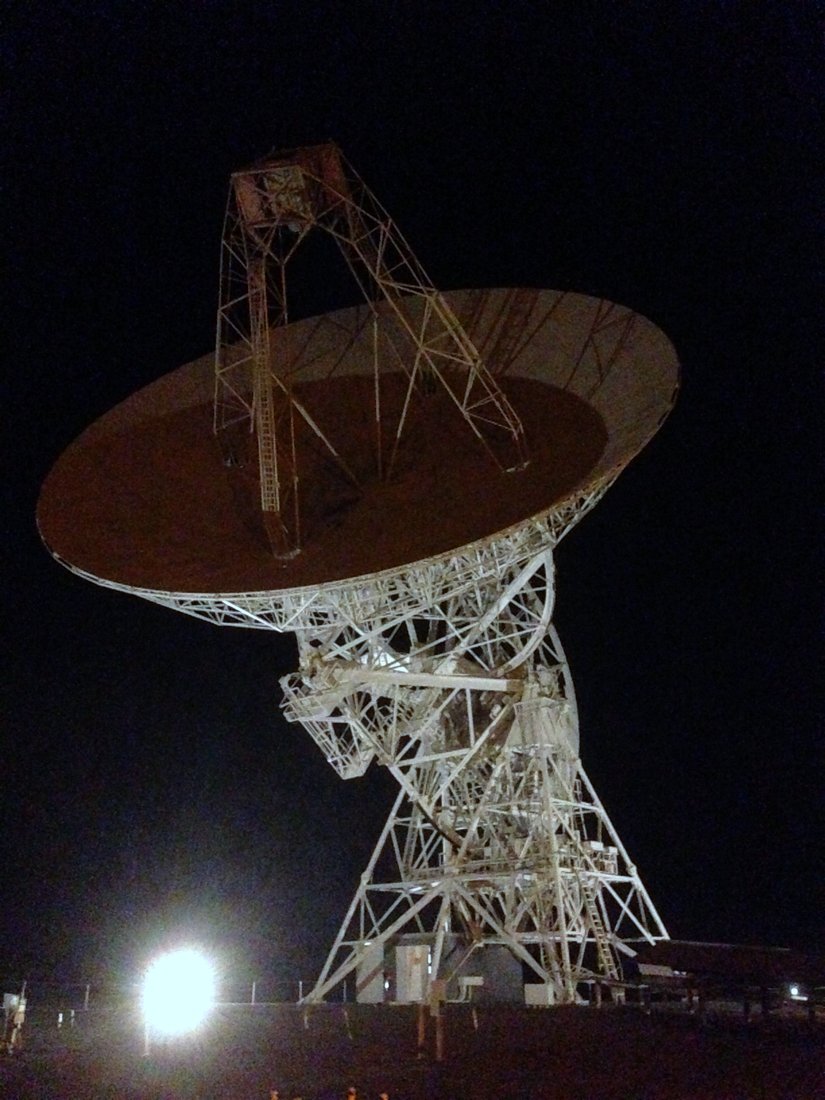
The project is a collaboration between the privately-funded Seti Institute and the Very Large Array observatory in New Mexico, one of the world’s most powerful radio observatories. Gaining real-time access to all the data gathered by VLA is considered a major coup for scientists hunting extraterrestrial lifeforms and an indication that the field has “gone mainstream”.

Normal astronomy operations will continue at the VLA, which was featured in the 1997 film Contact, but under the new arrangement all data will be duplicated and fed through a dedicated supercomputer that will search for beeps, squawks or other signatures of distant technology.

“The VLA is being used for an all-sky survey and we kind of go along for the ride,” said Andrew Siemion, director of the Berkeley Seti centre. “It allows us to in parallel conduct a Seti survey.

“Determining whether we are alone in the universe as technologically capable life is among the most compelling questions in science, and [our] telescopes can play a major role in answering it,” said Tony Beasley, director of The National Radio Astronomy Observatory, which runs the VLA.[]


Do you enjoy the SWLing Post?

Please consider supporting us via Patreon or our Coffee Fund!

Your support makes articles like this one possible. Thank you!

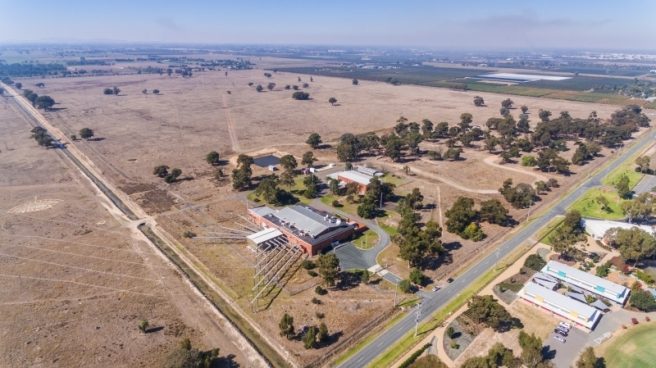
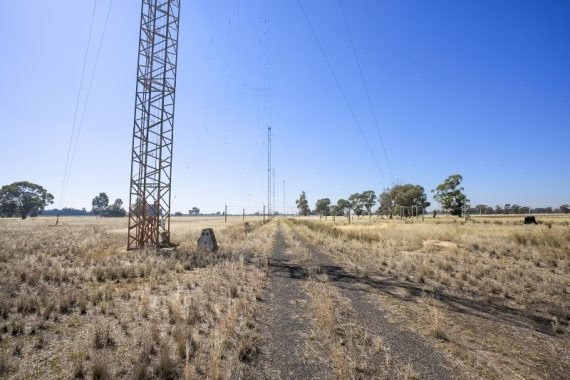
VI3RA: Last RF emanations from RA Shepparton before demolition (March 14-15, 2020)

Many thanks to SWLing Post contributor, Nigel Holmes, who writes:

Those of you who hold amateur (VK) licenses – form an orderly queue to book a spot.

Those of you who listen – make space on your shack wall for the last QSL card from Shepparton IHFTS.

A special callsign has been issued by ACMA for the event: VI3RA (Victor India…)

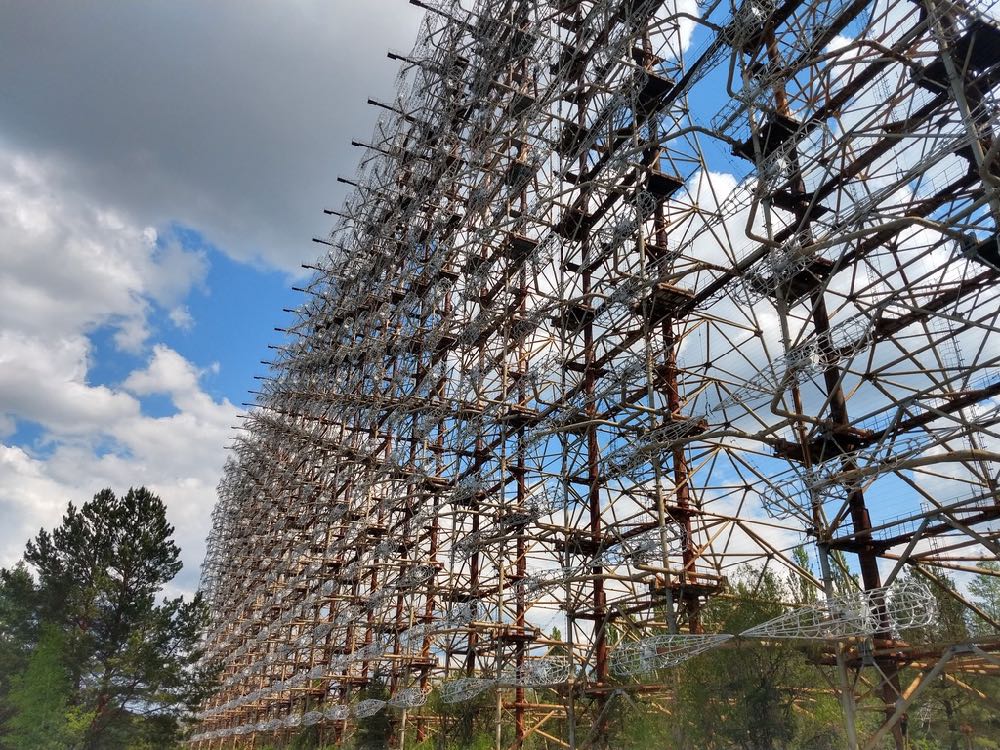
Amongst other experimental transmissions, will be an attempt will to reflect radio signals from the Moon using the high gain HF aerials at Shepparton. Frequencies in the 18 & 21 MHz amateur bands would be employed. This would emulate the ground-breaking work done by CSIR Radiophysics Laboratory in the 1940s from the Shepparton station which initiated Australia’s entry into radio astronomy.

Click here for more information about VI3RA at QRZ.com and SADARC.org.

Note that the event with take place March 14-15, 2020 (GMT +11:00).

Thank you for the tip, Nigel!  I’ll certainly attempt to put Shepparton in the logs! If I lived in anywhere near Shepparton, I’d make the pilgrimage to be in that long line of people hoping to light up one of those massive antennas!

I hope if any SWLing Post readers attend the event or operate as VI3RA, they’ll perhaps snap a few photos to share here with the community!