Category Archives: Ham Radio

Latest issue of Hackspace magazine features Ham Radio

(Source: Southgate ARC)

Issue 27 of Hackspace magazine features the Scottish Consulate Amateur Radio Club MS0SCZ, the free magazine PDF is now available for download

The Scottish Consulate ARC is part of the 57North Hacklab in Aberdeen, the article by Tom Jones MM6IRQ is on pages 28-31.

Also featured in the magazine:
• Interview with Mitch Altman WB9IQQ
• Long-range radio with Raspberry Pi by PJ Evans of the Milton Keynes Raspberry Jam.

Download the Free magazine PDF at
https://hackspace.raspberrypi.org/issues/27/pdf

Back issues can be downloaded from
https://hackspace.raspberrypi.org/issues/

Scottish Consulate
https://consulate.scot/
https://twitter.com/scotconsulate

Click here to read this article at the Southgate ARC.

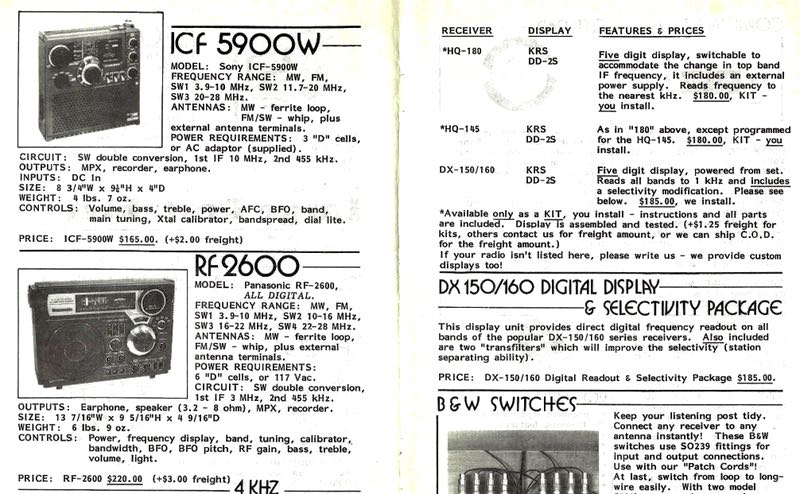
Radio West catalog at American Radio History

Many thanks to SWLing Post contributor, Zack Schindler, who writes:

Oh this brings back memories. I bought a lot of stuff from Radio West. Here is their catalog from 1983. Had them install a Collins mechanical filter in my Kenwood R-1000.

Click here to download Radio West Catalog 5 (PDF).

Thanks for sharing this bit of retail nostalgia, Zack!  This download is one of thousands available at the excellent American Radio History website.

Any other patrons of Radio West?  Please comment!

Robert’s Series: “The Care and Feeding of Electronic Equipment”

SWLing Post contributor, Robert Gulley (K4PKM–formerly AK3Q) recently posted two excellent articles on his website about the “care and feeding” of electronic equipment.  Here’s the description from Robert’s blog, All Things Radio:

Just a quick note to let you know there are two new articles published in the Reviews and How-Tos section dealing with simple checks and preventative care of electronic equipment. Over the years I have learned some important lessons for keeping computers and radios working properly, with the goal of having as little downtime as possible. The two articles were originally published in The Spectrum Monitor June and August issues, respectively. (If you have not subscribed to this magazine, you really should check it out – it is in my opinion the best radio magazine on the market today, and not just because they occasionally publish my articles!)

Here’s a quick link to the review page:

Reviews and How-Tos

And while you are there, check out some of the other reviews I have posted! Cheers, Robert K4PKM

Your articles are always amazing, Robert.  Thanks for sharing!

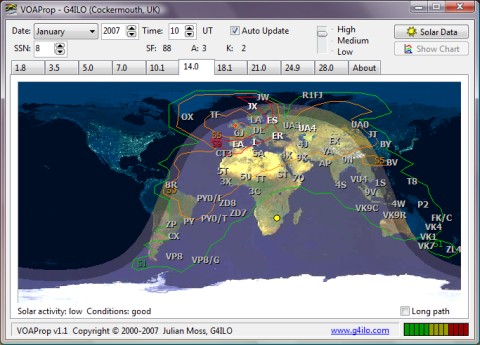
Ham CAP and VOA Prop: Fixing SSN look-up files

VOA Prop

Many thanks to SWLing Post contributor, Paul Evans, who notes:

Users of these two propagation prediction programs will find that they don’t work beyond Dec 2019 because the SSN look-up files didn’t go any further.

I noticed this 2-3 years ago and added to the end of the files required. I entered guesses for solar activity values, but with auto mode turned on they will fetch current values. At least this will get you started again. Or my guesses might be right!! 🙂

For Ham CAP use: http://w4.vp9kf.com/SSN.dat

For VOAProp use: http://w4.vp9kf.com/ssndata.txt

Download them and swap them into the directory where the application is located.

Thanks or the help, Paul!

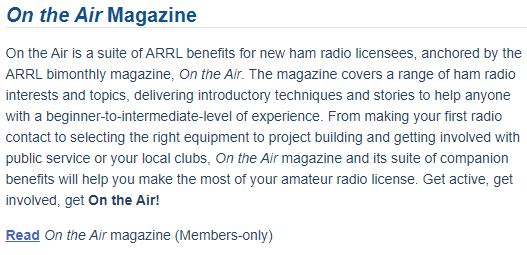
On The Air: ARRL’s excellent magazine for newcomers…only available behind their paywall

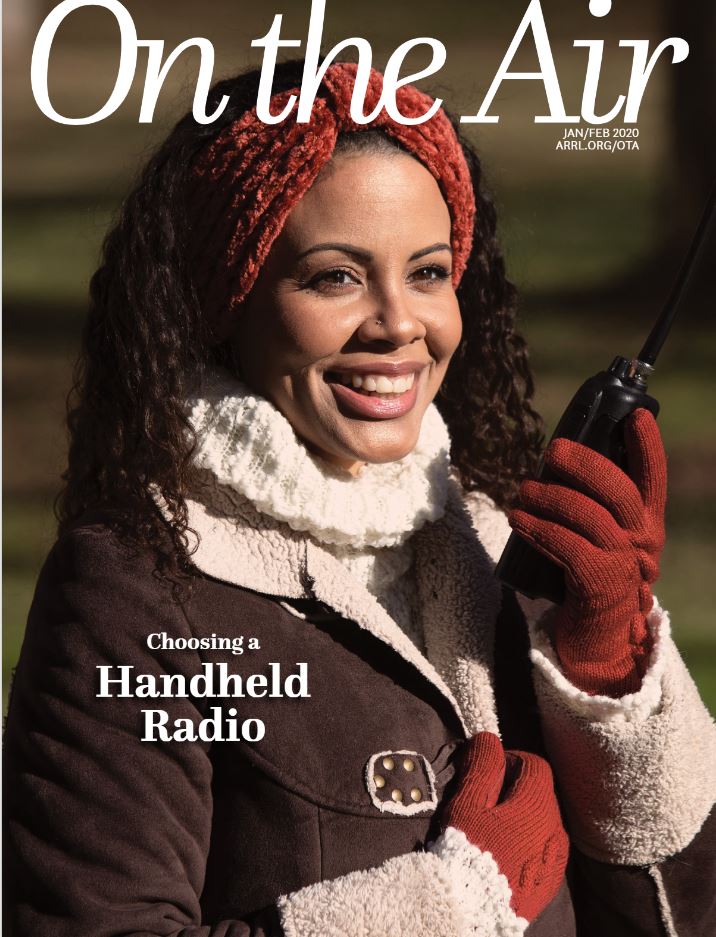
Cover of the new “On The Air” e-magazine from the ARRL

Today, the ARRL released their new electronic magazine for ham radio newcomers: On The Air.

The ARRL describes On The Air‘s mission:

“On the Air magazine is the newest ARRL member benefit to help new licensees and beginner-to-intermediate radio communicators navigate the world of amateur radio. Delivered six times a year, the magazine will present articles, how-to’s, and tips for selecting equipment, building projects, getting involved in emergency communication as well as spotlighting the experiences of people using radio to serve their communities, and those using it for enjoyment.”

I checked out On The Air and was quite pleased with the scope of the magazine. The first issue covers topics such as: understanding the ionosphere, choosing your first radio, building simple antennas, and much more. I love the fact that the articles are written with newcomers in mind, too; less technical jargon and more explanations.

I mentioned in a previous post that I’ve been teaching a ham radio class to a group of high school students. Most of the students have now acquired their Technician licenses, and we’re even plotting a General class course for the fall.

Last month, I shared some copies of QST (the ARRL monthly member magazine) with my students. While they enjoyed looking through the pages of QST, many told me they simply didn’t understand the articles yet…There’s just not a lot inside a QST issue to grab the attention of a fifteen or sixteen year old who’s just gotten her ticket. Understandable.

Then, I learned about On The Air from a friend with the ARRL.  I was so glad to hear that the League was finally making a bi-monthly magazine aimed squarely at newcomers! I was also pleased it was an e-publication, because it will be that much easier to share with my class and propagate to prospective students.

But today, I discovered, to my dismay, that other than the premier issue, On The Air is for ARRL members only. Here’s a screen grab from the website:

But…”for members only”––?

Alas, in limiting access, the ARRL has essentially insured that most of their target audience won’t ever have the opportunity to read On The Air, and thus they’ve crippled the best ARRL recruitment tool I’ve ever seen. 

What a shame.

I’ve contacted my ARRL representative and asked that they reconsider the decision to hide this brilliant magazine behind a membership paywall. I’m pretty sure that ad revenue and membership fees could readily cover the cost of publishing this electronic edition. After all, On The Air could lead to a lot more ARRL members! And, indeed, I hope it will.

If you feel as I do, please contact your ARRL Section manager. It may be that those making the decisions are, in this case, a little out of touch with the future of amateur radio.

Update – To be clear about this post: I’m not implying anything bad about the ARRL here, I just think it’s a lost opportunity if they keep future editions of On The Air behind the member pay wall. I imagine that ad revenue alone could more than support this niche publication if they simply release it as a free PDF. The real benefit, though, could be an increase in ARRL membership as On The Air readers get a taste of what the League could offer! In other words: this is an opportunity!

What do you think? Should On The Air be free to anyone interested in amateur radio, or for members only? Please comment!

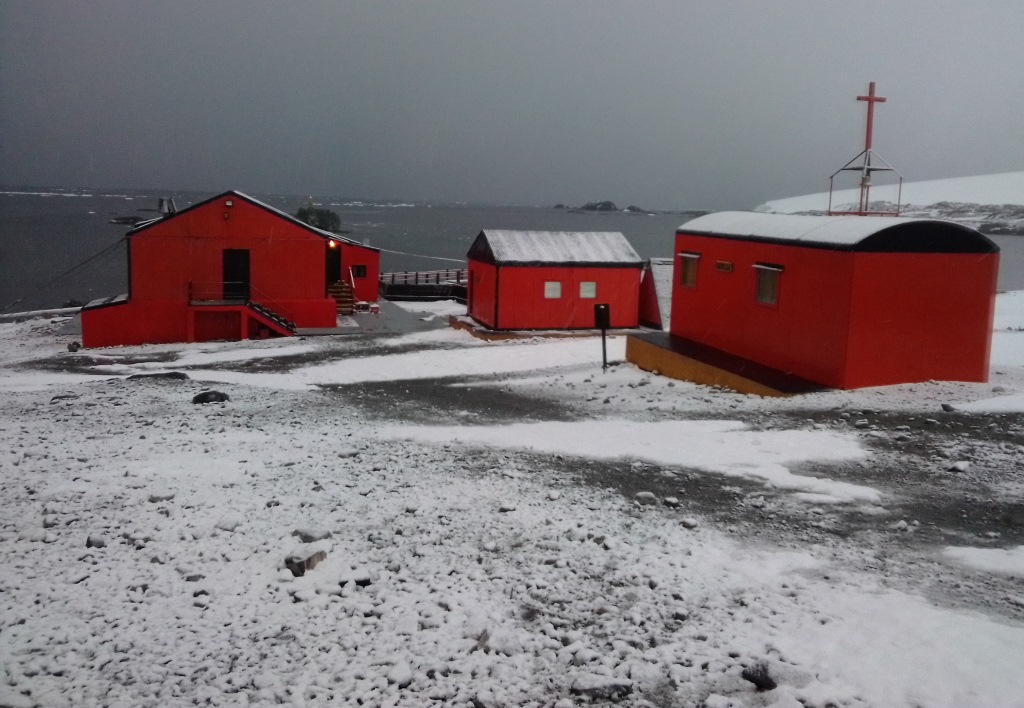
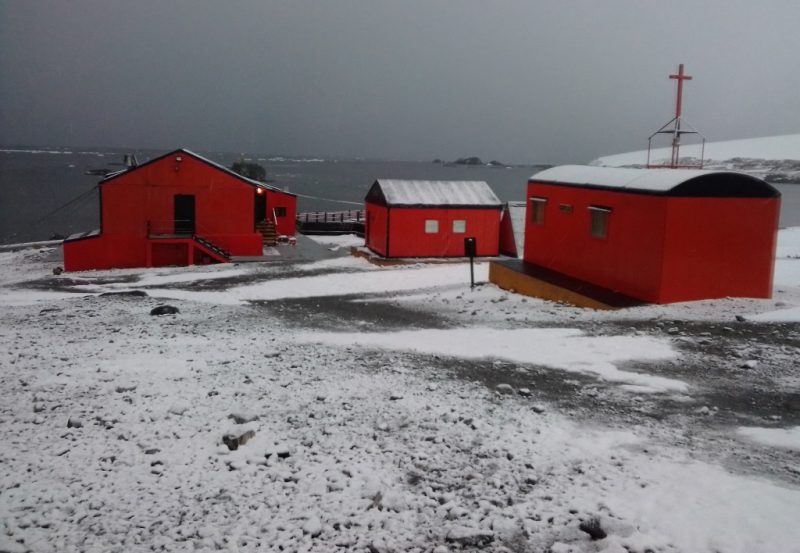
Arcángel San Gabriel (LRA36) special broadcasts and LU1ZV activation

Source: Base Esperanza – Antártida

Many thanks to SWLing Post contributor, Tracy Wood, who writes:

I listened to LRA36 streaming this past Friday with their special show, including callouts to other Argentine scientific stations via satphone and lots of greetings by ham radio enthusiasts, both recorded and via live call-in.

Source: Base Esperanza – Antártida

…At the conclusion the announcer said they would be back this Monday at 1800 Buenos Aires time or 2100 UTC.

Details about last Friday’s broadcast:

http://www.radionacional.com.ar/continuan-las-emisiones-especiales-en-lra-36-arcangel-san-gabriel/

Source: Base Esperanza – Antártida

The audio stream is only up when LRA36 is on the air apparently but is at the Radio Nacional website under the audio streams listing:”

http://vmf.edge-apps.net/embed/live.php?streamname=sc_rad32-100131&autoplay=true

Thank you so much for sharing this, Tracy! It’s incredibly difficult for me to snag LRA36 broadcasts off the air, so it’ll be nice to have this stream link as well.

I also recently received a note about LU1ZV: the amateur radio station at the Esperanza Antarctic Base.  What follows is a rough English translation of the press release. Click here to download the original press release in Spanish (MS Word Doc).

Source: Base Esperanza – Antártida

THE HAM RADIO ACTIVATION OF ESPERANZA ANTARCTIC BASE

Started on December 8, the activation of the LU1ZV amateur radio station of the Antarctic Base Esperanza, after years of being inactive.

The radio activity of LU1ZV has as primary objective to remember the 40th anniversary of the beginning of the transmission of the radio station LRA 36 “Arcángel San Gabriel” of the Esperanza Base, the first shortwave station in AM across Antarctica, which began broadcasting on October 20,1979. In addition, this activity seeks to maintain the continuity of emission of stations of radio amateurs from Antarctica.

The LU1ZV activation has registered more than 900 contacts with amateur radio stations
nationally and abroad, and in addition to covering all regions of the country, they have already
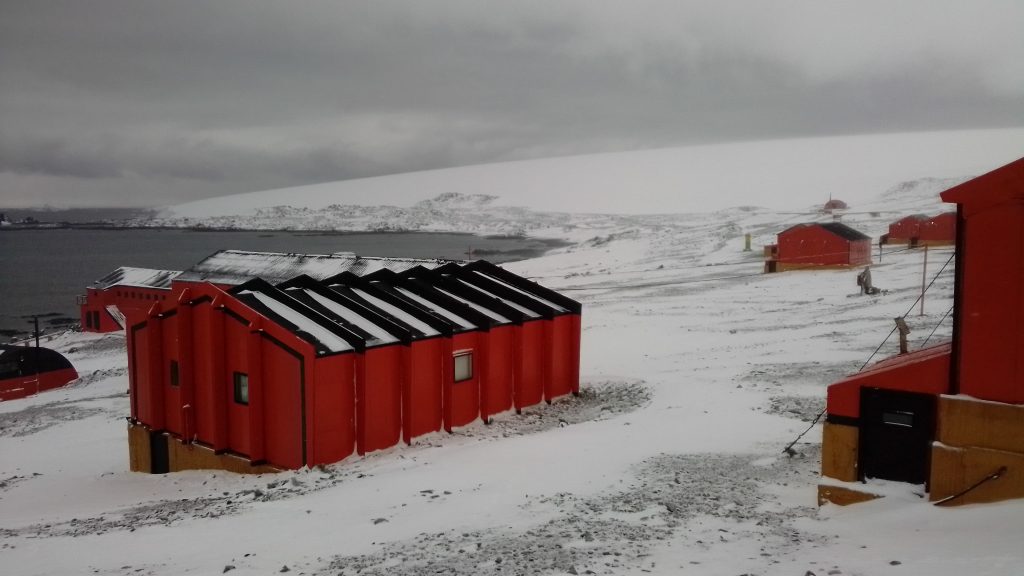
Source: Base Esperanza – Antártida

contacted twenty-two Argentine provinces.

Among the most relevant data that LU1ZV activity exhibits so far are the distant radio contacts  (despite the low emission power) as in the case of Japan, Canada, Latvia, Ukraine and Finland among others. They have contacted most South American countries, several of Central American countries and all from North America.

Another outstanding contact was made with VP8HAL, the Halley VI scientific station of the British Antarctic Survey (BAS), located in the Brunt Ice Barrier, about 1,700 km SE of Hope.

The operation of LU1ZV is carried out from the study of LRA 36 and the rhombic antenna of the station, while the station isn’t operating. The amateur radio station activity adapts to the general schedule of the base and of LRA36, so activation times are reduced to a few hours during the evening – night.

The Head of Hope Base, Lieutenant Colonel Norman Walter Nahueltripay was present during some contacts and received greetings from radio correspondents.

This special activation also includes the project “Uniendo Voces” of the National University of Quilmes (UNQ) of the province of Buenos Aires, an initiative that included areas of interest to amateur radio and Antarctic activations, and which was presented to the
Antarctic Joint Command (COCOANTAR).

“Uniendo Voces” has participated in these radio activations since 2013 (in Marambio Base and Matienzo) to which the historical emission from Base Esperanza is now added, within the framework of a special initiative called “DX Radial Expedition Uniting Voices”.

The amateur Radio Claudio García (LU1VC) member of the LRA 57 Radio Nacional de El
Bolsón (province of Chubut) and Juan C. Benavente (LU8DBS) of COCOANTAR and UNQ, perform the activation for which they had to move equipment to that Antarctic base.
The radio activation of Esperanza has the support and collaboration of Adrián Korol,
director of the Argentine Broadcasting Abroad (RAE) who expressed his emotion and
satisfaction for “this joint achievement with the Antarctic Command and the National University of Quilmes. “

Antarctic bases are licensed by amateur radio stations, and like all the activity, is regulated by the National Communications Agency (ENACOM). These radio activations have a “high symbolic and real value”, as Korol says, and they contribute, in addition to remembering ephemeris, to the promotion of sovereignty in the Antarctic region from the radio spectrum.

Likewise, the amateur radio activity contributes to the study of communications – such as
radio wave propagation conditions- and keeps an alternative communication service active and effective.

Many Argentine radio amateurs from different parts of the country are attentive to the
calls from LU1ZV and collaborate with the initiative.”

Along with the photos and LU1ZV press release above, I also received press releases from two special broadcasts that happened earlier. Click here and here to download the MS Word documents in Spanish.

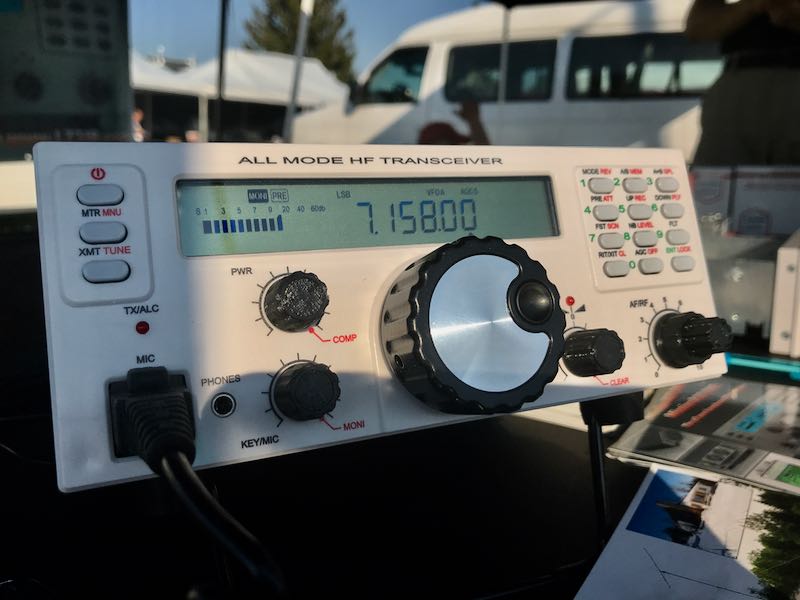
Popular KiwiSDR portal now requires ham radio license: alternatives

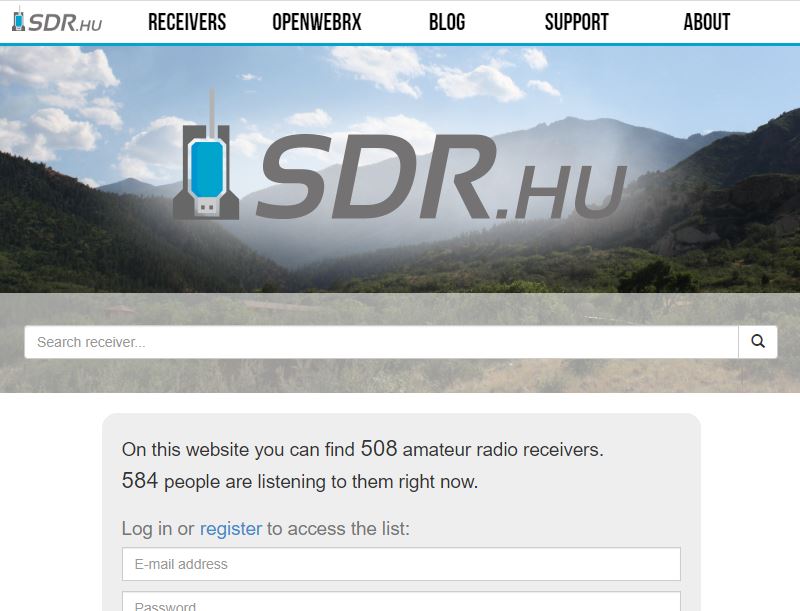
Many thanks to SWLing Post contributor, Dan Robinson, who discovered via Gilles Letourneau’s YouTube Channel that the popular SDR.hu KiwiSDR portal now requires registration and a ham radio callsign.

I almost didn’t believe this at first, but then checked on the SDR.hu FAQ page to find this message:

What is a callsign and how do I get one?

An amateur radio callsign is issued by the appropriate authority in your country (e.g. FCC in the US). The amateur radio callsign allows you to both transmit and receive with amateur radio equipment, and you need to pass an exam to get one. (If you are not familiar with this, please search Google about amateur radio.)

Can I access the receiver list if I do not have a callsign?

No.

Why do I need a callsign to access the receiver list?

The purpose of the site is to serve amateur radio. I decided to restrict access to the receiver list in order to protect the site and its purpose in the long term.

To be clear: this doesn’t imply you need a callsign to access the KiwiSDR network. This only applies to the SDR.hu KiwiSDR portal operated by András Retzler. I’m guessing he’s doing this to regulate his site’s resources. (See UPDATE below.)

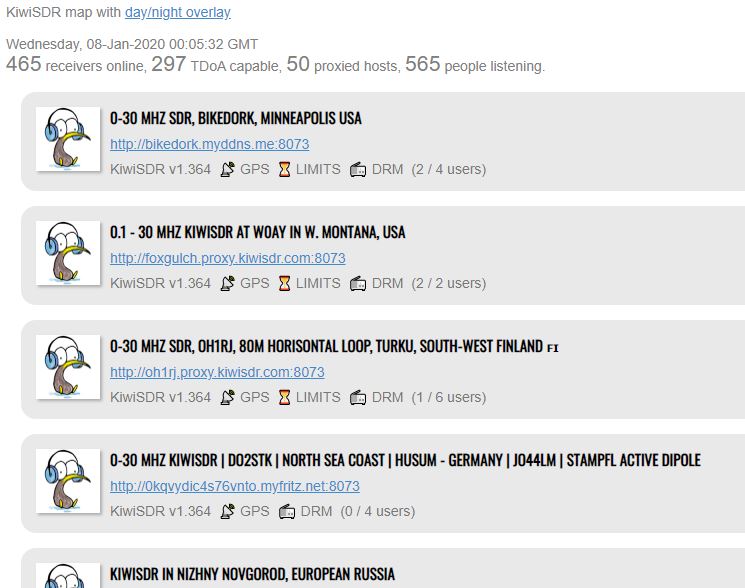
Alternative KiwiSDR Portals

kiwisdr.com/public/ provides a list of all active KiwiSDRs.

As Dan points out, there are a number of other KiwiSDR portals that do not require registration or a call sign.

Here are a few:

If you prefer another KiwiSDR portal, please comment with a link.  I’ll try to update this post with any new additions.

UPDATE – Many thanks to Cristiano Amaral who shares this update sent by Andras to all of the OpenWebRX contributors:

Hello,

You are receiving this e-mail because you were listing a public OpenWebRX receiver on SDR.hu in the last 3 months.

I wanted to let you know that the OpenWebRX project is discontinued [1], which means that it will not receive any updates (including security fixes) from me. I hope that you will be able to run your receivers without problems in the next years, and hopefully the community will be able to help each other even if I’m not working on the project anymore.

It is also important to know that starting from next year, Python 2, a dependency of OpenWebRX is not maintained either, at least officially by the Python team [2], as it is deprecated in favour of Python 3.

If you want to keep running your public receivers securely, you should be looking for a Python 2 fork that is still patched against the latest security vulnerabilities. There is a possibility that Anaconda [3] or Red Hat [4] will keep patching Python 2.

As a note, you can also find unofficial Python 3 ports of OpenWebRX online, though I’m not involved with those either.

Thank you for participating in the project, and I wish you a Happy New Year!

VY 73!

Andras, HA7ILM

sdr.hu