Category Archives: News

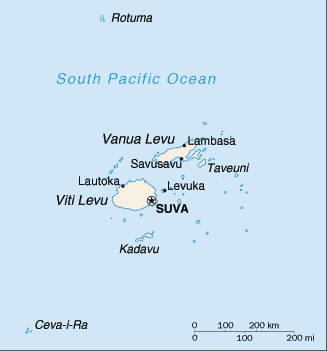
The Fiji Freedom and Democracy Movement carries anti-government message via shortwave radio

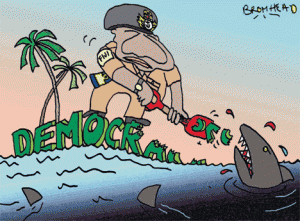
(Image: New Zealand Herald)

(Source: Radio Australia)

The Fiji Freedom and Democracy Movement in Australia has leased half an hour a week on the World Radio Network, a shortwave broadcaster, to get its anti-government message across.

Tui Savu, from the Australia-based Fiji Freedom and Democracy Movement told Pacific Beat that they have received positive feedback about the new program’s impact.

“We have had two test broadcasts and we have had our contacts report from all over Fiji. The contacts are coming back that it is being received loud and clear,” he said.

“Fijians, the way they have been raised, is that whatever comes through the media, they take it as gospel. So we are wanting to show an alternative, the other side.”

“The reason why we went for the radio is because the internet is only limited. This is a heart and mind campaign, directed at Fijians staying in the villages and rural areas. These are the people whose only source of information is through the radio.”

At present the program is for just 30 minutes broadcast only in Fijian. But Mr Savo says there are plans to eventually increase the program to one hour and address different groups within Fiji.

“Information is power, and that is why the Government has monopolised the media in Fiji, both the print and the spoken media,” he said.

” They know very well that if people start listening to the truth and to the other versions of what is truly happening in Fiji, then the people will be able to make up their own decisions.”

Clandestine stations often use shortwave radio as a means to broadcast into countries where local radio stations are either government controlled or banned from criticizing the ruling party. Indeed, a few years ago, Radio Australia increased their shortwave offerings in Fiji after being banned from broadcasting within the country.

Tagged: Why Shortwave Radio
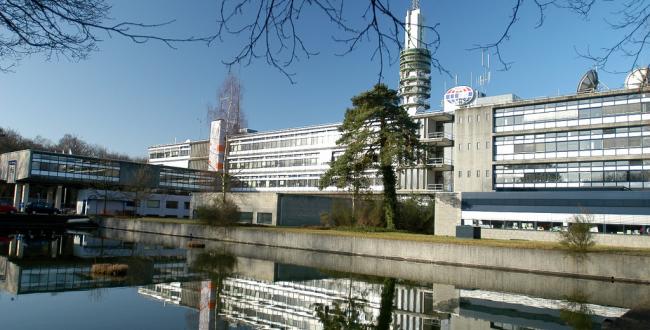
RNW will be closing English service at end of month

Radio Netherlands English service will be closing down on June 29, 2012. There will be a special program on their final day and listeners are invited to share their special memories of the service.  Additional shortwave frequencies are planned for this day and we will post them once available from RNW.

RNW headquarters in Hilversum, Netherlands (photo coutesty: RNW)

(Source: RNW)

Dear Readers,

We’re very sorry to inform you that the English service of Radio Netherlands Worldwide will be closing at the end of this month. As a result, this website will see some changes.

From 1 July 2012 there will no longer be a daily review of the Dutch papers. Our coverage of Dutch news stories will also cease. And, since RNW’s English webstream will end on 29 June, there will be no moreListening Guide.

However, we will continue to provide articles online relating to our new brief: promoting free speech in areas where people are not free to gather information or to form and express independent opinions.

Latest

You can check out the updates to this story lower on the page

Why?
The measures are a result of steep budget cuts imposed by the Dutch government and a concomitant change in focus. Providing the world with a realistic image of the Netherlands, as we have proudly done since 1947, will no longer be one of our statutory duties.

The last radio show
On 29 June we will broadcast a radio show looking back at the past decades of Radio Netherlands Worldwide. Have you got a memory to share? Please let us know, at the usual address, [email protected], or post a comment below this story, as many have already done. We’d love to hear from you.

Updates
Please keep checking this site for updates on our final day. There may be a surprise or two…

And, perhaps most importantly, thank you – for listening, reading, and riding this bumpy road with us over the years and through the recent, difficult times.

The RNW English team

Recording Radio History: The Queen’s Diamond Jubilee via BBC World Service

Diamond Jubilee at Buckingham Palace (photo: BBC)

Ten years ago, my wife–then fiancée–and I lived in the UK, and were fortunate enough to attend The Queen’s Golden Jubilee celebration on the vast lawn at Buckingham Palace. It was without doubt the largest party I’ve ever attended, packed to the gills with the British public–a thoroughly amazing event, featuring a who’s who of past-and-present British musicians and personalities, encouraging attendees to join them in their bit of fun–and, of course, God save the Queen.

Yesterday, I re-lived the energy of that party as I heard (and recorded) the follow-up event these ten years later–The Queen’s Diamond Jubilee, on the BBC World Service–as heard from remote Ascension Island.

When hearing live events like this on shortwave–especially ones like this that celebrate national heritage–I know I’m listening to history in the making. The crowds applauding and cheering in a live broadcast over shortwave reminds me of a former era when British Expats across the globe relied on the BBC World Service to connect them with ol’ Blighty.
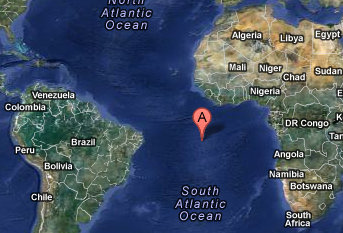

Ascension Island, marked with an "A" (image: Google Maps)

I recorded these broadcasts from my home in the southeastern US, hearing the BBC World Service relay station on the tiny, isolated Ascension Island in the South Atlantic. The broadcast was heard at first on 15,400 kHz, then moved to 9,915 kHz coinciding with their normal broadcast schedule. The broadcast, while completely intelligible, is weak in the beginning, but gains considerable strength by the end. There are summer static crashes heard as storms moved through the southeast US. I divided the broadcast into two parts, coinciding with my shift from one frequency to the other.

I also included a BBC WS news broadcast in Part 2 which followed the end of the show.

Either use the embedded Archive.org audio player below, or simply click here to download the mp3 files for Part 1 and Part 2.

I used the WinRadio Excalibur to record both of these segments. Its synchronous detection helped deal with fading (QSB) present at the beginning of the recording.

Once again, history is made…and archived on shortwave radio.  Enjoy!

Domo I Viti: New Fiji clandestine station

I just received this message from Glenn Hauser via the Hard-Core DX group:

** FIJI [non]. As first reported exclusively on WORLD OF RADIO 1617 and DXLD 12-20:

HOT NEWS: A station for Fiji named Domo I Viti should start on 4 June at 0830-0900 on 11565 via WRN from Palau. Not sure what its agenda is, clandestine or at least political? Seems there are at least two programs/stations by same name, in Auckland and Sydney by expatriates. Related to either of them, originating where? E.g.:
http://www.aucklandfiji.org.nz/community_features_view.asp?newsid=408
(Glenn Hauser, OK, May 9, WORLD OF RADIO 1617, DX LISTENING DIGEST)

WRN confirms that this new clandestine starts June 4 at 0830-0900 on 11565 via PALAU, and will be weekly on Mondays only. It`s sponsored by the Fiji Freedom and Democracy Movement, based in Adelaide, South Australia.

If anyone can hear it, please note how much, if any, is in English, any contact info, and if possible record an ID. I haven`t found any Adelaide office, altho searching on ABC News stories gets some hits which aren`t very productive.

Note that HFCC has WHRI rather than T8WH registered on 11565 at 08-09. WHR schedules show Angel 4, the most likely transmitter, on 17650 at that time, and Angel 3 on 9930. 11565 was probably just a place-holder in HFCC. Searching WHR program schedules is fruitless (Glenn Hauser, June 3, DX LISTENING DIGEST)

Click here to check out Glenn Hauser’s DX program, World of Radio.

Note that we’ve covered Fiji in the past as their ruling party routinely blocks free press. Click here to read past articles referencing Fiji.

RCI Action: Last month of RCI broadcasts, unless…

(Source: RCI Action)

June 24, 2012, will be the last day of Radio Canada International’s radio programming unless we can convince Canada’s government that our national public radio and television broadcaster CBC/Radio-Canada went too far when it cut our budget by 80% and decided we would no longer broadcast on shortwave or satellite, and be left with only a web presence on the Internet .

This decision to stop radio broadcasting fails to recognize that most people in the world do not have easy access to the Internet. It fails to recognize that there is very little access around the globe to contextualized Canadian news, news for those outside Canada. And since RCI’s mandate is to explain Canada to as much of the world as possible, CBC/Radio-Canada is making that harder for us.

That is why we are calling on Canada’s federal government to step in, stop the cut, and protect Radio Canada International’s international mandate.

Here’s where we need your help.

Please contact government (Conservative) Members of Parliament and tell them why access to Canadian news is important to you.

You’ll find the e-mail addresses for the MPs, and some more information on the impact of the cuts, announced April 4, 2012, here: http://rciaction.org/blog/what-you-can-do/

“Boatanchors” and antique wireless at the Dayon Hamvention

I’ve always found the Dayton Hamvention flea market to be a great place to find antique radios, but this year, the selection (along with the weather) seems to be exceptional.

I’ve attached a few photos I took yesterday morning as a gallery below. Simply click on a thumbnail to enlarge.  Enjoy

In Zimbabwe, “if you want to hear the truth…listen to Shortwave Radio Africa…listen to VOA”

This is a brilliant piece on the lack of press freedom in Zimbabwe and the importance of shortwave radio. It was broadcast yesterday on Weekend All Things Considered. Links to the show and audio are below.

(Source: NPR)

In Seke, a rural community 40 miles outside Harare, James Chidakwa and his father eat roasted nuts and cornmeal inside a small brick hut. They’re farmers who rely heavily on maize and chickens to survive. James Chidakwa says that like many, his family refuses to listen to government TV or radio broadcasts.

“They always lie to the people,” he says. “Everything they say is a lie.”

So at 6 p.m. most evenings, they turn on a battery-powered, short-wave radio and tune in to a “pirate radio station.” Chidakwa says Shortwave Radio Africa and Voice of America are their favorites.

“If you want to hear the truth, wait for the end of the day to listen to Shortwave Radio Africa, to listen to VOA,” he says.

The stations, which are based in the U.K. and the U.S., send their signals through radio towers in countries that border Zimbabwe. That means Zimbabwean officials — who claim these broadcasts are illegal — have little recourse. In the past, they’ve confiscated short-wave radios. Chidakwa says that forces some people to listen undercover.

“Some of them, they will take the radios into their bedrooms and, low volume, they listen to the news. But the truth is, there is fear in them,” he says.

But for Chidakwa and his father, it’s a risk they are prepared to take.

The stations, which are based in the U.K. and the U.S., send their signals through radio towers in countries that border Zimbabwe. That means Zimbabwean officials — who claim these broadcasts are illegal — have little recourse. In the past, they’ve confiscated short-wave radios. Chidakwa says that forces some people to listen undercover.

“Some of them, they will take the radios into their bedrooms and, low volume, they listen to the news. But the truth is, there is fear in them,” he says.

But for Chidakwa and his father, it’s a risk they are prepared to take.

You can listen to the full story from Weekend All Things Considered, by clicking here (mp3), or read the transcript on this page.

This is just one more story we’ll file under “Why Shortwave Radio.”

RCI, and others, I wish you were listening. Those in Zimbabwe certainly are.