Many thanks to SWLing Post contributor and noted political cartoonist, Carlos Latuff, who shares the latest entry in his Radiofax scrapbook.
Carlos notes:
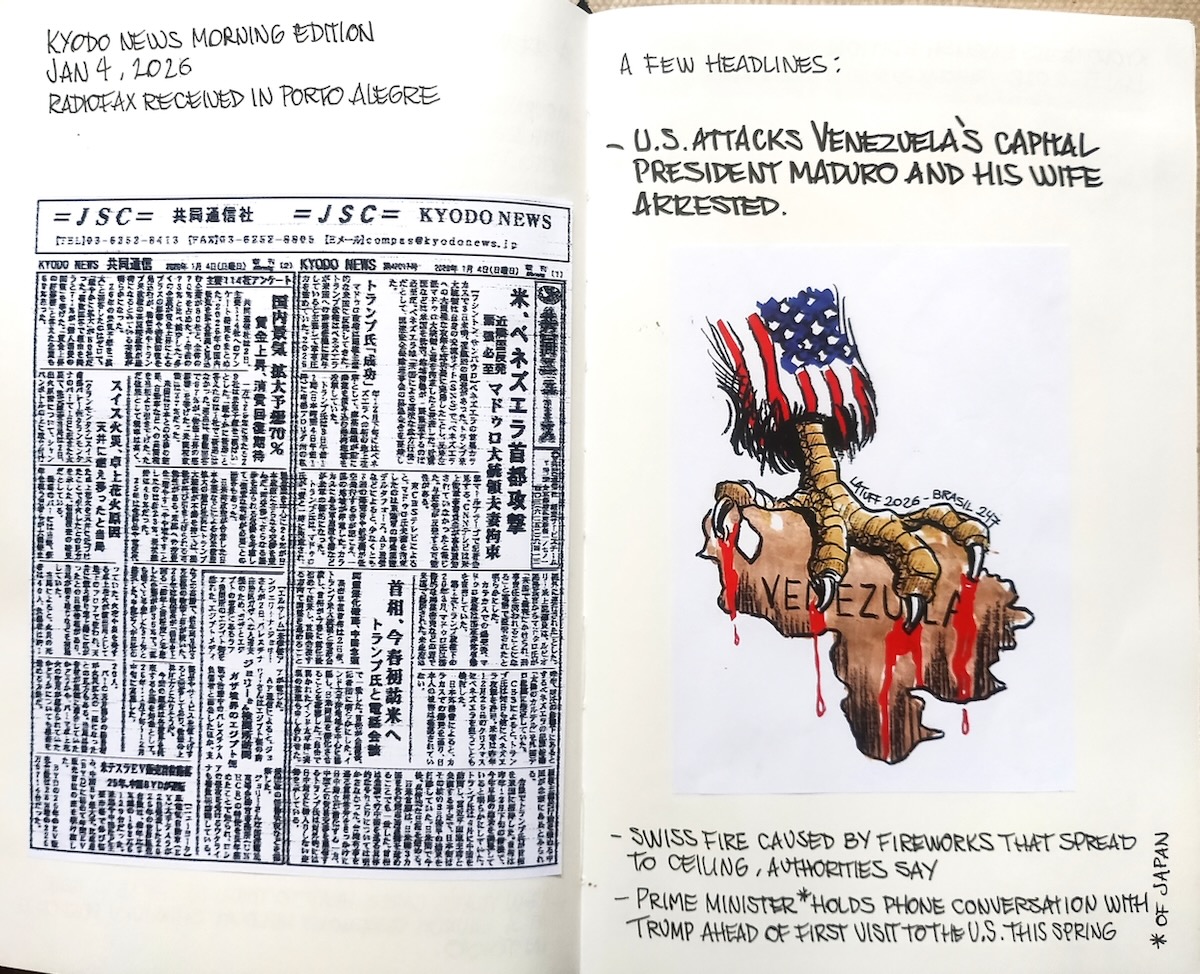
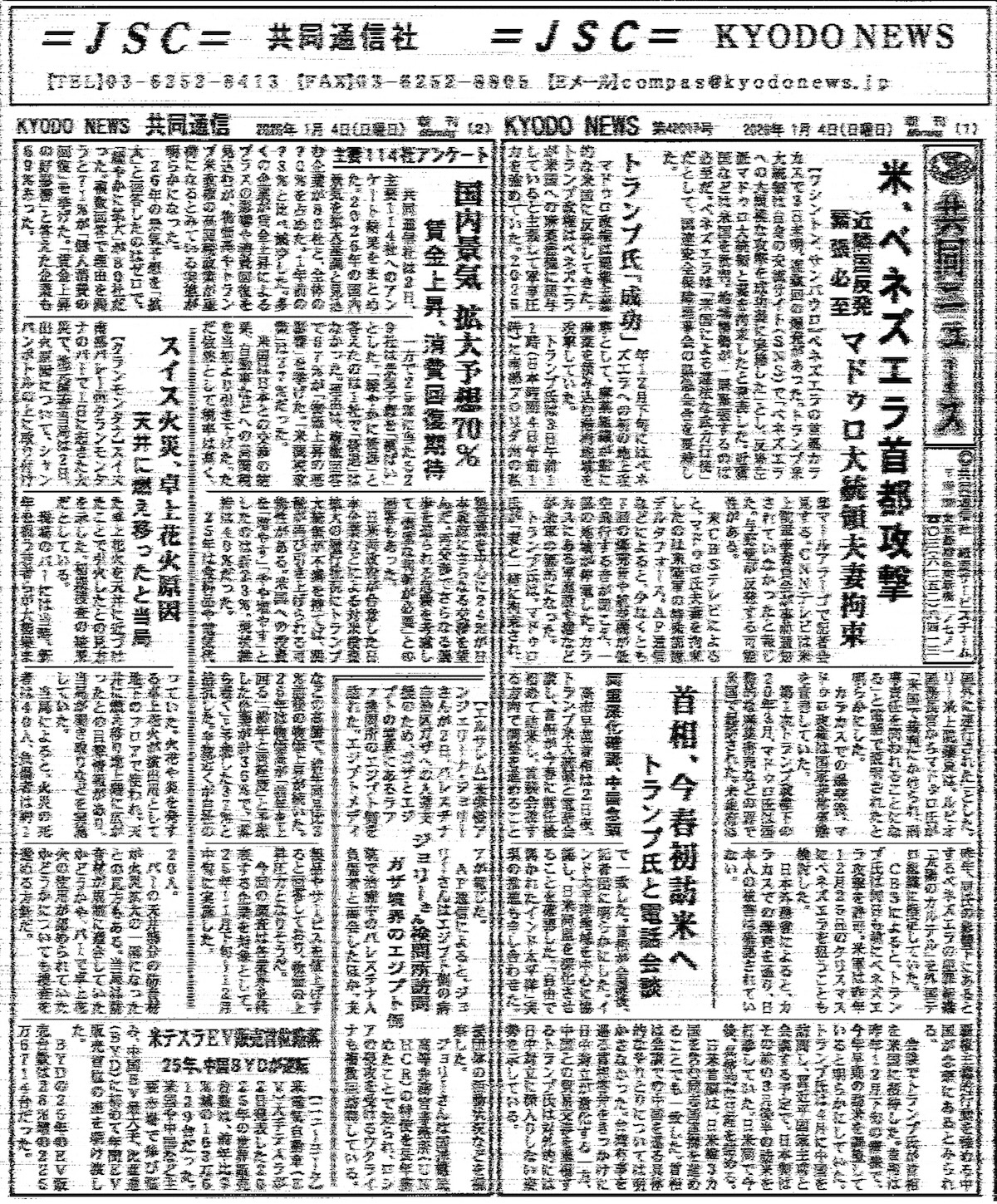
Kyodo News Morning Edition
Jan 4, 2026

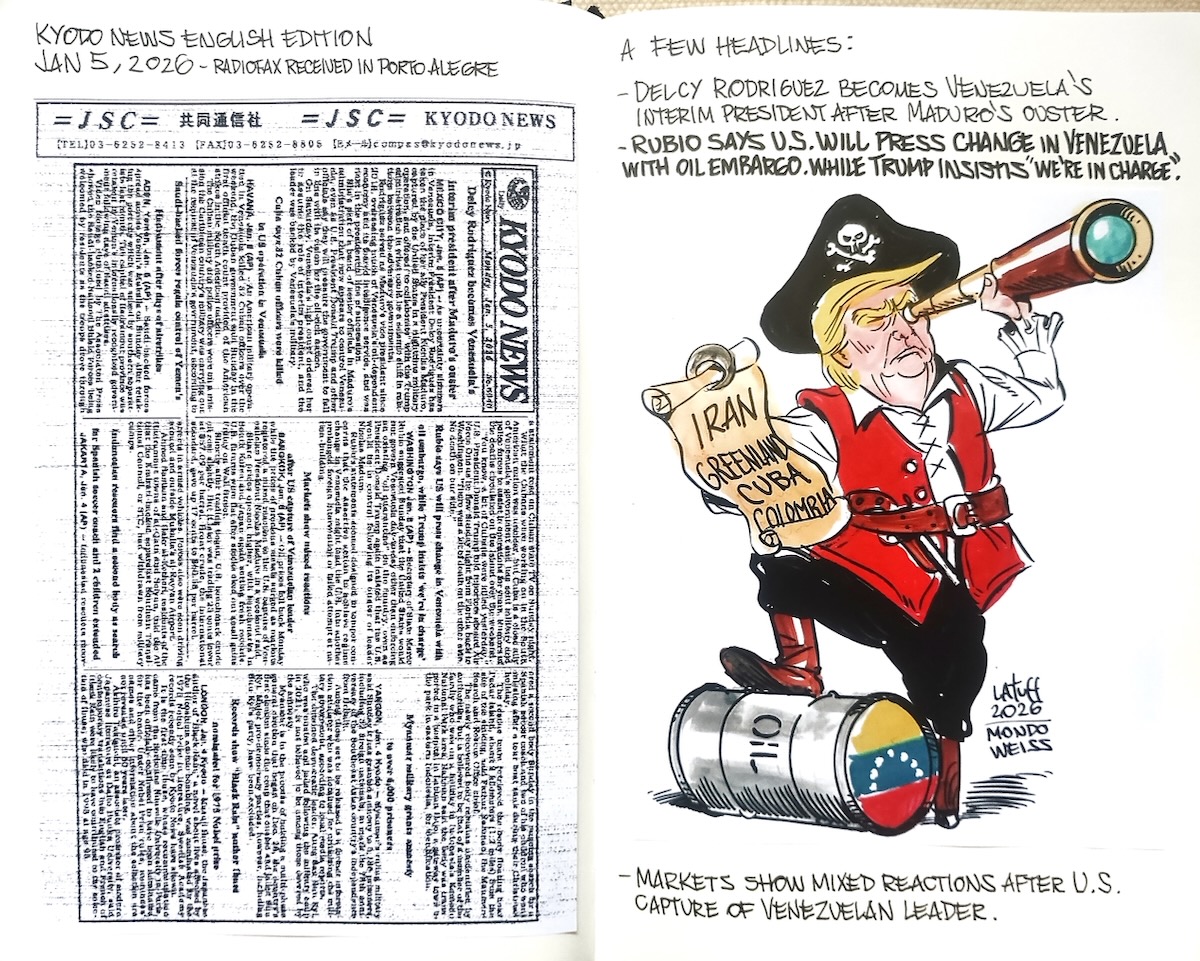
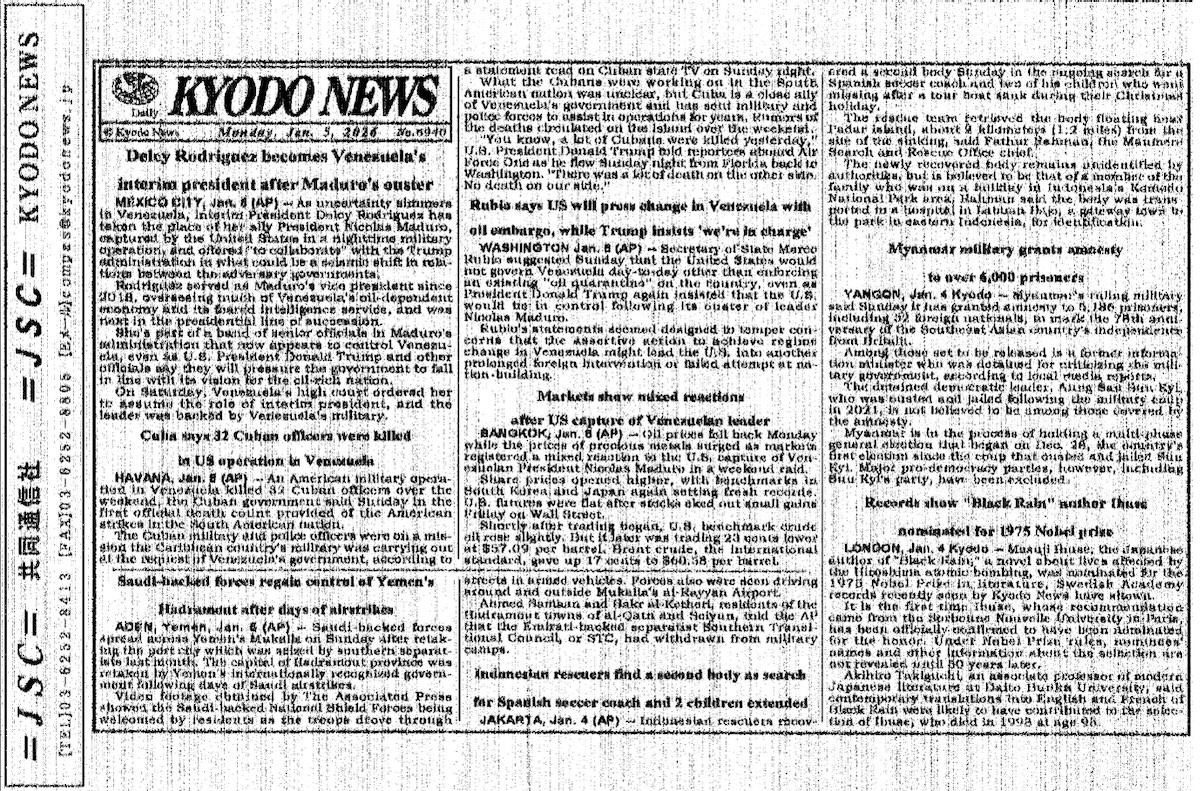
Kyodo News English Edition
Jan 5, 2026


Many thanks to SWLing Post contributor and noted political cartoonist, Carlos Latuff, who shares the latest entry in his Radiofax scrapbook.
Carlos notes:
Kyodo News Morning Edition
Jan 4, 2026
Kyodo News English Edition
Jan 5, 2026
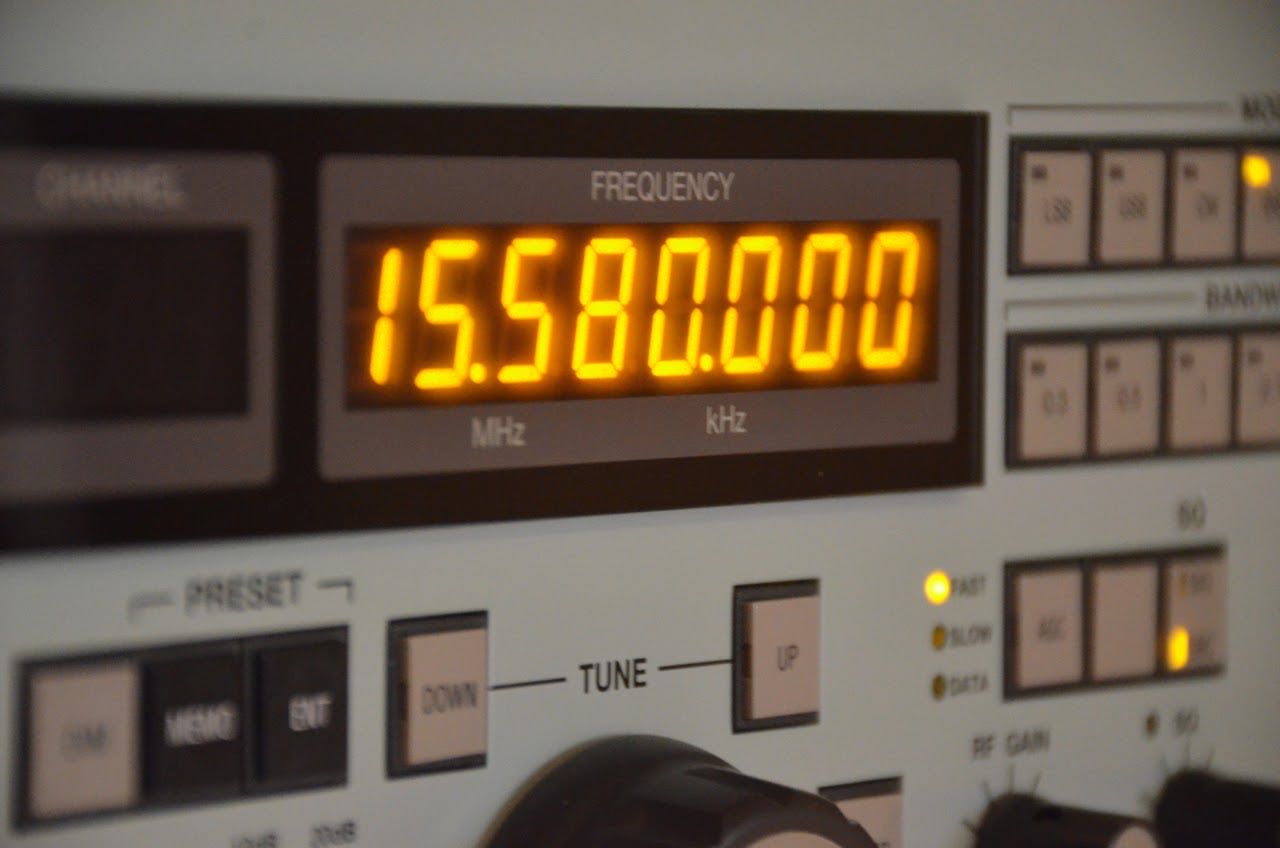 The FCC recently reminded holders of experimental high-frequency (HF) licenses that they must comply with the agency’s station identification rules, ending a period in which some experimental HF operations had been transmitting without identification under waivers. The ruling clarifies that experimental HF stations in the 2–25 MHz band must transmit their assigned callsign at least once every 30 minutes in plain voice or Morse code–with digital modulation disabled during the ID–to help manage interference with incumbent spectrum users, including amateur bands.
Note that Bennett Kobb first reported this on Experimental Radio News.
Many thanks to SWLing Post contributor James Salmon, who shares the following announcement:
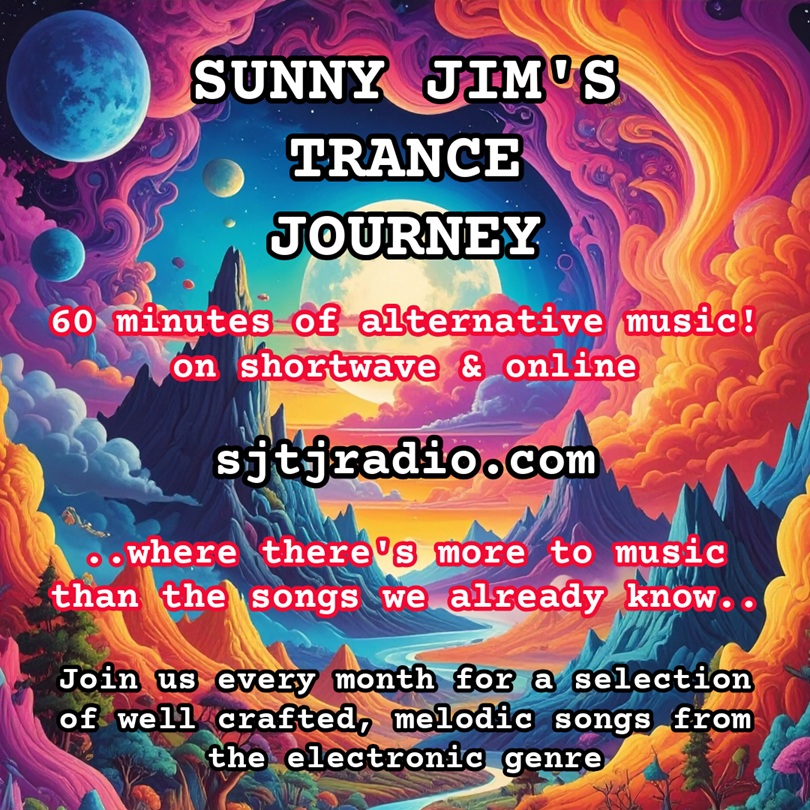
SUNNY JIM’S TRANCE JOURNEY
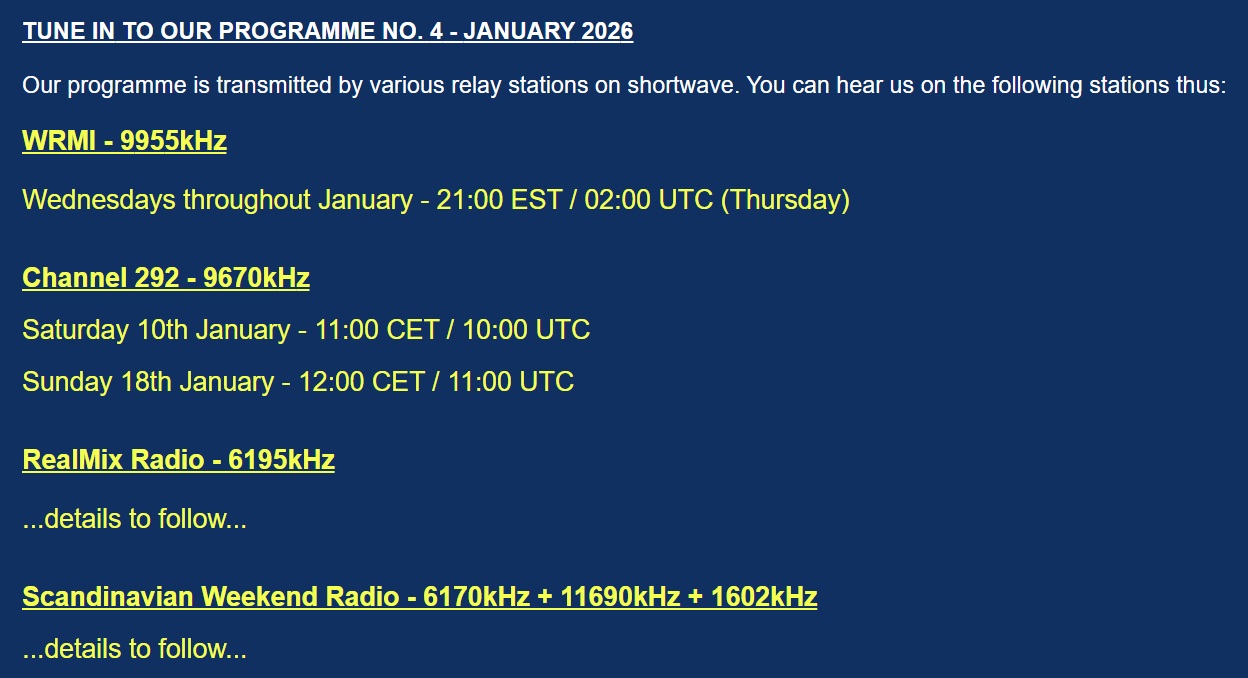
Another month, another programme… The January edition of SJTJ is now available! Tune in on all the normal channels – WRMI / Channel 292 / RealMix Radio / Scandinavian Weekend Radio – or, listen in high quality mp3 (?) by clicking on our Mixcloud player! Another selection of melodic, well crafted songs that you very likely have never heard before!
Find us here – www.sjtjradio.com
As always, eQSLs will be issued for all listening reports.
Oh yes – don’t be put off by the ‘Trance’ in the title – that’s just the name of the show… an explanation at the beginning of the programme…
All the best – Jim
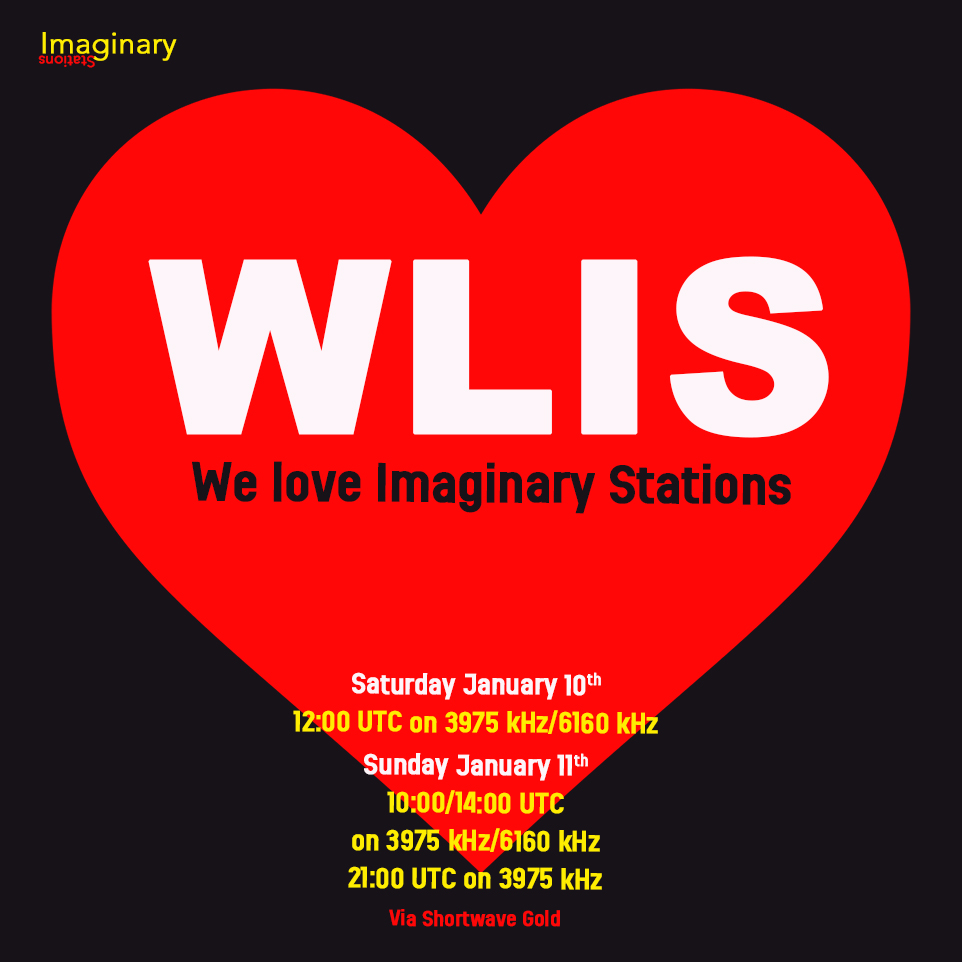
Greetings all SWLing Post community, Imaginary Stations bring you WLIS (We love Imaginary Stations). It’s a homage to imaginary, fictitious or fabricated radio stations that have appeared in films, books and music. Remember Jimi Hendrix’s EXP, Wolfman Jack on XERB, Harry Chapin’s WOLD, the many shows on GTA and others?
The first show is via shortwaveradio.de on Saturday 10th January 2026 at 1200 hrs UTC and then again on Sunday 11th January 2026 at 1000/1400 hrs UTC on 3975 kHz and 6160 kHz and (the new time of) 2100 UTC on 3975 kHz.
Use your shortwave radio or an online SDR to tune into those radio stations that may or may not exist. If you love (fictional or non-fictional) radio, you’ll love our show!
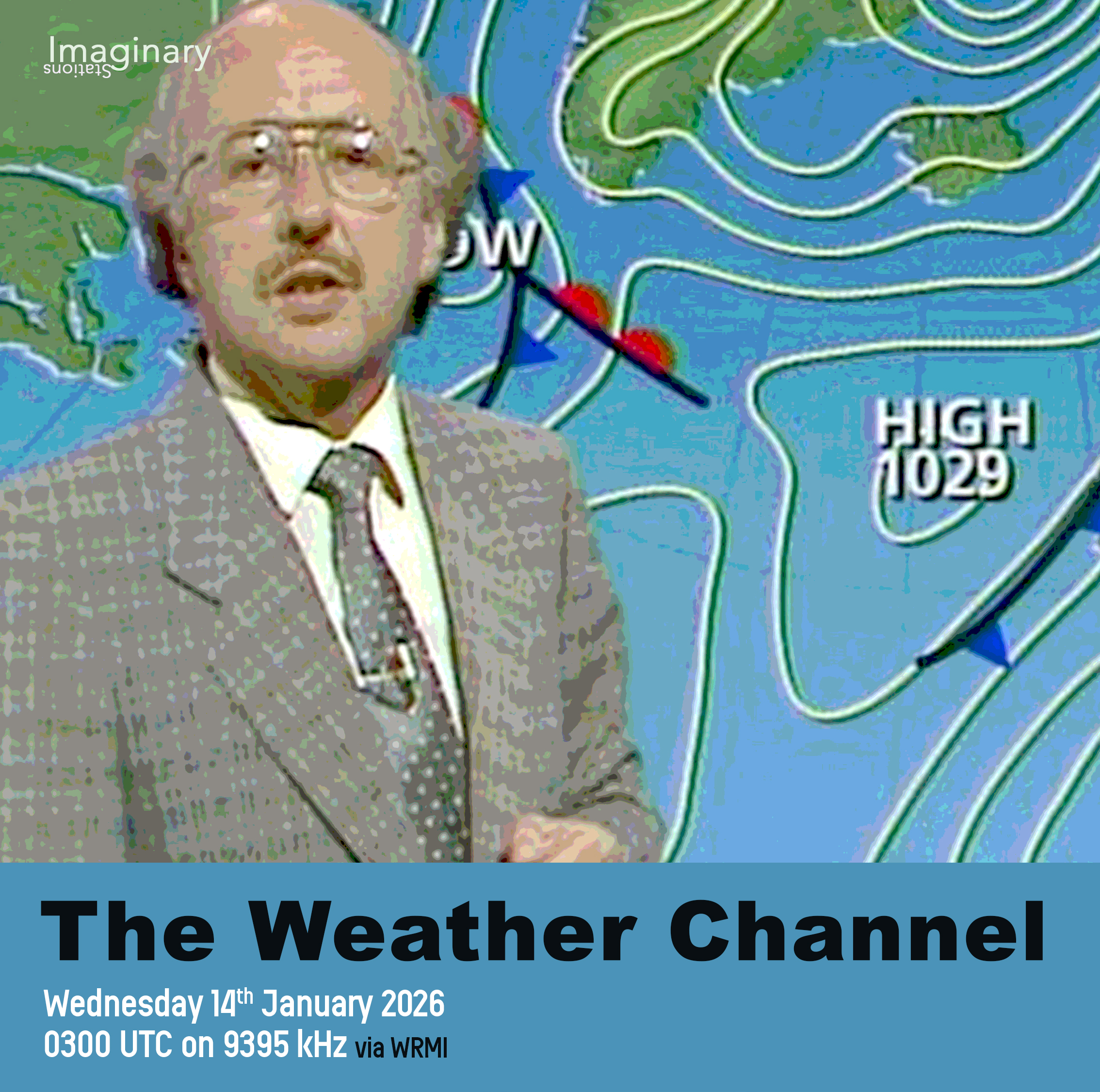
And on Wednesday 14th January 2026 at 0300 UTC on 9395 kHz via WRMI we bring you The Weather Channel, a programme which features the joys of meteorology. So have your weather vane wired up as your antenna and keep a look out for strange cloud formations while tuning into The Weather Channel.
For more information on all our shows, please write to us at [email protected] and check out our old shows at our Mixcloud page here.
FastRadioBurst23
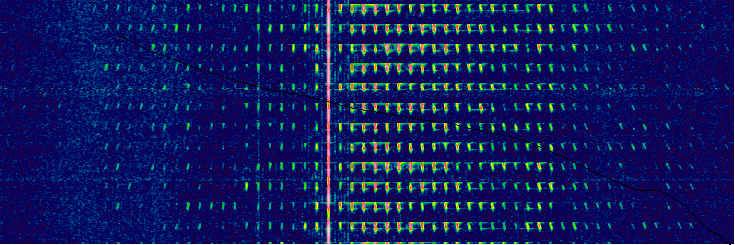 Many thanks to SWLing Post contributor, Fred Waterer, for sharing this article highlighting unusual activity from Russia’s shortwave station UVB-76, sometimes known among shortwave listeners as “The Buzzer.” Known for its continuous buzzing and occasional coded voice messages, the station recently broke pattern by playing music–including Tchaikovsky’s Swan Lake–and transmitting atypical sounds alongside cryptic codes, sparking speculation about the source and meaning of the broadcast.
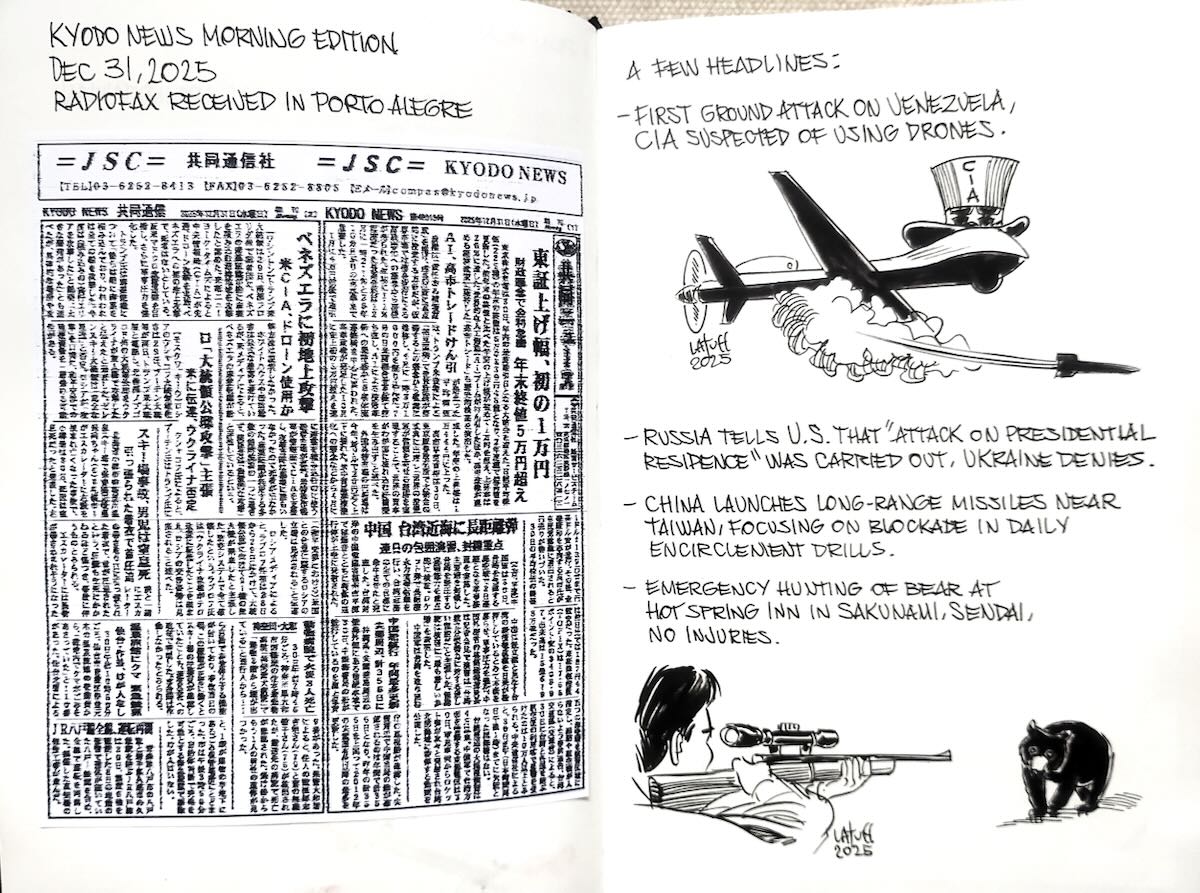
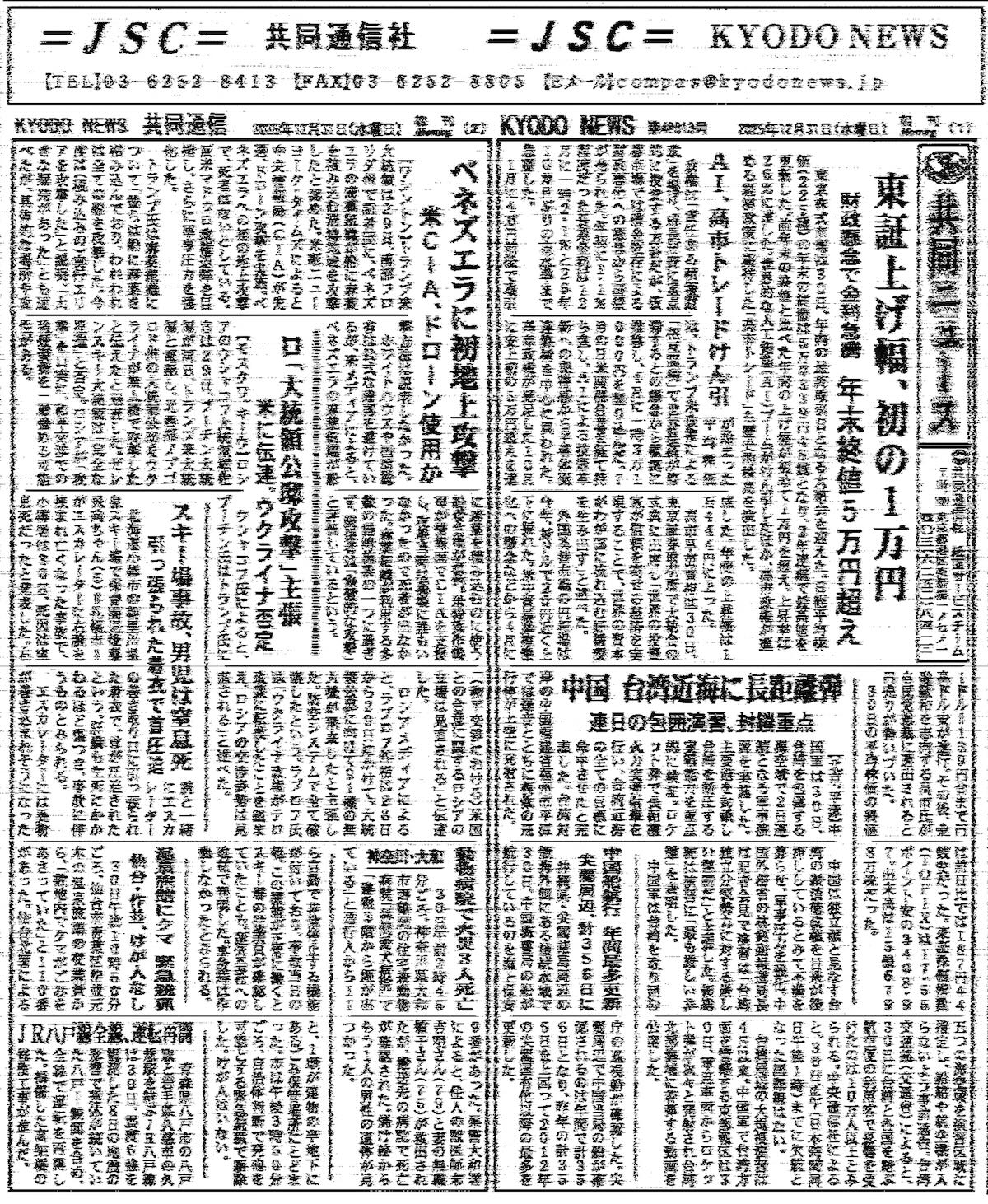
Many thanks to SWLing Post contributor and noted political cartoonist, Carlos Latuff, who shares the latest entry in his Radiofax scrapbook.
Carlos notes:
Kyodo News Morning Edition
Dec 31, 2025

Kyodo News Morning Edition
Jan 1, 2026


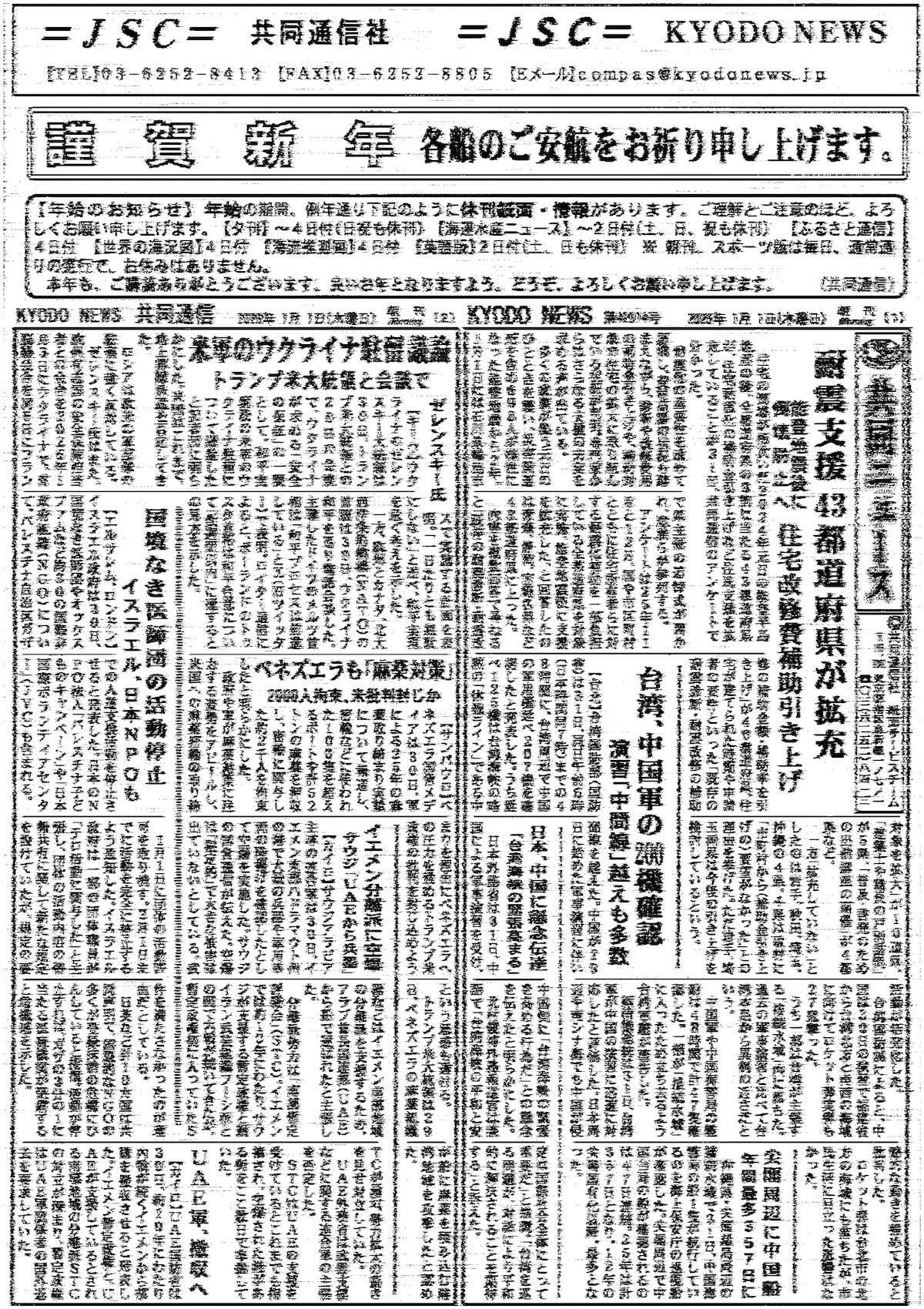
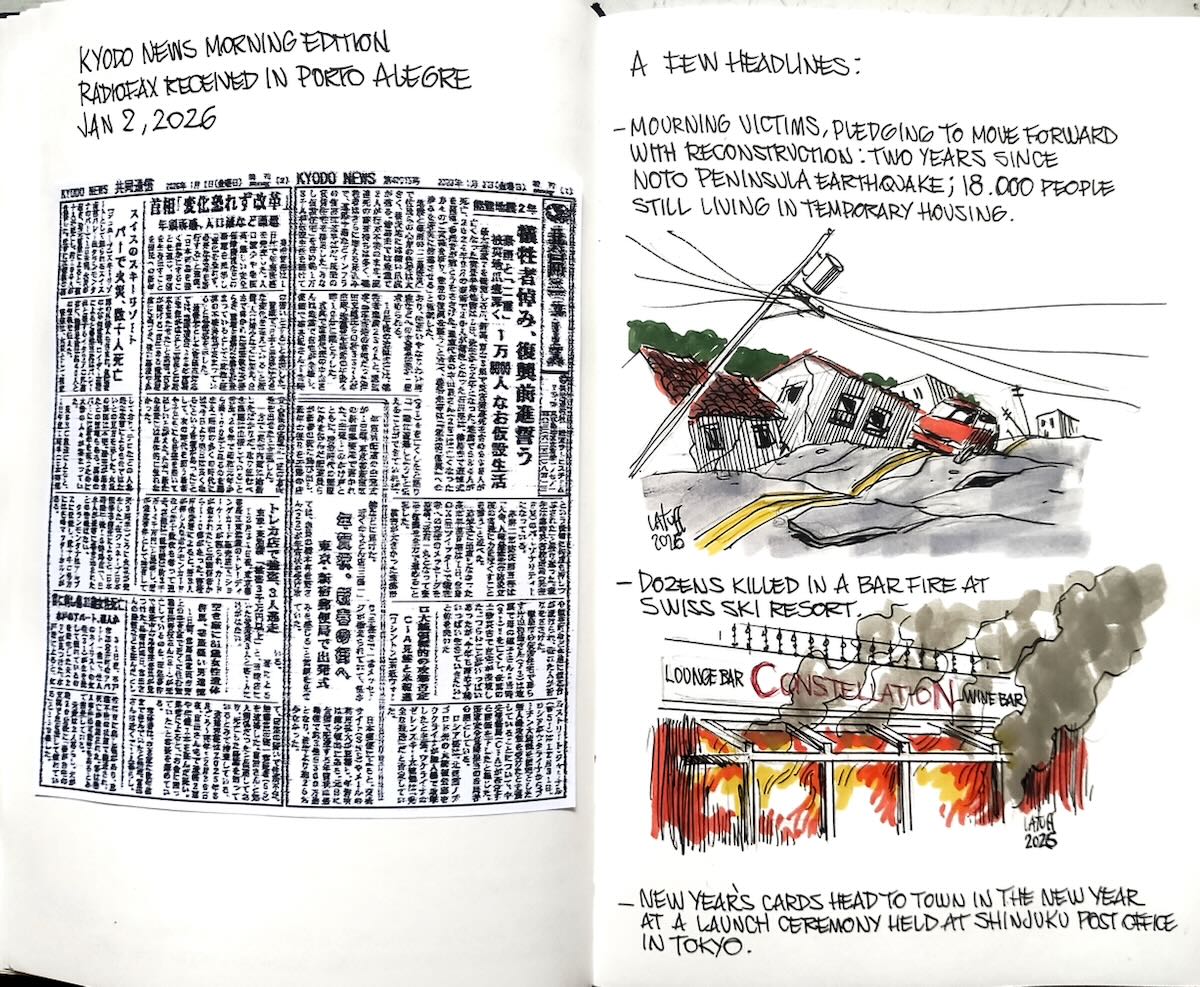
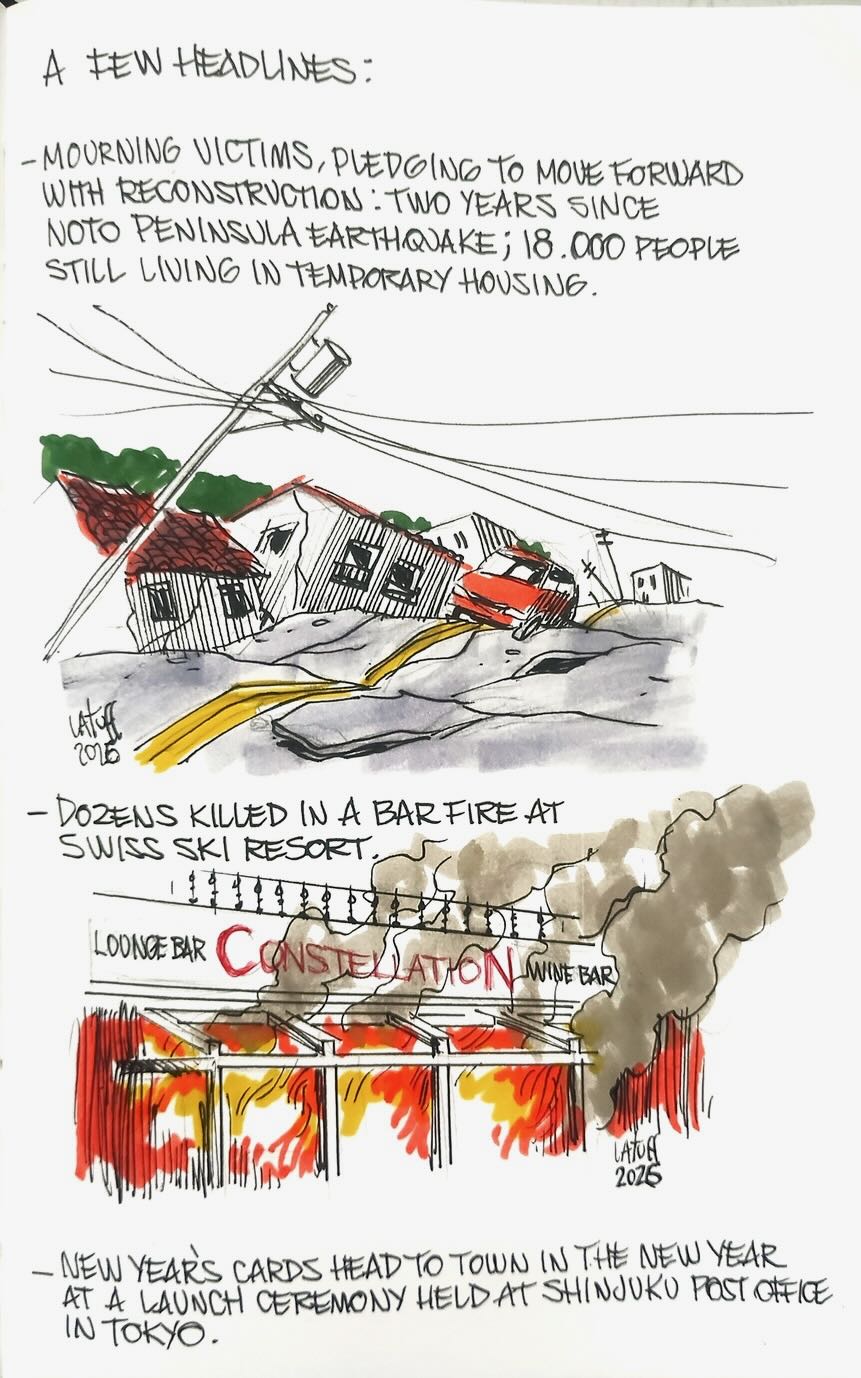
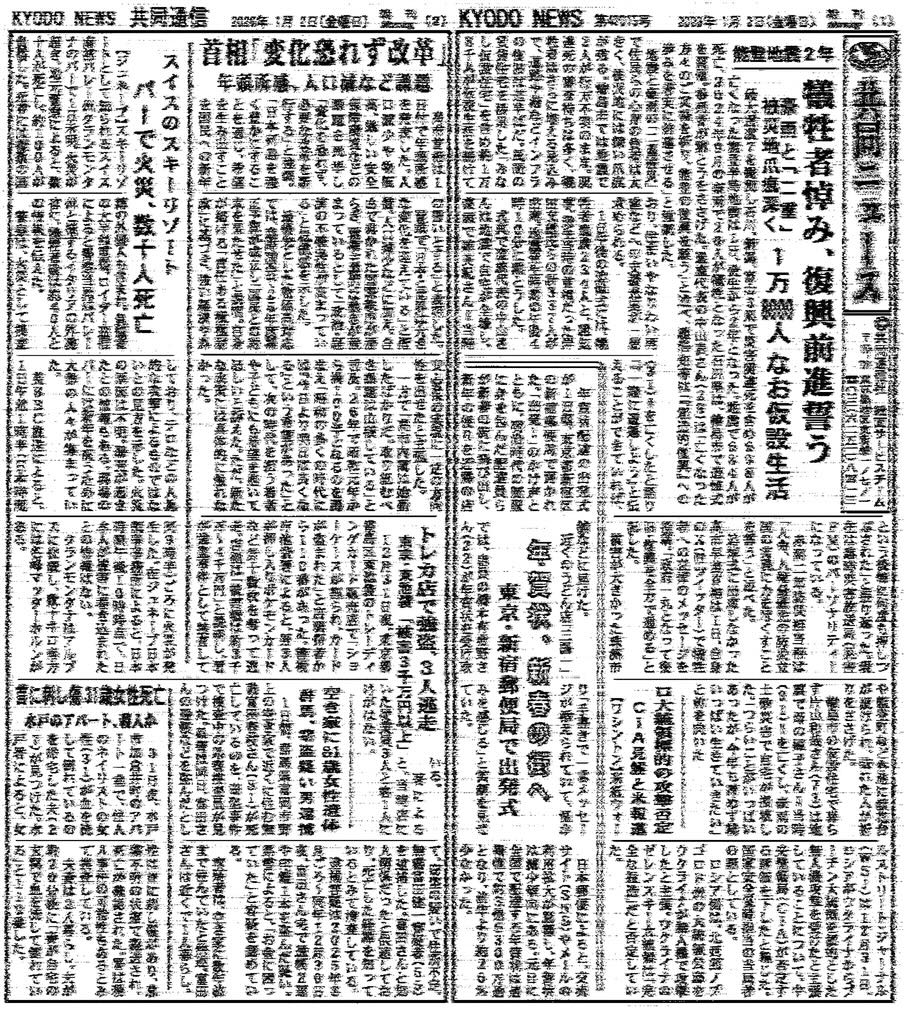
Kyodo News Morning Edition
Jan 2, 2026
Many thanks to SWLing Post contributor and noted political cartoonist, Carlos Latuff, who shares the following illustrated radio listening report of a recent CGTN broadcast.
 Carlos notes:
U.S. carried out large-scale strikes against Venezuela, CGTN Radio, 13630 kHz (Full report)