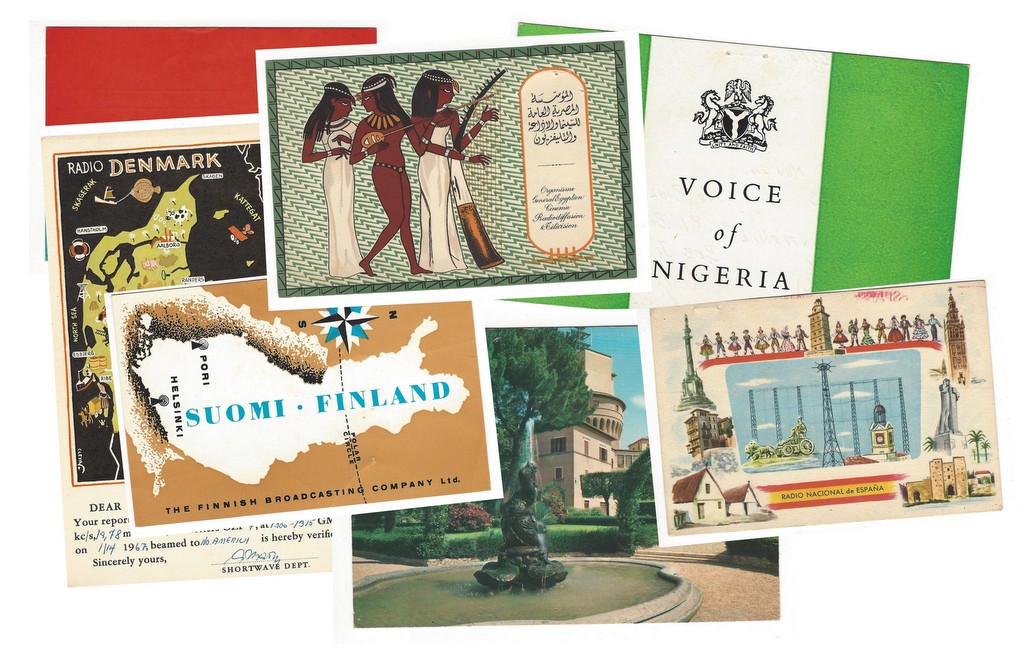
Category Archives: Nostalgia

How to safely archive QSLs, postcards, photos, and printed memorabilia

Recently, an SWLing Post reader asked this simple question:

“If you were me, would you laminate a super-rare QSL card?”

The short answer–?  Please don’t!

Never laminate a QSL card, photo, page or postcard

You should never apply heat-seal or adhesive (cold) seal lamination to a QSL card or any other paper memorabilia if your ultimate goal is to protect and archive it.

Why?  Doesn’t lamination, for example, make your card impervious to moisture (and spilled coffee)?  Sort of.  So that makes it safe for the long term, doesn’t it? Well…not exactly.

These forms of lamination, over time, basically destroy printed media. In the short term, laminating your cards can look great, and will keep some of the coffee off (though it may still seep in the sides); in the long term, however, the (petroleum-based) plastic can “off gas,” causing a detrimental chemical reaction with the media it attempts to protect.  Plastic can also be acidic.  Coupled with the lamination heat (or the adhesive, in the case of cold-seal lamination) these processes can actually speed up the aging process “causing progressive deterioration and eventual embrittlement,” according to one archiving source.

I feel fairly passionate about this because, during my undergraduate studies, I worked for my university archives department where I was taught (by an excellent and knowledgeable archivist) to handle, document, index, and preserve sensitive documents, books, photos, cards, slides and other forms of media (known in the trade as “ephemera”).  Many times, we’d receive important documents or photos from donors who had laminated them, believing they were archiving these items for future generations. Alas, we saw the results of the lamination damage first-hand:  decades-old items that had been heat-laminated were separating and clouding up, often tearing apart the item inside. Our head archivist likened laminating to a self-destruct mechanism.

Take away? Lamination is a very bad idea for the long-term protection of any print media.

How to archive a QSL card––or any document, for that matter
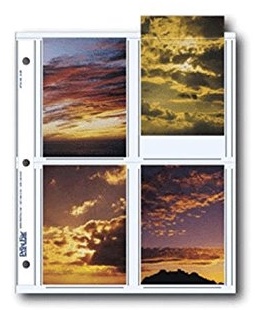
Archival sleeves come in all forms. This one holds four cards and fits in a three ring binder.

Fortunately, there are effective (and fairly affordable) ways to properly archive and organize your QSL card collection, as well as other sentimental and/or valuable ephemera.

Look for archival transparent sleeves supplied to libraries. These are generally made of polyethylene, mylar/polyester, or another transparent archival material that passes the Photographic Activity Test (PAT).

In short: If you find an archival sleeve, from a reputable seller that passes the P.A.T. test, you’ll know it’s safe.

Archival products are acid-free, lignan-free, and chemical softener-free, thus should not interact or bind with the media you’re preserving as non-acid-free items are prone to do. With anything I wish to archive, I go with archival quality all the way.

For example, I make sure not only the clear sleeves or pages are archival, but that the binder or box containing the items are acid-free and of archival quality, as well. Any labels I use are archival, as well . That may seem like overkill to many, but it’s just what an archivist would do!

Storage of the media is also important; you don’t want to put your cards in archival sleeves and then leave them in a damp shed or shack where moisture can become trapped between your card and the encapsulating archival sleeve; mold could still develop.  So a dry, somewhat temperature-controlled environment is key.  Generally speaking, keeping ephemera indoors where you live may be a better option.

Sources of Archival Materials
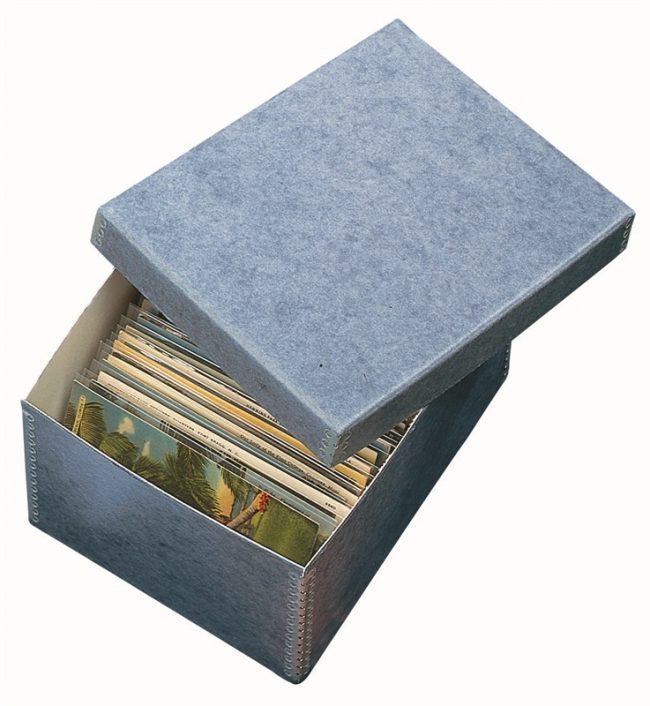
A simple acid-free box can store hundreds of QSL cards in archival sleeves sleeves.

Archival products are more expensive than standard office products, but they’re worth it. Make sure you’re purchasing the best quality you can afford. Two of my favorite suppliers are Gaylord Archival and Light Impressions, though there are many other reputable ones out there.

Amazon and eBay offer sources of archival quality products, as well, and pricing can be more competitive than either of the retailers I’ve listed above.

As for myself,  I only buy archival products from retailers that specialize in them. Both Light Impressions and Gaylord Archival have helpful staff you can call on the phone. They’ll help you find the best material for the preservation of your collection of QSL cards or whatever else you may want to protect.

I’d rather support Light Impressions with my purchase knowing that their standards are strict and their reputation rides on their products meeting strict archival standards. If you’re going to pay for something to protect your memorabilia, I say, go for quality!

And in the meantime…give the heat lamination a miss.

Good luck with your long-term archiving!  And don’t forget to share those rare QSL cards with us here.
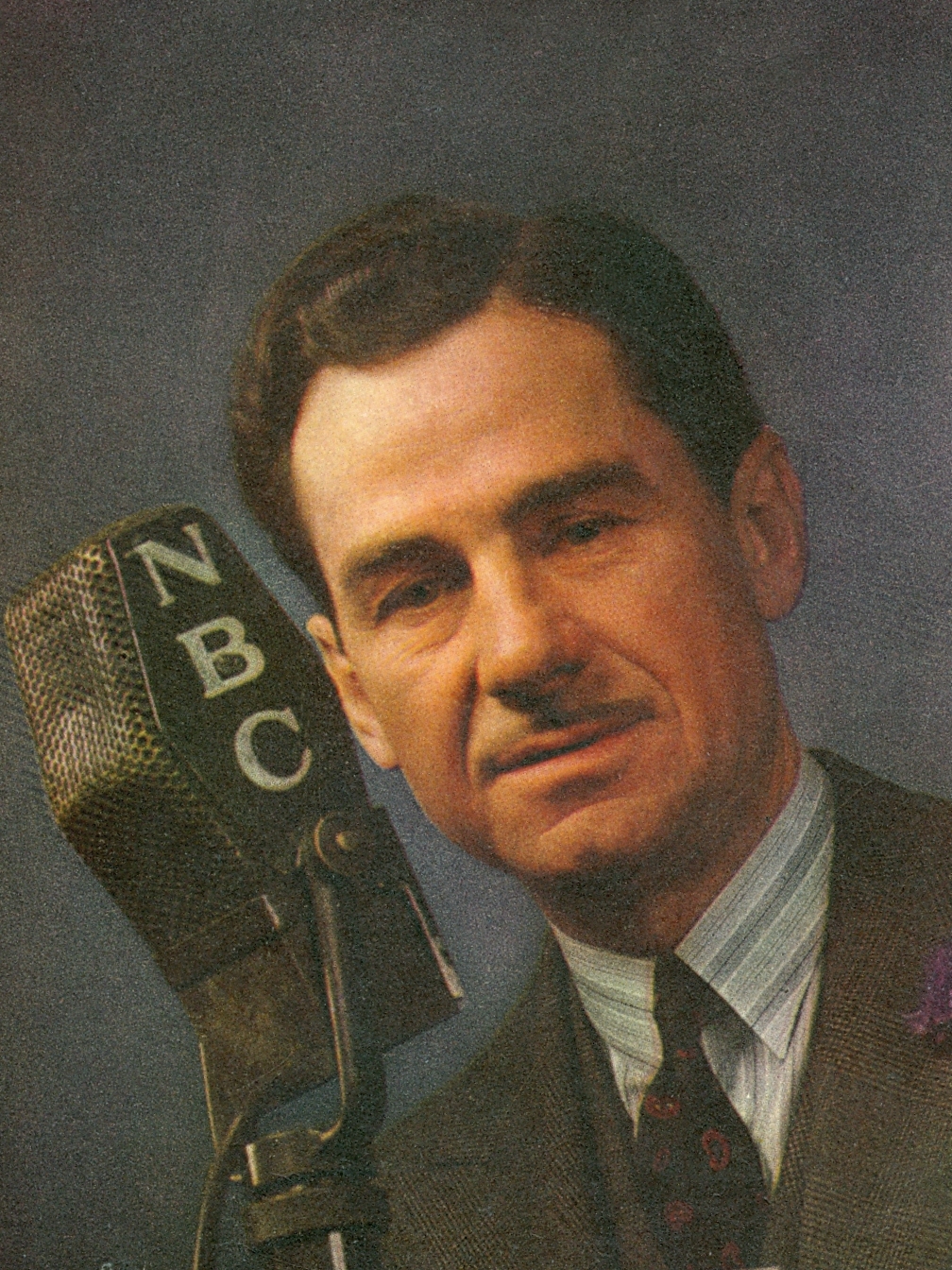
Lowell Thomas: “The Forgotten Man Who Transformed Journalism”

Many thanks to SWLing Post contributor, Bill Patalon, who shares the following story from The Smithsonian:

The Forgotten Man Who Transformed Journalism in America

Lowell Thomas was the first host of a TV broadcast news program, and adopted a number of other new technologies to make his mark in the 20th century

By the time Lowell Thomas turned 25, he’d already worked as a journalist, earned multiple degrees, and found a place on the faculty at Princeton University. But seizing a rare opportunity during World War I changed him from youthful overachiever to media heavyweight. During that conflict he met T.E. Lawrence, soon-to-be famous as “Lawrence of Arabia”—and Thomas played a large part in giving Lawrence that fame. The encounter launched Thomas into the media stratosphere with a groundbreaking multimedia presentation that captivated millions.

But while Lawrence’s work ended abruptly with his untimely death, Thomas went on to live a long, remarkable life. He traveled Europe, the Middle East, India, Afghanistan, New Guinea and Tibet, even meeting the Dalai Lama. He made fans out of Queen Elizabeth and Winston Churchill and led a prolific career in the news, making reports by print, radio, and TV—and reshaping them all into more formal, serious mediums.

Yet for a man with such a hyperbolic life, his legacy has been largely forgotten. Mitchell Stephens, a professor of journalism at New York University, set out to remedy that lapse in public memory with his new biography, The Voice of America: Lowell Thomas and the Invention of 20th-Century Journalism. Smithsonian.com talked with Stephens about his book, and why Thomas still matters today. […]

Click here to continue reading the full article at The Smithsonian online.

Many thanks for sharing this, Bill! What a fascinating fellow.

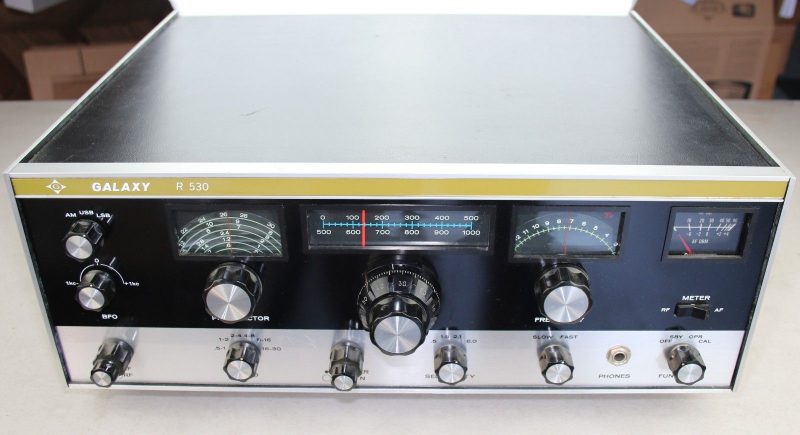
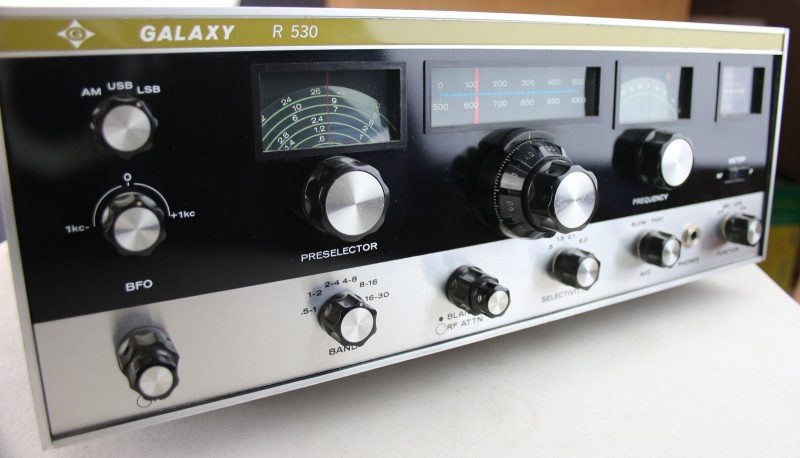
eBay: Galaxy R-530 Communications Receiver & Speaker

Many thanks to SWLing Post contributor, Rob G, who shares a link to this rare Galaxy R-530 receiver and speaker on eBay:

Click here to view on eBay.

The R-530 is certainly a handsome receiver. FYI: the last time we posted one of these from eBay, the final price was $470 shipped, but this particular listing also includes the SC-530 matching speaker.

Earlier this year, when an R-530 appeared on eBay, our resident rare receiver guru, Dan Robinson, chimed in with the following:

Some observations on this. The R-530, and military version R-1530, were considered fairly top of the line when they were made. They’re still among the rarer radios on the used market, though not the rarest. The R-1530 is not seen often.

On performance, these receivers were not on the same level as National HRO-500s, 51Js, and R-390s. This was made by Hy-Gain after all, which was not top of the heap in receiving design.

However, the R-530/1530s are great looking pieces. Anyone considering these should make absolutely sure that the PLL circuit functions on all bands. Poor cosmetic condition is a tipoff that the radio had a hard life.

Are there any Post readers own and use an R-530 of R-1530? Please comment!

Ed rediscovers Lafayette Radio Electronics

Many thanks to SWLing Post contributor, Ed, who shared the following message after I posted the Mystery Radio Challenge yesterday:

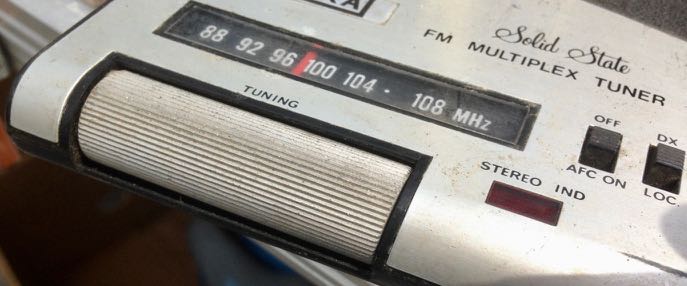
I could tell that FM tuner is actually an ‘FM converter’ by its shape and by the giveaway wide knurled tuning bar mounted way up front, so the driver of the 8-track tape player-equipped car could tune it more easily whilst driving–or whilst smooching in the car in the dark!

Then to determine the make & model, I searched Google for the words silk-screened on the front panel, “solid state fm multiplexer tuner” and easily found this exact match:

Alaron FM Multiplex Stereo Cartridge Tuner UNTESTED

This tuner came with an unusual antenna Y-adapter that connected (and probably matched) the tuner to the car’s AM antenna. It’s pictured in one of the photos. I wonder how good an FM tuner it is. It has a switchable AFC and a DX/Local switch.

Whilst scrolling through the excellent photos of the one being offered for sale online (for $46.74!) I saw the manual has a handwritten note that says, “Bought from Lafayette Radio Electronics 33760 Plymouth Road on 7/3/72 Invoice #3213570”– so it’s about 45 years old.

Out of curiosity, I researched that address and found that tuner was purchased at the third Lafayette store in (Livonia) Michigan.

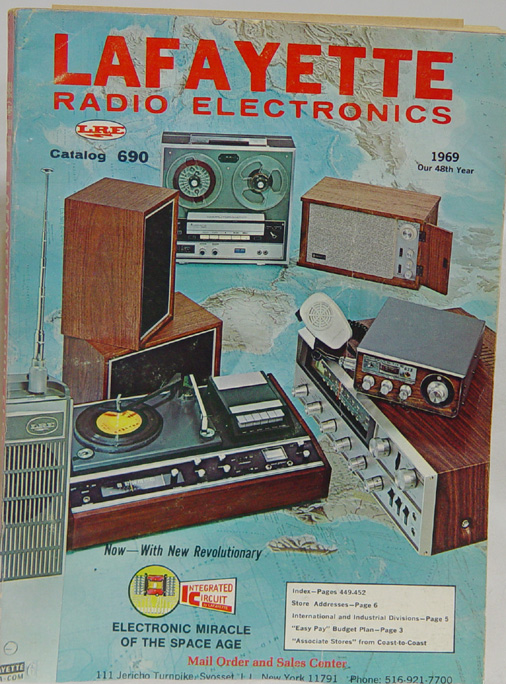
I imagine some of your SWLing Post blog readers (like me) fondly remember Lafayette Radio Electronics stores. They had a better selection of radio gear–even Collins rigs–than Radio Shack did. Here’s a nice writeup about Lafayette on Wikipedia:

https://en.wikipedia.org/wiki/Lafayette_Radio_Electronics

Thanks, Ed!  Any Post readers shop at Lafayette Radio Electronics stores in the past?  Please comment!

Mystery solved: Remember the 8 Track FM radio converter?

Sunday morning, I attended the Sainte-Foy flea market in Québec City. When I’m in QC, I love attending this particular market because of the amazing variety of things for sale. It’s a proper community event.

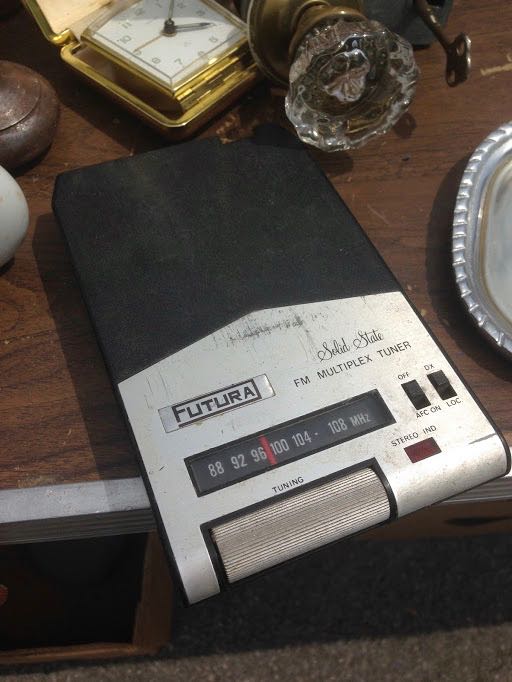
As I was browsing the various tables, I happened upon one of these:

Talk about a blast from the past!

Yesterday, I posted a cropped photo of this radio and it was quickly identified as an 8 Track FM radio converter by Ken (N2VIP). Steve Yothment found the same unit under a different brand and Bill Lee even found a Futura branded unit on the Internet. Of course, many others figured out this was an 8 Track to FM radio converter. Impressive sleuthing!

These radio tuners were popular in the days of the mobile 8 Track players–in that time period right before FM was standard in car radios, but 8 Track was somewhat prevalent.

My father had a similar FM radio converter for his 1966 Chevy pickup. As a kid, I thought the thing was fascinating! You simply inserted the unit into the 8 Track player and voilá!, FM radio!

I never quite understood how the FM reception was so decent considering there was no external antenna of any sort.

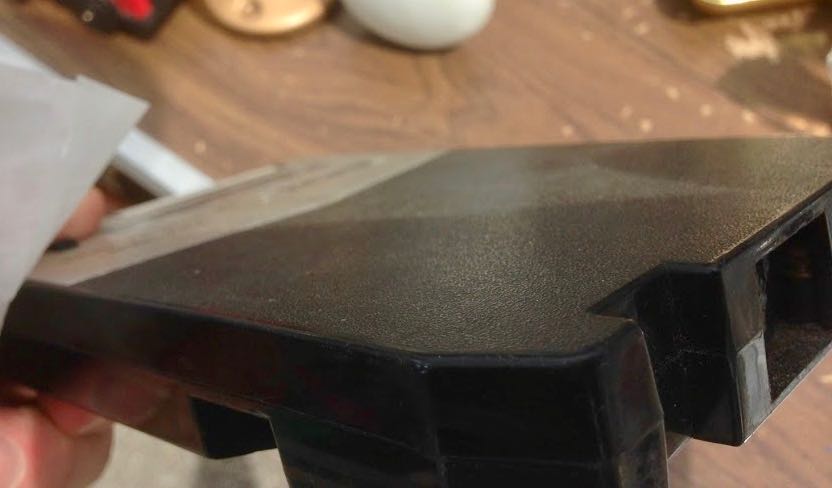
The rear of the converter looks like an 8 Track cartridge minus the magnetic tape.

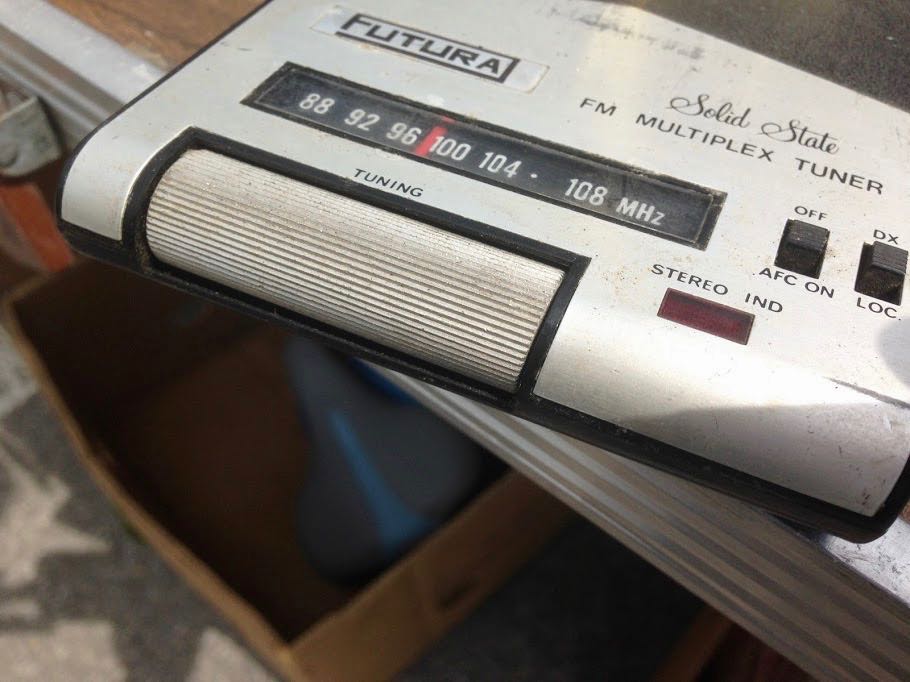
Taking a closer look at this particular FUTURA brand converter, I’m impressed with the number of features on such a compact front end:

  • Analog FM dial
  • Red LED stereo tuning indicator
  • AFC OFF/ON switch
  • DX/Local switch
  • A wide, vertically-oriented tuning knob

I’m curious: how many Post readers had an 8 track FM radio converter in their vehicle? Or, did you ever have an Audio Cassette to 8 Track converter? Please comment! Also, you should check out some of the comments from our previous post.

And thanks for being sports about my “Mystery radio challenge“–I knew savvy Post readers would ID this tuner in no time!

The Yaesu FRG-7700 in TV series iZombie

Many thanks to SWLing Post contributor, Mark Hirst, who adds the following to our growing archive of radios in film.

Mark writes:

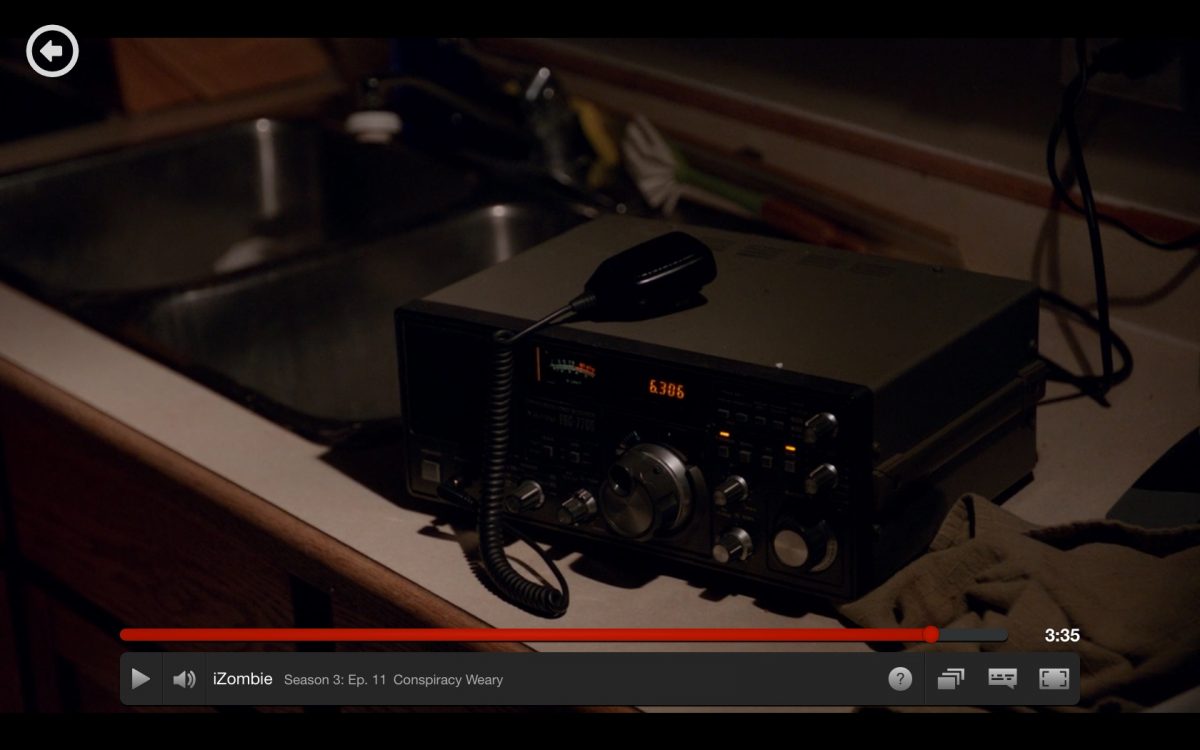
Another radio spotted in a TV show, this time in the Netflix show iZombie.

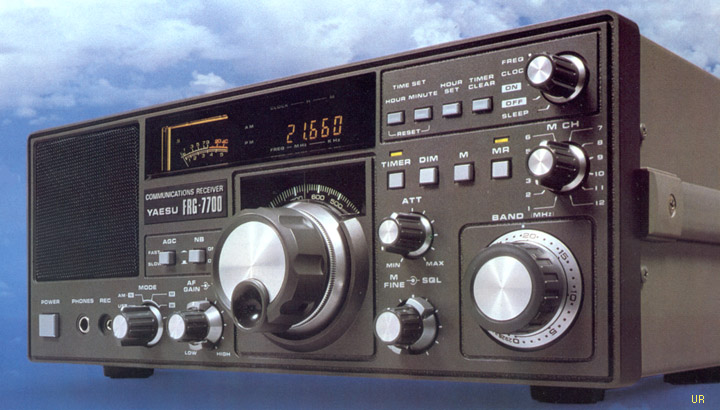
Having been gifted a Yaesu FRG-7700 recently, it was an easy spot.

Click to enlarge

This FRG-7700 appears to be a ‘special’ model however, with a microphone plugged into the headphone socket and able to act as a transceiver!!

You have sharp eyes, Mark! Yes, indeed, it looks like they’ve turned that ‘7700 into a transceiver by plugging a mic into the headphone jack.  Now why didn’t we think of that?!? 🙂

Thanks again for sharing!

eBay: Dan discovers a Furuno RV-103SR marine receiver

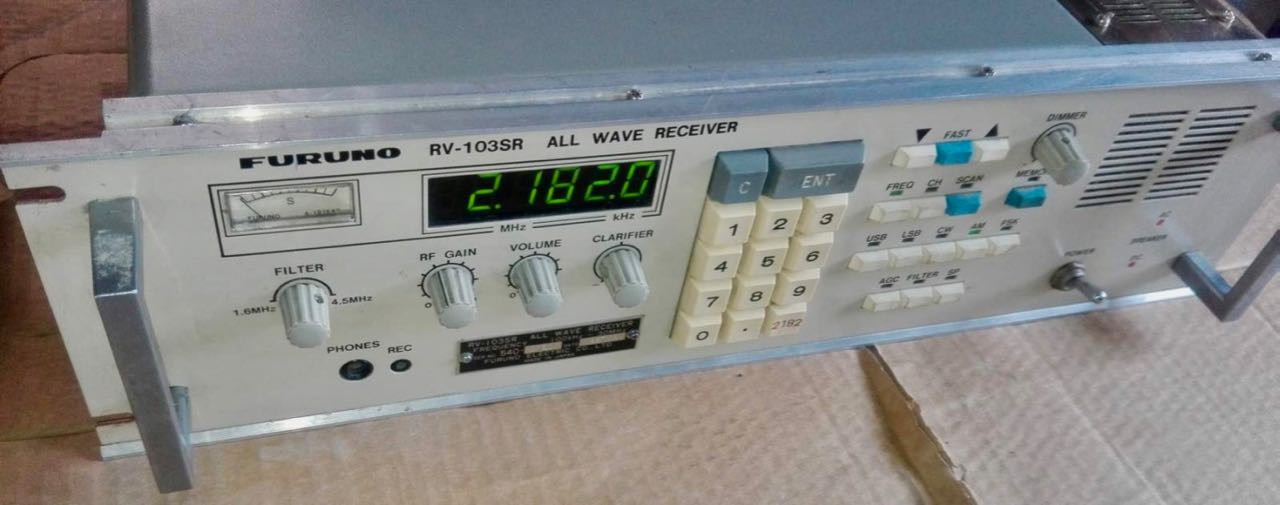
The Furuno RV-103SR

Many thanks to SWLing Post contributor, Dan Robinson, who shares the following regarding a Furuno RV-103SR marine receiver he discovered on eBay:

Recently, I came upon two great rarities in the world of receivers.

Furuno is a Japanese company known for maritime equipment, and is featured on one or two pages of the Osterman receiver directory. Two of these rare receivers came up on eBay, both located in an Asian location.

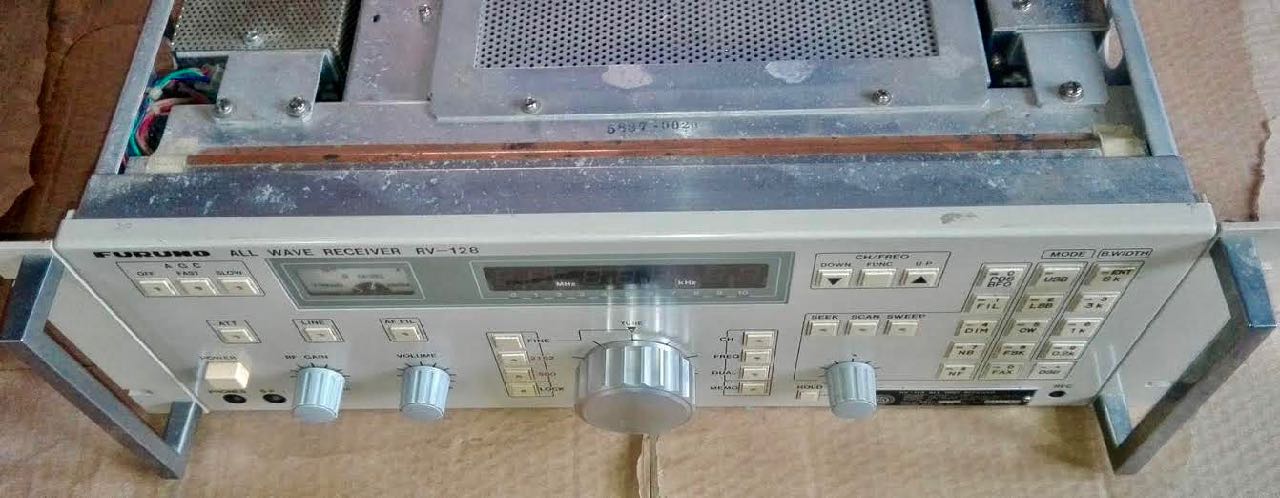
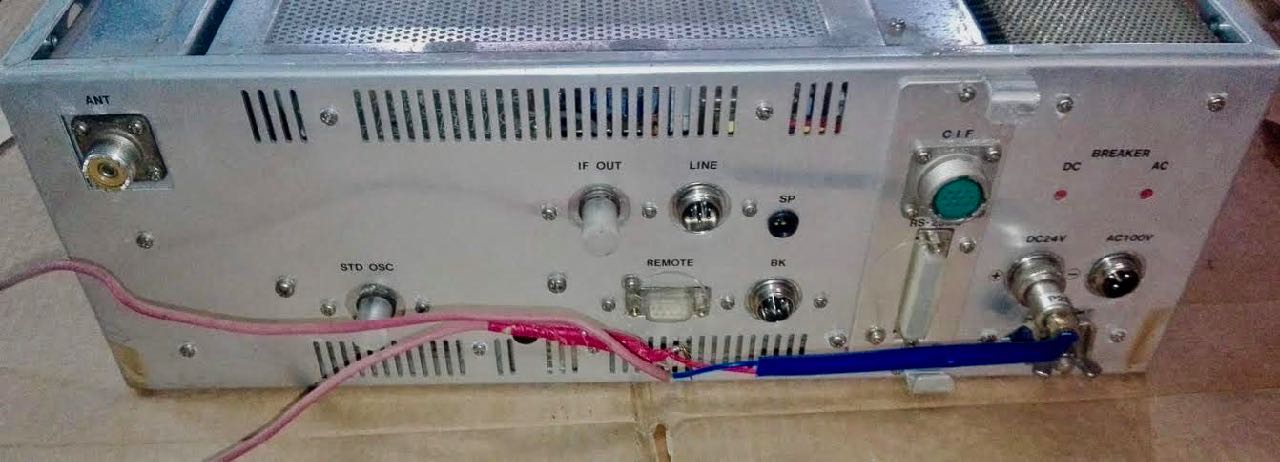
The Furuno RV-103SR and RV-128 are beautiful animals, and both receivers appear(ed) to be in good condition, obviously taken from ships, likely as part of tear downs in a shipyard.

There is very little information online about Furuno. One Japanese blogger did a review of the RV-128. And a guy in Republic of Srpska got to use the RV-128 which was installed on a giant oil tanker, during a trip he made as a navigator way back in 2002 (see the story at http://www.qsl.net/e78cb/mmstory.htm).

Here’s the link for the Japanese blogger (use Google translation to read it) http://blog.livedoor.jp/kerokeronyororo/archives/60986163.html).

In my correspondence with him, Fred Osterman notes that the RV-103SR variant was not known to him, and likely stands for rack mount. And Fred says he never saw these receivers in the flesh, and never saw one offered on the used market, “a rare bird” indeed. For those interested, Furuno equipment is on page 216 of Fred’s massive and excellent receiver book.

The appearance of these beautiful radios, and similar ones, again demonstrates the kind of equipment that is popping up in Ebay and other locations. We have seen numerous JRC marine receivers become available, many of them also former ship receivers. Anyone interested in these should ask the usual questions about condition, ask for photos and videos, to try to ensure that what eventually arrives is not DOA or suffering from various issues.

Click here to view on eBay.

More about Furuno

Furuno, it turns out, and as noted in the Osterman book, was behind the first fish finder ever produced. And the company had a range of transceivers for maritime use.

See the following links on YouTube:

Click here to view on YouTube.

Click here to view on YouTube.

Click here to view on YouTube.

Click here to view on YouTube.

Click here to view on YouTube.

Post Readers: this is what I love about Dan Robinson’s discoveries on eBay: he finds these rare treasures, then provides a little history about their origins, use and current availability. Thank you so much, Dan, for sharing!