Category Archives: Nostalgia

Bob’s Radio Corner: Pittsburgh

Emsworth Locks and Dam (Ohio River, Mile 6.2) Source: U.S. Army Corps of Engineers

By Bob Colegrove

If you happened to tune 8213 kHz during the ‘50s or ‘60s, you might have heard a dialog something like this:

Boat: “Pittsburgh, this is the Mary Alice, upbound at mile 14, request lock status.”

Pittsburgh: “Mary Alice, Emsworth has a two-tow delay. Recommend holding below the wall.”

Boat: “Roger, Pittsburgh. We’ll hold.”

You would have heard one of the U.S. Army Corps of Engineers’ HF River traffic control stations that operated on the Ohio River system. This station was not called “Pittsburgh Radio;” nor was it called “Radio Pittsburgh.” It had no known K… or W… call letters. Instead, each of these stations identified itself by city name only. In this case you might hear, “Pittsburgh calling downbound tow at mile 12…” or “Pittsburgh to all traffic: lock delay at Emsworth…”

From the 1940s through the late 1960s, the Corps of Engineers operated a network of HF shore stations along the Ohio and Mississippi river systems. These stations coordinated tow and barge movements, lock traffic, river closures, weather and river-stage reports, and emergency traffic.

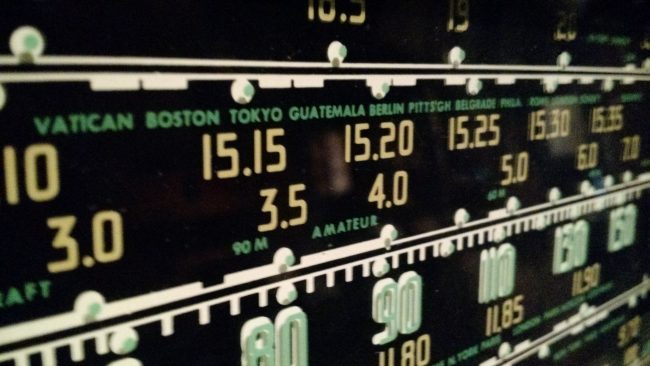
From the earliest time, I was enthralled by the international shortwave broadcast bands and had spent most of my time listening to the usual stations most of us remember. Since my old console radio had continuous coverage from 5.5 MHz through 18 MHz, I was curious about what lay between the broadcast bands.

I stumbled across “Pittsburgh” very early in my SWLing life. Pittsburgh stood out clearly. Along with WWV, it was the only other utility station I was able to identify during that time. I was fascinated by the conversation.

The Corps used a cluster of HF frequencies in the 8 MHz band for long-range river communication. These were not publicized like marine ITU channels; they were internal government/industrial channels. The 8 MHz band was chosen because it propagated well along the river valleys; it worked day and night; and it reached 100-to-300 miles reliably.

I don’t know how I ever determined the frequency. It was never announced, and I certainly couldn’t determine it on my old radio. The entire span from 5.5 MHz to 18 MHz covered a mere 4 inches on the dial. The pointer itself was about 100 kHz wide at this range. Somehow, I was eventually able to determine 8213 kilocycles.

Note that the frequency of 8213 kHz did not conform to the 32-channel duplex frequencies which eventually were carved out of this band. Pittsburgh was born out of necessity at a time when radio was still young and offered a ready solution to an age-old problem.

Before VHF towers lined the river in the late ‘60s and ‘70s, HF was the only way to maintain continuous communication along the entire Ohio River. The Pittsburgh District of the Corps oversaw the Emsworth Lock (Mile 6.2), Dashields Lock (Mile 13.3), and Montgomery Lock (Mile 31.7).

Pittsburgh Engineer District 2026

Commercial riverboat life on the Ohio River in the ‘50s and ‘60s was a world in transition. Just as the keelboat days and the legendary Mike Fink had given way to steamboats, by the early 1950s the Ohio River was shifting decisively from classic steam navigation to diesel-powered towboats pushing long strings of coal and freight barges. However, pockets of river-based living, indigenous to the previous age, were still hanging on.

The U.S. Army Corps of Engineers began replacing the old 19th-century lock-and-dam system with modern locks and dams in the early 1950s, creating deeper, more reliable navigation channels and enabling larger commercial traffic. These improvements supported the rise of large commercial operations, such as American Commercial Barge Line (ACBL), which maintained marine equipment registers and fleets during this era. Coal, petroleum products, aggregates, grain, and manufactured goods formed the backbone of mid-century river commerce moving between Pittsburgh, Cincinnati, Louisville, and down to the Mississippi.

The river had its share of hazards with winter ice and spring floods. The new lock-and-dam system gradually tamed these extremes, but the river remained unpredictable.

Life aboard a mid-century towboat was demanding. Crews worked long shifts. Work included line-handling, engine maintenance, navigation, and barge assembly. The river was both workplace and community. Small towns along the Ohio still remembered their steamboat heritage, shipyards, and wharf culture.

Sternwheel Towboat on the Ohio River – (Source)

The Ohio River, just like the Mississippi, was the life and livelihood of the people who lived along it. During the ‘50s and ‘60s HF radio was an essential part of this enterprise. Even more than medium wave broadcast radio of that time, the folks on boats depended on two-way communication over the HF airways.

Pittsburgh was not just a dispatch or control station for river traffic. It became a fountain of essential information, a clearinghouse for important messages. It was the cornerstone of social interaction for a population in constant transit.

Listeners in the 1950s often reported towboat captains calling dispatch, barges reporting position (“Upbound at mile 412…”), lockmasters giving traffic instructions, and weather and river-stage reports.

HF channels were shared working channels, not strictly controlled like today’s VHF marine channels. Besides traffic between the boats and Pittsburgh, there was also boat-to-boat communication. This was not chatty; it was disciplined, brief, and functional. There was a sense that HF radio was a valuable resource not to be abused. Before the modern lock system and before VHF towers lined the river, HF was the only way to maintain continuous communication along the entire 981-mile length of the Ohio River.

HF could skip over hills and valleys, reach hundreds of miles, work during floods, storms, or power outages, and connect boats to company headquarters far from the river. At a time before single sideband was in general use, Pittsburgh and riverboats operated with amplitude modulation (AM). Of course, there were no cellular telephones. Instead, HF radios afloat would occasionally contact shore-based stations which could then “patch” communications between ship and other shore locations over phone lines.

Many of the towboats and packets were family-owned and operated. The inland river system was one of the last major American transportation networks where family companies remained dominant well into the mid-20th century. These were not “packet boats” in the old passenger sense — by the 1950s, packets were gone — but family towboat companies were everywhere. Family crews were the norm. Several major river companies began as family outfits.

The boat was a floating extension of the family house. Kids often grew up on the river. Wives sometimes handled the books, payroll, or provisioning. Sons learned to steer before they learned to drive a car. Daughters often knew how to splice line or cook for a crew before they were teenagers.

Life aboard a family-run towboat was unlike anything in modern transportation. It was part workplace, part household, part floating village, and part family legacy. What you got was a blend of hard labor, deep routine, and a kind of river-born intimacy that only comes from living and working together in a confined space for weeks at a time.

Today, the U.S. Coast Guard works jointly with the U.S. Army Corps of Engineers, National Weather Service, and industry groups to manage the two river systems. It oversees marine safety, pollution response, and towing vessel incidents. It regulates, supports, and protects navigation on the Ohio and Mississippi Rivers, primarily through aids to navigation, safety enforcement, and emergency coordination.  Meanwhile, river communication has migrated to the VHF marine band.

Conclusion

The HF radio was a riverboat’s lifeline. On a family-run towboat, the HF AM radio was the telephone, dispatcher, news source, and emergency line. HF was the way to talk to the Corps (Pittsburgh) or to the company office, which might be someone’s house.

By the late ’60s or early ’70s VHF towers went up at every lock. Companies built microwave and landline dispatch networks. AM operation faded; finally, the last HF river channels went silent. Today, almost nobody remembers that era.

I have never listened to a station quite like Pittsburgh. It was a delicious slice of human experience. Unfortunately, it is an artifact of a time that has now passed. Still, I find myself absentmindedly punching in 8-2-1-3 on a DSP portable radio with the irrational belief that I will hear Pittsburgh. If it is true that a radio wave, once modulated, continues to travel forever, I like to think some being in a distant world may someday have their sense of imagination entertained as mine was many years ago.

Good DXing.

Denis Spots Radio Gear in True Detective

Many thanks to SWLing Post contributor, Denis (UA3221SWL), who writes:

Hello, Thomas.

I found some very interesting RX devices in True Detective S03E03 but can’t identify them:

    • First, a vintage 70-80s RadioShack HiFi receiver (STA or QTA series)
    • And right behind the actor, there’s an indoor table multidirectional magnetic/dipole antenna (I think it is) from the same manufacturer.

Can we ask the SWLing Post community for more information? Thanks for your work!

Best regards,
Denis UA3221SWL

Thanks for bringing this to our attention, Denis! Can anyone help with the details? Please comment!

Radio Prague International Marks 90 Years—Share Your Story

Many thanks to SWLing Post contributor, David Iurescia, for sharing this announcement from Radio Prague International, which invites listeners to help celebrate its 90th anniversary by sharing their own stories and memories connected to the station. As part of the celebration, Radio Prague is highlighting its rich history and global audience engagement built over decades of international broadcasting. ?

Read the full article here: https://english.radio.cz/your-story-our-history-celebrate-90-years-radio-prague-international-us-8883445

A Transoceanic on the Beach? Help Ed ID This Mystery Radio

Many thanks to SWLing Post contributor Ed, who writes:

Here in Philly, while perusing a vintage artifacts store here in Philadelphia, I found a 1958 magazine with a photograph of an attractive shortwave receiver model.

Maybe readers of the SWLing Post can identify this radio? Is it the successor to the Zenith Transoceanic series?

Cheers,

-Ed

Please comment if you can shed some light on this particular radio.

Bob’s Radio Corner: Where it Began – The AM Medium Wave Broadcast Band

Copilot Radio, Model Unknown
The dial certainly has some problems, but the rich, Bakelite, art deco cabinet is superb.

By Bob Colegrove

One of the great attractions of the radio hobby is that it has so many different areas on which to specialize.  As examples, one can focus on a particular band, collect or restore radios, DX or just listen.  With so much to choose from, one can impulsively skip from one area to another.  I have tuned the shortwave bands for many years, but I also like the AM medium wave band.  If there is a purpose to this post, it is simply to bring some occasional attention to AM listening and DXing.  There is nothing new in what follows.

What’s in a Name?

To start with, this subject is somewhat confusing by calling it what we do.  There are at least three common terms for the electromagnetic spectrum between 530 kHz and 1700 kHz: 1) AM, 2) broadcast band, and 3) medium wave.  This poses an identity dilemma; that is, none of these names are exclusive.  AM defines a form of modulation, amplitude modulation, which is used in other portions of the spectrum.  The same may be said of broadcast band.  There are several international broadcast bands within the shortwave spectrum.  That leaves us with medium wave.  But that term lacks precision.  What exactly are the boundaries of medium wave?  Shortwave bands have relatively precise names related to their wavelength, 80 meters, 31 meters, etc.  Should we call medium wave the 176-thru-943-meter band, instead?  Let’s just stick with any of the old familiar terms.

In the Beginning

I’m sure many readers share the experience related here.  Even before shortwave there was medium wave.  Our initial encounter may have been with the monolithic, multi-band console radio in the parlor.  However, the house was likely home to one or more less pretentious table radios, which were limited to the medium wave broadcast band.  It all began with curiosity about what lurked in the relative space between the few local stations that played so clearly along the dial.  We likely found less listenable stations poking through in the inter-station space.  These were stations like our own in neighboring communities.  Then, at night, a strange thing happened.  Like stars in the sky, more stations appeared, some hundreds of miles away.  At the same time, some of the stations we heard during the day disappeared, maybe even a local station or two.

Well, one thing led to another, and soon we were keeping track of stations that we heard.  We took note of where they were located and their position on the dial using a new term called kilocycles.  The fastidious among us kept daily logs with dates, times, and reception conditions.  So, our DXing career began.

I came along a full generation after the advent of AM radio broadcasting.  In my early years, it was still the mainstay of public information and entertainment.  Television stations were beginning to pop up across the country one by one, and FM radio’s popularity was still a decade away.  Like any imposing distraction, there was curiosity in what was being heard and, in the case of radio, where it was coming from.

Our house was home to perhaps three or four AM radios.  At the age of seven, I was gifted of a 4-tube Sears Silvertone – mine to keep in my own room.  But the radio that really got me going came along several years later and belonged to my father.  This was a General Electric Model P755A, five-transistor portable.  Shaped somewhat like a lunchbox, including the handle, it was the quintessential portable radio that the world had been waiting for.  It ran for many hours off a single, but pricey 9-volt carbon-zinc battery.  There was purposely no provision to run it from AC power.  Also, it used an internal ferrite core antenna.  There was no jack or terminal for an external antenna.  Besides the tuning knob and volume control, it had a jack for a single earplug.  It was truly portable in all respects.  For all its simplicity, it did its job very well, and I borrowed it whenever the occasion presented itself.

Left: Silvertone Model 132.818-1, Sears, Roebuck & Co (1949, $11.95)
Right: General Electric Model P755A Transistor Portable (1957, $19.95)

As an only child, I was the sole recipient of any goodies that came along, and it wasn’t too long before I had my own comparable Westinghouse portable.  But the GE was really the one that got things started.

A Plethora of Stations

I have recently wondered whether shortwave use has contracted about as far as it can go.  This is not the case with AM, at least not yet.  The graph below shows the total number of AM radio stations in the US throughout history, 100 years.  The total has remained relatively stable since 1960, albeit with a slight downward trend from the peak around 1990.  Stations occasionally come and go.  Some rebrand with a different format or fresh call letters.  Note that the steepest rate of decline, 217 stations, occurred over the past five years, amounting to 4.7%.  Whether this rate of attrition will continue is a matter of speculation.

Medium wave DXing is a lot different than shortwave.  The density of stations will vary depending on what part of the world you live in.  Here on the East Coast of North America, the AM band is saturated with signals.  That is, with a suitable antenna, one can at least detect a station on each of the 118 available channels – certainly at night and possibly even during the day.  On the other hand, some years ago, I had an opportunity to visit Honolulu, Hawaii.  With little time to listen, I only heard a few of the islands’ stations but imagined what possibilities nighttime Dxing held.

Despite the density of stations on the East Coast, there will still be limits on the number of stations logged.  My experience is that initially the log grows quickly, then tapers off steadily as you go along.  Your time is eventually spent locked in on a local or regional frequency, waiting for something you’ve heard to fade out and something you haven’t heard to fade in.  In a previous posting, I worked the lower end of the band rigorously for some time, coming up with a fair number of catches.

Ten-kHz channel separation is the convention in Region 2, the Americas.  There have been some occasional anomalies.  Several years ago, there was a handful of so-called “split-channel” nonconformists, who placed their carriers midway between channels and presented an opportunity to log some hard-to-hear countries.  It was also possible to pull in a few very high-power European and North African stations.  This took advantage of the 9 kHz vs. 10 kHz channel spacings between Region 1 (east) and Region 2 (west).

Seasonal changes are also important.  Winter is the best.  Propagation is generally better and more consistent.  Atmospheric noise is minimal.  Local stations limited to daylight operation have shorter hours.  The gray hours around sunup and sundown can produce unusual DX conditions.

Programming

Programming has changed since the 1950s.  As the go-to medium for public information and entertainment, content was original and competitive.  Mornings were often filled with local DJs playing occasional songs and generally keeping listeners apprised of news and weather.  Traffic helicopters were still in the future.  The genre of soap operas was born and consisted of 15-minute, serialized dramas one after the other during the middle of the day.  Faithful audiences followed these melodramas for many years.  DJs took over the airwaves again in mid-afternoon and continued through dinner time.  Prime time lasted throughout the evening hours with regular drama, comedy and variety shows which were networked throughout the country. Continue reading

BBC Interval Signals – Then and Now

by Dan Greenall

A half century ago, the BBC World Service used a number of different interval signals.   A few minutes prior to the start of a broadcast, a recognizable, often repeating tune would be played that would enable listeners to more easily locate the BBC in a crowded band on a typical analog receiver.

A peek into the 1975 World Radio TV Handbook notes a few of these.  There was the Morse signal V (as in, V for Victory), primarily used for broadcasts to Europe.  It was also identified as 4 notes tuned B-B-B-E, and an example can be found on Jerry Johnston’s page of shortwave interval signals:

https://www.iaswww.com/swmp3/intervalsignals/simple_is.php

Next, a version of the children’s nursery rhyme “Oranges and Lemons” was used during the 1970’s, and I  have managed to save a recording of it here:

https://archive.org/details/oranges-and-lemons_202510

Then, there were the three notes “B-B-C” in tonic scale.  This was assigned to the World Service for Africa and other services.

Finally, though not listed in this edition of the handbook, was the highly recognizable sound of the Bow Bells. This one came into common use during World War Two when it was broadcast as a symbol of hope for the people of Europe.  At least one source states that the original recording was made in 1926, now 100 years ago.  Many recordings of the Bow Bells interval signal can be found online via YouTube.

More recently, many of the BBC World Service broadcasts seem to start up very abruptly.  An open carrier appears on the frequency to be used only minutes, or even seconds, before the program (already in progress) begins. One example is noted in this recording made on February 5, 2026, just prior to 2200 UTC sign-on, on a frequency of 11645 kHz.

However, two of the above-mentioned tuning signals appear to still be occasionally in use.  The three-note B-B-C was observed on March 4, 2026, at 0028 UTC on 7445 kHz. This recording was made through a Kiwi SDR on the island of Cyprus.

I also logged them using their Bow Bells interval signal on December 28, 2025 at 2358 UTC on 6155 kHz while listening on a Kiwi SDR in Thailand.  Here is how they sounded then.

As well, SRAA reporter Paul Walker noted reception of the Bow Bells back in September 2025 on 9410 kHz.  Follow this link to his report:

https://shortwavearchive.com/archive/bbc-world-service-carrier-and-interval-signal-september-19-20-and-25-2025?rq=paul%20walker

I would be curious if other listeners have heard any of these interval signals recently preceding   BBC World Service broadcasts.