Category Archives: Nostalgia

Myke updates “At The Tone” and seeks recordings

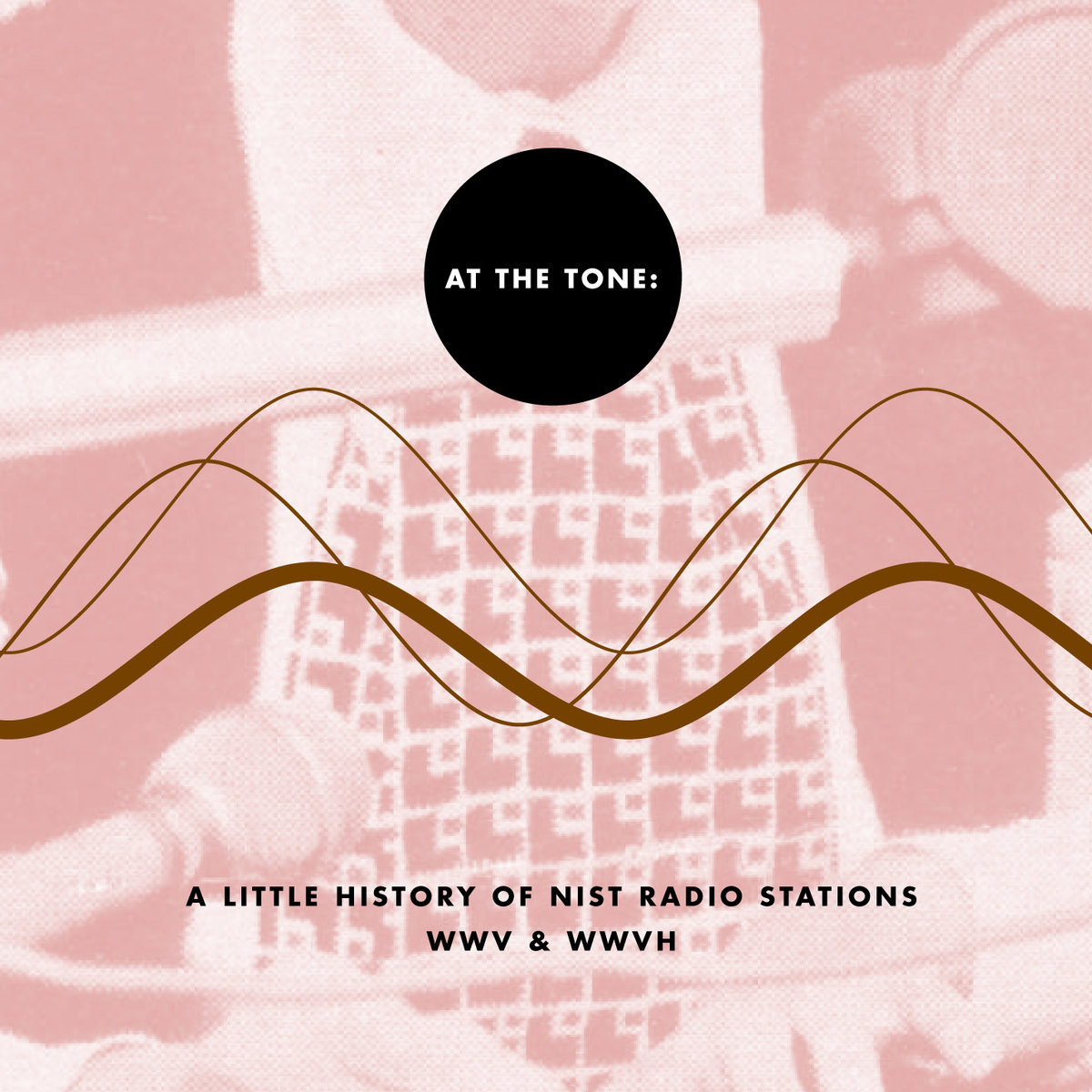
Many thanks to SWLing Post contributor, Myke Dodge Weiskopf, who shares the following update and request regarding At The Tone: A Little History of NIST Radio Stations WWV & WWVH (read about it here). Myke writes:

The times have demanded that I kick out a slightly updated version of “At the Tone”, as well as a humble request to your readership. I’ve also shared a long WWVH recording with you for the Archive by special arrangement.

As usual, [At the Tone] is still available in the same old place:

https://shortwavemusic.bandcamp.com/album/at-the-tone-a-little-history-of-nist-radio-stations-wwv-wwvh

The good news is that anyone who purchased it previously can simply re-download the album in their chosen format from their purchase history page on Bandcamp. They will be instantly treated to the new version with all the additional tracks and liner notes.

The changes aren’t major, but rather in the “nice to have” category:

  • There’s a new second recording of the 1972 WWV station ID, postdating the big format change in 1971.
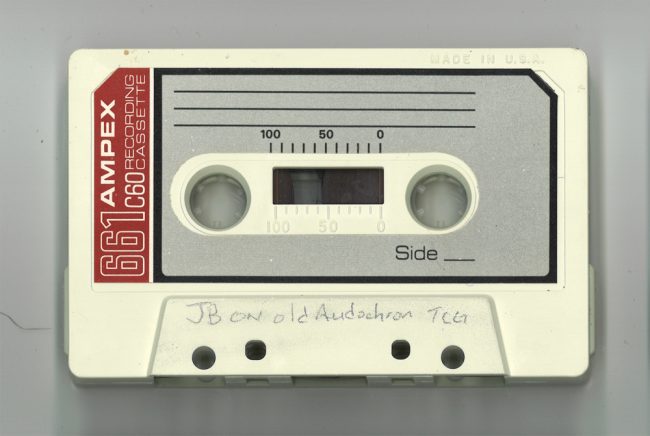
  • I’ve replaced the very short WWVH 1990 broadcast sample with a longer recording which I finally got around to cleaning up from the box of reels and cassettes sent to me by the station in 2015. I don’t know the exact date, because it came on an undated handwritten cassette labeled “JB on Old Audichron TCG”, but the broadcast format and announcement indicate it’s from the 1980s sometime up until the digital voice replacement in 1991. I attach a scan of the cassette itself.
  • I’ve done a better job cleaning up the (also WWVH-sourced) 1992 station ID recording from the original master cassette, so I’ve swapped out that track, although it’s otherwise identical in content.

So, to piggyback on that: my gift to you via Archive.org is the complete unedited 1980s WWVH recording, which runs 23 minutes total. I figured this would be a nice thing to share at this particularly turbulent moment in the station’s history.

The tape was in pretty bad shape when I received it, so while I’ve done the best I can to bring it up to par, there are some audibly wonky things going on from time to time.

Lastly, since WWV and WWVH are so much on people’s minds right now, I’m putting out one more call for recordings.

In particular, I don’t have good quality versions of the terrible 1991-era digital voices — I’d love to have longer or better tapes of those, especially if they include station IDs.

I also lost my recording of the emergency system test announcement in October 2010, not to be confused with the tests conducted in July of that same year!

Beyond those, though, I’d love to hear of any other recordings folks have dug up recently. There’s been some great stuff shared to the Archive already, but I’m always on the hunt for more to add to “At the Tone.” Contributors will be thanked in the liner notes and will be offered unlimited downloads of the set as they see fit to distribute. And if people have really special WWV recordings which they think might be locked away on on an obsolete or unplayable format, they should also get in touch – WWVH themselves entrusted me with transferring their own archival recordings, so I have some good credit in that department.
I can also vouch for Myke as a trusted custodian of any archived NIST time station recordings you may have.

Readers: if you have any WWV or WWVH recordings you’d like to share with Myke, please comment or contact Myke directly via his website.

Myke, I would like to thank you for adding this rare unedited 1980s WWVH recording to the Shortwave Radio Audio Archive. What a gem–many thanks!

If you would like to purchase and download At the Tone, please click here. As Myke mentioned, if you’ve already purchased At The Tone, simply login and download the updated version for free.
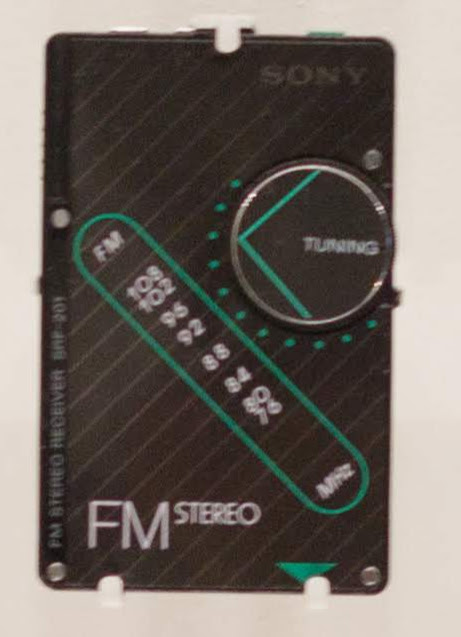
Credit card radios: Paul seeks info about the “SW One-Station Radio Clip T2”

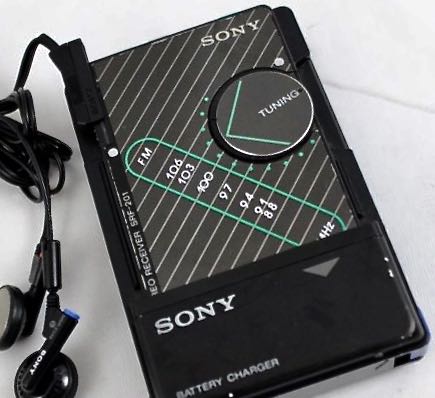
The Sony SRF-201

Many thanks to SWLing Post contributor, Paul, who writes:

On a recent visit to London’s Design Museum, I was thrilled to see a number of very interesting radio designs and models, some of which were familiar, and others I had never seen before.

Two which caught my eye were tiny Sony models from the mid 1980s.

The Sony FM RADIO SRF-201

One – the Sony SRF 201 -seems to be a little more well-known, and I’ve found plenty of information about it online, including some for sale, although it seems that the internal battery in most models is shot.

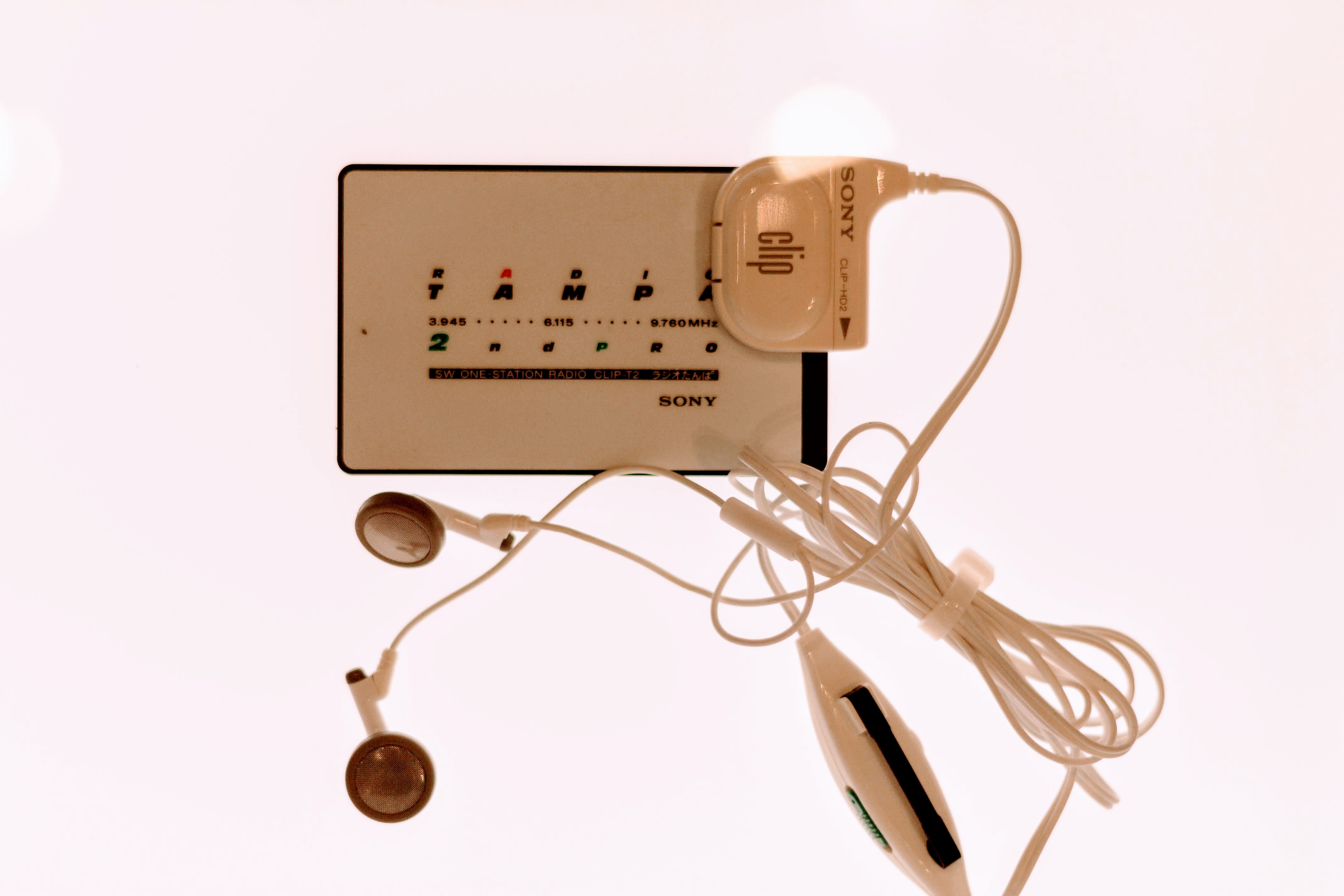
The SW One-Station Radio Clip T2

The other, which I’ve not found much about yet, and am hoping you or your readers might help with, seems to be known as ‘SW One-Station Radio Clip T2‘. It looks as though it might be a branded/promotional model for Radio Tampa, and seems to be pre-set to, or allows tuning on, shortwave between 3.945/6.115/9.760 MHz. Possibly this one is more recent than the 1980s, looking at the earphones.

I’m having trouble finding much online about the second radio, and wondered if you could help shed some light on it? I can’t even find a ‘Radio Tampa’!

Unfortunately, while the museum has great iPads at each section with some more information, the unit at the Sony section was not functioning!

Post readers: If you can shed some more light on the SW One-Station Radio Clip T2, please comment!

Thanks for sharing this, Paul. I have a soft spot for credit card radios since I used to sneak one into my 5th grade class and listen to FM stations. Somehow, I never got caught!

Richard sheds light on Cold War clandestine Radio Vltava

Many thanks to Richard Cummings of the website, Cold War Radio Vignettes, who writes:

I am putting together a series of blog posts about Radio Free Europe and Czechoslovakia, 1968.

In doing so so, I came across a clandestine radio station called Radio Vltava that broadcast
from East Germany into Czechoslovakia in support of the Soviet invasion and occupation.
There is little coverage in English about Radio Vltava but some information in German and Czech.

I also was able to come up with an audio of one of the first broadcasts as the station signed on.

I thought, and perhaps others, might find the blog interesting.

Click here to view this post.

Of course, if you (or others) see a need for corrections in the blog post, or have comments, please let me know.

Fascinating, Richard! Thank you for sharing–I really enjoyed the off-air recording of the Radio Vltava sign-on and interval signal.

Paul seeks help identifying BRT English service program theme

Many thanks to SWLing Post reader, Paul Golder, who writes:

This is a bit of a long shot.

I used to listen to a lot of DX programmes in the 1980s (around 1982-1985 mainly) and one of the stations I used to listen to was BRT’s English service on 1512kHz.

Does anyone remember the closing theme tune to their DX programme (Radio World?) or have any recordings of it? It was kind of Jean Michel-Jarre ish and was played out every week (about a minute or more) – I’ve never been able to find it and it’s been stuck in my head for 30 years!

Post readers: I you can help Paul, please comment! If you have a recording of the theme song that you can share, I’ll post it as well.

AFRTS: Thousands of hours of Roger Carroll shows now online

Roger Carroll

(Source: Radio World via Richard Langley)

Beginning in the early 1940s and for more than 50 years, the U.S. armed services produced long-form radio programs on vinyl disc to broadcast to troops overseas.

These were usually recorded by the top voice talents in Los Angeles and were heard over the American Forces Radio TV Service. Many of the same talent later created other shows specifically to aid the military with recruitment. The latter programs were then distributed to American radio stations for free on-air use.

Until recently, this trove of historical programming had been M.I.A., but now thousands of hours are available for online streaming, thanks to Army veteran Thom Whetston, who served in Panama and Korea.

“For years, AFRTS recorded many hours a week of personality-oriented music shows, and these were sent all over the world,” Whetston said. “The guys that hosted them got complimentary copies, and luckily one air talent in particular, Roger Carroll, saved most of his albums in his garage. For the last 10 years I had been writing a blog about AFRTS, and about a year ago, with Roger’s help, I began building a website where people can hear these shows again.”[…]

Continue reading the full article at Radio World…

Click here to visit Roger Carroll’s Best Sounds In Town and listen to the archive.

VOA Museum ‘Rock the Radio’ fundraiser gala September 22

(Source: Southgate ARC via Richard Langley)

Event to be held on 74th anniversary of VOA-Bethany Station dedication

Whether you engaged in dance parties in the 50s, sock-hopped through the 60s, or grooved to music of the 70s, chances are that radio provided the music of the moment.

It also meant a lifeline of accurate Voice of America news, features and music for people living in war-torn or oppressed countries.

The National Voice of America Museum of Broadcasting in West Chester will host its second annual fundraiser, “Rock the Radio” dinner-and-dance party on Saturday, Sept. 22 from 5:30 to 10:30 p.m. at the VOA museum in West Chester. Blue Stone Ivory, Cincinnati’s premier horn-driven classic rock band, will provide music from the Cold War era to help celebrate the 74 th anniversary of the VOA-Bethany Station.

“We’ll have a cocktail reception in the museum, a fabulous dinner and irresistible dance music that will keep people tapping their toes or entice them out onto the dance floor,” said Jack Dominic, museum executive director. “Funds go toward museum renovation to make the first floor accessible to people of all abilities.”

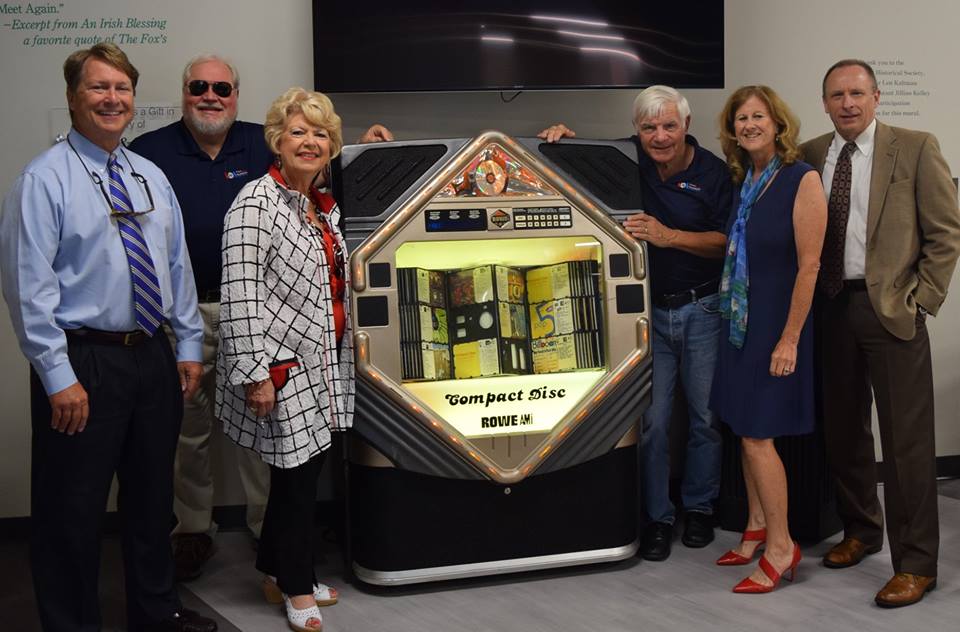
The National Voice of America Museum of Broadcasting gala committee. From left, back row: Greg Stevens, Chris Wunnenberg; Jack Dominic; Karl Ulrich. Front row: Patti Alderson and Melinda Zemper

The evening also includes the official opening of the museum’s new main exhibit hall and a private viewing of a Cold War exhibit supported by the U.S. Coast Guard’s alumni association for the USS Courier. The Courier was a floating Voice of America radio station stationed off the coast of Greece near the Panama Canal Zone from 1952-1964. It was tasked to defeat Soviet jamming near VOA target areas and contained a barrage balloon that held its medium-wave antenna aloft.

“Here in the U.S., we remember radio as entertainment, but it was a crucial way the Voice of America communicated throughout World War II and the Cold War to our troops and allies overseas and to people who lived in countries without a free press,” said Ken Rieser, president of the VOA museum board. “We want to recognize our nation’s commitment to tell the truth in media and educate people in countries where media is censored about what was going on in the world.”

Cost is $150 per person or $300 per couple, with various levels of sponsorship available for individuals, businesses and organizations. Sponsors so far include: Patti and Dick Alderson; Barbara and Larry Kellar; Mr. Mechanic; Oak Tree Communications; Sebaly, Shillito and Dyer; and Greg and Diane Stevens; Gary and Dee West; and Chris and Sandie Wunnenberg.

Sponsorship levels are: Platinum, $10,000; Gold, $8,000; Silver, $5000; and Bronze, $1,000. Sponsor recognition ranges run from free gala tickets, inclusion in the printed program, billing in all public relations and signage, recognition from the podium, logo inclusion on the museum website, and tables for 10 guests.

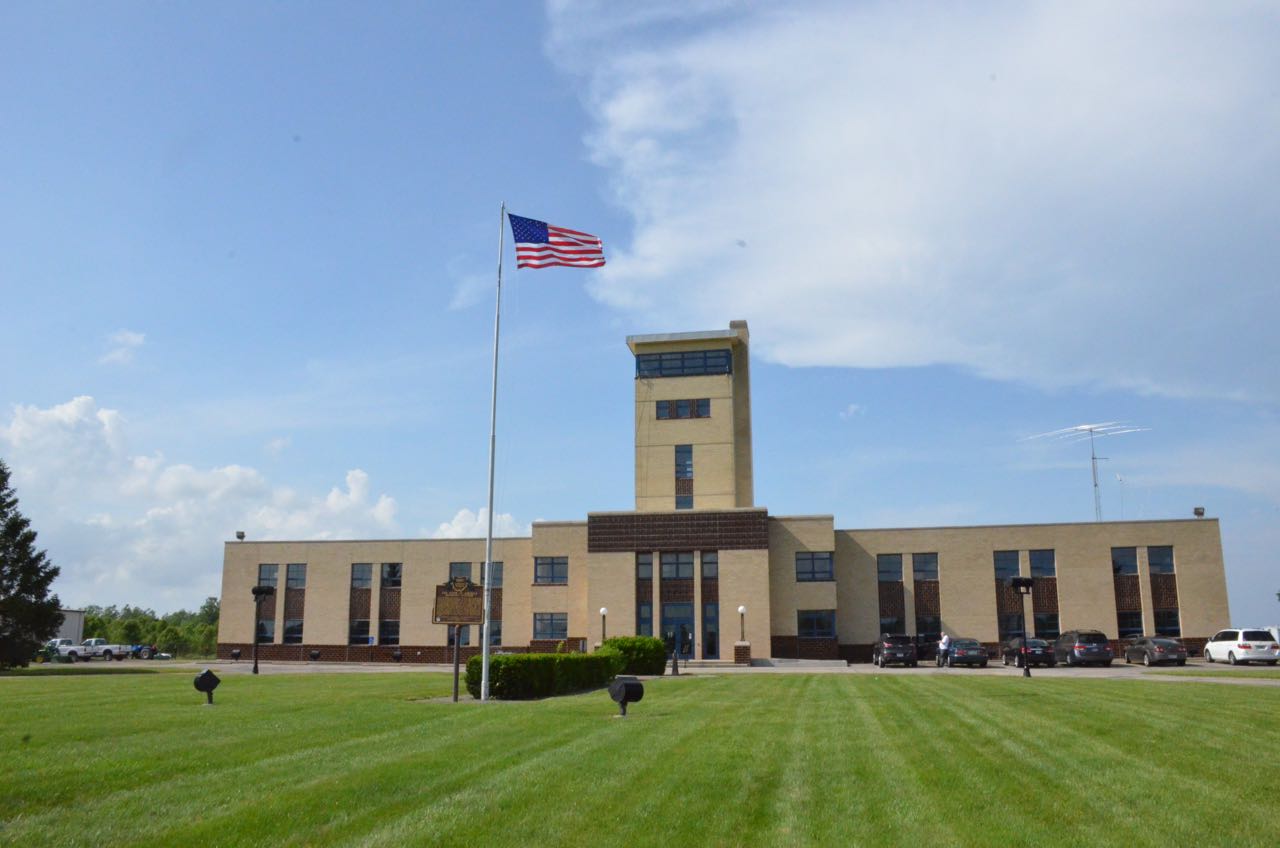
For 50 years, the VOA-Bethany Station transmitted Voice of America broadcasts to countries worldwide that lacked a free press, first in Europe during World War II and to South America during the Cold War. It was decommissioned by the federal government in 1994.

The iconic art deco building has been developed into the National VOA Museum of Broadcasting with the help of the entire community, mostly with volunteer labor. The Smith Family Foundation recently awarded the museum a $5,000 grant for education, event programming and exhibit development.

The museum is open Saturdays and Sundays from 1 to 4 p.m. at 8070 Tylersville Road. Museum general admission is $5 for adults and $1 for children. The museum recently added three new docents, but is still accepting more docent volunteers.

For more information about gala sponsorships, tickets, or to volunteer, email [email protected] , call Dominic at (513) 777-0027, or go to www.voamuseum.org.

Also, check out this article in Radio World.

Listener Post: Fred remembers discovering the shortwaves

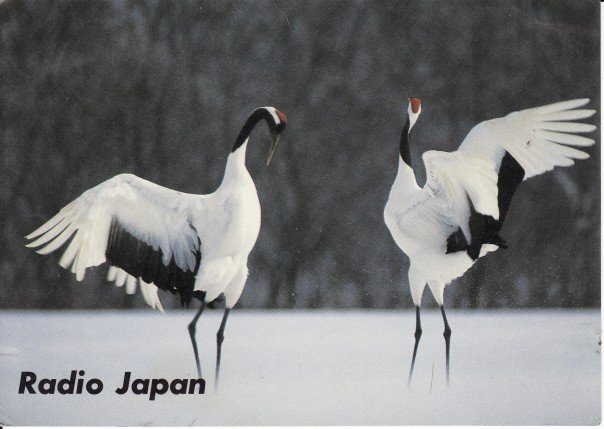
Radio Japan QSL (Source: Fred Waterer)

Many thanks to my buddy, Fred Waterer, who shared the following message with friends on Facebook and has kindly allowed me to post this here on the SWLing Post. I thought it would make a welcome addition to our Listener Posts category.

Fred writes:

On a hot humid day in July 1978, much like today, I discovered what would become a life long avocation. International broadcasting aka shortwave radio. I was playing around with a radio belonging to my father.

It was a Nordmende, manufactured just after WW2, everything on the radio, the dials and buttons were all in German. The summer before, I had figured out that UKW was FM and listened to it off and on, despite the fact it only went up to 100 MHz. No Rock 102 or CHUM-FM on this baby.

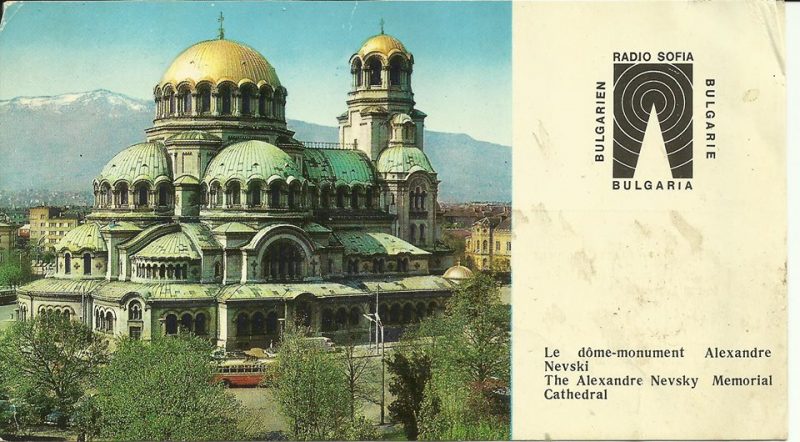
But on that day 40 years ago, I pressed KW, kurzewellen, German for shortwave. I turned the dial and heard a woman speaking English. Not unexpected. A few minutes later she identified the broadcast as coming from Radio Sofia, Bulgaria! I was astounded!!

Radio Sofia QSL (Source: Fred Waterer)

The rest of that day I tuned around and heard the BBC, and Radio Moscow, HCJB in Ecuador, Radio Prague, Radio Canada International and so many more. It was the beginning of what has become a life long hobby/obsession.

(Source: Fred Waterer)

In 40 years I have heard everything from the mundane to the dramatic. Lectures on Soviet grain production. The invasion of the Falklands. The fall of the Soviet Union. Wars. Elections. Assassinations. Music. Literature. Jamming. Propaganda. Three filing cabinets full of program schedules, reception logs, magazines and other goodies. Binders and boxes full of QSL cards, stickers and pennants. Bankers boxes full of audio recordings. That day in July 1978 changed my life. 40 years passes way too fast. Oh well, now it’s onwards to 50 🙂

Amazing, Fred! Yes indeed, for many of us one moment of discovery makes for a welcome lifelong companion!

Let me know if you’d like help digitizing those off-air recordings–I’d love to add them to the Shortwave Radio Audio Archive.

I encourage other SWLing Post readers and contributors to submit their own listener post! Tell us how you became interested in radio!