Category Archives: Nostalgia

Boat Anchor Tuesday: National HRO-50T

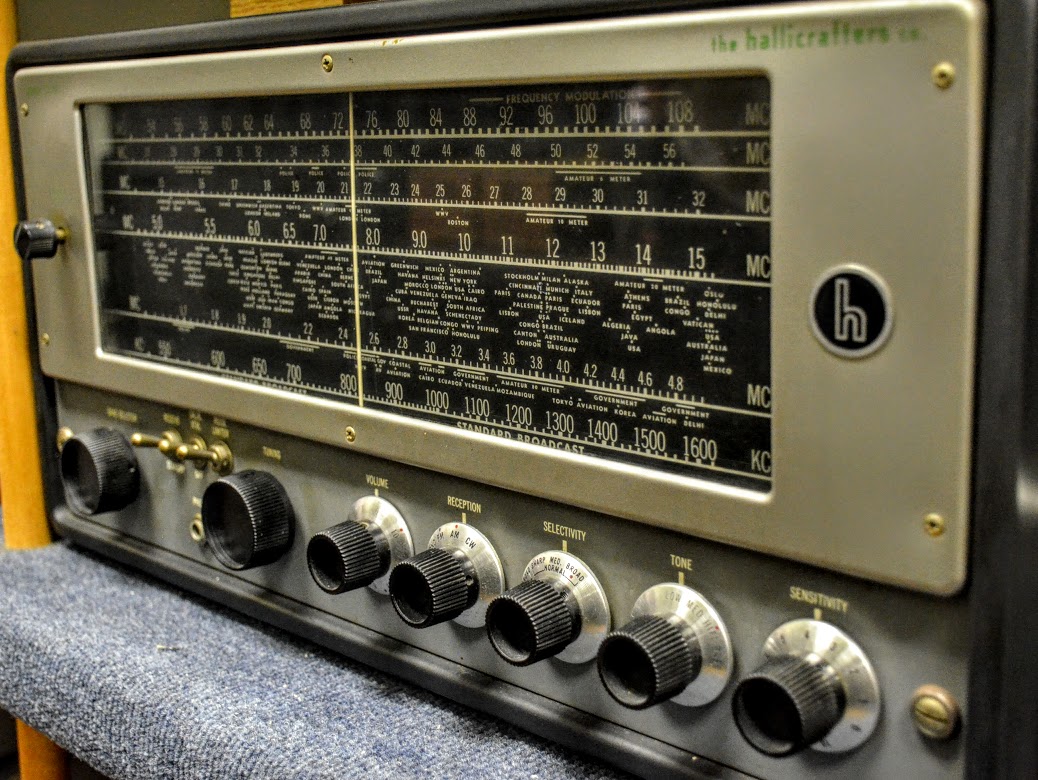
Many thanks to SWLing Post contributor, Price Kagey, who shares the following photo for Boat Anchor Tuesday and writes:

“My wonderful HRO-50T. I have replaced all tubes and now need to start on capacitors and resistors.”

What a beautiful radio, Price!  Once you’ve re-capped and replaced the resistors in this girl, you’ll have a phenomenal receiver. I’m a sucker for those HRO dials! Thank you for sharing!

Post readers: If you’d like to share a photo of your boat anchor on Boat Anchor Tuesday, simply send me an email with the photo and a short description. I’ll put it in the pipeline to publish!
Share your photos on Boat Anchor Tuesday!

Yesterday, as I took a little time to curate a massive collection of photos I took at the Museum of Radio and Technology, I posted a few “boat anchor” (heavy metal vintage radio) photos and labelled them “Boat Anchor Tuesday” on Twitter and Facebook.

Much to my surprise, I received a number of comments and emails with readers asking for more Boat Anchor Tuesday pics!

So I’ve decided to make it a feature here on the SWLing Post. After all, anyone who knows me knows that I’m a massive fan of boat anchors!

Your photos on Boat Anchor Tuesday!

Please send me a photo (or a few) of your favorite boat anchor. Every Tuesday, I’ll feature a reader’s boat anchor here on the SWLing Post.

If you can, include a few sentences about the radio: how you obtained it, what you like about it or any memories. We radio nostalgic people love this stuff!

Please send photo(s) and radio blurb to my email address found on our Contact page. I only plan to post one radio per week, so these will be scheduled far ahead to post automatically.

Shortwave Radio Recordings: SWL Digest from January 4, 1982

Do you miss Ian McFarland on Radio Canada International?

Yeah, me too.

That’s why I’m always pleased to receive off air recordings from Shortwave Radio Audio Archive contributor, Tom Laskowski.

I’ve just posted his latest off-air recording on the archive and thought I’d post it here as well. Tom note:

Here is another one of my many recordings of Shortwave Listener’s Digest from Radio Canada International, this time from January 4, 1982. This program highlights are: Glenn Hauser with his Year in Review for the previous year of 1981; part 1. Larry Magne with a test report for the Panasonic RF-9000 which listed at $US 3800!!!. The program ends with Glenn Hauser’s second part of his review of the previous year’s highlights. Unfortunately the broadcast suffers from some adjacent-channel interference.

Starting time: 2130 UTC on January 4, 1982

Frequency: 15.325 MHz

Receiver location: South Bend, Indiana

Receiver: Realistic DX-302

Click here to download this MP3 audio.

If you enjoy off-air recordings, check out some of the recent ones on the archive which include:

Thanks again, Tom, and thanks to the dozens of contributors that make the shortwave archive such a treasure trove of shortwave history!

Discovering the Apollo Survival Radio

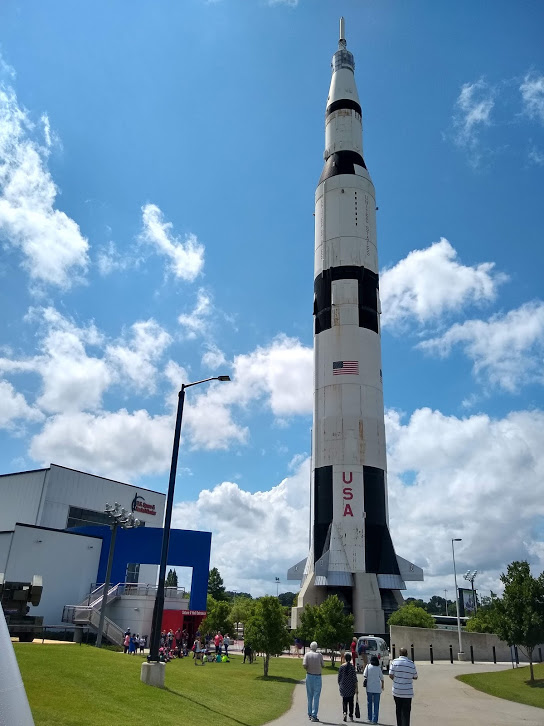
In a previous post, I mentioned that I visited the US Space and Rocket Center in Huntsville Alabama last week (a museum I highly recommend to anyone interest in spaceflight).

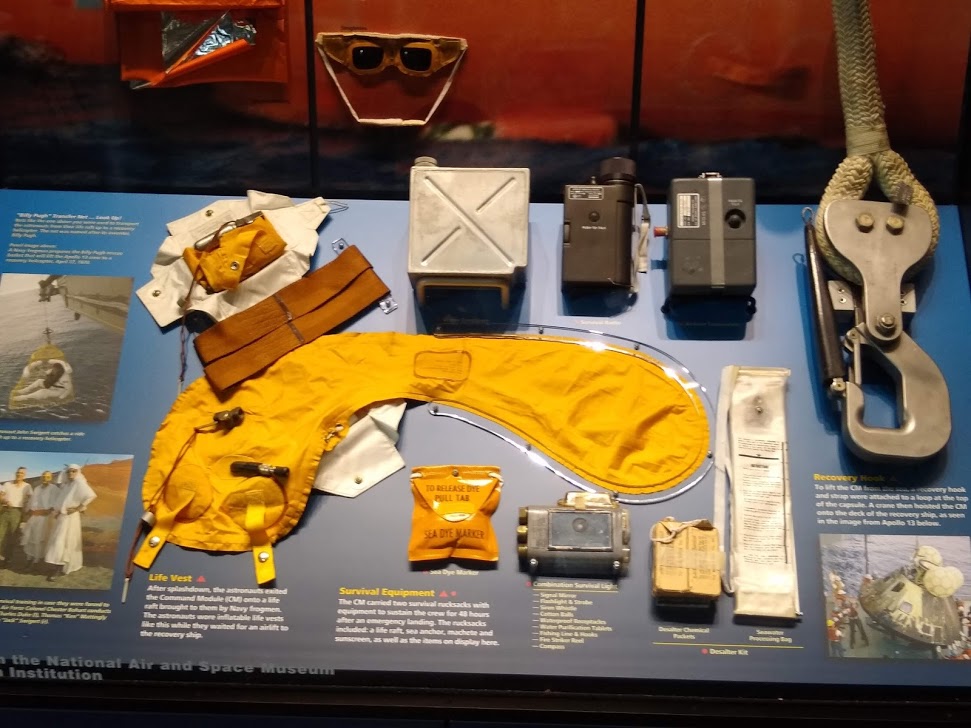
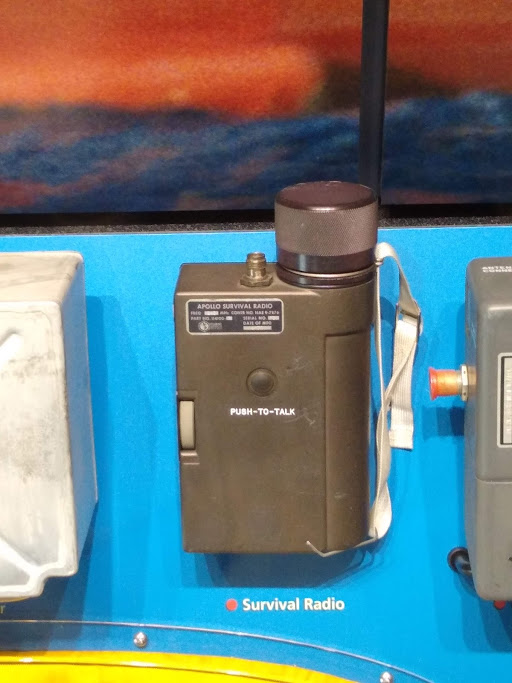
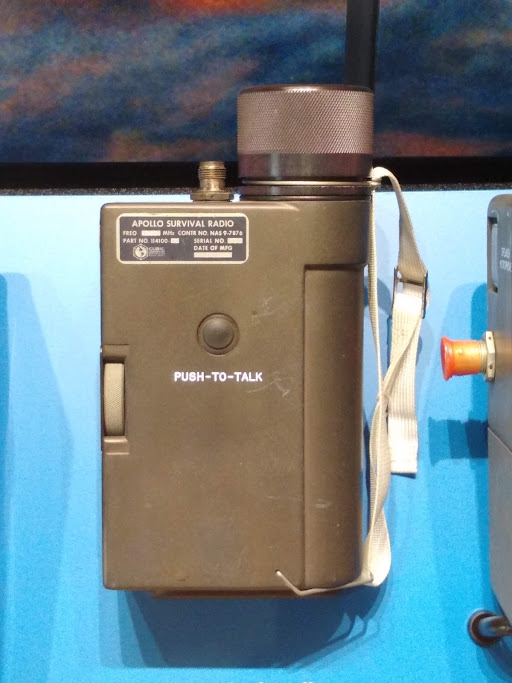
While perusing numerous displays in the Saturn V Hall at the Davidson Center for Space Exploration, I noted this little radio in a case devoted to Apollo survival gear:

I found no detailed information about this survival radio at the display (not surprising), so I snapped a few photos and researched it when I got back to the hotel room that evening.

The Smithsonian Air And Space Museum was one of the few sources I found with a description of this radio:

Survival gear was provided to Apollo astronauts in the case they returned to Earth and there was a substantial delay in rescue and recovery operations. One item in the survival kit was a hand-held UHF radio. Beginning with the Apollo 12 survival kit the radio beacon was manufactured by the Cubic Corporation. It could operate either as a “beacon” or for two-way voice communications. Permanently set to operate at 243 MHz, the transceiver and its cylindrical battery pack were water-tight. It could operate in beacon mode for up to 24 hours. An extendable antenna, a second battery pack, and a spacecraft connector cable were also provided.

I love finding purpose-designed radios like the Apollo Survival Radio.

Post readers: Have you ever stumbled upon similar survival or purpose-built radios? Please comment!

School of the Air celebrates 60 years and a vision of independence

(Source: ABC News vi Kim Elliott)

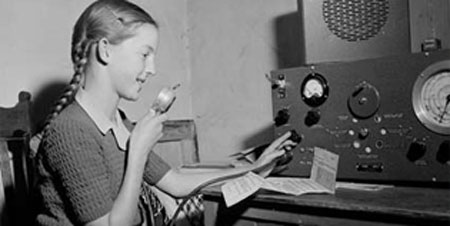
Parents of children in South Australia’s outback are calling for the state’s School of the Air to become independent so it has more control over how students learn.

The school at Port Augusta in the state’s north has marked its 60th anniversary of delivering lessons to students in remote areas.

When the school began in 1958, lessons were given via high frequency (HF) radio, but are now done over the internet.

In 1991, the School of the Air amalgamated with the SA Correspondence School to become Open Access College, which is based in Adelaide.

At a recent meeting in Port Augusta, the Isolated Children’s Parents’ Association called for the School of the Air to become an autonomous education provider.

The association’s north-west branch president Lynly Kerin said it was “no longer beneficial or manageable” for the school to be part of the college, and that its 49 students were being overlooked in the college’s cohort of 5,600 students.

Ms Kerin said the School of the Air community felt “overshadowed by decisions being made by people who may not understand the needs of our kids out here in remote areas”.

“At the very least, we request that the Minister look at an investigation into the change that we’re proposing,” she said.[…]

Continue reading at ABC News.

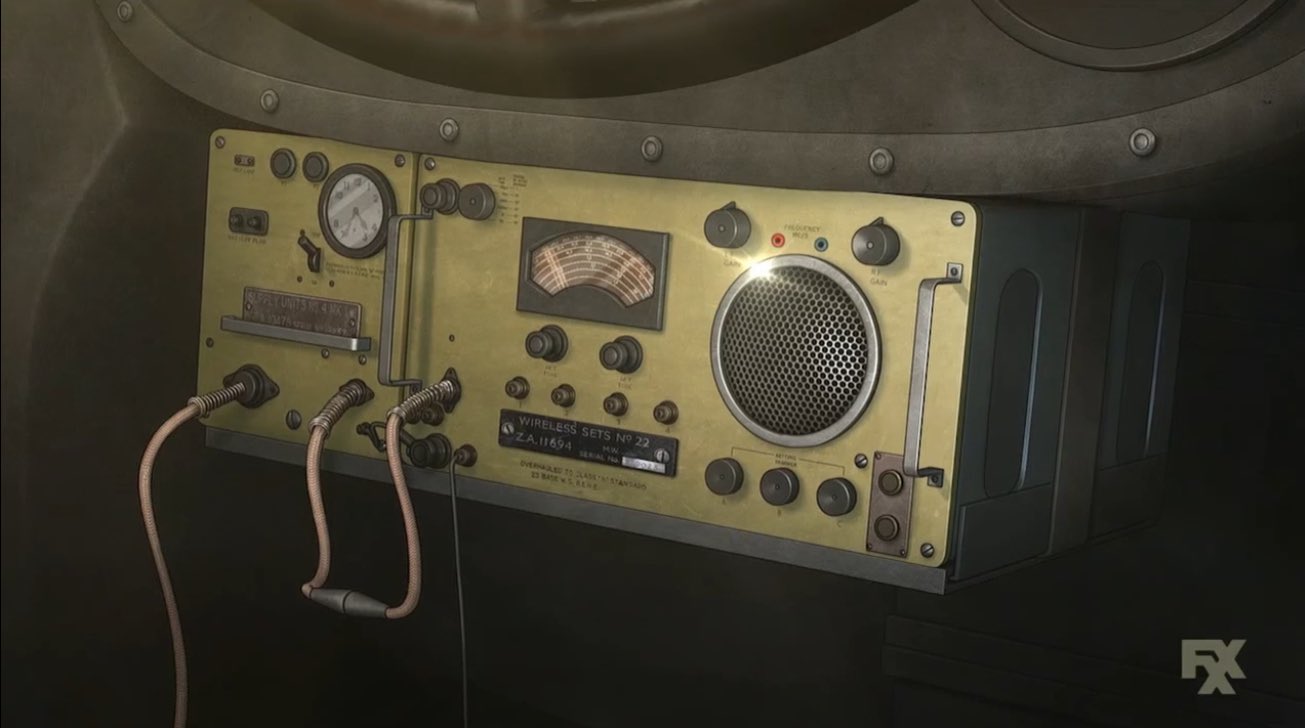
Ulis spots a brilliant radio illustration in Archer

Many thanks to SWLing Post contributor, Ulis, who shares the screenshot above–from the FX series Archer–via Twitter and notes:

I agree!  Kudos to the Archer team! That’s a brilliant and intricate illustration for an animated series. Thank you for sharing, Ulis!

I’ll add this post to our growing archive of radios in film.

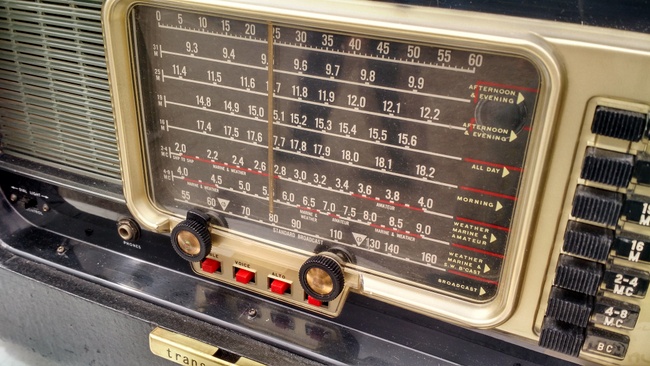
Radio World features a tribute to the Zenith Transoceanic

Many thanks to a number of SWLing Post contributors who’ve shared a link to this excellent article by Denny Sanders in Radio World Magazine about the history of the Zenith Transoceanic:

Zenith Trans-Oceanic Radio in War and Peace

This iconic portable receiver was known for durability and quality

They say necessity is the mother of invention. Nothing proves this more than the story of how the iconic Zenith Trans-Oceanic portable radio receiver came into existence.

Commander Eugene McDonald (1886–1958), the founder of Zenith Radio, was a stickler for quality and insisted that any Zenith product represented cutting edge technology and design integrity.

He was also an accomplished yachtsman. During his many ocean voyages, he constantly was frustrated with the inability of any portable commercial radio set to perform reliably at sea. In about 1939, he ordered the Zenith R&D department to come up with a rock-solid, portable AM receiver sensitive enough to pull in signals from great distances. He insisted that the radio be a multi-band unit including shortwave, marine and aircraft bands.

The Zenith crew came up with a gem: the Trans-Oceanic, a gorgeous piece of engineering housed in a robust and dramatic cabinet designed by the brilliant Zenith industrial designer Robert Davol Budlong.[…]

Continue reading the full article at Radio World Magazine online.