Category Archives: Nostalgia

I picked the wrong time to “thin the herd”

I had a nice phone chat with SWLing Post contributor and good friend Robert Gulley this week and discovered that, like me, he’s in the process of selling a few radios in his collection.

Robert is thinning his radio herd in order to help fund another hobby: photography. I’m minimizing my collection, on the other hand, to make room in my radio shack for a dedicated soldering station/work bench.

Other than units to evaluate and review for the Post, I’ve vowed not to acquire any more radios for the rest of this year. I’m trying to go “cold turkey” until January 1, 2019.

Turns out good ole Robert, of all people, is putting my prohibition to the test. I just found out he’s selling two radios I’ve kept in my search list.

One is the GE Super Radio II:


Robert is selling an excellent specimen. The Super Radio II is a choice model for AM DXers which is why I’ve kept an eye out for one. I’ve found a number of Super Radio I and III models locally, but not a II.

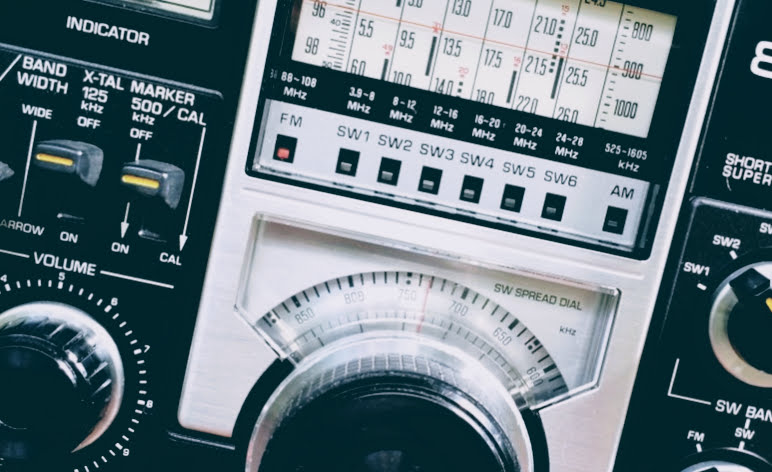
Another classic he’s selling is the RadioShack DX-440 (a.k.a. Sangean 803A):

If you’re a long-time reader of the Post you might recall that the ‘440 was my first digital portable. It was my travel companion when I lived in France during university, so I have a lot of nostalgia for this particular set. Of course, it had room-filling audio and great sensitivity and would operate for ages on batteries.

I’m going to try to look the other way, though. I hate to fall off the wagon so close to the end of the year!

Thanks a lot, Robert!!! (Ha ha!)

[If interested, here are links to Robert’s DX-440 and Super Radio II on eBay.]

Post readers: Do you have any particular radio models on your search list? Please comment!

Peggy Sue (K5PSG) is silent key

Image Source: PeggySueOnline.com

Many thanks to SWLing Post contributor, David Goren, who notes the passing of Peggy Sue who was the inspiration for Buddy Holly’s song. Dave notes, “Peggy Sue was a ham.”

She was indeed and her callsign was K5PSG. David shared the following article from the  Lubbock-Avalanche Journal:

Peggy Sue Gerron, who will be forever remembered in association with Buddy Holly because of his song bearing her name, died early Monday at University Medical Center in Lubbock.

She was 78.

Friends in Texas and New Mexico, who particularly knew her as a ham radio enthusiast, remember how fascinated she would be in talking to people she had never met from around the world.

Doug Hutton of Lubbock, who also is an amateur radio operator, said he was one of her friends who helped her get her radio license a decade or so ago.

Bryan Edwards, now living in New Mexico after operating the business called Edwards Electronics in Lubbock, said, “Peggy Sue was always just plain good to people.”

Hutton didn’t remember Peggy Sue from high school.

“She was three years younger than I am,” he said. But he knew her later as a ham radio buff.

“For several years, we had an event every year where it would be publicized within the ham radio community so that people would get on a certain frequency and talk to Peggy Sue,” he said. “That was a great thrill to those people to talk to her.”[…]

Continue reading the full article here.

Click here to watch Buddy Holly perform Peggy Sue live on the The Ed Sullivan CBS TV Show.

Ed spots a Super-Power Long Range Panoramic 11-71 in “The Interview”

Many thanks to SWLing Post contributor, Ed, who writes:

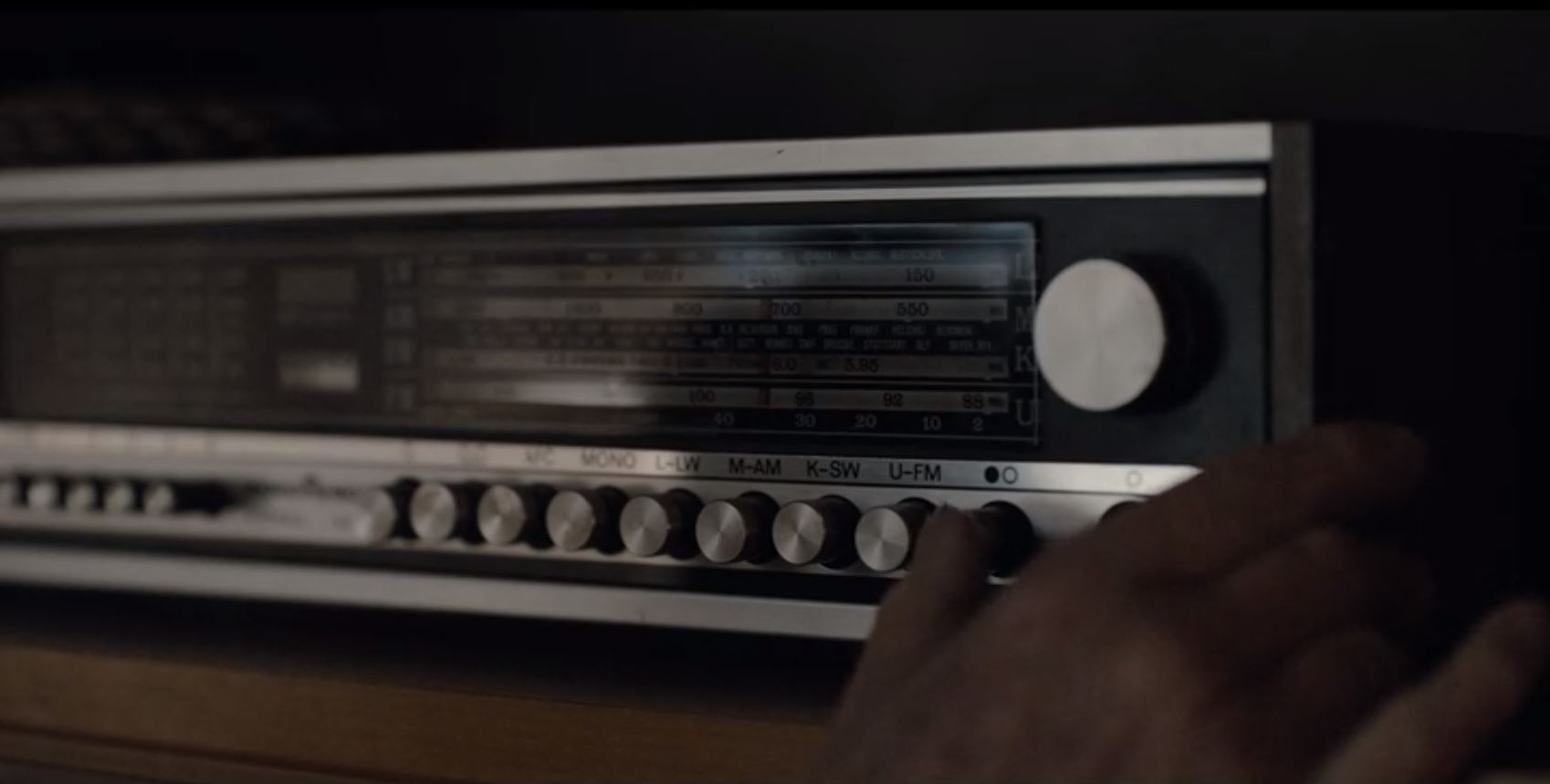
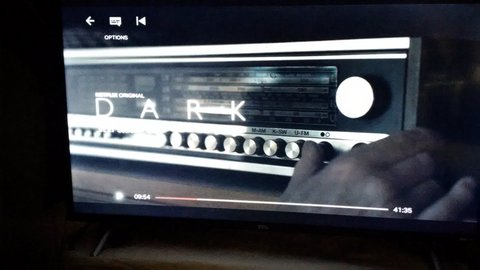
Whilst watching the 1998 movie The Interview on Netflix, I spotted a Kriesler Radio Company Super-Power Long Range Panoramic 11-71 made in Newtown (Sydney) Australia about
1:11 into the movie (the opening scene.)

More information here: https://www.radiomuseum.org/r/kriesler_11_71_117.html

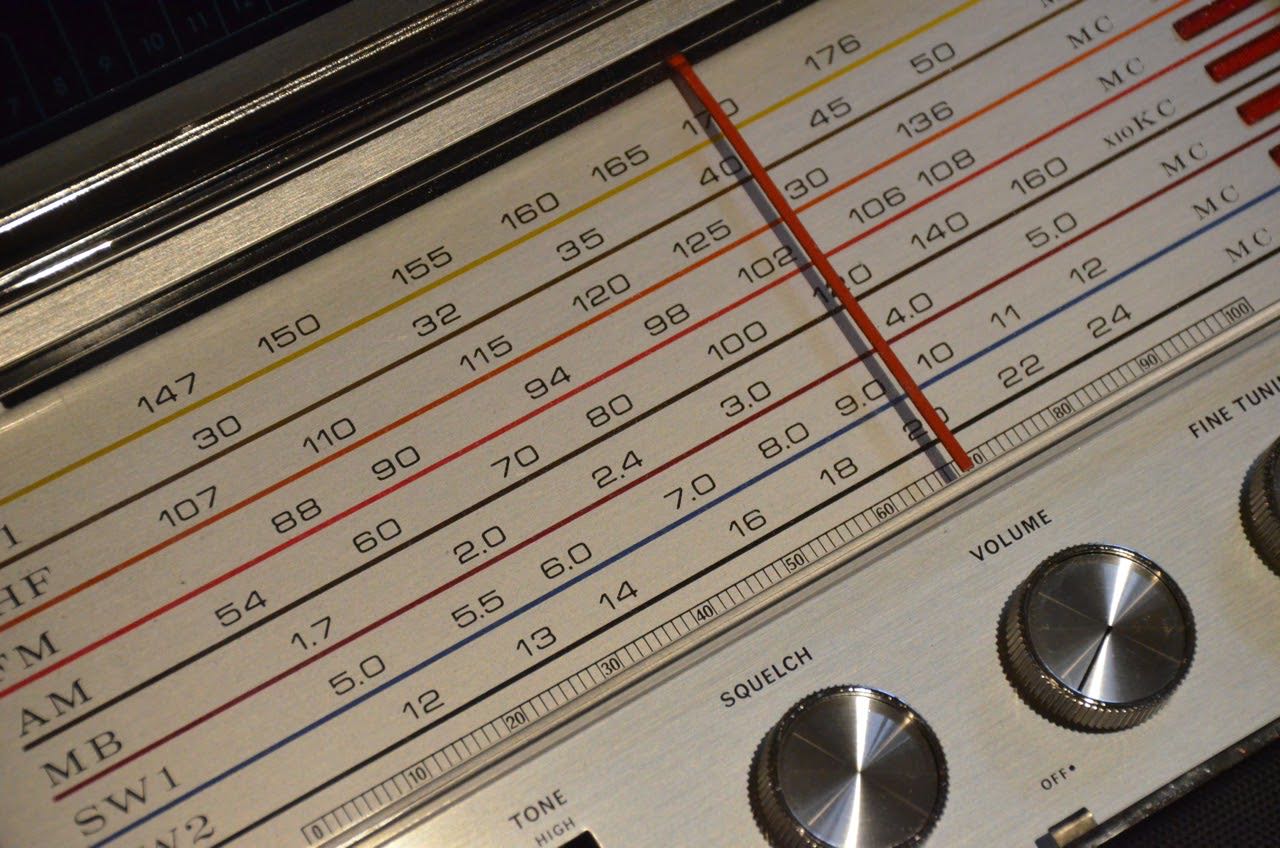
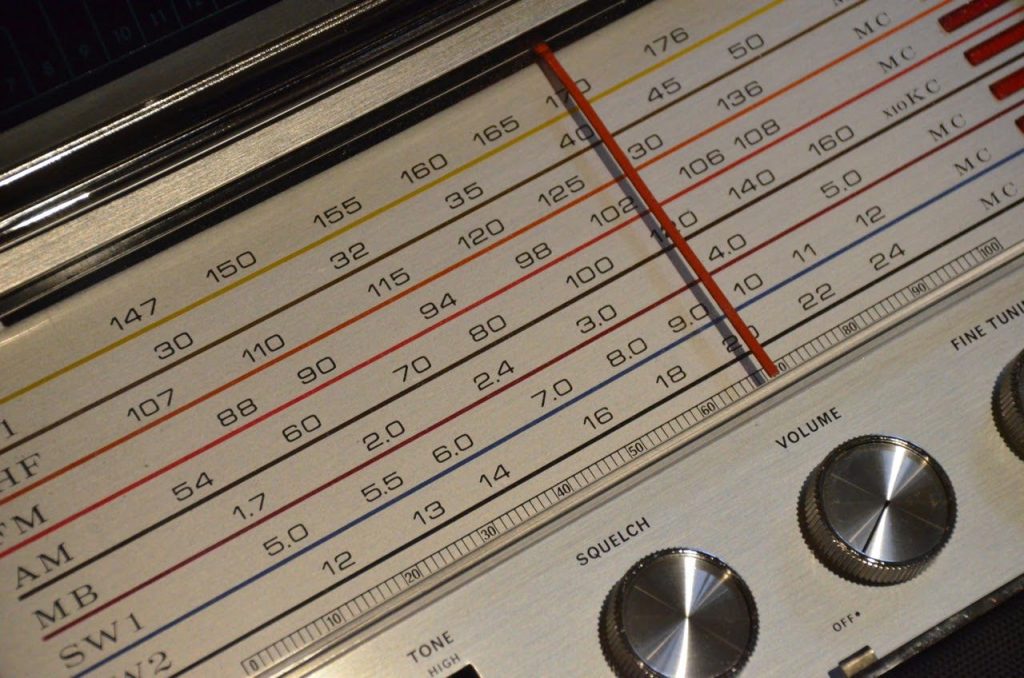
I’d never heard of the Kriesler Radio Company before, probably because they were in Australia. The Super-Power Long Range Panoramic 11-71 was made in the late 50’s is beautiful, and it has interesting bandspread markings.

I agree, Ed! The bandspread/dial on the Kriesler is beautiful. I was not at all familiar with this Australian radio–thank you for sharing!

I’ll add this post to our ever growing archive of radios in film.

Reader seeks Radio Bulgaria jingle

Many thanks to SWLing Post reader, Sarkis, who writes with the following inquiry:

I thought I would turn to the SWLing Post for some advice please.

I am trying to find recordings of Radio Bulgaria’s Italian Service which was taken off the air in 1997.

I’m after a jingle with which the current affairs programme started. If my memory serves me right, it was Italo Disco style.

Thank you in advance!

Kind regards,
Sarkis

Post readers: Does anyone have a recording of this jingle or remember the tune? Please feel free to comment with any details or a link to the recording!

Citizens Band (CB) radio celebrates 60th anniversary

Many thanks to SWLing Post contributor, Ron, who reminds us that today is Class D CB radio’s 60th anniversary. From Wikipedia:

On September 11, 1958 the Class D CB service was created on 27 MHz, and this band became what is popularly known today as “Citizens Band”. There were only 23 channels at the time; the first 22 were taken from the former amateur radio service 11-meter band, and channel 23 was shared with radio-controlled devices. Some hobbyists continue to use the designation “11 meters” to refer to the Citizens Band and adjoining frequencies.

My dad was an avid CBer when I was a kid. He had an FCC-issued license and belonged to a healthy community of CBers in our part of the state. He had a beautiful yellow Robyn T-240D (same as pictured above) as a base station, and a mobile CB installed in every car. After the FCC dropped the licensing requirement, his activity on the bands slowed down although it did give me a chance to hop on.

My best friend (who lived about 1/4 mile away) and I used to keep in constant contact with our 40 channel 5 watt CB walkie talkies. It was great fun.

Of course, it was a treat when I would catch some “skip” and make contact with someone two states away with that same walkie talkie.

Like it or hate it, a lot of radio enthusiasts and ham radio operators cut their teeth on CB radio.

I was certainly one of them.

CB radio is still a pretty dynamic public radio space today.  True, it’s a bit of a free-for-all and if you can’t tolerate profanity and “colorful metaphors” then you best stay away.

You don’t need a CB radio in order to listen to the CB frequencies; most SDRs and many portable shortwave radios can tune in. If interested, check out this previous post: Listening to Citizens’ Band (CB) radio on your shortwave receiver.

Post readers: Anyone still use CB radio today? Anyone else get their start in CB radio? Any stories you’d like to share? Please comment!

Jackie Gleason loved radio

Jackie Gleason with Audrey Meadows (The Honeymooners)

Many thanks to SWLing Post contributor, Ron, who notes that, “Jackie Gleason was a radio nut during his last years.” He shares the following quote from Gleason’s stepson [source]:

“The majority of his time at home was spent quietly,” he said. “He was a prolific reader. Constantly reading. There was a store called Bookland… Every week or two the owners would come by and drop off a box of books. Jackie just consumed books. He read everything but he was most intrigued with non-fiction. He felt that his life as an actor, as a performer, was all fiction.

“He also listened to the radio. He had a room upstairs that we called the radio room. There were dozens of radios. He listened to airplanes flying over at the airport, long distance radio operators from around the world. He had the passion and curiosity of a child with the experiences of an adult.”

Thanks for sharing that, Ron! I’ve always liked Jackie Gleason and especially those episodes of The Honeymooners.

Atlas Obscura features KPH Maritime Radio Receiving Station

Cypress tree avenue towards KPH. Photo by Frank Schulenburg via Wikimedia Commons

(Source: Atlas Obscura via Eric McFadden)

One of the most stunning sights of the Bay Area is the historic KPH Radio Station, also known as Marine Coast Station KPH. To reach the station, you must first pass through a clerestory tunnel of cypress trees near the Point Reyes National Seashore.[…]

KPH began providing Morse Code telegram service to ships at sea in the early 20th century, broadcasting from the Palace Hotel in San Francisco (where the station gets its PH call sign). The 1906 earthquake forced the station to move until it was eventually acquired by the Radio Corporation of America (RCA) and found its home in Marin County. The Receiving Station is a classic white Art Deco structure built in 1920. The transmitters themselves, in nearby Bolinas, are a similar style.

At the time, there were dozens of stations like KPH around the United States, though KPH was one of the biggest, sometimes referred to as “the wireless giant of the Pacific.” When the station fell into disuse, land contractors were set to demolish it, including its antennas, to build condominiums. But Globe Wireless acquired the site in 1997 and it was left untouched.[…]

Read the full article at Atlas Obscura.