Category Archives: Radio History

“The BBC and the Cold War”

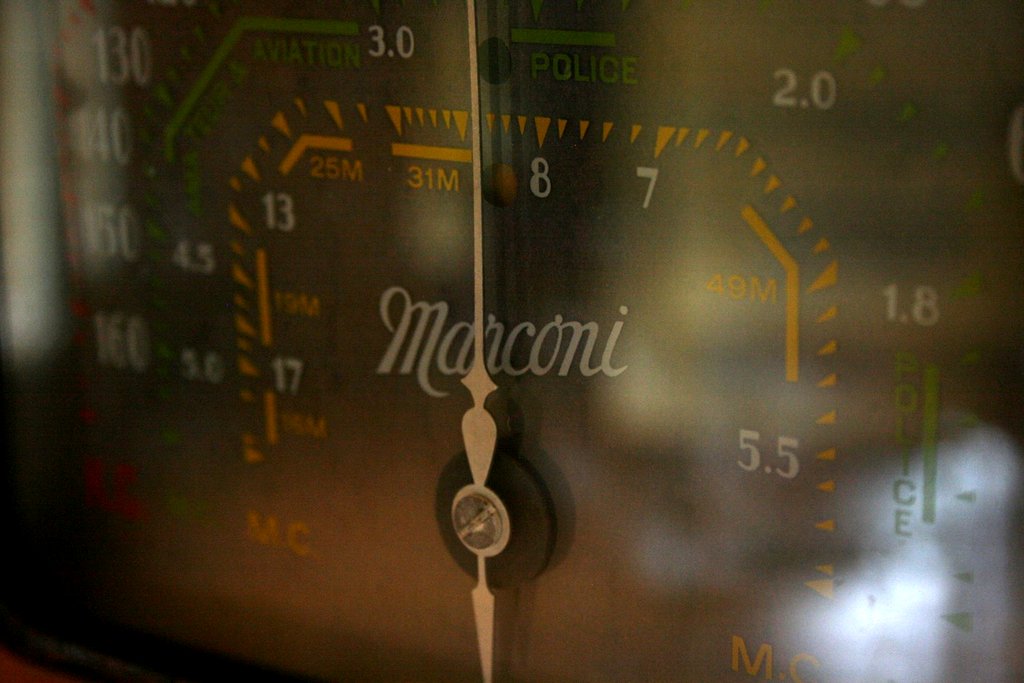
A vintage radio from Kim Andre Elliott’s collection.

Many thanks to SWLing Post contributor, Kris Partridge, who writes:

With Saturday being the 30th anniversary of the Fall of the Berlin Wall, BBC OnLine has posted this to commemorate the anniversary:

https://www.bbc.com/historyofthebbc/100-voices/coldwar

The Cold War was the defining global conflict of the second half of the Twentieth Century. Fought across multiple terrains, the “soft power” of international broadcasting placed the BBC on the frontline of the information war.To commemorate the thirtieth anniversary of the fall of the Berlin Wall, we explore the role the BBC played in communicating our understanding and experience of the Cold War, with the help of newly-released oral history interviews with those involved.

Click here to view this collection of stories and memories at the BBC.

Thanks so much for sharing this, Kris!

BBC Witness History: “Britain’s secret propaganda war”

Check out this brilliant BBC Witness History piece regarding the British propaganda effort during WWII:

How sex, jazz and ‘fake news’ were used to undermine the Nazis in World War Two. In 1941, the UK created a top secret propaganda department, the Political Warfare Executive to wage psychological warfare on the German war machine. It was responsible for spreading rumours, generating fake news, leaflet drops and creating fake clandestine German radio stations to spread misinformation and erode enemy morale. We hear archive recordings of those involved and speak to professor Jo Fox of the Institute of Historical Research about the secret history of British “black propaganda”.

Click here to listen to this program via the BBC Witness History website.

BBC Program: “London Calling: Cold War Letters”

Many thanks to SWLing Post contributor, David (G4EDR), who writes:

Looking forward to this documentary TV programme tonight. Looks like it will be about the BBC WS during the cold war.

https://www.bbc.co.uk/programmes/m000b1h0

Thanks for the tip, David!

Readers, my post is a bit late–David sent this two days ago. Still, the program is on the BBC website for a few more weeks, however it is very much geo-blocked so you’ll need a work-around if viewing from outside the UK.

The Netherlands celebrates 100 years of radio

Many thanks to SWLing Post contributor, Gérard Koopal, who writes:

Dear Thomas, on November 6 it is exactly 100 years ago that Hans Idzerda transmitted the first radio broadcast in the Hague, the Netherlands.

To commemorate this event, the VRZA has a special broadcast using the original Zeedijk studio from radio Veronica and historical NOS/NRU studios. The broadcast is from 10.00 till 21.00 hours CET and there is an internet stream available.

Also rebroadcasting through some lpam stations. For more information see this website (in Dutch):

www.hollandspalet.nl

Greetings, Gérard Koopal

Thank you for sharing this, Gérard!

“When the world got its news from shortwave radio”

Many thanks to SWLing Post contributor, Dennis Dura, who shares the following article from SwissInfo.ch. Make sure you visit SwissInfo.ch to listen to their embedded recordings:

What did SWI swissinfo.ch sound like for the first seven decades of its existence? The short answer: a radio station. 

From the mid-1930s to 2004, Switzerland’s international service was Swiss Radio International (SRI). The first few decades of SRI’s existence were the heyday of shortwave – it was often the only way of getting news directly from other countries.

A brief history of SRI, the predecessor of swissinfo.ch, helps explain why you hear what you do in the video above.

What began as the Swiss Short Wave Service in 1935, would grow from broadcasting programmes in German, French, Italian and English to include other European languages and Arabic, and eventually change its name to Swiss Radio International.

The international service was considered a voice of neutrality during times of war, first during World War II, followed by the decades of the Cold War and up to and including the first war in the Gulf in the early 1990s.

This decade would mark the beginning of the end for Switzerland’s shortwave broadcasts. Shortwave transmitters gave way to relaying programmes via satellite, and this, in turn, would give way to the internet when the service went online in 1999 as SRI’s website.

In 2004, the plug was pulled for good on SRI as part of budget cuts, but not swissinfo.ch. Now producing exclusively online, the international service extended its linguistic reach by adding Russian, Japanese and Chinese, and publishing more video and audio reports.

Journalists working in swissinfo.ch’s current ten languages collaborate closely to set the editorial agenda, providing the necessary context in their stories so they are understood wherever they are read, seen, or heard in the world.

Project ‘The Sounds of…’

This article is part of the project “The Sounds of…” produced with our partner media organisations Polskie RadioRadio Canada InternationalRadio Romania International and Radio Prague International. Further videos have been produced by journalists at these outlets, to give an insight into their work in these countries.

Eifeler Radiotage to broadcast from Cold War bunker

Photo source: Eifeler Radiotage

Many thanks to SWLing Post contributor, Gérard Koopal, who writes:

This might be interesting for your followers in Europe and especially for those living in or nearby Germany.

On the 9th and 10th of November, the Eifeler Radiotage are to start transmitting in German from a Cold War bunker in Germany. There is also a possibility to visit the location (Kall Krekel). Below is a link to their homepage where you can also find a few videos from the Cold War radio room which is still functional and in use.

https://www.eifeler-radiotage.de/

Thanks for the tip, Gérard!

A radio museum…in a subway

Many thanks to SWLing Post contributor, Paul Evans, who shares a link from Atlas Obscura featuring the Museo de la Radio in the Parque de los Venados station in Mexico City:

Upon entering the Parque de los Venados station of the Mexico City subway system, you may be surprised to find that you’ve also entered a museum. Here, the subterranean corridors double as the Museo de la Radio (Radio Museum), a small institution dedicated to the communication system’s history.

The museum’s exhibits display different radio-related devices such as lightbulbs, consoles, and microphones. The most prominent is the famous four-key xylophone with which the XEW—dubbed “the voice of Latin America”—announced its broadcasts during the golden age of the ’30s.

Other showcases contain collections of old radios, and still more highlight radio stars’ records. The display cards narrate some important events such as the first transmission, the birth of the digital radio, tidbits of curious data, and explain how the sound waves work.

The most interesting part of the museum is the radio booth, which actually broadcasts live shows. It was installed and opened in 2018, complete with the most advanced technology. One space is the speech booth, and another is the editing booth.[…]

Continue reading and view all photos at Atlas Obscura.