Category Archives: Radio History

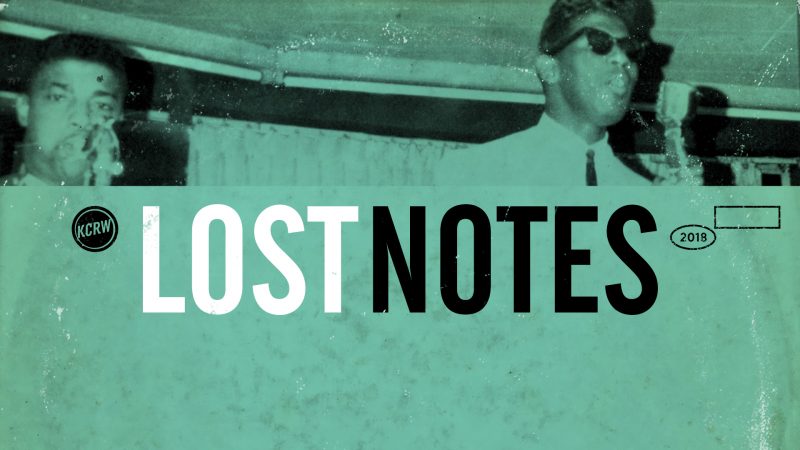
KCRW: The Rise of Pirate Radio Station WBAD

SWLing Post readers: check out this amazing audio documentary by our friend David Goren about the legendary hip hop pirate radio station WBAD. It’s part of a new series from KCRW called Lost Notes.

David shares the following note:

“Endless thanks to DJ Cintronics, and Dren Starr for sharing their stories. Thanks also to Myke Dodge Weiskopf and Nick White of KCRW for their incredible, skillful work and dedication bringing this to fruition.

If by chance you are not a hip hop fan, I would still encourage you to listen to this compelling two person narrative about people who love music and the lengths they go to put it on the air.”

Click here to listen via KCRW or subscribe to Lost Notes via iTunes or Google Play.

Clyde Haehnle: Loss of a broadcasting icon

(Source: The VOA Museum via David Snyde)

Museum Icon Passes Away

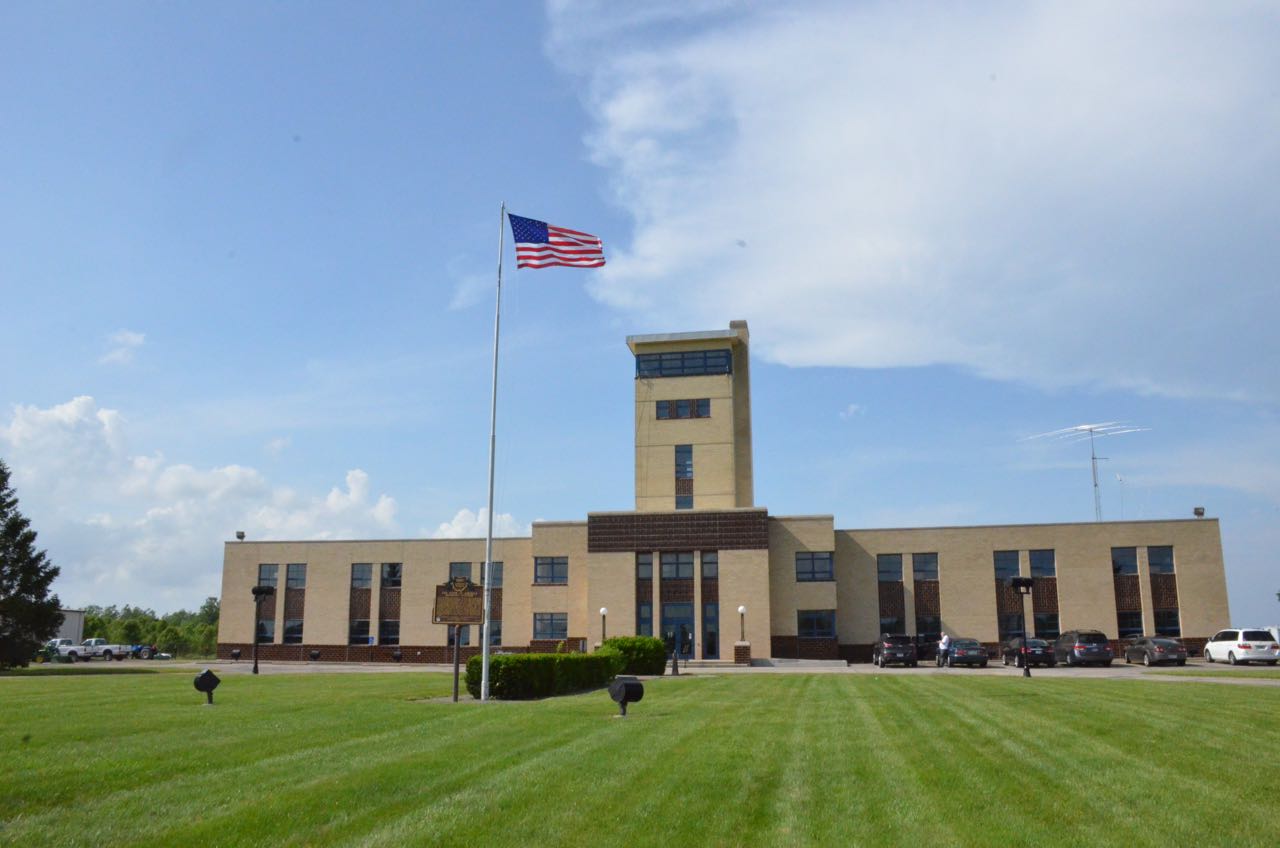
The National Voice of America Museum of Broadcasting mourns the loss of one of its major leaders and benefactors. Clyde Haehnle passed away peacefully on Sunday, April 8th.   Over the years, this icon in the development of broadcasting technology, not only locally but nationally, was the driving force behind the museum.

A veteran broadcasting engineer and executive, Mr. Haehnle was instrumental in the early meteoric development of Powel Crosley’s WLW. While working at WLW, fresh out of electrical engineering school at the University of Cincinnati, he was assigned in 1942 to work on design and construction of VOA-Bethany Station, the transmission facility of the newly- minted Voice of America. The facility operated from 1944 thru 1994 and beamed programs worldwide from the highest power shortwave transmitters built in the world at that time.

The rhombic antenna design requiring extensive mathematical calculations fell to Mr. Haehnle. His work accomplished with pencil, paper and a slide rule resulted in some of the most efficient antenna arrays ever built and enabled the VOA programs transmitted from the hilltop north of Cincinnati to be heard by eager listeners worldwide. P of Engineering at AVCO Broadcasting. He held many patents in electronic technology and continued to be a curious and thoughtful proponent of technology well into his ninth decade.

Mr. Haehnle’s untiring leadership and support has enabled the National Voice of America Museum of Broadcasting to develop into a rich educational institution celebrating the role broadcasting has made in the dissemination of programs globally encouraging democratic principles to truth-starved audiences.

The Museum plans a celebration of Mr. Haehnle’s extraordinary life later this spring.

Read more about Clyde.

California Historical Radio Society has acquired one of 8 original NBC chime machines

(Photo source: The CRHS Newsletter)

Many thanks to SWLing Post contributor, Dave Richards (AA7EE),  who writes:

Thomas – I know you’ve posted before about the NBC chimes, so I thought you might be interested to know that CHRS, the California Historical Radio Society, has acquired one of 8 original NBC chime machines. They don’t think that more than a dozen were ever made. CHRS have their own building on the island of Alameda, CA, and are putting a huge amount of time and work into amassing an impressive collection of vintage radio gear. [I]f you scroll about 1/3 way down this page, you’ll see the news, along with a brief history of an NBC chime machine, and pictures of the one they now have in their collection. It is a rare find indeed!

Click here to read the new on the CHRS newsletter.

Very cool! Thank you for sharing this, Dave! I’m very happy to hear that these chimes have proper custodians.

RSGB and WWII Voluntary Interceptors

(Source: Southgate ARC)

WWII role of the RSGB and Voluntary Interceptors

A new RSGB web page highlights the role of Voluntary Interceptors in the Second World War and the crucial involvement of the Society

At the outbreak of WWII in 1939 MI5 established a unit known as the Radio Security Service (RSS) to detect and monitor enemy radio transmissions. The RSGB were approached to help pick and recruit radio amateurs with advanced Morse skills. These volunteers became known as the Voluntary Interceptors.

Read the RSGB story at
http://rsgb.org/main/about-us/national-radio-centre-gb3rs/the-role-of-the-rsgb-and-voluntary-interceptors/

The former President of the Chelmsford Amateur Radio Society, Harry Heap G5HF (SK), was a Voluntary Interceptor, further information at
http://g0mwt.org.uk/society/g5hf-sk/g5hf.htm

Click here to read at the Southgate ARC.

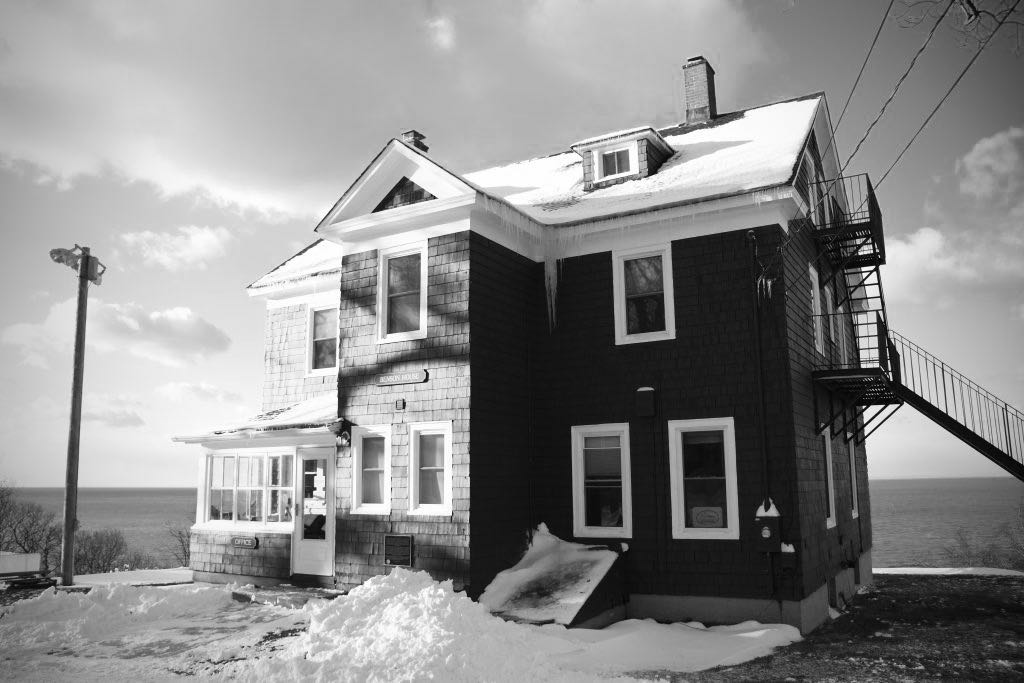
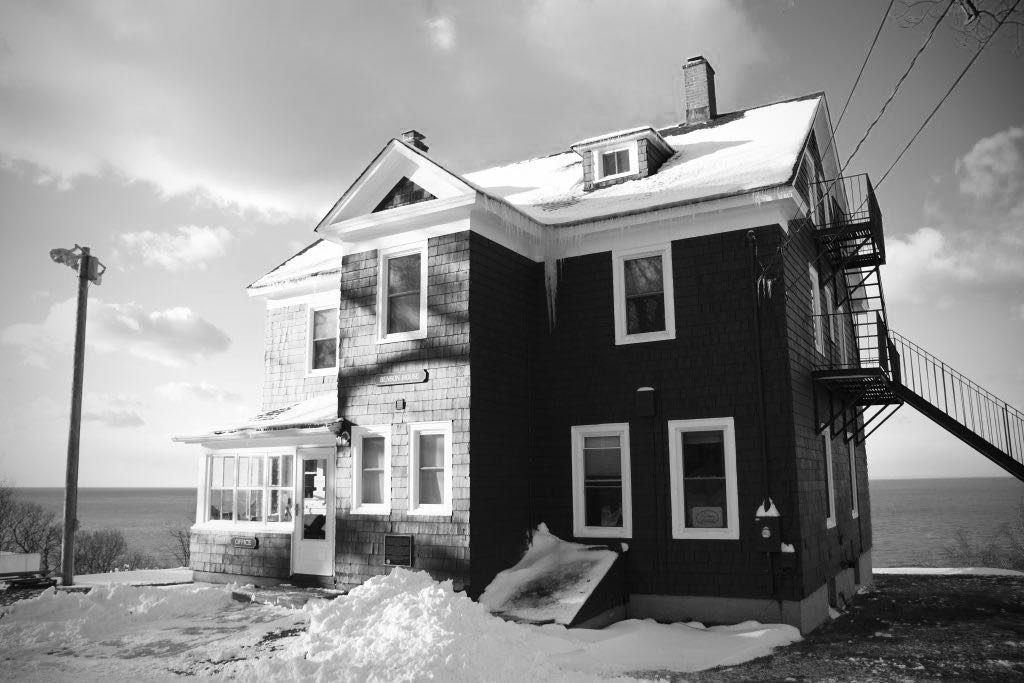
Wading River: WWII FBI covert radio station listed on the National Register of Historic Places

(Photo: Camp De Wolfe)

(Source: Riverhead Local via Mike Hansgen)

A house on the bluffs at Camp DeWolfe in Wading River, covertly used as an FBI radio transmission station during World War II to gather military intelligence, has been added to the state and national registers of historic places.

FBI radio operators impersonating German agents used the Wading River Radio Station to communicate with the German intelligence service, according to the site’s registration form with the National Register of Historic Places.

Information covertly gathered by agents at the radio station was critical to inspiring the United States’ development of an atomic bomb.

The station was also involved in the Operation “Bodyguard,” which used counterintelligence to confuse and mislead the Nazi government about the upcoming Allied invasion of Europe.

The radio station operated from 1942 to 1945.

[…]In January 1942, FBI engineers installed radio equipment in the house, hid a large antenna in the woods, and built a diesel-powered generator using an automobile engine to avoid local suspicion about electricity consumption at the house, which was far greater than what was then the norm due to the radio operations. An FBI agent assigned to manage the operation moved in with his family — and two or three radio operators. The first floor was maintained as the agent’s family home, while the second and third floors were used for the FBI operation, according to the national register registration narrative. They remained there for the duration of the war.

[…]The FBI had been looking for a spot to locate the transmission station for the spying operation and were attracted by the home’s cliffside location and the site’s remoteness. According to the national register registration document:

“By January 1942 [an FBI radio engineer] had stumbled upon the Owen House located in the tiny fishing and farming hamlet of Wading River, New York. Located eighty miles east of New York on Long Island’s North Fork the spacious three story building sat on a cliff bordered on one side by Long Island Sound and acres of dense trees on the other three sides, and the only approach to the station was a bumpy, rutted quarter mile path. Even by today’s standards the house is not easy to find. In 1942 it would have been nearly impossible.”

An FBI agent’s inquiry took the Owen family by surprise. They were sworn to secrecy.[…]

Click here to read the full article at the Riverhead Local.

“Air Waves”: A WWII era film about the art of broadcasting at NBC

Many thanks to SWLing Post contributor, Mike Hansgen (K8RAT), who shares the following film by RKO Radio Pictures via YouTube.

Click here to watch on YouTube.

Here’s the film description:

Made during WWII by RKO Radio Pictures, AIR WAVES gives a brief history of the radio, and shows the development of the technology as it progressed from a crystal set novelty to an indispensable part of American life. Radio City Music Hall and the Rockefeller Center are seen at the 2:00 mark, with the largest radio studios in the world. At 2:30, the NBC studios are seen and at 3:10 a demonstration is made of how sound effects are made using cellophane, wooden blocks, and rubber spheres. At 4:10, a studio is seen with actors rehearsing their lines, and an engineer working with the actors to make sure everything is technically okay. At 5:41, announcers Milton Cross is seen with Jack Costello and Calvin Keach. “Twin gods of radio broadcasting are the clock and the conference…” says the narrator, and at 6:00 you’ll see the discussions that lead up to the broadcast of any network show on radio (and today, on TV). At 7:15, records are played on the air, scripts are produced on steno and mimeograph machines, and all sorted… The music library is seen at 7:48 with sheet music laid out. At 8:06, all stations are notified of the latest information with the new program and a dress rehearsal undertaken. The stopwatch commands the attention of everyone, and the program is finally on the air at the 9:10 mark.

At 10:00, the film dramatically shifts to show December 7th in Hawaii, and speaks about the work of NBC to sell war bonds and promote national defense and “do its share unflinchingly”. The war effort is shown with men and women working on the air to help people working “at war” and boosting their morale. Lowell Thomas is shown at the 11:30 mark, keeping the public informed of the latest developments.

Thanks for the tip, Mike! It’s truly amazing to see the amount of effort that went into live radio broadcasts.