Category Archives: Radios

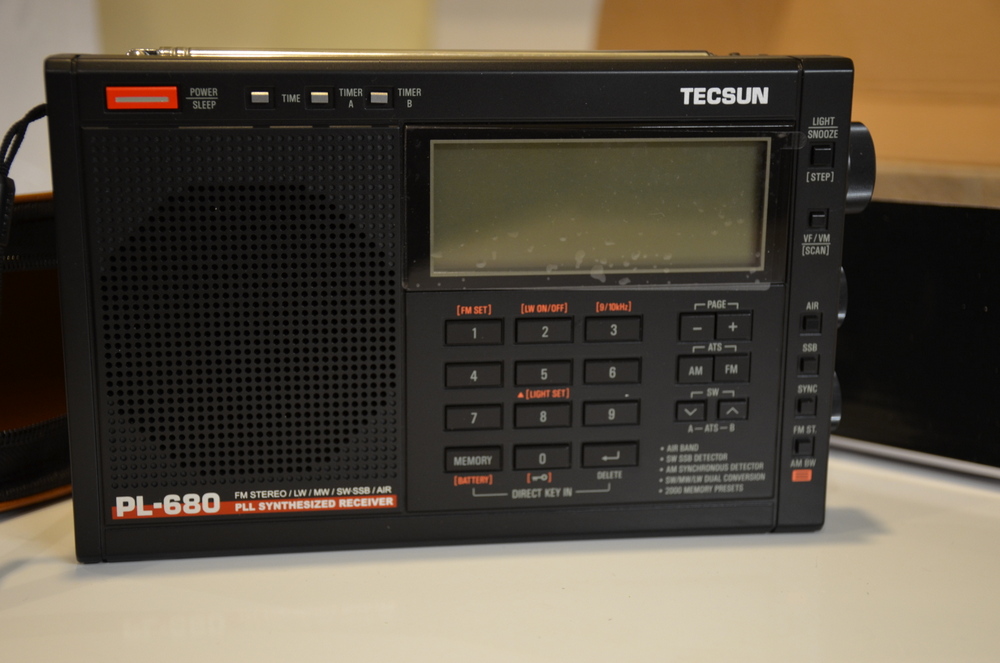
Reader Survey: Comparing the Tecsun PL-680 and PL-660 synchronous detection

PL-680-Sync-Detector

[Update: Please note that this survey has been closed, but the audio samples–labeled Radio A and Radio B–will remain to allow others the opportunity to make an evaluation prior to reading the PL-680 review.]

[Update 2: The PL-680 review and readers’ survey results have now been posted! Check it out here.]

The results from the PL-680/PL-660 reader survey have been pouring in! As of this posting, over 160 readers have participated by listening to and evaluating the AM shortwave audio samples. Thank you!

This morning, I spent time comparing the Tecsun PL-660 and PL-680 with synchronous detection in mind. Time permitting, I hope to publish at least a medium wave audio survey, too, before I post the PL-680 review later this week.   I doubt I will post an SSB reception survey since my digital recorder injects a bit of noise into those recordings.

If you’re not familiar with these readers surveys, please read our previous post, as it contains all of the vital info and disclaimers.

To participate in this survey, start by simply listening, then fill out the form that follows with your choice of “Best Radio” for each broadcast. Please note that I include two recordings per broadcast, but ask that you choose the best radio overall for each broadcast.

For example: if you feel that Radio A is better in the first recording of Radio Australia, but Radio B is slightly better in the second recording (again, of Radio Australia), you still need to chose which radio is best overall in the Radio Australia recordings set.

You’ll note that signal stability varies between the two recordings; this is simply the nature of shortwave radio. Also note that each recording was made within one minute of the other in each set.


 Audio Samples

Radio Australia 9,580 kHz

ABC-Radio-AustraliaBelow I’ve provided two recordings of Radio Australia on 9,580 kHz. In both recordings, I have the PL-660 and PL-680 in normal AM mode for the first half of the recording–you will hear a het (hetrodyne–which sounds like a high-pitch tone) in the upper sideband. About halfway through the recording, I switch each radio into lower sideband sync, which effectively removes the het sound.

I have provided two recordings for each radio since QSB (fading) was fast and deep. Indeed, you’ll note in the second set of recordings that the radios had more difficulty maintaining the sync lock.

First Recording: Radio A

First Recording: Radio B

Second Recording: Radio A

Second Recording: Radio B

Radio Riyadh 17,615 kHz

Saudi-Arabia - Radio-RiyhadRadio Riyadh could certainly be considered weak-signal listening this morning, though their opening on 16 meters was quite good for the time of day.

In the recordings below, I start in AM mode, then switch the radio to USB sync after 15 seconds, and to LSB sync after 30 seconds.

In the first set of recordings both radio’s filters are set wide; in the second set, narrow.

First Recording: Radio A – (wide band filter)

First Recording: Radio B – (wide band filter)

Second Recording: Radio A – (narrow band filter)

Second Recording: Radio B – (narrow band filter)


Submit your response

Click here to use our response form to vote on your favorites, or simply use the form embedded below:

I’ll leave all PL-660/PL-680 comparison surveys open for evaluation until I publish the Tecsun PL-680 review.
Distorted local FM audio on Brad’s Tecsun PL-660

PL-660SWLing Post reader, Brad, writes:

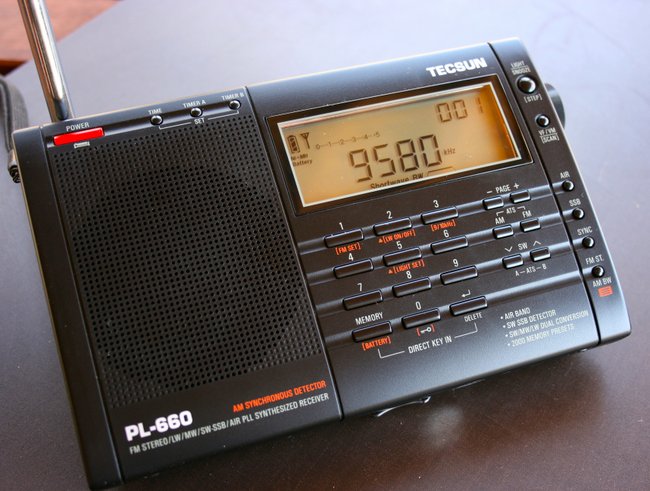
I just got a Tecsun PL-660 after reading many good reviews on the radio, but I have a problem in that there are two 100,000 W FM stations within a few miles of my house and the reception of these stations isn’t as good as some more distant stations.

The signal strength is great but the audio is a bit distorted like it has too much gain or something. If I manually tune the frequency a few hundreths off the “actual” frequency it seems to help. Moving the antenna switch to “normal” or “local” from “DX” doesn’t make much difference nor does using the external antenna. Any ideas what’s going on?

I’m about ready to return it and get a Sony ICF-SW7600GR instead.

This sounds, to me, like the front end is overloading on the PL-660. I don’t live near a blow torch FM station like Brad.

Have any other PL-660 owners had this problem? Any suggestions for Brad?  Please comment!

Reader Survey: Comparing the Tecsun PL-660 and PL-680 on AM shortwave

Tecsun-PL-680

[Update: Please note that this survey has been closed, but the audio samples–labeled Radio A and Radio B–will remain to allow others the opportunity to make an evaluation prior to reading the PL-680 review.]

[Update 2: The PL-680 review and readers’ survey results have now been posted! Check it out here.]

I’ve been spending a little time with my new Tecsun PL-680 today, and it’s been most interesting. Of course, I’ve already begun to form a few opinions about the radio and am taking notes. Yet I never believe a shortwave radio can be judged in one sitting; there are simply too many variables to account for, such as minute changes in propagation, fading, local radio interference, all of which can have a temporary effect on performance. It’s better to judge a radio after having used it over the course of at least a week or so, in diverse reception conditions.

Still, as I tuned the PL-680, I was already wondering how it compared with its predecessor, the PL-660–? And since I’ve received at least ten emails from readers curious about the same thing, I thought I might start a series of blind audio tests in order to let our readers decide for themselves.

So…ready for some fun?

TecsunPL680andPL660

Below, I’ve embedded eight recordings comparing the PL-660 and PL-680 on shortwave. All of these are recordings of broadcast stations, no SSB yet (I simply didn’t have the time today).

To participate, just listen, then fill out the form that follows with your choice of “Best Radio” for each broadcast. But do note the following:

  1. I’ve attempted to set the audio levels equally on both radios. Iused the broadcast in the first recording to set the audio levels; they remain at this level for the remainder of the recordings. Nonetheless, you’ll note that one of the radios seems to have lower audio on a couple of the higher-band recordings; this is not due to any change in the incoming volume nor adjustments to the audio levels.
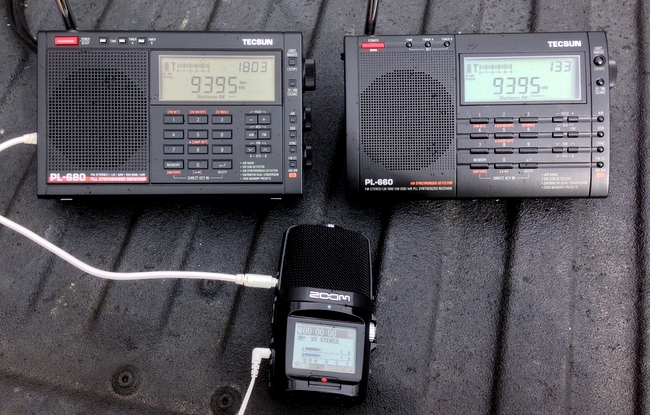
  2. As seen in the photo above, I used a Zoom H2N digital recorder to make these recordings on the tailgate of my truck.  Any time you hook a digital recorder up to a radio on the medium wave or shortwave bands, you most likely will inject a little noise. When I listened to each radio without the recorder in-line, I determined that the Zoom injected very little audible noise.
  3. The assignment of “Radio A” and “Radio B” was chosen by a coin toss–so pretty much at random!
  4. I included two recordings of WWV on 25 MHz. This is because the reception conditions from WWV change in a a matter of minutes, which would provide recording variation. I thought it would be best to include two such recordings.
  5. Both radios have the gain set to “DX” and bandwidth set to wide. None of these recordings employ synchronous detection. The telescopic antenna was fully extended on both units. Additionally, both radios had the tone control set to “bass.”
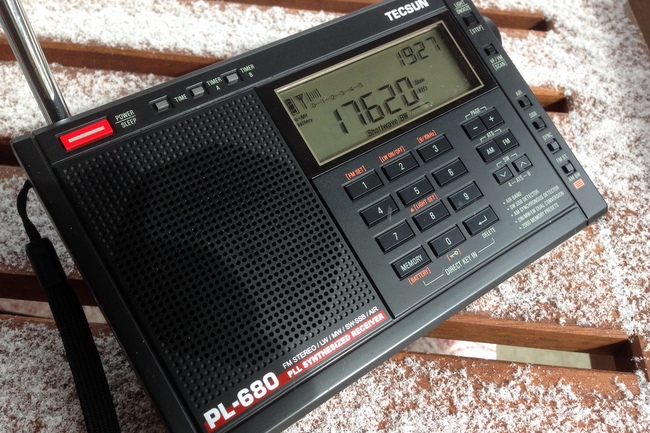
  6. No less relevant: it was 32F/OC with strong wind gusts and blowing snow in my face when I made these recordings. But I knew our readers would understand (and likely appreciate) this dedication to the absorbing art of  SWLing…just as I appreciate your participation in judging this head-to-head radio showdown!

Audio Samples

9,395 kHz – Radio Prague via Global 24 (strong signal example)

Radio A

Radio B

25,000 kHz – WWV Fort Collins, CO

Radio A – 1st recording

Radio B – 1st recording

Radio A – 2nd recording

Radio B – 2nd recording

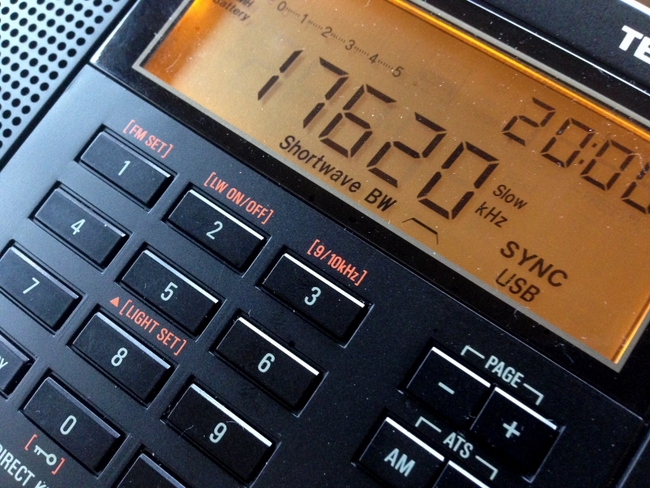
17,620 kHz – Radio France International (weak signal example)

Radio A

Radio B


Submit your response

Click here to use our response form to vote on your favorites, or simply use the form embedded below:

Unboxing the Tecsun PL-680

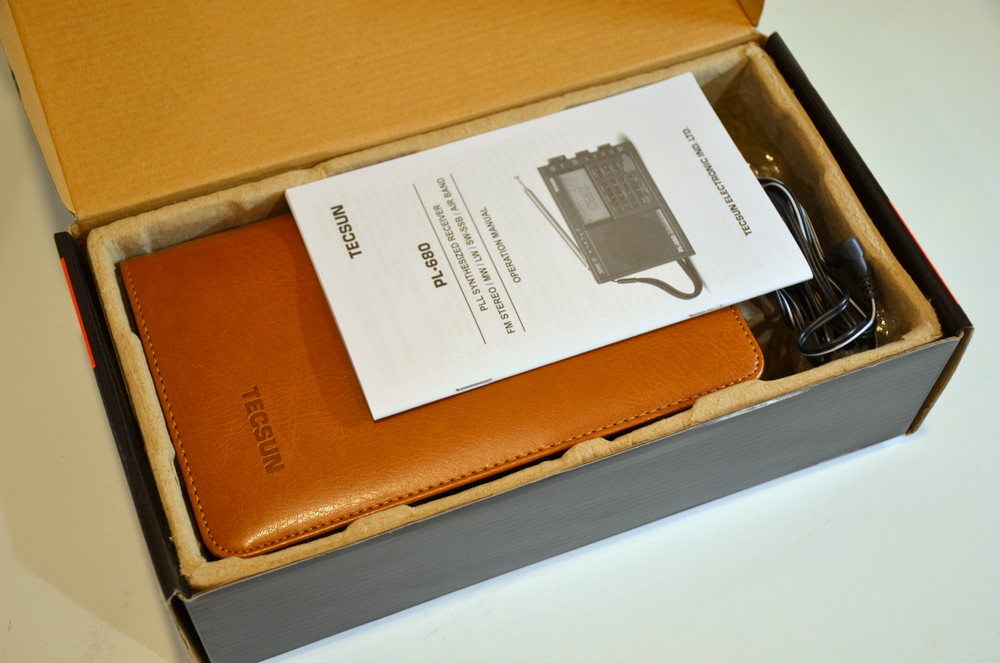
Tecsun-PL-680-6When I got home, after a very long day, I found that FedEx delivered the Tecsun PL-680 I ordered from Anon-Co.  I haven’t even had a moment to listen to the PL-680 yet, but I hope to make time tomorrow.

Tecsun-PL-680-7

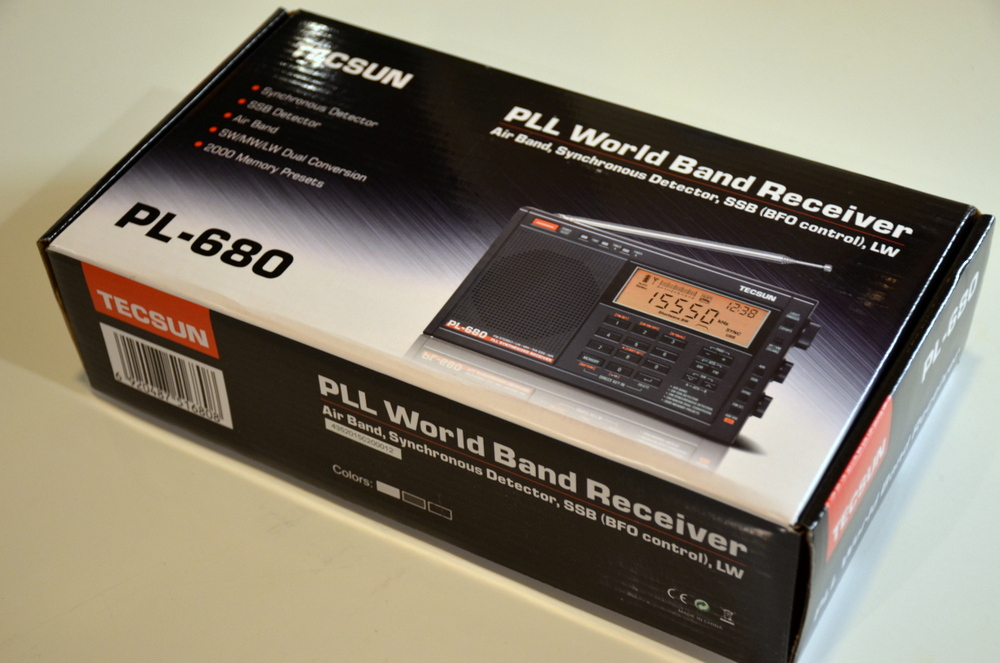
I’m happy to see that the PL-680 has hassle-free, well-designed packaging: a simple cardboard insert inside the box, yet everything was held in place firmly (no rattling).

Tecsun-PL-680-2

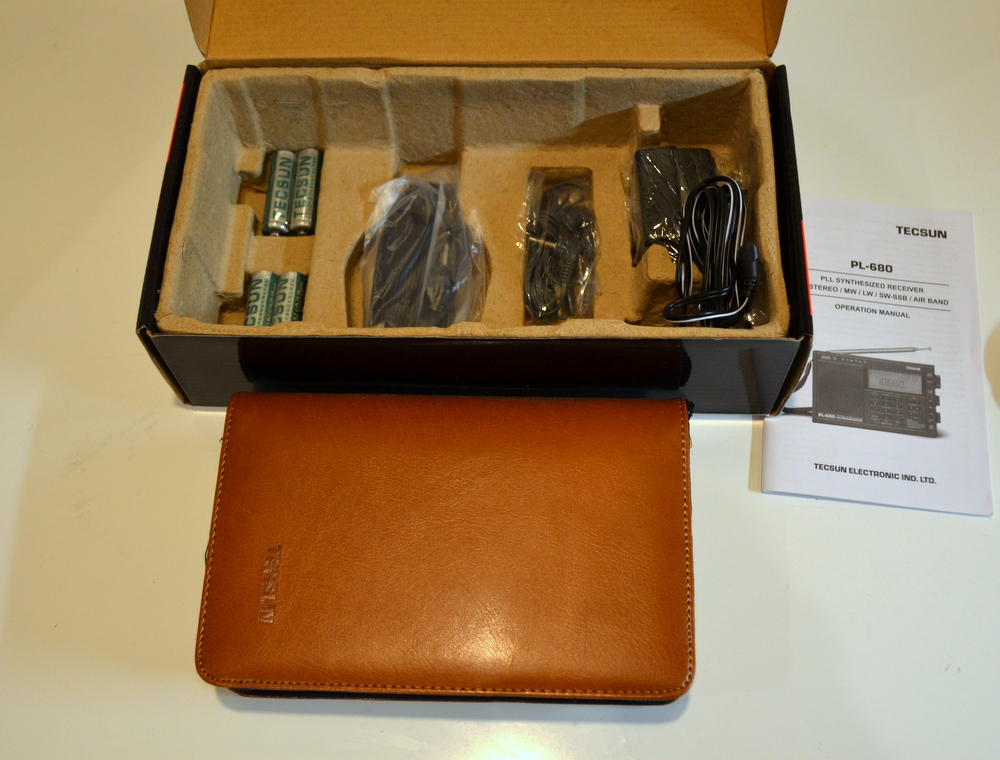
The PL-680 comes packaged in its padded case.

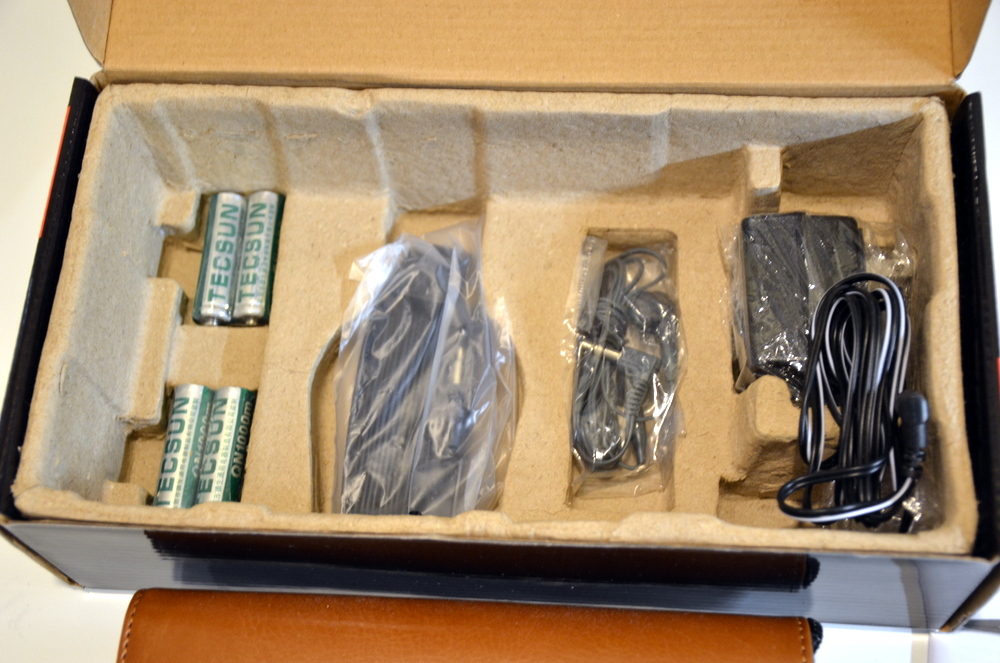
Tecsun-PL-680-3

Once it’s removed from the box, you can see the accompanying accessories: four standard Tecsun AA rechargeable batteries, one external wire antenna, one set of earphones and one AC adapter/charger.

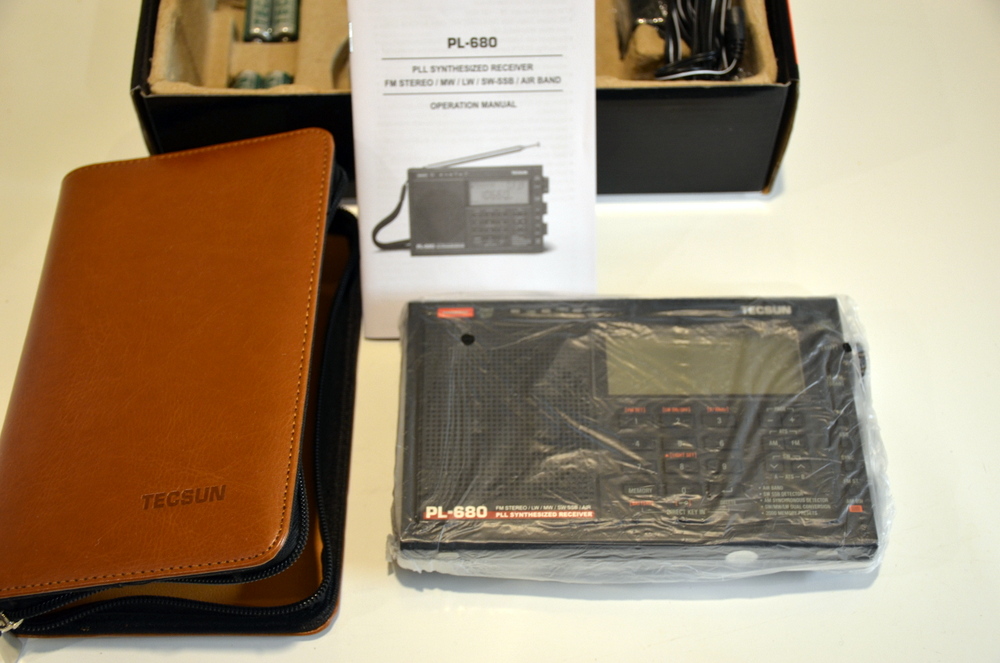
Tecsun-PL-680-4


The PL-680 was enclosed in a poly bag inside the padded case–it also ships with a protective plastic film over the display.

Tecsun-PL-680-5

Wow! The PL-680 certainly looks like a spitting image of the PL-600. I believe this is a good thing as I always preferred the look of the PL-600 over that of the PL-660.

More to come tomorrow! Follow the tag PL-680 for all posts about this new Tecsun radio.

Pulling Radio Santa Cruz out of the interference

BoliviaI recorded Radio Santa Cruz early this morning around 05:00 UTC on 6,135 kHz using the TitanSDR I currently have under review.

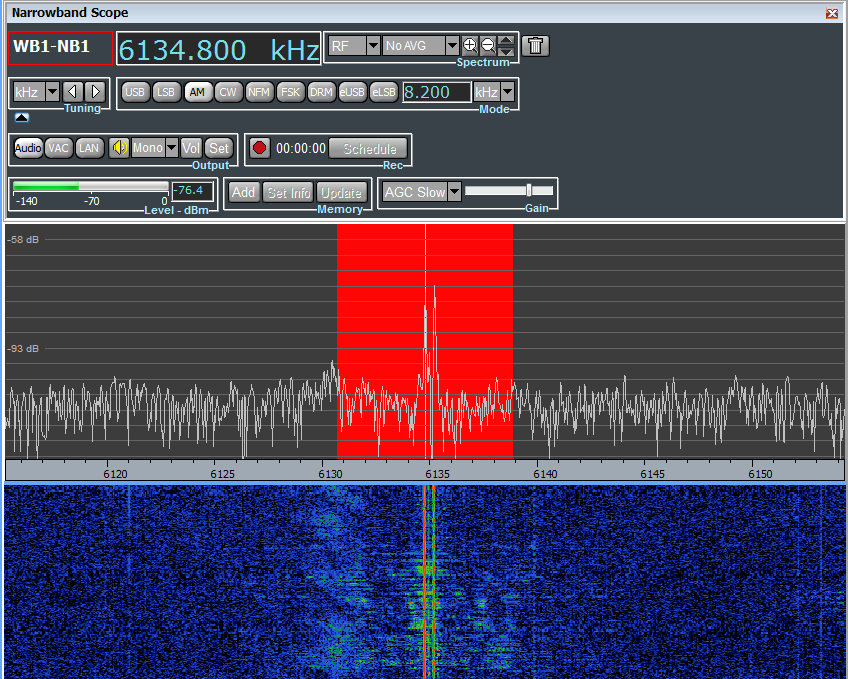
Radio Santa Cruz‘s 10 kW signal from Santa Cruz, Bolivia, was very much audible here in North America, though RSC was competing with another station on-frequency at the time. Actually, Radio Santa Cruz was broadcasting slightly off-frequency–6134.8 kHz instead of 6,135 kHz. In this case, the fact that RSC was slightly below frequency helped me delineate the station’s audio from that of a competing station.

Fullscreen capture 272015 54241 PM

In the screen-grab of the narrowband channel from the Titan SDR (above–click to enlarge) you can see two distinct carriers spaced only .2 kHz apart (represented by the two peaks in the spectrum display and two parallel vertical lines in the waterfall display).

Here is what the audio sounds like in normal AM mode when we center on the Radio Santa Cruz frequency of 6,134.8 kHz:

You hear a hetrodyne and garbled noise from a competing station. Not pleasant audio.

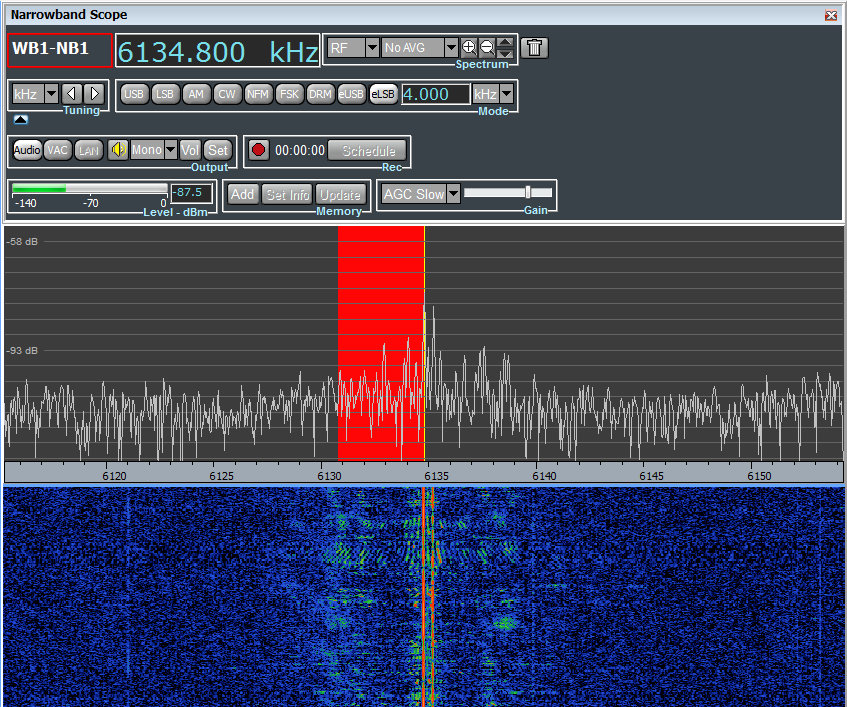
If we change from the AM mode to eLSB mode (essentially, the TitanSDR’s version of synchronous detection on the lower sideband) we are ignoring all of the noise in the upper sideband, allowing the desired signal of RSC to pop out.

Fullscreen capture 272015 54317 PM

You can see in the screen-grab above that now only the lower sideband of the RSC signal is highlighted. Here’s a 21 minute recording:

Makes quite a difference!

It’s easy to see competing signals and interference on an SDR’s spectrum display, but if you hear something similar on your portable, try the techniques above to see if it clears up the signal.

If your receiver lacks a selectable synchronous detector, much of the same results can be gained by zero-beating (tuning in) the desired signal in lower sideband mode. Of course, if you have a receiver that lacks SSB mode, the best you can do is tune slightly below frequency in AM, in which case the results will not be as dramatic.

Conclusion? Listening in single-sideband or with a selectable sync detector might be all you need to dig a signal out of the interference.

Video: Dan compares the Sony ICF-6800W with several benchmark receivers

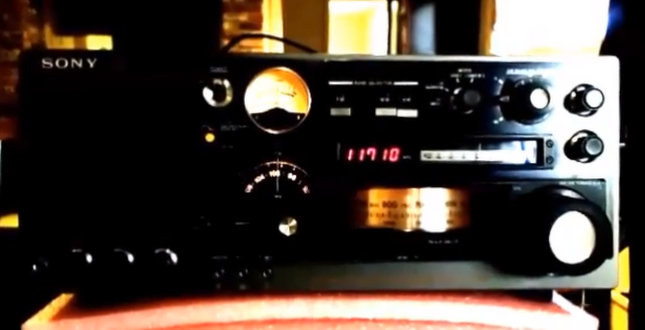
Fullscreen capture 272015 13405 PMCheck out this video of Dan Robinson comparing his Sony ICF-6800 with the JRC NRD-301A, Eddystone 1650/9, RFT EKD-515, Drake R7A, and the WJ8718A/MFP:

Thanks for sharing, Dan! Impressive lineup!