Shortwave listening and everything radio including reviews, broadcasting, ham radio, field operation, DXing, maker kits, travel, emergency gear, events, and more
Many thanks to SWLing Post contributor, April TimeLady, who writes:
Please find in this email links to two months of Japanese SDR recordings I have made. One is for July and the other is for August. I have uploaded them to archive.org. I send you these links because I think it may interest your audience to listen to Japanese language SDR recordings. Nearly all of the domestic broadcast recordings are NHK, specifically the late night program since I like it. Enjoy!
Many thanks to SWLing Post contributor, Gary Debock, who shares a short report he originally posted on Facebook from the Rockwork 2020 Ultralight DXpedition:
Rockwork 2020 started off with a monster session, with S9 signals from the likes of 320-AI (Aitutaki, Cook Islands), 352-RG (Rarotonga, Cook Islands), 558-Radio Fiji One, 603-Radio Waatea, 1017-Tonga, 1107-Magic Talk and the new 1503-Gold.
The session was kind of wild, with three different sets of visitors asking about my gear setup at Rockwork 4 (typically during critical moments of live DXing, of course :-). Despite this both Longwave and Medium Wave featured great propagation to New Zealand, with the long range beacon 238-KT (Kaitaia) opening up the fun around 1225. Switching back and forth between Longwave and MW in a live DXing format wasn’t exactly ideal, and no doubt my long time DXpedition partner Tom R. could have really cleaned up on the South Pacific beacons this morning with his SDR and broadband loop setup. As it was I came away with 238-KT, 320-AI (a monster signal), 352-RG and 366-PNI from across the equator, with 558-Radio Fiji One probably having its best session ever at the awesome ocean side cliff (extended S9+ periods between 1300-1330).
I promised long term “Cliffhanger DX” partner Craig Barnes that I would go all-out to receive some exotic DX in his honor, and the Cliff more than cooperated.
The Longwave and Medium Wave DX this morning [Auguest 5, 2020] was phenomenal, and there are still two more days before Tom gets here. Hopefully these conditions will stick around!
Audio samples
320 AI Aitutaki, Cook Islands Great signal but shaky sounding CW tone at 1239– best signal ever at the Cliff:
352 RG Rarotonga, Cook Islands In an S9 snarl with 353-LLD (Hawaiian mega-beacon) at 1256:
558 Radio Fiji One Suva, Fiji Overwhelming S9 signal and ID’s both before and after an island music song at 1312:
1017 A3Z Nuku’alofa, Tonga Female Tongan in an S9 snarl with DU sports co-channel (2KY?) at 1253:
More New Zealand monster signals from yesterday morning, courtesy of the “Kiwi Cliff.” This place’s preference for New Zealand signals is wacky to the extreme!
603 Radio Waatea Auckland, NZ 5 kW S9 Maori island music // 765 followed by a female Maori chant at 1309:
1107 Magic Talk Tauranga, NZ 10 kW Meltdown level Kiwi conversation between host and lady caller at 1255:
1503 Gold Wellington/ Christchurch, NZ 5/ 2.5 kW The old Radio Sports’ Yankee-accented English (from Fox Sports Network) has now been replaced by rocking oldies, such as Phil Collins with powerful strength at 1307:
73 and Good DX,
Gary DeBock (DXing at the Rockwork Ocean Cliff near Manzanita, OR, USA)
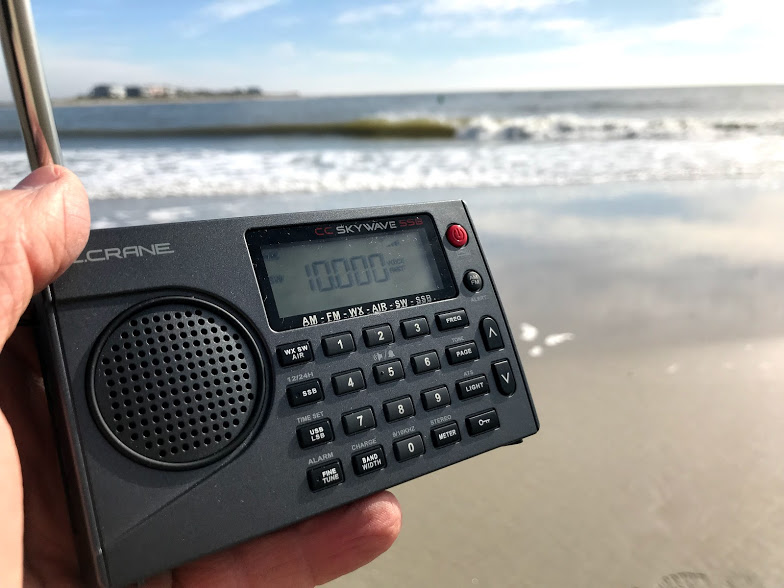
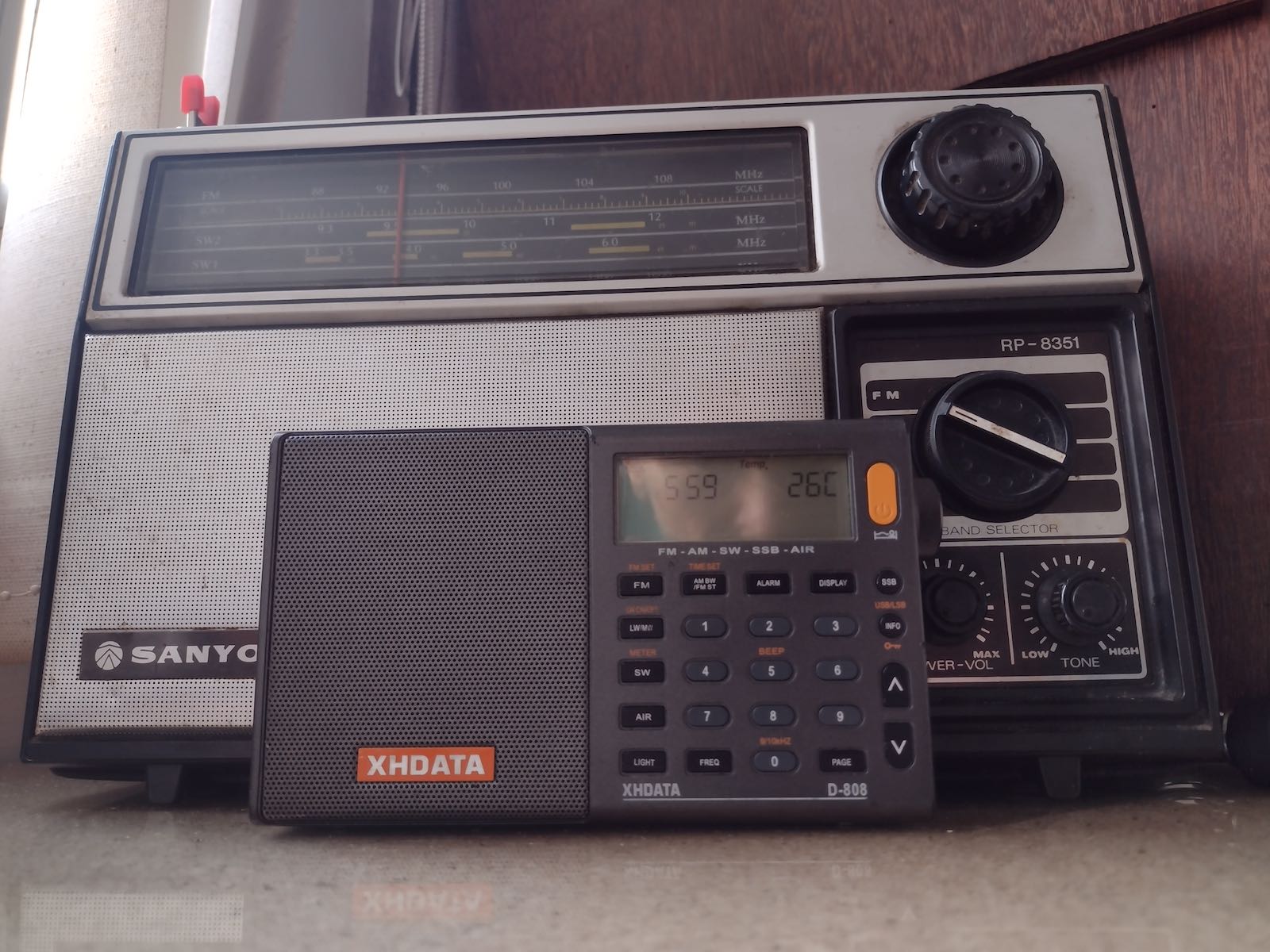
7.5″ loopstick CC Skywaves, PL-380 & XHDATA D-808
12″ Longwave FSL + three new 8″ Medium Wave FSL’s
Thank you so much, Gary, for allowing me to share your reports on the SWLing Post. Many of us would love to experience mediumwave DXing from your Rockwood perch, but we’ll have to live it vicariously through your excellent reports! We wish you excellent DX!
Photo from the Argentine Antarctic Base (LRA36) – Source: RAE
Many thanks to SWLing Post contributor, Giuseppe Morlè (IZ0GZW), who shares the following:
Dear Thomas
Here is the link of to video regarding the transmission of LRA 36 in USB mode Saturday July 25, 2020 from 17.00 UTC on 15.476 MHz.
A good result if I think it was almost impossible to listen to it with the sun still high … the place where I listen, in Formia, Italy, is really excellent.
73. Giuseppe Morlè iz0gzw.
Thank you for sharing this, Giuseppe! I’m always impressed with the DX you catch there at your location in Formia! Grazie e ciao!
The Voyager aircraft circles before landing at Edwards Air Force Base (Source: NASA via Wikimedia)
One of the most amazing things about hosting and curating a massive collection of shortwave radio recordings is listening to each recording as they’re published on the Shortwave Radio Audio Archive (SRAA).
SRAA contributor, Tom Gavaras, has shared some brilliant off-air and studio recordings over the years including the following shortwave recording of Voyager Experimental Aircraft flight communications with Dick Rutan and Jeana Yeager in 1986.
I haven’t even published the recording on the archive yet, as he just submitted it. Tom notes:
The flight took off from Edwards Air Force Base’s runway in the Mojave Desert on December 14, 1986, and ended 9 days later on December 23, setting a flight endurance record.
This shortwave recording is a sample of some of the communications between Dick Rutan and his ground crew including a debate if Dick should walk out of the aircraft after it lands.
Tom made this recording with an ICOM R71A receiver in Minnetonka, MN, and believes the date of this recording is December 22, 1986:
QSL card
This is simply amazing, Tom! Thank you so much for sharing your recording and QSL card with us. A proper radio treasure!
Many thanks to SWLing Post contributor, Richard Lacroix,
I was intrigued by your post, “The ghostly radio station that no one claims to run (BBC Future)”. I attempted to listening to the station on 4625 kHz from my home location here in Toronto, Ontario Canada but unfortunately could not receive the signal. WebSDR to the rescue. I managed to locate a couple of KiwiSDRs in Russia which yielded great reception of “The Buzzer”.
I figured that some readers may be interested in knowing what the buzzer sounds like. I have therefore included 2 recordings of the broadcast; the first in AM and the second in USB mode with a 3.2 kHz wide filter setting. I am also sharing a screen shot of the waterfall which clearly depicts the signal [see at top of post].
Recordings
The Buzzer recorded July 18, 2020 at 01:07 UTC on 4625 kHz in AM mode:
The Buzzer recorded July 18, 2020 at 08:26 UTC on 4625 kHz in upper sideband mode:
Thank you for sharing this, Richard!
Like you, I have difficult receiving The Buzzer from North America (especially in summer conditions with QRN). That’s where KiwiSDRs really come to the rescue. Thanks again for sharing your recordings.
Many thanks to SWLing Post contributor, April TimeLady, who writes:
This is a collection of SDR recordings made of Japanese language radio stations for June 2020.” It may be useful to note that I had encoded them at .ogg from .wav, and archive.org automatically converts audio to .mp3 format. The great majority of the recordings are from NHK JOAK Tokyo; I have reason to believe that it broadcasts in AM Stereo. Those recordings with “sas” in the filename are in stereophonic sound, or supposed to be at least. I am unsure if what I hear are artefacts of skywave or AM interference or actually stereo, but it seems to be so when I listen to the playback of such files. The English language Wikipedia article on AM stereo is definitely not complete when it comes to Japanese radio stations, and there does not seem to be a corresponding article on the Japanese Wikipedia..