Category Archives: Shortwave Radio

Budget proposes drastic cuts to Radio Martí

Note that the Edward R. Murrow Transmitting Station–the last VOA/BBG transmitting site in the US–is the main provider of Radio Marti over shortwave. No doubt, this proposed cut could close the site permanently. The end of an era.

(Source: Miami Herald via Mike Hansgen)

Trump’s budget includes drastic cuts to Radio and TV Martí

President Donald Trump’s recently released budget would drastically cut funds and staffing at the Miami-based Radio and TV Martí, while restoring funds to support other democracy projects in Cuba and new ones in Venezuela.

The restoration of funds comes amid large cuts to the Department of State and the United States Agency for Development (USAID). The proposal would allocate $10 million for programs related to Cuba and another $9 million for similar initiatives in Venezuela.

Click here to read the full article at The Miami Herald.

PNG extends public radio network, restores shortwave

(Source: Radio New Zealand via Mike Hansgen)

Papua New Guinea’s communications minister, Sam Basil, says he plans to grow radio services in PNG.

He marked this week’s World Radio Day by saying radio is a medium that reaches the widest audience, including vulnerable communities in remote parts of the country.

Mr Basil has announced the medium and shortwave services of the state broadcaster, NBC, will be restored, and that the corporation will migrate from analog to digital technology.

He said new stations will be opened in Jiwaka and Hela and that a new NBC headquarters will be built.

Click here to read this article at Radio New Zealand.

A carpenter “who carves vintage radio sets”

Many thanks to SWLing Post contributor, Kim Elliott, who shares the following story from the Odisha Sun Times:

Bhubaneswar: Only a lucky few get to live and breathe their passion and Rajendra Sahu, a carpenter, is one of them.

From Odisha’s capital city of Bhubaneswar, Sahu steals time to give shape to his imagination. He has been carving radios of varied shapes and sizes since past decade-and-half.

“I make radios just because it makes me happy. I return from work by 7 pm and start with the daily ritual of making radio,” said Rajendra. He prepares the cabinet with plywood, sunmica and cane whereas the circuit board is affixed from discarded ones.

“It takes around five days to assemble a radio. I browse through online sites looking for designs,” said Rajendra, who also collects antique radio sets from various parts of Odisha.

“I grew up listening to the radio. There’s a charm to it that the gadgets today fail to deliver. My father too was very fond of them. He would make radios, but I learnt to make them by myself,” he added.[…]

Continue reading the full story at the Odisha Sun Times.

Icom IC-R8600 added to Sherwood’s Receiver Test Data Table

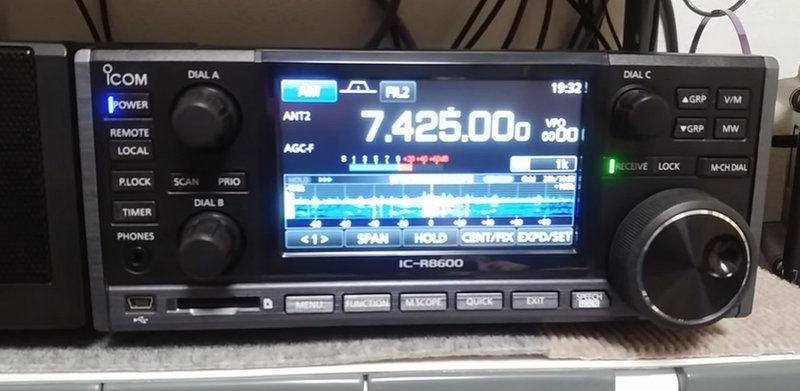
Icom IC-R8600

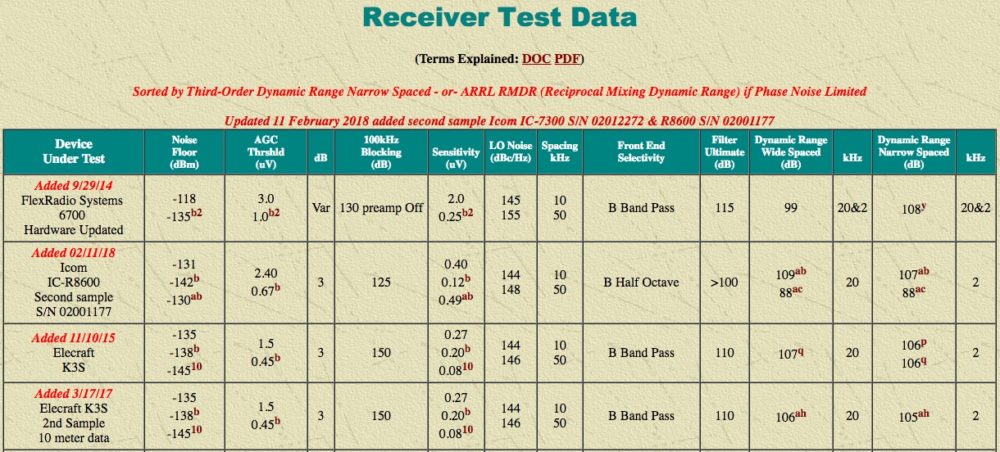
Rob Sherwood, at Sherwood Engineering, has now published test results of the Icom IC-R8600 wideband receiver. The IC-R8600 is (impressively) second from the top of the list sorted by third-order dynamic range narrow spaced if phase noise limited:

Click here to view the full list at Sherwood Engineering.

Click here to check out Dan Robinson’s recent review and benchmark receiver comparisons with the IC-R8600.

Sony could halt production of shortwave radios in February

Several SWLing Post readers have sent me a link to this item on BCL News (originally posted by Takahito Akabayashi via WOR) stating that Sony will cease production of all shortwave radios this month:

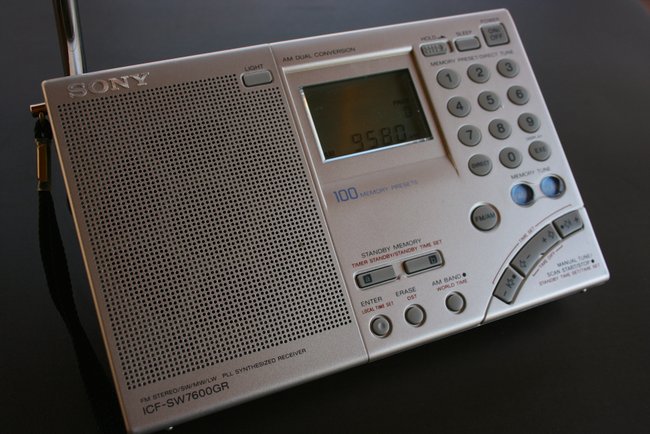
SONY Japan declared in January that they ended the production of ICF-SW35 shortwave receiver. They also declared in February that they end the sales of another shortwave receiver ICF-7600GR at their on-line store. Probably they will declare the end of its production soon.

ICF-SW35 has been on sale since 2000, ICF-7600GR since 2001. This means SONY will completely withdraw from the shortwave receiver market.

I have not been able to locate a statement from Sony regarding this, but I’m not at all surprised if it is true. Shortwave radios represent such a small niche market for Sony, I’m surprised they’ve continued producing them up to 2018. Indeed, to my knowledge, they haven’t updated their benchmark portable (the Sony ICF-SW7600GR) since they released it in 2001. That’s an incredibly long market life!

The ‘7600GR is still one of my favorite portables even though it lacks an encoder/tuning knob and isn’t as sensitive as the Tecsun PL-680, for example. I do love its sync detector and rock-solid AGC. Additionally, it’s one of the few portables on the market that has a proper line-out audio jack for recording and a variable attenuator.

Production of the ‘7600GR has been sporadic–a number of times, Sony gave retailers the impression the product line was dead only to release small batches of new units from time to time. Likely, they’ve been clearing out the final production run.

I predict the price of the ICF-SW7600GR will climb as they become a little more scarce.

Looking back, I wrote a post in September 2016 describing where to find new or open box units online. If you’re interested in the ‘7600GR, check out that post in our archives.

If anyone finds a release from Sony regarding this news, please comment with a link!

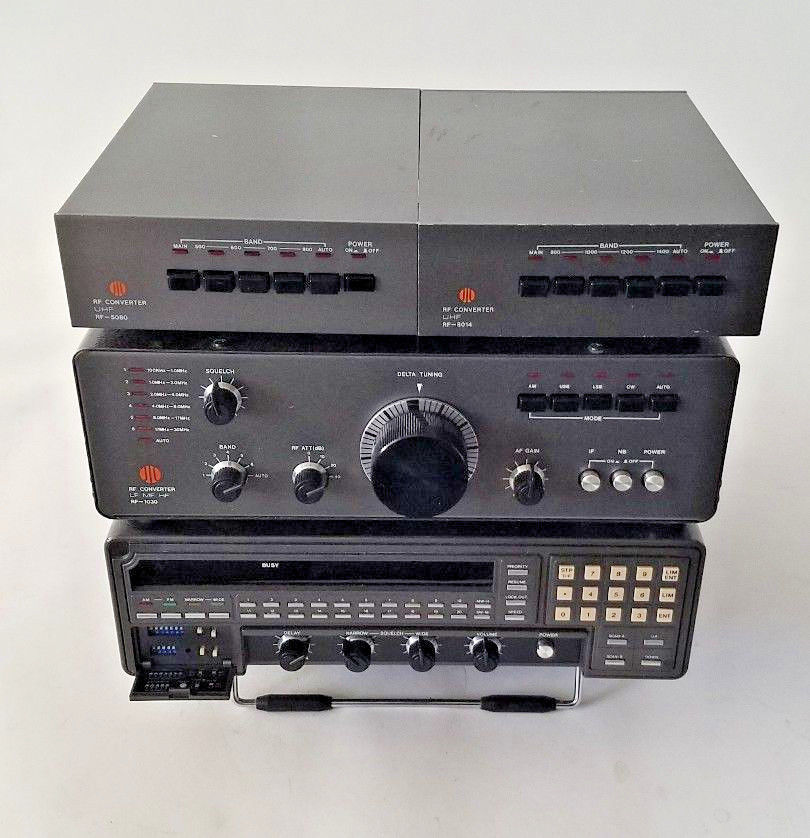
Mario spots a rare J.I.L. Communications Receiver SX-400 on eBay

Many thanks to SWLing Post contributor, Mario Filippi, who writes:

Hope you are doing well. Spotted this J.I.L. receiver on eBay, never heard of this unit before.

Click here to view on eBay.

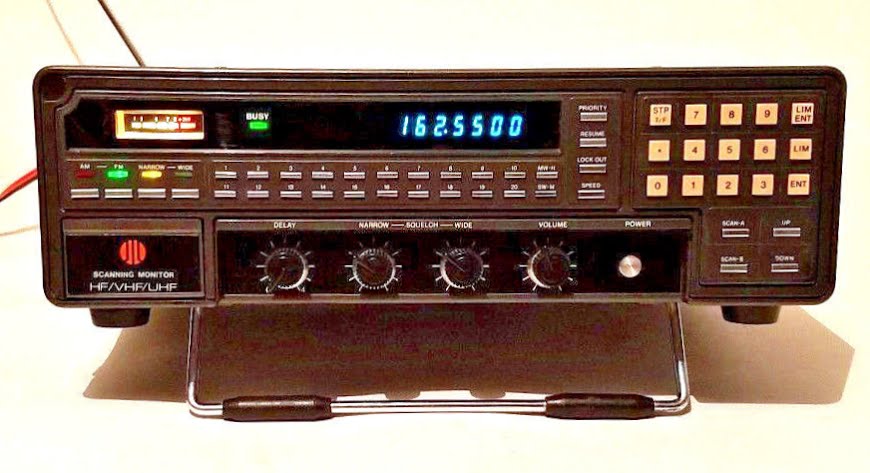
Thanks for the tip, Mario! This is a new one for me as well–what an interesting stack-able set of up/down converters. RigPix has a few more details.

Post readers: Can anyone comment about this until or its performance on the HF bands?

Paul explores the Luxembourg Effect

Many thanks to SWLing Post contributor, Mike Hansgen, who shares the following article by Paul Litwinovich at WSHU:

In this article I’ll look at two things that, unless you are a serious ham operator or an absolute radio geek, you probably are unfamiliar with.

First, we will take a look at a very rare phenomenon first noted by radio listeners back in 1933. It generated several theories, but the correct one was only verified experimentally in recent times.

Second, we will look at a government-funded project that, while built for other purposes, was used to confirm the phenomenon 75 years later.

The Luxembourg Effect was first documented by electrical engineer and professor Bernard Tellegen. The professor is also credited with the invention of the tetrode vacuum tube. My past article, A Radio for the Roaring Twenties, features one of the first radios to use the tube.

One night, Mr. Tellegen was in the Netherlands, listening to a station transmitting from Beromunster, Switzerland, on 652 kHz. In the background of the Swiss signal, he could hear the audio of Radio Luxembourg, which normally broadcast on 252 kHz. He was far enough away from each station that neither station’s signal would have been strong enough to overload his receiver. The two signals seemed to be mixing somehow, but by what means?[…]

Click here to continue reading at WSHU.