Category Archives: Shortwave Radio

BBC video: “The ‘spy radio’ that anyone can hear”

Many thanks to SWLing Post contributor, Mark Hirst, who writes:

Nothing that an SWLing Post reader doesn’t already know–more for general consumption:

http://www.bbc.co.uk/news/av/world-42819704/numbers-stations-the-spy-radio-that-anyone-can-hear

For decades, people around the globe have been able to listen in to mysterious spy broadcasts from all over the world with just a radio.

Gordon Corera has been investigating the strange world of number stations.

Video produced by James Reevell

Thanks for the tip, Mark!

Frank recommends the MFJ-1886 magnetic loop antenna

Many thanks to SWLing Post contributor, Frank M. Howell, who left the following comment on our indoor antenna post yesterday:

You omitted the MFJ Receive Loop….it outperforms my Wellbrook ALS-1530+. Very competitive price point!

See http://www.mfjenterprises.com/Product.php?productid=MFJ-1886.

Thanks for pointing this out, Frank.  You’re right in that I had forgotten about the MFJ receive only loop antenna. It’s a fairly new product in their (massive!) catalog of radio products.

I’m very curious if any other SWLing Post readers have experience with the MFJ-1886 antenna.  I’d love a review.

Indoor shortwave antenna options to pair with a new SDR

Many thanks to SWLing Post contributor, Chris Freitas, who writes:

“I am thinking of the new RSP1A SDR. Would you know of a good indoor antenna that would work well with it?”

Your antenna question is simple, but the answer is complex!

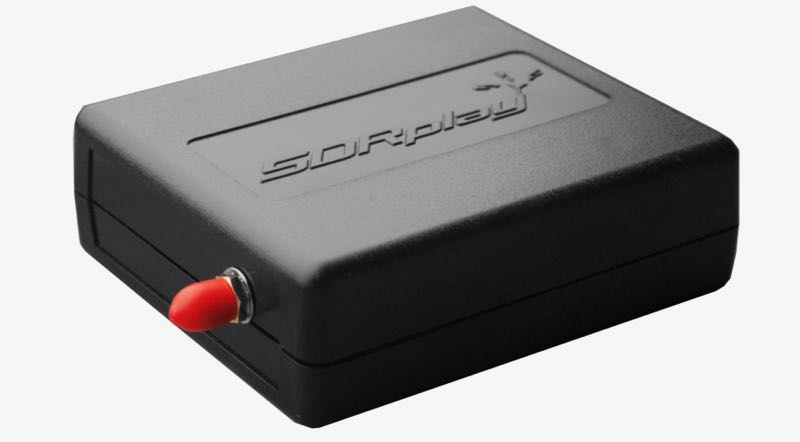
First off, I think the RSP1A is a great choice as it’ll give you proper exposure to the world of SDR (1 kHz to 2 GHz!)  at a modest price.

Unlike a portable radio of course, your SDR must be connected to a PC, laptop, tablet or some sort of mini computer like Raspberry Pi. This limits your ability to easily try different antenna locations within your home compared to, say, a battery-powered portable radio. It might take some dedicated experimentation and patience.

Indoor antennas are so vulnerable to the radio noise within your home.

If you live in an off-grid cabin with no radio interference nearby, even a simple $1 random wire antenna hooked up to RSP1A’s SMA connector would yield results. I occasionally spend my summers in an off-grid cabin and it’s simply amazing what you can do with a modest setup when there are no man-made radio noises around.
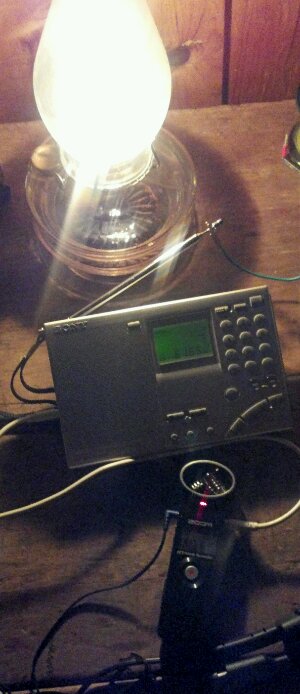
Listening to the final broadcast of Radio Netherlands in an off-grid cabin on Prince Edward Island in 2012.

But how many radio enthusiasts live in an off-grid cabin? Answer: very, very few! Most of us only get to experience off-grid life during natural disasters when the electrical grid has been damaged in our neighborhoods.

The reality of indoor antennas

You’ve told me previously that you live in an apartment in an urban setting, hence you probably cope with a lot of RFI.
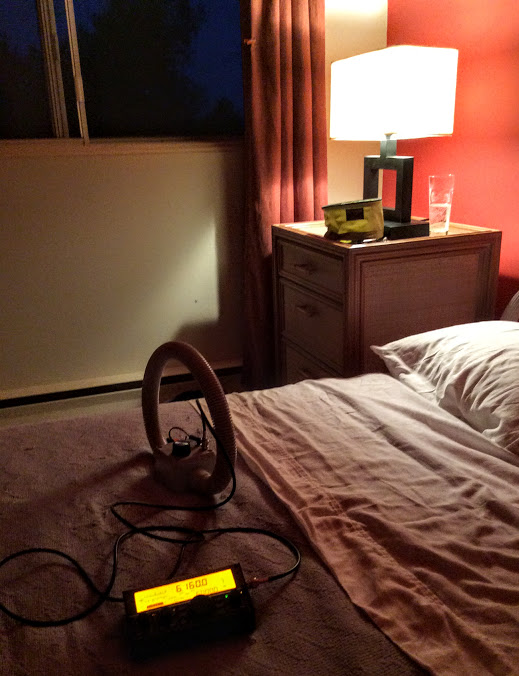
When an antenna is indoors, it is forced to function within this RFI-dense environment. Your telescoping whip or wire antenna doesn’t discern between radio noise and your target broadcast signal. Thus, noise can overwhelm your receiver, essentially deafening it to all but the strongest shortwave broadcasters.

And simple, inexpensive portable amplified shortwave antennas? I’ve expressed my opinions about them before. They amplify the RFI as effectively as they do broadcasters.

This is why if you had a means to put a small random wire antenna outside–even if it was simply draped outside a window–it would likely perform better than an indoor antenna. I’m guessing this isn’t an option for you, Chris.

Think loops
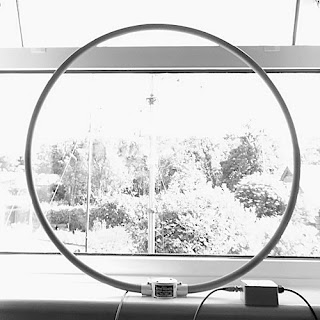
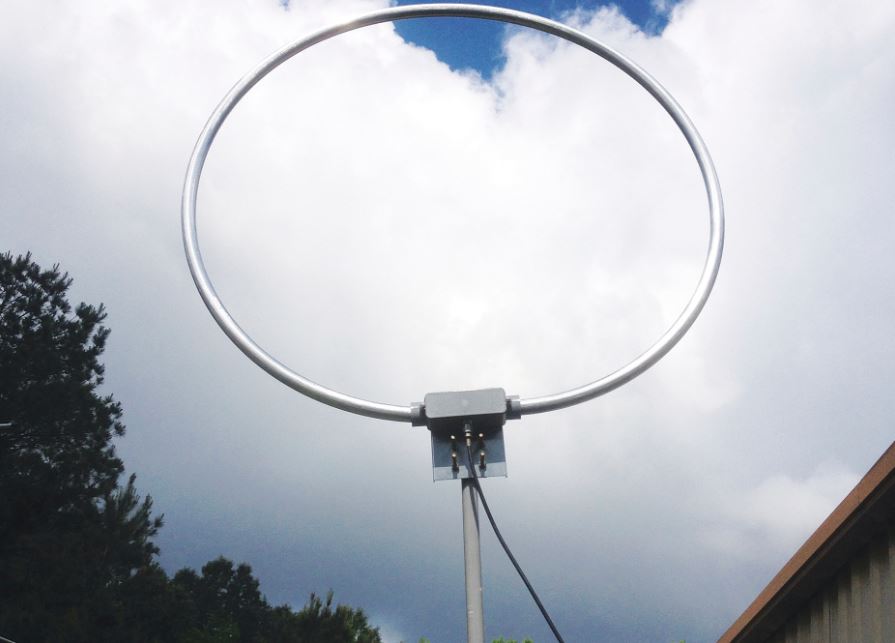
A broadband loop antenna (image courtesy of wellbrook.uk.com)

Magnetic loop antennas are a popular topic here on the SWLing Post for a reason: they’re one of the best frontline tools for fighting urban noise. (Here’s a great tutorial/presentation [PDF] describing how mag loop antennas work.)
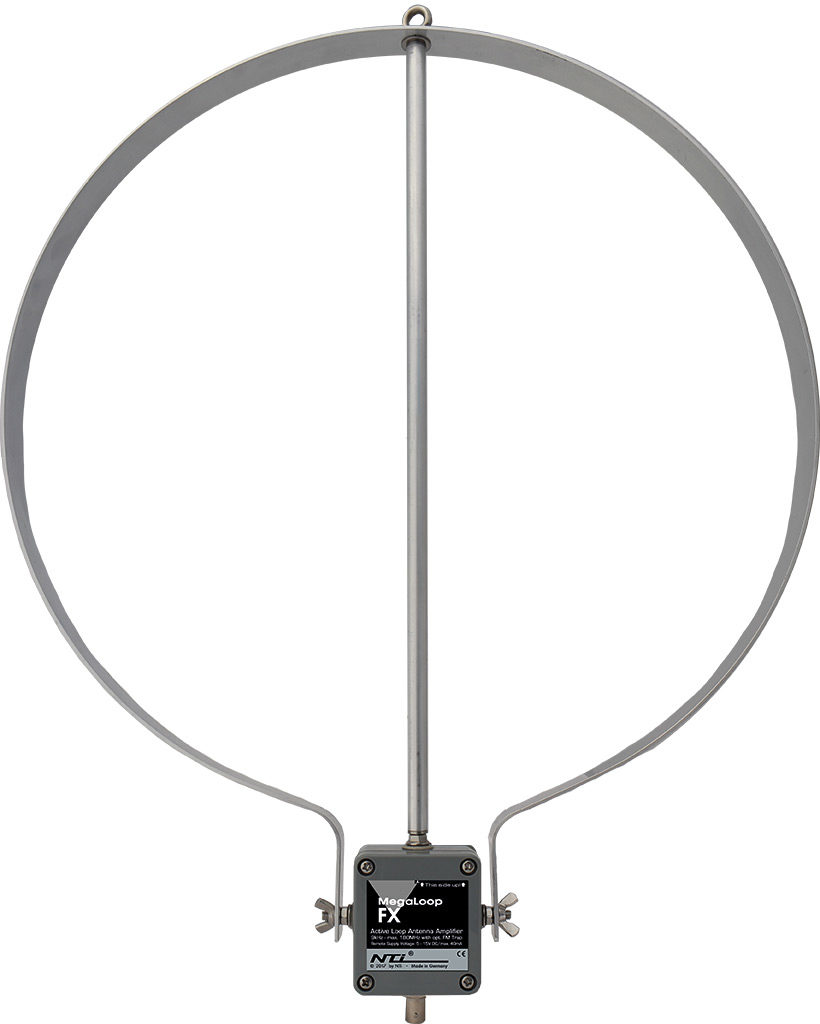
The compact Bonito Mega Loop FX

While you can build an amplified mag loop antenna (like our buddy, TomL) it’s not a simple project.  Passive single turn loop antennas, on the other hand, are quite easy to build but are narrow in bandwidth (here’s a very cheap, simple passive loop project). You would likely design a single passive loop to serve you on a specific brodcast band and would have to retune it as you make frequency changes. You could build a passive loop antenna for less than ten dollars if you can find a good variable capacitor. Here’s another tutorial.

Commercially produced amplified wideband magnetic loop antennas are not cheap, but they are effective. If you’re a serious SWL, a good mag loop antenna is worth the investment.

Here are a few of my favorites starting with the most portable:

PK Loops
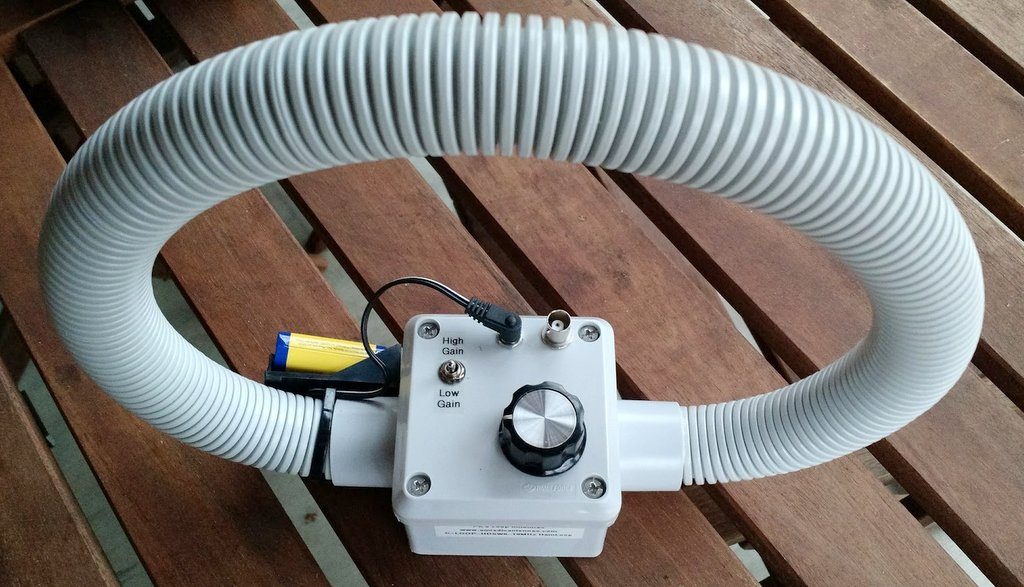
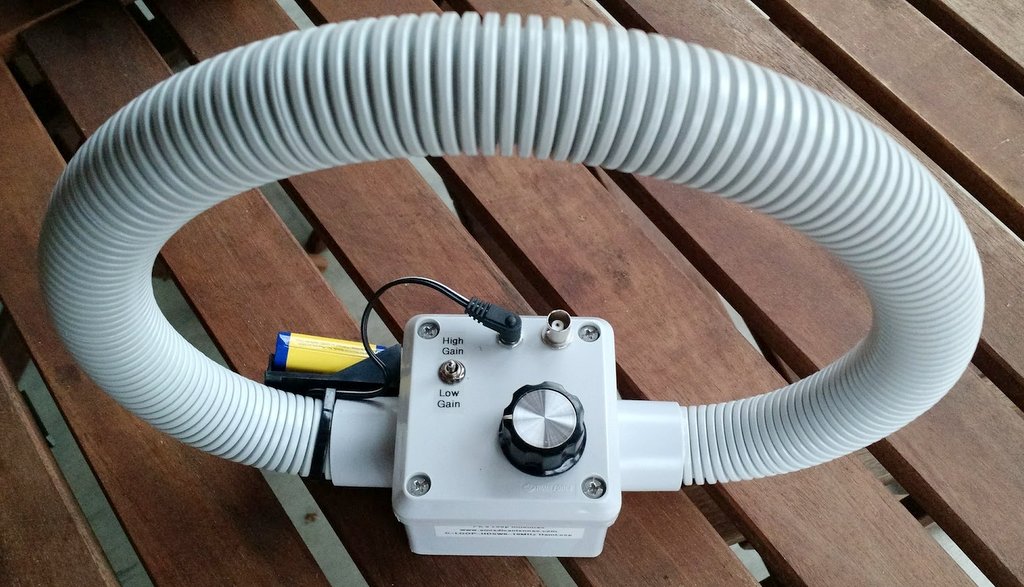
The PK Loop

The most affordable and portable mag loop antenna I own is the PK Loop.  I have the more compact PK Loop C-LOOP-HDSW6-18 (6 – 8 MHz), but Guy Atkins also touts the slightly larger Ham Loop which he finds tunes beyond the advertised 3.5 – 14.5 MHz range.

PK Loops are not as broad in bandwidth as the other antennas I mention below. You will have to retune the loop with any band changes and sometimes even within a specific meter band.

Click here to check out PK Loop offerings on eBay.

W6LVP Loops
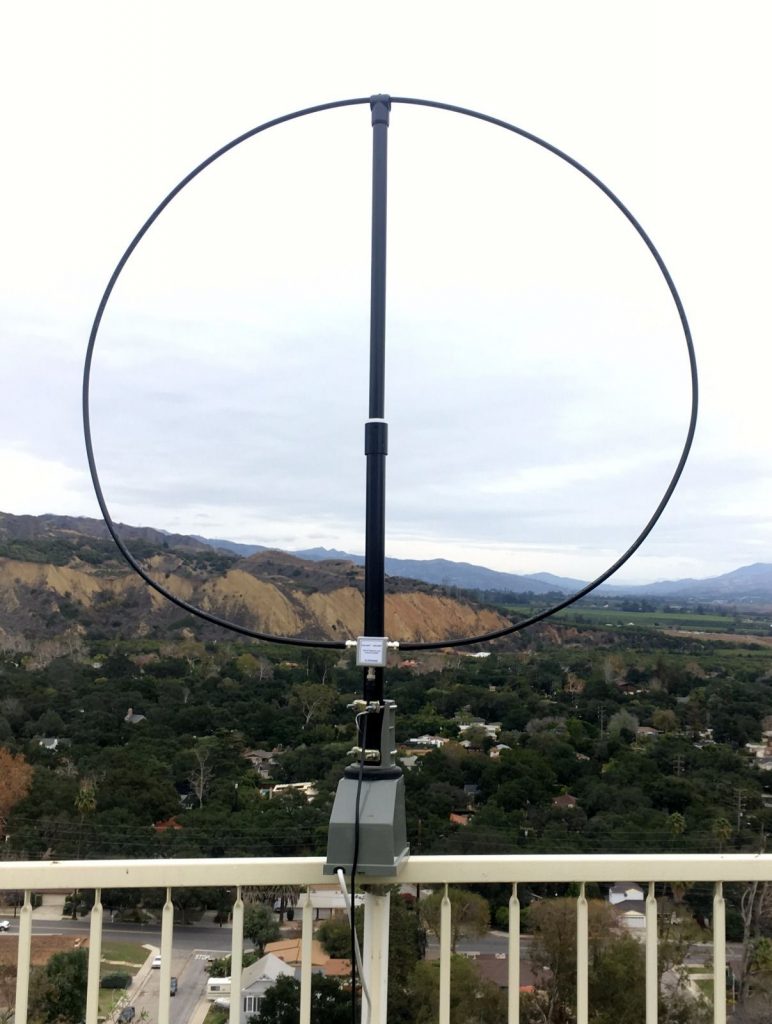
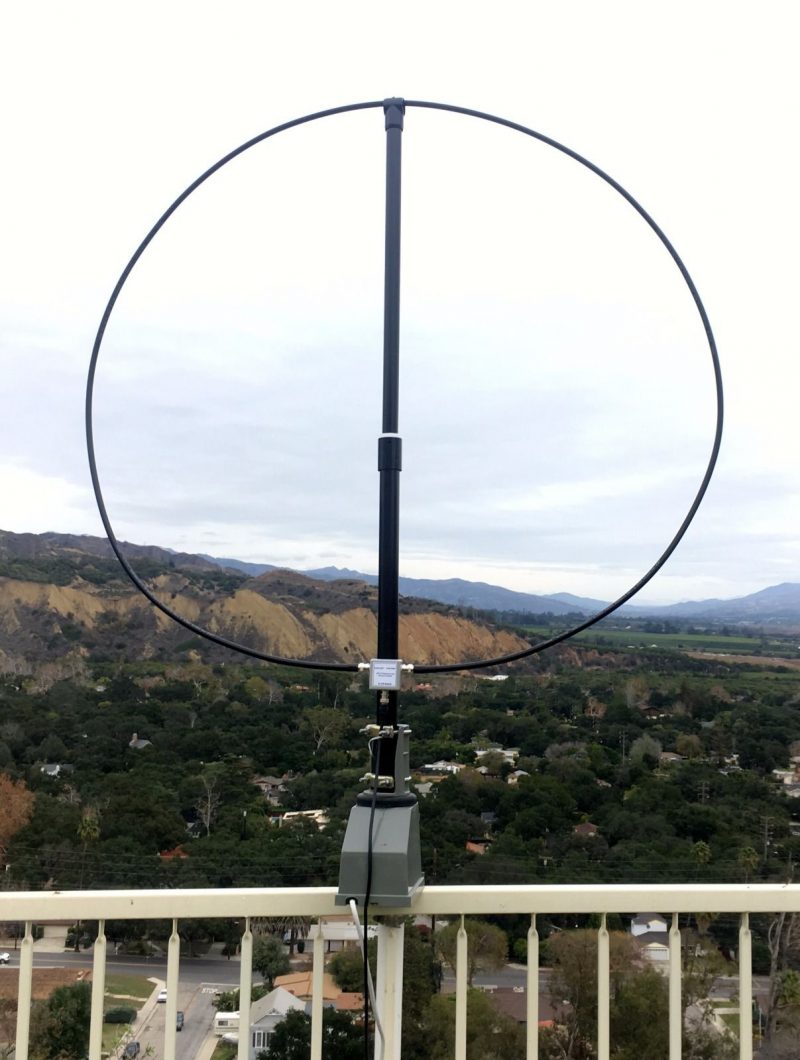
The W6LVP Loop Antenna

To my knowledge, the W6LVP is one of the most affordable larger diameter amplified wideband mag loop antennas. We’ve published positive reviews of this antenna in the past.

W6LVP sells two versions of the antenna–since you’re not operating a transmitter, this $250 model would be all you need. indeed, if I were in your shoes, this would likely be the loop I purchase–very cost effective.

Wellbrook Loops

Wellbrook antennas are the staple magnetic loop antenna for many DXers.

Wellbrook loops are manufactured in the UK and have been on the market for a very long time. Their re-engineered Active Inoor Loop Antenna LA5030 would serve you well. At £240.00 (roughly $330 US) plus shipping, it’s one of the most affordable in the Wellbrook line, but over a $250 budget.

Wellbrook makes a number of loops, but since you have no plans to mount this outside, I believe their indoor model would suffice.

Other loop options

There’s no shortage of magnetic loop antennas on the market, but most are pricer than the models I mention above and I know you have a tight budget. Here’s are some models we’ve mentioned on the SWLing Post in the past:

I have the RF Pro-1B and am very impressed, but it’s overkiil for your application (and twice the price of the W6LVP loop).

Fighting urban noise

Even if you build or purchase a magnetic loop antenna, you still need to eliminate as much RFI as you can on your own.

A couple years ago, our friend London Shortwave wrote a brilliant guest post about fighting urban noise. Read through his piece and try to implement as much of his advice as you can.

I hope this helps, Chris! This post is by no means comprehensive, so I hope others will chime in and comment with their experiences. Good luck fighting urban noise and I hope you enjoy your journey into the world of the SDR!


NBC: “Hawaii’s communication breakdown and how going ham could save us”

Many thanks to SWLing Post contributor, Curtis, who shares the following video from NBC Left Field:

Hawaii’s recent false nuclear missile alert showed us how reliant we are on cell phones and modern technology—and how unprepared we are if they become inaccessible. But in case the unexpected happens, an unlikely group of hobbyists—ham radio operators—are standing at the ready and may save us all.

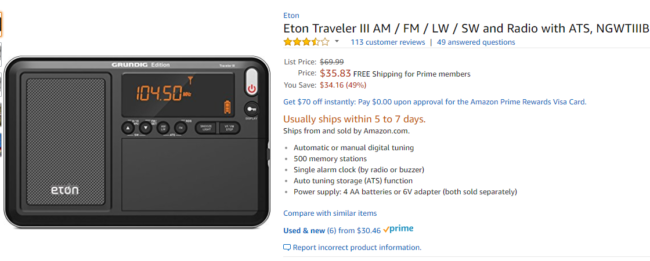
Radio Deal: Eton Traveler III $35.83 shipped via Amazon.com

Amazon has just posted an excellent price for the Eton Grundig Edition Traveller III shortwave portable: $35.83 shipped!  This is the lowest price I’ve seen for the Traveller III since December when it hit this lowest price for a very brief period of time. As with any Amazon spricing, this could end at any time.

Click here to view on Amazon.com (affiliate link).

Can you help Luke identify this radio noise?

Many thanks to SWLing Post contributor, Luke Perry, who writes:

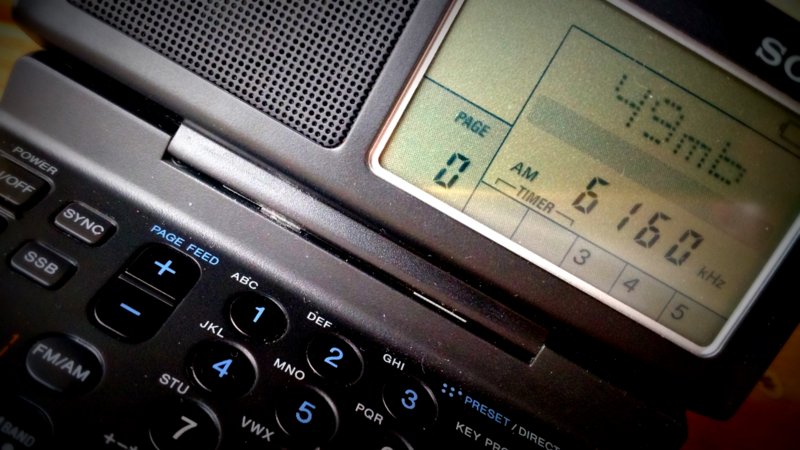
I am experiencing a issue with my shortwave reception at my part-time home. I have been helping out my mother so I have brought over my Sony portable, along with the Sony active antenna. I have a constant ‘clicking’ sound starting at about 5 kHz or thereabouts that make listening unbearable. As the video shows the problem is non-existent below 4 kHz. I tried moving the radio throughout the house thinking it could be something in the room and still get the same interference.

I was hoping that the filter on the active antenna would help but it does little to remedy the problem. I have no issues with MW or FM reception at all.

I have made a short YouTube video to document the problem in the hopes that one of the blog readers can identify it. I looked online at other instances of RFI and I could not find one that is similar. Hope that someone can help me!

https://youtu.be/OcEWAkdfmWw

Click here to view on YouTube.

After listening to the first few seconds of your recording, I thought it sounded a bit like an electric fence controller. However the interval between pops is nearly random, which suggests a different source. I suppose it’s possible a faulty fence controller could do this. I believe the only way you could defeat this noise (without shutting it down at the source) would be to use a radio with a durable noise blanker. Of course, I know of no portable radios with an NB function (though most SDRs and tabletop receivers include an NB).

Post readers: Can help Luke ID the source of this noise?  Does it sound familiar to you? Please comment!

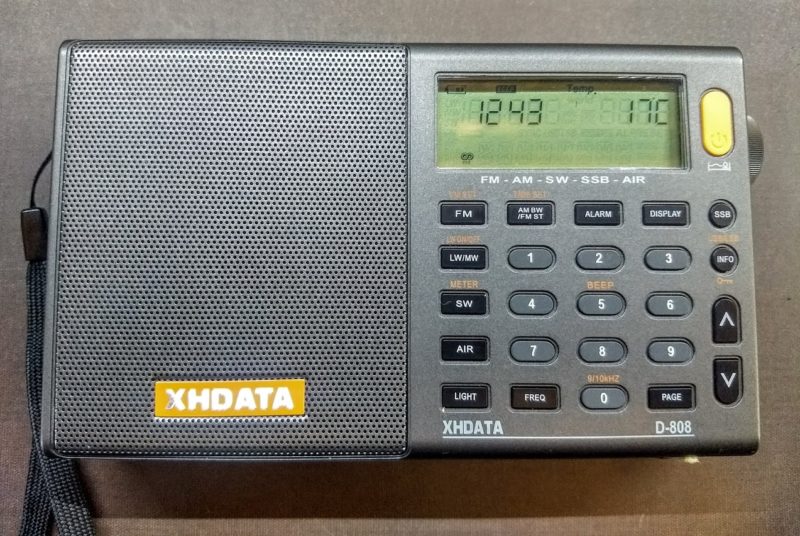
XHDATA D-808: using an external longwire antenna for MW

Many thanks to SWLing Post contributor, Mad Radio DXer, who writes:

I want to bring to the attention of your readers & fellow XHDATA D-808 owners that it can accept an external antenna on MW without the need for any modifications. This I found out during a DXpedition to the field when I used around 50 metres of longwire.
I have some videos to prove this. The first is the difference between the external longwire antenna vs the internal ferrite antenna…

Click here to view on YouTube.

The second video is pretty much the same as the first, but this time I am tuning on a lower frequency of the MW band. Also I show that not only can the 3.5mm antenna input be used to connect an external MW antenna, but the internal whip antenna too.

Click here to view on YouTube.

The third video shows the difference between the XHDATA D-808 vs the Degen DE1103 PLL (using the external MW antenna trick). when using an external antenna for Medium Wave. In my opinion there is not much difference between them reception-wise, but the D-808 has the advantage of being able to select tighter bandwidth filters for less QRM from stations on adjacent frequencies.

Click here to view on YouTube.

These days I am more of a MW DXer than on shortwave. I am thrilled to have found out that the XHDATA D-808 can accept an external antenna for Medium Wave in stock form, since my understanding when I read some reviews was that it could not unless an internal modification was done. I will do more experiments of MW reception with the D-808 on my next DXpedition.

I want to add a few more points…

  • The D-808 does not work with an external longwire antenna for Long Wave. I tried this & will upload a video of the result soon. However, I tried using my LW induction antenna at home & it did get stations which it could not using the internal ferrite antenna on its own. Again a video of that will be upcoming.
  • I tried using a Wellbrook antenna for improved MW reception on the D-808 & unfortunately it does not work well. There was too much background noise, & there were harmonics + images all over the band. I would instead recommend using a good passive antenna like a longwire rahter than a strong active one.
  • It is recommended to use 25 metres or more longwire for best results. Obviously, the more longwire used means the lower the frequency gain for reception.
  • I cannot guarantee that this will work for all XHDATA D-808 units in case, for eg, some have different firmware versions. All I can say is it does not hurt to try, but bear in mind what I said about the longwire antenna length. Also a nice quiet location away from manmade noise helps even more to minimise any QRM.

I hope this has been helpful & useful to all XHDATA D-808 who like me, are really into MW DXing.

I’m happy to hear that you’re enjoying MW DXing and that the XHDATA D-808 is serving you well! Over the years, my DXing habits shift and change, but I’ve always included a healthy amount of mediumwave DXing in the mix. Especially when propagation on HF is dismal, I head down to the MW band for some action! Thanks again for sharing your videos and tip!