Category Archives: Shortwave Radio

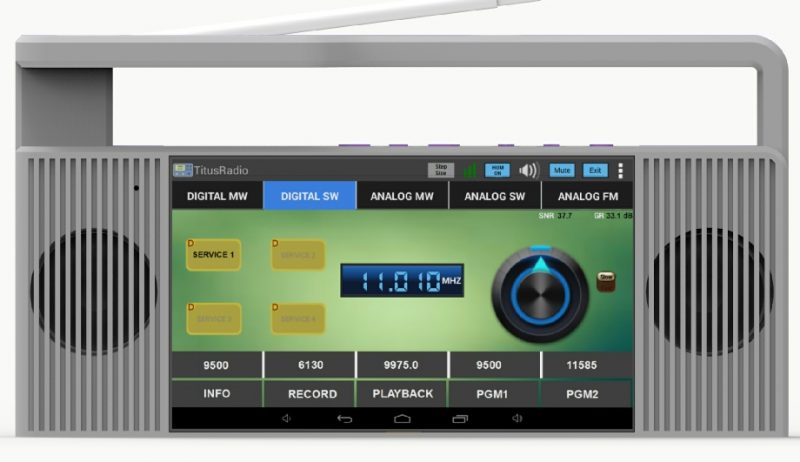
pantronX Titus II quick update

Many thanks to SWLing Post contributor, Ed, who notes:

I just received a status update on the pantronX Titus II portable SDR from Mike, their chief engineer.

Mike said the self-contained SDR portable will include “SoapySDR as the interface to make it much easier to roll your own SDR app.” Here’s some info about SoapySDR:

https://github.com/pothosware/SoapySDR/wiki

Mike also said, “To be 100% truthful, our biggest push right now is for the international MW & SW broadcasters. They want to go DRM digital is the worst way!”

You might want to share this news with SWLing Post readers.

Thank you for the update, Ed! Click here to view the pantronX website.

Radio Slovakia International asks, “Why is shortwave radio still alive?”

Many thanks to a number of SWLing Post readers who shared a link to this article via Radio Slovakia International:

Why is shortwave radio still alive?

If you use the internet to listen to streaming audio and podcasts, you could be forgiven for assuming there’s no need for shortwave radio any more. It seems many broadcasters appear to agree, with stations dropping their shortwave services year after year.

But not so fast. Shortwave’s not dead, say its proponents. Rather, it’s in a state of transformation. Not only does it still provide a vital service for the many millions of individuals worldwide who don’t have access to the internet, but this medium also has a certain ‘magic’ which, we discovered, is very hard for its fans to explain.

In this entertaining, full-length feature, Gavin Shoebridge asked shortwave listeners from across the globe to explain why they still use the service, why they don’t ‘go digital’, and where they think shortwave will be in the coming years.

Click here to download the MP3 audio.

Click here to read and listen via Radio Slovakia International.

Could NHK Japan purchase Santa Maria di Galeria site?

(Source: CatholicCulture.org via London Shortwave)

As Vatican Radio ends short-wave broadcasts, others expand

As Vatican Radio closes an era by ending its short-wave transmissions, other broadcasters are stepping up their involvement in the short-wave field, notes Sandro Magister of L’Espresso.

Msgr. Dario Vigano, the prefect of the Vatican’s new Secretariat for Communications, has cut off short-wave broadcasts—long the heart of the Vatican Radio operation—in a move to cut costs and move toward emphasis on communicating through the internet. But Magister observes that short-wave transmissions retain their “unique ability to arrive as a free and true voice even in the most geographically and politically inhospitable places of the world.”

The Italian Vatican-watcher reports that other broadcasters are expanding their short-wave offerings. BBC has invested £85 million (almost $105 million) in a drive to expand its short-wave capacity. And Japan’s NHK network has inquired about purchasing the broadcasting station at Santa Maria di Galeria, just outside Rome, that Vatican Radio will no longer use.

Read this article at CatholicCulture.org.

RNZI becomes the voice of the Pacific

(Source: Asia Radio Today via Mark Little)

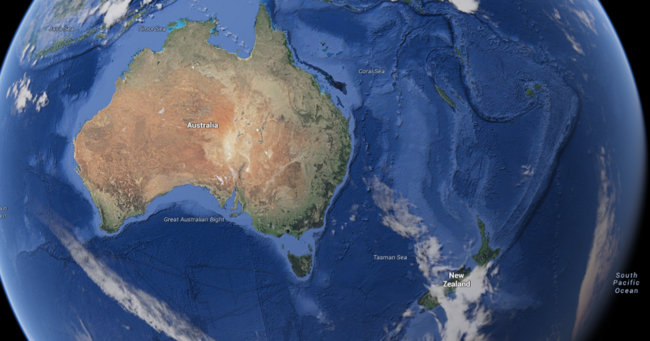
As Radio Australia cuts shortwave services, RNZI becomes the voice of the Pacific

Radio New Zealand International (RNZI) continues to serve people across the Pacific region, delivering essential day to day news and information and providing a vital lifeline in times of natural disaster, as Radio Australia closes its international shortwave transmission service to Papua New Guinea and the Pacific.

Emphasising the importance of RNZI’s 25-year relationship with New Zealand’s Pacific neighbours, RNZ CEO, Paul Thompson said: “Remote parts of Papua New Guinea, Solomon Islands and Vanuatu who may be feeling the loss of the ABC can rest assured RNZI will continue to provide independent, timely and accurate news, information and weather warnings as well as entertainment to its Pacific listeners.”

Australian Broadcasting Corporation’s decision to switch off its shortwave services as a money saving measure has already drawn criticism and protests from a number of groups in Australia.

Read more at: http://www.asiaradiotoday.com/news/radio-australia-cuts-shortwave-services-rnzi-becomes-voice-pacific © Radioinfo.com.au

In truth, RNZI has always done a fabulous job of covering the Pacific islands with news and information. I’m happy to hear they plan to stick around.

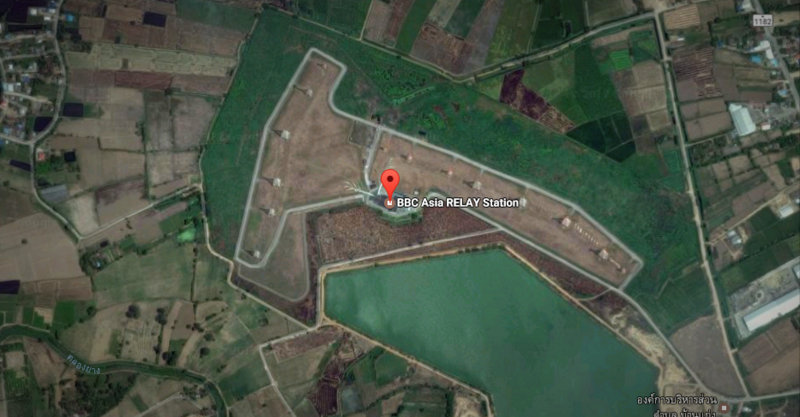
BBC cuts broadcasts from Thailand transmission station

(Source: Malay Mail Online via R. Lewis )

BANGKOK, March 8 — The BBC World Service has stopped broadcasting from one of its major global transmission stations situated in Thailand, AFP has learned, after talks broke down with a junta riled by its uncensored coverage.

Sources with knowledge of the negotiations said the BBC’s Thai-language output impeded discussions about renewing the 20-year lease on the complex, the network’s main shortwave broadcast station for Asia.

The centre’s large red and white transmission towers in Nakhon Sawan 240km north of Bangkok beamed local language news into tightly-controlled countries such as China and North Korea, and into places where many still rely on radio like Pakistan and Afghanistan.

– See more at: http://www.themalaymailonline.com/world/article/bbcs-thai-transmission-towers-fall-silent-as-junta-talks-falter#sthash.NsUkQnEQ.dpuf

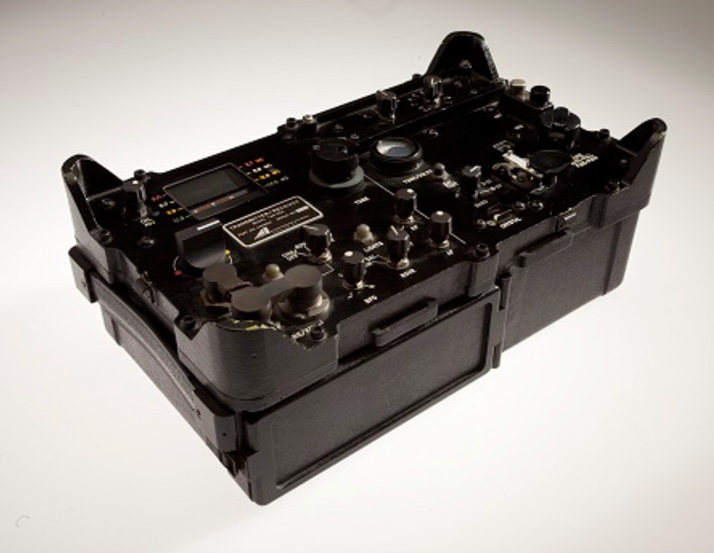
The TAR-224 CIA Radio

Many thanks to SWLing Post contributor, @K7al_L3afta, who suggested I post photos of the TAR-224 Radio. Obviously, he knows I’m a fan of this sort of rig!

He discovered the TAR-224 on the excellent CIA online museum where they give a brief description of the unit:

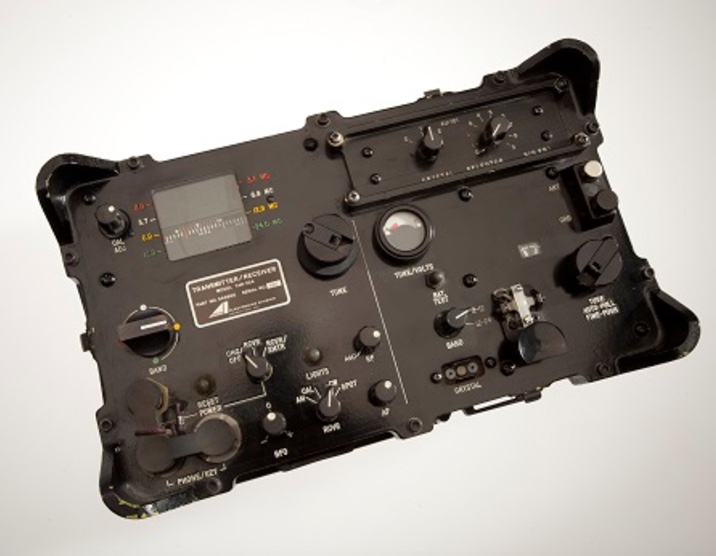
A compact, high-frequency, paramilitary transceiver, the TAR-224 enabled communications with field agents operating behind enemy lines. It saw service in Vietnam as well as during Operation EAGLE CLAW.

31 cm x 18.3 cm x 12 cm
(L x W x H)
A much better description of the TAR-224 can be found at the CryptoMuseum:

TAR-224 was a very compact, self-contained spy radio station, developed by AVCO Corporation in Cincinnati (Ohio, USA) around 1970 for the CIA. It was intended for communication with field agents operating behind enemy lines, and can be seen as a successor to the ageing GRC-109 (RS-1) of the 1950s. It was used for many years until it was phased out in the late 1980s.

The entire unit is completely waterproof, with all switches and controls at the front panel properly sealed, allowing the radio to be stored under harsh conditions for an extended period of time. A plastic lid can be placed over the controls to protect them against dust and dirt. It is held in place by three metal latches at the edges.

[…]The radio coverages all frequencies between 2 and 24MHz. The receiver has a Variable Frequency Oscillator (VFO), allowing continuous tuning of all 4 frequency bands, whereas the transmitter is crystal operated. The unit can be powered by an external 12V source that is connected to a 3-pin socket at the front left, or by a special 12V battery pack that is installed behind a watertight panel at the front left. A plastic grip, at the left of the radio, allows the unit to be carried around easily.

[…]Most TAR-224 units were used by the CIA on special (overseas) missions, but the radios were also used by intelligence services in Europe. It is known to be used on a mission in Angola in 1975. According to CIA communication specialist Teddy Roberts, the TAR-224 was still being used in operational context in 1983, when he trained a unit of US Army Green Barets on its use.

Continue reading…

Evidently, the TAR-224 is quite rare and I was not aware of it. Thanks for sharing, @K7al_L3afta!

VORW Radio International expands with shortwave broadcasts to Asia

Many thanks to SWLing Post contributor, John from VORW Radio International, who writes:

I am pleased to announce the further expansion of VORW Radio International, now transmitting to Asia!

Each broadcast features a mixture of my commentary and listener requested music. You’ll hear a great variety of music in this program, from Classical to Classic Country, from Rock to Smooth Jazz, you’ll hear it all!

If you’re interested in listening, the updated broadcast schedule is as follows (with bold text marking additional transmissions):

  • Thursday 1000 UTC – 1100 UTC – 5850 kHz to Northeast Asia / Pacific Northwest
  • Thursday 1300 UTC – 1400 UTC – 6070 kHz to Europe
  • Thursday 2000 UTC – 2100 UTC – 6070 kHz to Europe
  • Friday 0100 UTC – 0200 UTC – 7490 kHz to North America (8 PM – 9 PM Eastern, Thursday)
  • Friday 1130 UTC – 1230 UTC – 3210 kHz to Northwest NSW, Australia

March 9th – 1200 UTC – 1300 UTC – 12085 kHz to Northeast Asia

Questions, comments, reception reports and music requests may be sent to [email protected]

Reception reports will receive a QSL!

Many thanks, John! Happy to see yet another expansion of your broadcasts!