Category Archives: Shortwave Radio

ORF: Moosbrun rotating antenna to be demolished

Drehbare Hochleistungsrichtantenne ORF Moosbrunn (Daniel Csiky – Wikimedia Commons)

Many thanks to SWLing Post contributor, Adi, who shares the following news about Austria’s historic 500-kilowatt shortwave transmitter in Moosbrunn:

ORF has Austria’s 500-kilowatt short-wave transmitter blown up

This massive, unique rotating HF antenna, capable of broadcasting to the furthest corners of the globe, is set to be demolished. The article explores its rich history, technical capabilities, and the broader implications of its loss for global communications.

Read the full story on heise online.

Don Moore’s Photo Album: Museum Findings – World War II

Along US Highway 550 in southwest Colorado

Don Moore’s Photo Album
Museum Findings: World War II

by Don Moore

More of Don’s traveling DX stories can be found in his book Tales of a Vagabond DXer

Learning should be a life-long pursuit for all of us. One of my ways of doing that is by visiting museums while traveling, whether in the USA or abroad. Cultural, historical, and science museums are my favorites. And if a museum’s theme includes the 20th century, there is a good chance that something related to radio will be found in the collection. In this edition of the Photo Album I want to share some findings related to radio and World War II that I’ve recently found in museums here in the USA.

Do A-Bombs QSL? 

I’m based in Pennsylvania but my daughter lives in western Colorado and my son in Texas. So in September and October of 2024 I made a 45-day road trip to visit them both and see sites along the way. One stop was Santa Fe, New Mexico. The New Mexico History Museum downtown has an excellent exhibit on the development of the Atomic Bomb and the effect on the local area. The real place to learn about this, however, is an hour north of the city at Los Alamos, where the project actually happened.

In addition to the historical sites, Los Alamos has one of the best science museums I’ve been to anywhere. That’s not surprising considering that not many places have as many scientists per capita as Los Alamos does. And there I learned that radio was closely involved in dropping the first A-Bomb on Hiroshima.

The scientists at Los Alamos developed two types of atomic bombs. The bomb dropped on Hiroshima used a uranium-gun to initiate the explosion. The scientists were certain this would work so this was not tested beforehand. The bomb dropped on Nagasaki used the second method with a with a plutonium-implosion as the trigger. But they were uncertain as to whether or not this would actually work so it had already been tested in the New Mexico desert in July 1945. That was the first atomic explosion and the scientists collected lots of useful measurements.

But the developers had no such measurements for the uranium-gun bomb as it hadn’t been tested. But how to get them? They obviously couldn’t place monitors on the ground at Hiroshima beforehand. Physicist Luis Alvarez was tasked with finding a solution. Alvarez’s team built three canisters filled with monitoring equipment and VHF transmitters to be carried by The Great Artiste, the observation plane that would accompany the Enola Gay to Hiroshima. The three canisters were to be dropped by parachute at the same moment that the Enola Gay dropped the bomb.

The signals from the canisters were to be picked up by a bank of Hallicrafters S-36 VHF receivers on the plane and then feed to oscillographs to record the results, which would simultaneously be recorded by movie cameras.

It all worked according to plan and data was received from two of the three canisters before they were engulfed by the explosion. But, to the best of my knowledge, no QSLs were issued for the receptions.

The WASP Museum

My next destination after Santa Fe was San Antonio, Texas, 700 miles (1100 kilometers) away. To make the road trip more interesting I wanted to find some things to see along the way. While perusing Google Maps I came across the National WASP World War II Museum in Sweetwater, Texas. The museum has nothing to do with insects. The acronym stands for Women’s Airforce Service Pilots.

The use of women pilots in support roles to the US Army Air Force began in 1942 with the Women’s Flying Training Detachment (WFTD) and Women’s Auxiliary Ferrying Squadron (WAFS). In 1943 the two programs were merged to form the WASP program and the airfield at Sweetwater was chosen for the four-month training program. In total, 1,830 women started WASP training and 1,074 finished, about the same success rate as with male military pilots of the era. Continue reading

Jeff rediscovers the Tecsun PL-660

Many thanks to SWLing Post contributor Jeff McMahon over at The Herculodge for his recent post, “Dude, You Really Love Radios: A Nostalgic Ode to the Tecsun PL-660.

Jeff reflects on rediscovering the Tecsun PL-660, a “Pre-DSP Glory Era” classic, sharing insights about its design, performance, and the irresistible pull of nostalgia. Like many of us who love radios, he’s already contemplating buying a second one!

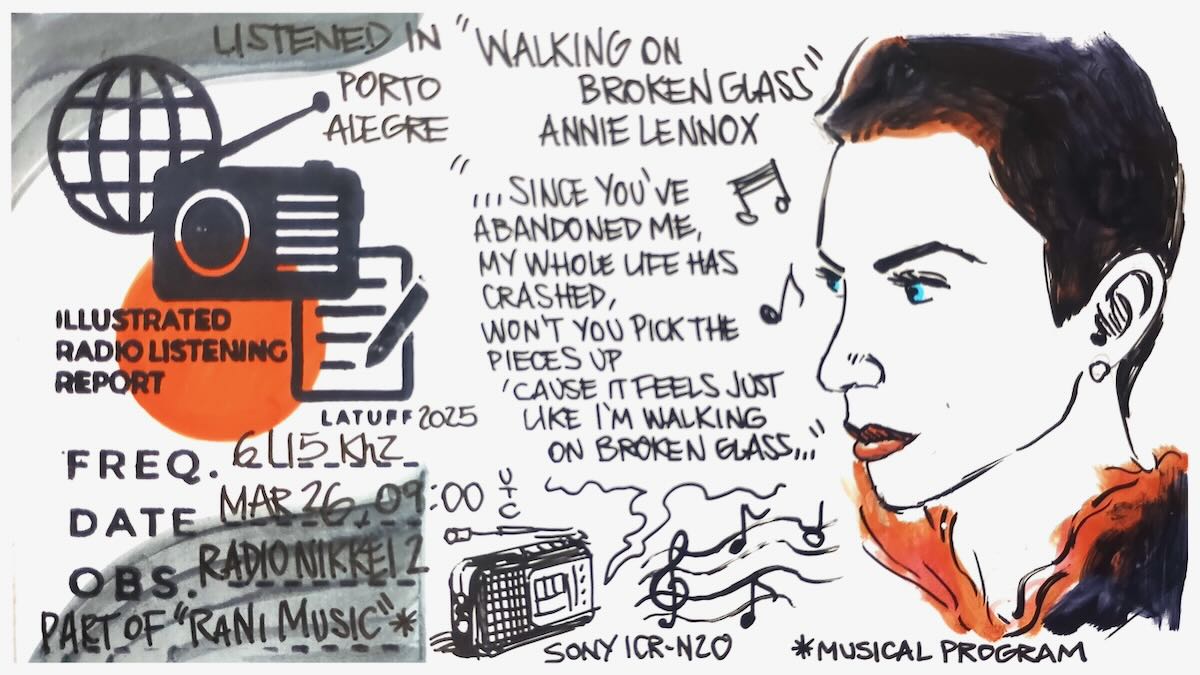
Carlos’ Illustrated Radio Listening Report and Recording of Radio Nikkei 1 (January 24, 2025)

Many thanks to SWLing Post contributor and noted political cartoonist, Carlos Latuff, who shares illustrated radio listening report of a recent Radio Nikkei 1 broadcast.


Carlos notes:

*Better listened with earphones*

Part of Radio Nikkei 1 news bulletin (Nikkei Electronic News) in Japanese. BYD, a major Chinese electric vehicle (EV) manufacturer, announced on the 24th that it will launch a plug-in hybrid vehicle (PHV) in the Japanese market at the end of 2025. Listened in Porto Alegre, Brazil.

Click here to view on YouTube.

Dan Revisits Radio Japan: A Half-Century Later

Many thanks to SWLing Post contributor Dan Greenall, who shares:


Running into an old friend

Hi Thomas

I was doing some random tuning on shortwave this evening using the KiwiSDR at VK2ATZ in New South Wales, Australia, when I came upon a repeating music box-like tune on 13705 kHz that I thought had a familiar sound to it. It was like running into someone who you hadn’t seen in many years and trying to place where you knew them from. Yes, the sound was a bit different, perhaps even a little slower (age does that ?), but then it came to me, could it be Radio Japan, the overseas service of NHK? A quick check at Short-Wave.info revealed this was indeed NHK World Radio.

It felt like I had found an old friend, one that I knew from my high school days over a half century ago. Still recognizable after all those years, and it felt good to know that they are still around.

Attached are two recordings:

Radio Japan, interval signal and bilingual ID, as heard in Ancaster, Ontario, Canada on 9505 kHz in 1970:

NHK World Radio, interval signal and sign on in Thai on 13705 kHz, January 23, 2025 at 2300Z (via VK2ATZ KiwiSDR):

73

Dan Greenall
London, Ontario, Canada

Jeff’s short review of the Tecsun PL-880

Many thanks to SWLing Post contributor Jeff McMahon, who notes that he’s recently published a short review of the Tecsun PL-880 on his blog, The Herculodge.

Jeff has discovered something that portable radio enthusiasts have known for more than a decade: the PL-880 sports some of the best audio fidelity in a modern portable radio!

His review prompted me to search for my original review of the PL-880. It turns out I published it in December 2013. Has it really been over 11 years since the PL-880 was introduced? It’s hard to believe—but I’ll admit it still holds its own. I’ll never let mine go.

Thermometers at the ready please

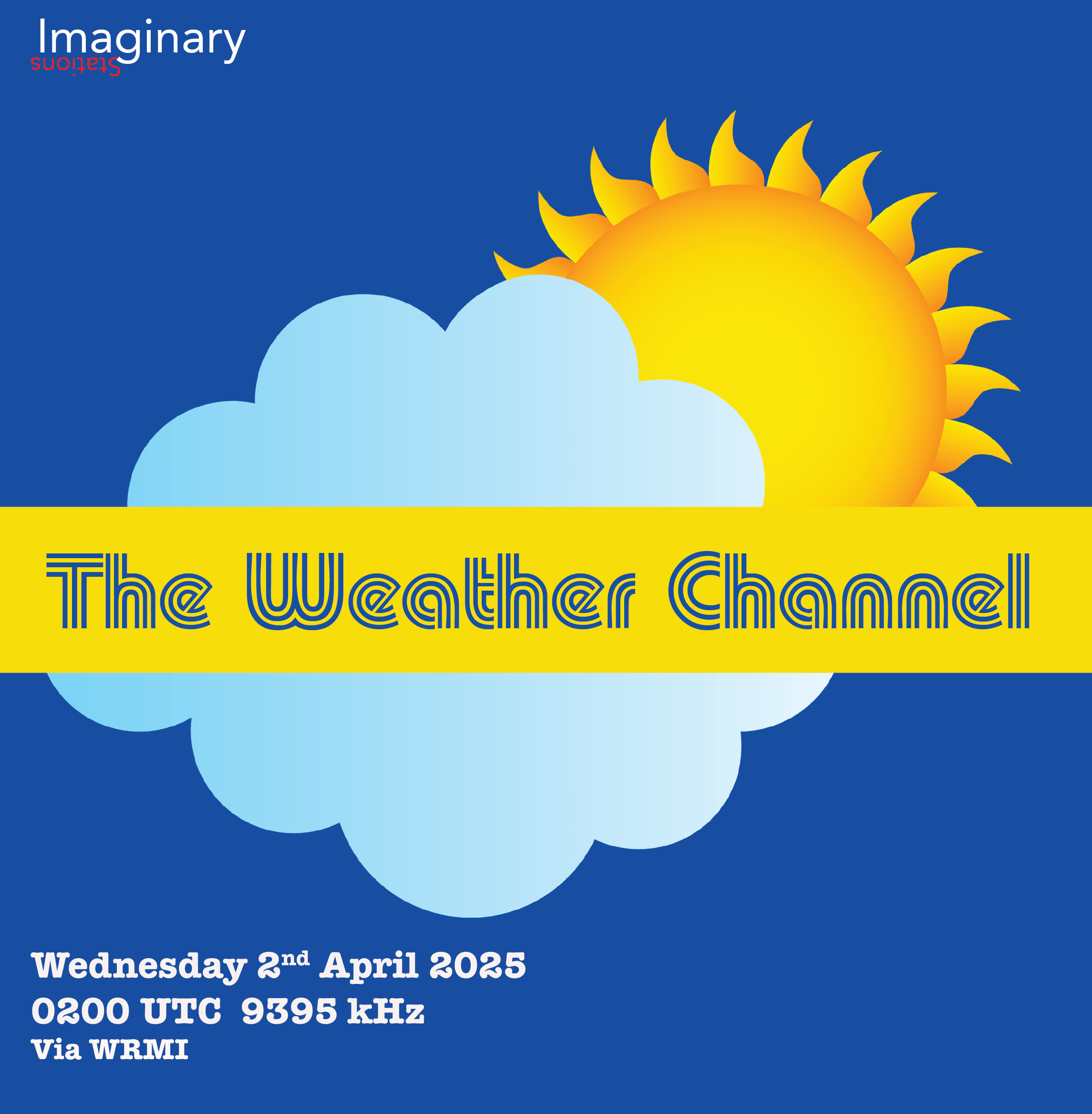
Hi to all SWLing Post community! FastRadioBurst 23 here with news of this week’s Imaginary Stations shortwave output.

On Saturday 25th January 2025 at 1200 hrs UTC on 6160 kHz and also on Sunday 26th January 2025 at 1000/1400 hrs UTC on 6160 kHz and at 2100 UTC on 3975 kHz via Shortwave Gold we’ll be bringing you WARM 3 (which was broadcast on WRMI last week if you missed it) a continuation of tunes to heat you up during this winter period (if it is winter where you are).  So hitch up the huskies, take off your snowshoes, grab that USB powered hot water bottle and enjoy some great tunes. You can be assured there won’t be any lukewarm songs on the show, they’ll all either be hot or just below boiling.

Feeling cold or feeling run down with a cold? Well on Wednesday January 29th January 2025 at 0300 UTC via WRMI we have WARM 4 with tunes hotter than a thermal vest. Tune in and WARM up! More on our WARM shows here.

For more information on all our shows, please write to [email protected] and check out our old shows at our Mixcloud page here.