Shortwave listening and everything radio including reviews, broadcasting, ham radio, field operation, DXing, maker kits, travel, emergency gear, events, and more
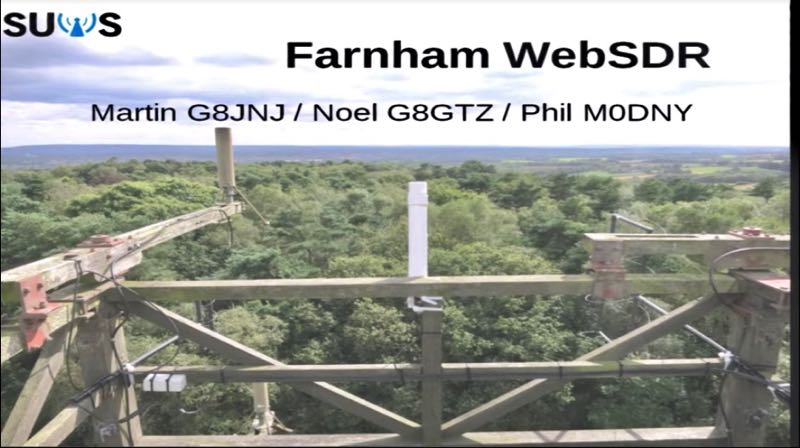
This presentation gives an overview of the Farnham WebSDR, available at http://farnham-sdr.com/ which currently covers the LF bands through to 10GHz.
The presentation describes the system architecture and antennas currently used on each band and how the team has used RTL dongle receivers, available for under £10, to give good RF performance on all bands from DC to 10GHz. There is a demonstration of the SDR in use on both PC and smartphone.
Many thanks to the Southgate ARC who notes this recently published 1947 silent film from the Radio Society of Great Britain:
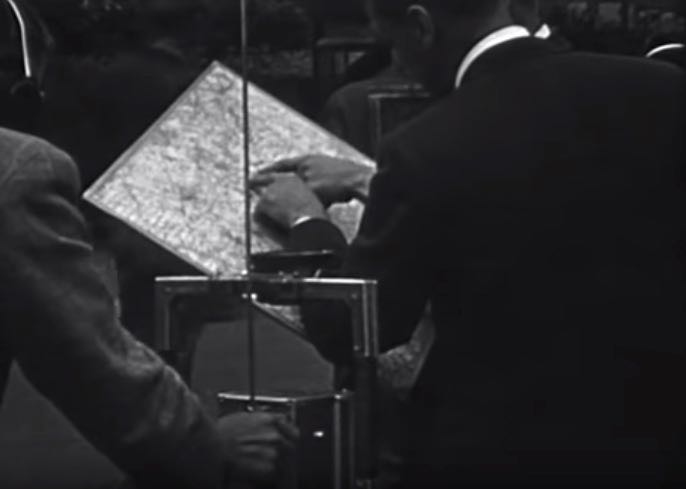
The RSGB has released a vintage silent black and white video of an Amateur Radio Direction Finding (ARDF) field day held in 1947 at Chipping Barnet which was then in Hertfordshire
The Incorporated Radio Society of Great Britain titled the video – D/F Field Day (North of the Thames) May 18th 1947. It has been added to the many amateur radio videos that can be viewed on the Society’s YouTube channel.
One thing that’s apparent from the video is the difference in the age range of those who participated in amateur radio in the late 1940’s compared to today.
Pages 69-70 of the RSGB Bulletin (forerunner of RadCom) for October 1947 contained a fully illustrated report on the North of the Thames ARDF event as well as the South of the Thames event held on July 6, 1947.
The two leading affiliated societies on May 18 were from Essex:
1st Romford and District Radio Society
2nd Southend and District Radio Society
The two clubs swapped positions for the July 6 event.
Fascinating! I love how everyone wore proper attire and much of the equipment was home brew. I imagine operators were happy to go back to field and enjoy all sorts of radio activity so close on the heels of WWII.
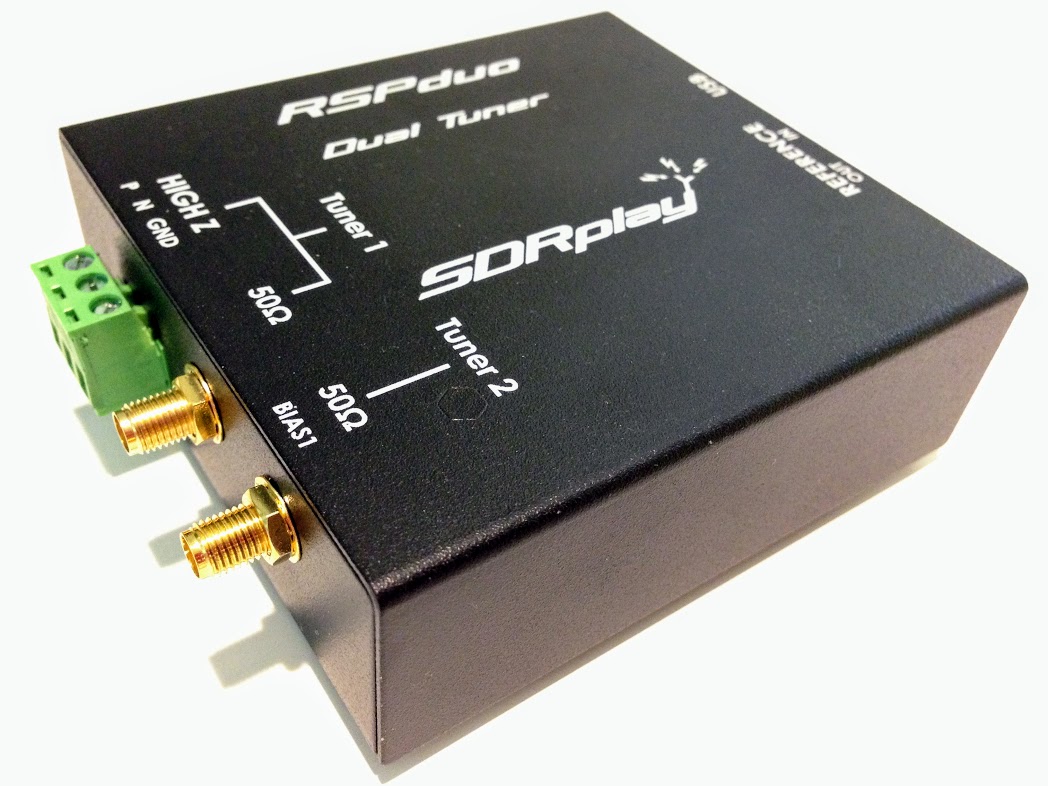
This video guide demonstrates the new RSP TCP server software which is now included in the latest Raspberry Pi SD Card image. The video shows how easy it is to set up an RSP at a remote location for access over the internet.
The video uses a Raspberry Pi at the remote location, and a Windows PC running HDSDR back at home base.
We are only demonstrating the Raspberry Pi version of the server here. Also, we are demonstrating extended mode (enabling the full RSP ADC resolution which only works with software which supports an EXTIO interface). Other (non EXTIO compatible) RTL-SDR software will also run via the server on an RSP device – but in “normal mode” meaning that the data resolution will be restricted to 8 bits.
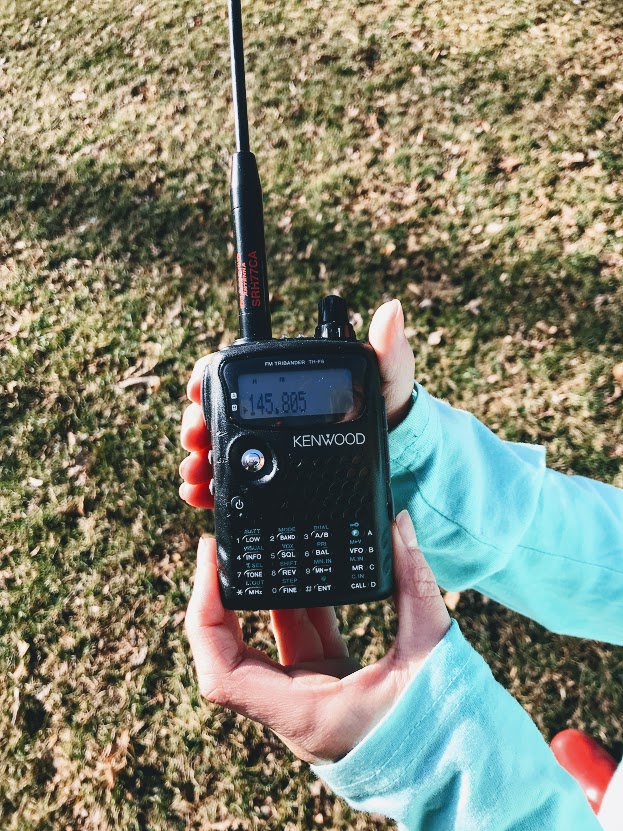
My daughter hold the Kenwood TH-F6 HT while we listen to the ISS contact.
Many thanks to my good buddy Eric (WD8RIF) for reminding me about a scheduled ARISS (Amateur Radio on the International Space Station) contact between Canadian astronaut David Saint-Jacques and Faith Christian Academy in Orlando, FL, USA.
Astronaut David Saint-Jacques (Source: Canadian Space Agency)
Living in the mountains, I miss a lot of low angle ISS passes due to ridge lines blocking my line of sight. This time, though, the pass was high and mostly to my open south which meant it was one of the longest ARISS contacts I’m monitored.
My daughters drop everything to monitor radio or visual ISS passes–this February 14th pass was no exception.
In fact, I’m sure a lot of their enthusiasm about studying for their ham radio licenses stems from these ARISS events.
My daughters helped me make short videos of David Saint-Jacques’ replies (of course, we can’t hear the FL school’s transmissions). Below, I’ve matched the school’s questions with his answers:
Question regarding superstitions, traditions and rituals: