Category Archives: Weather Radio

Guest Post: An Introduction to DXing the MF Marine Bands

Many thanks to SWLing Post contributor, Don Moore–author of  Following Ghosts in Northern Peru–for the following guest post:


Monitoring the MF Marine Bands

By Don Moore

For me, DXing has always been about the challenge of receiving difficult-to-hear radio stations, regardless of the type of station or frequency range. In my five decades in the radio hobby I’ve logged a lot of different kinds of stations – shortwave broadcast, medium wave, shortwave utility, longwave beacons, etc. But some of my favorite catches have been in the upper end of the medium frequency range.

Technically speaking, medium frequency (MF) is the range from 300 to 3000 kHz and includes the standard medium wave (AM) broadcast band. The upper end of the MF band, from 1600 to 3000 kHz (except for a small portion reserved for amateur radio),  has always been assigned to various types of utility uses including broadcasts and other voice communications from regional maritime stations. And while digital modes and satellites have done a lot to change the nature of communication with ships at sea, there is still a lot of good human-voice DX to be heard.

Several dozen stations, mostly in Europe and North America, broadcast regularly scheduled marine information broadcasts in the MF range. These broadcasts are usually between five to ten minutes in length and include weather forecasts, navigational warnings, and other notices to keep ships at sea safe. On occasion it’s possible to hear two-way voice communication here between ships and shore stations, although that’s much less common today.

The Equipment

Nothing special is needed to DX the marine MF band other than a receiver that covers the frequency range and can receive USB mode (which all these broadcasts are in). However, for reasons explained below, I highly recommend using an SDR to make spectrum recordings of the entire band to go through later. Continue reading →

Jock satisfies his inner radio nerd with a deeper dive into NOAA weather radio

Many thanks to SWLing Post contributor, Jock Elliott, who shares the following guest post:


Perhaps the ultimate radio nerd story . . .

by Jock Elliott (KB2GOM)

Perhaps I am the only guy on planet earth with a “kinda” interest in DXing NOAA weather radio, but there you have it, and this led me down an interesting rabbit hole in the world of radio.

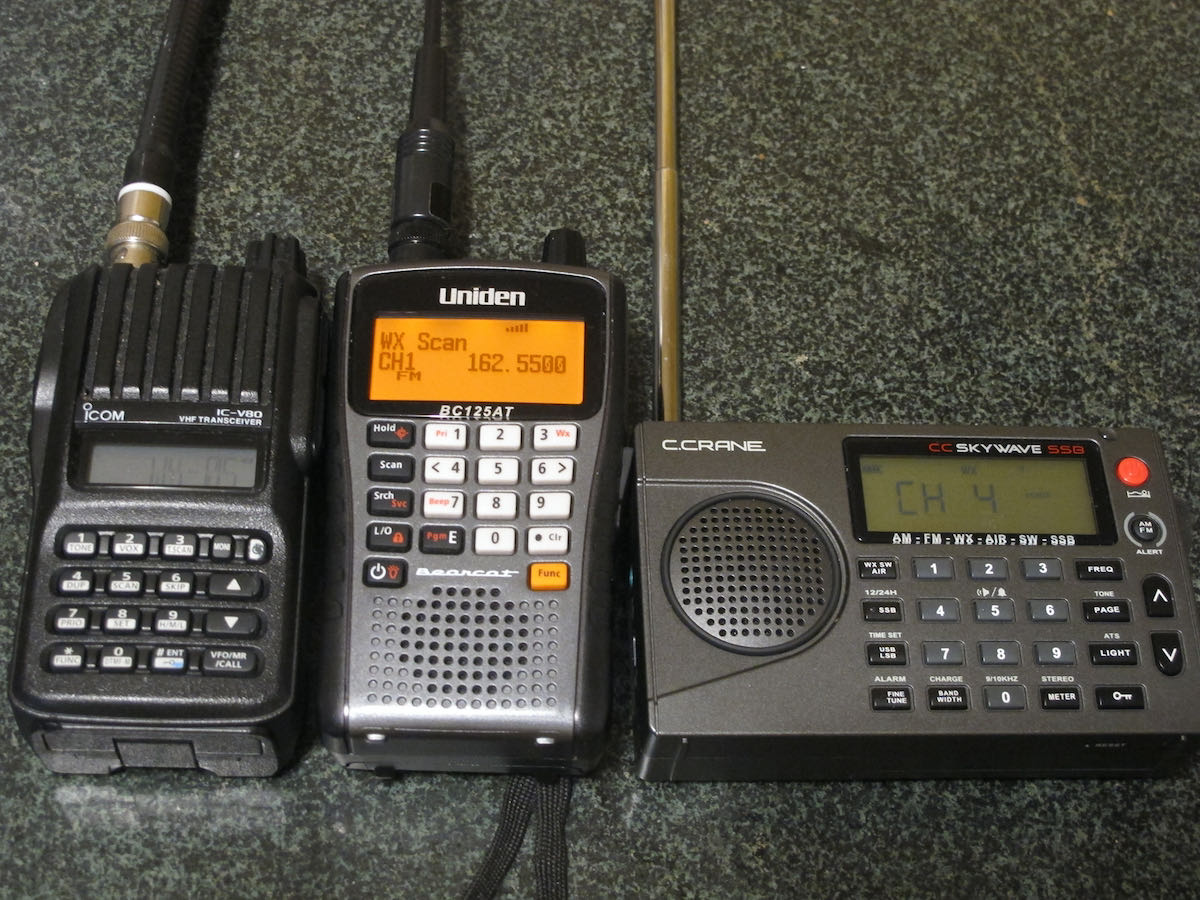
Earlier this year, I found myself in Sodus, NY, in the western part of the state, near the shores of Lake Ontario. I had with me the following: an Icom V80 2-meter handy-talkie with a sharply tuned commercial antenna that works great on my home repeater (146.94) in Troy, NY; a Uniden BC125AT scanner with a Diamond 77 antenna, and a CCrane Skywave SSB. All receive the NOAA weather channels.

In the early morning, I checked www.wunderground.com for weather in the Sodus area. Snow was expected overnight. So I grab the Uniden 125AT, activate the weather scan function, and found that it received NOAA weather radio channels 1, 2, and 3, and the audio sounded great through my headphones. I tried stepping through the weather radio channels on my Icom V80 and found that it received channels 1, 2, and 3, but with just a wee bit of static in the background. I tried switching the antennas between the 125AT and the V80, and there was no appreciable difference.

Now, here’s the interesting part: I tried the same trick on the CCrane Skywave SSB with its telescoping whip fully extended, and it received weather channel 1 just fine with excellent audio through the headphones. But channel 2 was way down in the soup, a hair above “barely audible.” I tried waving the Skywave around, point the whip antenna in different directions and orientations to see if I could improve the signal. I succeeded only in nulling it out. Weather radio channel 3 was not audible at all, but channel 4 was coming in well, and so was channel 7 . . . and the other two radios were not receiving channels 4 and 7 at all.

Frankly, I didn’t know what to make of this. To be clear, I was able to hear that forecast that I needed to hear — for Wayne County, NY — on all three radios. But why would there be such a stark difference between the CCrane Skywave SSB and the other two radios?

At this point, I was really curious what the answer might be.

The V80 and the 125AT “agreed” with each; both were receiving NOAA weather radio channels 1, 2, 3. The CCrane Skywave SSB appeared to be the anomaly, receiving channels 1, 2 (barely), and 4 and 7, which the V80 and 125AT did not receive.

Continue reading →

Maintenance at DWD Pinneberg transmitter

Many thanks to SWLing Post contributor, Ralf Bender, who notes:

Hello Thomas,

For all interested, extensive technical work is in progress at the DWD Pinneberg weather radio transmitter. Affected are NAVTEX, facsimile, rtty and voice transmissions.

Complete shutdown:
16.08.2021 00:00 by 21.08.2021 24:00 UTC. Other scheduled shutdowns will occur during the day on the following dates:
23.08.2021 05:00-17:00 UTC
24.08.2021 05:00-17:00 UTC
25.08.2021 05:00-17:00 UTC
30.08.2021 05:00-17:00 UTC
31.08.2021 05:00-17:00 UTC
—
73 Ralf
—
DL0103SWL
DO5RBB

Thank you for sharing this, Ralf and apologies for not getting this posted earlier. Yours was one of the emails lost in my SPAM box.

Weather radios given to communities in path of natural disasters

Many thanks to SWLing Post contributor, NT, who writes:

Hi Thomas,

A few months ago, a city in northern California gave away weather radios to help their community prepare for fire season. And last year a county in Georgia did the same thing in advance of extreme weather.

With all the fires and severe weather happening around the world, I’m curious if other communities have been doing emergency radio give-aways? I thought you or other SWLing Post readers might have seen similar stories?

73,
NT

Great question, NT!

Post readers: please comment if you know of other communities around the world who’ve deployed weather radios in an effort to prepare for natural disasters.

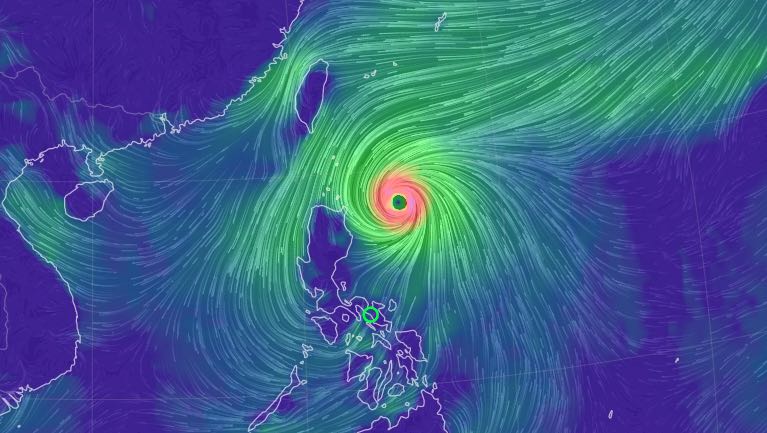
Radiofax images of Typhoon Surigae from the Japan Meteorological Agency

Many thanks to SWLing Post contributor, Carlos Latuff, who writes:

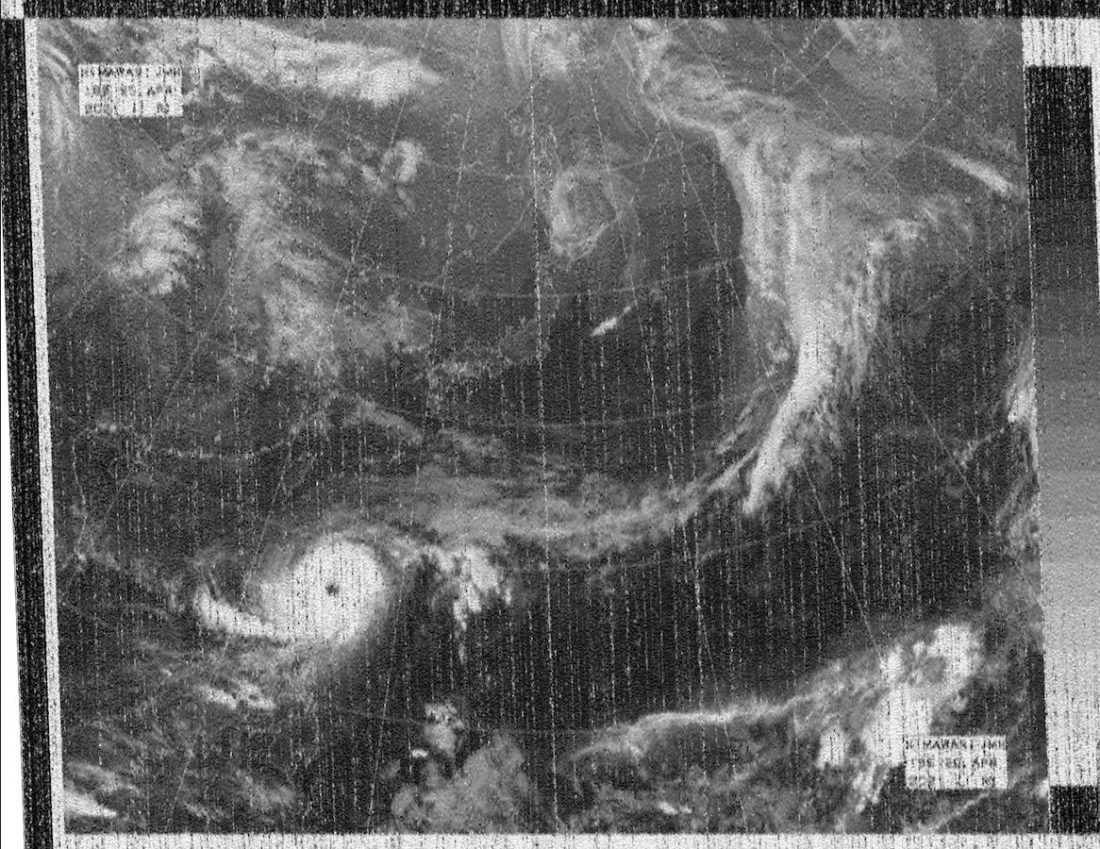
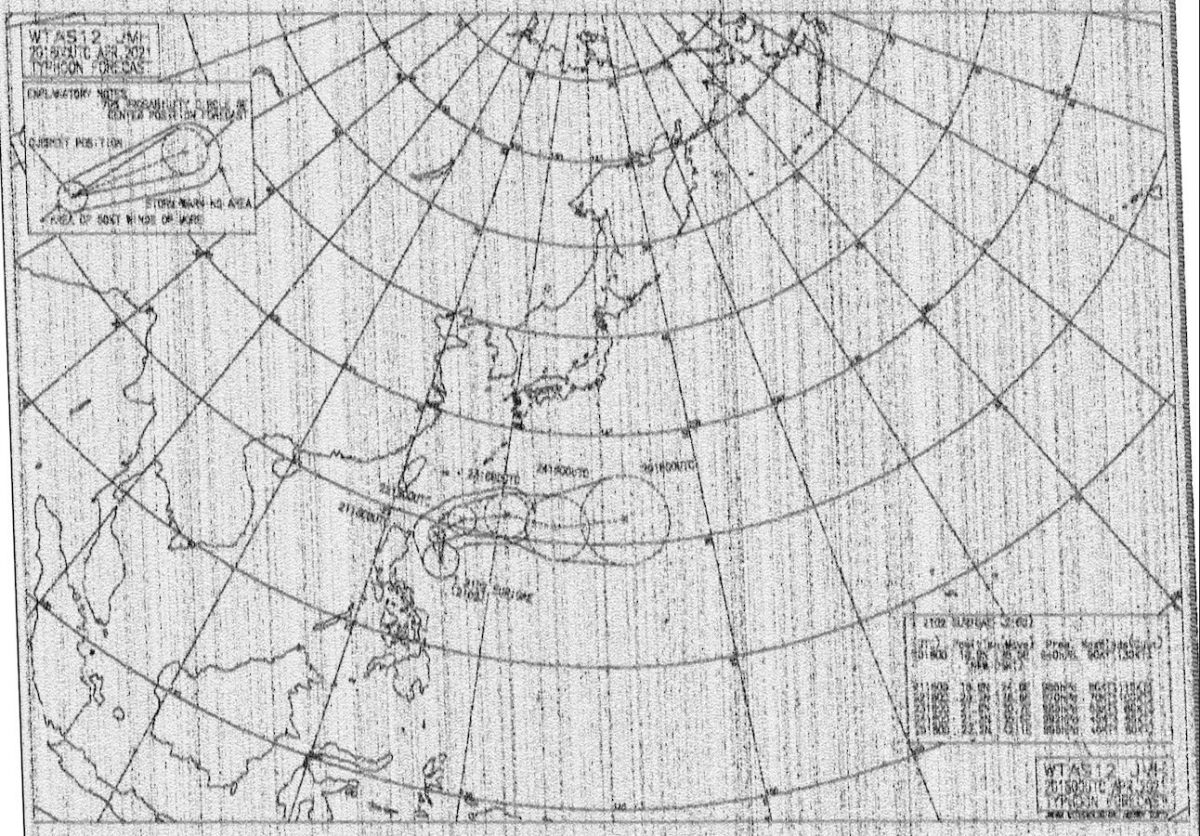
Technology considered obsolete, the fax, or better, radiofax (transmitted by radio) continues to be used by several meteorological agencies around the world, which broadcast weather charts to vessels on the high seas. These two images were transmitted today by the Japan Meteorological Agency and received at 19h10 and 19h50 (UTC) in Porto Alegre, Brazil.

The first image is a photo from the Japanese satellite Himawari 8. Even with noise, due to the shortwave propagation, you can see clearly the “eye” of typhoon Surigae.

The second image is a typhoon alert, indicating on the map that Surigae has changed course and is now en route to the Pacific.

These two images were transmitted today by the Japan Meteorological Agency, on the frequency of 7795 kHz

Thank you for sharing this, Carlos. It’s amazing, the amount of information you can receive over the air even with modest equipment by today’s standards. With a modest portable radio and a little decoding software, anyone can grab images like this.

Radio Waves: Brazil Proposes End of all Ham Radio Exams, Radio Engineer Files Objection to WIPE, Radio in the Malvinas War, and List of 48 Weatheradio Sites in Proposed Closure

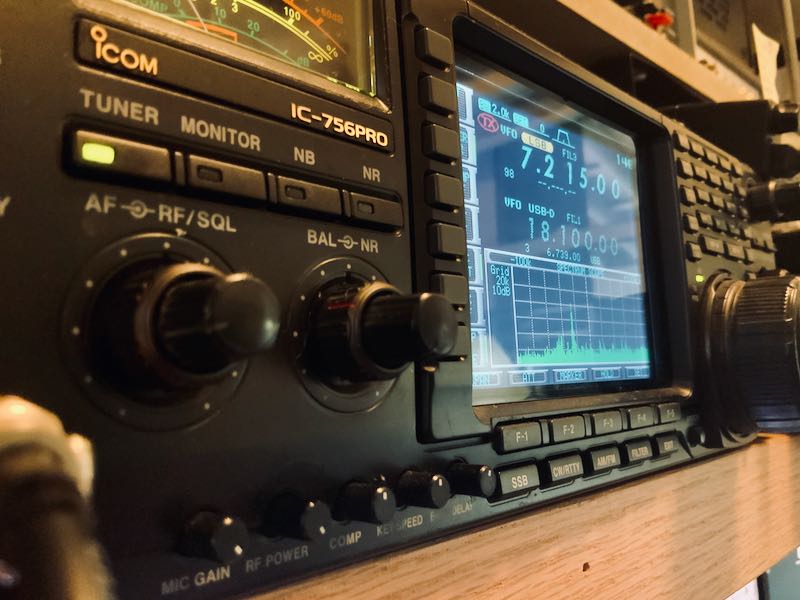
Icom IC-756 Pro Transceiver DialRadio Waves:  Stories Making Waves in the World of Radio

Because I keep my ear to the waves, as well as receive many tips from others who do the same, I find myself privy to radio-related stories that might interest SWLing Post readers.  To that end: Welcome to the SWLing Post’s Radio Waves, a collection of links to interesting stories making waves in the world of radio. Enjoy!

Many thanks to SWLing Post contributors Rob (PE9PE), Bennett Kobb, Harald
(DL1AX), and Dennis Dura for the following tips:


Brazil proposes end of all amateur radio exams (Southgate ARC)

ANATEL, the Brazilian National Telecommunications Agency, recently published a public consultation, CP65, which is available at this link:

In their website, LABRE, the Brazilian Amateur Radio League, was surprised by the CP65 proposal that proposes, among other topics, the extinction of the COER (amateur radio certificate) exam for all classes and replacement by free access to initial class C, as is done today with the Citizen’s Band, as well as access to subsequent classes B and A upon presentation of the Certificate of Technical Course and Graduation in Telecommunications, respectively, or minimum stay of 3 years in each class.

In addition, the aforementioned proposal suggests ending the rules of different prefixes for each of the States of the Federation, remaining only the prefix per class and there would no longer be any special callsigns.

The proposal, in addition to going against what is consensus in the international regulation related to the Amateur Radio Service, is absolutely contrary to the LABRE’s thinking with regard to the minimum requirements to be a radio amateur and also does not match ANATEL’s request for support from LABRE in the revision of amateur radio regulations in Brazil.

For further clarification on the subject, LABRE has already requested a meeting with ANATEL, which will be scheduled soon.

PR7GA

Radio Engineer Files Objection to WIPE (DRMNA.info)

Story by Bennett Kobb:
On September 3, radio engineer Alex Pilosov of Shortwave Solutions filed with the FCC an objection to WIPE, the DRM-based HF station of Turms Tech of New York, presumed to be ready to broadcast from the Armstrong Tower in Alpine, NJ.

WIPE is suspected to be intended mainly for secret, non-broadcast message transmission for private trading clients while broadcasting financial and economic news for the public.

WIPE is not yet operational. The station is waiting on its FCC license, but Pilosov took aim at possible glitches in its license application. He also raises the issue of whether U.S. shortwave stations can legally conduct non-public telecommunications in the broadcast bands in a service limited to broadcasting.

Pilosov is a consultant to HF stations in the Experimental Radio Service, which are not constrained by the broadcast rules; thus he or his clients are prospective competitors to WIPE. This is Pilosov’s second FCC objection. He also filed against the application of Parable Broadcasting for WPBC, a DRM HF station proposed for Batavia, IL.[…]

Radio in the Malvinas War (RAE)

In 2020 we celebrate the centenary of radio in Argentina. Such an event can be approached in various ways, since there are several milestones along this century of radio in our country. There are some events that are marked by fire in collective memory.

It is our intention to approach the celebration focusing on an event in which radio was in the spotlight: the 1982 Malvinas War, a conflict waged on various fields: military, economic, diplomatic and, of course, communications, mainly as a means of propaganda.

Most countries over time have recognised the great potential of radio as an effective instrument both in times of war and peace. Historically, Germany was the first country to use this for purely political purposes.

During WWII the broadcasts of Radio Tokyo, Radio Germany, the BBC in London and other stations were used for propaganda and military purposes by combatant nations.

The post-war period and the subsequent Cold War brought along a “war of the airwaves”. During these years, countless stations emerged with their own propaganda styles, looking to advance their social, political and economic systems.

An example of this are the broadcasts of Radio Moscow, Voice of America or Radio Beijing. Along with these stations, others of a clearly political nature emerged, such as Radio Free Europe and Radio Liberty, that targeted countries in Eastern Europe, as well as nations that became independent after the collapse of the Soviet Union. This group also includes the so-called clandestine stations, which generally broadcast secretly from conflict zones or from nearby regions or using rented transmission sites.

Before April 2, 1982, the Malvinas Islands had one radio station: the Falkland Islands Radio Service (FIBS) – with broadcasts in English. Content aired included locally-produced programs as well as news services of BBC London. It broadcast on 536 khz and 2370 khz.

The AM frequency was intended to cover the Port Stanley area, reaching a little further with SW transmissions.[…]

List of 48 Weatheradio Canada transmitting site proposed for decommissioning (Weatheradio Newsletter)

As mentioned in a previous post, Weatheradio Canada is considering shutting down 48 network transmitters across the country. SWLing Post contributor, Dennis Dura, recommends checking out the Weatheradio Canada Newsletter for updates.

He also forwards the following list of sites that are proposed for decommissioning. Click here to download the list as a PDF.


Do you enjoy the SWLing Post?

Please consider supporting us via Patreon or our Coffee Fund!

Your support makes articles like this one possible. Thank you!

Weatheradio Canada considers shutting down 48 network transmitters across the country

Storm with lighteningMany thanks to a number of SWLing Post readers who’ve recently contacted me regarding announced closures at Weatheradio Canada. Dennis Dura recently shared this link from the Weatheradio Newsletter which is essentially a call to action to save the Weatheradio service.

For those of you not familiar, Weatheradio Canada is very much like NOAA Weather Radio service in the US: essentially, a vast network of transmitters which provide local forecasts and weather warnings. Both Weatheradio Canada and NOAA Weather Radio use seven fixed frequencies of 162.400, 162.425, 162.450, 162.475, 162.500, 162.525, and 162.550 MHz.

I found it difficult to believe that Canada would close their entire network of Weatheradio FM transmitters because, like the US, there are vast rural and remote areas that are well-served by the radio network. I can’t tell you how many times I’ve been camping or travelling outside of mobile phone network coverage in the US and Canada and relied on weather radio for my forecast.

I decided to reach out to Environment and Climate Change Canada and get their official word. Here’s the response I received from their Media Relations representative:

As Canada’s official source for weather forecasts and alerts, Canadians rely on getting the latest current weather conditions from Environment and Climate Change Canada’s (ECCC) Meteorological Service. Since 1871, Canada’s Meteorological Service has continuously adapted to and taken advantage of the latest science and technology to maximize services to Canadians, including those living in remote or Northern areas, or areas without cellular service.

The Weatheradio network, introduced in the 70’s, is made up of 230 transmitting stations. For the most part, these Weatheradio transmitters are in urban areas with plenty of options for accessing weather information and alerts, e.g. internet, mobile apps, radio, television. ECCC has identified 48 Weatheradio transmitters across Canada for potential decommissioning. Of these 48, 12 in Ontario, three are in BC, three in AB, five in SK, four in MB, five in QC, five in NB, three in NS, one in PEI and seven in NL.

In other words, Environment and Climate Change Canada is considering decommissioning about 21% of their Weatheradio transmitters, targeting ones located in urban areas.

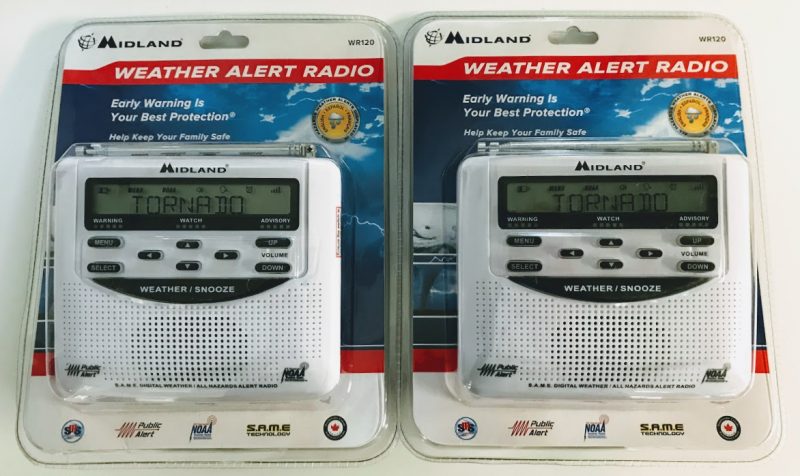
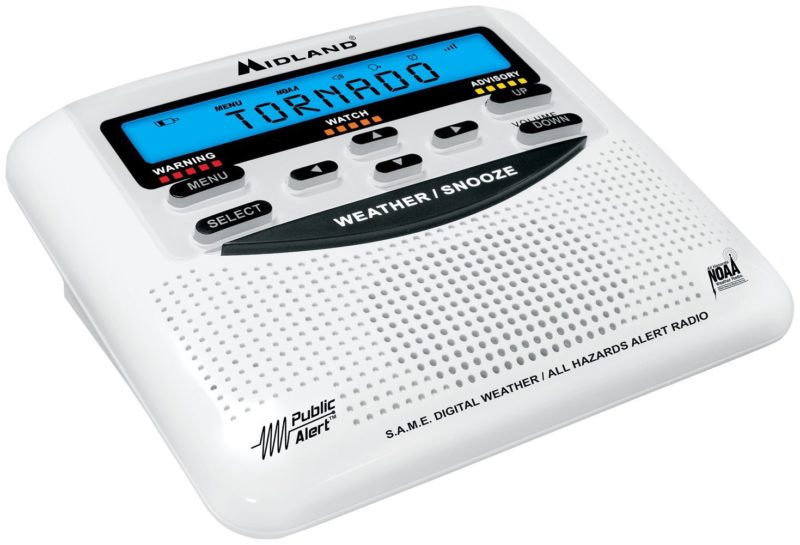
The Midland WR120 weather radio.

I haven’t seen a map of the transmitters marked for potential closure, but I strongly suspect if you live in a very rural area you’re unlikely to be affected.

If you live in an urban area, however, and routinely rely on a weather radio for forecasts and automatic alerts, you may soon only hear static.

If you feel strongly about these potential changes within the Weatheradio Canada network, I suggest you reach out to your Member of Parliament and Environment and Climate Change Canada.