Tag Archives: Pirate Radio

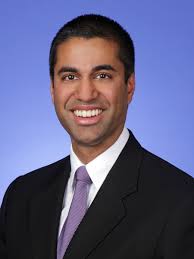
FCC Chairman Ajit Pai questioned about pirate enforcement

FCC Chairman Ajit Pai

(Source: Tom Taylor Now newsletter)

FCC staff will be “cops on the beat” against pirates.

Chairman Ajit Pai had his stats ready for yesterday’s House Oversight Hearing – the FCC’s issued 39 NOUOs (Notice of Unlicensed Operation) this year, among other enforcement actions. Pai knew the question about the effect of closing of 11 field offices was coming from somewhere, and it was posed by Tampa-area Republican Rep. Gus Bilirakis. Pai says as a Commissioner, “I had substantial disagreements with the original” plan of then-Chair Tom Wheeler. The compromise worked out with Congress included closing the Tampa field office – but Pai says the Commission’s doing its best to address the pirate problem that is “a problem all across the East coast.” That when he says the staff is determined to be “cops on the beat” against unlicensed operators. That seemed to satisfy Bilirakis. More from the hearing – there’s support for a new minority tax certificate plan. It would incentivize an owner to sell to a qualified minority by offering a tax break or deferral. And we haven’t mentioned the #1 complaint around telecom – doing something to choke off robocalls and “spoof calls.”

Check out the full Tom Taylor Now newsletter which also includes questions posed to Chairman Pai, about defining Net Neutrality.

Radio Caroline to broadcast on 648 kHz mediumwave

(Source: Southgate ARC and Mike Terry)

Caroline to be on 648 kHz with 1 kW ERP

We can now announce that our AM frequency will be 648 kHz with a power of 1000 watts. This is ERP or simply the power radiated by the aerial.

A transmitter was imported from the Continent a few days ago and is now being modified to suit the frequency. There are further hurdles, but as you can see progress is being made.
http://www.radiocaroline.co.uk/#home.html

It’s taken Radio Caroline 53 years to get an AM licence and it was perceived as a threat to the BBC for many years.

Ironically 648 kHz was best known for transmitting the BBC World Service in English around the clock on 648 kHz from September 1982 until March 2011 from the Orfordness transmitting station on the Suffolk coast.

RadioWorld: FCC Puts Pirate Activity in Spotlight

(Source: RadioWorld via Bill Patalon)

Over the course of two days in May, the Federal Communications Commission took action on four allegedly unlicensed pirate radio operators.

In all these cases — one in Mount Vernon, N.Y., one in Dallas and three in a single location in East Orange, N.J. — the FCC reiterated that operating radio transmitting equipment at certain levels without a valid station is against the law, ordered them all to shut down, laid out the potential ramifications and gave each a window in time for them to explain their actions in writing.

Pirate radio has been a renewed point of concern for broadcasters in the United States, with recent debate over the possible impact of cuts in field offices and with Commissioner Michael O’Rielly keeping a spotlight on the problem.

Continue reading at RadioWorld…

FCC Commissioner pushing for aggressive pirate radio enforcement

Many thanks to an SWLing Post contributor who shares this FCC PDF document: Remarks of FCC Commissioner Michael O’Rielly Before the 2017 Hispanic Radio Conference, Fort Lauderdale, Florida March 28, 2017.

Note O’Rielly’s remarks regarding pirate radio enforcement in the south Florida radio market:

“Many of you may have heard me speak before about pirate radio, a huge problem here in South Florida and one that has a disproportionate impact on the Hispanic radio community. The failure to properly address it highlights a deficiency in the Commission’s enforcement tools and undermines our overall credibility. Today, these squatters are infecting the radio band at the expense of listeners of legitimate radio stations, causing great harm to emergency preparedness within covered areas and undercutting the financial stability of licensed radio stations, your stations.

To that point, I could use your assistance in batting down arguments that pirate radio stations are somehow training grounds for those seeking to enter the field or that these “stations” bring a unique service to primarily minority communities, and therefore should be left alone. Few people actually have your background, experience, and history of serving these important communities, so your voice and words would be a welcome rejoinder to these baseless claims.

On my part, just this morning, I spent some time with the FCC’s Miami Field Office to ring the figurative fire alarm on overall efforts to combat pirate radio stations. Quite frankly, I sought answers on why these stations weren’t already eradicated. In particular, I discussed their recent enforcement actions in this market, what obstacles they face in expediting cases, and what additional authority may be of assistance. I also raised the issue of whether the ability to seize pirate equipment found in common areas could aid their efforts. In addition, we discussed whether our current fines should be increased, and if imposing penalties on those that directly and intentionally facilitate pirate stations could be helpful. It was a very positive meeting, and I walked away with renewed belief that the Miami Team was up to the task. But, they are also on notice that I expect to see this situation addressed quickly and sufficiently.”

Click here to read Commissioner O’Reilly’s full remarks (PDF).

In addition, this reader notes a new job posting with the FCC for an enforcement officer:

https://fcc.usajobs.gov/GetJob/ViewDetails/466088000/

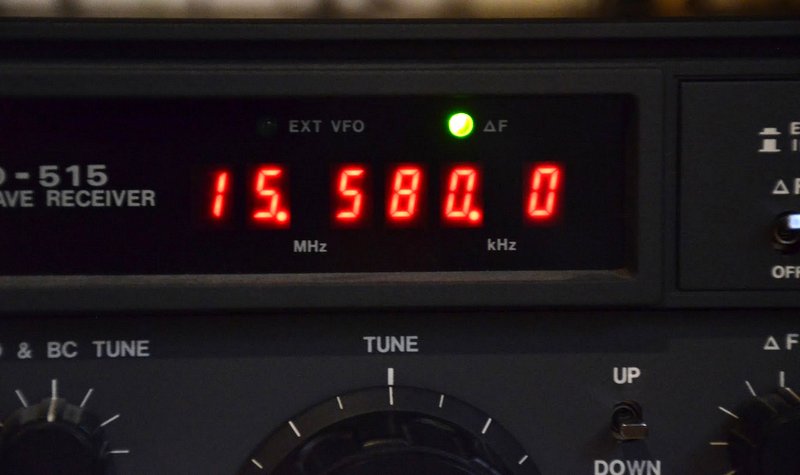
Global HF Pirate Weekend: March 30-April 2, 2017

Many thanks to SWLing Post contributor, Andrew Yoder, who writes:

Just a reminder that the next Global HF Weekend is coming up: March 30-April 2, 2017

Finnish DXer Harri Kujala started the weekends (the 1st weekend of April & the 1st weekend of November) about five years ago & I said I’d write about them. The idea was for listeners in faraway areas to be able to hear broadcasts that normally would not be audible (or barely so)–all while promoting cooperation among those in the hobby. In those first GFWs, some transatlantic QSOs were established and stations from Europe & North America were reported in Russia, India, Ukraine, Japan, and other countries.

I’d expect that some stations will post schedules on HFU. I’ll also be tracking the broadcasts and schedules on my blog, so if any stations send schedules to me, I’ll post it, but without the station name: just date, time, frequency. This will be especially handy for those stations who choose to operate outside of Harri’s suggested 19m and 13m frequencies. Given the lack of sunspots and the low solar activity, 9, 11, 13, and 15 MHz might be better choices than 21 MHz.

Here’s the rest of the general info:

March 30-April 2, 2017
General frequency ranges:
15010-15100 kHz
21455-21550 kHz

Basic schedule:
European morning, 0800-1200 UTC from Europe to Asia/Japan/Oceania.
European afternoon, 1200-1600 UTC from Europe to North America and vice versa.
European night, 2200-2400 UTC from North America to Asia/Oceania.

Of course, these are general frequency ranges where pirates have broadcast during prior Global HF Pirate weekends. Some stations will surely operate on frequencies and times outside of these ranges. These will be updated on HF Underground (https://www.hfunderground.com/) and on the Hobby Broadcasting (http://hobbybroadcasting.blogspot.com/) blog as it happens.

Pirates playing Chuck

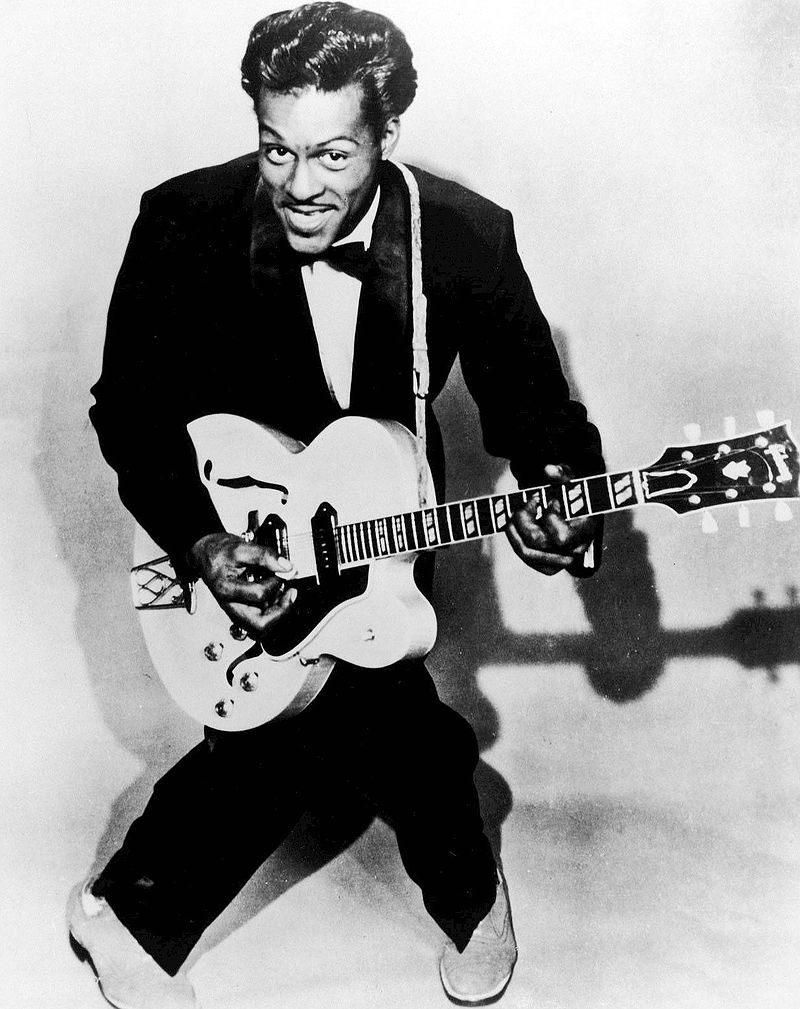
Chuck Berry (1926-2017)

If you’re a fan of rock’n’roll, you no doubt heard the sad news of Chuck Berry’s passing today after 90 years at full throttle.

Many thanks to SWLing Post contributor, Mike Hansgen (K8RAT), who notes that a number of pirate stations have been playing Chuck Berry tributes tonight; these will, no doubt, continue into tomorrow night, as well.

Mike’s message prompted me to trigger a spectrum recording, as I’m currently on the road. I’ll pull out a portable tonight and listen live, but it’ll be nice to catch up with Chuck later as I play back my spectrum recordings. (This is why I love SDRs.)

Many thanks to the pirates who are paying tribute to the legend.

Rest in peace, Chuck. A toast to the grandfather of rock’n’roll.

The past, present and future of UK pirate radio

Radio Caroline circa 1960’s.

Many thanks to SWLing Post contributor, Aaron Kuhn who shares this excellent article from Dazed:

The influence of pirate radio has endured despite government crackdowns and the rise of legitimate alternatives – today, it continues to thrive, both legally and otherwise

Drive around some parts of London today and you’re still liable to hear mainstream radio broadcasts drowned out by fleeting bursts of unfamiliar music. Pirate radio stations have been illegally hijacking the FM dial since the 1990s, but while the pirate scene is far smaller than it was in its heyday, the movement is still thriving on a local scale, while a vibrant array of online-only stations are inspired by the energy and spirit of the pirates. To put it simply, pirate radio never left London.

The UK’s pirate radio story starts with Ronan O’Rahilly’s Radio Caroline back in the 1960s, famously avoiding the authorities by broadcasting from international waters, but it was really the 1990s that paved the way for pirate radio in this country. Its evolution loosely follows that of the underground rave scene, which mainstream radio wouldn’t touch in its early days. “It’s the closest thing to mass organised zombie-dom,” BBC Radio 1 DJ Peter Powell said of acid house. “I really don’t think it should go any further.” Needless to say, it wasn’t going anywhere, and between 1988 and 89, pirate radio stations rapidly started to appear to serve a youth hungry for new sounds that weren’t being catered to by mainstream radio. By 1989, there were over 60 pirate radio stations operating in London alone.

While the first pirates – from Sunrise to Centreforce to Fantasy – mostly played music from America and European countries like Belgium, it didn’t take long for the British youth to start doing their own thing. “The UK kids realised people were making music in their bedrooms and they thought ‘I can fucking do that!’” exclaims Uncle Dugs, one of the UK’s leading authorities on pirate radio. Having been involved in radio (both legal and otherwise) for over 20 years, Dugs’ new book Rave Diaries and Tower Block Tales documents life as a young raver turned award-winning DJ after years on the pirate scene. As he explains, by 1991, London’s underground music landscape had become “99% UK producers and DJs,” transforming from acid house to hardcore and then to jungle. As London’s underground grew, so did its pirate presence, with legendary stations like Weekend Rush, Kool FM, Pulse FM, Innocence, and Defection springing up by the end of 1991. “You could flick through the radio and at every .2 on the dial there was a pirate station,” Dugs laughs. “There wasn’t even space on the radio for a new one.”[…]

Click here to read the full article at Dazed.