Tag Archives: Radio Nacional da Amazonia

Good Listening from Brazil on Shortwave in 2025

by Dan Greenall

Fifty years ago, there were dozens, if not hundreds, of Brazilian shortwave signals to hear on shortwave. As with the rest of the world, this is no longer the case. However, especially with the advent of remote SDRs to assist with the enjoyment of the DXing hobby, there are still a number of stations broadcasting from Brazil that are well worth a listen, even if you don’t understand Portuguese. Here is a sampling of what can be heard in 2025.

Radio Nacional da Amazonia 6180 and 11780 kHz

This is perhaps the easiest station to hear for overseas listeners. They run high-powered transmitters and have been widely reported in many parts of the globe. The station began a short daily broadcast in English and Spanish in late March, but I’m not sure if this is still going, as I haven’t checked recently. Here is a recording from April 18:

The transmitter power used by the next two stations is unknown, so the use of a remote SDR to hear them well may be required. Overseas listeners can look for them anyway, but note that their schedules seem to be irregular. Broadcasts consist mostly of popular music with frequent station ID’s in Portuguese between selections.

Radio Ancora (free radio?) Bahia, Brazil 6200 kHz

Recording 1 – September 13, 2025 at 2337 UTC:

Recording 2 – September 13 at 2358 UTC:

Recording 3 – September 14, 2025 at 0223 UTC:

Online presence here: https://ancoraonline.wshost.com.br/timetable

Radio Casa (free radio?) Amparo, Brazil 5900 kHz

Recording 1 – September 16, 2025 at 2020 UTC:

Recording 2 – September 16, 2025 at 2015 UTC:

Recording 3 – September 24, 2025 at 2200 UTC.

Online presence here: https://radiocasa.net/

The last two stations should be audible to DXers outside Brazil.

Radio Inconfidencia, Belo Horizonte, Minas Gerais 6010 and 15190 kHz

With 5 kW of power, Radio Inconfidencia gives a full identification in Portuguese at the top of most hours that includes callsigns, frequencies, and location. It is on the air around the clock.

Radio Inconfidencia full ID recording – September 16 at 2158 UTC on 15190 kHz:

Radio Inconfidencia second recording – September 15 at 2353 UTC on 15190 kHz:

Radio Voz Missionaria, Camboriu SC 5940 and 9665 kHz

Using 10 kW of power from the south of Brazil, Radio Voz Missionaria should be heard, at least on occasion, in many parts of the world. This station also operates 24 hours a day.

Recording – Radio Voz Missionaria – April 23 at 2357 UTC on 9665 kHz:
Dan Records New International Service from Rádio Nacional da Amazônia

Many thanks to SWLing Post contributor Dan Greenall, who writes:

Hi Thomas:

The SWLing Post reported the start-up of an International Service from Radio Nacional da Amazonia in Brazil back on March 27.

Since then, I had been intending to give a listen, and finally, last night (April 18 UTC) I was able to do so. It is only a brief 10-minute segment in both English and Spanish and runs roughly from 0150 to 0200 UTC:

I made the recording (above) on 11780 kHz through the use of a Kiwi SDR located near Rochester, New York. It was a bit of a tease, I think. 15 minutes in each language would be nice.

73

Dan Greenall, Ontario, Canada

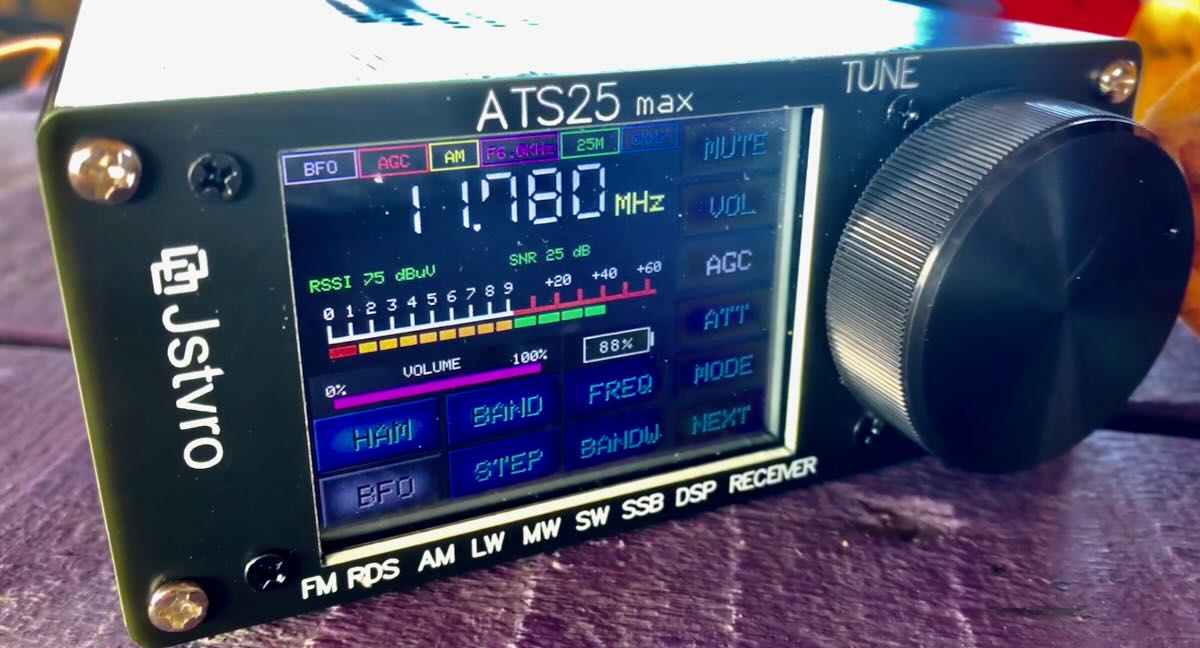
Short Video: Paul tunes in Rádio Nacional da Amazônia with his ATS25 in McGrath, Alaska

Many thanks to SWLing Post contributor, Paul Walker, who shares the following video of his open-air DX shack in McGrath, Alaska. Paul notes:

I got my iRig working and recorded audio of Rádio Nacional da Amazônia on 11780 kHz directly from the radio into my phone and it sounds really good with such a strong signal here in ALASKA. Take a listen….

Click here to view on YouTube.

Thanks for sharing this, Paul! That does sound amazing–like a local station!

You, sir, are a true DXer! Anyone who regularly braves frigid temps to chase far-flung DX is made of some incredibly tough stuff!

Thanks for sharing, Paul!

Radio Nacional da Amazonia prepares for DRM broadcasts

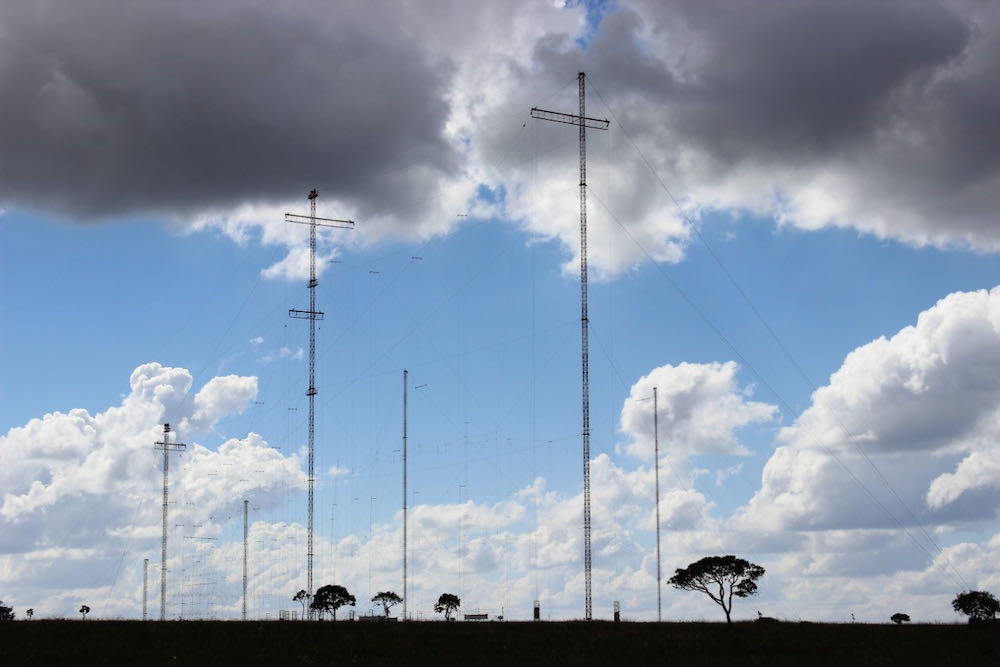
Photo: DRM Consortium

Many thanks to a number of SWLing Post contributors who share the following news from the DRM Consortium:

Brazil prepares for domestic DRM transmissions to Amazonia (DRM Consortium)

DRM broadcasts from a locally produced transmitter will be originated for the first time in Latin America, as Brazil will officially start digital (DRM) shortwave transmissions through The National Radio of the Amazon towards the vast area of the northern Amazon region, mainly inhabited by indigenous populations.

In another first, Empresa Brasil de Comunicação (EBC), the public broadcaster, placed the order for the high-powered transmitter with a local manufacturer, the BT Transmitters company from Porto Alegre. BT Transmitters signed a contract with EBC for the production of a 100 kW transmitter in the DRM digital system.

The equipment will be used on the 11,780 kHz frequency in the 25-meter band, which is one of the shortwave channels used by Rádio Nacional da Amazônia since 1977.

The purchase for R$3.5 million is the result of an auction held in August 2020, in which other equipment for EBC’s public radio broadcasts is planned to be acquired.

At the end of last year, Nacional da Amazônia carried out tests with the DRM technology using a transmitter of 2.5 kW with the digital power of just 1 kW.  EBC demonstrated then, for the first time in the country, the use of multi-programming and the transmission of interactive multimedia applications.

Despite this low power of the transmitter supplied by BT Transmitters, recordings were reported from different regions of the country and even from North America and Europe (Radiolab – Começam transmissões de rádio digital DRM em onda curta no Brasil).

The results of the tests were published last month by the DRM Consortium.

The DRM (Digital Radio Mondiale) standard provides power savings of up to 80% in electricity consumption, a sound quality equal or superior to FM, as well as allowing images and other data to be sent to the radio receiver.

DRM is a worldwide consortium, and more information can be found at www.drm.org.

This story was also noted in Radio World:

DRM Shortwave Will Serve Amazon Region (Radio World)

National Radio of the Amazon orders a 100 kW BT transmitter

National Radio of the Amazon plans to use DRM shortwave transmissions to serve indigenous populations in the northern Amazon region, according to the Digital Radio Mondiale Consortium.

Public broadcaster Empresa Brasil de Comunicação (EBC) ordered a 100 kW BT transmitter to broadcast in DRM at 11,780 kHz in the 25-meter band, a shortwave channel used by Rádio Nacional da Amazônia.

The purchase, valued at about $650,000 USD, was the result of an auction held a year ago for purchase of equipment for EBC public radio broadcasts.

This is believed to be the first domestic DRM installation on a locally produced transmitter in Latin America.

University of Brasilia and the Ministry of Science, Technology and Innovation to experiment with 2.5 kW DRM transmitter

(Source: DRM Consortium)

A new era begins for Brazilian radio broadcasting with the arrival and installation of a first shortwave digital radio DRM transmitter developed and manufactured in the city of Porto Alegre by BT Transmitters. The transmitter will be sited at the public broadcaster (EBC) Rodeador Park, near the capital Brasilia, to be connected to one of the huge HF antennas of EBC (National Amazon Radio is transmitted from there).

The equipment (a transmitter of 2.5 kW) will be tested on an experimental and scientific basis with the help of the University of Brasilia (UnB) and the Ministry of Science, Technology and Innovation.

The National Radio of the Amazon broadcasts from Brasilia especially to the Northern, Amazonian region of Brazil. The signal will be also available in the neighbouring countries to the north of Brazil. This is primarily a domestic shortwave digital project aimed at the Amazon where about 7 million riverside and indigenous people live. They are far from any other means of communication as there is no mobile phone or internet coverage.

Rafael Diniz, the Chair of the DRM Brazilian Platform, thinks that: “Shortwave digital radio (DRM) for the Amazon region will ensure a new level of communication and information as Nacional’s programming is both popular and educational. It brings audio and much more at low energy cost to whole communities there. With the adoption of digital radio, one of the major problems, that of poor sound quality affecting at times shortwave, will end. Listeners will be able to enjoy DRM broadcasts in short wave with a quality similar to that of a local FM station together with textual and visual multimedia content.”

“This is a huge step forward, says Ruxandra Obreja, DRM Consortium Chair, “not just for Brazil but for the whole of Latin America. When everything else fails or does not exist, DRM will provide information, education, emergency warning and entertainment at reduced energy costs.”

Click here to read this article at the DRM Consortium website.

As a side note, I do hope the DRM Consortium or the University of Brasilia and the Ministry of Science, Technology and Innovation somehow make DRM receivers available to the “7 million riverside and indigenous people” they hope will eventually benefit from their broadcasts. At this point, however, this sounds more like a university experiment similar to those conducted at the Budapest University of Technology in Hungary.

The World Cup on shortwave, continents apart

WorldCupBall-001Yesterday, I was primed to follow the FIFA World Cup semi-final match featuring the Netherlands vs. Argentina. Moreover, we have good friends from Germany visiting; of course, they wanted to see who their winning team will be playing in the final match come Sunday.

But as we live in a fairly rural area, and don’t place much of a priority on television (radio, anyone?), we have no cable, no satellite, and with no more than a rabbit-ear indoor antenna on our only telly, no local over-the-air broadcasters available. But we found we were able to watch the match stream live on ESPN via an Apple TV box attached to our only television.

Of course, I also tuned in the match on shortwave radio–via the BBC World Service on 11,810 kHz out of Ascension Island–starting a little after 20:00 UTC. And guess which stream was more “live” (i.e., immediate), ESPN or shortwave?  Here’s the recording:

Answer:  You guessed it–the shortwave coverage was one full minute in advance of the ESPN “live” stream. My friends watching television in another room marveled at my clairvoyance…

When the match went into extra time, as Argentina and the Netherlands were tied 0-0, the BBC World Service dropped the frequency to KBS (you’ll hear a few minutes of KBS in the recording).  At this point I was resigned to watching the match on ESPN, as I didn’t want to miss any of the action while trying to find another broadcaster covering the match.

Then, radio to the rescue:  I received the following tweet from SWLing Post reader/contributor @LondonShortwave:

So I quickly tuned to Radio Nacional Amazonia on 6,180, where I discovered a booming signal and full match coverage. Even though the commentary was in Portuguese, a language I can’t speak, I could still follow the match knowing player and team names. When Argentina won the penalty kicks after extra time, commentators exploded with excitement. Listen for yourself:

What made the match all the better, besides watching it with my good friends here at home, was following it with my shortwave friends across the globe. As we exchanged tweets (while following coverage) it was as if we were all in the same room. Indeed, here’s what @LondonShortwave said:

So true–!  While using the Internet to communicate, we were listening to the same and far-more-efficient shortwave station for coverage.

Now on to Sunday, and hoping I can catch the final match on the BBC World Service…with the rest of the world. If you can, join us. Game on!

Shortwave Radio Recordings: Rádio Nacional da Amazônia

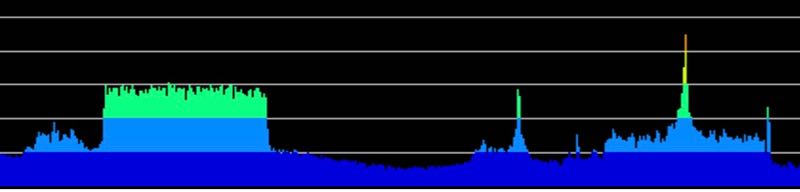
Rio_de_JaneiroLast night, Rádio Nacional da Amazônia had a booming signal into North America on 11,780 kHz. Rádio Nacional’s AM signal was very wide; I actually opened up the filter on my SDR to 16 kHz to record this broadcast. In truth, that’s probably too wide, but it certainly made for great audio fidelity.

So, if you’re in the mood for some Brazilian music and commentary today, this 168 minute recording of Rádio Nacional da Amazônia should satisfy.

This was recorded on Sunday, April 28–starting around 22:15 UTC–on 11.78 MHz. Click here to download the full recording as an MP3 file, or listen in the embedded player below:

Want more Rádio Nacional? Click here for other recordings.