Tag Archives: UNESCO

Radio Waves: Georgia LPFM Wants More Power, Radio Bulgaria QSL #8, Preserving Radio Mogadishu, Shortwave HQ Updates, and Joining the CIDX

Radio Waves:  Stories Making Waves in the World of Radio

Welcome to the SWLing Post’s Radio Waves, a collection of links to interesting stories making waves in the world of radio. Enjoy!

Many thanks to SWLing Post contributors Dennis Dura, David Iurescia, and Michael Smith for the following tips:


Georgia LPFM Asks FCC to Raise Power Due to Atmospheric Conditions (Radio World)

Valdosta operator says “suspicious phenomenon” is preventing LPFM from reaching potential

[…]WFAG(LP) operates on 89.7 FM with 100 watts of ERP in Valdosta. “Supra 89.7” is licensed to the nonprofit Valdosta Alliance.

In a letter addressed to Chairman Brendan Carr, the alliance’s general manager, Paula Greer, said that the “serious, suspicious phenomenon of apparent ‘ducting’” or “illegal broadcasting” has been preventing the community project from maximizing its potential. [Continue reading…]
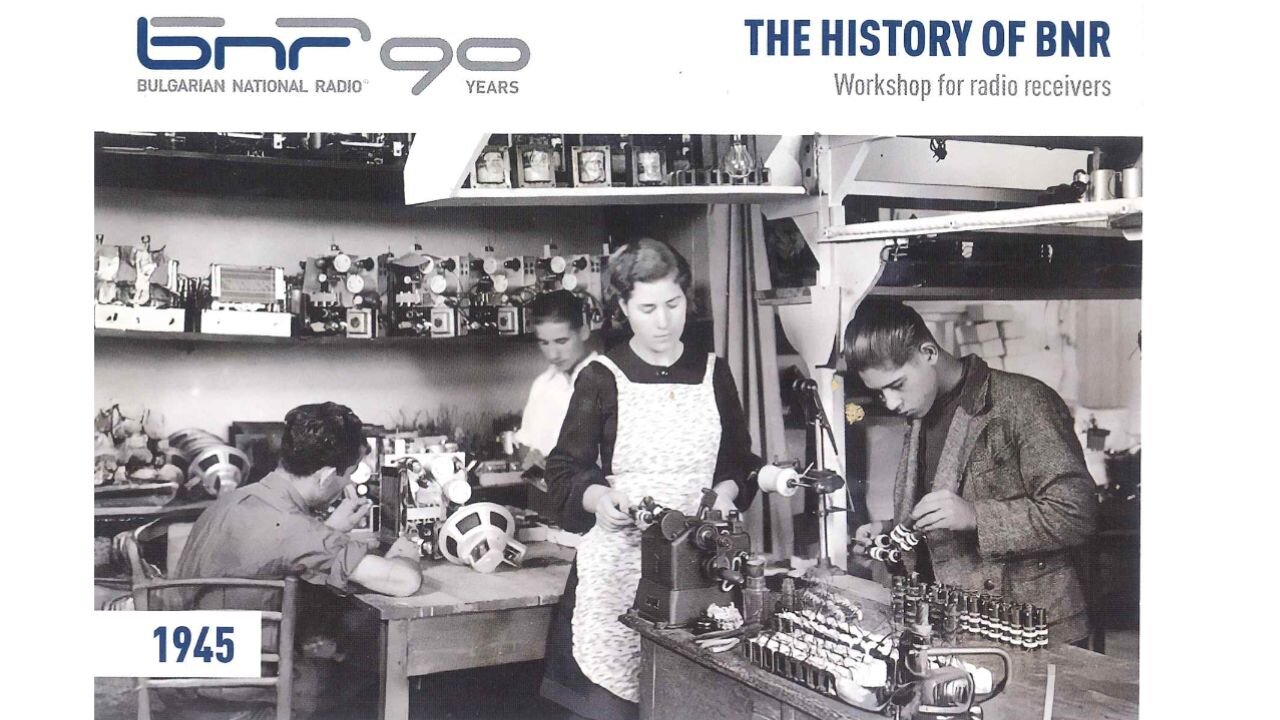

QSL Card No. 8: First Bulgarian radio manufacturing factory (Radio Bulgaria)

Throughout 2026, Radio Bulgaria is confirming listeners’ reception reports with a new series of 12 QSL cards. Each card highlights a significant moment from the history of the Bulgarian National Radio (BNR) and Radio Bulgaria, which is celebrating its 90th anniversary this year. At the beginning of each month, we present the story behind the image featured on the latest card.

The eighth QSL card for 2026 is dedicated to Svetozar Prenerov’s first Bulgarian radio manufacturing factory.

In 1925, Svetozar Prenerov, an engineer who had just completed his education in France, received an invitation to take part in the Philips project to manufacture radio sets in the Netherlands. However, the young engineer turned down this tempting offer, deciding instead to manufacture radio sets in his homeland. Thus, in 1925, the ‘Elektron’ craft workshop began operations under the leadership of Svetozar and his brother Veselin, producing ‘Universal’ linear radio sets. [Read more at Radio Bulgaria…]


Safeguarding memory before it disappears – Preserving the Radio Mogadishu archive (UNESCO)

Click here to watch on YouTube.


ShortwaveHQ Database Updates

Many thanks to SWLing Post contributor, Michael (KM7FMJ), who notes that his ShortwaveHQ directory has recently received a number of updates. Most notably, the site’s search now draws from the full EIBI A-26 schedule, with more than 4,800 entries covering 309 stations. Check it out here!
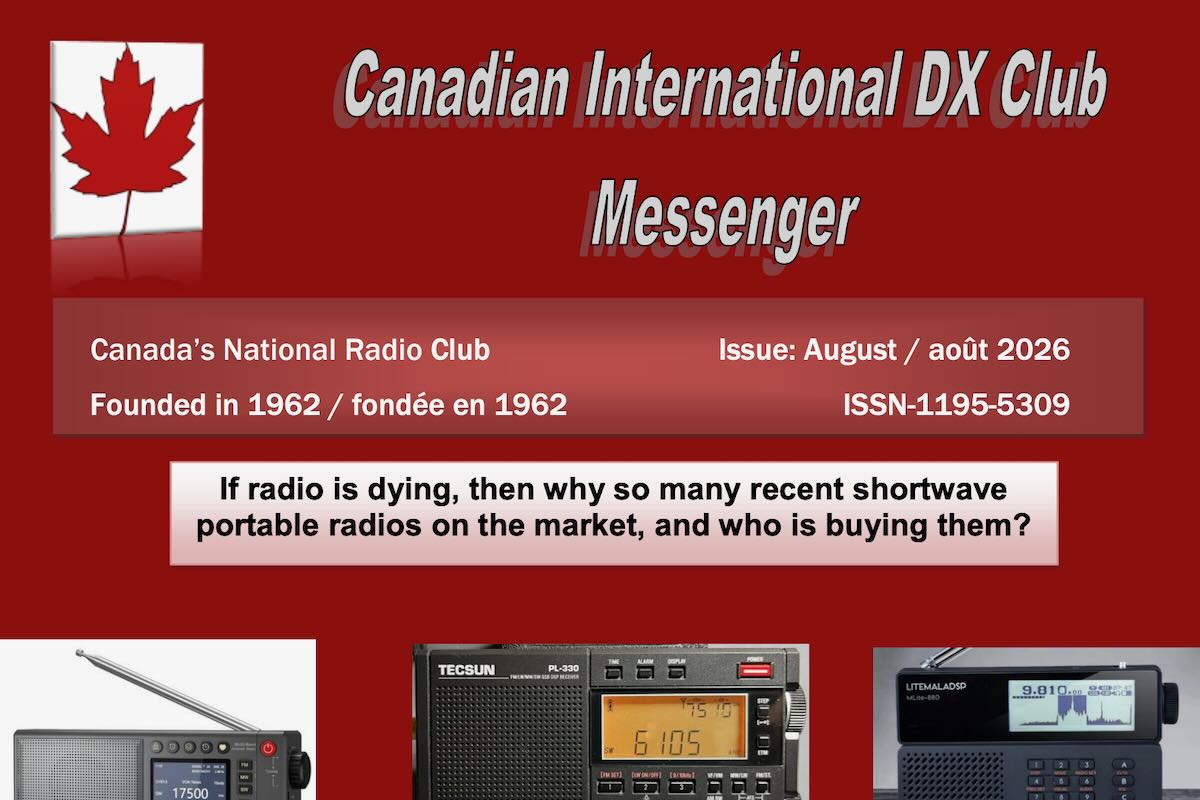

Join the CIDX

If you aren’t already a member of the Canadian International DX Club (CIDX), one of the many excellent international shortwave radio clubs, here’s a good example of what you’re missing. The August 2026 issue of the CIDX Messenger runs an impressive 73 pages and includes a feature asking, “Do People Still Listen to the Radio?“, a look at why young Africans continue to listen to radio, Canadian Radio News, and much more. The CIDX also hosts monthly Zoom meetings, with the next scheduled for August 16. All of this is available to members for a very modest membership cost. If you’re not a member, consider joining and supporting one of the organizations that continues to keep the international DX community connected. Click here to check out the CIDX!


Do you enjoy the SWLing Post?

Please consider supporting us via Patreon or our Coffee Fund!

Your support makes articles like this one possible. Thank you!

Radio Waves: UNESCO on Radio, Fallout After Reciva, Local Radio Appeal, 2022 Hamvention a Go, and Pandemic Ham

Radio Taboo FM in rural Cameroon

Radio Waves:  Stories Making Waves in the World of Radio

Because I keep my ear to the waves, as well as receive many tips from others who do the same, I find myself privy to radio-related stories that might interest SWLing Post readers.  To that end: Welcome to the SWLing Post’s Radio Waves, a collection of links to interesting stories making waves in the world of radio. Enjoy!


Why UNESCO Believes in Radio (Red Tech)

Chief, Media Development and Media and Information Literacy at UNESCO Mirta Lourenço shares insight on radio’s evolution and challenges. She explains how the international organization is working to support radio stations around the world to ensure they’re able to accomplish their crucial mission.

RedTech: How do you view the role of radio in our society?

Mirta Lourenço: Thanks to radio, we benefit from many essential public services that we seldom reflect on. These include global positioning systems, satellite navigation, environmental monitoring, intelligent transport systems, space research, etc. Radio broadcasts offer information and the possibility for people to participate, regardless of their literacy levels and socio-economic situation.

The medium is also especially suited for multilingualism. Audiences may need to hear programs in their primary language, particularly if said language is local and endangered, or in the case of refugee radio or isolated communities. Also, when literacy levels are low, local languages are crucial to the populations’ access to information, as radio constitutes the main source for reliable journalism. History has shown us that radio is the most effective emergency communication system and in organizing disaster response.

All this does not mean that radio broadcasting is free from challenges. Continue reading

Three things you can do to honor World Radio Day 2013

DSCN2988wtmk

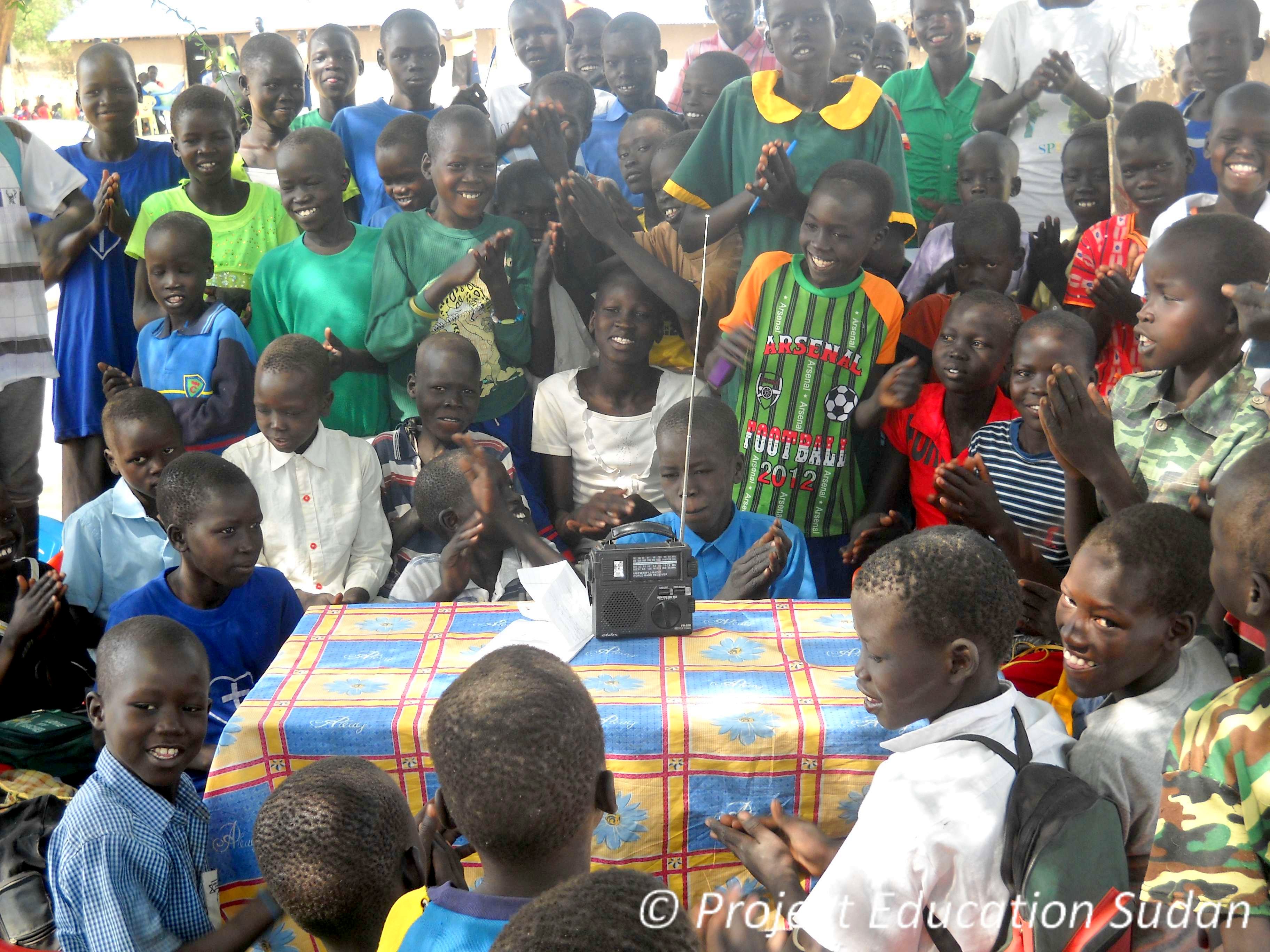
Children in South Sudan listen to their favorite shortwave program, VOA Special English. (Photo: ETOW partner, Project Education Sudan)

From my previous posts today you’ll already know it’s UNESCO World Radio Day–a day to celebrate the relevance of radio in the 21st century. Here are some ideas of how you can celebrate and make a difference with radio:

  1. Send a shortwave radio, care of Ears To Our World. You can send one self-powered shortwave radio to a classroom or community in the third world for as little as a $40.
  2. Sign the petition to keep RCI Sackville from being dismantled–Senator Hugh Segal is in the process of holding the CBC accountable for slashing RCI’s budget. Add your voice to support this cause.
  3. If you’ve heard my recording for UNESCO regarding the relevance of radio, you may also like to visit World Radio Day’s webpage and listen to what others have to say about the relevance of shortwave radio. Share this page with your friends.

…Oh, and one more thing:  you can turn on your radio, and listen.  World Radio Day is a young international holiday, but I’m most encouraged to see how it is receiving increased media attention each year.  This is a wonderful, meaningful hobby–and a worthy cause–so, enjoy!

Happy World Radio Day!

Cheers,
Thomas

Voice of Russia: World celebrates all-uniting role of radio

WorldRadioDay(Source: Voice of Russia)

February 13 is World Radio Day. It’s a young holiday, just two years old, established on the initiative of the United Nations Educational, Scientific and Cultural Organization (UNESCO) in 2011. Representatives of all of the world’s major radio broadcasters, the Voice of Russia among them, have gathered at the UNESCO’s central headquarters in Paris to celebrate World Radio Day.

February 13 is not a random date. On that day in 1946, Radio UN aired its first broadcast. In his World Radio Day-2013 message, UN Secretary General Ban Ki-moon said that as a boy growing up in a poor village after the Korean War with neither phones nor television people still had something that connected them to the world outside their small village – they had radio. Since its invention more than 100 years ago, radio has sparked imagination and opened doors for change, entertaining, informing, promoting democracy and connecting people wherever they are, and “in conflict situations and times of crisis, radio is a lifeline for vulnerable communities,” Ban Ki-moon remarked.

About 95% of all people throughout the globe listen to radio regularly, chief of the UNESCO’s Communication and Information Sector Mirta Lourenco told the Voice of Russia:

“Radio remains the most easily accessible mass media. You can listen to it in the remotest corners of the Earth. Thanks to radio, people who cannot read or write have access to information. Radio plays a crucial role in emergencies, natural disaster warning and during rescue operations. For the UNESCO, World Radio Day is the acknowledgment of the tremendous use of which radio has been to humanity over more than a century.”[…]

Read the full article at the Voice of Russia website.

The relevance of shortwave radio for UNESCO’s World Radio Day 2013

ChildSWRadioUganda

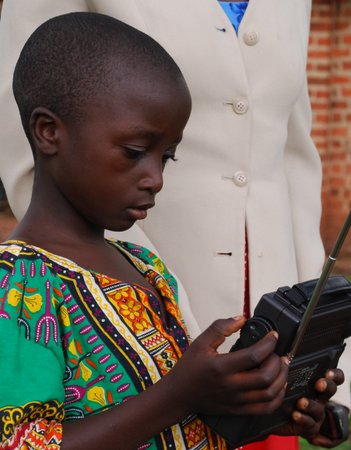
Student in Uganda tunes an Ears To Our World self-powered shortwave radio. (Photo: ETOW partner, The Empower Campaign, Uganda)

Wednesday, February 13th 2013 is World Radio Day.  UNESCO describes World Radio Day as “a day to celebrate radio as a medium; to improve international cooperation between broadcasters; and to encourage major networks and community radio alike to promote access to information and freedom of expression over the airwaves.”

A worthy cause.

UNESCO asked me to record a segment about our non-profit, Ears To Our World, and the relevance of radio in honor of World Radio Day.

Here’s my (brief) contribution:

UNESCO Proclaims World Radio Day – February 13

UNESCO’s Executive Board approved item 13 of its provisional agenda “Proclamation of a World Radio Day” to be celebrated each February 13th.

The Executive’s decision is as follows:

  • Recommends to the [UNESCO] General Conference that it proclaim a World Radio Day and that this Day be celebrated on 13 February, the day the United Nations established the concept of United Nations Radio;
  • Invites all Member States, organizations of the United Nations system and other international and regional organizations, professional associations and broadcasting unions, as well as civil society, including non-governmental organizations and individuals, to duly celebrate the World Radio Day, in the way that each considers most adequate;
  • Requests the Director-General, subject to the final resolution of the General Conference, to bring this resolution to the attention of the Secretary-General of the United Nations so that World Radio Day may be endorsed by the General Assembly.

Read UNESCO’s full World Radio Day proclamation here (PDF).