Tag Archives: Why Shortwave

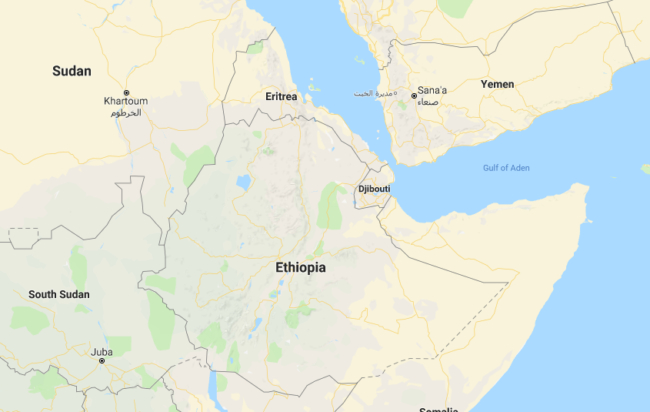
BBC launches new shortwave services for Ethiopia and Eritrea

(Source: BBC Media Centre via Mike Hansgen)

The BBC is launching new daily radio services which will be aired Monday to Friday in Amharic, Afaan Oromo and Tigrinya. The new language services have been available online since September 2017 when they launched websites and Facebook pages in all three languages.

The new radio services will provide impartial news, current affairs, features and analysis for Ethiopia and Eritrea, as well as regional and international news. There will be a strong focus on culture, health and original journalism from the region. These services are part of the largest investment in the BBC World Service since the 1940s and are funded by the UK government.

The programme will be broadcast on shortwave, satellite – and streamed directly onto each service’s Facebook page.

In addition content produced by BBC Learning English, part of the BBC World Service which teaches English to global audiences will feature prominently across the schedules for all three languages, with daily content as follows:
·
Essential English – Beginners (airs on Monday, repeated on Wednesday)
A functional five-minute audio course presented by an English speaker and a local presenter, which aims to help beginners to learn English. Learners will be introduced to essential chunks of functional language, which will allow them to start having simple conversations in English immediately.

English Expressions – Intermediate (airs Tuesday, repeated on Thursday)
This five-minute audio course focusses on common expressions used in everyday English. An English speaking presenter and a local language presenter discuss the meaning and use a different expression each week.

English Together Advanced (airs Friday only)
This is a bilingual five-minute audio with three presenters (2 English and one local language) discussing a current (safe i.e. non news) topic and examining the language used in the story allowing the user the practise their listening skills and equip them with the grammar and vocabulary needed to discuss the story.

The programmes are broadcast Monday-Friday at the following times:

  • 17:30 – 17.45: Amharic news
  • 17.45 – 17:50: Amharic Learning English
  • 17:50 – 18:05: Afaan Oromo News
  • 18.05 – 18.10: Afaan Oromo Learning English
  • 18:10 – 18:25: Tigrinya News
  • 18:25 – 18:30: Tigrinya Learning English

Programmes will also be streamed via the respective BBC websites and Facebook pages (see links below).

Details of how to listen:

Amharic

Afaan Oromo

Tigrinya

Notes to Editors
The Initial shortwave broadcast to go out at 17:30 GMT/ 20:30 EAT on three transmitters providing coverage across Ethiopia and Eritrea:

  • 7.595MHz
  • 11.720MHz
  • 12.065MHz

Repeat to follow at 18:30 GMT /21:30 EAT

  • 9.855MHz
  • 15.490MHz

Satellite Radio content will go out on the following channels:

  • Arabsat (BADR4) – 11.966GHz, Horizontal
  • Nilesat 201 -11.843GHz, Horizontal
  • Hotbird 13D – 12.597GHz, Vertical

Evening satellite broadcast to go out at 17:30 GMT and will be repeated until 21:30 GMT.

  • The BBC World Service reaches a global audience of 269 million weekly, on radio, TV, and digital.
  • BBC World Service received further funding of £291m until 2019/20 from the UK Government to launch twelve new language services: Afaan Oromo, Amharic, Gujarati, Igbo, Korean, Marathi, Pidgin, Punjabi, Serbian, Telugu, Tigrinya, and Yoruba. This additional funding is not part of the licence fee.

MF

Click here to view thisnews item at the BBC Media Centre website.

Solomon Islands Broadcasting Corporation to end MW, but maintain shortwave & FM services

Many thanks to SWLing Post contributor, Nigel Holmes, who shares the following:

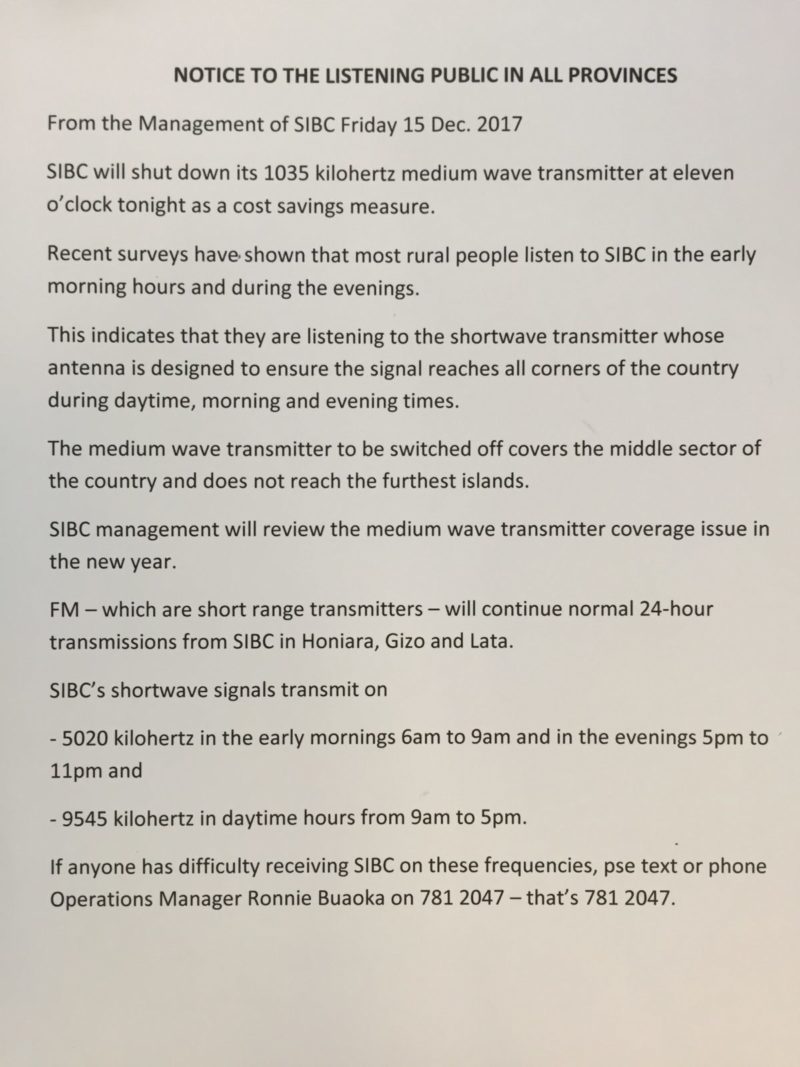
SIBC [Solomon Islands Broadcasting Corporation] has ended its MF service on 1035 kHz.

Delivery on FM & HF has been retained. Audience surveys indicated HF delivery was more effective than MF. The decision will be reviewed in 2018

http://www.sibconline.com.sb/special-announcement-from-sibc-management/

Thank you for the tip, Nigel!

PNG Minister for Communication wants to invest in shortwave

(Source: The Post Courier via Bill Lee)

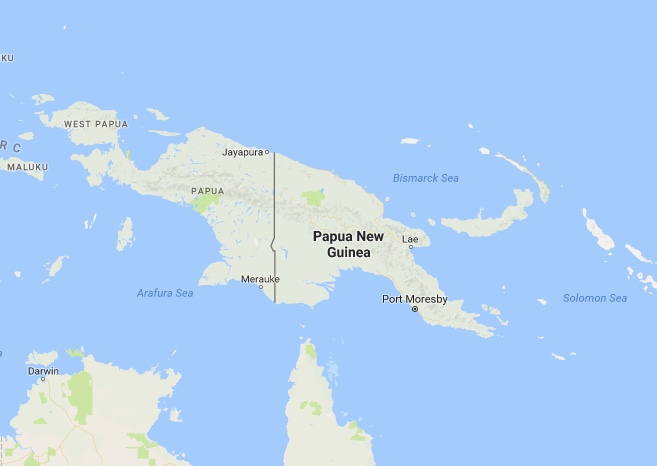
Minister for Communication, Information Technology and Energy Sam Basil wants all 22 provinces to have short wave frequency radio stations.

He said this during the Central Province assembly induction program last week Friday in Port Moresby.

“My role as the minister is to make sure that we go back to all the 22 provinces to make sure that we revive the radio stations,” Mr Basil said.

He said most of the radio stations currently using frequency modulation (FM) face the problem of signal loose in the rural settings as it is only powered by repeater and could not be able to penetrate when it meets obstacles.

“This is to ensure that people are kept informed and in tuned with the government of the day,” Mr Basil said.

[…]“I want to go short wave and we want to bring back to all the provinces capital in Papua New Guinea through National Broadcasting Corporation so that people in the mountains can have excess to communication,” Mr Basil said.

Click here to read the full article at The Post Courier.

BBC World Service: new shortwave services to Ethiopia and Eritrea

Note that, in terms of press freedoms, Reporters Without Borders ranks Eritrea the second most repressive country in the world, next to North Korea.

(Source: BBC Media Centre)

BBC World Service continues expansion with new services for Ethiopia and Eritrea

Three new language services for Ethiopia, Eritrea, and the diaspora are being launched today by the BBC World Service as part of its biggest expansion since the 1940s.
BBC News in Amharic, Afaan Oromo and Tigrinya will be available online and on Facebook. This will be followed later in the year with shortwave radio services in each language consisting of a 15-minute news and current affairs programme, followed by a 5-minute Learning English programme, from Monday to Friday.

The new BBC services will provide impartial news, current affairs and analysis of Ethiopia and Eritrea as well as regional and international news. Boosting the BBC’s operation in the Horn of Africa will also provide the rest of the BBC’s global audience with a better understanding of Ethiopia and Eritrea.

Programmes will target a younger audience with social media playing a key role. In addition to news and current affairs, there will be extensive coverage of culture, entertainment, entrepreneurship, science & technology, health and sport – including the English Premier League.

These services will benefit from a growing network of journalists across the region and around the world.

Francesca Unsworth, BBC World Service Director, says: “The BBC World Service brings independent, impartial news to audiences around the world, especially in places where media freedom is limited. I’m delighted we’re extending our service to millions of people in Ethiopia, Eritrea and the diaspora worldwide.”

Will Ross, Editorial Lead for Africa, says: “We know that there is a great deal of hunger for audiences in Ethiopia and Eritrea to access a broad range of high quality content in Amharic, Afaan Oromo and Tigrinya. It has been a privilege to work with Ethiopian and Eritrean journalists who are so keen to learn new skills and to ensure the new language services are a success.”

The Guardian: Study shows ABC cuts to shortwave & rural broadcasts “jeopardising safety of remote communities”

(Source: The Guardian via Ian P)

Reduction of local news and station closures disastrous for people living outside Australia’s cities, researchers say

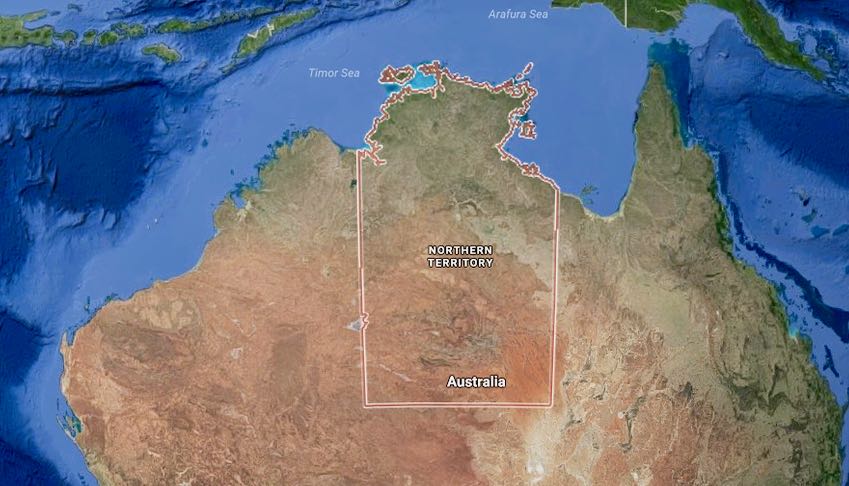
Cuts to the ABC in regional and rural Australia and the corporation’s increasing reliance on digital technologies is jeopardising the safety of remote communities and their access to emergency warnings, Deakin University research has found.

The ABC’s increasingly “digital-first” approach to emergency information and the reduction in ABC reporters’ local knowledge is causing great distress among rural populations who rely on broadcast signals because they don’t have the bandwidth or coverage for digital, researchers say.

A reduction of local news and information, centralised newsrooms in metropolitan areas, the closure of several ABC stations and the scaling back of broadcast programming has been disastrous for people outside the cities, according to a new study, Communication life line? ABC emergency broadcasting in rural/regional Australia.

But the ABC has played down the study’s significance, saying it is based on parliamentary submissions and is not an “accurate or up-to-date” summary of the corporation’s role in rural and regional Australia; and that the ABC is not funded as an emergency service.

Based on public submissions to a parliamentary inquiry, the researchers Julie Freeman, Kristy Hess and Lisa Waller found “burgeoning discontent about the corporation’s ability to fulfil its role as a designated emergency broadcaster and provide communication life lines to rural and regional communities”.[…]

Continue reading at The Guardian.

RFA suspends in-country operations in Cambodia

(Source: Radio Free Asia)

WASHINGTON – Libby Liu, President of Radio Free Asia (RFA), today issued the following statement about RFA’s decision to suspend in-country operations in Cambodia:

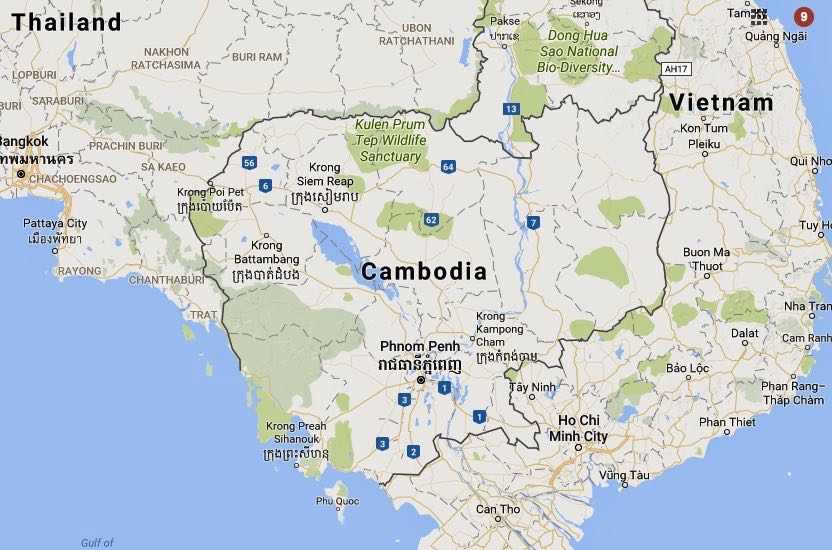
After almost 20 years of bringing the Cambodian people independent, reliable and trustworthy news and information from inside the country, Radio Free Asia has regrettably been forced to close its Phnom Penh bureau. The government’s relentless crackdown on independent voices in recent weeks has made it impossible to keep the bureau open while guaranteeing the integrity of RFA’s journalistic mission.

It has become increasingly apparent that Prime Minister Hun Sun has no intention of allowing free media to continue operating inside the country ahead of the 2018 elections. The government has instead seized on every opportunity to go after critics, political opponents, NGOs, and independent media committed to reporting the truth. Using a thin pretext of tax and administrative violations, authorities have closed independent radio stations carrying RFA, Voice of America, and Voice of Democracy. The government has forced The Cambodia Daily newspaper to close due to an extreme and punitive retroactive tax bill and has kept its manager, Mr. Steele, from leaving the country under threat of criminal charges. Authorities have been employing these same tactics against RFA, despite our full cooperation at every step to comply with all requests and our sincere efforts to register as a licensed media company. Nevertheless, they have resorted to false statements and increasingly threatening and intimidating rhetoric about RFA, made mostly through leaked documents on government mouthpiece media and random statements from different ministries.

Facing down intimidation is nothing new for RFA. Our journalists and commentators have been threatened, jailed, and forced to leave the country to avoid arrest or worse. But recent developments have intensified to an unprecedented level, as Cambodia’s ruling party shamelessly seeks to remove any obstacle or influence standing in its way of achieving absolute power.

Through the years, Cambodian journalists working for RFA have risked their lives to report on corruption, illegal logging, forced evictions, bribery, labor disputes, and rights abuses, among other important stories largely ignored by state-controlled media. Their hard work has helped to build the foundation of RFA’s investigative, in-depth journalism from the ground up and has earned us the trust of the Cambodian people — to whom we also owe our heartfelt gratitude. The sacrifice and support of staff and audience alike reinforces the need for RFA to keep Cambodia’s citizens informed, so they possess a more complete and accurate picture of what’s happening in their neighborhoods, their towns, and their villages. We hope that the government will not persecute the individual brave Cambodians who worked with us in retaliation for RFA’s efforts to bring reliable free press to their countrymen and women.

RFA stands resolved to stay true to its vital mission in Cambodia, now more than ever, to go forward shining a light even in the darkest of hours. RFA will keep reporting on the most important and censored issues and events inside the country — and we will continue to broadcast and publish our programs, reports and content on shortwave radio, social media, and on our website.

As history has shown, dictators may rise and force their will on nations, but the people will always seek truth in pursuit of freedom.


Guam to California: CTF 75 successfully tests HF communications system

Electronics Technician 2nd Class Anthony Juarez and Electronics Technician 3rd Class Codie Flanagan, assigned to Naval Mobile Construction Battalion (NMCB)1, adjust frequency codes on a GRC-234 high-frequency base station at Naval Base Guam July 27, 2017. (Source: DVIDS)

(Source: Defense Video Imagery Distribution System)

NAVAL BASE GUAM , GUAM
08.04.2017
Story by Petty Officer 1st Class Torrey Lee
Commander, Task Force 75
Subscribe 5

Commander, Task Force (CTF) 75 successfully completed communications systems tests using high-frequency (HF) radio waves to broadcast voice and data 6,050 miles from Naval Base Guam to Port Hueneme, California, July 27, 2017.

The assessment tested the capabilities of expeditionary forces to use HF waves to deliver data over the Pacific. HF has become a viable alternative for military forces when more common forms of communication, such as satellites, are unavailable.

“In this particular back-up plan, we tested our ability to talk, and we were able to send text to one of our units that is across the Pacific Ocean,” said Lt. Cmdr. Timothy Carmon, a communications planner temporarily assigned to CTF-75. “The transmissions and receptions are not as fast as IP services, however we were still able to communicate in a timely manner with the distant end.”

Utilizing the assets of CTF-75’s Naval Mobile Construction Battalion (NMCB) 1, the command configured its antennae to broadcast to California. Once a successful voice transmission was received, communication directors at Navy Expeditionary Combat Command Pacific requested that CTF-75 try to send a data file.

“These data files allow us to save time,” said Electronics Technician 2nd Class Anthony Juarez, a communications supervisor assigned to NMCB 1. “We can send general diagrams, fire plans and points of interest. Instead of trying to verbally describe something, they [the recipient] have a graphic or a picture that gives them a better idea of the situation.”

Common communication devices used by the U.S. military incorporate satellites. CTF-75 has been testing HF systems in the case of satellite communication failure. HF is a frequency wave broadcast that is transmitted around the curvature of the Earth. Unlike other forms of frequencies, such as very-high frequencies and ultra-high frequencies, the transmission is not distorted by terrain or physical obstructions.

“We may not always have access to operational equipment or the latest assets, but as communicators we should have a backup plan that is ready to be executed,” said Carmon.

Guam is located in the western region of the Pacific. Having an HF range of 6,000 miles is equivalent to broadcasting from Japan to the U.S., or oppositely, from Japan to the middle of Africa. During this most recent test, CTF-75 was also able to establish communications with Mobile Diving and Salvage Unit 1 in Hawaii.

“We can hop our communications from island to island,” said Juarez. “This test gave us the opportunity to know we can push our system to the absolute max from Guam. There are definitely different systems out there, but our system is really efficient at long-range HF. As new radios are incorporated in the Navy expeditionary community, I have no doubt it will get faster, more reliable and easier to set up.”

CTF-75 is currently testing its communication abilities with subordinate commands which include Seabee units, riverine squadrons, cargo handlers, explosive ordnance disposal technicians, and expeditionary intelligence forces.

“This achievement was an important step in an effort to increase our capabilities to be prepared to execute missions in austere locations around the globe,” said Carmon. “Our expeditionary commanders may never need to communicate over a few thousand kilometers, but if the need arises our communicators will be able to provide the connection for that commander.”

CTF-75 is the primary expeditionary task force responsible for the planning and execution of coastal riverine operations, explosive ordnance disposal, diving engineering and underwater construction in the U.S. 7th fleet area of operations.

Read the full article at the DVIDS hub…