Shortwave listening and everything radio including reviews, broadcasting, ham radio, field operation, DXing, maker kits, travel, emergency gear, events, and more
Many thanks to SWLing Post contributor Fred Waterer, who writes:
I’ve subscribed to this channel for some time. This video, which dropped the other day, will be of relevance to both SWLs and HAMS:
Rob does some deep dives into language. Including the surprising origins of many words in English and the lingering influence of both Anglo Saxon and Norman French.
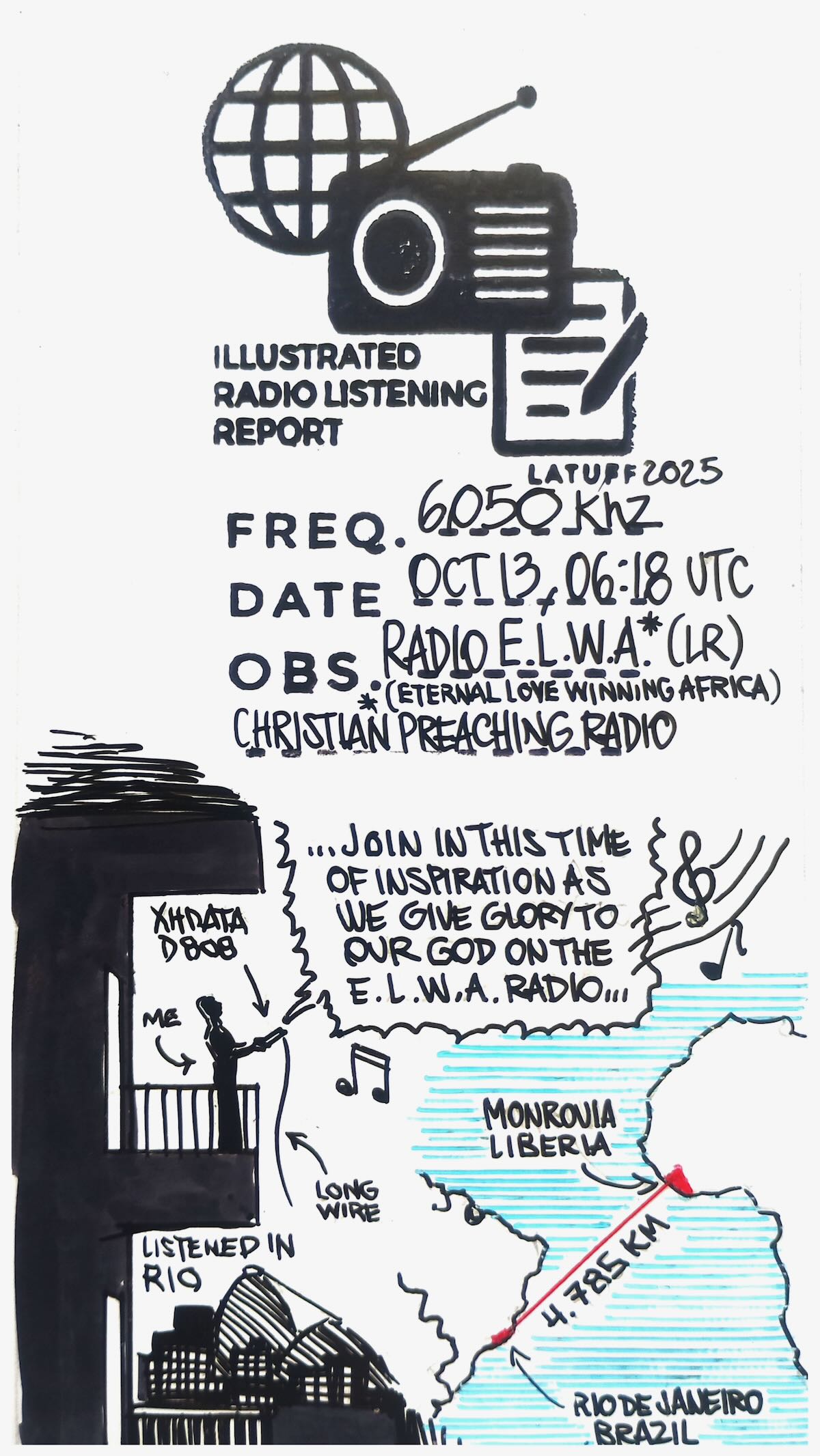
It’s never been easy for me to pick up the ELWA (Eternal Love Winning Africa) radio signal on 6050 kHz in Brazil. The signal was always weak, propagation was poor, and conditions were never particularly favorable for listening to the historic evangelical radio station from Monrovia, the capital of Liberia. Until then, I had only listened ELWA, with great difficulty, in Porto Alegre and Guaíba, both cities in Rio Grande do Sul, and in Juiz de Fora, Minas Gerais. Recently, while scanning shortwave frequencies during the early morning hours in Rio de Janeiro, I received the ELWA radio signal and decided to try recording the broadcast. I noticed a sort of propagation window between 6:30 and 6:50 (UTC). Even though, it took at least six days of failed attempts, the same weak signal and poor propagation, until finally today, October 13th, I got clear audio.
Many thanks to SWLing Post contributor Dan Greenall, who shares the following guest post:
The 90 metre band – Then and Now
by Dan Greenall
A few decades ago, the 90 metre shortwave broadcast band used to be full of interesting and challenging-to-hear DX signals. In the 1974 edition of The Complete Shortwave Listener’s Handbook, author Hank Bennett reports on what you might expect to hear on these frequencies. There is a copy of this book on the Internet Archive. Here is a link to that specific page.
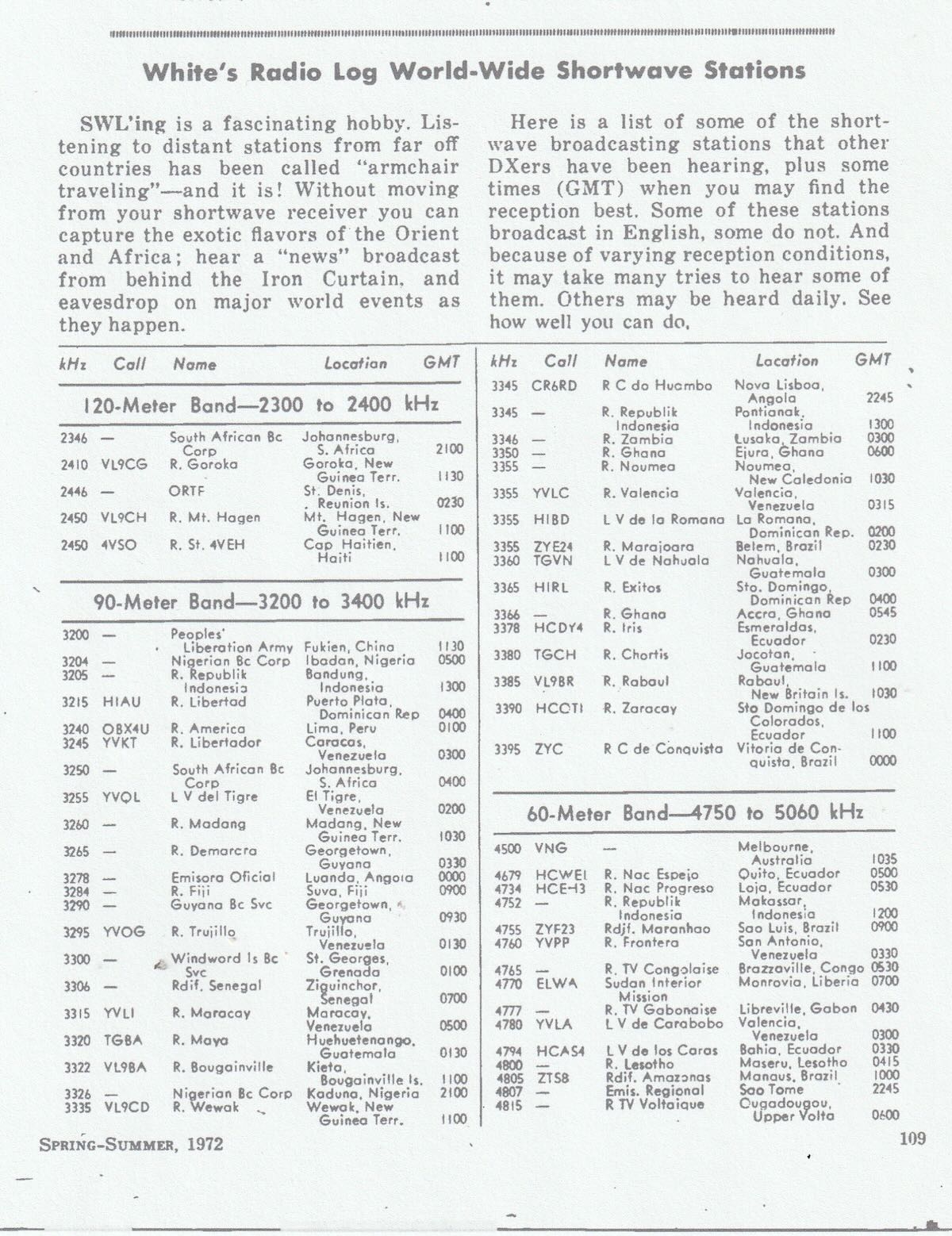
Also, this sample page from White’s Radio Log in the 1972 Communications World magazine shows a number of stations that could be logged in 90 metre band.
Here are a few links to recordings from my personal collection that have survived through the many years. These were all made between 3200 and 3400 kHz from my listening post in southern Ontario, Canada.
[Note: Click on each broadcast link to open the associated Internet Archive page with more info.]
Today, it seems that only a handful of stations can be found broadcasting in the 90 metre band. These would include WWCR in Nashville, the Voice of Indonesia, KCBS Pyongyang and Radio Mosoj Chaski in Cochabamba, Bolivia. As well, the Canadian time signal station CHU still continues to use 3330 kHz.
A recent recording of Mosoj Chaski Radio, a Christian broadcaster logged using a remote SDR in Lima, Peru, is presented here.
Although not in English, listen carefully and you can hear them give their frequency of 3310 kHz in the 90 metre band as well as their location of Cochabamba, Bolivia.
Many thanks to SWLing Post contributor Carlos Latuff, who writes:
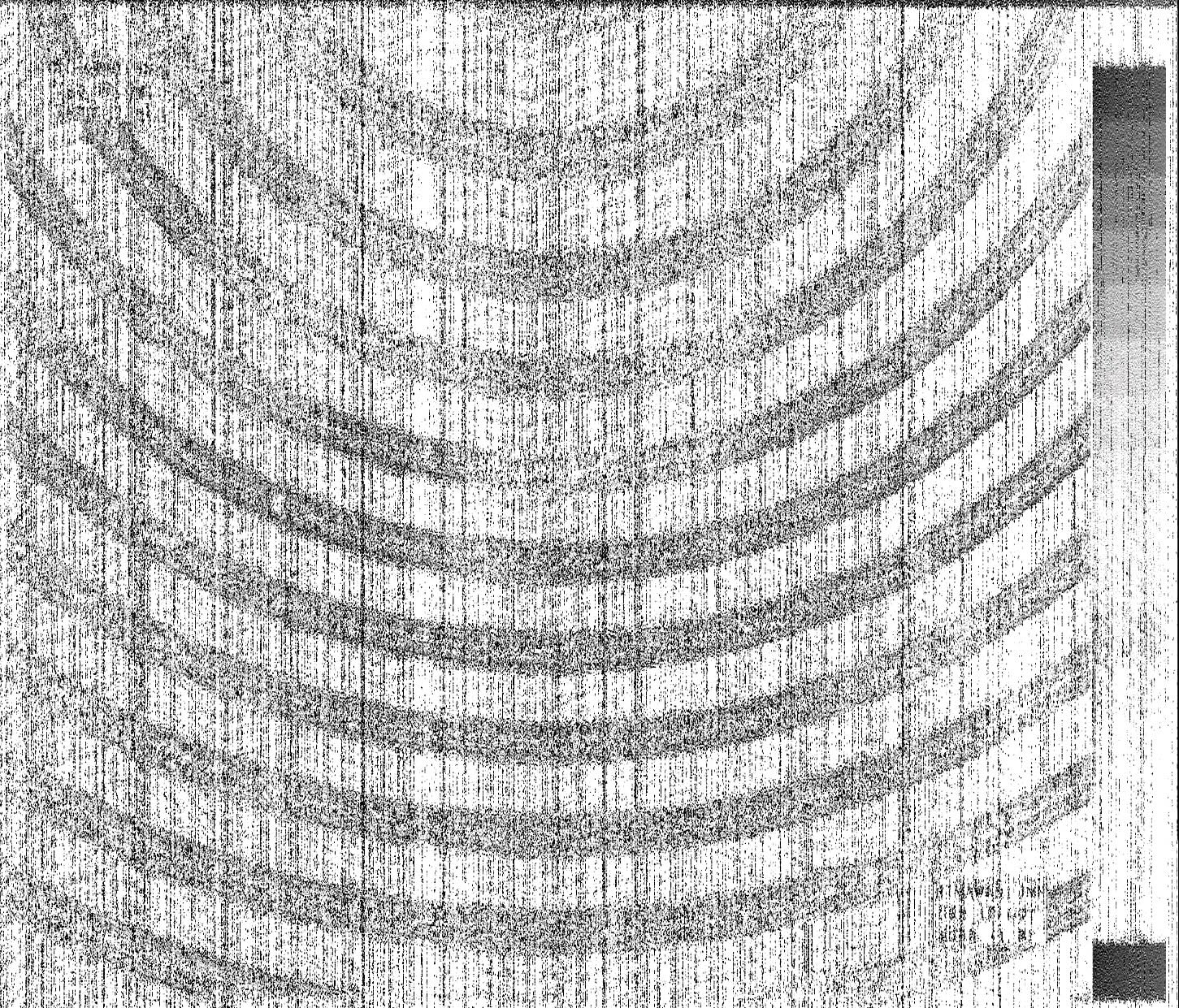
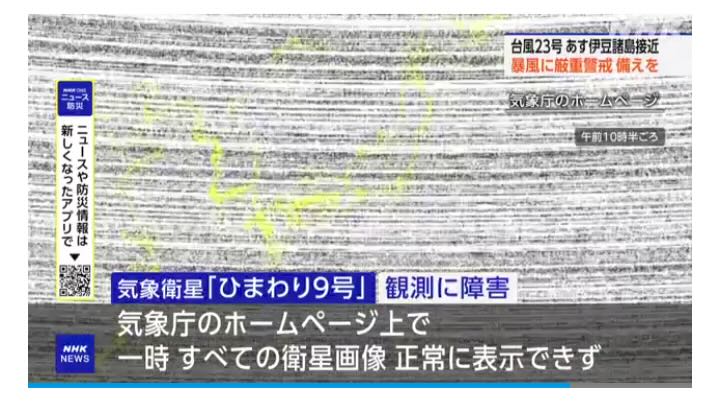
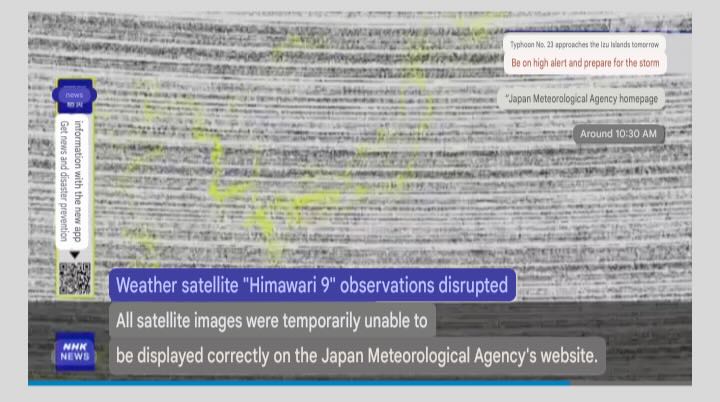
This is the image I received today, October 12th, at 7:10 UTC, in Rio de Janeiro, Brazil, from the Japan Meteorological Agency, via radiofax (13988 kHz). It was supposed to be a satellite image, showing Tropical Storm Nakri (which will become a typhoon in the next few hours). Instead, I received this truncated image. This isn’t a radio transmission/reception error, but rather a problem with the image generation from the Japanese Himawari satellite, something I hadn’t seen before.
This is the information provided by the Japanese TV NHK website.
Many thanks to SWLing Post contributor David Iurescia for sharing the following article about one of my favorite topics, which we’ve covered in the past.
Long before Zoom classrooms or remote-learning platforms existed, Australia was already teaching across the outback via radio. This article from Education Daily explores how the School of the Airbegan in 1951 using shortwave radio and evolved into one of the world’s most advanced distance education systems—connecting students across half a million square miles.
It’s a brilliant look at how necessity inspired real innovation in broadcasting and education.
Many thanks to SWLing Post contributor Carlos Latuff, who writes:
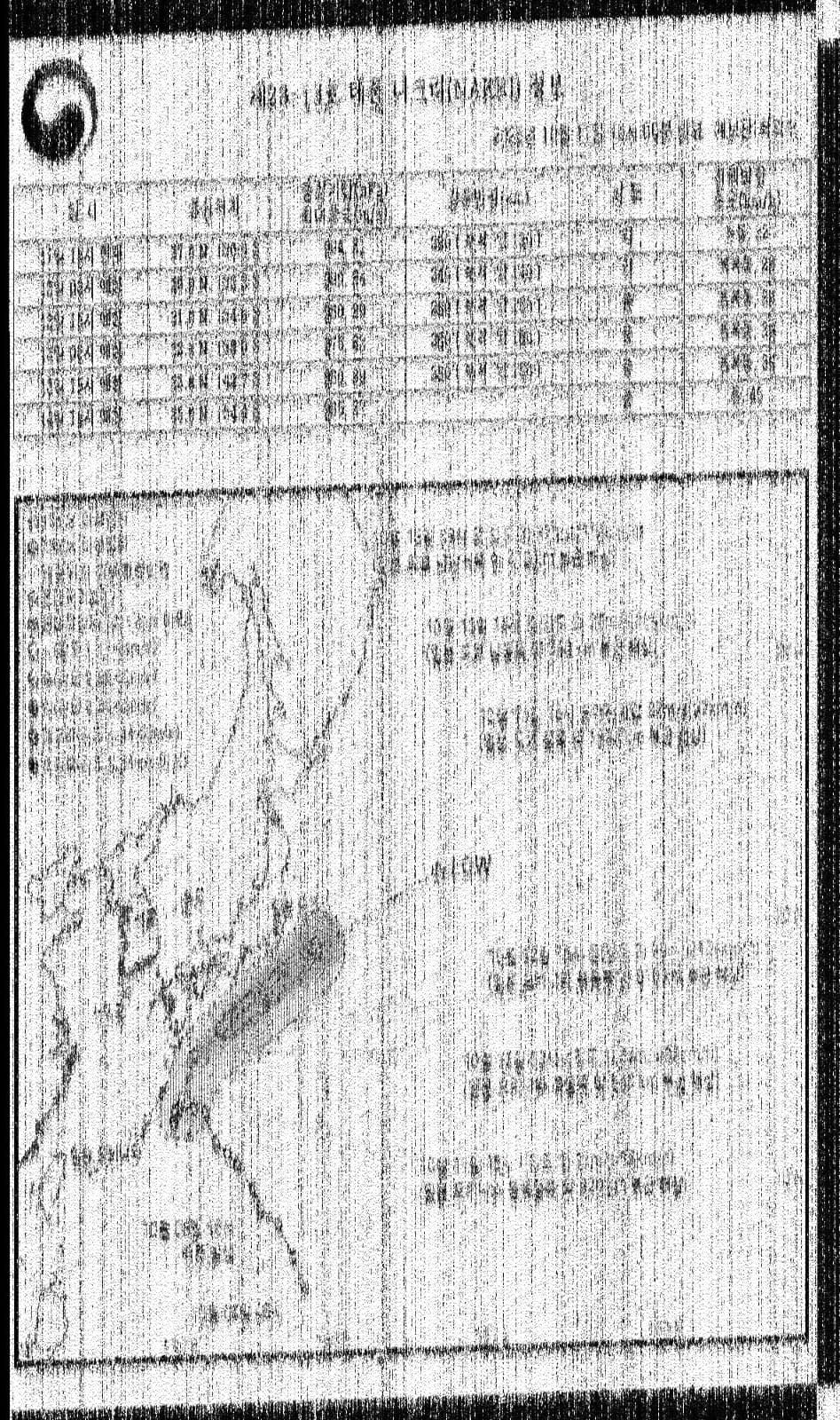
The path of tropical storm “Nakri,” forecast to become a typhoon on Sunday, is shown on this weather chart from the Korea Meteorological Administration, broadcasted via radiofax and received this morning in Rio de Janeiro, Brazil, 0800 UTC, frequency 13570 kHz (UTC).
Please support this website by adding us to your whitelist in your ad blocker. Ads are what helps us bring you premium content! Thank you!