Shortwave listening and everything radio including reviews, broadcasting, ham radio, field operation, DXing, maker kits, travel, emergency gear, events, and more
Many thanks to SWLing Post contributor and buddy, One Deck Pete, who writes with a question.
I am not sure if I have sent you this before but this alternative version of a Joe Meek produced single has what I think are shortwave samples bookending it and also a couple of times during the tune.
[Note that Pete originally posted this video on his own blog.]
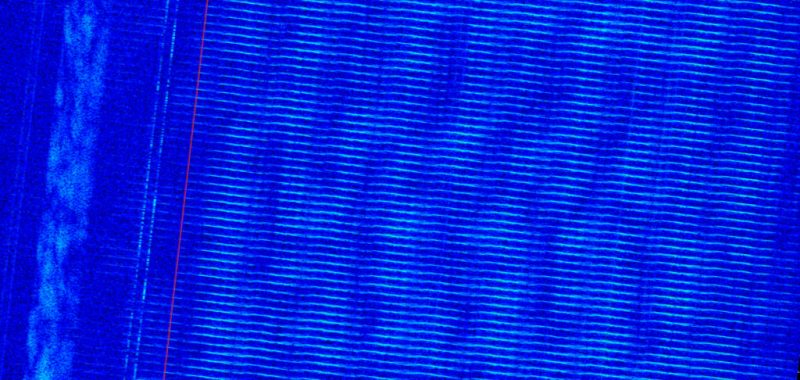
Have you any guesses what they could be? It was produced in 1966, Joe Meek was a bit of an electronics wizard and I was told subscribed to Practical Wireless and loved a sound effect. It sounds like some fast Morse, telemetry or RTTY but I could be wrong.
Perhaps it isn’t shortwave-based but it sounds like it to me!
How about it SWLing Post readers? What are those digital sounds at the beginning and end of this recording? (Bonus points if you can decode!)
Many thanks to SWLing Post contributor Dennis Dura for sharing this excellent Hackaday feature: Quieting That Radio. If you’ve ever struggled to hear weak signals through modern RFI, this piece, featuring content from Electronics Unmessed, is well worth checking out. It explores the hidden interference SDR setups often face and offers simple, practical/inexpensive fixes—like adding a counterpoise or ferrite choke—that can make all the difference in pulling in those hard-to-hear stations. This is advice we’ve recommended in past articles, but it’s brilliant to see demonstrated improvement.
Many thanks to SWLing Post contributor Dan Greenall, who writes:
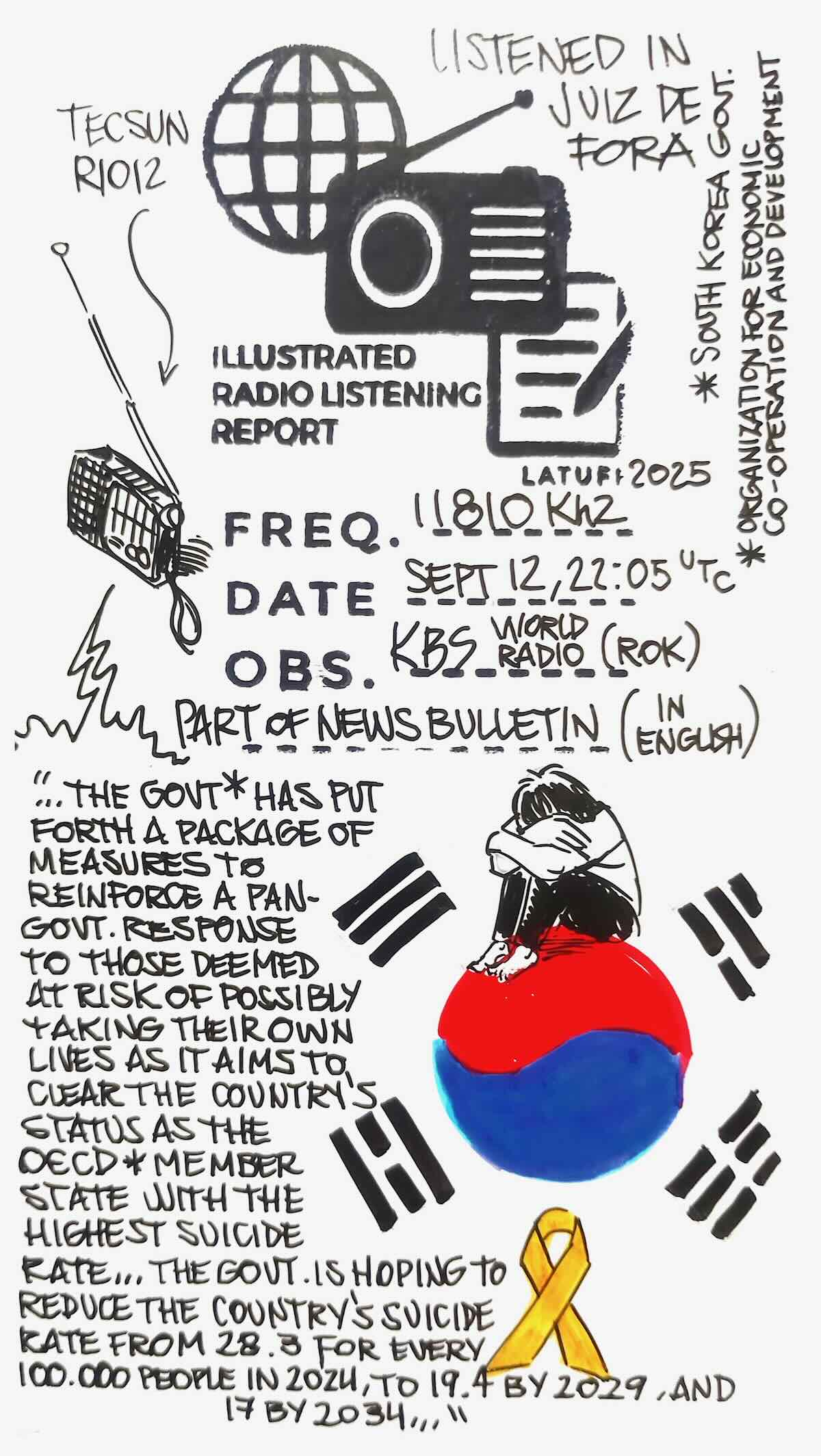
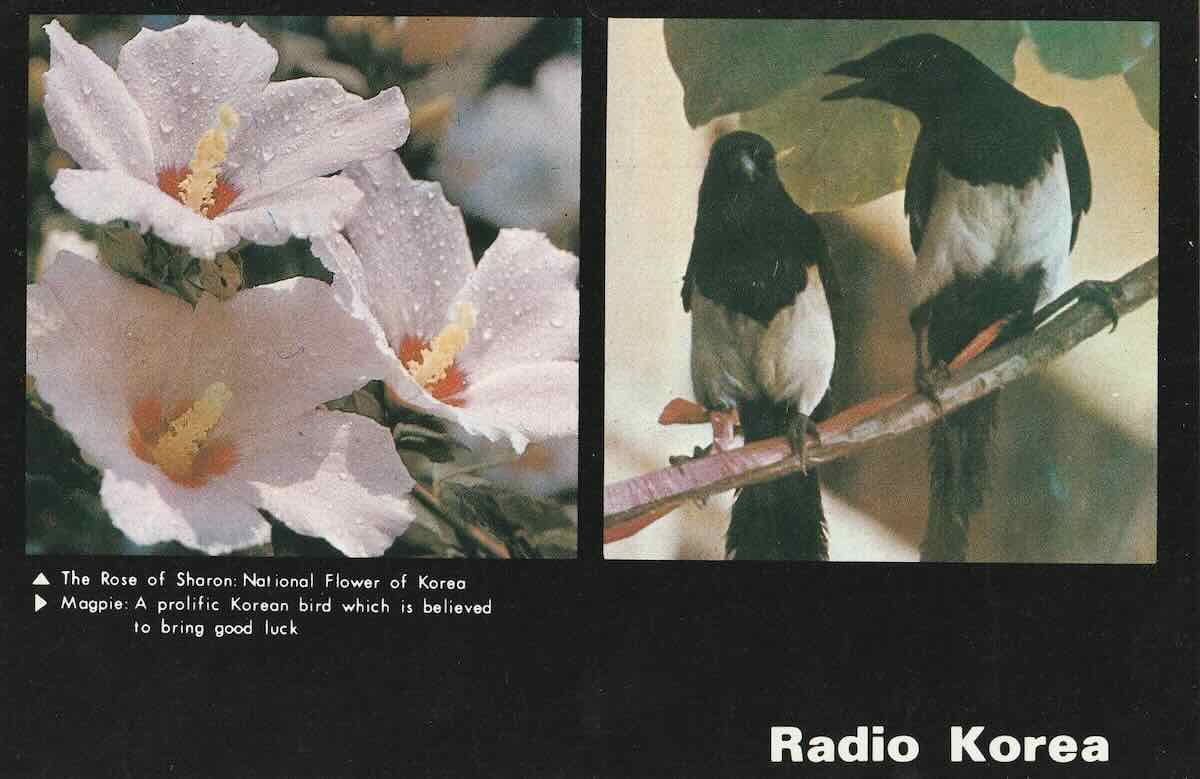
Back in the 1980’s, KBS World Radio was known as Radio Korea, and they could be heard quite well at times here in eastern North America. Even with modest receiving equipment, their familiar interval signal, that included regular ID’s in English and Korean, made it fairly easy to spot.
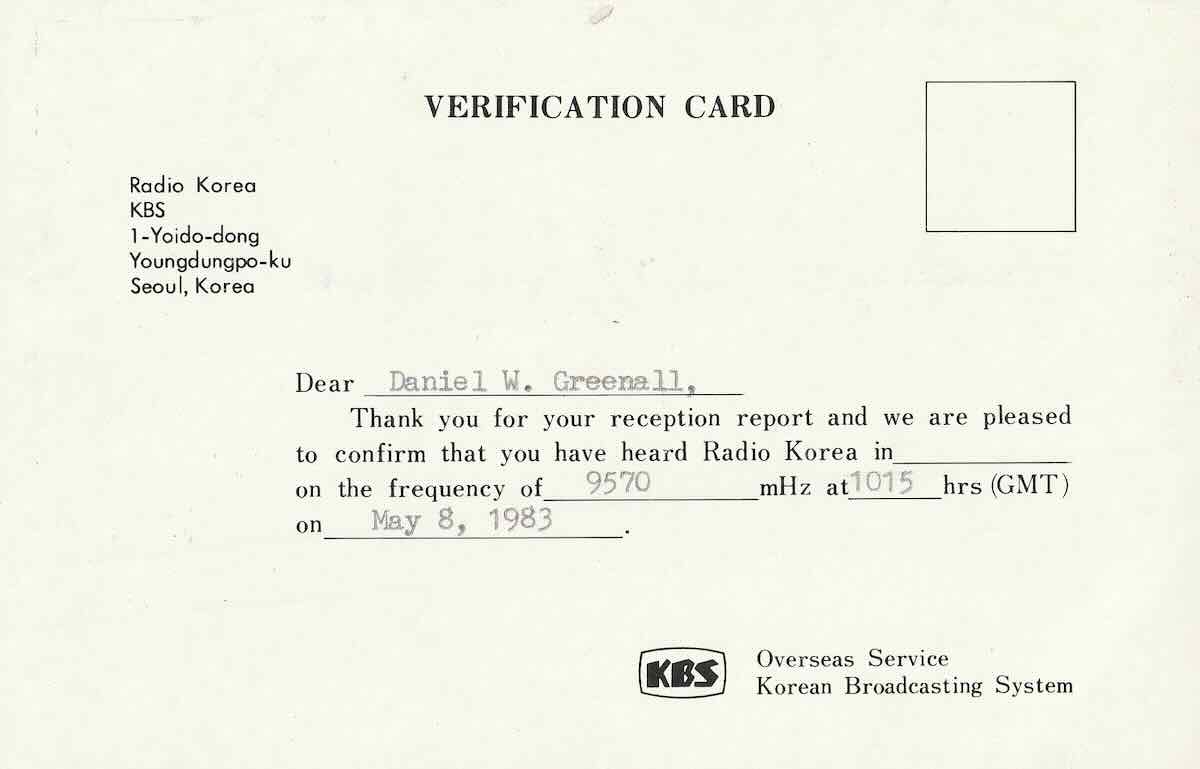
The recording here (circa 1983) was made in Brantford, Ontario, Canada, using a Panasonic RF-3100 portable receiver and a long wire antenna. As a bonus, this station offered a variety of colorful QSL cards to its listeners.
Today, KBS World Radio from Seoul in the Republic of Korea continues to offer programs via shortwave in several languages including English. Transmitter power up to 250 kw is used so they should be audible in most parts of the world. “Sign on” is strikingly similar using the same interval signal with bi-lingual ID’s and opening music.
They also use some of the same frequencies, including 9570 and 15575 kHz, that they have broadcast on for decades. This recording was made using a remote SDR in Hong Kong on August 14, 2025 on 15575 kHz around 1300 hours UTC.