Author Archives: Thomas

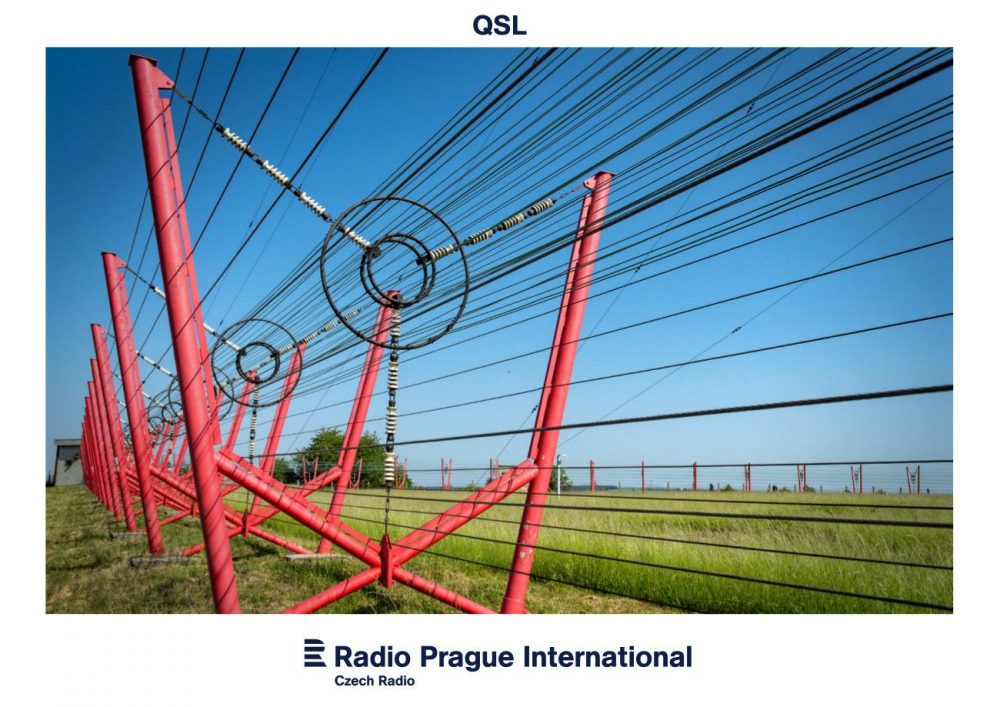
2020 Radio Prague QSL Cards

Many thanks to SWLing Post contributor, David Iurescia (LW4DAF), who writes:

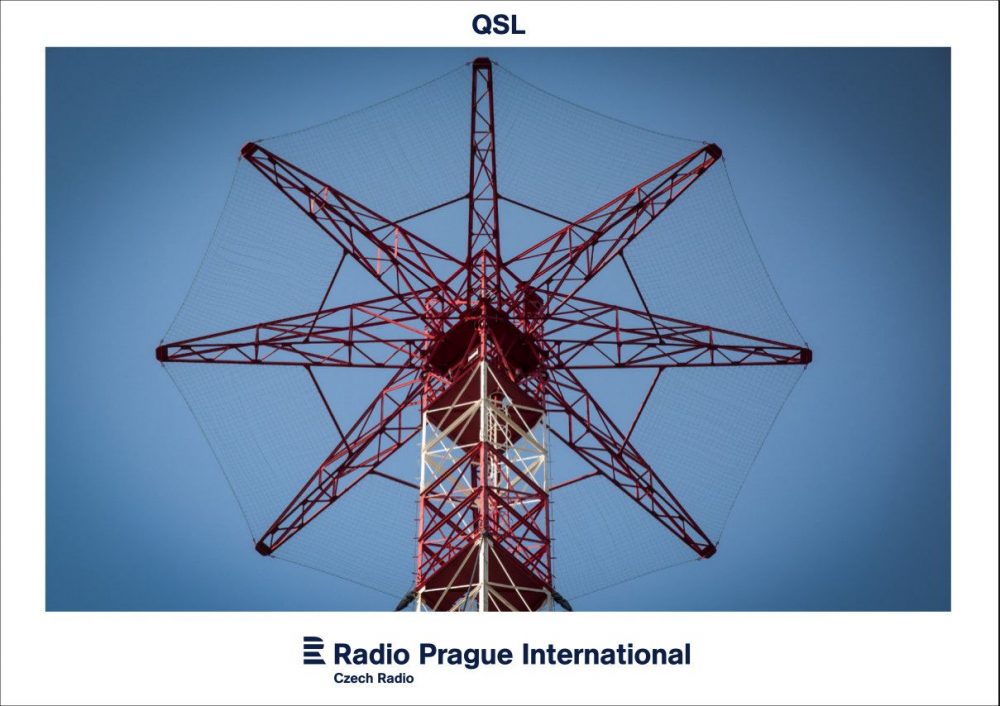
“These are the new 2020 QSL Cards from Radio Prague International.
The theme of this year is “Transmitters” (Antennas):”

(Source: Radio Prague)

The three letters – QSL – constitute one of the codes originally developed in the days of the telegraph. All codes consisted of three letters beginning with “Q”. Later some of these “Q” codes were adopted by radio-telegraphists and radio listeners. QSL means “contact confirmed” or “reception confirmed”.

The expression “QSL card” or just “QSL” gradually came to be used among radio-amateurs and then more broadly as radio began to develop as a mass medium. Radio stations were keen to know how well and how far away their programmes could be heard and began to send their listeners “QSL cards” in return for reception reports. The card would include letters making up the “call sign” of the station – the system still used in the United States – or the broadcasting company’s logo or some other illustration. The card would also include a text stating the frequency and the transmitter output power, and a confirmation of when the listener heard the station.

Domestic broadcasters do not tend to use QSL cards these days, but their popularity remains among radio stations broadcasting internationally. They are still keen to know how well they can be heard in the parts of the world to which they broadcast. In the era of shortwave broadcasts Radio Prague sent out QSL cards for reception reports received. After curtailing our shortwave transmissions as of February 1, 2011 we will continue issuing QSL cards for reception via the Internet.

Here you can look through our current and past series of QSL cards:

Click here to view all of the new QSL cards from Radio Prague.
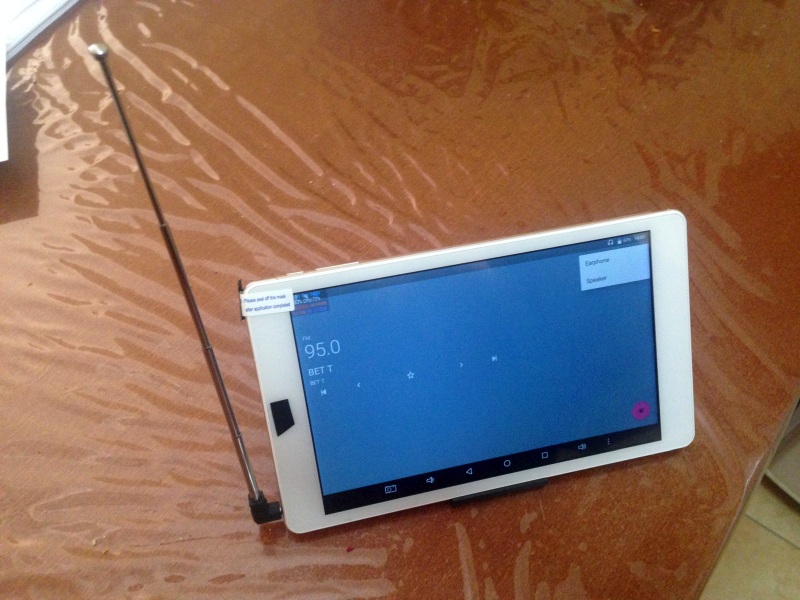
External FM antenna for Android phones/tablets

Many thanks to SWLing Post contributor, Adid, who writes:

Check this little gadget for android phones or tablets

https://www.aliexpress.com/item/32976847250.html

If they have the FM app installed than this will come handy.

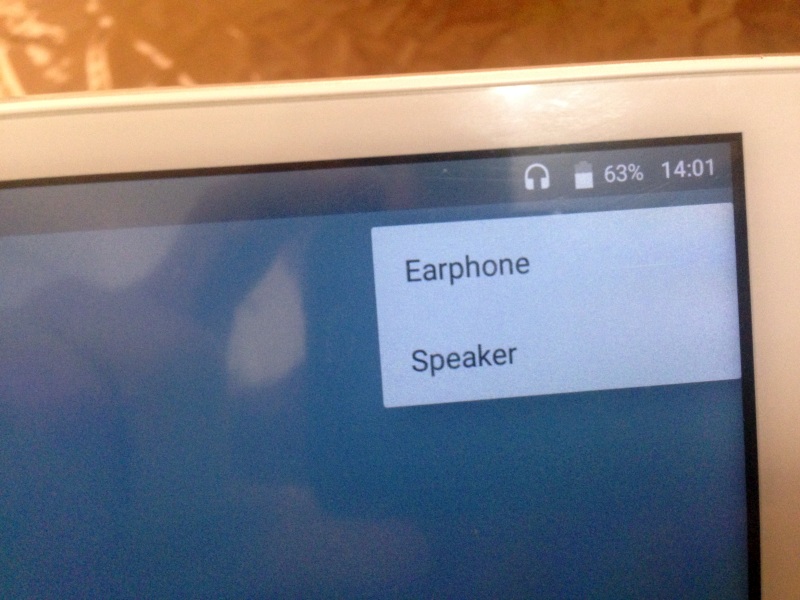
One needs to select speaker and not earphone as expected.

It works fine here. (I don’t know if Apple phones have an FM module)

Thank you, Adid! Very cool! This little antenna costs $0.90 USD–an insanely low price.

If you have an old set of earphones lying around the house (I probably have two dozen that ship with various radios) you could also snip off the earpieces and use the pigtail as a wire FM antenna.

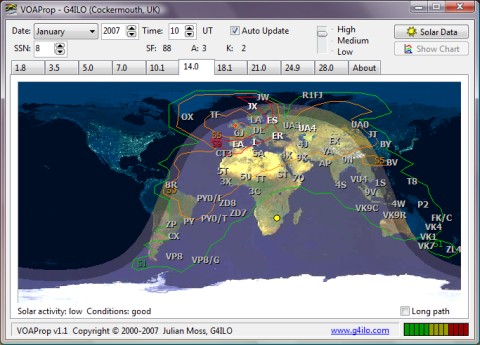
Ham CAP and VOA Prop: Fixing SSN look-up files

VOA Prop

Many thanks to SWLing Post contributor, Paul Evans, who notes:

Users of these two propagation prediction programs will find that they don’t work beyond Dec 2019 because the SSN look-up files didn’t go any further.

I noticed this 2-3 years ago and added to the end of the files required. I entered guesses for solar activity values, but with auto mode turned on they will fetch current values. At least this will get you started again. Or my guesses might be right!! 🙂

For Ham CAP use: http://w4.vp9kf.com/SSN.dat

For VOAProp use: http://w4.vp9kf.com/ssndata.txt

Download them and swap them into the directory where the application is located.

Thanks or the help, Paul!

An app to decode DRM?

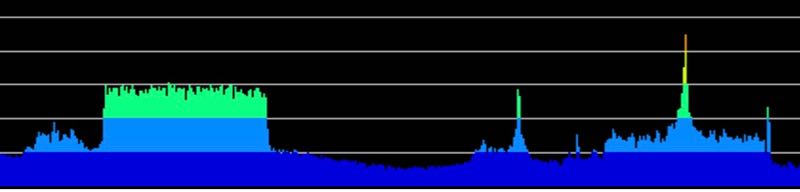
DRM broadcast (left) as seen via a KiwiSDR spectrum display.

Many thanks to SWLing Post contributor, Richard Langley, who shares this story by Hans Johnson at Radio World:

Can an App Solve the DRM Receiver Problem? (Radio World)

The Digital Radio Mondiale standard for digital broadcasting in long, medium, and shortwave bands offers the possibility to transmit audio, text and pictures.

A few broadcasters use DRM for both domestic and international transmissions. DRM’s largest problem is lack of receivers, especially affordable standalone ones.

Some listeners use an SDR, computer and free Dream software to receive the DRM signals, but this audience doesn’t make up the mass audience that broadcasters are looking for.

[…]AlgorKorea didn’t develop the apps with the intention of solving the DRM receiver issue. They developed them to resolve a problem with FM hearing aids used in classrooms.

So how do they work? The DRM+SDR version couples the popular and inexpensive RTL-SDR to an Android device with a USB OTG adapter.[…]

Click here to read the full article at Radio World.


Shortwave version of the Southgate ARC News

Many thanks to SWLing Post contributor, Harald (DL1AX), who shares the following message from the Southgate ARC:

Southgate News is now on ShortWaveRadio

We now have a regular Sunday morning news broadcast on ShortWaveRadio.de
So tune in every Sunday at 10am UTC on 3975 and 6160 kHz.
The programme is repeated at 14:00 UTC on 6160 kHz and 16:00 UTC on 3975 kHz

Thanks Harald! Southgate is a wonderful source of radio news. I look forward to checking out their shortwave broadcast!

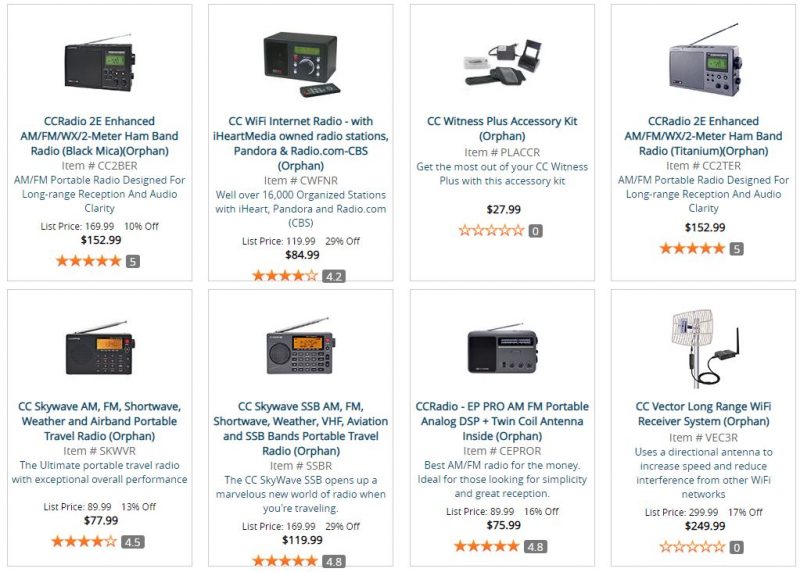
Radio Deal: C.Crane Orphans sale

I just received a newsletter from C.Crane noting that they’re having an “Orphan” sale today (17 January 2020).

“Orphans” are C.Crane returns and open box items that have been tested and evaluated by C.Crane. Orphans are sold at a discount and carry a full 60 day warranty. I’ve purchased a number of Orphan items in the past and have never received a dud.

One of the best deals I see in their list of Orphans is the CC Skywave SSB for $119.99–the lowest price I’ve seen for this particular unit.

Click here to check out other C.Crane items.

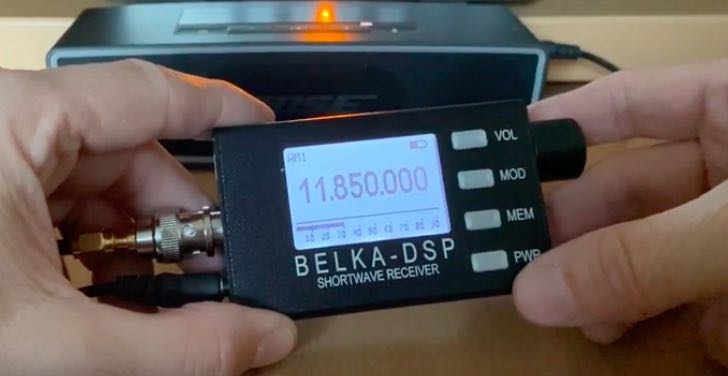
Video: Fenu demonstrates the BELKA-DSP receiver

Many thanks to SWLing Post contributor, Dan Robinson, who shares the following video demonstration of the BELKA-DSP receiver by Fenu Duarte:

Click here to view on YouTube.

Thanks for sharing this, Dan.  I must admit, it seems the BELKA-DSP has some excellent receiver characteristics. I like the backlit display and the rugged, simple form-factor. It doesn’t have an internal speaker, but based on Fenu’s video, the audio sounds superb (especially if you’re using a quality amplified speaker like Fenu).

I had planned to review the little BELKA-DSP last fall, but simply had too many in-bound review transceivers. As I knock out some of these reviews, I might have to reconsider!

Alex Buevsky kindly supplied the English language manual for the BELKA-DSP last year. If interested, click here to download the PDF.