Author Archives: Thomas

BBC Audio Access Abroad: Major Changes Coming Spring 2025

Many thanks to SWLing Post contributor, Richard Cuff, who shares the following news via the BBC:

Upcoming changes for listening to BBC audio outside the UK

If you live outside the UK, how you listen to BBC radio will change, starting from spring 2025.

Instead of using BBC Sounds, you’ll be able to use a new service at BBC.com and on the BBC app. BBC Studios has launched these all-new audio environments, tailored to outside UK audiences. The BBC’s content will remain available on other international podcast platforms.

International listeners will no longer be able to use the BBC Sounds app and website from spring 2025.

You can find out more about these changes on the bbc.com website

Advice for UK Listeners travelling abroad

For listeners who reside in the UK, you will still be able to use the BBC Sounds mobile app when you are abroad. Check our FAQ for further info: Can I use BBC Sounds when I travel outside the UK?

Why are we making these changes?

BBC Sounds is a UK licence fee funded service. To offer better value for our UK listeners, BBC Sounds will be repositioned and made available exclusively to UK audiences.

BBC Studios is a commercial subsidiary of the BBC and is focused on bringing our trusted, world class journalism and storytelling to international audiences. This includes BBC audio content on bbc.com and the BBC app, which will be focused to international listeners.

Support for listeners Outside the UK

If you live outside of the UK and have a query regarding listening to BBC radio and audio content, please visit the support page at bbc.com where you can find help and contact their support team.
Radio Free Europe: 30 Years in Prague

Many thanks to SWLing Post contributor David Iurescia, who shares the following article from Radio Prague (in Spanish), which focuses on the history and relevance of Radio Free Europe. For the past 30 years, the station has been broadcasting from Prague, continuing its mission of providing uncensored news to regions where press freedom is severely restricted. The article explores the station’s enduring role in the fight against authoritarian censorship and the growing challenges it faces in today’s geopolitical landscape.

Read the full article on Radio Prague’s website (Google Translate can assist with translation).

SWL Contest 2025 Wrap-Up & New SSB SWL Contest

Many thanks to SWLing Post contributor Frank, who shares the results of the SWL Contest 2025, which challenged shortwave and medium-wave listeners from around the world to log as many stations and transmitters as possible. A total of 34 participants from 17 countries participated, demonstrating the incredible reach and diversity of the SWL community.

Frank is now organizing an new challenge—the SSB SWL Contest 2025, running from March 1st to October 31st, 2025. This contest focuses on listening to amateur radio stations in SSB mode across the 10m to 40m bands, with the goal of logging the most DXCC entities over eight months. Both SWLs and licensed amateur radio operators are welcome to participate!

Check out the full results of the SWL Contest 2025 here.

For the new SSB SWL Contest 2025 Rules, visit: https://chinaradiosswl.blogspot.com/2025/02/ssb-swl-contest-2025-rules.html

Finding the Kookaburra on Shortwave—Past and Present

Photo by Matthew Willimott via Unsplash

Many thanks to SWLing Post contributor, Dan Greenall, who writes:

Hi Thomas

I still have warm memories of tuning into Radio Australia on 9580 kHz at sunrise during my early days of shortwave listening. They would sign on with their Waltzing Matilda interval signal and the sound of the kookaburra bird.

While doing some listening on the SDR of my friend Ken (VE3HLS) who has retired to northern Thailand, I have discovered you can still hear the kookaburra on shortwave by tuning into Reach Beyond Australia. Their broadcast to Myanmar in Burmese from 1500 to 1530 UTC on 11900 kHz can be very well heard on this Kiwi. There is a brief English announcement at sign and sign off, as well as a few seconds of “kookaburra chatter.”

Attached are two recordings, the first at sign on (March 7, 2025) and the second at sign off (December 1, 2024).

Also I’ve included a link to Interval Signals Online where you can find the old Radio Australia sign on.

https://www.intervalsignals.net/

73

Dan Greenall VE3HLC, London, Ontario, Canada

Radio World: NRSC Studies RF Noise on Various Roadway Types

Many thanks to SWLing Post contributor, Dennis Dure, who shares the following item from Radio World:

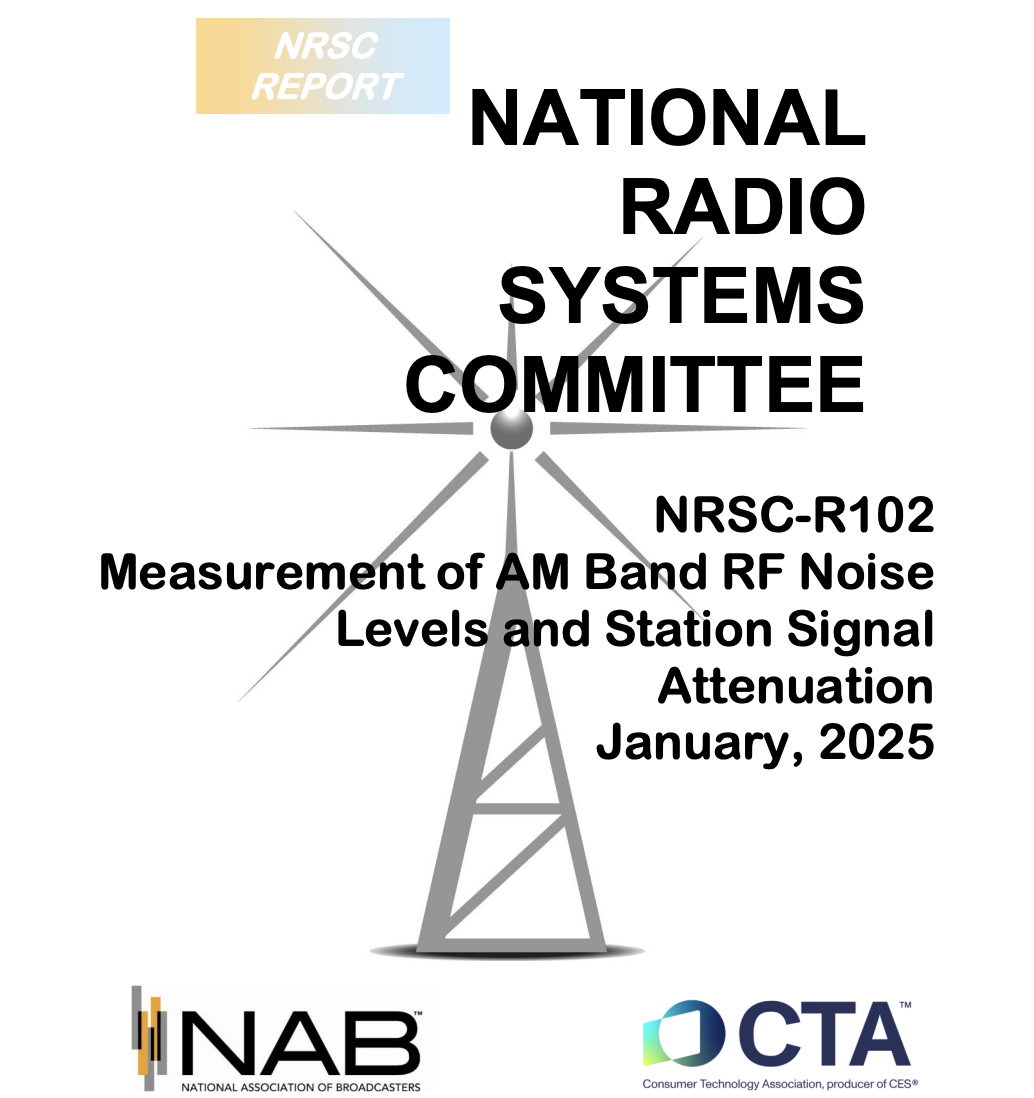
NRSC Studies RF Noise on Various Roadway Types (Radio World)

Radio World asked Cris Alexander to read the report and comment

The National Radio Systems Committee recently published the results of a study on AM band noise.

The report, principally authored by John Kean, is titled NRSC-R102, “Measurement of AM Band RF Noise Levels and Station Signal Attenuation.” It was released in January.

The study consisted of several measurement series conducted along roadways both in urban and rural areas, measuring the signal strength of three different Baltimore/Washington 50 kW AM stations as well as the RF noise on three different unoccupied AM band frequencies.

Measurements were made across five environments: rural, rural-suburban, suburban, urban and dense urban. The results were mostly as one would expect, but there were a few surprises. [Continue reading…]

Click here to download the NRSC PDF report.

Carlos’ Illustrated Radio Listening Report and Recording of Radio Nikkei 1 and 2 (March 3, 2025)

Many thanks to SWLing Post contributor and noted political cartoonist, Carlos Latuff, who shares illustrated radio listening report of recent Radio Nikkei 1 ad Radio Nikkei 2 broadcasts.


Recording:

Click here to view on YouTube.

Recording:

Click here to view on YouTube.

Blackout in Chile: A Reminder of Radio’s Role When All Else Fails

Many thanks to SWling Post contributor Carlos Latuff, who writes:

Good morning, Thomas. I just translated this article from Chilean radio station “Canal 95”, published on February 26. Original in Spanish here: https://www.canal95.cl/magazine/apagon-redes-sociales-rinden-tributo-radio-pila


After the blackout, social media pays tribute to battery-operated radios

Social media users highlighted the importance of battery-operated radios as the only reliable source of information in emergencies, while critics pointed to the fragility of the current system.

After a large blackout left much of Chile without electricity last Tuesday, millions of people were affected and left without communication. All due the fact that the telecommunications and internet antennas service completely collapsed.

In this scenario, and in the absence of real-time information, social media users began to highlight the importance of having battery-powered radios to access news in emergencies such as, for example, the decision to declare a curfew.

“Will we have to go back to copper wire telephones? Cell phones ‘died’ in the emergency. Explanations are useless in the face of a serious incident. Earthquake, tsunami, flood, or power outage like yesterday. Totally incommunicado. Only the battery-operated radio worked ,” remarked the renowned journalist and radio personality, Sergio Campos.

Many also recalled that this device has been key during earthquakes and other disasters in the country, although there was no shortage of jokes.

“Serious question: does everyone really have a battery-operated radio?” asked one user of the X platform. “It’s always good to have one. My mother-in-law has one and it’s super old, but it works. And the radio too,” joked comedian Luis Slimming.

Although some users admitted not having a functional radio at home, implying that they had not previously considered it necessary due to the outdated technology, other users reinforced the importance of having one of these reliable devices that allow them to stay in touch.

The work of radio stations that continued to operate during the emergency was also highlighted. There was no shortage of criticism of telephone companies and the widespread use of smartphones that do not have integrated FM radio.

“I want to give a round of applause to Chilean radio stations. We would still be going around in circles if it weren’t for the fact that they continued to broadcast and report on what was happening. Every Chilean home should have a battery-operated radio ,” wrote @satoruswft .

It remains to be noted that Chile has historically faced natural events that disrupt basic services, but the current dependence on the Internet and cell phones has created a gap in preparation for blackouts.

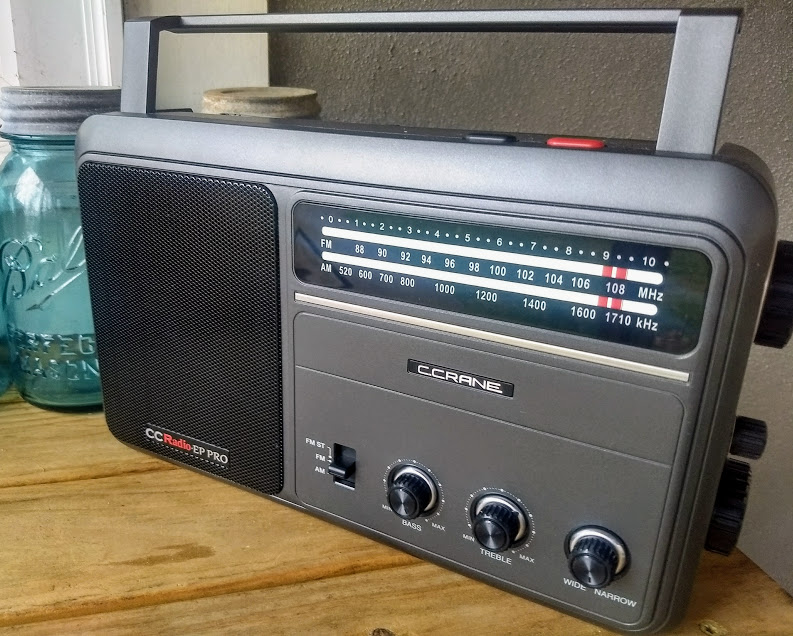
So, keep this in mind: a battery-powered radio is still a must-have in an emergency.