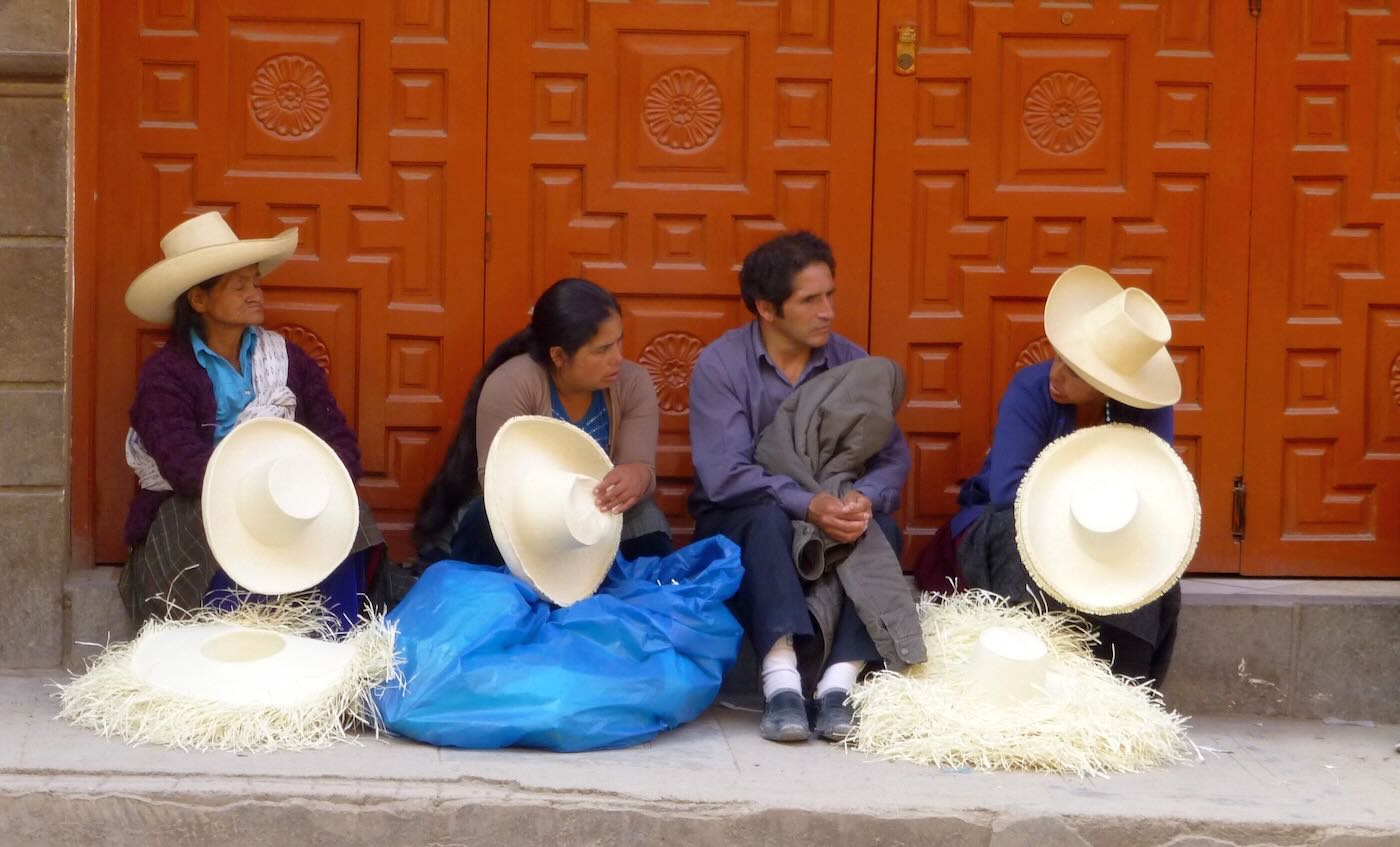
Author Archives: Thomas

Don Moore’s Photo Album: Chota, Peru

Don Moore’s Photo Album: Chota, Peru

by Don Moore

More of Don’s traveling DX stories can be found in his book Tales of a Vagabond DXer

For DXers of Latin American stations, the period from about 1978-1998 was the golden age of DXing Peru. Those years saw an explosion of shortwave broadcasting from small towns, especially in northern Peru. Most of the stations were unlicensed and few lasted long. I tell the complete story of the period in Tales of a Vagabond DXer. However, the book doesn’t have many pictures as that would have made it much more expensive to produce and to buy. Fortunately, this blog is a perfect place to share photographs.

In those days one of the biggest radio hotspots in Peru was the department of Cajamarca. Over one hundred stations broadcast on shortwave, however briefly, just from that department. Cajamarca is a special place to me because I visited the region in 1985 during the height of the radio boom and visited over a dozen stations in the towns of Chota, Bambamarca, Cutervo and Celendín and the city of Cajamarca.

Chota is the largest town in the central part of Cajamarca department and played an important role in the development of broadcasting in small provincial towns.  It’s about 140 kilometers north of Cajamarca but in between is cold barren Andean altiplano rising to over 4,000 meters elevation. In 1985 the bus ride took twelve hours and we encountered ice storms coming and going.
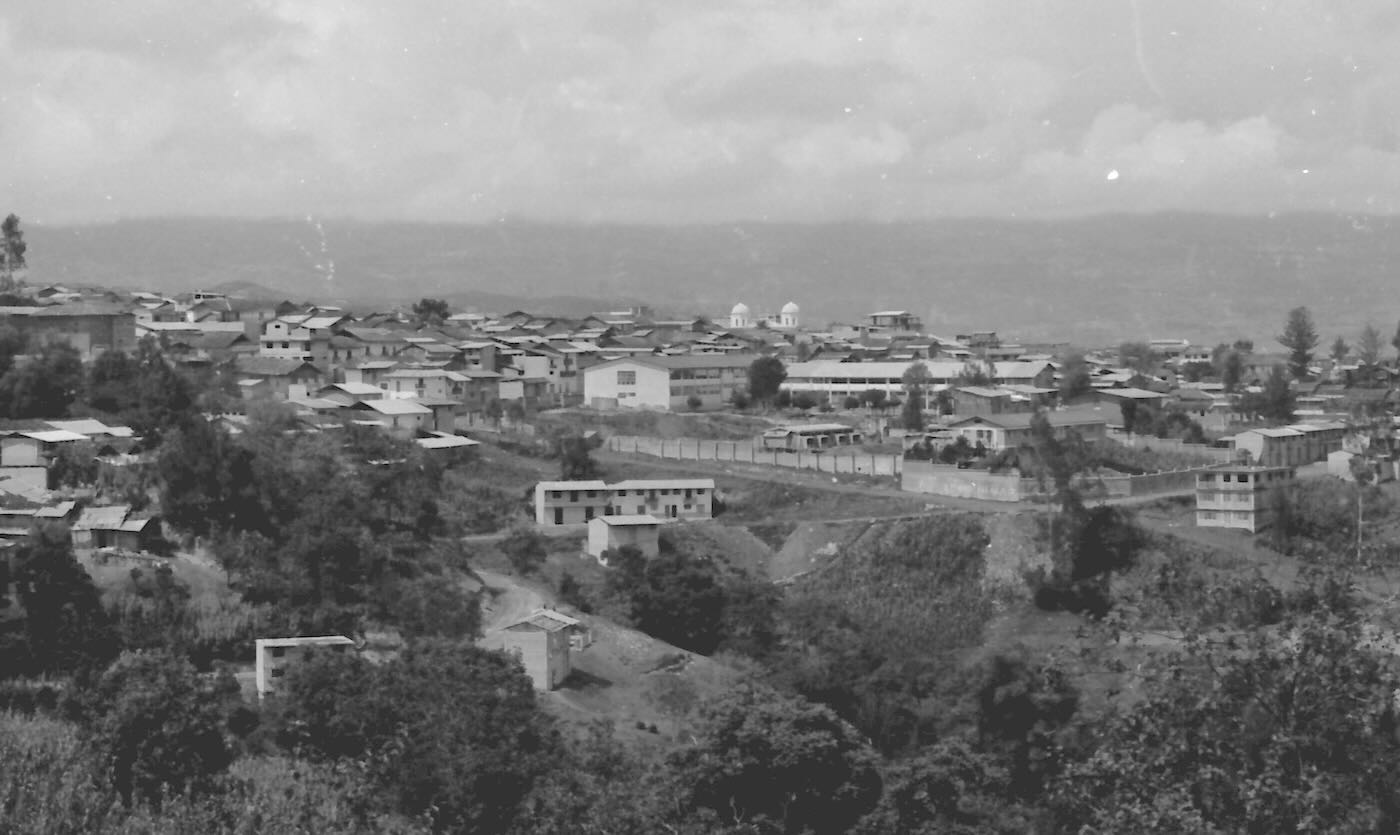
In 1985 Chota was a sleepy Andean town in a fertile river valley.
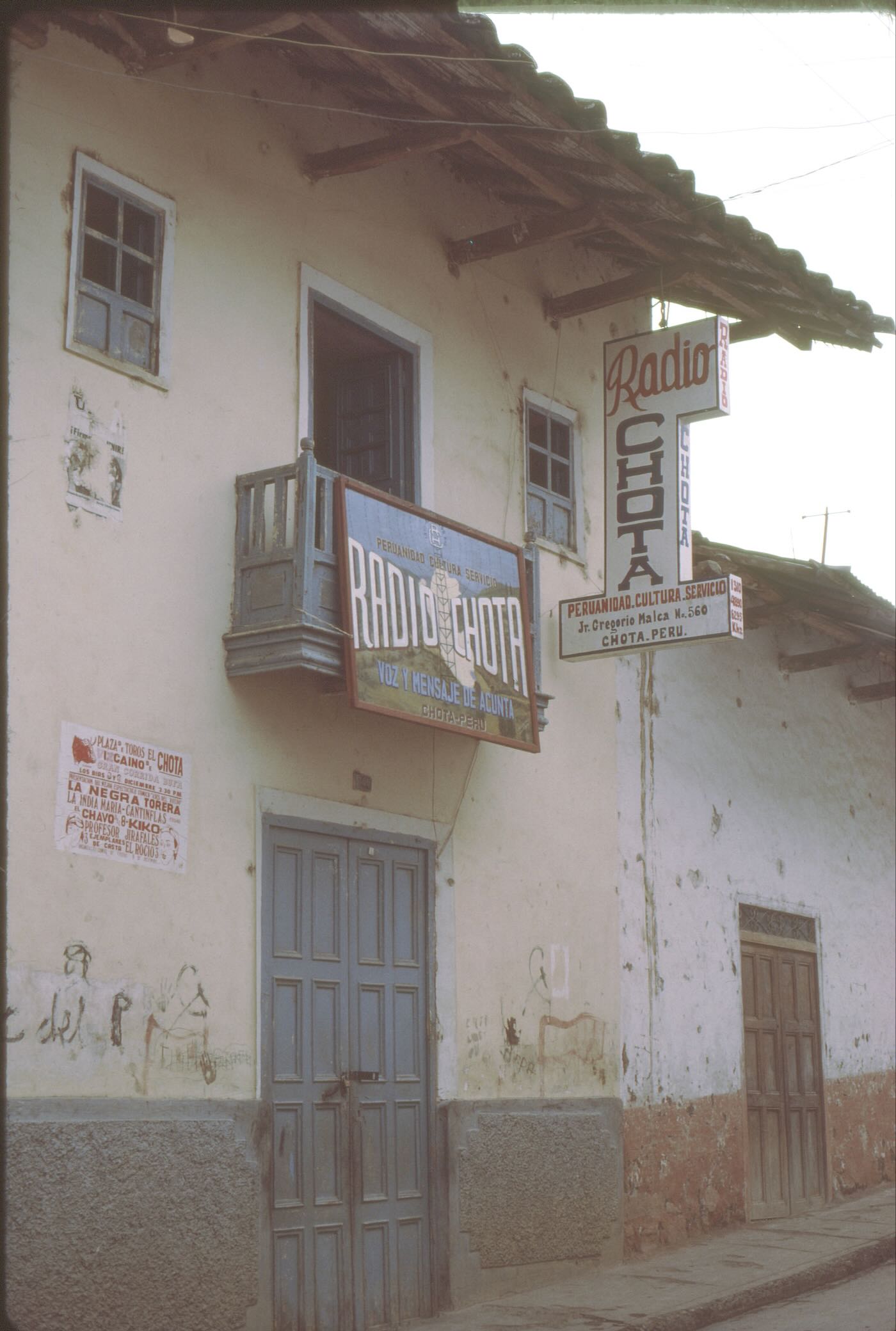
Radio Chota was already seven years old when I visited in March 1985. The station only had a medium wave license but also broadcast unlicensed on the out-of-band shortwave frequency of 6296 kHz where it was widely heard by DXers. Later they received a shortwave license and were assigned 4890 kHz but several years passed before they actually switched frequencies. Radio Chota was a success story and is still on the air today.  Most of the stations I visited in 1985 were not so lucky.
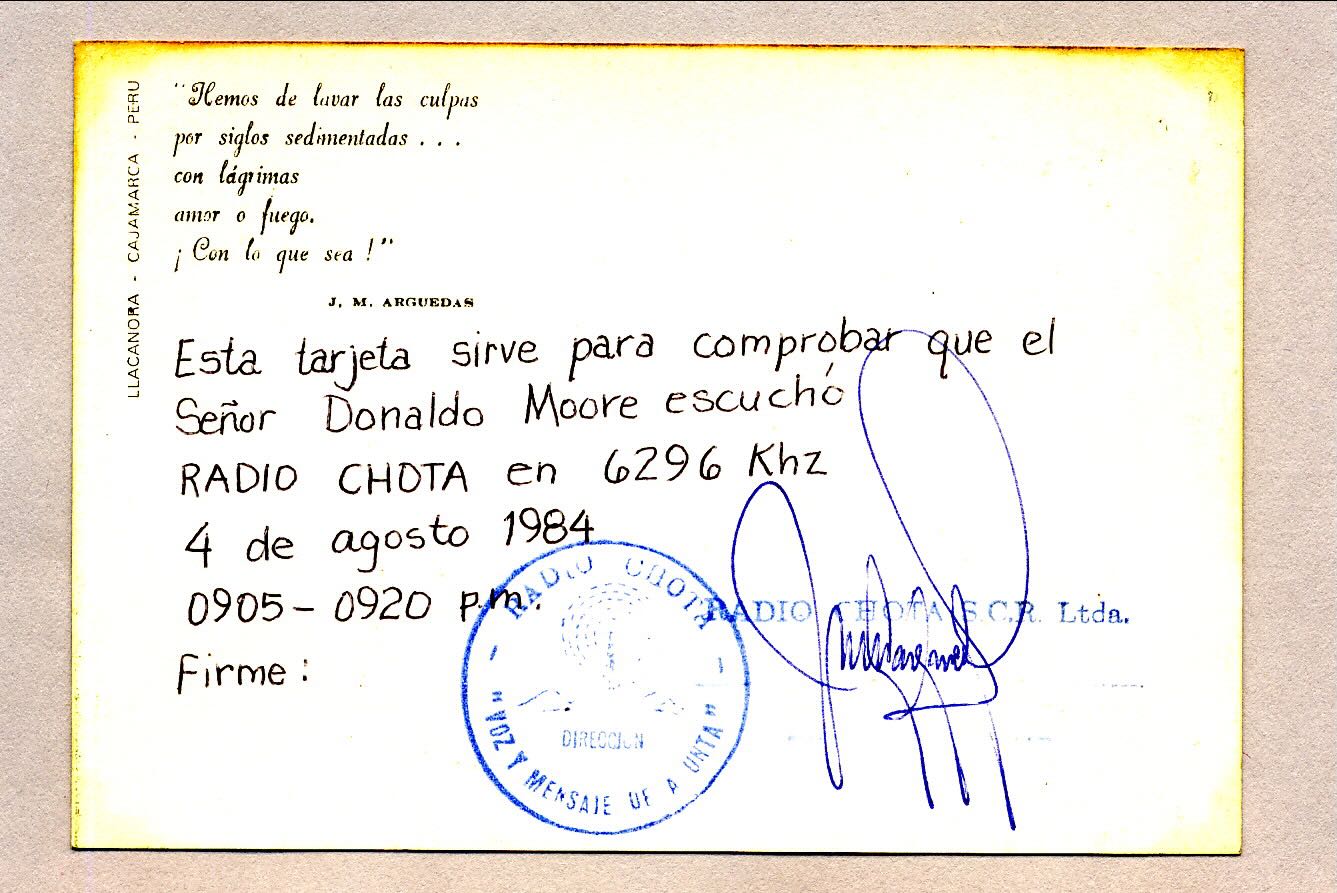
QSL collection of Don Moore … www.DonMooreDXer.com …

Radio Chota as heard on 6296 kHz in 1982 via On the Shortwaves:

Radio Chota as I heard it in Quito, Ecuador on 4890 kHz in 1997:
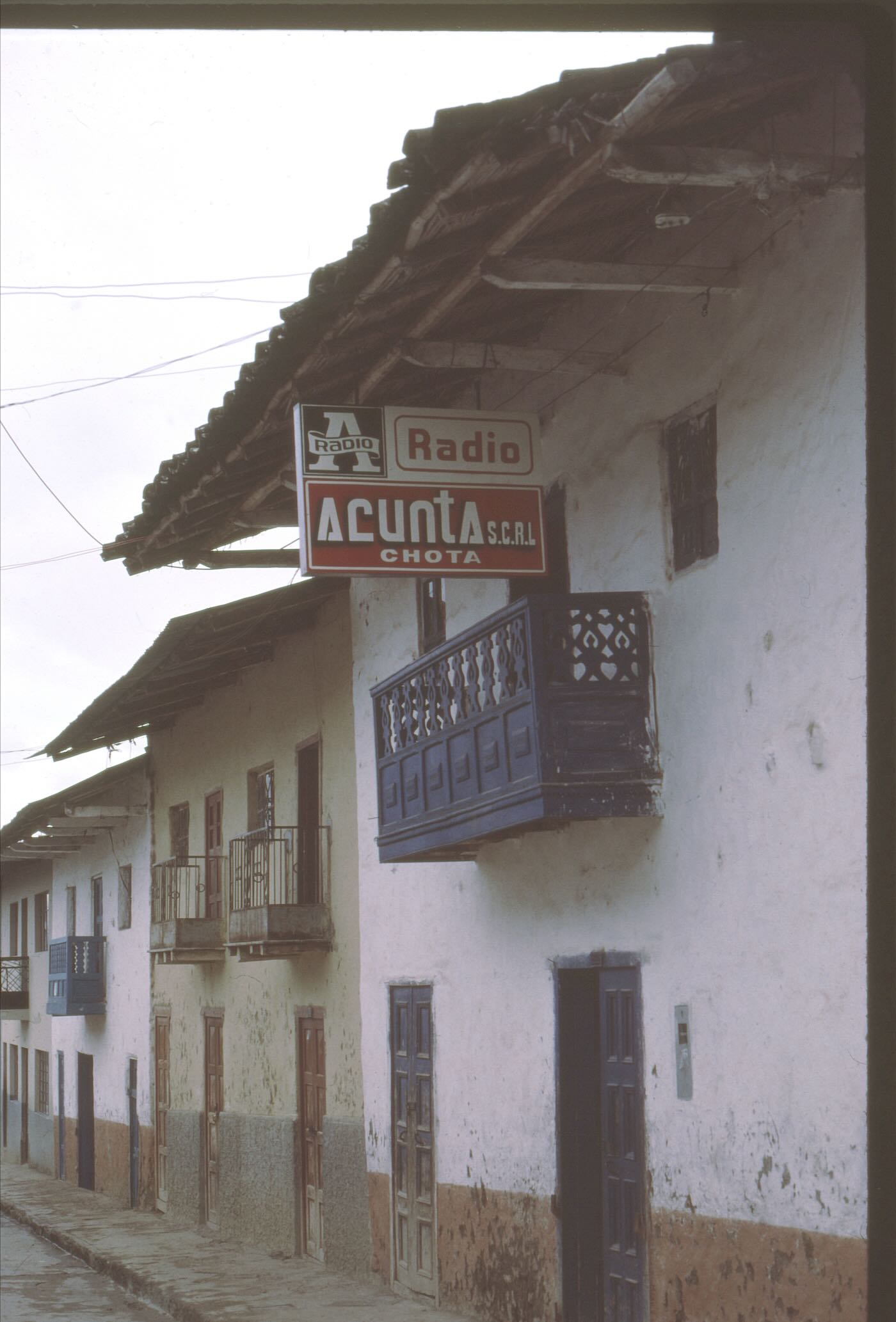
Radio Acunta was a more typical broadcaster of the period. The station broadcast irregularly in 1984 and 1985 with a homemade 100-watt transmitter. The station didn’t survive but the transmitter with its crystal-controlled frequency of 5800 kHz was a good starter set. Over the next several years DXers followed its movements around northern Peru as it was sold from one would-be station to another.
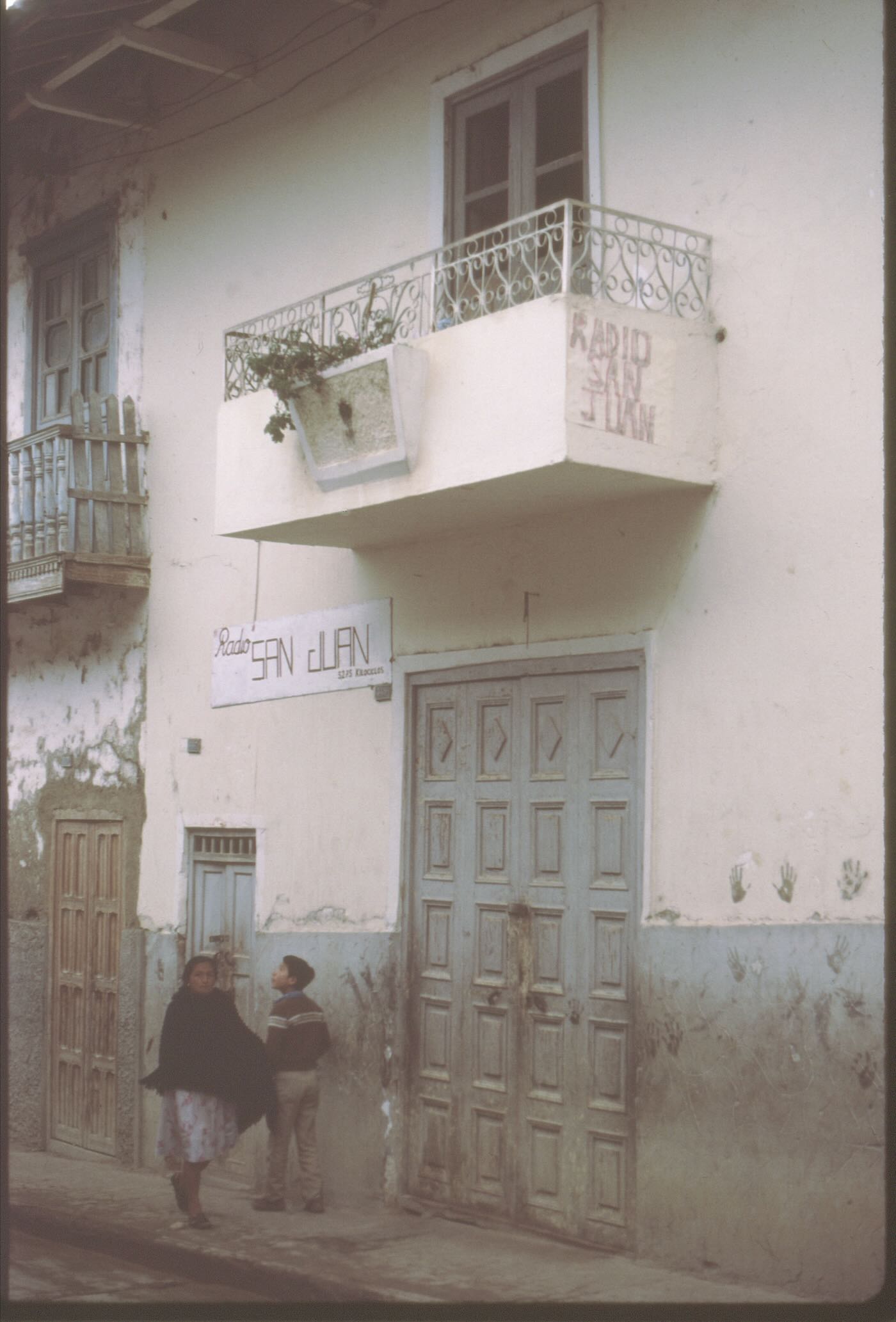
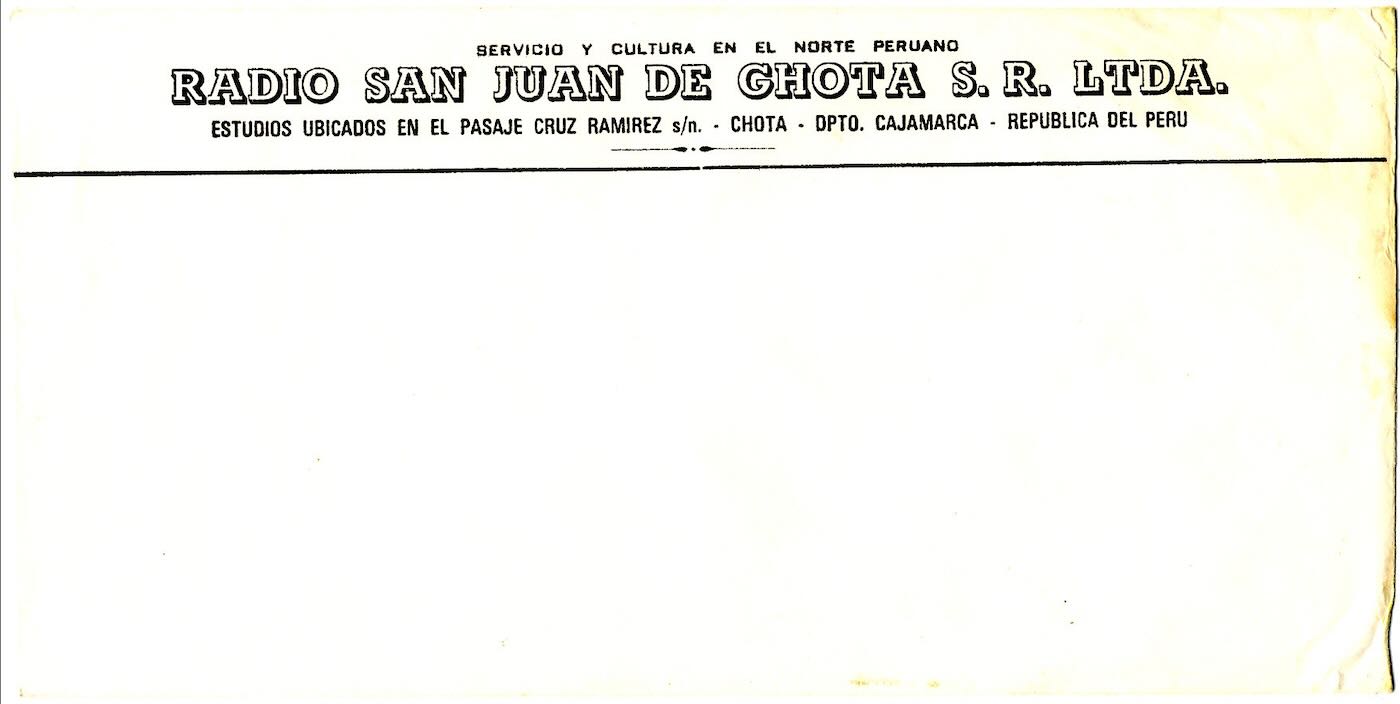
This picture with the homemade posterboard signs really captures the transient nature of broadcasting in rural Peru in the 1980s. Radio San Juan de Chota was on 5274 kHz for a few months in late 1984 and early 1985. I doubt they ever had permanent signs made. They did, however, have professionally printed envelopes.
Recording of Radio San Juan de Chota via On the Shortwaves:
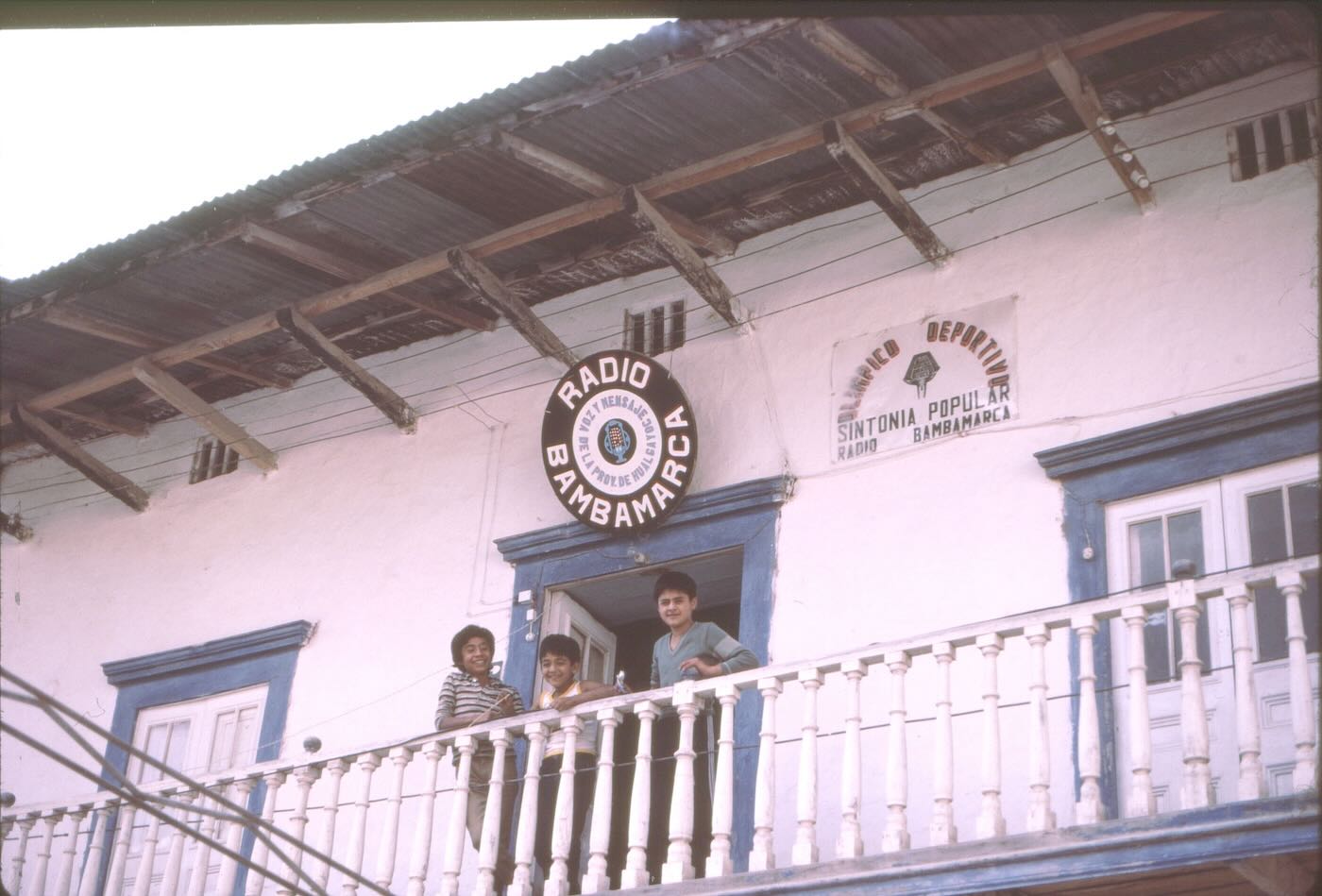
Bambamarca is a smaller farming town 20 kilometers south of Chota. It was also home to several shortwave stations over the years. Radio Bambamarca had a short appearance on 5657 kHz in the mid-1980s.

Return to Chota

I always expected to return to the Cajamarca area someday. Finally, in November and December 2017, I revisited all the places I had seen in 1985 and more while researching my historical travelogue Following Ghosts in Northern Peru. A few months later, in May 2018, I returned to the city of Cajamarca and Chota with my DX travel buddies, John Fisher and Karl Forth. Continue reading
HF Signal Enhancer for SDR: A Hands-On Build by Steve Allen (KZ4TN)

Many thanks to SWLing Post contributor Steve Allen (KZ4TN), who shares the following guest post:


SDR Signal Enhancer

by Steve Allen

I came across this HF Signal Enhancer for SDR on the RTL-SDR.com website. It was designed and built by Peter Parker, VK3YE from Melbourne, Australia. Below is the link to the video of the signal enhancer in action using an RTL-SDR V4 Software Designed Radio;

www.youtube.com/watch?v=W6OXc_wZTXU

It was very easy to see and listen to the improvement to the signal reception the signal enhancer made. Having been a life-long shortwave listener and current SDR user, I had to build one.

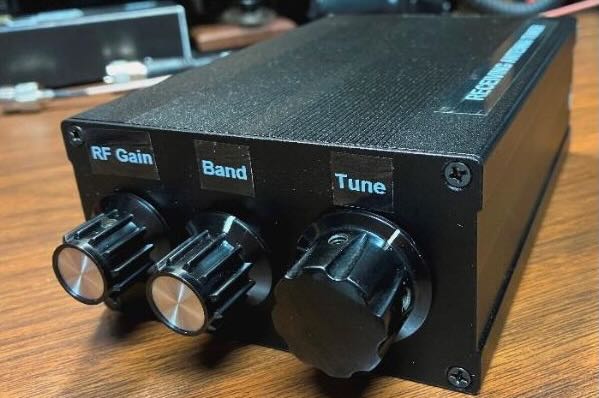
I did a screen capture of the schematic, re-drew it using MS Word, and built the bill of materials. In Peter’s original design he included a T-R relay so you could use the SDR along with a transmitter, which I opted to leave out. I had the passive components in my “junk box” but had to source the enclosure, controls, and antenna connectors. I have used these clam shell extruded enclosures with previous projects and love the build quality and the fact that they incorporate a slot in the sides which let me insert a sheet of PCB material on which I can do the assembly.

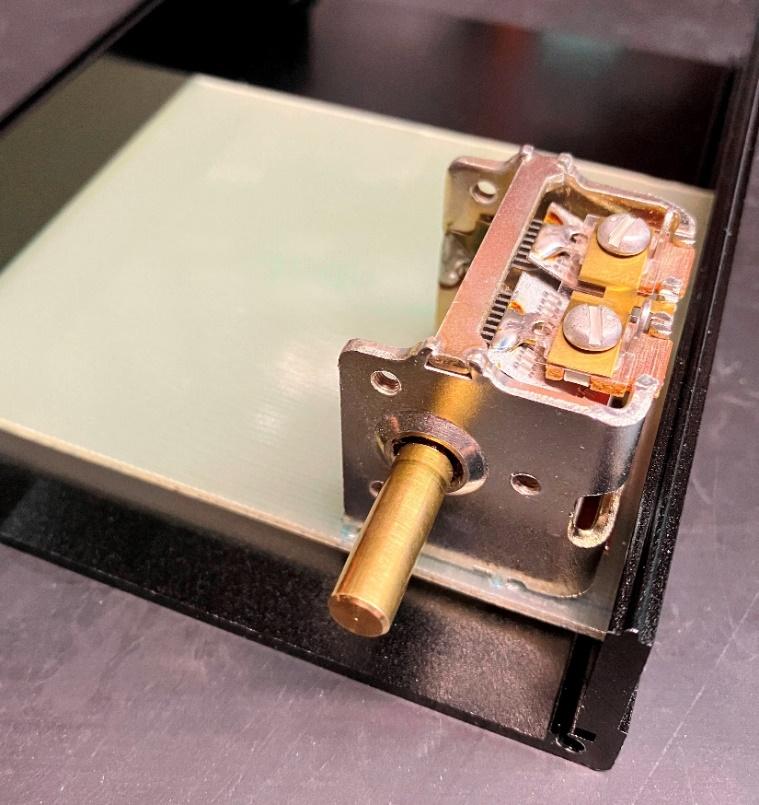
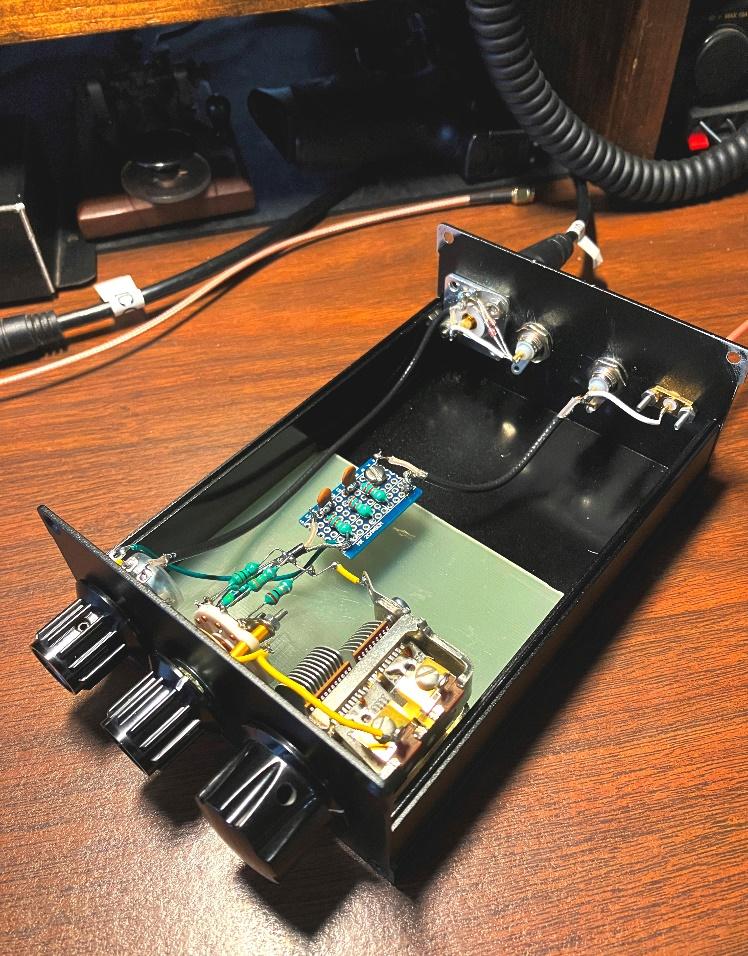
Referring to the schematic drawing in Peter’s video, you can see that the variable capacitor “floats” above ground, which is not the usual application for these devices. To do that I mounted the vari-cap on a piece of non-plated PCB material that I cut to the width of the enclosure and it fit nicely within the slot. The vari-cap had three pins on the side of the frame that allowed me to force fit it into three holes I drilled in the PCB material. I was very careful to drill the holes undersize and then slowly open them up until the vari-cap press fit on to the board. For good measure I ran UV curing adhesive down into each hole, letting it flow all the way through before I set it with a UV light source.

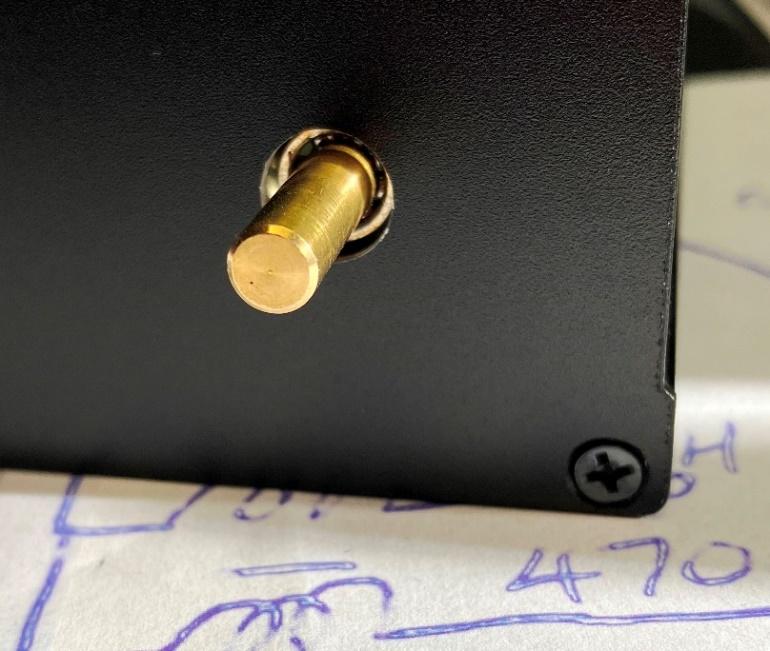
I then drilled an oversized hole in the front panel for the vari-cap shaft to pass through.

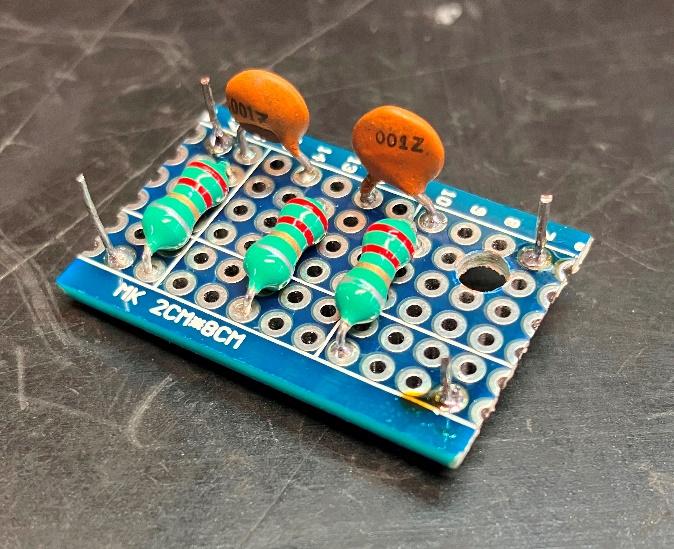
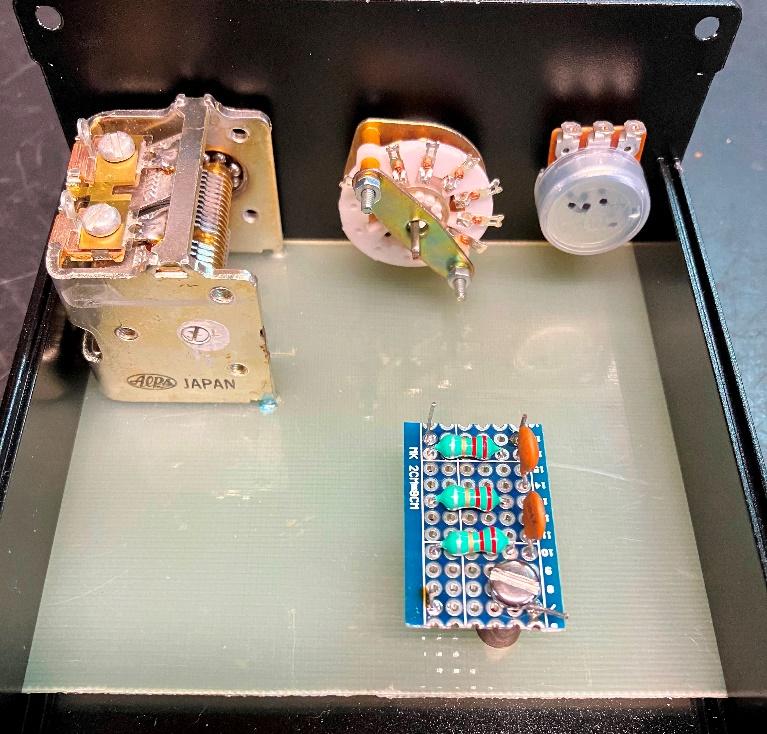
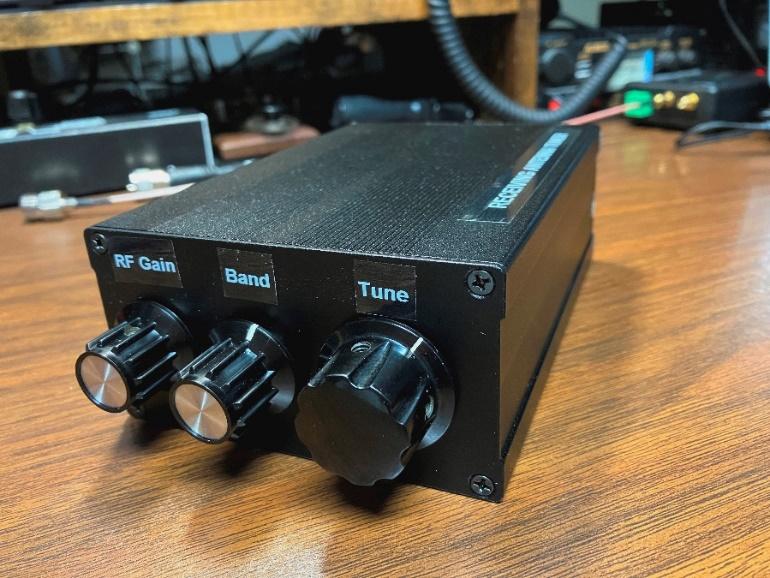
I then mounted the RF gain and band switch. The next step was the assembly of the AM broadcast filter. As SDRs can be overpowered by local AM radio stations Peter choose to include an internal band pass filter that is configured for around 3.5 MHz. The intent of this filter is to attenuate the signals below 3.5 MHz. Strong AM stations will still be heard but there is much less chance of them bleeding through on the higher frequencies.

I assembled the filter on a piece of perf board and connected the component leads on the bottom. I passed leads back up through the perf board for the signal path and ground. I mounted it on the main board with a standoff.

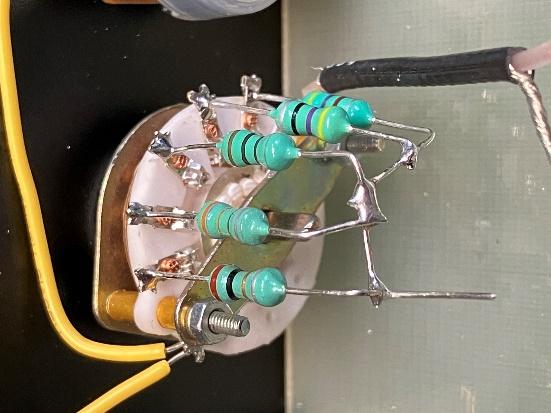
The next step was the wiring of the inductors to the rotary switch. Simple, and I tied them to the vari-cap frame.

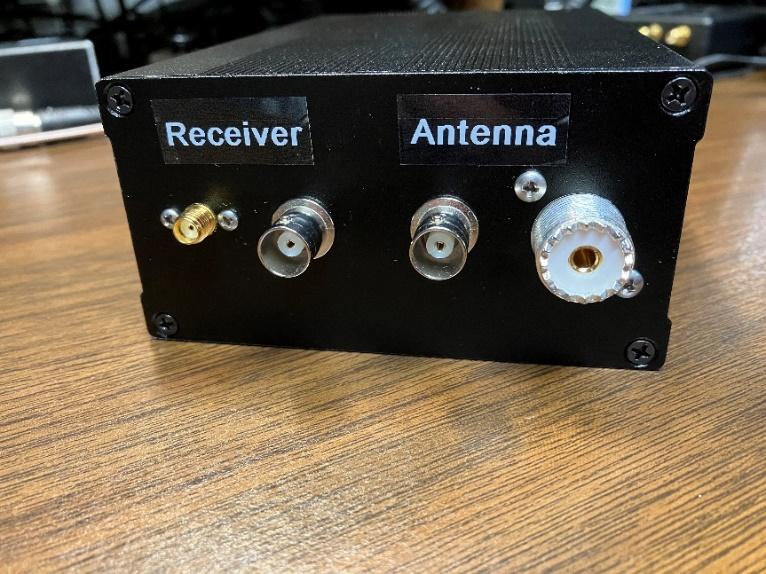
For the back panel I chose an SO-239 and a BNC for the antenna input, and for the radio connection an SMA and another BNC. I sanded off the coating on the enclosure at the antenna mounts as well as the four corners where the back panel screws into the top and bottom of the clam shell enclosure to provide good grounding of the enclosure. I wired the 1N4148 diodes on the antenna connectors, and attached the RG-174 coax. As Peter suggested, I grounded the long (relatively speaking) runs to and from the back panel with coax and grounded it at the back panel.

The last step was to apply a bit of epoxy adhesive to the fiberglass board and the slot it runs in to hold it in place. Once the epoxy set, I did the final wiring of the front and rear panel components. You can see how I sanded the corners of the back panel in the above photo.

I connected it to my inverted L antenna and an SDR Play RSP2 and gave it a test run. I like the fact that I can visually see the changes to the signal strength on the SDR software as well as audibly. It makes a noticeable improvement to the reception.

Thank you Peter. I enjoyed the build.

Steve Allen, KZ4TN

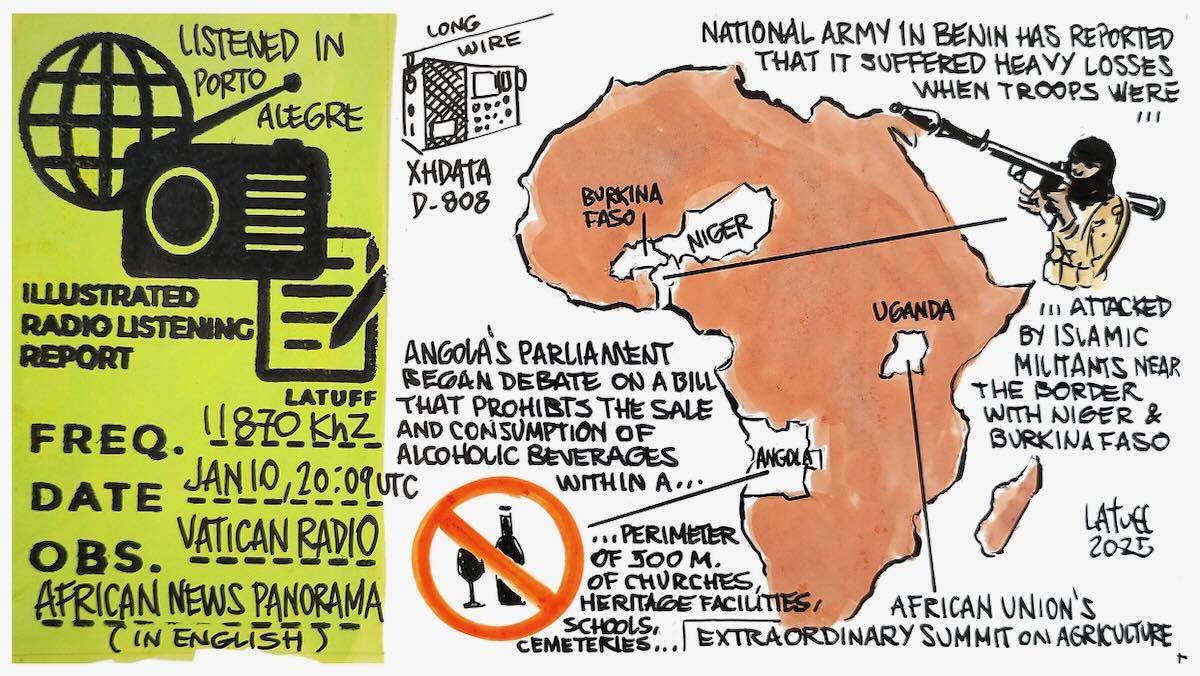
Carlos’ Illustrated Radio Listening Report and Recording of Vatican Radio (January 10, 2025)

Many thanks to SWLing Post contributor and noted political cartoonist, Carlos Latuff, who shares illustrated radio listening report of a recent broadcast of African News Panorama via Vatican Radio.


Carlos notes:

Vatican Radio’s African News Panorama, in English.
Angola parliament debates on banning the sale of alcoholic beverages in some places, African Union’s Extraordinary Summit on Agriculture in Uganda, Benin’s National Army attacked by Islamic militants. Listened in Porto Alegre.

Click here to view on YouTube.

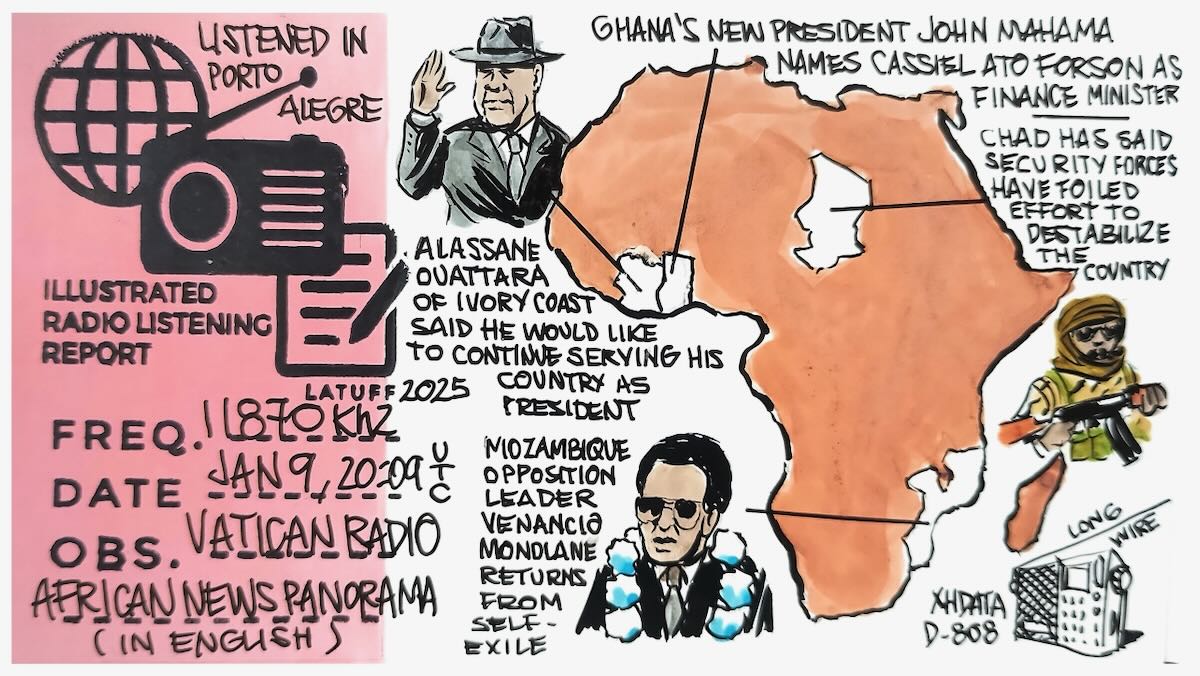
Carlos’ Illustrated Radio Listening Report and Recording of Vatican Radio (January 9, 2025)

Many thanks to SWLing Post contributor and noted political cartoonist, Carlos Latuff, who shares illustrated radio listening report of a recent Vatican Radio broadcast.


Carlos notes:

Vatican Radio’s African News Panorama, in English.
Ivory Coast’s Alassane Outtara would like to continue serving his country as president, Mozambique opposition leaders Venancio Minolane returns from self-exile, Ghana’s new president names finance minister, Chad foiled effort to destabilize the country. Listened in Porto Alegre, Brazil

Click here to view on YouTube.

Carlos’ Illustrated Radio Listening Report and Recording of Vatican Radio (January 8, 2025)

Many thanks to SWLing Post contributor and noted political cartoonist, Carlos Latuff, who shares illustrated radio listening report of a recent Vatican Radio broadcast.


Carlos notes:

Vatican Radio’s African News Panorama, in English.

The US has accused the Sudanese Rapid Response Forces of genocide, African-Americans in Ghana, Somalia talks with Egypt over the new African Union’s peacekeeping mission. Listened in Porto Alegre, Brazil.

Click here to view on YouTube.