Shortwave listening and everything radio including reviews, broadcasting, ham radio, field operation, DXing, maker kits, travel, emergency gear, events, and more
Many thanks to SWLing Post contributor, Dan Hawkins, who writes:
Air traffic bands on VHF is well-known.
Not so well-known are the shortwave (HF) communications networks that must be operated by transoceanic flights.
This is an ARINC station for San Francisco, California. I am located about 70 miles inland from this station. I assume ARINC is using a directional antenna system beamed westward toward the Pacific Ocean.
I recorded this video of an ARINC station late last night for my YouTube channel.
I enjoy monitoring air traffic on VHF and often forget that when I’m outside the range of an airport’s tower, I can still hop on HF and often hear international traffic. Thanks again!
Last week, I watched the Netflix movie, Spectral, and couldn’t help but notice a couple of radios on set.
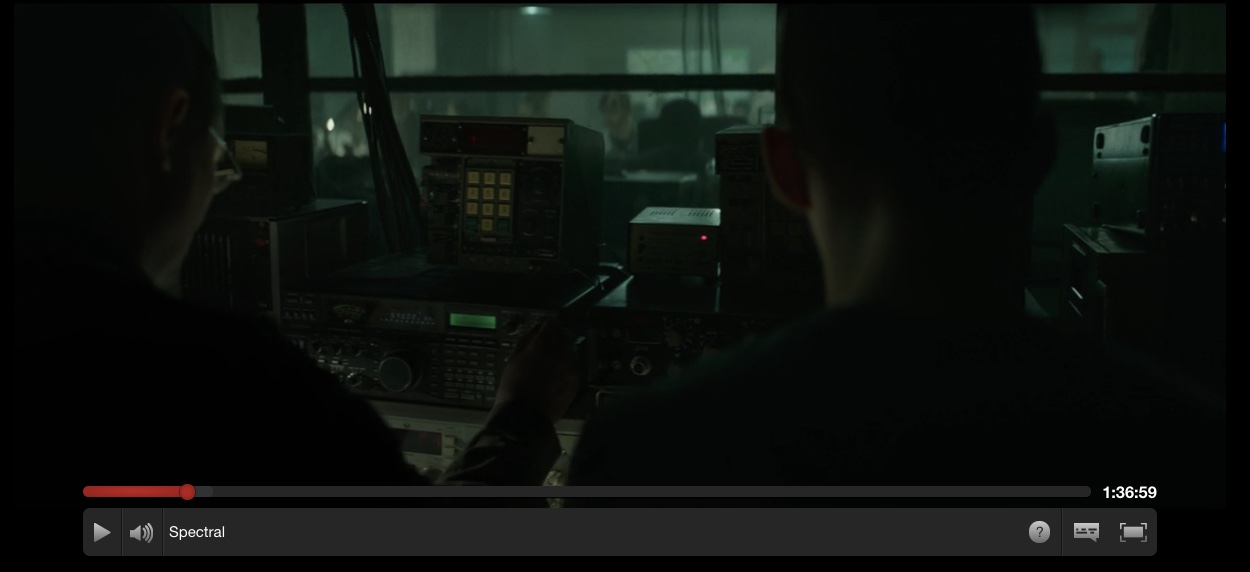
I spotted the first rig at the beginning of the film while the camera was panning a military communications center. It’s a dark screen shot, but I believe this may be a Kenwood TS-940S:
Click to enlarge.
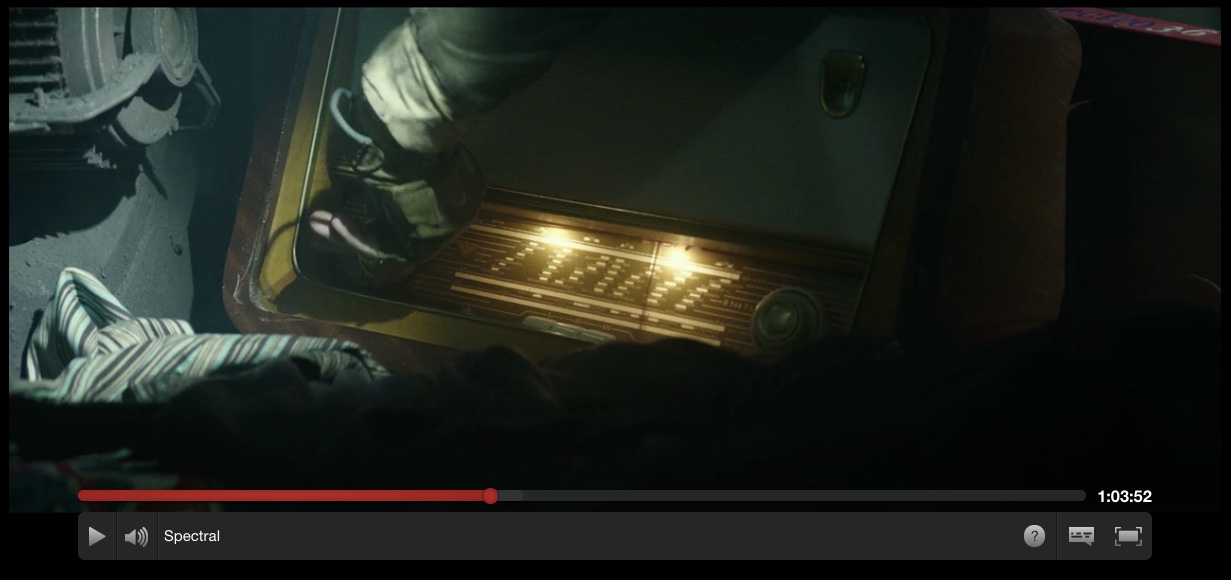
The second radio appeared to be a 1950s-60s era Grundig tabletop. Perhaps someone can identify the model?
Click to enlarge
I’ve noticed that many of the radios we’ve spotted in film and TV lately have been in Netflix original productions. I assume the art/set designers appreciate the radio aesthetic. I certainly do!
It was, to say the least, all fascinating. Even the expedition’s financing interested me.
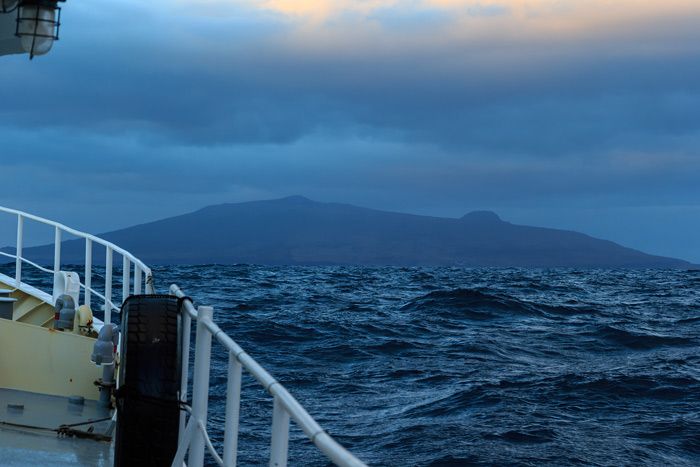
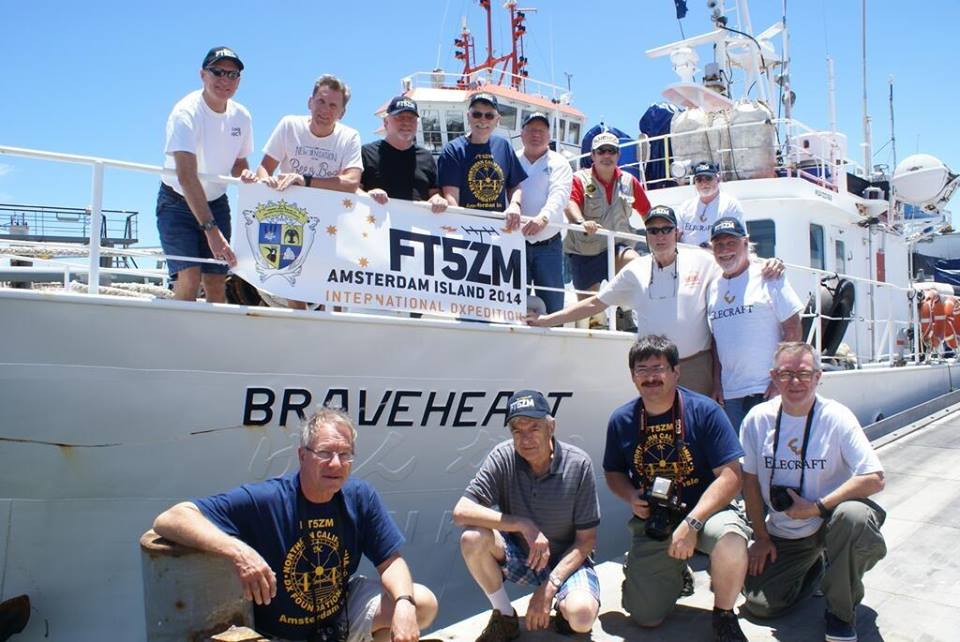
But I particularly found the logistics of the whole enterprise intriguing, such as the crew’s equipment choices in the form of emergency provisions, food, medical and camping supplies…Also fascinating, of course, was the description of the lengthy voyage to the island and back aboard the Braveheart.
The Braveheart and FT5ZM crew
I’ll never forget what the presenter, Bob (K4UEE) noted regarding the anticipated landing on the island. Here they were, he explained, heading to one of the most remote islands in the world, and its only inhabitants were twenty-seven French scientists with the TAAF (Terres australes et antarctiques françaises). The DXers had to spend several weeks there, and––especially considering the close quarters––worried they could find common ground with these dedicated and apparently very serious scientists, and were uncertain about whether the two diverse groups could get along during their stay.
Then, en route to the island, Bob and the DXers discovered this video produced by the Amsterdam Island scientists. It immediately settled their concerns:
Aw, whoever said serious scientists have to be serious all the time?
Bob said that after watching this video, the whole FT5ZM team knew they were in for a treat. And as it turns out, they were. Not only were the scientists a fun group who shared their sense of humor, but they also shared their enjoyment of rather superlative cuisine on that far-flung isle. It seems that French scientists don’t venture to a remote island without proper provisions…and a proper French chef!
I rediscovered this video several months later, and also unearthed a number of other “Happy” videos from the 2014 TAAF teams.
And so, for your Friday enjoyment, here are the rest of the videos, too:
If you live in North America and have an interest in becoming a ham radio operator, this is the weekend to check out what amateur radio is all about, and meet local radio enthusiasts.
“ARRL Field Day is the single most popular on-the-air event held annually in the US and Canada. On the fourth weekend of June of each year, more than 35,000 radio amateurs gather with their clubs, groups or simply with friends to operate from remote locations.
Field Day is a picnic, a camp out, practice for emergencies, an informal contest and, most of all, FUN!
It is a time where many aspects of Amateur Radio come together to highlight our many roles. While some will treat it as a contest, other groups use the opportunity to practice their emergency response capabilities. It is an excellent opportunity to demonstrate Amateur Radio to the organizations that Amateur Radio might serve in an emergency, as well as the general public. For many clubs, ARRL Field Day is one of the highlights of their annual calendar.
The contest part is simply to contact as many other stations as possible and to learn to operate our radio gear in abnormal situations and less than optimal conditions.”
Many Field Day sites have a GOTA (Get On The Air) station where non-licensed individuals are welcome to play radio. It’s a fantastic way to try your hand at transmitting with a little guidance and encouragement from the more experienced. Indeed, even if there is no GOTA station, you will often be invited to try out the mic.
This year, I’m joining the Québec Amateur Radio Club (Club Radio Amateur de Québec), for the second year in a row, and I’m looking forward to it very much!
Keep in mind that there are many shortwave listeners among the amateur radio community; indeed, many hams became interested in the hobby through SWLing.
Three quality options for streaming/download – Hi 1400 MB, Med 675 MB & Lo 250MB
Witnesses in order
1. DFAT (Foreign Affairs & Trade)
2. 52′ Gary Baker (ex-Broadcast Australia) and NH (ex-ABC/RA)
3. ABC
4. 2h22′ Graeme Dobell (ex-ABC/RA journalist & ABC Pacific correspondent) (By far the most interesting testimony, a tutorial in South Pacific geopolitics. Who knew the Australian Constitution refers to the S Pac in the External Affairs Powers area??!!)
I was tickled by Sen. Xenophon’s retort, “What, they don’t have ears?!” to ABCs assertion that letters of support (for HF b’casting) from the hobbyist fraternity were irrelevant. Sen. Xenophon could have added, “What, they don’t vote, pay taxes or are entitled to have a view of ABC?!”
A couple of you had trouble locating the submissions to the enquiry, they’re found here:
Many thanks to SWLing Post contributor, Bill Patalon, who shares the following story from The Smithsonian:
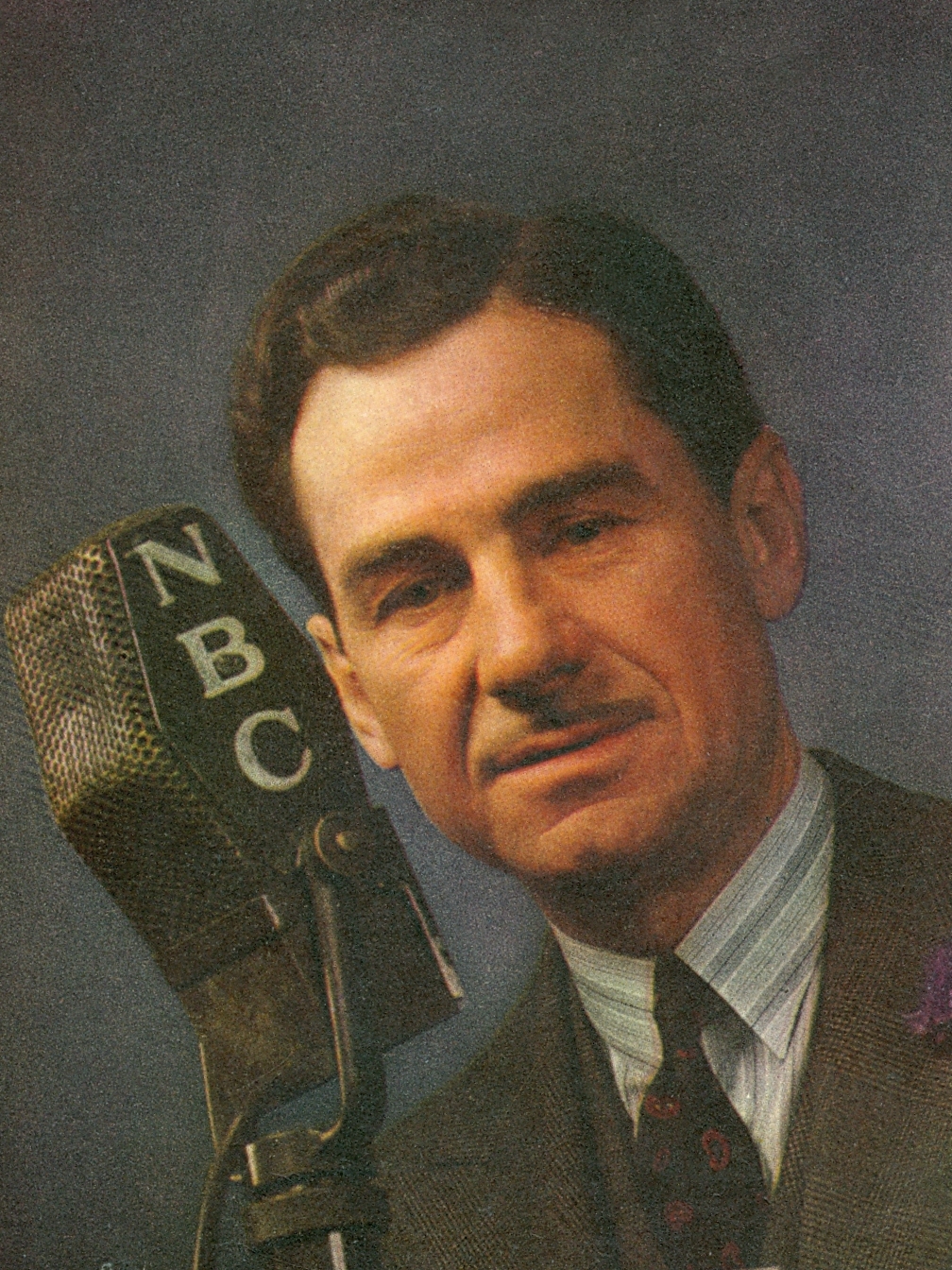
The Forgotten Man Who Transformed Journalism in America
Lowell Thomas was the first host of a TV broadcast news program, and adopted a number of other new technologies to make his mark in the 20th century
By the time Lowell Thomas turned 25, he’d already worked as a journalist, earned multiple degrees, and found a place on the faculty at Princeton University. But seizing a rare opportunity during World War I changed him from youthful overachiever to media heavyweight. During that conflict he met T.E. Lawrence, soon-to-be famous as “Lawrence of Arabia”—and Thomas played a large part in giving Lawrence that fame. The encounter launched Thomas into the media stratosphere with a groundbreaking multimedia presentation that captivated millions.
But while Lawrence’s work ended abruptly with his untimely death, Thomas went on to live a long, remarkable life. He traveled Europe, the Middle East, India, Afghanistan, New Guinea and Tibet, even meeting the Dalai Lama. He made fans out of Queen Elizabeth and Winston Churchill and led a prolific career in the news, making reports by print, radio, and TV—and reshaping them all into more formal, serious mediums.
Yet for a man with such a hyperbolic life, his legacy has been largely forgotten. Mitchell Stephens, a professor of journalism at New York University, set out to remedy that lapse in public memory with his new biography, The Voice of America: Lowell Thomas and the Invention of 20th-Century Journalism. Smithsonian.com talked with Stephens about his book, and why Thomas still matters today. […]