Category Archives: AM

I should be working, but instead I’m playing radio…

Ever had one of those days where you should be catching up on work, correspondence, and projects, but instead you find yourself outside, in front of a radio and just enjoying a long listening session?

Yeah, that’s me and that’s today.

How did it all happen?

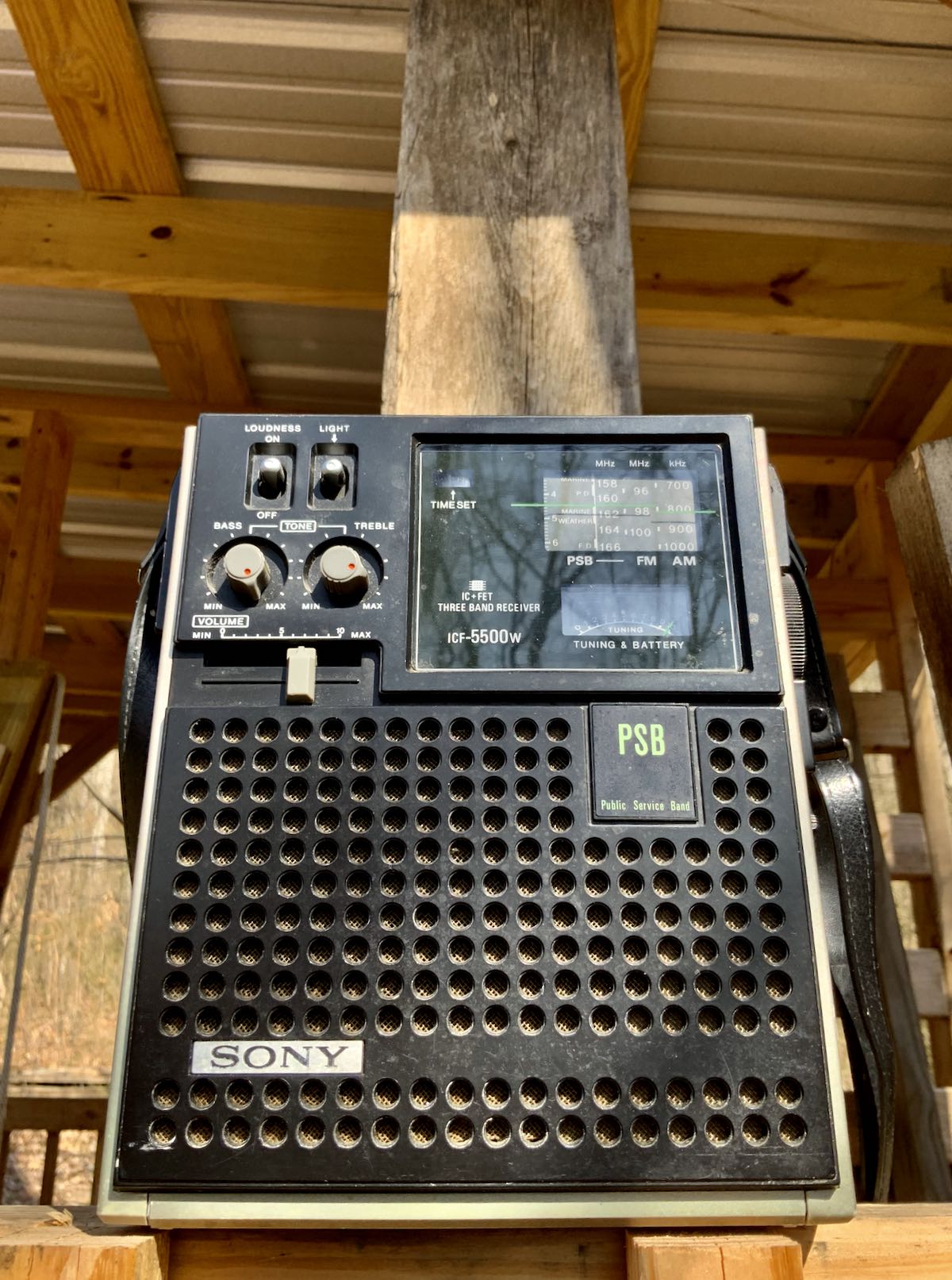
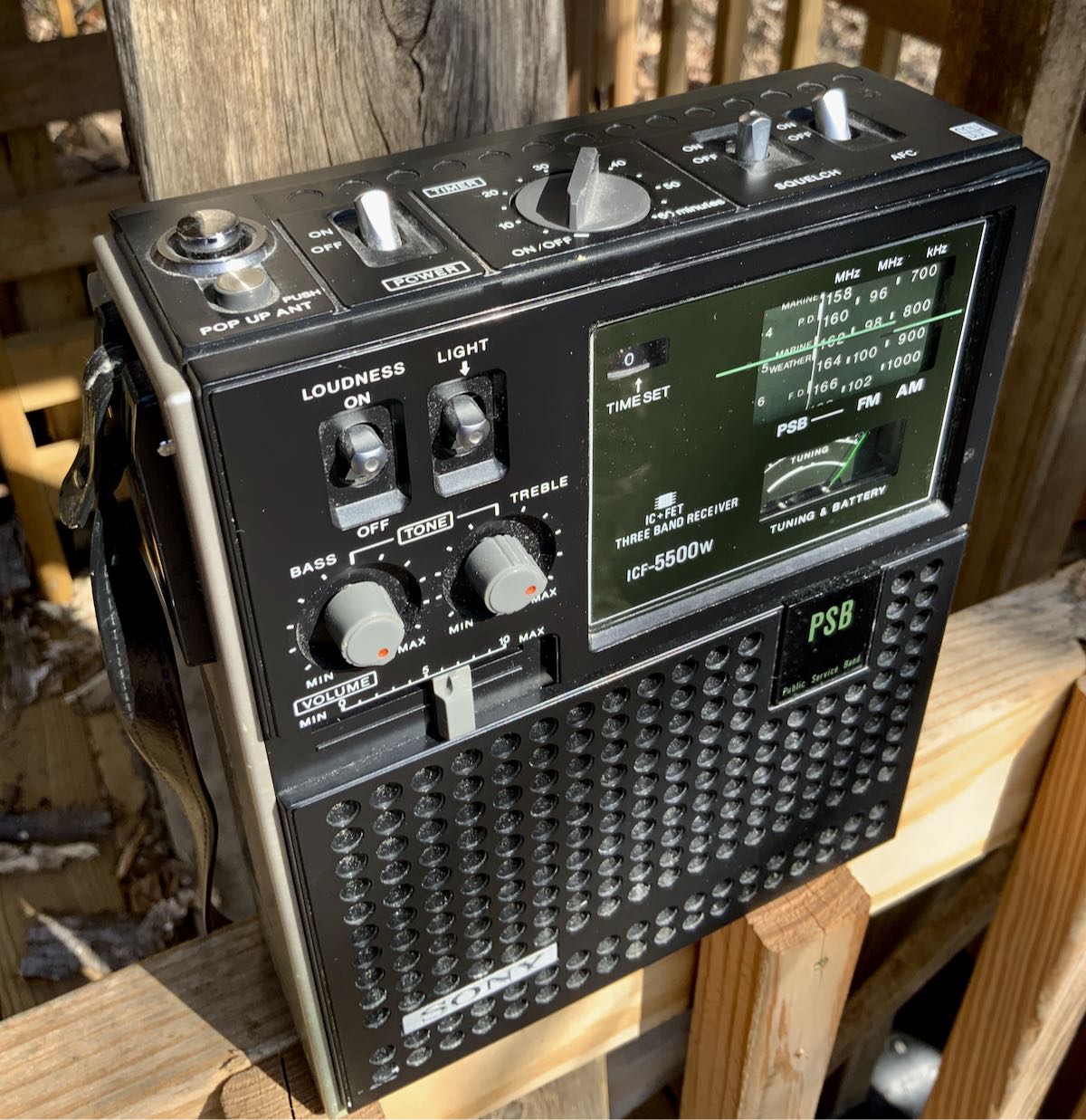
Well, this morning I dropped an RF adapter behind a shelf and, in the process, picked up my Sony ICF-5500W that was standing in the way. It felt a little light because it had no batteries inside.

Next thing I know, I’m loading the ‘5500W with C cells and heading outside.

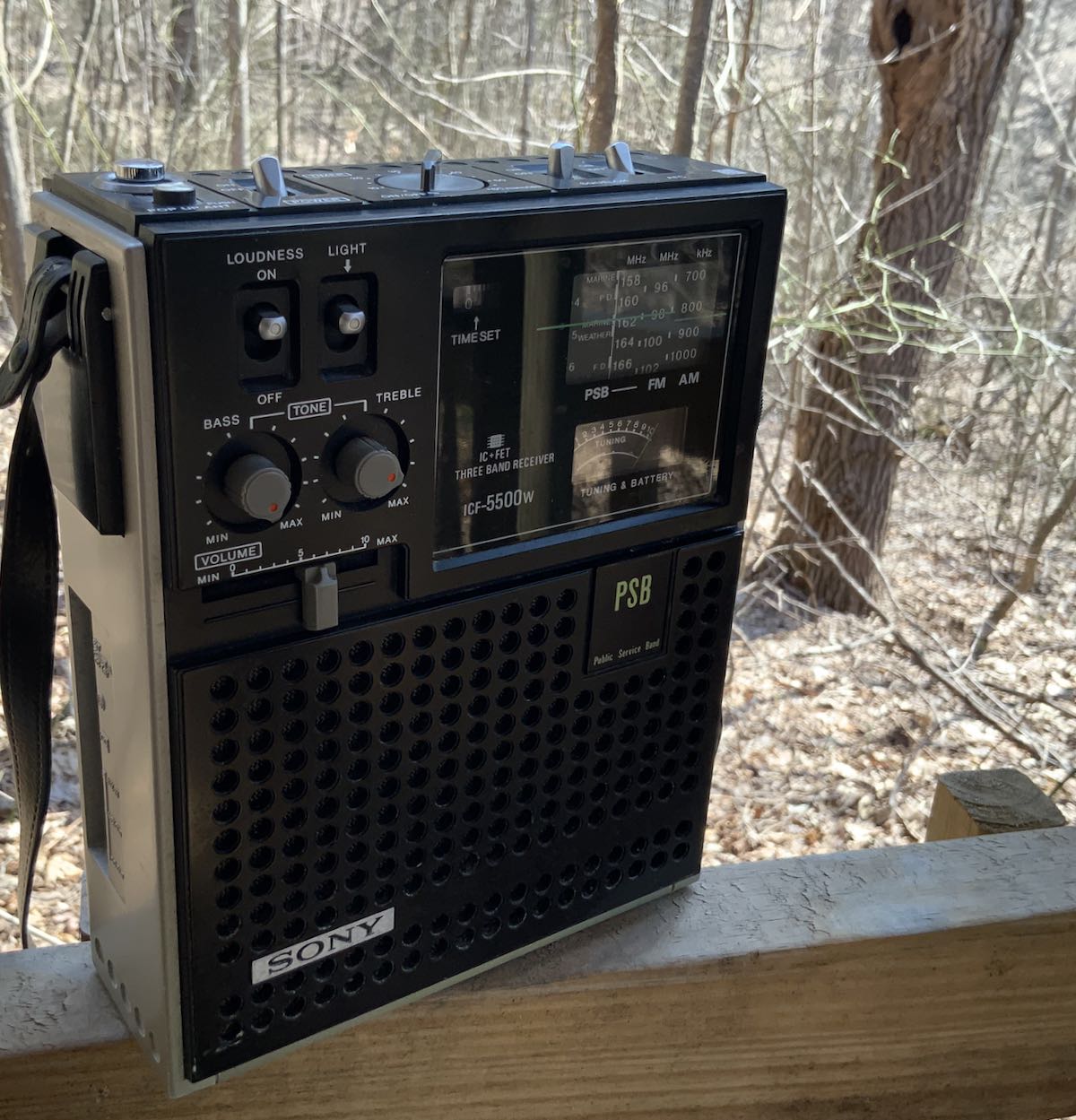
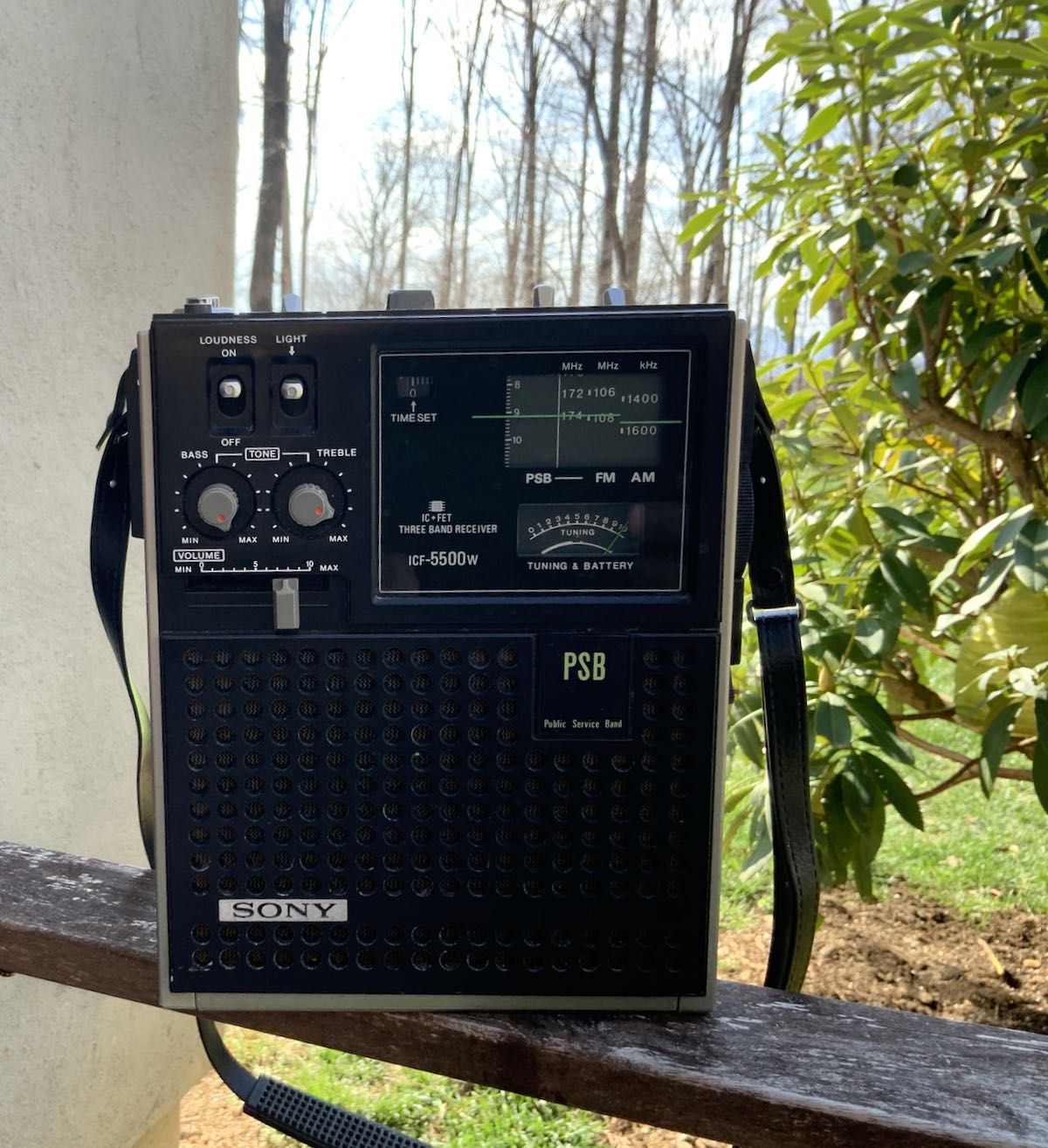
It’s a gorgeous day, so I thought it might not be a bad idea to energize the caps in this benchmark solid-state radio and check reception outdoors. Besides, it’s a perfect way to do my bit for Social DXing, right?

The ‘5500W was performing flawlessly, so the next thing I know I’ve passed a good hour band-scanning and doing a little daytime DXing.

The ‘500W is truly a remarkable mediumwave receiver and I love the fluid “tuning experience” of the analog dial.  The audio, of course, is brilliant and perhaps that’s why I can’t let go of it (nor the Panny RF-2200).

So am I the only one playing radio today instead of doing work–? Tell me it ain’t so!  Please comment!

Radio Waves: Digitizing Pakistan, BBC MW Closures, Lowe HF-250 Review, and BBC News suspends 450 job cuts

Radio Waves:  Stories Making Waves in the World of Radio

Because I keep my ear to the waves, as well as receive many tips from others who do the same, I find myself privy to radio-related stories that might interest SWLing Post readers.  To that end: Welcome to the SWLing Post’sRadio Waves, a collection of links to interesting stories making waves in the world of radio. Enjoy!

Many thanks to SWLing Post contributors Alan, Mike, and Dave Zantow for the following tips:


Government to fully digitize Radio Pakistan (Radio Pakistan)

The incumbent government, under its vision of introducing modern trends and technology in different sectors, has planned to fully digitize the state-owned Radio Pakistan.

This information has been revealed in official documents during the ongoing week-long national workshop on Digital Radio Migration policy of Radio Pakistan at Pakistan Broadcasting Academy, Islamabad.

The digitization will bring about a revolution in the field of broadcasting in the country, and will capture the audience at home and abroad including South Asia and Central Asia and the Middle East through quality news, current affairs and programs.

Under the plan, the biggest 1000-Kilowatt DRM Medium-wave transmitting station of Radio Pakistan will be set up at Fort Monroe hill station in Dera Ghazi Khan district in South Punjab at an estimated cost of three billion rupees.

It will be the first ever most powerful but digital transmitter of Radio Pakistan that is to be established in center of the country as part of Phase-II of Digital Radio Migration policy and it will help cover the entire population of Pakistan with crystal clear and noise-free waves.

The project has already been approved by the federal cabinet while the Punjab government has been asked to acquire land for the said purpose.

Under Phase-II of DRM plan, five DRM+FM transmitters of 10-kilowatt each will be installed in Islamabad, Lahore, Karachi, Faisalabad and Multan in the existing Radio Stations.

Besides, eight DRM+FM transmitters of five kilowatt each will be installed in Quetta, Peshawar, Gilgit, Skardu, Gwadar, Mirpur (Azad Kashmir), Khairpur and Narowal in the existing radio stations.

The phase-II of the plan would be accomplished in three years with an overall estimated cost of 3,153 million rupees.

And under Phase-III of the plan, four DRM medium wave transmitters of 100-kilowatt each will be installed in Lahore, Skardu, Quetta and Peshawar for strategic purposes.[]

BBC Radio to close more medium wave transmitters (Radio Today)

The BBC says it is closing a further 18 medium wave transmitters across England, Scotland and Wales in the next stage of its plan to cut costs.

Services being closed range from BBC Radio Solent’s two AM frequencies on the South Coast to BBC Radio Scotland’s service in Aberdeen.

Six more BBC Local Radio services will no longer be transmitted on AM – they are Three Counties Radio (630 and 1161 kHz), BBC Radio Merseyside (1485 KHz), BBC Radio Newcastle (1458 KHz), BBC Radio Solent and BBC Radio Solent (for Dorset) 999 and 1359 KHz, BBC Radio Cornwall (630 and 657 kHz) and BBC Radio York (666 and 1260 KHz).

Kieran Clifton, Director, BBC Distribution & Business Development explains: “The majority of radio listening in the UK – including to the BBC – is now digital, and digital listening is continuing to grow.

“This change was planned as long ago as 2011, but we have taken a measured approach to implement it to ensure that as many of you as possible have already moved on to other ways of receiving the services before we make this change. We know that the changes will impact some of you, and that’s why we’re speaking about the plans again now. We want to make sure that people listening to these transmissions will be able to use other methods to hear the same programmes.”[]

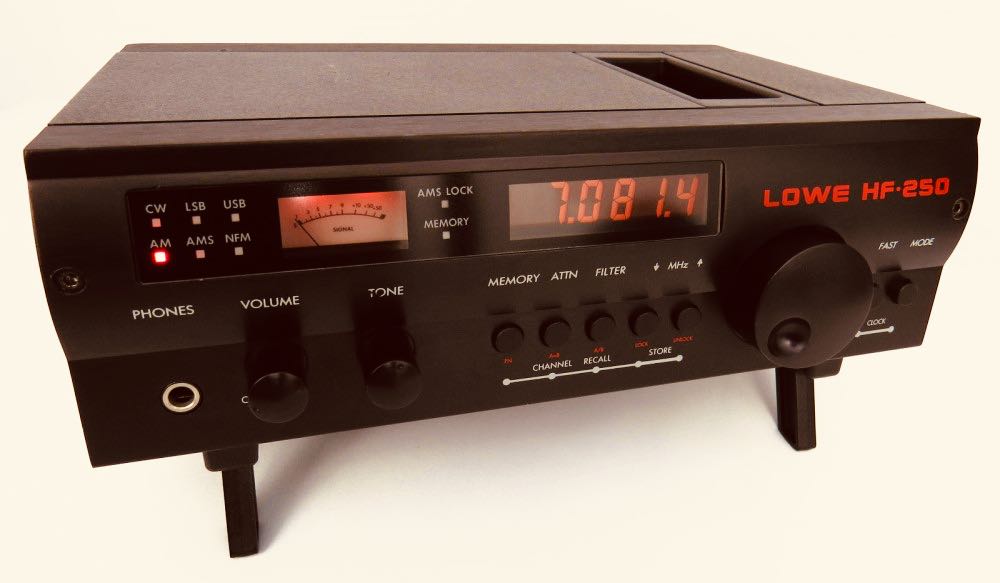
Dave’s review of the Lowe HF-250 (N9EWO)

[…]As far as audio quality goes, it’s extremely difficult to beat the Lowe HF-250. Mind you it has it’s share of “bug-a-boos” as well.

In our view it has held up much better in it’s old age vs. the AOR AR7030. Properly operating and in decent condition samples are fairly rare on the used market now (even more so in North America). Most owners know what the receiver is and hang on to them. But once a great while one does show up on the used market. Click here to read the full review.

BBC News suspends 450 job cuts to ensure Covid-19 coverage (BBC News)

BBC News has suspended plans to cut 450 jobs as it faces the demands of covering the coronavirus pandemic.

The job losses were announced in January and were part of a plan to complete a £80m savings target by 2022.

Outlets due to be hit include BBC Two’s Newsnight, BBC Radio 5 Live and the World Service’s World Update programme.

Director general Tony Hall gave staff the news on Wednesday, a week after the broadcaster delayed the end of the free TV licence scheme for all over-75s.

Lord Hall said “we’re suspending the consultation on those saving plans”.

He told staff: “We’ve got to get on with doing the job that you’re doing really brilliantly.

“It would be inappropriate. We haven’t got the resource to plough ahead with those plans at the moment, so we’ll come back to that at some point.

“But for the moment we just want to make sure you are supported and you’ve got the resources to do the job that you and your colleagues are doing amazingly.”[]


Do you enjoy the SWLing Post?

Please consider supporting us via Patreon or our Coffee Fund!

Your support makes articles like this one possible. Thank you!

With no Internet at home, PA school district uses AM radio to reach students

Check out the following story and video from WTAE Pittsburgh:

BUTLER, Pa. —As the coronavirus shutdown continues, the is going back to an old technology to help kids from falling more behind than they already are.

AM radio is making a comeback.

“We were trying to figure out how to create some normalcy for all of our students,” said Superintendent Brian White, “and we thought what better way than grabbing onto AM radio?”

White says he got the idea from a conversation with his father, also an educator, as they were setting up ways to communicate.

White says several students in the geographically large district don’t have access to the internet.

“When he was talking about that, I thought why aren’t we doing this for all of our students, that would be great. But let’s go to radio instead,” White said.

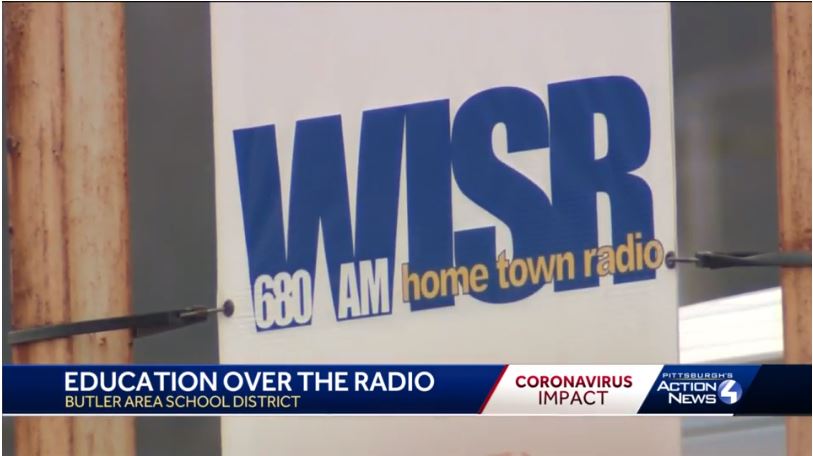
Elementary and secondary school teachers record lessons the night before and send them in. Then, 680 AM WISR in Butler broadcasts the lessons. Secondary students get their lessons at 9 a.m. and elementary students at 9:30 a.m.

“I thought the idea was great. It kind of takes you back in a way to think about the days of fireside chats,” said Hope Hull, the principal at Connoquenessing Elementary School.

Hull says she thinks this exercise improves listening skills for students. She added that her teachers are excited to put these lessons together.

White says there are plans in motion to get more students laptops and Wi-Fi capability.

Click here to read the full story and watch the WTAE video.

Radio Waves: Keeping Car Radios, Moon Bounce, Voyager 2, and ABC Delays Plan

Radio Waves:  Stories Making Waves in the World of Radio

Because I keep my ear to the waves, as well as receive many tips from others who do the same, I find myself privy to radio-related stories that might interest SWLing Post readers.  To that end: Welcome to the SWLing Post’sRadio Waves, a collection of links to interesting stories making waves in the world of radio. Enjoy!

Many thanks to SWLing Post contributors Benn, Tony, and Michael Bird for the following tips:

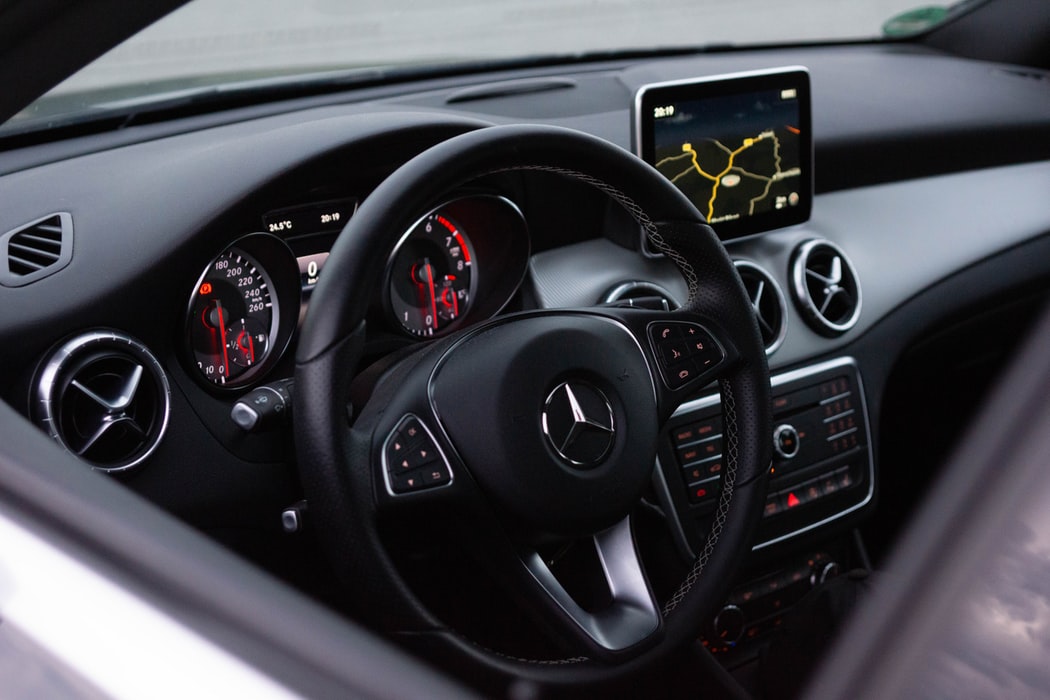
Opinion: Automakers, don’t remove radios from the dashboard (The Detroit News)

Make no mistake about it: The renaissance of electric vehicle manufacturing has been one of the most significant blessings of innovation in the 21st century. The continued production and voluntary adoption of electric vehicles have made the United States a greener and cleaner nation. However, while EV makers continue working to bring the U.S. forward environmentally, they need to ensure their design methods do not have a negative impact on one of the country’s most crucial national security apparatuses.

As the former administrator of the Federal Emergency Management Agency (FEMA) that oversaw the operations of over 220 declared disasters, I am concerned about what I’ve seen from automakers removing AM radios from vehicles — an action that will make Americans less safe in emergency situations.

Interference between the broadcast reception and the electric motors of certain cars, principally electric vehicles, is the reasoning behind some companies’ decision to eliminate the radio from car dashboards. However, scrapping radio rather than making the signals compatible can severely harm the federal government’s disaster relief efforts.

Federal law mandates that FEMA always possess the capabilities to deliver messages to the American people. To this end, FEMA has spent tens of million dollars and counting perfecting the Primary Entry Point (PEP) stations — consisting mostly of AM stations, but some FM ones as well — that connect to The National Public Warning System.[]

Australia’s first ever moon bounce remembered as a feat that shocked industry experts (ABC News)

You probably haven’t heard of Ray Naughton’s feat of science — not many people have. But 55 years ago, the quiet electronics store owner from Birchip, in western Victoria, successfully completed Australia’s first ever moon bounce.

The amateur radio fanatic had spent most of his time alone in a paddock, tinkering away on a 250-metre wide, 30-metre tall antenna capable of bouncing a radio signal off the moon and back again.

Mr Naughton was driven by news that astronauts would soon be walking across its surface.

When that day came, on July 20 1969, Mr Naughton used his antenna to tune into conversations between astronauts and NASA.

A small group of locals watched on in wonder, realising for the first time what their private neighbour had been working on.[]

When Voyager 2 Calls Home, Earth Soon Won’t Be Able to Answer (NY Times)

NASA will spend 11 months upgrading the only piece of its Deep Space Network that can send commands to the probe, which has crossed into interstellar space.

Voyager 2 has been traveling through space for 43 years, and is now 13 billion miles from Earth. But every so often, something goes wrong.

At the end of January, for instance, the robotic probe executed a routine somersault to beam scientific data back to Earth when an error triggered a shutdown of some of its functions.

“Everybody was extremely worried about recovering the spacecraft,” said Suzanne Dodd, who is the Voyager project manager at NASA’s Jet Propulsion Laboratory in Pasadena, Calif.

The mission’s managers on our planet know what to do when such a fault occurs. Although it takes about a day and a half to talk to Voyager 2 at its current distance, they sent commands to restore its normal operations.

But starting on Monday for the next 11 months, they won’t be able to get word to the spry spacecraft in case something again goes wrong (although the probe can still stream data back to Earth). Upgrades and repairs are prompting NASA to take offline a key piece of space age equipment used to beam messages all around the solar system.[]

ABC forced to delay five-year plan and job cuts announcement (The Age)

The ABC has been forced to delay the release of its five-year blueprint – including job cuts – to prioritise its response to the coronavirus pandemic.

The national broadcaster was due to announce its long-term plan at the end of this month. A three-year funding freeze that took effect last July, stripping $84 million from ABC’s budget, will result in an estimated 200 redundancies.

In an email to staff, managing director David Anderson said, “I think you will agree with me when I say that the current situation with COVID-19 means our focus must be on the welfare of all of you and our role as a public broadcaster in providing the community with timely and credible information in this challenging time for our country.

“For this reason, I’m sure you will understand my decision to postpone the announcement until we are through this period … your patience and professionalism are, as always, greatly appreciated.”

Anderson told employees he would reveal his plan “as soon as we have returned to normal levels of activity”.[]


Do you enjoy the SWLing Post?

Please consider supporting us via Patreon or our Coffee Fund!

Your support makes articles like this one possible. Thank you!

Radio Waves: Birmingham Museum (BBRM), Si4730 Radio, Ham Radio at Camp Lejeune, and the Oakland A’s Leave Radio

Radio Waves:  Stories Making Waves in the World of Radio

Because I keep my ear to the waves, as well as receive many tips from others who do the same, I find myself privy to radio-related stories that might interest SWLing Post readers.  To that end: Welcome to the SWLing Post’sRadio Waves, a collection of links to interesting stories making waves in the world of radio. Enjoy!

Many thanks to SWLing Post contributors Pete Eaton and Bill Patalon for the following tips:


The Rich History of Birmingham’s Black Radio Museum (Birmingham Times)

The Birmingham Black Radio Museum (BBRM) began as a project for Bob Friedman in 1992 to commemorate the first 50 years of a single radio station, 1400 WJLD-AM, and it grew to chronicle black radio in the Magic City.

After moving to Birmingham from his native New York City, N.Y., in 1987, Friedman worked at WJLD, where he started a 1950s vocal-group harmony show in April 1989 and later began a Saturday morning talk show, “Sound Off.” About two and a half years into his 22-year tenure at WJLD, he asked to produce a retrospective about the station’s first half century.

“I put together a pamphlet [about the station] and got people to buy ad space in it,” he recalled. “I also had a Saturday morning show, so I could promote it.”

Friedman, BBRM Founder and Director, recorded interviews with on-air personalities, including Ed “Johnny Jive” McClure, Jesse Champion Sr., and Lewis White.

“I started learning about this unbelievable history of black radio in Birmingham,” Friedman said. “And that sent me on a track, so that even though I left WJLD in 2011, I had already incorporated the BBRM.”

The museum, largely based online at www.bbrm.org, tells of stations that include WJLD, WENN, WAGG, WSGN, and Bessemer’s WBCO. Personalities include but are not limited to legends Dr. Shelley Stewart, Paul “Tall Paul” White, Willie McKinstry, the Rev. Dr. Erskine Faush, and Roy Wood Sr. The physical home is inside the Alabama Jazz Hall of Fame in the Carver Theater, which is currently closed for repairs.[]

All Band Radio Uses Arduino and SI4730 (Hackaday)

It is getting harder and harder to tell homemade projects from commercial ones. A good case in point is [Mirko’s] all band radio which you can see in the video below the break. On the outside, it has a good looking case. On the inside, it uses a Si4730 radio which has excellent performance that would be hard to get with discrete components.

The chip contains two RF strips with AGC, built-in converters to go from analog to digital and back and also has a DSP onboard. The chip will do FM 64 to 108 MHz and can demodulate AM signals ranging from 153 kHz to 279 kHz, 520 kHz to 1.71 MHz, and 2.3 MHz to 26.1 MHz. It can even read RDS and RBDS for station information. The output can be digital (in several formats) or analog.

The radio takes serial (I2C) commands, and the Arduino converts the user interface so that you can control it. The chip comes in several flavors, each with slightly different features. For example, the Si4731 and Si4735 have the RDS/RBDS decoder, and the shortwave mode is available on Si4734 and Si4735.[]

Fitting 19th Century technology into 21st Century warfighting (DVIDS)

CAMP LEJEUNE, N.C. (Feb. 7, 2020)— U.S. Marines with Information Group, II Marine Expeditionary Force (II MIG) participated in a HAM Amateur Radio General Licensing Course as part of the group’s High Frequency Auxiliary Initiative on base, Jan. 27-31, 2020.

The course, taught by members of the Brightleaf Amateur Radio Club, out of Greenville, N.C., helps Marines learn the principles of high frequency radio operations as a contingency against a peer-to-peer adversary in real-world operations.

Throughout the duration of the course, Marines learned HAM radio frequency and propagation theory, frequency band allocation, conventional and field-expedient antenna theory in addition to HAM radio operations and control.

U.S. Marine Corps Col. Jordan Walzer, commanding officer of II MIG, created the High Frequency Auxiliary Initiative after recognizing the need for utilizing more options in a combat environment. He wanted the Marines to familiarize themselves with older technology to ensure their lethality in any situation.

“Embracing technology is great but overreliance leaves us vulnerable,” Walzer said. “In a peer-to-peer conflict, our space-based capabilities will be attacked. The next war will look less like ‘Saving Private Ryan’ and a lot more like ‘Ghost Fleet’.”

Contrary to Saving Private Ryan, which was fought utilizing traditional land-based maneuver warfare, Ghost Fleet is a book set in the near future and includes the addition of space and cyber warfare.

So wars of the past were fought in the air, on land and at sea, whereas future wars will likely include the addition of space warfare, explained Walzer. U.S. forces need to create a cohesion of modern technology and analog throwbacks to mitigate hackers and drones.

HAM radios make effective alternate communication because they do not rely on satellites or internet, but instead, radio waves. They can travel directly or indirectly, along the ground or by bouncing the radio waves off of the ionosphere or troposphere layers of the atmosphere to communicate.

“Right now, our adversaries are aggressively pursuing counter-space weapons to target our satellites and ground stations,” Walzer said. “If our satellites get knocked out, what do we do then? [High Frequency] radio has been around for well over a century and is still used today. Why? Because it’s a reliable, low-cost alternative to satellite communications. With the right training and education, a Marine with a radio and some slash wire can communicate over-the-horizon for long distances, even between continents.”

HAM radios, also known as amateur radios, are communication devices created in the late 1800s. Depending how much an individual is willing to spend on equipment, someone can talk to others across town or across the world, all without the need for an internet connection. Although most people use HAM radios as a hobby, II MIG views them as potential lifelines in a highly contested environment.

There are three courses taught on HAM radios by the Brightleaf Amateur Radio Club. The entry level class is called the technicians course, which gives people frequency privileges in very high frequency (VHF) and ultra-high frequency (UHF) bands and some privileges in the high frequency range. A frequency privilege is just another meaning for permission to use a specific frequency. The HAM Amateur Radio General Licensing Course is the intermediate level course, which allows spectrum privileges on almost all spectrums that the government gives amateur radio operators. The expert class license, also called Extra Class, gives users full privilege on any frequencies allocated to HAM radios.

“I think the course was very informative,” said Sgt. Matthew Griffith, an intelligence surveillance reconnaissance systems engineer with 2nd Radio Battalion, II MIG. “It’s good to learn the things that make our equipment work. In my area of this field we use the equipment but don’t [always] know how the equipment works on the inside, which sometimes makes it harder to troubleshoot if a problem arises. Leaving the course with this knowledge will be invaluable for my Marines and me in the future.”

Dave Wood, the president of the Brightleaf Amateur Radio Club and instructor of the course, plans to conduct the first expert level course in the future after enough Marines have graduated from the intermediate course. The club plans to host the next entry level course during the summer of 2020 and train more Marines.

“The volunteers who make up our High Frequency Auxiliary are absolutely vital to us building a world-class capability,” Walzer said. “We’re drastically improving our skill by pairing experts with Marines who have a passion for HAM radio. They may not wear the uniform, but they’re American patriots serving our country in a different way.”

Whether the next conflict is fought in air, on land, at sea, or in space, one thing is clear; Marines will adapt to face those threats whether it is with the technology of today or equipment of the past.[]

Oakland Athletics off the radio waves in the Bay Area, commit to A’s Cast stream (The Mercury News)

The Oakland Athletics will not broadcast games over radio

The Oakland Athletics, who have led a nomadic existence on the Bay Area airwaves, pulled the plug on radio Tuesday, announcing that games will be available only online.

The A’s could have returned to KTRB, the station they teamed with just before the start of last season after an ugly split with 95.7 The Game, but instead chose to expand their use of a streaming service called TuneIn. The team launched A’s Cast on the service last season

Though the method of delivery is different, the voices are not. Ken Korach will return for his 25th season in the broadcast booth alongside Vince Cotroneo. (The team will continue to carry Spanish-language broadcasts on KIQI AND KATD.)

“There’s going to be some frustration because it’s something new,” said Cotroneo, who will mark his 15th season with the A’s. “It involves an education, downloading, and an additional step in what they are accustomed to basically their entire lives. Hopefully, it’s not difficult to get the product.”

The A’s say they are betting on a more tech-savvy generation. They planned to pursue an all-digital approach last season before the KTRB deal emerged . KTRB was the team’s 12th radio home since its arrival in 1968, and the fifth since 2000.[]


Do you enjoy the SWLing Post?

Please consider supporting us via Patreon or our Coffee Fund!

Your support makes articles like this one possible. Thank you!

KKOH 780 kHz off the air tonight

Many thanks to SWLing Post contributor, Paul Walker, who writes:

If you know any DXers out in western US… pass the word:

Saturday night/Sunday Morning, at 12 AM Pacific KKOH 780 will be off the air for about 6 hours to do some maintenance.

Thanks to Chief Engineer Daniel Appellof for letting me know well ahead of time so I can pass the word

[…]Listen after the off air time is done because KKOH will come back on at 50KW non directional and will have 10-30 minutes of dx test material…. sweep tones, morse code, telephone dial tones and telephone off hook noises and such.

[UPDATE] We’re going to get about 15 to 20 minutes of DX Test material at 50kw non-directional tonight at 12 midnight before he shuts it off.

Thanks for the tip, Paul.  I’m sure west coast US DXers will certainly enjoy this opportunity!

A Look Back: Memories of the Panasonic RF-2200 and its sibling, the National Panasonic DR22

Many thanks to SWLing Post contributor, Mario Filippi (N2HUN), for the following guest post:


A Look Back: Memories of the Panasonic RF-2200 and its Sibling, the National Panasonic DR22

by Mario Filippi, N2HUN

All photos by author unless otherwise noted

One of the preeminent AM/FM/SW portables of all time is the venerable Panasonic model RF-2200 receiver that was sold in the USA starting in the mid-1970’s for around $165.00 US.

Weighing in at a hefty 7 pounds, 13 ounces and vital statistics of 12” x 7” x 4” it came equipped with a robust shoulder strap to schlep from the radio shack to alfresco listening sites and was basically a completely self-contained entertainment center for the radio enthusiast.  My first RF-2200 was purchased in the late ‘70’s from Grand Central Radio Shop in New York City, now just a memory and long gone, but back then they sold a bevy of shortwave and ham radio equipment.
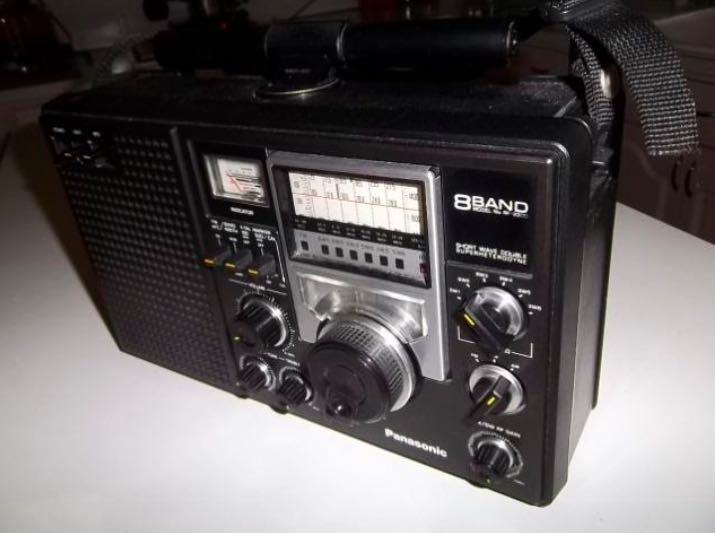
Photo 1. Author’s favorite portable of all time, Panasonic RF-2200

It was love at first sight when I saw the RF-2200 in the store’s gleaming glass display case way back when. The ‘2200 possessed all the bells and whistles to guarantee a good time for the SWL such as a rotatable ferrite AM broadcast band antenna, BFO (Beat Frequency Oscillator) for SSB reception, AM /FM/SW (3.9 – 28 MHz) bands, a D’Arsonval “S” meter that doubled as a battery status indicator, large four inch front mounted speaker, switchable coarse/fine tuning speed, base/treble/RF gain pots, 125/500 kHz crystal markers to calibrate the VFO, wide/narrow bandwidth switch, dial/S meter lights, earphone/recorder jacks and telescopic antenna for SW and FM. Plus it sported the renowned Panasonic trademark.
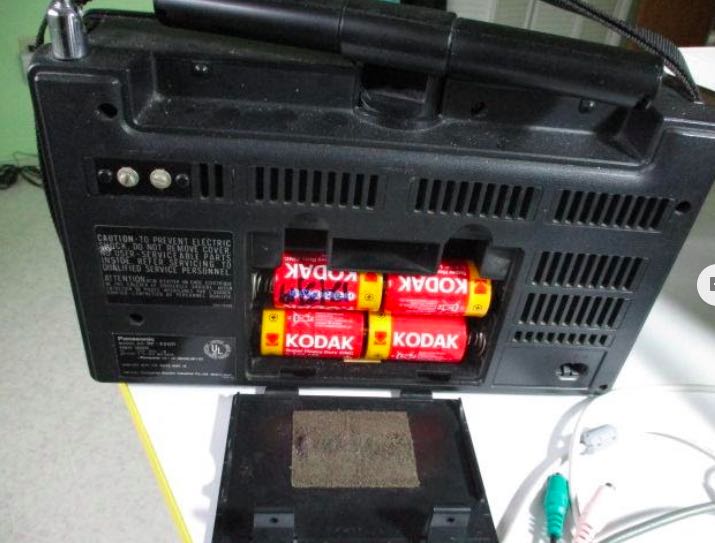
Photo 2. RF-2200’s rear: exposed battery compartment, screw connectors for external antenna, AC plug lower right. Rectangular earphone storage compartment is above batteries. Battery cover’s gray foam pad is dry rotted and needs replacement.

Part of the 2200’s ample avoirdupois can be attributed to the unit’s four “D” battery power plant, but Panasonic also supplied an AC cord to plug into the house mains and an earphone (located inside the battery case).  It runs forever on those four stout dry cells, one of the many positive features of this vintage gem.

Back in those days portable radios generally were not judged and valued based their diminutive size and weight but on the array of features geared to the end-user. Front panels were festooned with an array of controls rivaling an aircraft’s cockpit.  Knobs, analog dials, meters, large front-mounted speakers, switches and lots of black plastic were the order of the day. These all contributed to the beauty and practicality of portable shortwave radios back then.

One thing missing though was built-in memory channels; those existed in the operator’s brain and not yet delegated to memory chips.
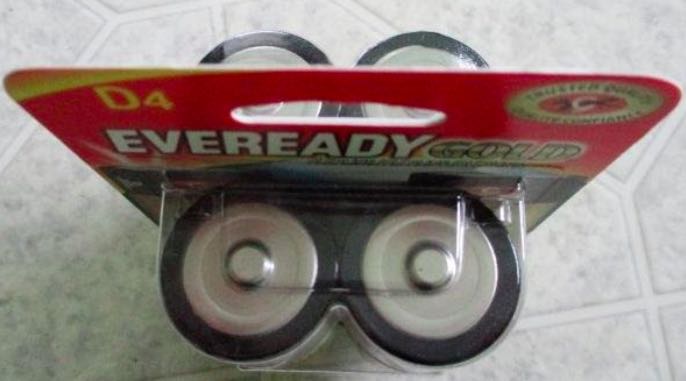
Photo 3. Pack of four “D” cells, at 1 lb 4oz, weighs more than some of today’s portables!

One of the features long gone and missing in modern receivers these days is the “recorder out” jack that looks identical to an eight-inch earphone jack and yes the ‘2200 has one. It was used to plug in a tape recorder to memorialize an op’s favorite radio show. Of course back then there were many more shortwave stations broadcasting.  Gone also are those tiny incandescent bulbs, sometimes described as “grain of wheat” lamps that were used on S meters, dials, etc. The RF-2200 sports ample illumination for the S-meter and tuning dial which makes it a perfect bedside table radio for late night DX’ers and insomniacs.

Speaking of DX, the ‘2200’s rotatable AM ferrite antenna is one of the main virtues this radio possesses.  As an avid AM DX’er and faithful disciple of AM radio in general, the ‘2200’s rotary directional antenna nulls out noise and routinely pulls in stations as far away as Nashville (WSM), Chicago (WBBM), St. Louis (KMOX), Atlanta (WSB), Boston (WBZ) and Toronto (CJBC) when the sun goes down. Look closely at the antenna mount’s base and you’ll even see compass-like degree markings that’ll help when retrieving a favorite local or DX AM station.
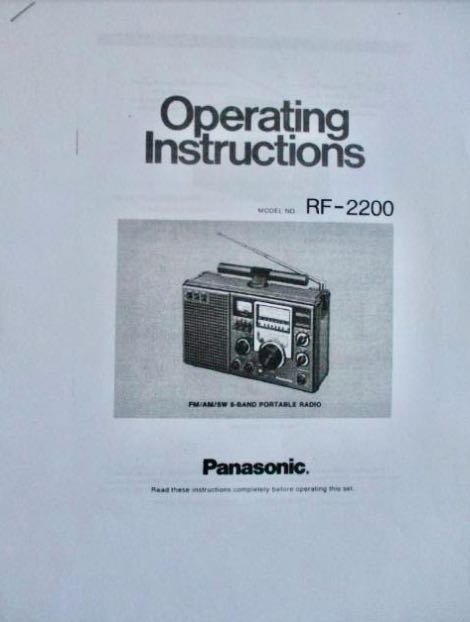
Photo 4. Operating manual copy is available on-line

Shortwave coverage is approximately from 3.9 – 28 MHz as per the service manual, but I’ve checked the actual coverage of my unit using a calibrated service monitor and found it to be 3.47 – 28.9 MHz which makes sense since I’ve tuned to W1AW’s code practice on 3.581 MHz with no problem and have also heard the Volmet station on 3.485 MHz. That’s good news for hams wanting to receive 80m CW.  It gets a bit tricky though using the fine tuning option for CW hi hi.

AM broadcast band coverage is only from 525 – 1610 kHz as per the specifications; the AM band had not yet been extended to 1710 kHz at that time.  The ITU approved the extension in 1988. With that in mind I wanted to determine what the actual band coverage of my unit was. Again, using an IFR service monitor it was found to be from 514 – 1720 kHz; that’s good news for those who listen to stations at the top of the band.  It also explains why I can hear YWA, a non-directional radiobeacon (NDB) from Toronto, Canada just below the AM band on a frequency of 516 kHz. If you own a RF-2200 or DR22 tune to the bottom of the AM band and listen for it. You may also hear the warbling sound of NAVTEX stations on 518 kHz.  Switch on the BFO and wait for dark, you might get lucky like I have.

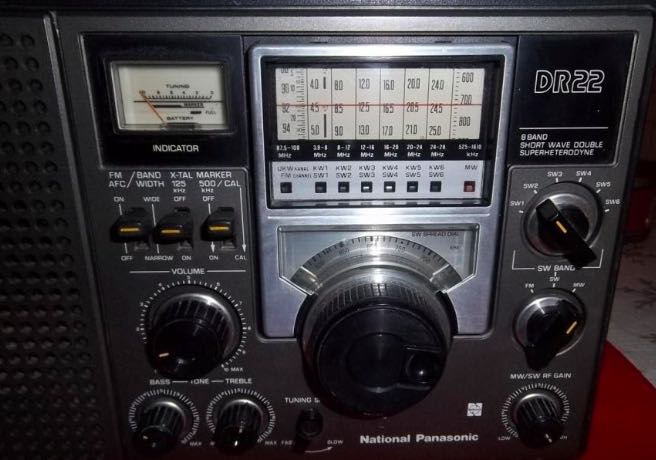
My apologies for not being an FM broadcast band listener so all I can state is the few times I’ve listened it sounded absolutely great.  The specs state a FM broadcast band frequency range of approximately 87.5 – 108 MHz. Mine measured from 86.8 – 108.9 MHz but I’ve yet to realign my unit so these ranges may vary among the population.  Note that I have undertaken the labor intensive task of aligning my National Panasonic DR-22 which is almost the exact same unit as the ‘2200. You can search this blog for my results that were kindly published by Thomas previously (click here to read).
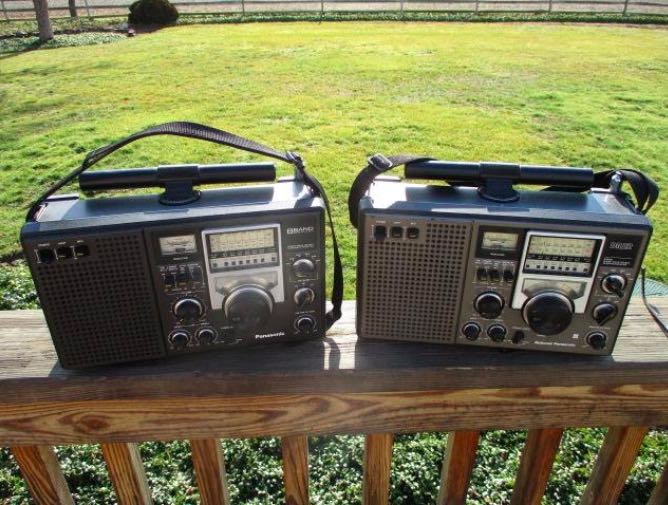
Photo 5. Side by side comparison.  Panasonic RF-2200 on left, National Panasonic DR22 on right.

For those not aware, the RF-2200 was also marketed in Europe as the National Panasonic DR22 and in other parts of the world as the Cougar 2200. My DR22 was an eBay purchase, and that’s the best place to find either model.

DR22s are rather rare compared to the ‘2200 though. First off, one of the major differences with the DR22 is that it runs on either 110 or 220V, and that’s accomplished by a switch on the back of the unit.
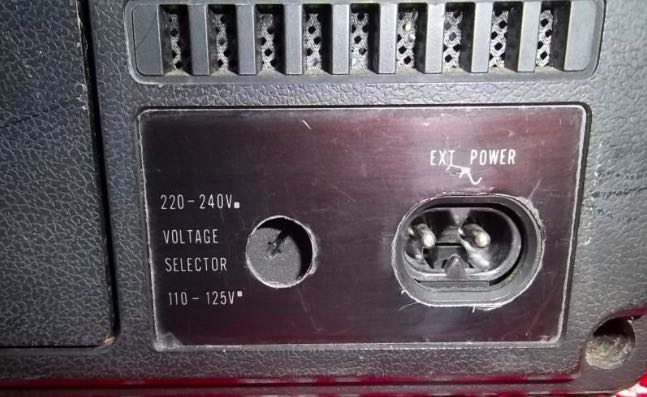
DR22 runs on 120 or 240V via switch on rear panel

The DR22’s front panel stenciling is slightly different too, as shortwave bands are labeled “KW 1 – KW 6” in addition to “SW1 – SW6”.  Not sure what “KW” means though. Perhaps some reader can enlighten us.

Well, that’s about it, if you want a RF-2200, or DR22 then window shop on eBay.  Lately they have been selling from $40.00 US (parts only) to $455.00 for pristine units. That’s a pretty wide price range and even I’m surprised at the high prices being gotten for clean units.  All I can say is that the two I have now are staying right here in the shack with me.
Thanks for reading and 73’s.


eBay searches (note these eBay partner links support the SWLing Post):


Thank you so much for sharing this excellent post, Mario. Like you, I’m a massive fan of the Panasonic RF-2200; in fact, I own two of them! It is, in my opinion, the best AM/MW portable ever made. 

Post Readers: Any other RF-2200 and DR22 owners out there? Can anyone explain why the DR22 labels shortwave bands as “KW1 – KW6”–?  Please comment!


Do you enjoy the SWLing Post?

Please consider supporting us via Patreon or our Coffee Fund!

Your support makes articles like this one possible. Thank you!