Category Archives: Articles

Listening to Coronal Mass Ejections, close to the source

(photo: Spaceweather.com)

Shortwave radio listeners know that coronal mass ejections (CMEs) often disturbing our SWLing. More than once I’ve been in the middle of listening to a broadcast, or even chatting with a fellow radio amateur on the HF spectrum and the effects from a CME would, in essence, wipe us out.

CMEs, in fact, have been getting a lot of publicity as of late. Now’s your chance to hear whatone sounds like–a little closer to the source:

[The following video] is a sonification of the recent solar storm activity turns data from two spacecraft into sound. It uses measurements from the NASA SOHO spacecraft and the University of Michigan’s Fast Imaging Plasma Spectrometer (FIPS) on NASA’s MESSENGER spacecraft at Mercury. The creator is Robert Alexander, a design science doctoral student at the University of Michigan and NASA fellow.

CIA: A History of the Foreign Broadcast Information Service

I just stumbled upon this fascinating history of the CIA Foreign Broadcast Information Service and thought SWLing Post readers might enjoy browsing it as well. This  is a history of the early, pre-CIA, years of the Foreign Broadcast Information Service. It was published with a classification of “Confidential” in 1969 and fully released to the public by the CIA’s Historical Declassification Division in 2009.
Click here to go to the CIA website, or download each chapter via links below:

All In A Weekend: Bon voyage to David Bronstetter, from an unlikely listener

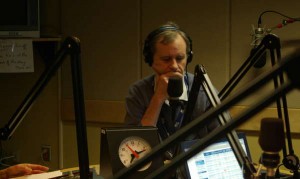
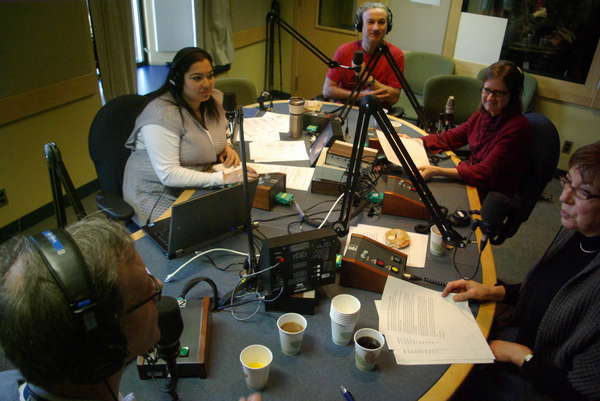
Dave Bronstetter hosting All In A Weekend at the CBC studio in Montreal. (photo: CBC)

I believe it was in the fall of 2007 that I first tuned to the enlightening CBC Montreal program, All In A Weekend, with host David Bronstetter. Unlike listeners in Montreal, or anywhere in the province of Quebec, for that matter, I didn’t hear the show on FM radio, nor streaming over the internet–it was on a shortwave radio.

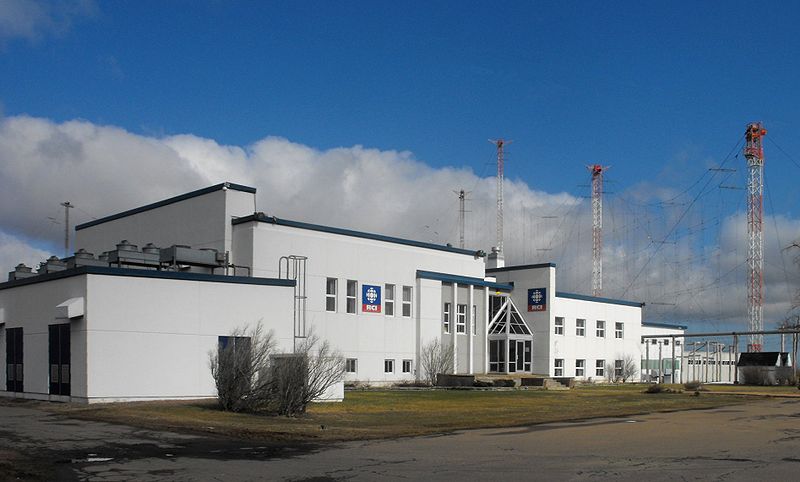
You see, each Saturday and Sunday morning at 7:00 EST (12:00 UTC) Radio Canada International turns on a shortwave transmitter at their Sackville, New Brunswick site, and broadcasts CBC Radio One Montreal programming on 9,625 kHz for North Quebec. They’ve done this for years.  That means that many of us south of the Canadian border can catch the “back side” of this broad signal quite easily.

When I first heard All in A Weekend, I was favorably impressed by the program’s host, Dave Bronstetter. When I landed on his voice the first time, he was in the middle of an interview, and even in that brief interval of tuning I could tell that this was an insightful interviewer. Returning to hear the following half-hour segments of the show, I learned that his keen intelligence was manifest not only in intimate, articulate, and adaptive interviews with his guests, but also in an absurd wit.

In short, I was hooked.

From that day forward, I joined thousands of Quebec listeners, right here from my home in the southern US, as we tuned in All In A Weekend. Dave and his Montreal crew became my weekend morning coffee companions.

Dave chats with host Sonali Karnick, Elias Abboud, and Nancy Wood. (source: CBC Radio One)

In my many years of listening to radio, I’ve heard hundreds of hosts from around the world, but this guy stood apart. Dave Bronstetter’s hosting was fueled by a quick wit, which he wove into his interviews with an eloquence that would make any comic green with envy.  Moreover, this fun, catch-’em off-guard approach resulted in better interviews with his diverse guests, all excellent listening, such as with famous jazz photographer Herman Leonard, singer Emilie-Claire Barlow (and many other Canadian artists like her, whom I’ve since learned to appreciate), and a stand-out interview with a Palestinian that I haven’t forgotten, nor am likely to.

And more than once, while reporting weather, in the midst of listing all the towns and cities across the vast province of Quebec, Dave slyly inserted the tiny town where I then lived.  This always made me start, and brought a chuckle. Of course, I couldn’t help thinking that this caught the attention of many other listeners, too, but leaving them scratching their noggins–Sylva, Quebec? Where on earth’s that–?

Radio Canada International's Sackville, New Brunswick shortwave transmitter site. (photo: Wikimedia Commons)

How could Dave have known about Sylva? Well, he interacted with his listeners, and I was no exception. It didn’t matter if listeners were sending him a compliment or complaining about the fact that he was reading off the wind speed in Baie-Comeau and Kuujjuaq, he paid attention. I would dash off an email to request songs, play along with his contests, or brag about our lovely Southern-states weather when Montreal was having a brutally chilly day. Many of my emails were sarcastic, and Dave’s rebuttals, two-fold.

Once, Dave actually made a call to my home in Sylva and interviewed me on the air.  A couple of days prior to the interview, he called to ask my permission and to, well, just chat. We probably talked for an hour–even in that casual conversation, I noted his interviewing talent: I felt like I was talking with an old friend, one who understood me and appreciated my offbeat sense of humor.

Many times while listening to All in a Weekend, I reflected, this is what I love about radio. The footprint is vast–it jumps national borders with ease, and offers an instant level of interaction that’s hard to replicate even in our internet-driven age.

To my dismay, Dave recently announced that he was retiring after 33 years with the CBC. Last Saturday’s show was his last.

At least, so he says.

Regardless, I can tell you this:  I will miss my buddy, Dave Bronstetter, on the air. I know of no replacement, and I can only imagine how difficult it may be for the charming Sonali Karnick to follow his tough act. I hope it will be by carving her own unique personality into the show. That’s what gave the unassuming All In A Weekend its moxie in the first place, and drew me in regularly to listen.

My hat’s off to you, Dave; may you enjoy whatever you do going forward. You are unquestionably one of a kind. And please–keep in touch!

Want to hear what the send-off broadcast All In A Weekend sounded like on shortwave radio? Try this:

ABC video highlights the Dooen transmitter on World Radio Day

The Dooen tower "hat" (photo: ABC)

(Source: Australian Broadcasting Corporation)

Standing 201-metres tall with a 19-metre wide capacitive ‘top hat’, the 3WV mast in western Victoria stands out in the vast flat landscape that stretches below it.
Celebrating 75th years of service, the occasion of World Radio Day seemed a worthy time to pay tribute to this impressive technological structure.

“It really meant a lot to us. It must’ve been a big undertaking in 1936 to build it because cranes and things that are about today weren’t even heard of,” says long time Horsham resident James Heard.

And while the locals are proud of the trusty Dooen mast, its power reaches far wider than just this wide brown land.

In fact 594 AM has even been heard as far as Canada, Japan and South Africa.

The staggering reach is aided by the distinctive ‘top hat’ and the low frequency of the AM band. While obviously a success, the antenna was the first of its kind in Australia and acted as a prototype for other services.

“It’s the first solid-state 50-kilowatt broadcast transmitter installed for the ABC and it was the test bed for the installations across the rest of the country,” says Tim Hughes, Transmission Coordinator for ABC Victoria.

So whether you’re tuning in from snowy Canada or just down the road, thanks be to the 3WV transmitter.

I’m sure many an ultralight DXer would like to snag this transmitter! Watch the 3+ minute video on the ABC website.

The Guardian on World Radio Day: celebrating an unsung hero

(Source: The Guardian)

Radio is the predominant source of information in areas of the world that are sometimes too remote to get a newspaper delivered, let alone access the internet. This is why Unesco has noted that radio is a “low-cost medium, specifically suited to reach remote communities and vulnerable people”.

Attention given to technology for information communications has recently been captivated by web-based applications, especially “new” or “social media”. But about 65% of the world’s 7 billion people do not use the internet. In addition to those who are offline due to lack of access, there are also those who are unaware, unable or simply do not want to use social media.

People listen to the radio in their cars, on the move and at work. Radios don’t require large amounts of electricity, and wind-up radios don’t need an electrical source at all. Moreover, radio reaches large groups of people, being easily shared among families or listener groups. It is a medium often used as a focal point for community discussion on subjects including politics, elections and service provision. Radio efficiently reaches large audiences in real time. [continue reading…]

This will be filed under our ever-growing category, “Why Radio?

Read the full article at The Guardian.

RNW: radio = free access without app or web

Brilliant article from Radio Netherlands Worldwide.  Hat tip to SWLing Post reader Mike Taniwha!

(Source: RNW)

On World Radio Day, 13 February 2012, UNESCO will remind the world that there is a medium which reaches parts that other media can’t reach.

Radio is still a vital form of communication because a radio station can be set up much faster, and at much lower cost, than a terrestrial or satellite TV station. Radio is especially useful for reaching remote communities and vulnerable people such as the illiterate, the disabled and the poor. It also provides a platform for such groups to take part in the wider public debate.

Radio also plays a vital role in emergency communication and disaster relief, which was illustrated following the tsunami in the Indian Ocean in December 2004. RNW was able to help several partner stations in Indonesia by sending out “radio stations in a box” – self-contained mobile FM stations providing a temporary studio and transmitter ready to be used by broadcasters whose own facilities had been destroyed.[continue reading…]

Thanks, RNW, for reminding us why radio is the the most effective information medium. Read the full article at Radio Netherlands Worldwide.

Guardian article on “the rise and rise of radio”

(Source: Susanna Rustin, The Guardian)

What is it about radio that has made it so durable, and able to coexist not only through the age of television, but the age of new media too? As social networking giant Facebook prepares to float itself and raise an astonishing £5bn, what has enabled radio to stand its ground?

[…]Radio can be made at a fraction of the cost of television, meaning that programme-makers, DJs and entrepreneurs can all have a crack at it. Commercial broadcasters as well as the BBC value it as an incubator for future TV talent. Added to which, radios themselves are cheap, and all over the place: by people’s beds, in the bathroom, in the car.

“Despite the fact you think we’re a visually saturated culture, there are all sorts of places where you get radio and nothing else. The technology of radio is cheap, simple and idiot-proof, and older listeners in particular are going to be very reluctant to let it go,” says [Mark] Damazer.

[…]There is a confidence among many of those who work in radio that what they do will carry on. We remain attached to radio and its rhythms, to the hum and the sound of it. And we get attached to the people who present it, when we don’t violently take against them. Radio is personal.

Couldn’t have said it better myself. Another article filed under “why radio?”

Read Rustin’s full article at The Guardian website.