Category Archives: Nostalgia

Beach Boys, Good Vibrations, and HB-7 Headphones

Many thanks to SWLing Post contributor, Mark C, who writes:

Thomas,

You have posted numerous photos of radios appearing in film. I found something similar but with an interesting twist.

The link is to the YouTube clip Good Vibrations the Lost Studio Footage. Watching the Beach Boys singing that iconic musical selection is thrilling enough but I would have never guessed I would be seeing them wearing the military HB-7 and using them as studio headphones while they were performing!

Good Vibrations the Lost Studio Footage

Click here to view on YouTube.

Sincerely,

Mark

That’s just brilliant, Mark. Thank you for sharing this. I would have never guessed HB-7s would be used in a studio setting, but it certainly looks like them in the video.

I have to thank you for sharing this lost footage of the Beach Boys, too. This was new to me. I love the song, too; certainly iconic!

Kostas explores an alternative to Morse Code that’s been used in prisons, with roots in ancient Greece

Many thanks to SWLing Post contributor, Kostas (SV3ORA), for sharing the following guest post which originally appeared on his radio website:


TAP: A Morse alternative mode for the HAM, with no need for training

by Kostas (SV3ORA)

Introduction

The thinking of this new mode, came to me when someone posted that he quit the HAM hobby because he did not learn Morse code and he did not want to use computers to do the job for him. Some time I faced a similar situation and I believe many do one day or the other. So I thought that I had to do something about it. It is too bad people quit the hobby or missing the fun of the KEY operation, because of the obstacle of Morse code. No matter what CW operators that already learnt Morse might say, the fact is that Morse requires patience, continuous practice and most importantly time. After all military had dedicated courses on it in the past, so it must be more than true. These are things not all people can, or are willing to do. An alternative that gives the same pleasure like Morse and operates with the same techniques, but requires no training and time must exist. Meet the TAP mode!

Mode description

This mode has its roots to ancient Greece. You may read the article in Wikipedia for more information on the Polybius square. A form of it, was used in the previous century in was times, for in-prison communication. A modified version is presented here by me, that fits perfectly the HAM radio. This modified TAP code scheme, is dedicated to HAM radio and includes the numbers and the letter “k”.

This is all you need to know in order to send and receive TAP. It is easy to follow and easy to generate on paper. This is a 6 by 6 table, with the first six alphabet letters placed in the first line, the next six in the second and so on. After the alphabet ends, the numbers are put in the same manner. Thats it!

Sending TAP

It is better to describe the sending procedure with an example.
To send the letter “i” you send two dots (“i” is on the second row), wait a bit and then send 3 more dots (“i” is on the third column). In other words, you first count the number of rows where the letter exists, then wait a bit and then you count the number of columns where this letter exists. Before sending the next letter, leave a bit of more time, so as to distinguish that this is a separate letter and not the time between rows and columns. Thats it!

Try it now without any transceiver! Write the TAP table on a piece of paper (you do not need to write the row and column numbers), or read it from the website. Tap on your desk with your finger and send some words to the colleague near you. See how easy it is?

There are actually four spacings involved. The spacing between adjacent dots, the spacing between the row and the column, and the spacing between letters and the spacing between words. Follow the PARIS spacing, like Morse code does, if you intent to write a software for it. However, in practice, manual operators would need to consider just two spacings, the spacing between rows and columns and the spacing between letters. These are the most important. Just make the one bigger than the other and communication should be achieved without problems.

Receiving TAP

It is better to describe the receiving procedure with an example.
To receive the letter “i” you listen two dots (“i” is on the second row), then a short scilence time and then listen 3 more dots (“i” is on the third column). In other words, you first listen for a number of dots (this is the row where the letter exists), then sense the scilence and then you listen for the next number of dots (this is the column where the letter exists). The scilence time between two letters is greater than the scilence between rows and columns and this can be distinguished easily. Thats it!

Try it now without any transceiver! Write the TAP table on a piece of paper (you do not need to write the row and column numbers), or read it from the website. Put your coleague to sent you some TAP words and you should be able to decode them by counting the rows and columns in the TAP table.

A programmer that may need to implement the mode in software, should follow the PARIS spacing to distinguish the different parts of the code, as described above.

TAP advantages

Here are some advantages I can think, of TAP in comparison to Morse.

  • No training is required, start using it imediatelly, even by non-HAM people and kids. This probably is the greatest advantage and this is why most would want to use TAP in HAM radio.
  • The encoding/decoding square can be drawn easily, it is very easy to remember how to draw it.
  • Decoding by hardware or software means, becomes very easy, as there are no dashes to account for. Dot lengths can be anything and can be even varying from dot to dot, it does not matter.
  • All you count, is how many ON-states (taps) there are and the rough timing between them, to decide between a row-column or a letter. Because of this intependency from dashes, the code can be used on any means, radio, light, pipes, walls, desks etc.
  • If dot lengths are kept very short (up to the point where channel noise allows it), RF amplifiers can be pushed beyond their limits (due to limited duty cycle), or otherwise run cooler within their limits. There are some mediums, like light communication, where bright pulses of light can be produced easily (eg. xenon tubes), but not kept for duration and TAP is ideal on them.

TAP disadvantages

Here are some disadvantages I can think, of TAP in comparison to Morse.

  • Speed limit issues probably. TAP beginners achieve for sure faster speeds than Morse beginners. However, a trained Morse HAM, can achieve greater speeds with Morse.
  • Learning the table by heart, can be tricky in comparison to Morse. However war prisoners had tricks to learn by heart the 5×5 TAP  square.
  • Not known (yet) among the HAM community, like any new mode. Why not change that by let HAMs know about it?

TAP common points to Morse

There are some common points shared between TAP and Morse code.

  • Both are relatively slow modes.
  • Both are ON/OFF keying modes, efficient class-E amplifiers can be used.
  • Both share the same channel bandwidth and noise-related characteristics.
  • Both are human-oriented, although TAP does not require training. Both share the PARIS timing when implemented in software.
  • Both allow for the “joy of the KEY”. You send TAP with the same equipment as Morse.
  • Both are ideal for homebrew QRP, due to efficiency and transceivers simplicity.

Dave spots a Sony CRF-320 in an episode of Taxi

Many thanks to SWLing Post contributor, Dave (N9EWO), who writes:

Hey Thomas,

Interesting little tidbit.

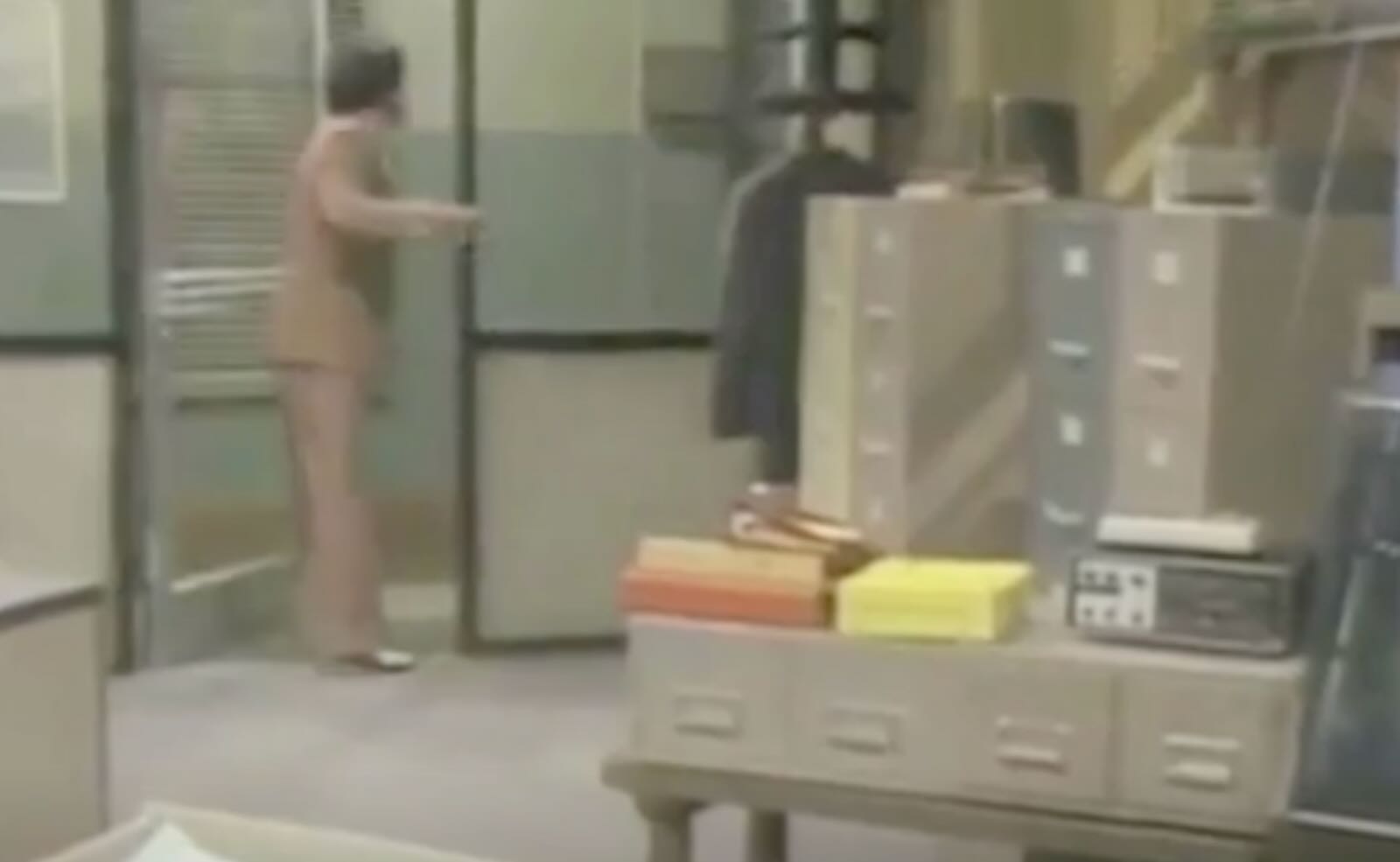
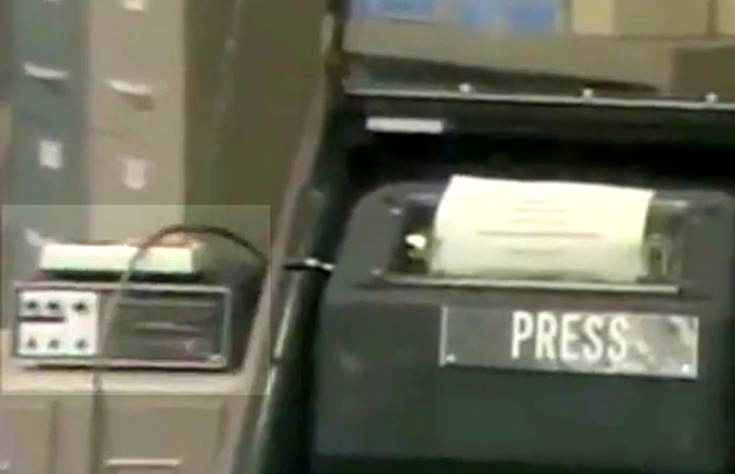
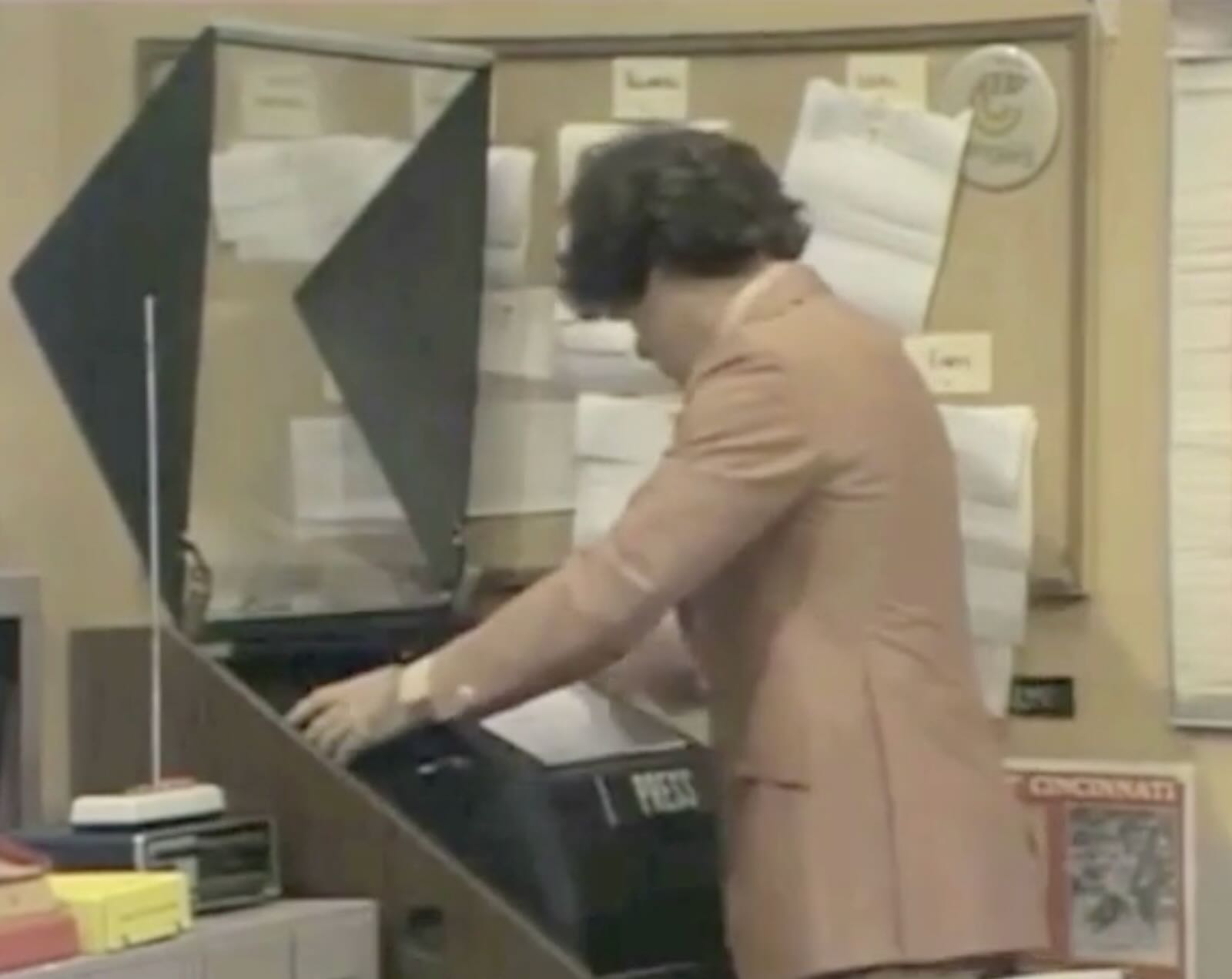
Noticed a Sony CRF-320 being used as prop in a 1982 episode of “Taxi” (Season 4 Episode 11), See captured enhanced attached photo [above].

“I Wanna Be Around” : Louie turns the tool room into a survival shelter.

YouTube (marked at a point where shortwave was made comment to) :

https://youtu.be/S0_-34fdZUQ?t=1032

Look for it just left of the CB and desk microphone.

73
Dave Zantow N9EWO

Thank you for sharing this, Dave! Wow! What a classy radio to have as a prop on display in Taxi! Great catch!

Radio Waves: Led Zeppelin Saved by Off-Air Recording, News on a Music Station, FFC Notice to Pirate Landlords, and Hamvention 2022

Radio Waves:  Stories Making Waves in the World of Radio

Welcome to the SWLing Post’s Radio Waves, a collection of links to interesting stories making waves in the world of radio. Enjoy!


The improvised Led Zeppelin song that was lost by the BBC for over 40 years (Far Out)

During Led Zeppelin’s 12 years together, the group released eight studio albums, each composed of tracks Jimmy Page and company believed to be the best representation of the group at that specific moment in time. When amassed, these albums trace the evolution of Zeppelin’s style, approach to production, individual musical skills, and songwriting habits. And while we might have assumed this rendering of Zeppelin’s musical life to be complete, it would seem that we’ve not been given the full picture. Indeed, there are certain Led Zeppelin songs that even some of the group’s most die-hard fans never knew existed.

Following the release of the Led Zeppelin compilation album BBC Sessions in 1997, Jimmy Page began hearing a bootleg version of a song he hadn’t heard in just under 30 years. The band had never attempted it during an album session, and it never appeared on any of their records. After a bit of digging, Page realised that the track had come from a BBC performance Led Zeppelin made in the first months of 1969. Unfortuantely, it transpired that the BBC had managed to lose the tape from that day, meaning that Page was forced to track down a copy of the song a fan had recorded off the radio back in ’69. [Continue reading…]

How One Music Station Covered The Buffalo Massacre (Radio Ink)

(By Tom Langmeyer) The unfortunate conventional wisdom that has prevailed in radio during the last 20 years is “We are a music station. We don’t do news.” Unfortunately, this sentiment represents many people who set the tone for the industry and make these proclamations proudly, as the radio business becomes more and more irrelevant.

There is some truth to the statement that a “music station should not be covering news” by those who think completely linearly. However that culturally process-driven approach that has zero to do with results.

A music-intensive radio station is not expected to do news in the traditional sense, nor should be competing with news stations. It’s not a music station’s role.

However, all radio stations must have a component of “news. Now, before folding your arms across your chest, think about it this way.

“News” is really what your listeners need and want in the radio experience. What does “news” mean for your station? What is it? How is it delivered? How much? How do we activate our listener? That’s where things are different and need to be defined.

Think about a great country station that’s talking about a concert that’s happening in town and building an experience around it. That’s NEWS.

No one is saying a music station should be WINS, WBBM, KNX or KCBS.

No matter the music format is, there needs to be a playbook for how and what information (relevant “news”) gets presented.

On the advising side of Great Lakes Media’s business, we create customized plans for stations committed to localism and winning on the revenue hill. Sure it’s different – and that’s why it works.

It’s called the “Great Lakes Media Way.” [Continue reading at Radio Ink…]

FCC Sends Pirate Radio Notices to Property Owners (Radio World)

Agents traced signals in Pennsylvania, Maryland and Oregon

The Federal Communications Commission has sent notices to several property owners of alleged pirate radio activities on their properties.

The letters from the Enforcement Bureau are headlined “Notice of Illegal Pirate Radio Broadcasting.” They remind the owners that federal law now provides for fines of up to $2 million “if we determine that you have continued to permit any individual or entity to engage in pirate radio broadcasting from the property that you own or manage.”

The bureau said its agents used direction finding techniques to source these FM signals. It mailed letters to Richard Manson for broadcasts on 103.5 MHz in Philadelphia in January; to Maria V. Hernandez of Kissimmee, Fla., for signals on 87.9 MHz in Hazleton, Pa., in January; to Edwin and Joyce Pitt of Baltimore, Md., for signals on 91.3 in February; and to Kent and Deanna Coppinger for signals on 100.5 MHz in La Grande, Ore., in March. [Continue reading…]

Hamvention to kick off this weekend in Xenia; Thousands expected to attend (Southgate ARC)

After nearly three years, Hamvention is back.

The convention is the world’s largest amateur radio gathering at Greene County Expo Center, according to the event’s website.

Around 30,000 visitors are expected to come to the event from all over the world.

Michael Kalter, the spokesperson for Hamvention, said that based on numbers from the Greene County Convention Visitors Bureau, Hamvention adds $30 million to the local economy.

He said amateur radio, also known as ham radio, is something people of all ages and backgrounds can be a part of, which is why he thinks the convention draws such a large crowd.

Kalter shared how it feels to bring so many people from around the world together. “That makes me feel really good,” Kalter told News Center 7?s Kayla McDermott. “I’m glad that the hobby seems to be really growing and flourishing,” he added.

There are no COVID-19 restrictions in place for this year’s convention. With thousands of people expected to attend, safety is a top priority. Before entering the convention center, people must have their bags checked. The Greene County Sheriff’s Department said they have prepared for the event.

Major Shawn Prall, with the sheriff’s office, said they have a plan in place to make sure traffic moves along smoothly as there are only two lanes to get to the grounds. Crews will also keep an eye on the weather, in case there is a chance for it to turn severe. Prall said this will be his fourth Hamvention and he has never had an incident. “We’re taking precautions, both that the public will see in uniform presence and also things that they can’t see. Just trying to keep everybody safe and be ready for any kind of incident, whether it be weather or manmade or anything like that,” Prall said.

The convention runs this weekend 9 a.m.-6 p.m. Friday, 9 a.m.- 5 p.m. Saturday and 9 a.m.-1 p.m. Saturday.

Source: https://www.whio.com/news/local/hamvention-kick-off-this-weekend-xenia-thousands-expected-attend/RUMUJLOHEJCUXOOSMEZJL6S22I/


Do you enjoy the SWLing Post?

Please consider supporting us via Patreon or our Coffee Fund!

Your support makes articles like this one possible. Thank you!

World War II Radio Letters: a real-life shortwave story – Part II

Many thanks to SWLing Post contributor, Jock Elliott, who shares the following guest post:


World War II Radio Letters: a real-life shortwave story – Part II

By Jock Elliott, KB2GOM

That so many people have been moved by Part I has been heartwarming. Since writing it, there have been further developments. Tecsun Radio Australia asked (and was granted) permission to reproduce the article for Anzac Day (April 25), when all fallen personnel in all wars are remembered in Australia.

In addition, I became aware of two books – World War II Radio Heroes Letters of Compassion and Waves of Hope (thanks, Bill Hemphill!) – that are all about World War II radio letters. We’ll get to those books in just a bit.

But first, I wanted to tell you something you might find surprising: I did not set out to write about how shortwave listeners had reassured my Mom that my Dad was alive during WWII. Not at all. In fact, in my 50 years as a writer, I found the process of how this came to be written, well, a little strange.

The night before, I had drifted off to sleep thinking about a radio and antenna comparison I had been fooling around with during the day (and which I plan to write up in the future). But in the morning – Holy Smokes! – completely out of the blue, my mind was seized by the following thought: Wasn’t it a shortwave listener in New Jersey that first informed my Mom that my Dad was a prisoner of War? (It turned out that wasn’t quite correct.) It’s in a scrapbook in the basement . . . go find it!

Now, I had not thought about those old scrapbooks in at least two decades, maybe more, but I could picture a particular scrapbook in my mind. Rooting around in the basement, I found it, but it didn’t contain anything about my Dad going missing in action or my Mom being informed he was still alive. Maybe I was wrong, I thought.

Back upstairs in my easy chair, the thought would not leave me alone, kept nudging me: Go find it. More digging in the basement produced the right scrapbook with the right information. Reading it, I found tears running down my face at the kindness of strangers.

As I completed writing World War II Radio Letters Part I and sent it off to Thomas, it struck me as curious that, in all my years writing about radio subjects, I had ever seen an article, or even a mention, of the shortwave monitors of WWII. I thought perhaps no one had ever written on the subject, but I was wrong.

I was poking around the internet and came across World War II Radio Heroes: Letters of Compassion Second Edition by Lisa Spahr. It is a 212-page 10-inch by 7-inch book that details her discovery of her grandfather’s WWII trunk, which contained dozens of letters and postcards from shortwave listeners who wrote to Spahr’s great-grandmother to let her know that her son had been captured and was a prisoner of war.

The book, which contains photos of the original correspondence from the SWLs, chronicles her attempt to contact those shortwave listeners or their families, her discovery of the Short Wave Amateur Monitors Club – which turned the monitoring for POWs names into an organized effort – and a lot else besides. If you enjoyed my first post on this subject, I am pretty sure you will enjoy this book.

The other book – Waves of Hope by Ronald Edward Negra – is about how his mother, Agnes Joan Negra, was a shortwave monitor during WWII who sent out more than 300 letters and postcards to families to inform them that their loved ones were captured and still alive. This is a larger format book (8.5 inches by 11 inches) running to 124 pages that reproduces the letters that Agnes received back from grateful families after receiving the news from Agnes. At the time of this writing, Agnes is still alive, about to celebrate her 102nd birthday!

I found Waves of Hope to be a moving and compassionate book, and I think any SWL will appreciate having it on his or her bookshelf.

Finally, you will find a great deal of additional information here: https://www.ontheshortwaves.com/history-III.html#POW

At the end of it all – the strange process of writing the story, the response of the readers, the books telling the story of WWII radio letters – I come back to the place I started as a grade school boy. It was then that I discovered monitoring the radio can be an almost magical activity . . . and you never know when something you heard may touch another’s life in a profound way.

So keep listening!

Radio Waves: Border Blaster Early Days, Resistance on the Radiowaves, Towers With Flared Skirts, and Palau Restores AM

Radio Waves:  Stories Making Waves in the World of Radio

Welcome to the SWLing Post’s Radio Waves, a collection of links to interesting stories making waves in the world of radio. Enjoy!


In border radio’s early days, psychics and mystics ruled the airwaves (Mexico News Daily)

Charlatans originally built powerful ‘border blaster’ stations to evade scrutiny by US authorities

In radio’s early decades, among the oddball attractions found on the airwaves from 1920 to 1940 included a husband-and-wife team of psychics broadcasting from the U.S.-Mexico border under the stage names of Koran and Rose Dawn who became so popular that their extensive following helped them create a secondary income source: an organization called The Mayan Order.

Those who applied for membership and received its periodicals, the founders suggested, could harness the ancient Mesoamerican civilization’s secrets.

The pair were just two of the many psychics and other broadcasters of questionable integrity on the airwaves along the Rio Grande during radio’s beginnings. These characters built “border-blaster” stations of such epic size and scope that they could transmit from the Mexican side of the border into the United States.

Author John Benedict Buescher’s new book, Radio Psychics: Mind Reading and Fortune Telling in American Broadcasting, 1920–1940, unearths Koran and Rose Dawn’s forgotten story, as well as those of about 25 other border-blaster radio personalities on the Rio Grande who were heirs to a longtime American fascination with the occult.

“I was surprised how really dominant this stuff was in the early days of radio,” Buescher said. “Radio historians typically have just waved it off, not really focused on it, didn’t really take it seriously.” [Continue reading…]

Ukraine’s resistance on the radiowaves (DW Video)

Ukraine is fighting with more than weapons. The airwaves are also a frontier. Ukrainian computer specialists and radio operators have managed to jam Russian communications or intercept them. revealing some shocking details of the war’s brutality.

Click here to watch the view at DW’s website.

Why Well-Dressed Towers May Wear Flared Skirts (Radio World)

Cox, Dawson explore the benefits of umbrella-spoke feed for MW towers

Ben Dawson and Bobby Cox will talk about flared skirts at the NAB Show.

“A flared skirt is a set of symmetrically spaced cables around the tower, which attach electrically near the top of the tower, extend outward from the tower along a path similar to the top guy cables, and then turn back in toward the tower base at a point roughly halfway down the tower,” said Cox, senior staff engineer at Kintronic Labs.

“Insulators at this midpoint insulate the cables from ground. The cables terminate on an insulated feed ring encircling the tower base above ground level, similarly to a conventional skirt feed. The antenna is driven between this feed ring and RF ground. The resulting flared skirt takes the shape of a diamond, looking rather like umbrella spokes.”

These systems are used to provide a feed arrangement for grounded towers that is mechanically simple but has certain attractive aspects.

“The wide bandwidth characteristics of the flared skirt make these antenna designs extremely useful for multiplexing several AM stations onto a common antenna,” said Dawson, consultant engineer at Hatfield & Dawson. [Continue reading…]

Palau restores AM radio service (RNZ)

After erecting a new tower Palau’s state broadcaster has restored its AM radio service.

The previous AM tower was destroyed during Typhoon Bopha, in 2012.

Rondy Ronny, head of programming said that the new AM tower and radio service will benefit all the 16 states of Palau.

“A lot of the outlying states are not able to connect into the internet and just don’t have that capability or have very high tech phones like how we do here in Koror. People don’t expect people from Angaur, from Babeldaob to be on their phones all the time.”

Ronny said that the new tower will be crucial to Palauans during natural disasters. [Continue reading at RNZ…]


Do you enjoy the SWLing Post?

Please consider supporting us via Patreon or our Coffee Fund!

Your support makes articles like this one possible. Thank you!

Radio Prague: 1965 20th Anniversary of the Liberation of Czechoslakia 7″ record

Many thanks to SWLing Post contributor, Mike Barraclough, who shares the following partially in response to Sam’s search for the Radio Prague’s Forward Left interval signal:


In 1965 on the occasion of the 20th anniversary of the liberation of Czechoslovakia Radio Prague offered their listeners a free copy of a 45rpm record they’d produced. There were 5 versions issued with commentaries in German, English, French, Italian and Spanish. Information and images here, at the time of writing there are two copies of the French edition for sale from record dealers.

https://www.discogs.com/artist/463619-Radio-Prague-2

I’ve digitised my copy of the English one I received.

Side One

Side One Recording

Side One has a recording of their interval signal at the time and the Communist Anthem Forward Left it is taken from.

Side Two

Side Two Recording

Side Two The Road to Freedom has an account of the liberation of Czechoslovakia in early May 1945 and the role of Radio Prague during it with recordings of their broadcasts, including one in English, at the time.

I’ll be submitting a slightly expanded account of this to the British DX Club for next month’s bulletin as picking up Radio Prague and other English language stations from abroad on mediumwave such as Radio Moscow was the reason I bought a shortwave receiver. Living on the East Coast of the UK I could pick up AFN Bremerhaven daytime as well as a Dutch station Radio Veronica playing pop records all day as an alternative to the BBC. Radio Luxembourg, which you’ve most likely heard of, for nightime listening. Will check, think it would be early 64 when I bought my first shortwave receiver.