Category Archives: Nostalgia

WI2XLQ: Brian Justin’s annual longwave broadcast

Canadian Reginald Aubrey Fessenden in his lab believed circa 1906 (Source: Radio Canada International)

(Source: ARRL News via Harald Kuhl)

The Canadian inventor, experimenter, and entrepreneur Reginald Fessenden has been credited as the inventor of radiotelephony. Fessenden claimed to have made his first voice — and music — broadcast on Christmas Eve in 1906 from Brant Rock, Massachusetts, although his account is disputed. As he has done each December for the past few years, Brian Justin, WA1ZMS, of Forest, Virginia, will transmit a program on 486 kHz, under authority of his FCC Part 5 Experimental License WI2XLQ ito commemorate Fessenden’s accomplishments.

Justin will transmit for at least 24 hours starting at around 2000 UTC on December 24, with a repeat transmission on New Year’s Eve likely, “keeping in step with what Fessenden was reported to have done on both nights in 1906,” Justin explained.Fessenden’s transmitter was most likely a high-speed “dynamo” or alternator — a predecessor to the later Alexanderson alternator — modulated by placing a carbon microphone in series with the antenna feed line to create an amplitude modulated signal. Fessenden a few years earlier had limited success making voice transmissions using a rotary spark gap transmitter. Fessenden fed his signal into a substantial antenna system erected in Brant Rock for his experiments. Accounts say on Christmas Eve 1906, he transmitted recordings of two pieces of music and read a verse from the bible.

Justin will use somewhat more modern equipment — a home-brew master oscillator, power amplifier (MOPA) transmitter based on a classic design from the early 1920s. It uses a UV-201 oscillator tube driving a VT-25 tube — a modern equivalent to a UV-202 — to generate “a few watts” on 486 kHz. His modulator consists of another VT-25, which uses a large inductor in the RF amplifier’s plate supply to serve as a Heising modulator. The audio program comes from a laptop computer.

“Heising modulation was used in World War I as an easy way to achieve AM in rigs such as those used in aircraft,” Justin said. “My particular Heising modulator can deliver only around 60% modulation, so an audio processor is used to help boost the average volume level ahead of the modulator tube.”

Justin uses far more modern technology to boost “the few watts” of modulated RF to drive a modified Hafler 9505 solid-state 500-W audio amplifier. “The idea for the amp came from W1TAG and W1VD,” he said, “and information on using such an amp on the 630 and 2200-meter ham bands can be found on the web.” After a multi-pole low-pass filter, the carrier output is 150 W.

Justin’s antenna is a Marconi T, crafted from a 160-meter dipole some 60 feet above ground and fed with open-wire line, which is shorted at the transmitter end. A homebrew variometer — constructed from 14-gauge wire wound on a piece of 4-inch diameter PVC pipe — is placed in series to resonate the antenna, which is fed against an extensive ground system. “Most of the RF is lost due to the ohmic losses of the ground system, but at least 15 W ERP is possible, depending on the dampness of the soil. Damp soil helps lower the ground losses,” Justin said.

Click here to read the full article on the ARRL News.

Listener reports may be sent to Brian Justin, WA1ZMS, at his QRZ.com address.

If you would like more information about Brian Justin and WI2XLQ, check out our interview with him in 2013. Indeed, I successfully heard the 2013 WG2XFG broadcast and posted this audio clip on the Shortwave Radio Audio Archive.

Additionally, SWLing Post reader, George Stein has a very personal connection with radio pioneer, Reginald Fessenden: click here to read his story.
Phil recommends The Radio Historian website

Many thanks to SWLing Post contributor, Phill (W9IXX), who writes:

Thought might be interested in this if you haven’t already mentioned this site:

http://www.theradiohistorian.org/pubs.html

Check out his calendars!

Thanks for the tip, Phil! I know we’ve linked to article on this site before, but thanks for mentioning it again. This is truly a treasure trove for those of us who love vintage radio.  I especially like the articles page which has a number of fascinating reports. Of course there are a load of photographs and recordings as well.

Click here to check out The Radio Historian website.

Now Unblocked: Watching the new Radio Australia documentary

Yesterday, we posted a note about the new documentary, “Australia Calling: 80 Years of International Broadcasting.” At the time, I mentioned that the video was geo-blocked–meaning, you could not watch the video outside Australia without using a VPN.

Many thanks to SWLing Post contributor, Peter Marks, who shares this great news:

I’ve corresponded with the iview team and they have un-geoblocked the video. It can be watched here:

https://iview.abc.net.au/show/australia-calling-80-years-of-international-broadcasting/video/NC1940H001S00

I tested it over a VPN to Singapore and it played for me.

Thanks so much, Peter! I’ve loaded the video with no problems here in North America.

Click here to watch “Australia Calling.”


Do you enjoy the SWLing Post?

Please consider supporting us via Patreon or our Coffee Fund!

Your support makes articles like this one possible. Thank you!

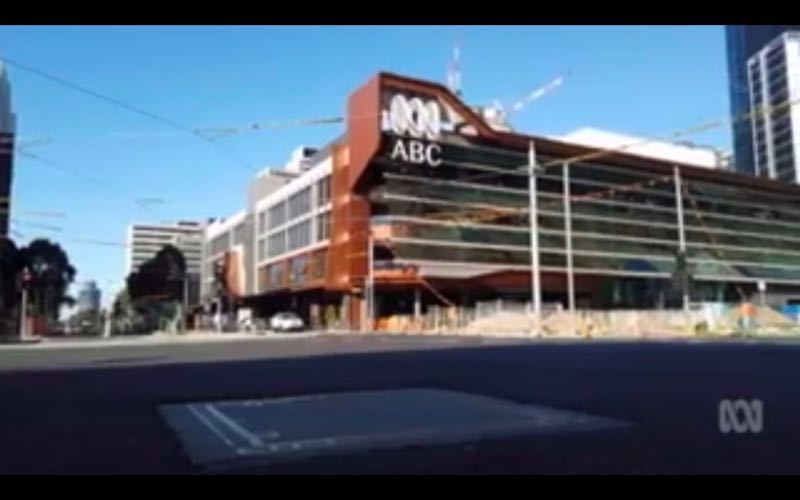
Australia Calling: ABC documentary looking at the impact of Radio Australia

Many thanks to a number of SWLing Post contributors who contacted me about a new documentary focused on the impact of Radio Australia. Peter Marks writes:

The celebration of 80 years of international broadcasting from Australia continues. The ABC has published “Australia Calling: A look at 80 years of Radio Australia and ABC international broadcasting” today:

https://www.abc.net.au/news/2019-12-16/abc-celebrating-80-years-of-international-broadcasting/11783252

And tonight there’s a documentary being shown on TV.

There’s even a story about the making of that documentary here:

https://www.abc.net.au/news/about/backstory/news-coverage/2019-12-16/making-australia-calling-documentary/11795134

Thank you, Peter! I just started watching the documentary via ABC’s iView. Note that the program is geo-blocked and not available outside of Australia (unless, like me, you have a good VPN). [No longer geo-blocked! See update.]

Here’s a link to the documentary on iView:

https://iview.abc.net.au/show/australia-calling-80-years-of-international-broadcasting

Peter also shared a number of related stories–some of which we’ve published in the past:

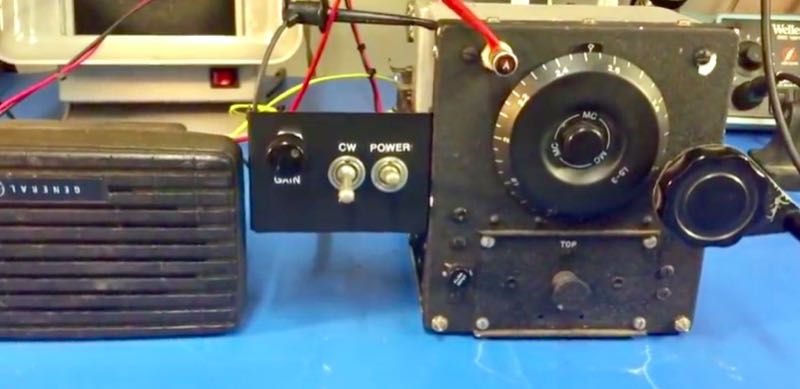
Restoration of a USN version of the ARC-5 command set receiver

(Source: Southgate ARC)

Gregory Charvat N8ZRY writes on Hackaday about an un-modified-since-WW2 surplus CBY-46104 receiver with dynamotor.

He writes:

I’ve been told all my life about old-timey Army/Navy surplus stores where you could buy buckets of FT-243 crystals, radio gear, gas masks, and even a Jeep boxed-up in a big wooden crate. Sadly this is no longer the case.

Today surplus stores only have contemporary Chinese-made boots, camping gear, and flashlights. They are bitterly disappointing except for one surplus store that I found while on vacation in the Adirondacks: Patriot of Lake George.

Read the full story at
https://hackaday.com/2019/12/12/wwii-aircraft-radio-roars-to-life-what-it-takes-to-restore-a-piece-of-history/

Video

Video description: Repair and restoration of a USN version of an ARC-5 command set receiver. This model covers 1.5-3 Mc, runs off its original dynamotor, with no internal circuit modifications. This radio is original with the exception of a small number of caps that tested bad which were re-stuffed. Build date is Feb. 42, who knows where and what this radio may have been involved in?

I’ve always wanted a functioning ARC-5 command set to accompany my BC-348-Q receiver. This article has inspired me.

Post readers: Anyone own a functioning ARC-5 (or any variants)? Please comment!

Cold War Sports: High-Speed Telegraphy

Many thanks to SWLing Post contributor, Paul Evans, who shares the following short radio documentary from the BBC World Service:

The end of the Cold War in 1989 spelt the demise of a little-known, but surprisingly popular sport behind the Iron Curtain – high-speed telegraphy competitions. With the help of two of Czechoslovakia’s best former Morse-coders, we revisit the inaugural World Championship in Moscow in 1983 when the Soviet Union rolled out the red carpet for teams from across the Communist bloc. Ashley Byrne reports. The programme is a Made-In-Manchester Production.

Click here to listen to this program via the BBC.

As Paul points out, “HST is still going strong as a sport!” Indeed it is because CW is simply timeless! Thanks for the tip, Paul!

Los Altos History Museum features “Ham for the Holidays” 

(Source: Southgate ARC)

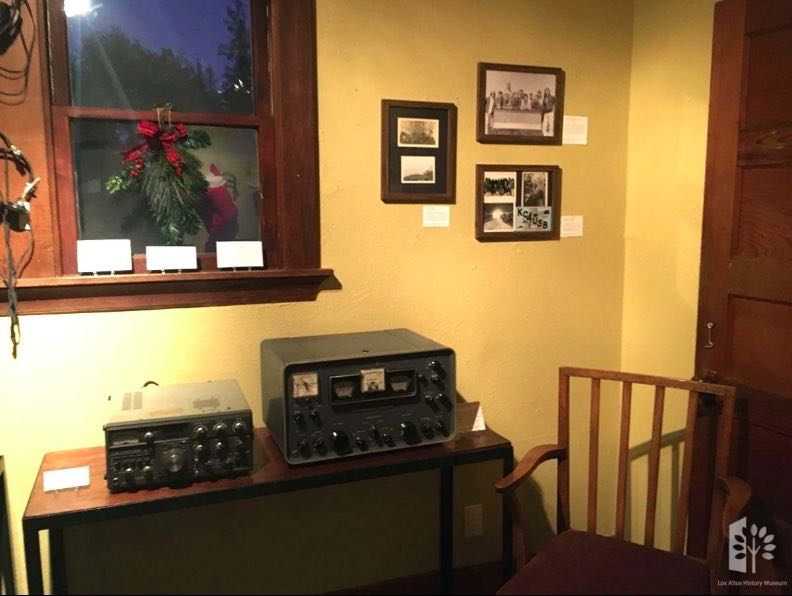
The Los Altos History Museum serves up “Ham for the Holidays: Amateur Radio Operators, Then and Now,” a historical perspective on how radio hobbyists help keep neighborhoods safe during disasters, in an exhibit appearing in the J. Gilbert Smith House through January 5, 2020.

They say: Tis the season for giving thanks, and around the holidays we are especially grateful for our local amateur radio operators. Known as “hams,” these volunteers help keep our community safe throughout the year at regular public events and during times of crisis. In this exhibit, learn more about the history of hams and how a fun hobby can also keep our neighborhoods prepared and resilient.

The exhibit is free to the public, and open Thursday-Sundays, noon-4pm

https://www.losaltoshistory.org/exhibits/ham-for-the-holidays/

Los Altos History Museum, 51 S. South San Antonio Road, Los Altos, CA, USA