NIST Radio Station WWV Celebrates a Century of Service
By Laura Ost
What technological application has had musical, timekeeping, navigational, scientific, traffic-control, emergency-response, and telephone applications?
Answer: WWV, one of the world’s oldest continuously operating radio stations.
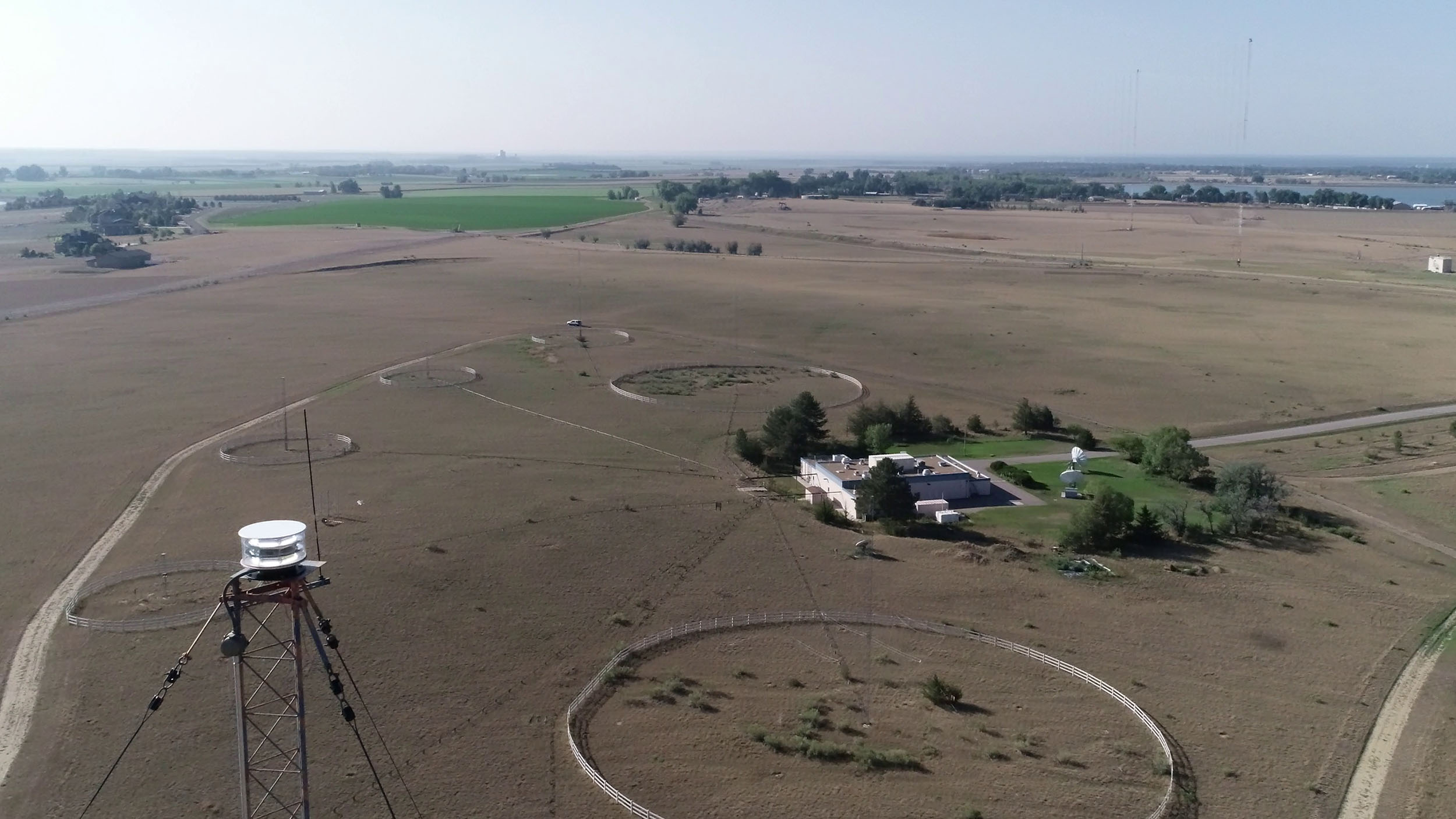
NIST received the call letters WWV a century ago, in 1919. Since then, it has operated the station from several different locations — originally Washington, D.C., then a succession of locales in Maryland, and now Fort Collins, Colorado.
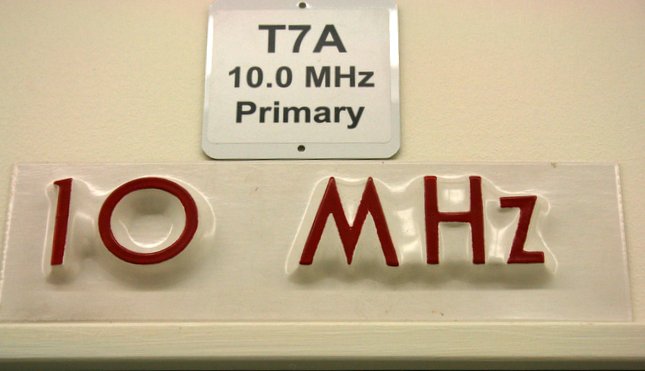
The programming is rather dry but very, very useful. WWV broadcasts time and frequency information 24 hours a day, seven days a week, to millions of listeners worldwide. The station broadcasts standard time (aka Coordinated Universal Time) and standard frequencies (e.g., at 5, 10 and 15 megahertz) for use in calibrating radio receivers, alerts of geophysical activity, and other information.
WWV broadcasts on six different shortwave frequencies because transmission effectiveness and reception clarity vary depending on many factors, including time of year, time of day, receiver location, solar and geomagnetic activity, weather conditions and antenna type and configuration. Broadcasting on different frequencies helps to ensure that the radio transmission can be received on at least one frequency at all times.
Over the years, WWV has had a startling number of applications.
“Historically, WWV will always be interesting because of the huge role it played in the development of radio in the United States by allowing broadcasters and listeners to check and calibrate their transmit and receive frequencies,” says Michael Lombardi, leader of NIST’s Time and Frequency Services Group.
“Today, WWV still serves as an easily accessible frequency and time reference that provides information not available elsewhere,” he says. “For example, along with its sister station, WWVH in Hawaii, WWV provides the only high-accuracy voice announcement of the time available by telephone [by calling 303-499-7111 or — in Hawaii — 808-335-4363]. These phone numbers receive a combined total of more than 1,000 calls per day. Both the radio and telephone time signals are used by many thousands of citizens to synchronize clocks and watches, and also by numerous industries to calibrate timers and stopwatches. We also know that WWV is highly valued by scientists performing radio propagation studies because it provides them with accurate time markers on six different shortwave frequencies.”
NIST time and frequency broadcasts are also available via the internet, of course, but the internet is not always available. Radio broadcasts can also support celestial navigation (i.e., using the stars to set one’s course) and can provide backup communication of public service announcements during disasters or emergencies.
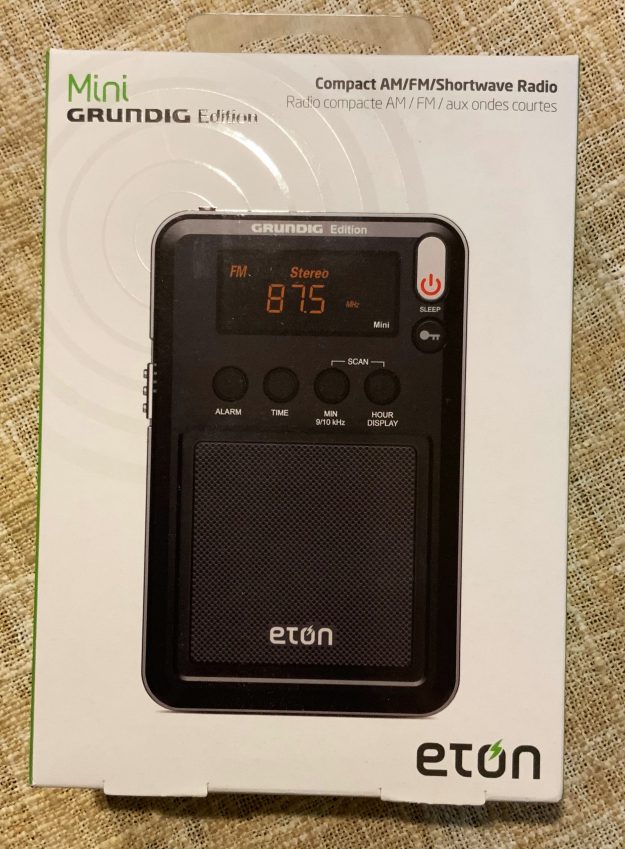
WWV is also popular with amateur radio (aka ham radio) operators, who use the broadcasts to get geophysical alerts — indicating how far high-frequency radio signals will travel at the current time and receiver location — as well as to tinker with their electronics and teach young people how radio works.
As a ham operator said on NPR, WWV is “the heartbeat of shortwave radio. When something goes wrong, you check WWV to see if you’re picking up their signal. And you know then that everything’s OK. Maritime operators, military operators, amateur radio operators, we all listen to and use WWV regularly.”
Many technical papers and even books have been written about NIST’s radio work. One such book, published by NIST, is Achievement in Radio.
The radio broadcasting craze started after World War I. NIST, then known as the National Bureau of Standards (NBS), got the call letters WWV for its experimental radio transmitter on Oct. 1, 1919.
A 1919 newspaper story recounted that NBS experimented with broadcasting “music through the air,” transmitting tunes played on a Victrola record player several hundred yards to an NBS auditorium. That demonstration might have been sponsored by military laboratories then operating at NBS.
WWV began broadcasting in May 1920 from Washington, D.C., at a frequency of 600 kilohertz. The first broadcasts were Friday evening music concerts that lasted from 8:30 to 11. The 50-watt signal could be heard about 40 kilometers away.
Among many other relevant activities, NBS supported the public’s use of the novel technology by publishing instructions on how to build one’s own radio receiver. The agency’s 1922 how-to publication cost 5 cents.
A legacy of impact
WWV and WWVH had a broad impact on the world in their early years, as the 1958 NBS annual report indicated:
The radio broadcast technical services are widely used by scientific, industrial, and government agencies and laboratories as well as by many airlines, steamship companies, the armed services, missile research laboratories and contractors, IGY [International Geophysical Year (PDF)] personnel, satellite tracking stations, schools and universities, numerous individuals, and many foreign countries. They are of importance to all types of radio broadcasting activities such as communications, television, radar, air and ground navigation systems, guided missiles, anti-missile missiles, and ballistic missiles.
NIST has conducted several surveys of WWV users. Many people rely on WWV to set the clocks and watches in their homes, as indicated by regular increases in calls to the telephone time-of-day service whenever Daylight Saving Time starts or ends.
In one interesting example of the NIST radio station’s impact, WWV time codes were used in a 1988 project by the city of Los Angeles to synchronize traffic lights at more than 1,000 intersections. City officials estimated that this project saved motorists 55,000 hours a day in driving time, conserved 22 million gallons per year in fuel, and prevented 6,000 to 7,000 tons of pollutants per year.
“It’s not easy to think of a lot of technical services offered by the government that have stayed relevant for 100 years, but WWV is about to do just that,” Michael Lombardi says.
WWV history highlights
WWV has been very useful to the general public and to many industries and government agencies over the years, as indicated by the newly published article, “A Century of WWV,” by NIST electronics technician Glenn Nelson. Following are some of the station’s highlights:
1919—First public announcement of call sign WWV being assigned to NBS in Washington, D.C.
1923—First WWV broadcast of standard frequencies to help users calibrate their radios. (In subsequent years, the station began broadcasting at higher frequencies, as well, to get better transmission and reception.)
1931—The WWV broadcasting station moves to College Park, Maryland.
1933—The WWV station moves to Beltsville, Maryland.
1936—The FBI asks NBS to conduct tests using WWV to determine the feasibility of using one transmitter to cover the entire country. (Such a system was eventually ruled out.)
1936—In response to requests, WWV broadcasts its first musical note. Such tones are useful to piano tuners, for example, and in later years to the police for calibrating radar used to check vehicle speeds.
1937—WWV begins broadcasting time interval signals.
1939—Pioneering NBS effort to reflect WWV transmissions off the moon. It didn’t work then but the military later accomplished it. (It turns out that bouncing signals off the moon is easier and scientifically more useful if done with lasers.)
1943—NIST begins using quartz crystal oscillators to provide greater accuracy in setting standard frequencies.
1945—WWV begins broadcasting the time using telegraphic code.
1948—NBS’ second high-frequency radio station, WWVH, begins operating in Maui, Hawaii (later moved to Kauai), in order to broadcast to the West Coast and to ships and countries throughout the Pacific Ocean.
1950—WWV voice announcements of standard time begin.
1954—The NBS Central Radio Propagation Laboratory moves to Boulder, Colorado, and the quartz crystals are flown to Denver and driven to Boulder (although WWV still broadcasted from Maryland).
1957—WWV broadcasts its first solar-storm and geophysical data alerts.
1960—WWV becomes the nation’s first radio station to place a digital time code in its broadcasts.
1961—The WWV station moves to Greenbelt, Maryland
1963—NIST’s low-frequency radio station, WWVB, goes on the air from Colorado, to broadcast accurate standard frequencies needed by satellite and missile programs.
1966—WWV moves to Fort Collins, Colorado, and begins broadcasting from there.
1967—The second is internationally redefined to be based on the vibrations of the cesium atom, and NIST’s radio stations begin broadcasting Greenwich Mean Time rather than the local time at the stations. (Several years later, WWV and the other stations begin broadcasting Coordinated Universal Time, as they do today.)
1971—WWV begins offering the time of day by telephone, gets 1 million calls per year by 1975.
1980s—GPS and the internet are introduced, offering new and more accurate ways to distribute time and to support navigation, and NBS is renamed NIST.
[…]