Category Archives: Radio History

WI2XLQ: Brian Justin’s annual longwave broadcast

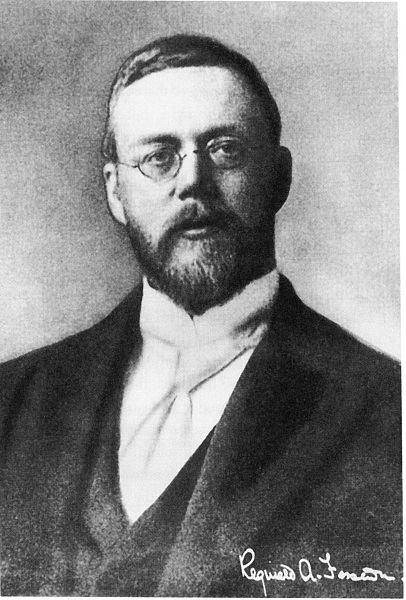
Canadian Reginald Aubrey Fessenden in his lab believed circa 1906 (Source: Radio Canada International)

(Source: ARRL News via Harald Kuhl)

The Canadian inventor, experimenter, and entrepreneur Reginald Fessenden has been credited as the inventor of radiotelephony. Fessenden claimed to have made his first voice — and music — broadcast on Christmas Eve in 1906 from Brant Rock, Massachusetts, although his account is disputed. As he has done each December for the past few years, Brian Justin, WA1ZMS, of Forest, Virginia, will transmit a program on 486 kHz, under authority of his FCC Part 5 Experimental License WI2XLQ ito commemorate Fessenden’s accomplishments.

Justin will transmit for at least 24 hours starting at around 2000 UTC on December 24, with a repeat transmission on New Year’s Eve likely, “keeping in step with what Fessenden was reported to have done on both nights in 1906,” Justin explained.Fessenden’s transmitter was most likely a high-speed “dynamo” or alternator — a predecessor to the later Alexanderson alternator — modulated by placing a carbon microphone in series with the antenna feed line to create an amplitude modulated signal. Fessenden a few years earlier had limited success making voice transmissions using a rotary spark gap transmitter. Fessenden fed his signal into a substantial antenna system erected in Brant Rock for his experiments. Accounts say on Christmas Eve 1906, he transmitted recordings of two pieces of music and read a verse from the bible.

Justin will use somewhat more modern equipment — a home-brew master oscillator, power amplifier (MOPA) transmitter based on a classic design from the early 1920s. It uses a UV-201 oscillator tube driving a VT-25 tube — a modern equivalent to a UV-202 — to generate “a few watts” on 486 kHz. His modulator consists of another VT-25, which uses a large inductor in the RF amplifier’s plate supply to serve as a Heising modulator. The audio program comes from a laptop computer.

“Heising modulation was used in World War I as an easy way to achieve AM in rigs such as those used in aircraft,” Justin said. “My particular Heising modulator can deliver only around 60% modulation, so an audio processor is used to help boost the average volume level ahead of the modulator tube.”

Justin uses far more modern technology to boost “the few watts” of modulated RF to drive a modified Hafler 9505 solid-state 500-W audio amplifier. “The idea for the amp came from W1TAG and W1VD,” he said, “and information on using such an amp on the 630 and 2200-meter ham bands can be found on the web.” After a multi-pole low-pass filter, the carrier output is 150 W.

Justin’s antenna is a Marconi T, crafted from a 160-meter dipole some 60 feet above ground and fed with open-wire line, which is shorted at the transmitter end. A homebrew variometer — constructed from 14-gauge wire wound on a piece of 4-inch diameter PVC pipe — is placed in series to resonate the antenna, which is fed against an extensive ground system. “Most of the RF is lost due to the ohmic losses of the ground system, but at least 15 W ERP is possible, depending on the dampness of the soil. Damp soil helps lower the ground losses,” Justin said.

Click here to read the full article on the ARRL News.

Listener reports may be sent to Brian Justin, WA1ZMS, at his QRZ.com address.

If you would like more information about Brian Justin and WI2XLQ, check out our interview with him in 2013. Indeed, I successfully heard the 2013 WG2XFG broadcast and posted this audio clip on the Shortwave Radio Audio Archive.

Additionally, SWLing Post reader, George Stein has a very personal connection with radio pioneer, Reginald Fessenden: click here to read his story.

An Enigma machine just fetched over $106K at auction

(Source: Bloomberg.com)

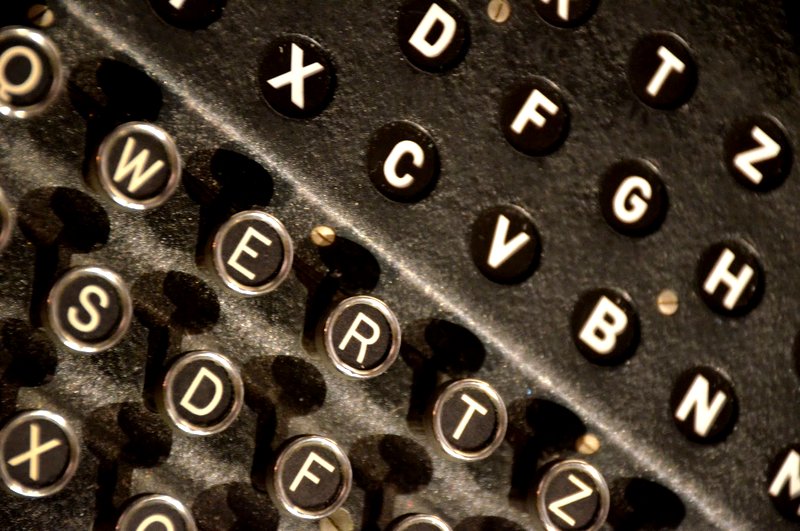
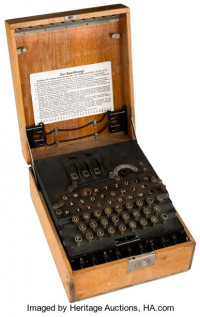
A rare “Enigma” machine, used by Nazi Germany to create military communications code thought to be unbreakable, sold at auction for more than $106,000.

The 28.5-pound cipher machine went to an internet buyer on Saturday, according to Heritage Auctions. It comes with operating instructions, a case with an engraved Third Reich emblem — and a rich lore including how British scientist Alan Turing helped crack the code.

One of the unit’s 26 light bulbs is broken, according to the description.

It’s not the first time a Nazi code creator has traded hands for such a sum. In May, an Irish private collector swiped up a different encryption machine, known as the “Hitler mill” because of its hand crank, for 98,000 euros ($109,000) from a Munich auctioneer, according to the Telegraph.[…]

Click here to continue reading the full article at Bloomberg.com.

Click here to view the auction page.

SWLing Post contributor and friend, Dan Robinson, and I once visited the National Cryptological Museum at Fort Meade and got to try our hand at using an Enigma machine. It’s an absolutely brilliant bit of mechanical engineering, of course. I highly recommend this museum to anyone interested in radio, computers or cryptography.

If you’d like to learn about another fascinating bit of over-the-air WWII technology–the SIGSALY network–I strongly encourage you to check out this post from our archives.

Phil recommends The Radio Historian website

Many thanks to SWLing Post contributor, Phill (W9IXX), who writes:

Thought might be interested in this if you haven’t already mentioned this site:

http://www.theradiohistorian.org/pubs.html

Check out his calendars!

Thanks for the tip, Phil! I know we’ve linked to article on this site before, but thanks for mentioning it again. This is truly a treasure trove for those of us who love vintage radio.  I especially like the articles page which has a number of fascinating reports. Of course there are a load of photographs and recordings as well.

Click here to check out The Radio Historian website.

Now Unblocked: Watching the new Radio Australia documentary

Yesterday, we posted a note about the new documentary, “Australia Calling: 80 Years of International Broadcasting.” At the time, I mentioned that the video was geo-blocked–meaning, you could not watch the video outside Australia without using a VPN.

Many thanks to SWLing Post contributor, Peter Marks, who shares this great news:

I’ve corresponded with the iview team and they have un-geoblocked the video. It can be watched here:

https://iview.abc.net.au/show/australia-calling-80-years-of-international-broadcasting/video/NC1940H001S00

I tested it over a VPN to Singapore and it played for me.

Thanks so much, Peter! I’ve loaded the video with no problems here in North America.

Click here to watch “Australia Calling.”


Do you enjoy the SWLing Post?

Please consider supporting us via Patreon or our Coffee Fund!

Your support makes articles like this one possible. Thank you!

Australia Calling: ABC documentary looking at the impact of Radio Australia

Many thanks to a number of SWLing Post contributors who contacted me about a new documentary focused on the impact of Radio Australia. Peter Marks writes:

The celebration of 80 years of international broadcasting from Australia continues. The ABC has published “Australia Calling: A look at 80 years of Radio Australia and ABC international broadcasting” today:

https://www.abc.net.au/news/2019-12-16/abc-celebrating-80-years-of-international-broadcasting/11783252

And tonight there’s a documentary being shown on TV.

There’s even a story about the making of that documentary here:

https://www.abc.net.au/news/about/backstory/news-coverage/2019-12-16/making-australia-calling-documentary/11795134

Thank you, Peter! I just started watching the documentary via ABC’s iView. Note that the program is geo-blocked and not available outside of Australia (unless, like me, you have a good VPN). [No longer geo-blocked! See update.]

Here’s a link to the documentary on iView:

https://iview.abc.net.au/show/australia-calling-80-years-of-international-broadcasting

Peter also shared a number of related stories–some of which we’ve published in the past:

Behind-the-scenes film of BBC Rampisham Down site circa 1961

Many thanks to SWLing Post contributor, Dave Porter, who shares a link to the following BBC Archive video of BBC RMP circa 1961. The BBC posted this video in light of the recent demolition of all but one of the original Rampisham Down towers.

Click here to watch the video on Facebook.

LRA36 and Radio Kuching QSL Cards

Many thanks to SWLing Post contributor, Richard Schreiber, who writes:

Hi Thomas,

After reading recent SWLing Post articles on LRA36 and Radio Kuching, thought I’d send along these images of QSL cards from both stations – dating back to 1981 and 1977 respectively.

I lived in Colorado at the time and heard both Kuching, Sarawak, and Argentine Antarctica from time to time and was fortunate enough to receive QSL’s.

You’ll notice on the envelope the special postmark of the Esperanza Army Base in Argentine Antarctica. In those days the covers were often as interesting as the cards.

73

Thanks for sharing those QSL cards, Richard! I think this is the first time I’ve seen an LRA36 QSL from the early 80s. Those cars are to be treasured!


Do you enjoy the SWLing Post?

Please consider supporting us via Patreon or our Coffee Fund!

Your support makes articles like this one possible. Thank you!