Category Archives: Radio History

1920s Radio Times magazines now available to public

(Source: BBC Media Centre)

BBC makes 1920s Radio Times magazines available to public

The BBC is making the earliest issues of the complete Radio Times magazines publicly available online for the first time. This release is part of the BBC Genome Project – a digitised searchable database of programme listings – from 1923 to the end of 2009.

BBC programme records have been available to the public via the BBC Genome Project since October 2014. Now, users can access digitised editions of the magazines from 1923-1929. Opening up this archive means researchers will be able to make direct links between the listings in the database and the original published listings.

Early colour front covers, specially commissioned illustrations and letters from the BBC’s first radio audience form part of the content in this fascinating record of early broadcasting.

Radio Times began in 1923, a year after the British Broadcasting Company started regular broadcasts, and thus provides a valuable record of the programmes that have been broadcast over nine decades.

More than five million programme records, scanned from Radio Times magazines, form the backbone of the BBC Genome website. Now, members of the public will be able to view the 1920s listings in facsimile, as well as all the extra material contained in articles and features in the magazine that have previously been unavailable on the site.

Hilary Bishop, Archive Development Editor, says: “We are particularly pleased that it is easy for our users to flick between the listings in the database and the related text in the magazine, as well as to scroll through articles not seen previously on BBC Genome. It is part of our commitment to continually improving BBC Genome and helping to open up the BBC’s archives as much as possible.”

Radio Times in the 1920s featured regular articles by the first Director General of the BBC, Lord Reith, and the BBC’s chief engineer, Peter Eckersley, addressing topics that concerned the BBC audience of the time, such as how to choose the best ‘receiving set’ and how to prevent ‘oscillations’ over the airwaves.

Articles, cartoons and programme listings all provide an insight into the history of broadcasting and the BBC’s first listeners, while adding some context, for a modern audience, to the earliest BBC programme records. The first editions of Radio Times show a nation still enthralled by the technological wonder of the new ‘wireless’ sets.

In each edition for the first few years of publication, cartoons explored the comic possibilities of a public who still didn’t quite understand how radio worked. “Would you kindly remove your hat madam?” asks a man at a ‘wireless village concert’. Yet the performer on stage is a radio set.

As the public wrestled with their new radio antennae, legendary cartoonist W. Heath Robinson illustrated two editions with eccentric designs of aerials.

Other historical snippets include a ‘new experiment’, in 1924, to broadcast a programme from California, to London. The exercise was to be repeated in the opposite direction. “If suitable conditions exist in the atmosphere”, concludes the article, “there is no reason why the experiment should not be successful”.

You can access the digitised 1920s magazines at: http://genome.ch.bbc.co.uk
Click here to read this article at the BBC Media Centre.

Click here to browse the Radio Times archive.

The first maritime radio distress call

(Source: The Telegraph via Mike Barraclough on Facebook)

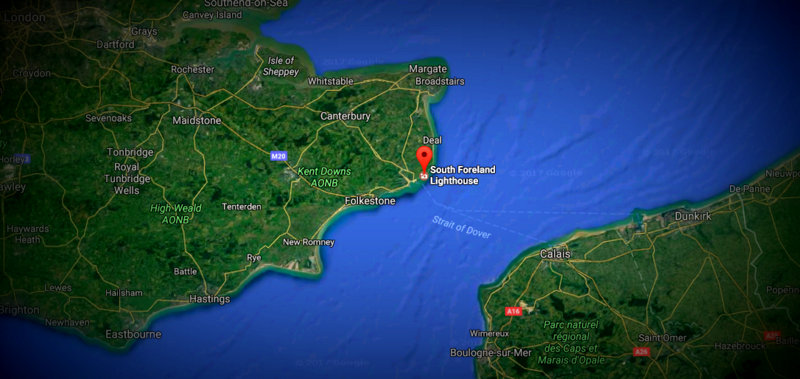
On 17 March 1899, the East Goodwin Sands Lightship, operating under a licence from the General Post Office, BT’s predecessor, sent a signal on behalf of the merchant vessel Elbe, which had run aground on the treacherous Goodwin Sands off the coast of Kent.

The message was received by the radio operator on duty at the South Foreland Lighthouse, who was able to summon the aid of the Ramsgate lifeboat.

Goodwin Sands featured again a few weeks later when, on 30 April 1899, the East Goodwin Sands Lightship sent a distress message on her own account when she was rammed by the SS R F Matthews.

Rather than the now-famous signals of “SOS” or “Mayday”, the recognised call sign for ships in distress at the time was “CQD”. Devised in 1904 by the British Marconi Society, it was popularly mistaken to mean “Come Quick – Danger” or, more bleakly, “Come Quickly – Drowning!”. However, its actual official meaning came from the land telegraph signal CQ – “sécu” from the French word sécurité – followed by D for Distress.

The “SOS” Morse code signal – three-dots/three-dashes/three-dots – was established as an International Distress Signal, agreed at the Berlin Radio Conference on 3 October 1906 – though the signal wasn’t formally introduced until 1 July 1908.

Continue reading the full story at The Telegraph online.

Dame Vera Lynn on the White Cliffs of Dover

Dame Vera Lynn

Many thanks to SWLing Post contributor, Mike Hansgen (K8RAT), who shares the following news about Dame Vera Lynn’s 100th birthday:

(Source: The Mirror)

The face which inspired hope to a nation during the dark days of WW2 will once again light up the White Cliffs of Dover.

Forces Sweetheart Vera Lynn turns 100 today with a special tribute to the singer and the song she made famous…They’ll be Bluebirds Over The White Cliffs of Dover.

(Source: The Mirror)

A 150ft image of the inspiring Vera is being projected onto the iconic white cliffs in Kent as she becomes the first centurion to release an album! [Continue reading…]

Mike adds:

“It is March 20, the 100th birthday of the wonderful Forces Sweetheart. Remember her boys who flew the Spitfires and the Lancasters. Remember her boys at Arnhem.

Remember them all.”

Mike knows I’m a WWII buff and also a fan of Dame Lynn.

Photo source: Decca Records

Indeed, back in 2015, I recorded The White Cliffs of Dover being played through my WWII era Scott Marine Radio Model SLR-M in honor of Memorial Day. If you missed it, click here to enjoy a little tribute to the Forces Sweetheart.

Wish I could be in Dover tonight to see the white cliffs–! Happy Birthday, Dame Lynn.

Mike also suggests this excellent pictorial timeline tribute to Vera Lynn via the BBC website.

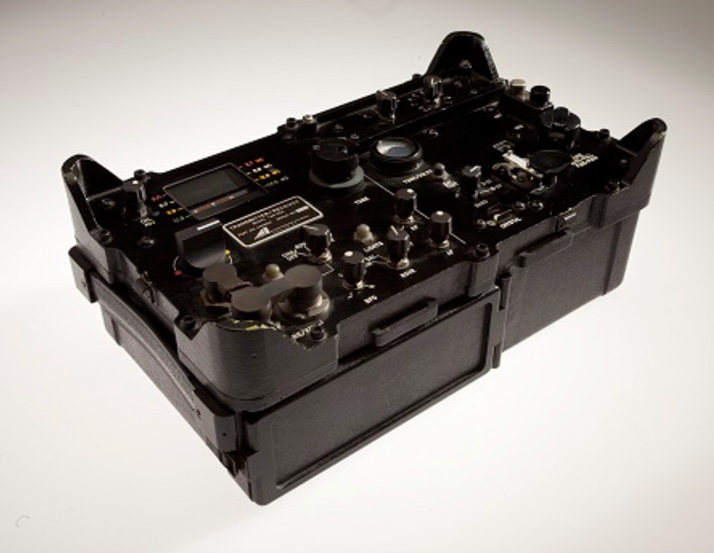
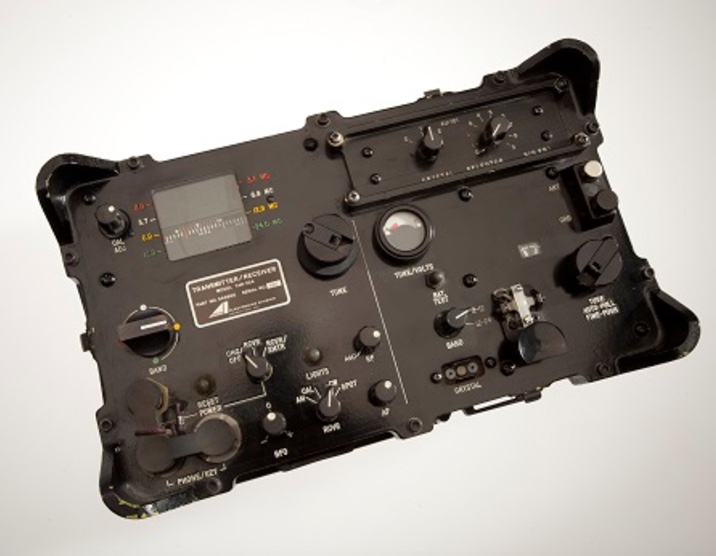
The TAR-224 CIA Radio

Many thanks to SWLing Post contributor, @K7al_L3afta, who suggested I post photos of the TAR-224 Radio. Obviously, he knows I’m a fan of this sort of rig!

He discovered the TAR-224 on the excellent CIA online museum where they give a brief description of the unit:

A compact, high-frequency, paramilitary transceiver, the TAR-224 enabled communications with field agents operating behind enemy lines. It saw service in Vietnam as well as during Operation EAGLE CLAW.

31 cm x 18.3 cm x 12 cm
(L x W x H)

A much better description of the TAR-224 can be found at the CryptoMuseum:

TAR-224 was a very compact, self-contained spy radio station, developed by AVCO Corporation in Cincinnati (Ohio, USA) around 1970 for the CIA. It was intended for communication with field agents operating behind enemy lines, and can be seen as a successor to the ageing GRC-109 (RS-1) of the 1950s. It was used for many years until it was phased out in the late 1980s.

The entire unit is completely waterproof, with all switches and controls at the front panel properly sealed, allowing the radio to be stored under harsh conditions for an extended period of time. A plastic lid can be placed over the controls to protect them against dust and dirt. It is held in place by three metal latches at the edges.

[…]The radio coverages all frequencies between 2 and 24MHz. The receiver has a Variable Frequency Oscillator (VFO), allowing continuous tuning of all 4 frequency bands, whereas the transmitter is crystal operated. The unit can be powered by an external 12V source that is connected to a 3-pin socket at the front left, or by a special 12V battery pack that is installed behind a watertight panel at the front left. A plastic grip, at the left of the radio, allows the unit to be carried around easily.

[…]Most TAR-224 units were used by the CIA on special (overseas) missions, but the radios were also used by intelligence services in Europe. It is known to be used on a mission in Angola in 1975. According to CIA communication specialist Teddy Roberts, the TAR-224 was still being used in operational context in 1983, when he trained a unit of US Army Green Barets on its use.

Continue reading…

Evidently, the TAR-224 is quite rare and I was not aware of it. Thanks for sharing, @K7al_L3afta!

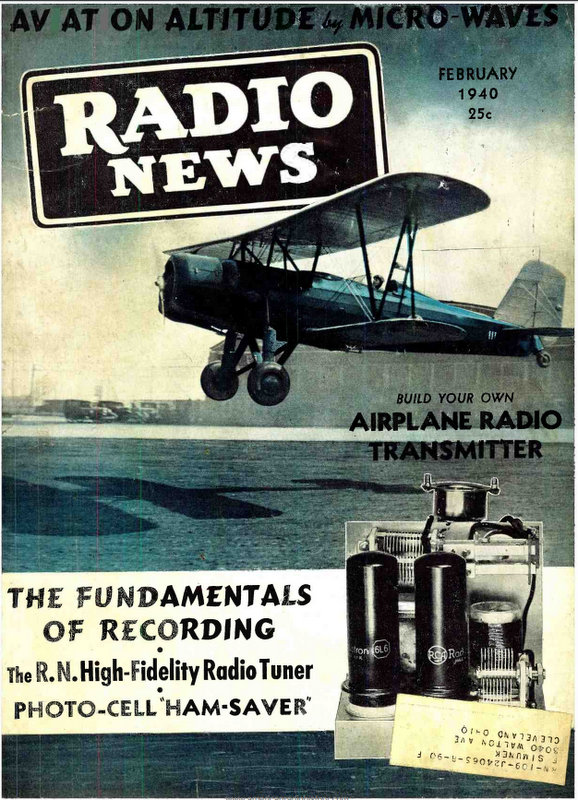
Radio News archive at American Radio History

Many thanks to SWLing Post contributor, Jarno (PA3DMI), who reminds us that the American Radio History site is chock-full of radio nostalgia:

To keep you and your readers busy 🙂

http://www.americanradiohistory.com/Radio_News_Master_Page_Guide.htm

Many thanks, Jarno!

Check out the main index for even more radio periodicals.

VOA Museum celebrates VOA 75th anniversary

Photo from the control room at the VOA Bethany museum.

(Source: Southgate ARC)

National VOA Museum to celebrate 75th anniversary of Voice of America

There’s an important birthday celebration in West Chester this year: the 75th anniversary of the Voice of America.

“We’re planning a series of events and exhibits this year to celebrate the VOA’s commitment across America and the world to embrace best practices in telling the truth in order to let the world decide,” said Jack Dominic, museum executive director.

The VOA was formed in 1942 as a way to counteract Nazi propaganda in Germany and provide war news to American troops and Allies overseas.

“WLWO, a division of WLW, was transmitting news via shortwave radio overseas long before 1942,” said Dominic. “In fact, broadcasters from WLWO provided the nucleus of the early VOA broadcasting team. Cincinnati’s shortwave technology and its broadcasters truly helped the U.S. win the war.”

The reentrant rhombic antennas at the VOA-Bethany station in West Chester were so powerful that they became quickly known as the “siege guns of radio” for their capacity to reach the far corners of Nazi-occupied countries with little audible distortion. A frustrated Adolph Hitler was known to call the VOA “those Cincinnati liars.”

The VOA-Bethany station transmitted VOA news to Europe during WW II and South America during the Cold War through its innovative shortwave rhombic antenna network developed by the Crosley Corporation. The Bethany station was decommissioned by the federal government in 1994, after shortwave radio technology was supplanted by television and satellite technology.

“The men and women who made up the VOA broadcasting system were our journalistic beacons of light during the 20th century,” said Ken Rieser, president of the VOA museum board.

“Elmer Davis, John Houseman, Edward R. Murrow and Robert Bauer all had positions of leadership within the VOA.

“We hope that the VOA enjoys many more years of embracing the highest of journalistic standards in its reporting so it inspires people in war-torn and oppressed countries to hope, dream and work toward democracy.”

The Voice of America, based in Washington, D.C., is the world’s largest international broadcaster, providing balanced and comprehensive news and information in 47 languages to 236 million people each week, according to the VOA website. It continues to reach people in countries lacking a fee press today and its languages include: Russian; Ukrainian; Azerbaijani; Serbian; Armenian; Thai; and Somali.

The National VOA Museum of Broadcasting is located in the art deco Bethany station building and houses three collections: Gray History of Wireless radios; VOA-Bethany station’s Voice of America control room; and the Media Heritage Cincinnati Museum of Broadcast History. The West Chester Amateur Radio Assn. operates station WC8VOA from the museum building.

The VOA museum now offers an annual $50 membership that provides free admission for the member, an adult guest, and up to three children under 12. Members also receive updates and advance information about new exhibits and programs.

For $250, members receive the benefits above, as well as a 50 percent discount on any and all lectures, programs or visiting exhibit tickets.

The National VOA Museum of Broadcasting is open the third Saturday of each month from 1 to 4 p.m. Admission is $5 for adults and $1 for children. The museum is located at 8070 Tylersville Road in West Chester.

Museum will be open this Saturday, Feb. 18

For more information, visit the VOA Museum website at www.voamuseum.org or call (513) 777-0027.

To access Voice of America programs, visit www.voanews.com

The VOA Bethany museum is certainly worth a visit! I went there in 2015 and was most impressed with the work these volunteers have accomplished.

Click here for our short photo tour.