Category Archives: Radio History

Stuart Sizer: Heathkit designer, dad, and “bon vivant”

Heathkit-Drawings-2Two weeks ago, through a radio preservation group, I met the son of Heathkit product designer of the 1950s-70s, Stu Sizer––”stylist, artist, maker of models, bon vivant.” His son described the discovery of a few vintage Heathkit brochures, photos, and illustrations his father kept in his family’s basement shop, many of which had been scanned at some point.

Stu Sizer––”stylist, artist, maker of models, bon vivant”––was tasked with crafting Heathkit’s user-friendly and attractive exterior designs. For many years Sizer was Heathkit’s only product designer, and was therefore often busy. “He was a great dad,” his son told me, “but he spent a lot of time in the basement proof-building kits.”  He adds wryly, “Let that be a lesson to the hams of this world.”

Sizer’s son kindly shared with us the following scans and photos of his dad’s work, many of which are original drawings; the series concludes with some clippings featuring Sizer.

PC241116 PC241108 PC241107 PC241106 PC241099 Heathkit-Drawings-16 Heathkit-Drawings-15 Heathkit-Drawings-13 Heathkit-Drawings-12 Heathkit-Drawings-11 Heathkit-Drawings-10 Heathkit-Drawings-9 Heathkit-Drawings-8 Heathkit-Drawings-7 Heathkit-Drawings-6 Heathkit-Drawings-5 Heathkit-Drawings-4 Heathkit-Drawings-3 Heathkit-Drawings Heathkit-Advertisement

On Stuart Sizer

Heathkit-Stu Walter SizerHeathkit-Stu Walter Sizer-3Heathkit-Stu Walter Sizer-2

Tuning the Scott Marine SLR-M at sea

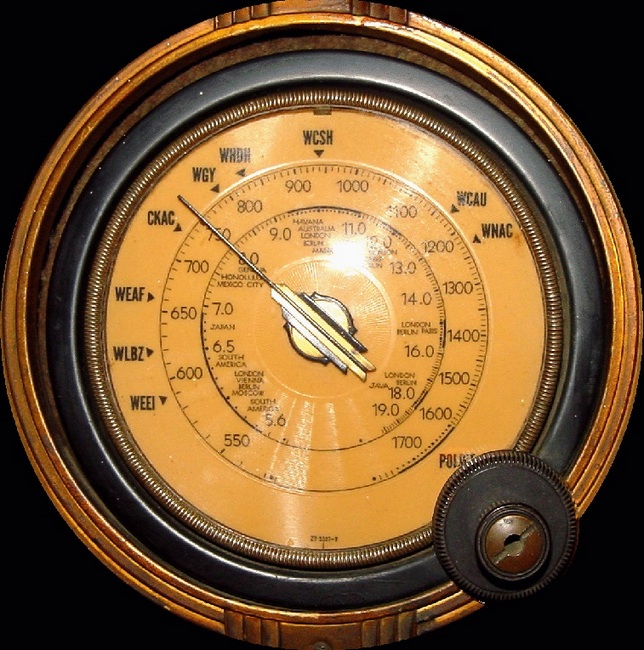
Scott-Marine-SLR-M-Dial

Many thanks to SWLing Post reader, Vendel Boeree (K2DSI), who writes:

Hi Tom, I just wanted to compliment you on your fine website. As a kid I would listen to Radio Netherlands which made me quite the hit with mom because she was homesick for our native Holland for quite some time. I was heart broken to find out that Radio Netherlands went dark not that long ago.

Scott-Marine-SLR-MBack in 1967 my family moved to Australia and went there by freighter. Things didn’t work out as planned and we returned on an old American freighter, the “African Moon”.

I became friendly with the radio operator on that ship and he let me shortwave listen when he was off watch. The receiver was a “Scott” and appeared to be the same as yours. They also had a “Scott” receiver in the lounge that had a slide rule dial that was used for entertainment purposes. I was hooked. I wanted to be a radio operator.

Needless to say I didn’t follow through on that dream and I suppose that’s just as well seeing as how ROs are a thing of the past.

Take care and keep up the good work.

Vendel Boeree/ K2DSI

Thanks so much for sharing those memories, Vendel! I bet reception was nothing short of amazing while you were at sea. I’m guessing the slide rule model Scott you listened to in the lounge was the model SLR-F (click here for a photo).

Just the other day, my wife looked around my radio shack and asked what radio I would grab if the house were on fire. My answer was the Scott Marine SLR-M. It represents everything I love in WWII era receivers: built like a tank, great sensitivity, beautiful back-lit dial, built-in speaker, phono in, a magic eye and–since it was intended as a troop morale radio–beautiful room-filling audio.

Yep. Scottie’s a keeper!

Colin’s welcome additions to the shortwave archive

IMG_0135If you’re a subscriber to the Shortwave Radio Audio Archive, you’ve no doubt noted the excellent recordings submitted by Colin Newell (of DXer.ca) the past few weeks.

Colin has been digitizing loads of off-air recordings made in the 1970s and 1980s. His recordings include rare DX, Cold War broadcasters, west coast pirate radio stations, mediumwave DX, and much more.

I encourage you to click here to browse and listen to what Colin has uploaded so far.

Consider subscribing to the shortwave archive so you don’t miss new additions when they’re published!

Video: This Is Radio Free Europe (1964)

RFE-Image

If you’re in the mood for a little Cold War era nostalgia, check out this video produced by Radio Free Europe in 1964. One of the things I found most fascinating was seeing the number of rack-mounted Hammarlund SP-600s (and other benchmark receivers) at the RFE monitoring station near Munich.

Listening to the Voice of Greece on the Signal Corps BC-348-Q

SignalCorps-BC-348-Q

Yesterday evening, I warmed up my Signal Corps BC-348-Q and tuned to 9,420 kHz to see if the Voice of Greece happened to be on the air.

Fortunately, I was rewarded with a strong signal from Avlis.

The ‘348 did a fine job playing all that lovely Greek music, too. Though the WWII era ‘348 was never intended to be an HF broadcast band receiver, when paired with a good speaker, it sounds pretty darn amazing!

Here’s a short video (apologies for the dark image):

1944 WWII Hallicrafters Shortwave Radio Promo

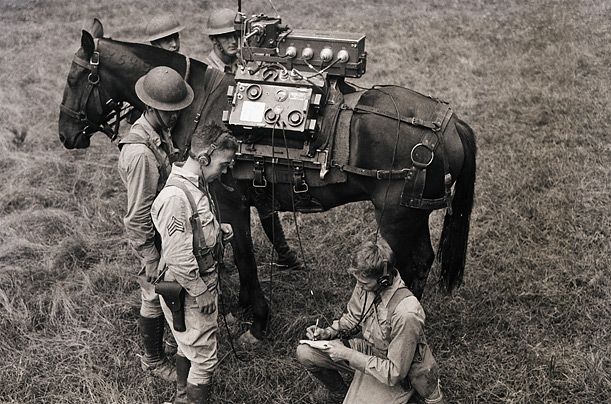
WWII-HallicraftersInteresting 15 min. video demonstrating the Army Signal Corps using an Hallicrafters SCR-299.

https://www.youtube.com/watch?v=TURd_XVpwvk

While certainly a promotional piece for Hallicrafters, this has great footage and captures a bit of the excitement of radio expanding into new frontiers. There is a discussion of how the radio was modified for military conditions as well as some innovations which were implemented to make such a system mobile.

As an aside, it never ceases to amaze me how clear and crisp black and white film technology of the time seems somehow better than the color images which replaced it. But that may just be me — a black-and-white guy living in a colorized world!

There is a second part to this video, as well as other WWII-era videos available on YouTube with a bit of searching, and of course don’t forget to check out the SWLing’s Shortwave Radio Archive page for more interesting shortwave audio old and new!

Robert Gulley, AK3Q, is the author of this post and a regular contributor to the SWLing Post. Robert also blogs at All Things Radio.

From the Shortwave Archives: BBC World Service report on the Space Shuttle Challenger disaster

STS-51-L crew: (front row) Michael J. Smith, Dick Scobee, Ronald McNair; (back row) Ellison Onizuka, Christa McAuliffe, Gregory Jarvis, Judith Resnik.

STS-51-L crew: (front row) Michael J. Smith, Dick Scobee, Ronald McNair; (back row) Ellison Onizuka, Christa McAuliffe, Gregory Jarvis, Judith Resnik.

Many thanks to SRAA contributor, Tom Laskowski, who submits the following notes with his timely off-air recording of the BBC World Service from January 28, 1986:

Thirty years ago today the US Space program came crashing down with the explosion of the Space Shuttle Challenger.

I was a student at Purdue University at the time, living in a dormitory.

I decided to make some recordings knowing this would be a historic event.

This is a recording I made of the BBC on the evening of Jan 28 (0200 UTC on January 29). The frequency was most likely 5975 kHz or 9590 kHz. The dorm environment didn’t make a great place for SWL reception and the recording is noisy but still of decent quality.

Recorded using a Sony ICF-2001 with a wire attached to a window screen for an antenna.

Click here to download the recording as an MP3, or simply listen via the embedded player below:

Thank you so much for sharing this recording, Tom. What a brilliant way to remember and honor the Challenger crew.

To listen to a wide array of off-air shortwave radio recordings, explore the Shortwave Radio Audio Archive.