Category Archives: Radio History

Guest post: Trip Down Shortwave Memory Lane via Vintage RadioShack Catalogs

RadioShack-CatalogMany thanks to SWLing Post contributor, Mario Filippi (N2HUN), for the following guest post:


Trip Down Shortwave Memory Lane via Vintage RS Catalogs

-Mario Filippi (N2HUN)

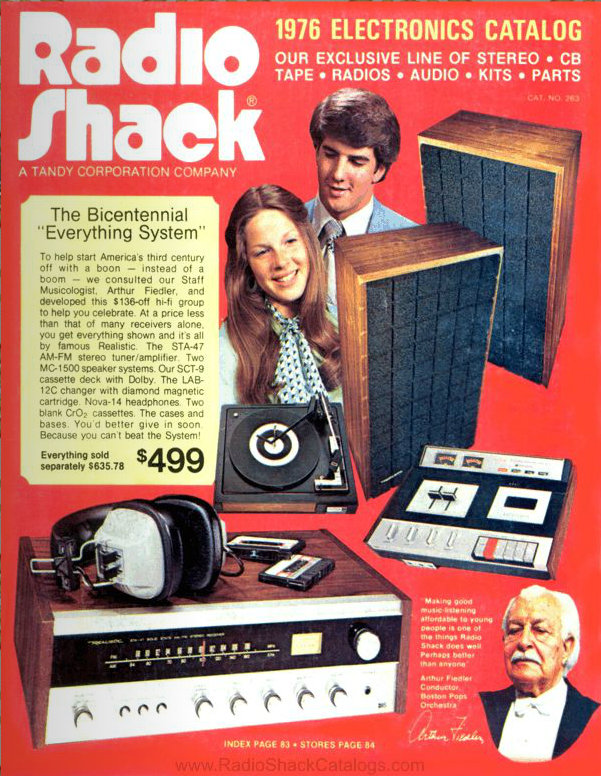
Attached is a wonderful website containing archived Radio Shack catalogs and sales flyers going back to 1939, surely of interest to SWLs, hams, and other electronics hobbyists. Most of us have fond memories growing up and visiting our local Radio Shack when it was the place to go for ham, shortwave, and scanner radios. My hometown Radio Shack was located on North Avenue in New Rochelle, NY and I purchased an electric guitar (could not afford a Fender) from them in the late 60’s which had three pickups and included a case for $29.95!

Radio Shack Catalogs

You see, back then Radio Shack had a much more diversified line of products, including musical instruments, power tools and even scientific stuff like microscopes and slide rules. These archived catalogs are a treasure trove of information not only from a historical perspective, but for anyone who is interested or who is contemplating purchasing vintage equipment such as shortwave radios, because you can look up the original sales info in the RS catalog which contains the original price, photo, description, and accessories available at that time.

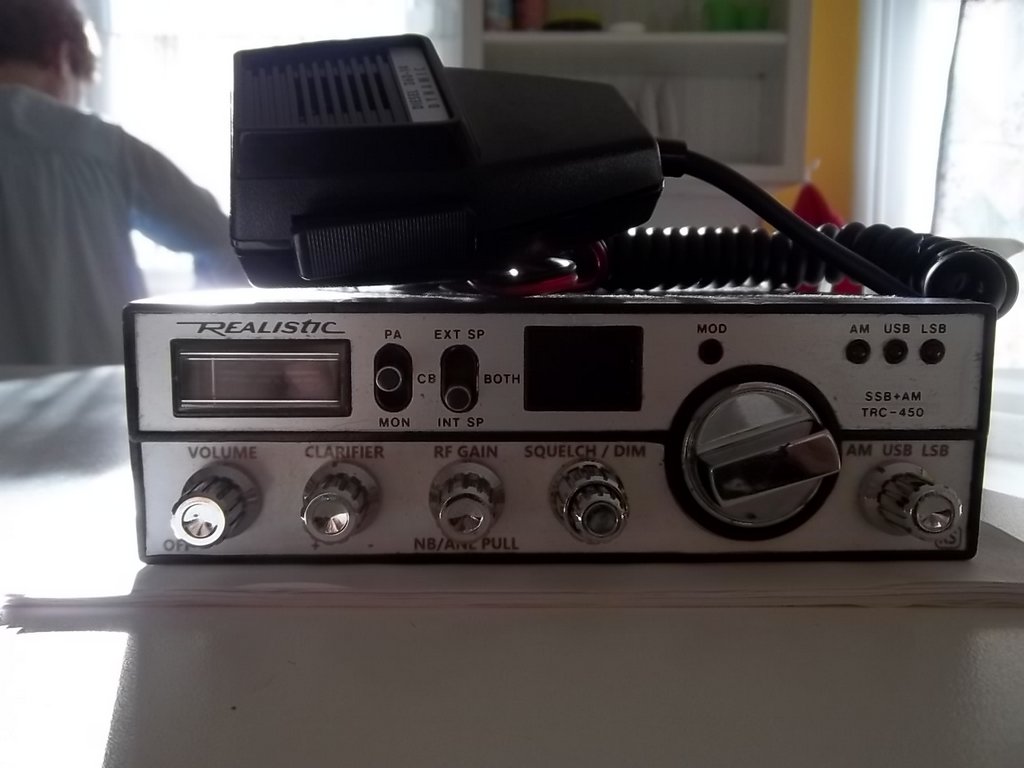
For example, last year I purchased a “tech special” Realistic TRC-450 AM/SSB CB radio on Ebay that needed LED repair, so I looked up the original sales ad and got the price, photo (this helps to see original condition), and product description. Below is a picture of my restored Realistic which originally sold in 1980 for $269.95!
RadioShack-TRC-450

The classic Realistic TRC-450 AM/SSB CB radio. (Photo: Mario Filippi)

Nowadays most people don’t realize how expensive electronics were a few decades ago. A comparable new AM/SSB CB radio sells for about half that price nowadays!

Lastly, as one progresses chronologically through the catalogs, you can see technology (and even fashion) trends – the large 8 track tape decks of the 60’s and 70’s progressed to smaller cassette players of the 80’s and 90’s, then DVD/CD players made their entrance, ultimately giving way to higher tech forms of entertainment such as satellite radio and Internet-based entertainment. Well I hope you enjoy this totally entertaining and informative website and I thank the individual who took the time and effort to preserve for perpetuity these priceless annual time capsules for everyone to enjoy.


Mario, many thanks for this trip down memory lane!

As you state, these catalogs are actually an excellent reference source when trying to determine pricing and features of RS radios found on the used market.

I think they’re also so much fun to flip through as they’re chock-full of nostalgic value. When I was a kid, I could care less about toy store catalogs–the RadioShack catalog was my toy store!

Indeed, when I open the online catalog copies at Radio Shack Catalogs, I can almost smell the ink on the pages! Am I the only one?
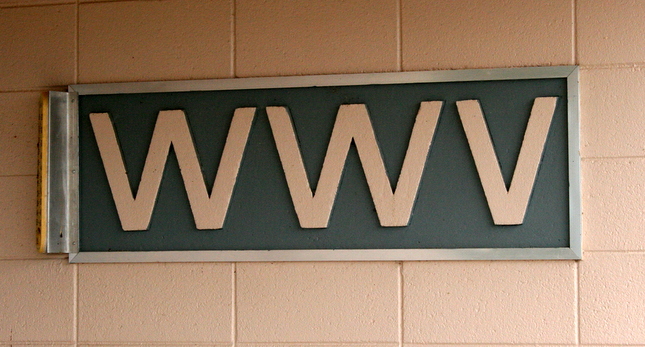
WWV History: Richard’s QSL cards

WWV-First-Sign-SM

Sign from the original WWV tranmitter site in Maryland, currently posted outside of the Fort Collins, Colorado transmitter building. (Photo: Thomas Witherspoon)

Commenting on our post about Myke’s new release of At The Tone, SWLing Post contributor Richard Langley writes:

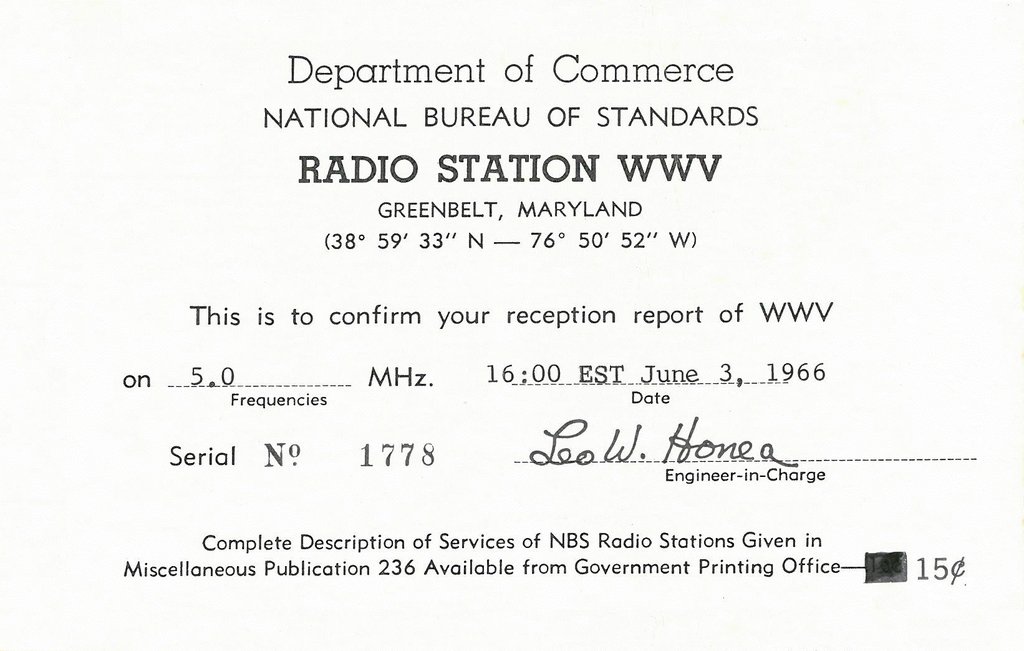
I must have first heard WWV shortly after putting together the Knight-Kit Span Master I received for Christmas 1963. I still have my log books from my high school days, which include an entry for Radio Habana on 29 December 1963 for which I subsequently received a QSL card. But I guess I didn’t log all my receptions. The first entry for WWV is dated 3 June 1966 in the last year of WWV’s operation from Greenbelt, Maryland (on government land that subsequently became the site of NASA’s Goddard Space Flight Center).

WWV_QSL_frontWWV_QSL_back

I have a QSL card for the reception of the 5 MHz signal featuring a drawing (in pink) of the Jefferson Memorial [see above].

The next entry is dated 1 December 1966, the first day of WWV’s operation from Fort Collins, Colorado.

WWV_firstday_QSL_frontWWV_firstday_QSL_back

I have one of the special QSL cards issued for confirmation of first-day reception for my report on the 20 and 25 MHz signals [see above].

I’m sure I heard WWVH early on too but my first log entry is dated 29 March 1967. I never did QSL them.

Richard: Thanks so much for sharing these special QSL cards. Wow! I had never seen the first day card from WWV Fort Collins before–what a treasure you have there!

Updated release: “At The Tone: A Little History of NIST Radio Stations WWV & WWVH”

AtTheTone

Almost five years ago, I wrote about a unique collection of archived recordings called At The Tone: A Little History of NIST Radio Stations WWV & WWVH.

Producer Myke Dodge Weiskopf recently released a new and expanded edition of At The Tone which is now available for purchase and download.

Myke describes the update:

“The new edition significantly expands on the previous CD reissue from 2009. It incorporates a bunch of tapes sourced from the original announcer tracks made by Jane Barbe herself for WWVH, as well as a handful of vintage broadcast recordings previously left out of the set. I’ve also taken the opportunity to clean up and remaster the set overall, so it’s a much more cohesive listening experience as a body of work.”

Click here to purchase the new digital edition of At The Tone.

Please comment!

Myke is also giving away a free download of At The Tone to a lucky SWLing Post reader!

Simply comment on this post, noting the first time you heard WWV: note both the year and the model of receiver used.

For example, I would comment: “The year was 1976 and the receiver was an RCA Model 6K3 console radio.”

Myke will pick a winner from the comments next Wednesday (November 25th). If the winner has already purchased the expanded edition of At The Tone, Myke will reimburse the purchase. Good luck!

Archived recording of Marchese Marconi

Marconi

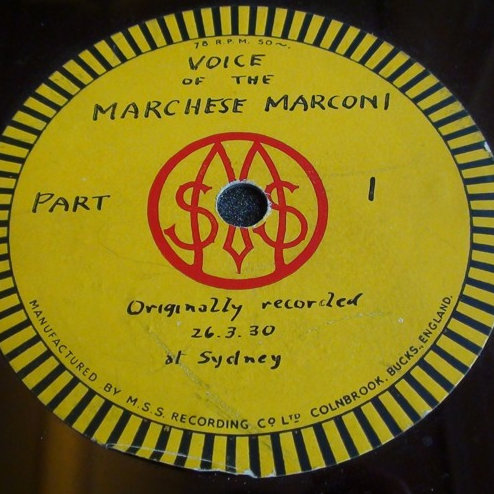
The Essex Record Office has published a recording of a speech made by Guglielmo Marconi in 1935. You can listen to the recording by clicking here or listening via the embedded player below (description follows):

(Source:Essex Record Office via Southgate ARC)

“Second part of a speech made by Guglielmo Marconi on the occasion of the unveiling of the ‘Fisk Memorial’ at Wahroonga, Sydney, New South Wales, Australia on 14 December 1935 (the disc is incorrectly labelled). The ‘Fisk Memorial’ commemorates the first direct wireless message sent from the U.K. to Australia, in 1918.

In the speech, Marconi forecasts the impact that wireless communication will have on ship navigation, but also the world economy generally. Would he be surprised by how accurate he was in his prediction that ‘no country can make much headway’ without such technology?”

A timeline of radio in the UK

Crosley-Dial

Many thanks to SWLing Post reader, Daniel, who shares a link to this article on the BT website:

From Marconi and the transistor radio to DAB: the history of radio in the UK

93 years ago this week, the BBC made its first radio broadcast. We look back at some of the most significant events in radio’s history.

On November 14, 1922 the British Broadcasting Company began its first radio broadcast. Since then the radio landscape has changed dramatically.

Radio is still an incredibly popular medium. According to Ofcom’s 2015 Communications Market Report, nine in ten UK adults listen to the radio each week. We listen for an average of 21.4 hours a week, but the way we do this has changed.

Families had to huddle around the radio in the 1930s, but now we can listen to the radio anywhere, anytime using our smartphones. We look at some of the most significant milestones of British radio over the last 93 years[…]

Click here to read through the entire article and timeline at BT.com.

AFVN: The GI’s Companion — A Tribute To Our Vietnam Veterans

Many thanks to SWLing Post contributor, Richard Langley for the following guest post:


AFRTS_QSL-001

AFVN: The GI’s Companion — A Tribute To Our Vietnam Veterans

Radio station WEBY on 1330 kHz in Milton, Florida (near Pensacola and Elgin Air Force Base), has produced a 10-hour documentary on the American Forces Vietnam Network. This documentary aired in two-hour segments in the afternoons of 26 through 30 October 2015. But it is being repeated in its entirety between 8:00 a.m. and 6:00 p.m. CST (14:00 to 24:00 UTC) on Veterans Day (known as Remembrance Day in Canada and elsewhere), 11 November.

The WEBY website is http://www.1330weby.com/ and a backgrounder on the documentary can be found here: http://www.1330weby.com/images/afvn/AFVN_Documentary_on_WEBY.pdf and a timeline of U.S. broadcasting in South Vietnam here:
https://www.afvnvets.net/hist—timeline.html

WEBY runs 25 kW during daytime hours (and a puny 79 watts at night) and can be heard in parts of four states (Florida, Alabama, Mississippi, and Louisiana) but it also streams its programs on the Internet and so can be heard around the world. I’ll try to record some of the streamed audio in case the documentary is not available after the broadcast.

I was alerted to this documentary by a recent episode of PCJ Radio International’s Media Network Plus (24 October) during which Keith Perron interviewed the producer. That interview is worth listening to, too.

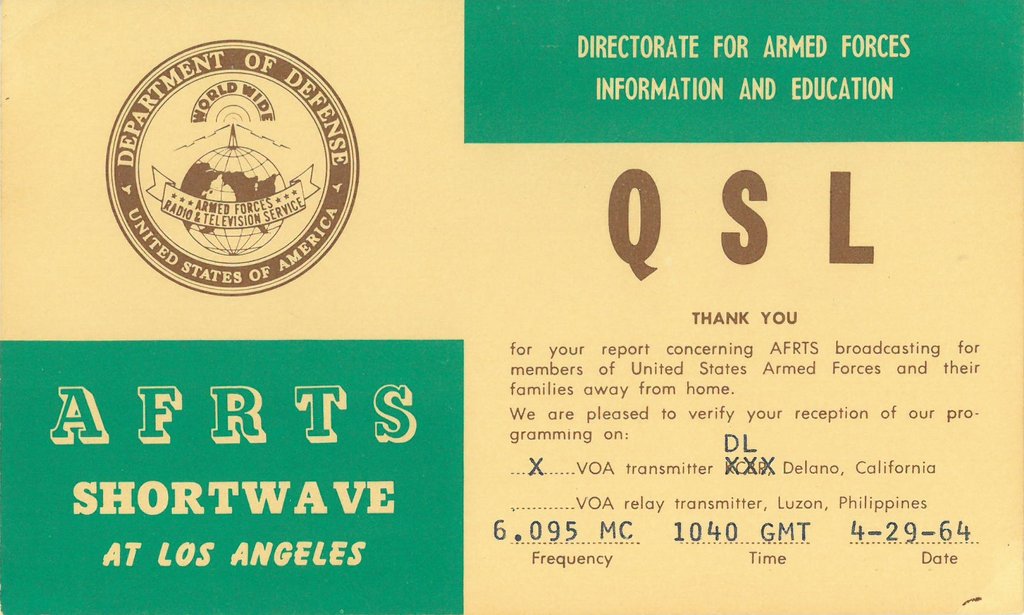
AFVN transmitted on AM and FM throughout South Vietnam. I never had the opportunity to listen to AFVN personally, but as a high school student, I did use to listen to the Armed Forces Radio and Television Service (AFRTS) on shortwave from time to time. AFVN received some of their broadcast material via AFRTS broadcasts from Voice of America transmitters in Delano, California, and the Philippines. A scan of a QSL card I received for a broadcast from AFRTS Los Angeles via Delano in April 1964 [see below].

AFRTS_QSL

A.V.Club reviews “The Russian Woodpecker”

Duga-3-Woodpecker

Many thanks to SWLing Post reader, Charles, who writes:

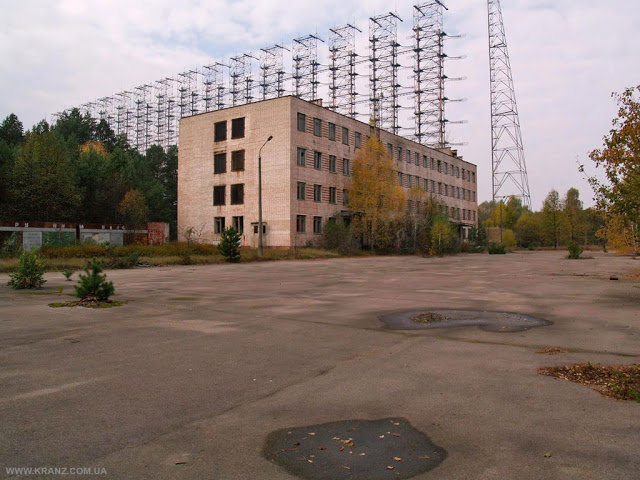
Thomas, you might find this movie review of “The Russian Woodpecker” interesting. Looks like the film is more conspiracy than investigative reporting. Too bad. Having dealt with Woodpecker noise during my ham radio career, it would have been fun to know more about the motivation behind building that enormous OTH radar:

http://www.avclub.com/review/russian-woodpecker-offers-plenty-conspiracy-little-226743