Category Archives: Radio History

Tom’s 1981 off-air recording of RCI’s Shortwave Listener’s Digest hosted by Ian McFarland

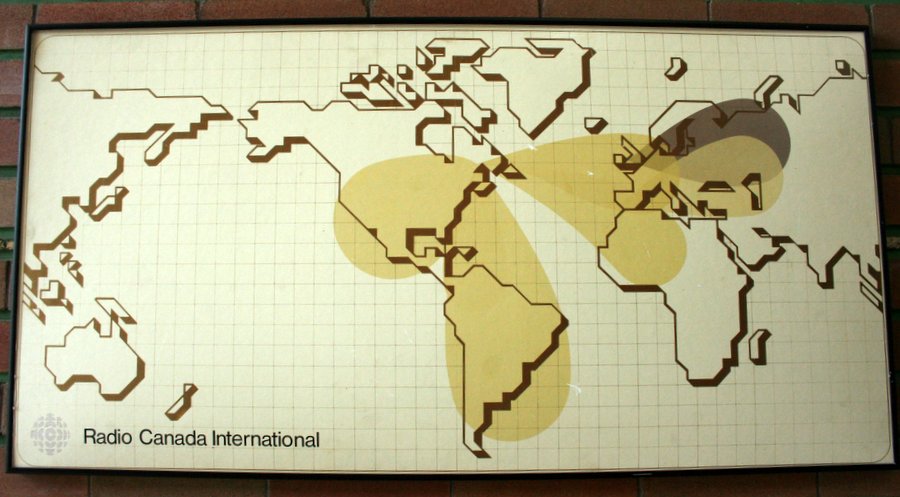
I snapped a photo of this propagation poster in RCI's Sackville, NB transmitter site only months befor ethe site was closed.

A propagation poster in the foyer of RCI’s Sackville, NB, transmitter site only months before the site was closed. (Photo: Thomas Witherspoon) 

Tom Laskowski, has been generously contributing a number of off-air shortwave radio recordings to the Shortwave Radio Audio Archive (SRAA).

Recently, he shared a series I’m sure many of you remember. Tom writes:

My first contribution of many recordings I have of Radio Canada International’s Shortwave Listener’s Digest hosted by Ian McFarland.”

“The first 12 1/2 minutes is Bonsoir Africa. The recording was made using a cheap GE portable. The audio quality isn’t great but it’s still very nostalgic listening to a program I recorded 34 years ago.”

This brings back many memories of one of my favorite shortwave programs–thank you, Tom!

The audio quality actually reminds me of one of my first analog portables, Tom! Nostalgia at its best.

Check out all Tom’s SRAA contributions by clicking here. While you’re at it, bookmark the SRAA!

Anniversary of Sputnik I Launch & Radio Moscow

radio_moscow_sputnik_card_side1

Many thanks to SWLing Post contributor, Richard Langley, who writes:

Yesterday, 4 October, was the anniversary of the Soviet Union’s launch of Sputnik I, the first artificial Earth satellite. The launch heralded the beginning of the space age. Sputnik I’s Doppler-shifted radio transmissions on 20.005 and 40.002 MHz led to the development of the U.S. Navy Navigation Satellite System (Transit) and the equivalent Soviet system (Tsikada) and, eventually, to GPS and GLONASS and the other modern global navigation satellite systems.

The Sputnik I radio signals were picked up by many shortwave listeners. The 20 MHz signal was close to that of WWV and so was easy to find. And, apparently, WWV turned off its 20 MHz transmitter during some of Sputnik I’s passes over the U.S. so as not to interfere with reception.

There are several good sites on the Web with information about Sputnik I and its radio signals including:

Richard's Radio Moscow QSL card (Click to enlarge)

(Click to enlarge)

Sometime in high school, I received a card from Radio Moscow celebrating the launch of Sputnik I [see above]. Perhaps it was issued in 1967 for the 10th anniversary of the launch.

Richard: You never cease to amaze me! Thank you so much for sharing all of this Sputnik I information and resources! That gorgeous QSL Card is perhaps my favorite design from Radio Moscow.

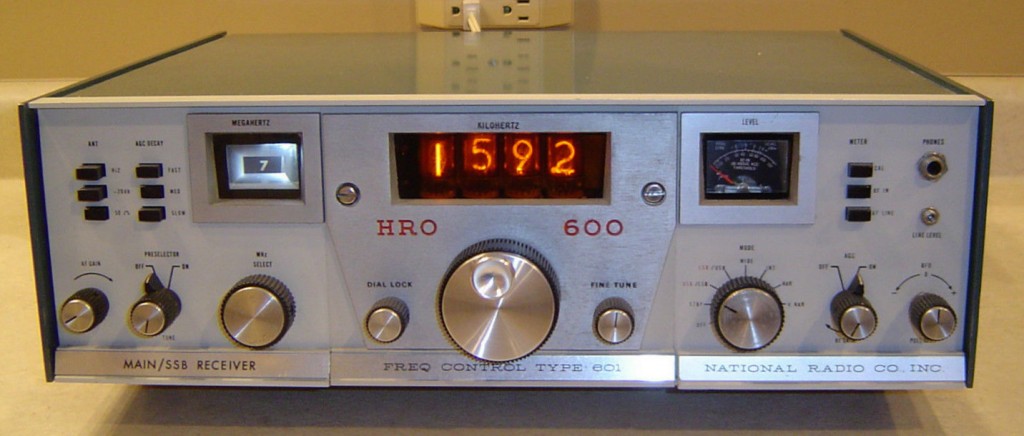
Dan spots an extremely rare HRO-600 on eBay

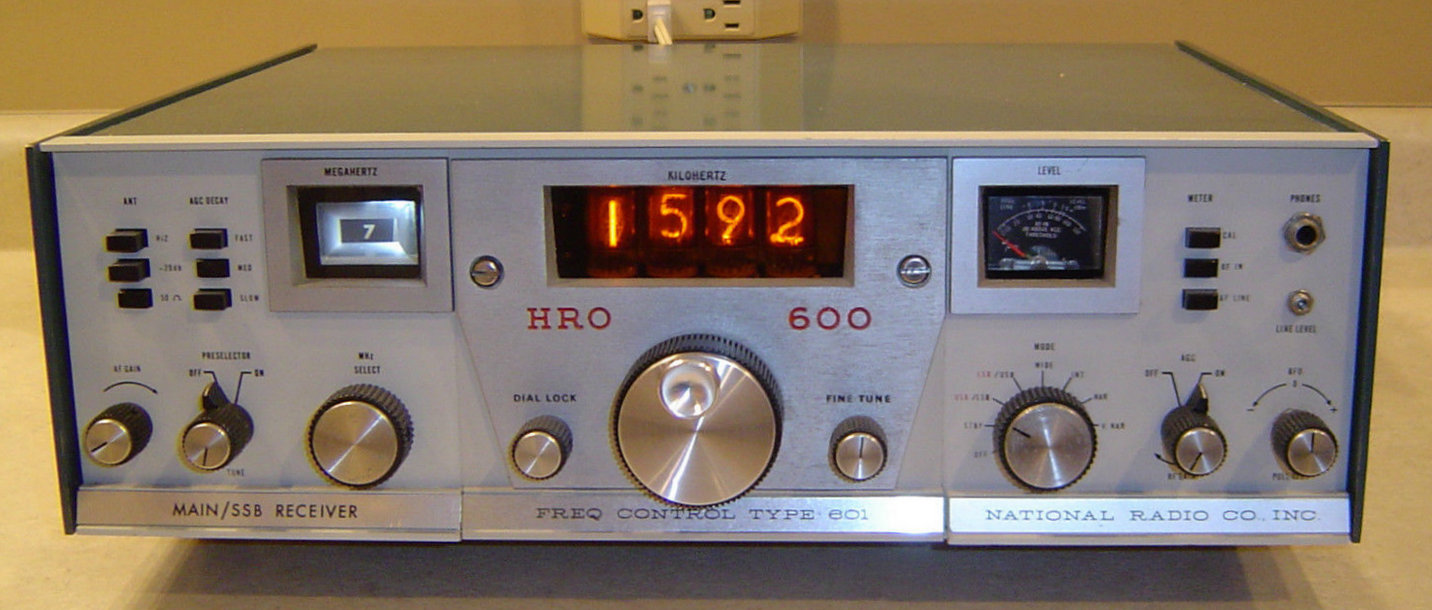
HRO-660

SWLing Post contributor, Dan Robinson, writes:

Wow . . . a huge, amazing rarity…this is perhaps the rarest of radios, the HRO-600.

It is almost never seen on the used market and when it is, it is usually in non-operational condition. In its day it was quite advanced, though now, a Tecsun could run rings around it, and it uses NIXIE tubes…good luck obtaining those…anyway for anyone who has never seen one in this condition, and for everybody, here it is…

Click here to view on eBay.

Wow–I thought that receiver might sit on eBay for a while, but it sold for $3,895 US only moments after Dan spotted it.

Assuming this listing will eventually disappear from eBay, I downloaded a few more photos:

This slideshow requires JavaScript.

I really enjoy tips like this from Dan.  While rare radios like the HRO 600 are well beyond my budget, it’s so much fun to learn about them. Indeed, I had no idea HRO made a receiver that used Nixie tubes!

What is a Nixie tube you ask? Per Wikipedia:

Nixie2“A Nixie tube, or cold cathode display, is an electronic device for displaying numerals or other information using glow discharge.

The glass tube contains a wire-mesh anode and multiple cathodes, shaped like numerals or other symbols. Applying power to one cathode surrounds it with an orange glow discharge. The tube is filled with a gas at low pressure, usually mostly neon and often a little mercury or argon, in a Penning mixture.

Although it resembles a vacuum tube in appearance, its operation does not depend on thermionic emission of electrons from a heated cathode. It is therefore called a cold-cathode tube (a form of gas-filled tube), or a variant of neon lamp. Such tubes rarely exceed 40 °C (104 °F) even under the most severe of operating conditions in a room at ambient temperature. Vacuum fluorescent displays from the same era use completely different technology—they have a heated cathode together with a control grid and shaped phosphor anodes; Nixies have no heater or control grid, typically a single anode, and shaped bare metal cathodes.”

As Dan states, Nixie tubes can be very difficult to source these days. I’m sure the radio collector that purchased this HRO 600 is well aware.

Update: While I don’t know what Nixie tubes the HRO-600 takes, Leeds Radio, has a substantial collection of Nixie tubes at reasonable prices. Click here to browse through the collection. Leeds, by the way, is a fantastic resource for pretty much any sort of tube/valve you may need. Check out this piece on Leeds Radio from WNYC.

I hope someone uploads a video of the HRO-600 in operation; I’ve never seen one in action.

Dan, thanks again for sharing your eBay finds!

Aircraft Communications in 1915

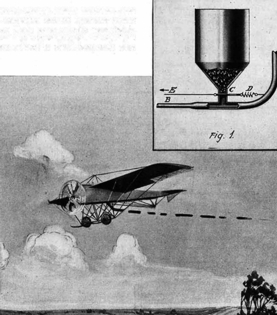
A French communication system for use by airplane pilots in 1915: black powder could be puffed out into a Morse code message. Image: Scientific American, September 25, 1915

A French communication system for use by airplane pilots in 1915: black powder could be puffed out into a Morse code message.
(Image: Scientific American, September 25, 1915)

Many thanks to SWLing Post reader, Robert Gulley, who notes the following on his blog:

I found this interesting post from Scientific American concerning the lack of reliable wireless communication in aircraft in 1915 – just one of those fascinating historical tidbits.

You can read the full post on Robert’s website or Scientific American.

It is fascinating to see “old school” innovations that made long distance communications possible in 1915; before wireless technology became as practical and accessible as it was even only a decade later.

The demise of longwave could lead to the end of the Shipping Forecast

shipping-forecast-locations

Many thanks to SWLing Post reader, Erica, who writes:

“I saw this article about the demise of the Shipping Forecast on Radio 4 Longwave and thought readers might be interested:

http://www.telegraph.co.uk/culture/tvandradio/bbc/11892805/End-of-Shipping-Forecast-on-long-wave-radio-could-leave-sailors-high-and-dry.html

I’m not a fan of DAB radio and my bedroom radio aerial has to be positioned just so to get radio 4 FM with cclarity, so I will be disappointed if Longwave eventually gets switched off. That’s not to mention all the people–however many there may be–who don’t have easy ways to get weather info out at sea.”

Here’s an excerpt from The Telegraph:

It has kept sailors safe on the ocean waves for 90 years, becoming just as much a part of national consciousness as cricket, cups of tea and The Archers.

But the days of hearing the Shipping Forecast out on a boat may be numbered thanks to the demise of long wave technology, a veteran announcer has said.

Peter Jefferson, who read the Shipping Forecast to Radio 4 listeners for 40 years, said the “very old” transmitters which worked on long wave could soon be retired.

If that was to happen, he said, anyone more than 12 miles from the coastline would be unable to hear the shipping forecast on long wave, ending a Radio 4 tradition dating back to 1924.

Speaking at the Radio Times Festival, in Hampton Court, Mr Jefferson said the soothing tones of the Shipping Forecast would then be left to its many fans who choose to listen to it from their homes in lieu of a “sleeping pill”.

“Long wave reaches much further than FM, it’s as simple as that,” he said.
“So FM would be totally useless for shipping beyond 12 miles from land.

[…]A spokesman for the BBC said they were no firm plans to end long wave broadcasting, and no date set for when the technology could run out.

The service currently reaches as far as south-east Iceland, and is occasionally picked up as far as 3,000 miles away.

Read this full article at The Telegraph online.

Of course, I haven’t heard the Shipping Forecast on longwave since moving back to the States from the UK. Still, I would be very sad to hear the program and the longwave medium fall silent.

I would like to start adding some Shipping Forecast programs on the Shortwave Radio Audio Archive where we also curate select mediumwave and longwave recordings.  If you have the means to record episodes on longwave, please consider helping us!

Shortwave Radio Recordings: RCI, BBC, VOA circa 1979 & 1981

HalliDial

Many thanks to SRAA contributor, Tom Laskowski, who shares the following recording and notes:

A few snippets from my old shortwave tapes that were too short to upload individually. These were made using a GE portable multi band that had poor selectivity, hence the annoying ute during the BBC clip.

Times of individual clips are:

  • 00:00 – 01:59: 1979, July 19 – RCI, frequency announcements in English and french.
  • 01:59 – 09:51: 1979, July 20 – BBC, newscast, bothered by an annoying utility station.
  • 09:51 – 11:38: 1981, August 28 – VOA, science news item about Voyager 2
  • 11:38 – 14:52: 1981, August 29 – VOA, science news item about Voyager 2

Click here to download the recording as an MP3, or simply listen via the embedded player below:

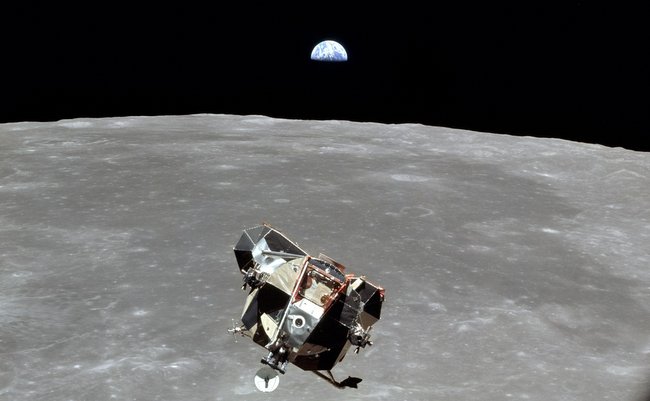
Shortwave Radio Recordings: VOA on the 10th anniversary of Apollo 11 moon landing

Apollo_11_lunar_module-001

Many thanks to SWLing Post and SRAA contributor, Tom Laskowski, who shares this recording of the Voice of America; recorded on July 20, 1979 at 0500 UTC on the 31 meter band. Tom notes:

“The first 4:30 is from a VOA newscast that aired before the main part of the program. The main recording was presented on the 10th anniversary of the Apollo 11 moon landing. I enjoy listening to this every year on the landing anniversary.”

Click here to download the recording as an MP3, or simply listen via the embedded player below:

Note that Tom has been sharing a number of shortwave recordings from the late 1970s. All of his recordings are being published on the Shortwave Radio Audio Archive. Tom: thanks so much for being a part of the shortwave archive community.

If you have recordings you would like to share with the world as well, please contact me.