Shortwave listening and everything radio including reviews, broadcasting, ham radio, field operation, DXing, maker kits, travel, emergency gear, events, and more
SWLing Post contributor, Richard Langley, is not only a dedicated shortwave DXer, but he’s also on the faculty of the Department of Geodesy and Geomatics Engineering at the University of New Brunswick. Additionally, Richard coordinates Innovation: a regular GPS World feature that discusses advances in GPS technology and its applications.
The latest Innovation feature is absolutely fascinating in that it highlights the potential for AM broadcast band HD radio signals (IBOC) to be an effective navigation aid. Richard’s introduction to this article takes us back to the time of Reginald Fessenden:
THE YEAR WAS 1906. On Christmas Eve of that year, Canadian inventor Reginald Fessenden carried out the first amplitude modulation (AM) radio broadcast of voice and music. He used a high-speed alternator capable of rotating at up to 20,000 revolutions per minute (rpm). Connected to an antenna circuit, it generated a continuous wave with a radio frequency equal to the product of the rotation speed and the number of magnetic rotor poles it had. With 360 poles, radio waves of up to about 100 kHz could be generated. However, Fessenden typically used a speed of 10,000 rpm to produce 60 kHz signals. By inserting a water-cooled microphone in the high-power antenna circuit, he amplitude-modulated the transmitted signal. On that Christmas Eve, he played phonograph records, spoke and played the violin with radio operators being amazed at what they heard.
Fessenden had earlier worked with spark-gap transmitters, as these were standard at the time for the transmission of Morse code, or telegraphy, the wireless communication method already in use. But they couldn’t generate a continuous wave and couldn’t produce satisfactory AM signals. But as telegraphy was the chief means of communication, they remained in use for many years along with high-powered alternators and the Poulsen arc transmitter, which could also generate continuous waves.
After a 2005-13 hiatus, I have rediscovered a childhood hobby and your reviews have helped me find my way to the post-Sony portable shortwave radio markets.
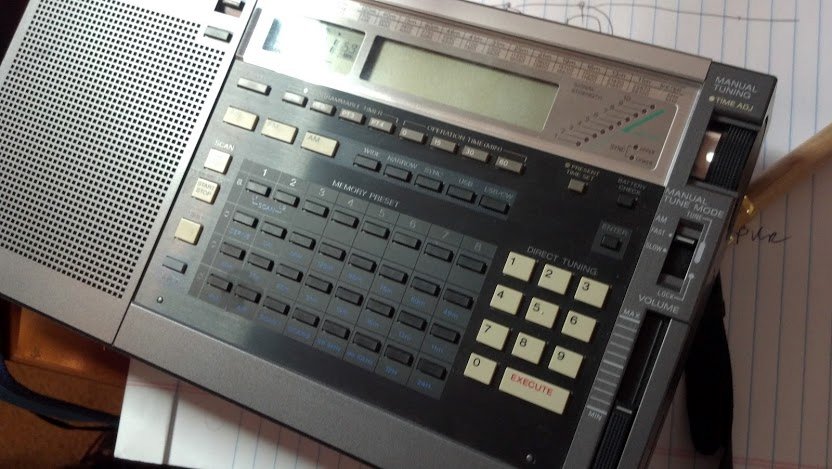
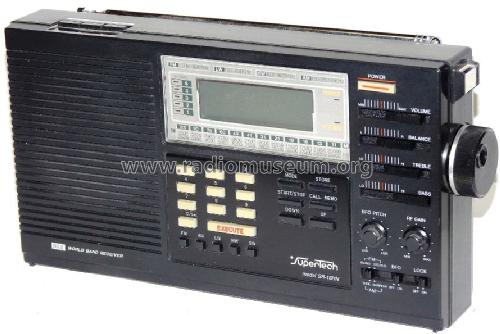
First, I obtained my “childhood dream” radio (Sony ICF 2001D), because at the time I made these recordings I was still in school and 1300 DM would have equaled over 1 year of pocket money, so a Supertech SR16HN had to do. I thought I got some fine results with this Sangean-Siemens re-branded receiver then, using a CB half-length antenna, a random wire, and much endurance.
The Supertech SR16HN (photo: Radiomuseum.com)
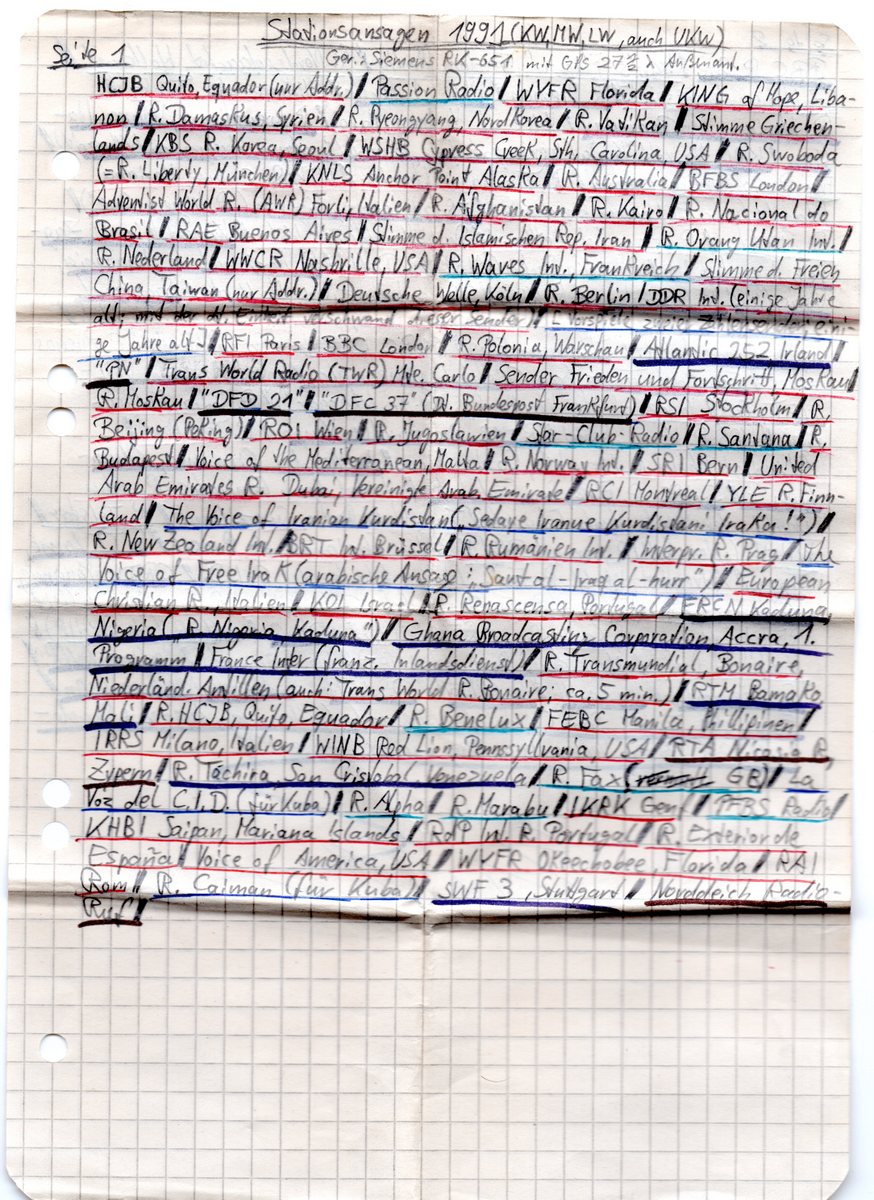
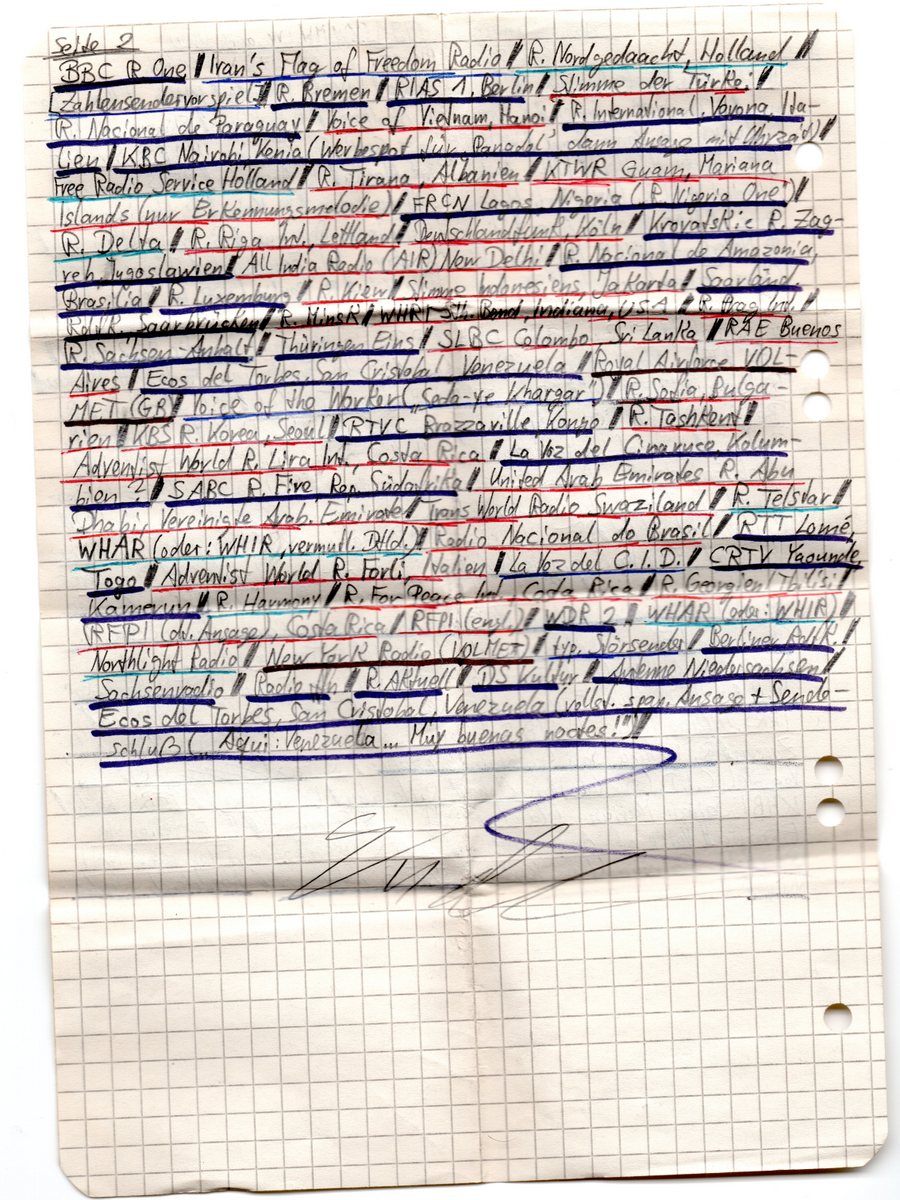
I kept regular logs throughout the years, wrote to 50 international and pirate stations for QSL and compiled this cassette.
A few years before I got that trusty SR16HN, however, I recorded a few number stations (such as G3, Four Note Rising Scale etc) with an ordinary radio cassette recorder, and in 1991 I put them onto this tape as well. The other recordings are done with the same radio placed right in front of the SR 16HN.
Feel free to make use of these recordings. Most of it are the well-known international state-owned shortwave stations of the past; plus European pirates; plus number stations; and at the end, a few (off-topic) local Am and FM stations interval signals.
As I said, this collection I made shortly after the Wende/reunification period, when all former-GDR state broadcasters changed their names, sometimes more than once.
Please continue your good work on the blogs! Weather permitting I am often outside cycling and always have the tiny Sony ICF 100 with me (which I call my then-student’s dream radio of the later 90ies).
Cassette Side 1
Frank’s original hand-written notes. Click to enlarge.
Wow! Frank, what a treat to listen to all these station IDs!
I had forgotten how many interval signals have changed over time and how many, of course, have disappeared. This tape represents a flood of nostalgia for me.
I should add, too, that I’ve enjoyed hearing so many IDs in German. It’s funny, but we all get hooked on listening to language programming from our native or second languages. It makes me realize just how many broadcasters used to have German language services.
Again, many thanks, Frank, for taking the time to digitize these recordings and scan your original hand-written notes. This stuff is invaluable, in my book!
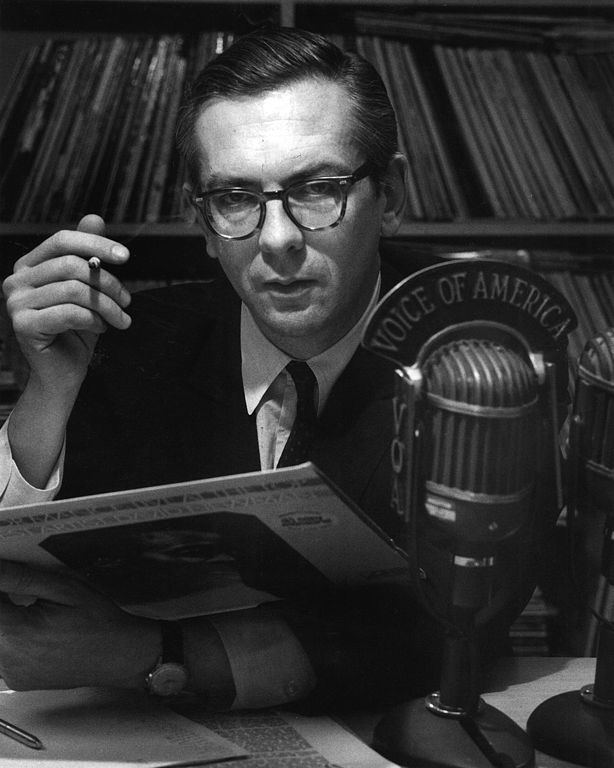
Regular SWLing Post readers know that I’m a huge fan of the late Willis Conover. I just learned, via the Arts Journal blog, about an amazing collection of Conover audio archives that are now being shared online:
“The music program at the University of North Texas has graduated hundreds of jazz artists who went on to successful careers as professionals.[…]
Under Maristella Feustle of the university’s library, there is an archive devoted to the late Willis Conover of the Voice of America[…]. Conover’s VOA programs sent jazz around the world. For a quarter of a century he was one of the nation’s most valuable cultural diplomats. As of today, parts of the Conover archive are online and open to the public, thanks to a grant from the Grammy Foundation.[…]”
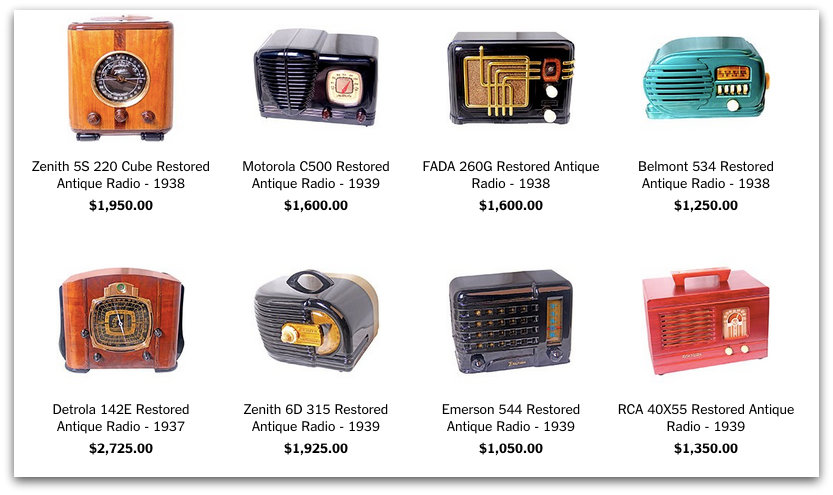
Pricing is not for the faint of heart–at time of posting, prices ranged from $395 to $23,000 US. Each radio is beautifully presented, with a full description, and carries a one year restoration warranty. For an additional $95, many models can be modified with an AUX in audio jack.
While these radios are well outside my meager vintage radio budget, I must say that I’ve thoroughly enjoyed looking at the photos and reading the descriptions.
Many thanks to SWLing Post and Shortwave Radio Audio Archive contributor, Brian Smith, for the following guest post and vintage recording:
Shortwave Radio 1974: Canada, Argentina, Spain, West Germany, Albania, utility stations
-Brian Smith (W9IND)
Want to know what shortwave radio sounded like in 1974? This 55-minute recording, recovered from a cassette, was never intended to be anything but “audio notes”: I was an 18-year-old shortwave listener who collected QSL cards from international stations, and I was tired of using a pen and a notepad to copy down details of the broadcasts. I wanted an easier way to record what I heard, and my cassette tape recorder seemed like the perfect means to accomplish that goal.
But it wasn’t. I soon discovered that it was simpler to just edit my notes as I was jotting them down — not spend time on endless searches for specific information located all over on the tape. To make a long story shorter, I abandoned my “audio notes” plan after a single shortwave recording: This one.
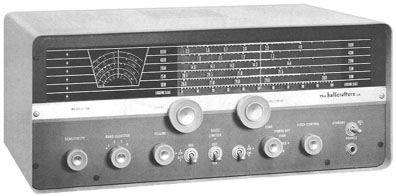
Hallicrafters S-108 (Image source: DXing.com)
Still, for those who want to experience the feel of sitting at a shortwave radio in the mid-1970s and slowly spinning the dial, this tape delivers. Nothing great in terms of sound quality; I was using a Hallicrafters S-108 that was outdated even at the time. And my recording “technique” involved placing the cassette microphone next to the radio speaker.
Thus, what you’ll hear is a grab bag of randomness: Major shortwave broadcasting stations from Canada, Argentina, Spain, Germany and Albania; maritime CW and other utility stations; and even a one-sided conversation involving a mobile phone, apparently located at sea. There are lengthy (even boring) programs, theme songs and interval signals, and brief IDs, one in Morse code from an Italian Navy station and another from a Department of Energy station used to track shipments of nuclear materials. And I can’t even identify the station behind every recording, including several Spanish broadcasts (I don’t speak the language) and an interview in English with a UFO book author.
The following is a guide, with approximate Windows Media Player starting times, of the signals on this recording. (Incidentally, the CBC recording was from July 11, 1974 — a date I deduced by researching the Major League Baseball scores of the previous day.)
Guide To The Recording
00:00 — CBC (Radio Canada) Northern and Armed Forces Service: News and sports. 07:51 — RAE (Radio Argentina): Sign-off with closing theme 09:14 — Department of Energy station in Belton, Missouri: “This is KRF-265 clear.” 09:17 — Interval signal: Radio Spain. 09:40 — New York Radio, WSY-70 (aviation weather broadcast) 10:22 — Unidentified station (Spanish?): Music. 10:51— Unidentified station (English): Historic drama with mention of Vice President John Adams, plus bell-heavy closing theme. 14:12 — Unidentified station (Spanish?): Male announcer, poor signal strength. 14:20 — Unidentified station (Spanish): Theme music and apparent ID, good signal strength. 15:16 — Unidentified station (foreign-speaking, possibly Spanish): Song, “Chirpy Chirpy Cheep Cheep.” 17:00 — Deutsche Welle (The Voice of West Germany): Announcement of frequencies, theme song. 17:39 — Unidentified station (English): Interview with the Rev. Barry Downing, author of “The Bible and Flying Saucers.” 24:36 — One side of mobile telephone conversation in SSB, possibly from maritime location. 30:37 — Radio Tirana (Albania): Lengthy economic and geopolitical talk (female announcer); bad audio. Theme and ID at 36:23, sign-off at 55:03. 55:11 — Italian Navy, Rome: “VVV IDR3 (and long tone)” in Morse code.
Brian, this is a brilliant recording–regardless of audio quality–and we’re very thankful you took the time to share it. Propagation has left something to be desired as of late, so time traveling back to 1974 has been incredibly fun.
Post Readers: If, like Brian, you have off-air recordings on tape that you’d like to share, please contact me! Even if you don’t have the means to transfer your tapes to a digital format, I’m a part of a small community of shortwave radio archivists who would be quite willing to help.
Many thanks to SWLing Post contributor, Moshe, who writes:
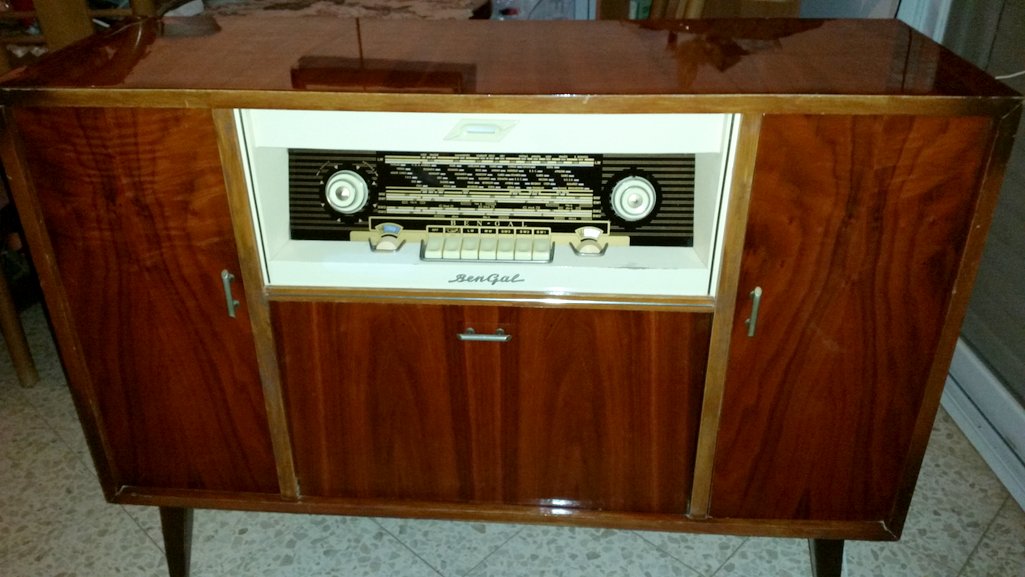
About 2 weeks ago, a very good friend called me and exclaimed, “you just have to see this radio…I’m keeping it for you!”–so, I drove to his aunt’s house and saw this beauty.
After hauling the radio to my place, I started to check it out, to see what would be needed for restoration; it was working, with bad contacts, poor frequency response and low output.
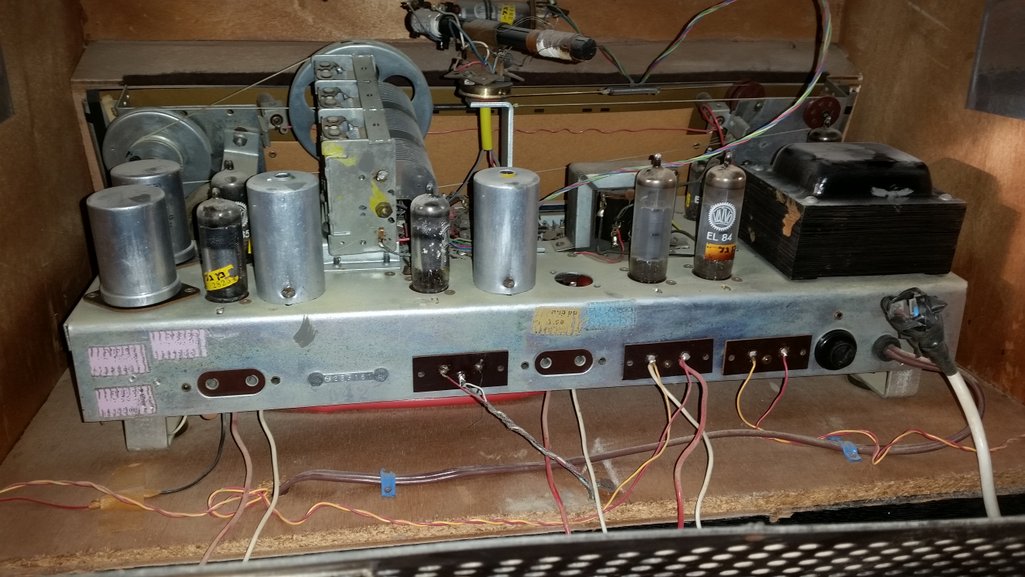
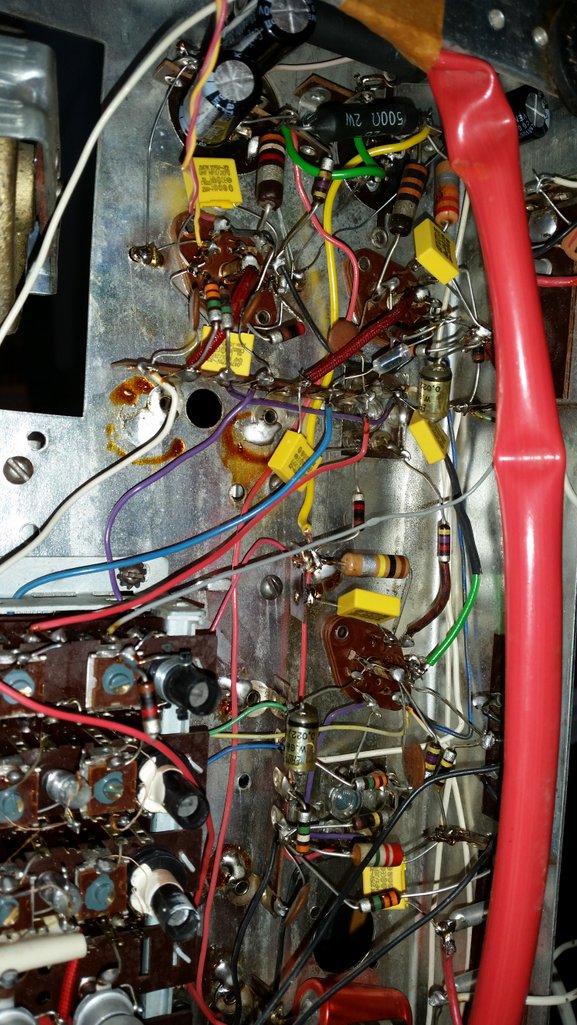
I took hi-res pictures of this radio, some during restoration. Now the radio sounds great. It has been recapped, a couple of bad resistors and bad wires replaced, contacts have been cleaned, and some good cleaning for the chassis as well.
As I wanted to keep the original appearance of the chassis, I kept the original filter capacitors on board, but disconnected them from the circuit, added terminal strips and new capacitors from underneath.
The radio uses an EF85 tube as the RF stage. With the addition of a grounding connection and random wire antenna, it’s very sensitive on shortwave.
About the Ben-Gal Duet-Stereo:
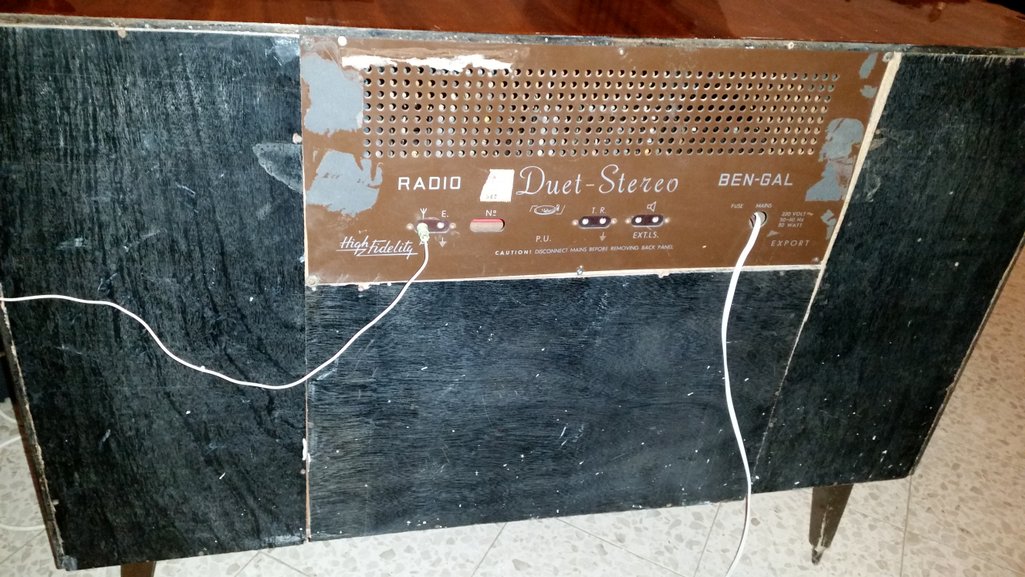
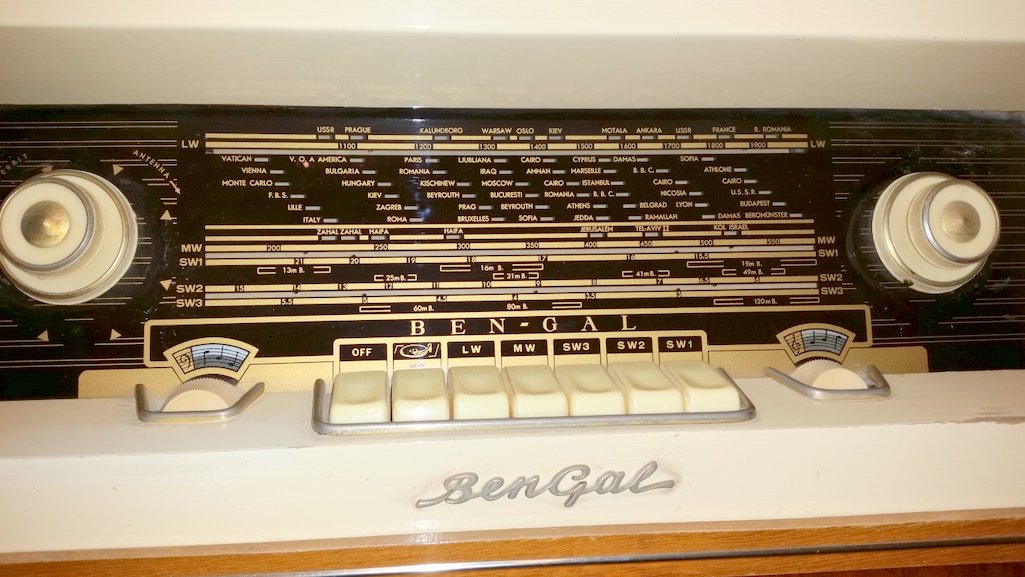
It was made in Israel by Ben-Gal, a label inside shows it was made at 12th of December, 1965.
It is a console model with record player. As the model name suggests, the amplifier and record player are stereo (though the tuner is not…).
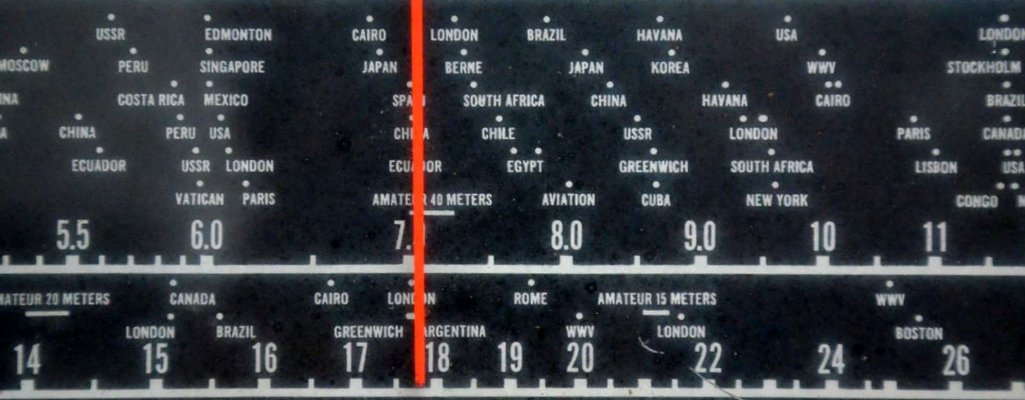
The radio has longwave (marked in meters), mediumwave (marked in meters) and 3 shortwave bands (with megacycle and meter band marks).
The shortwave bands overlaps with each other, so cover is continuous:
SW3 2.3MHz to 6MHz,
SW2 5.5MHz to 15.5MHz,
and SW1 14.5MHz to 23MHz.
Many thanks, Moshe, for sharing photos and this description of this beautiful Ben-Gal Duet-Stereo. I bet the audio fidelity is amazing. My father has a 1960’s console–with a similar configuration–made by Admiral, though it was limited to mediumwave and FM reception. Some day, I will try to restore it to its former glory!
“There was nothing remarkable to see on Chopmist Hill in 1940 when, a year before the Japanese would attack Pearl Harbor and bring America into the war, a Boston radio technician by the name of Thomas B. Cave drove up Darby Road.
[…]Cave worked for the Intelligence Division of the Federal Communications Commission, charged with finding a hilltop in southern New England that could serve as one of several listening posts to detect radio transmissions from German spies in the United States.
What he discovered up at William Suddard’s 183-acre farm was nothing short of miraculous.
Because of some geographic and atmospheric anomalies, Cave reported he could clearly intercept radio transmissions coming from Europe — even South America.
As a Providence Journal story revealed after the war, military officials were initially skeptical. They wanted Cave to prove his remarkable claims that from Chopmist Hill he could pinpoint the location of any radio transmission in the country within 15 minutes.
The Army set up a test. Without telling the FCC, it began broadcasting a signal from the Pentagon. From atop the 730-foot hill in the rural corner of Scituate, it took Cave all of seven minutes to zero in on the signal’s origin.
In March 1941, the Suddards obligingly moved out of their 14-room farmhouse, leasing the property to the FCC.
Workers set off erecting scores of telephone poles across the properly, purposely sinking them deep to keep them below the tree line. They strung 85,000 feet of antenna wire — the equivalent of 16 miles — around the poles and wired it into the house.[…]”