Category Archives: Radios

The thrill of the hunt even knowing there is no “perfect” radio

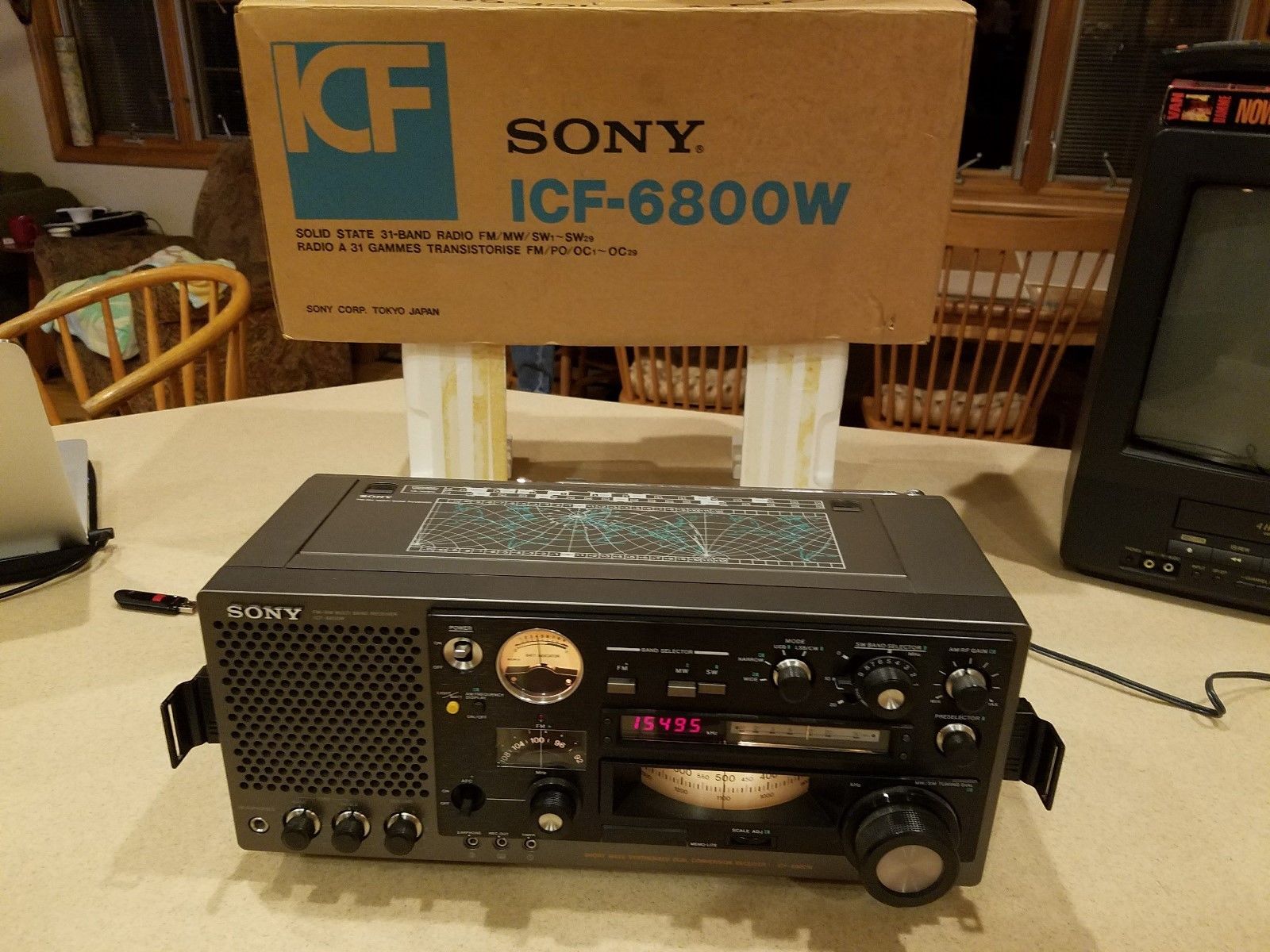
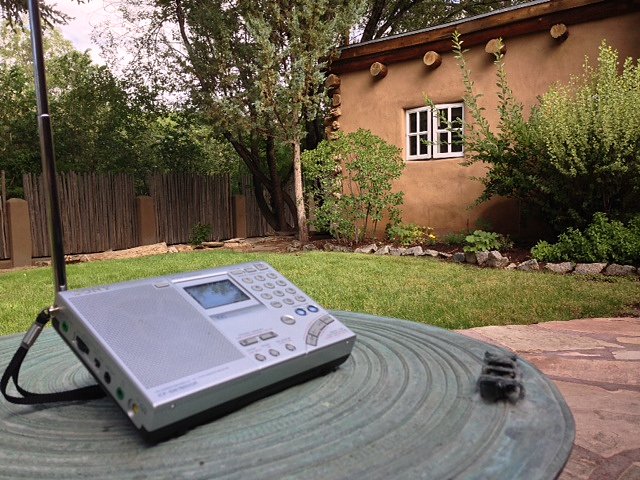
Though I own a number of portables that have better performance specs and ergonomics, I still gravitate to my ICF-SW7600GR.

Most recently, I received correspondence from Golan Klinger who has been bitten by the radio bug (he calls it “radioitis”). He has been acquiring portables and comparing them, seeking his favorite overall.

Golan had an epiphany he recently shared with me:

Thomas, in your “Mega Review” [summarizing your radio preferences] you wrote:

But this is my personal choice; you might have a completely different answer. I guess that’s the point I made earlier–it all depends on the listener.”

Of all the valuable advice I’ve gleaned from your website, that might be the most important.

Every radio seems to have its own personality and one can read and watch all the reviews in the world but there’s no substitute for sitting down and actually listening to a radio.

I just had an epiphany — there can be no perfect radio and even if there were, finding it wouldn’t be half as much fun as the search for it.

That’s why everyone has multiple radios and when asked which is their favourite they lean back and say, “Well…”

What a wonderful hobby this is turning out to be!

You nailed it, Golan.

Indeed, with most every review I post I receive both praise and criticism later from readers. To some, sensitivity is everything–to others, it’s audio fidelity. Some listeners seek optimal reception on particular bands: longwave, mediumwave, the 31 meter band, FM, etc. There are even some who place a great deal of importance on the design and aesthetics of the radio. When I write a review, I do my best to walk in the shoes of all of these folks. It’s not an easy task.

When I’m not writing a review and am only concerned with what I value in a radio, it’s a balance of performance, flexibility and ergonomics I seek.

But as you say, there is no “perfect radio” out there that could satisfy everyone. I doubt there ever will be.  Each listener has their own set of preferences–the checklist that matters to them most.

I’ll admit that part of what drives me to do radio reviews is my curiosity and the hope that each upcoming model might be a step closer to the elusive “Holy Grail” radio; for me and for you. It’s all about the thrill of the hunt!

Thanks for sharing, Golan!

A review of the SDRplay RSP1A software defined radio


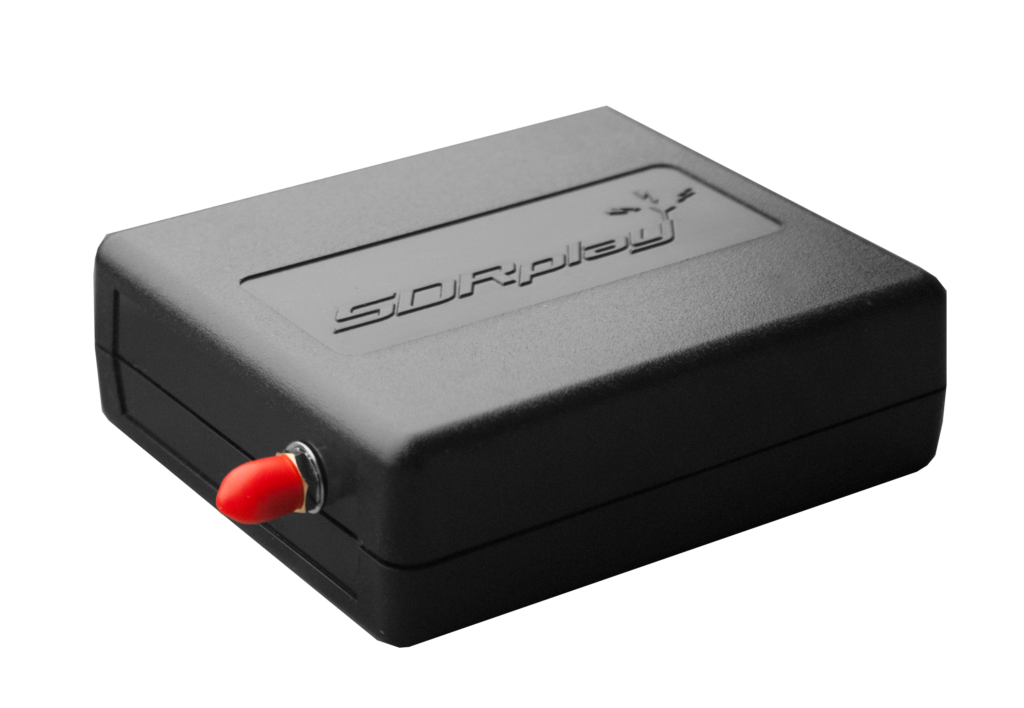
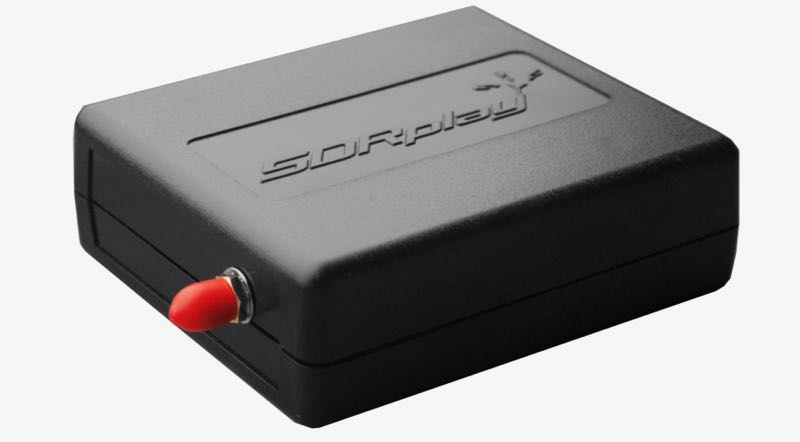
Today, SDRplay, the UK-based manufacturer of affordable software defined receivers, announced a new addition to their product line: the SDRplay RSP-1A.

The RSP1A joins the SDRplay product line of the RSP2 ($169.95 US), and RSP2 Pro ($199.95 US). The new RSP1A will retail for $99.00 US.

But what of this SDR’s performance?  In a nutshell: as of today, I’d contend that the RSP1A will simply be the best SDR value on the market. End of story. There is nothing I know in the $99 price bracket that can beat it.

How do I know this?  I can make this statement with confidence because I have been involved with real-world testing and evaluation of the RSP1A Alpha, Beta, and production models since May. I took the RSP1A with me to Canada this past summer for field recordings with my laptop, and I’ve also evaluated the RSP at my home. Like a number of other reviewers, I’ve been intimately involved with putting the RSP1A through its paces. And let’s just say I like what I’ve seen.

I actually do quite a bit of Alpha and Beta testing for manufacturers. While it’s time-consuming volunteer work and requires meticulous attention to minor details, it gives me an opportunity to have meaningful positive impact on an upcoming product. Manufacturers that actively involve enthusiasts in their testing phase tend to produce better-quality products on the first run. Better products, of course, mean a better radio market with options for those only now discovering the mystery––and fun––of radio as well as DXing.

Since the RSP1A is essentially iterative agility on behalf of SDRplay, the RSP1A was surprisingly solid even in its early release. And try as I might, there were very few issues I ever needed to report back to the engineering team. SDRplay took each item of feedback seriously, logged it, and followed-up. Over the course of the evaluation period, SDRplay improved their dedicated SDR application SDRuno, as well.

In essence, the RSP1A hardware now in production and shipping has been thoroughly tested and is ripe-and-ready for your radio adventures.

I have not compared the RSP and RSP1A side by side; running two instances of SDRuno on the same PC has been problematic. To my ear, when I’ve tested one after the other, the RSP1A serves up slightly better sensitivity, perhaps due to a slightly lower noise floor. Also the RSP1A frequency stability is much improved over the RSP1.

Specifically, the following upgrades have been made per SDRplay:

  • ADC resolution increased to 14-bit native for sample rates below 6 MHz, increasing to 16 bits with decimation
  • Enhanced RF pre-selection (greater filter selectivity plus 4 additional sub-bands compared to the original RSP1) for reduced levels of spurious responses
  • Improved LNA architecture with variable gain––the RSP1 had just a single gain step
  • Improved intermodulation performance
  • Performance extended to cover 1kHz to 2 GHz with a single antenna port.
  • Bias-T facility
  • Improved frequency stability incorporating a 0.5ppm TCXO (software trimmable to 0.01ppm)
  • Selectable broadcast AM/FM/DAB notch filters
  • RF shielding within the robust plastic casing

Performance
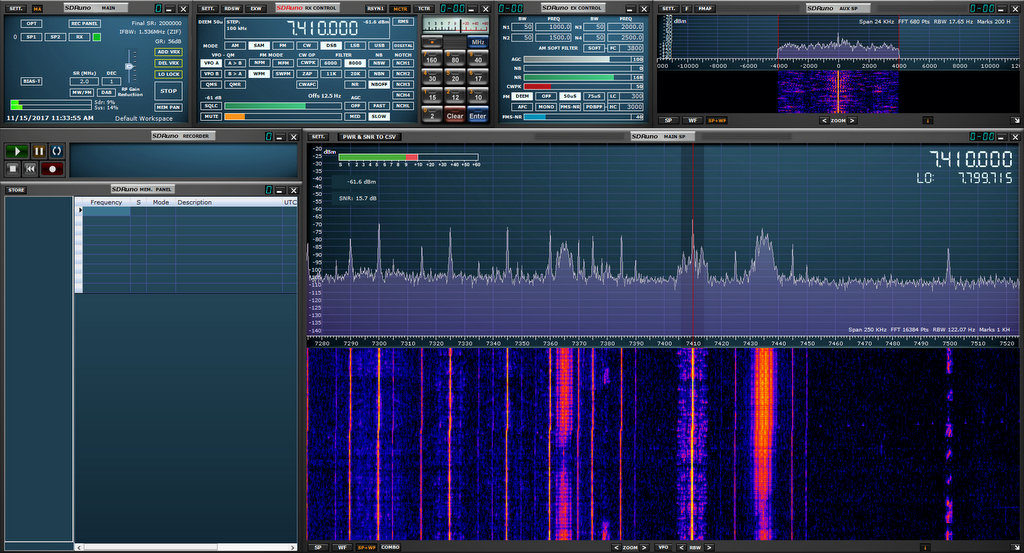
Suffice to say, this budget SDR delivers, and users will be wooed by its stellar performance.

I’ve spent 95% of my evaluation time on the HF and mediumwave bands and I’ve been impressed with the receiver’s sensitivity, selectivity, and AGC control. The audio fidelity is also highly customizable since it’s pumping audio directly through your PC’s system.

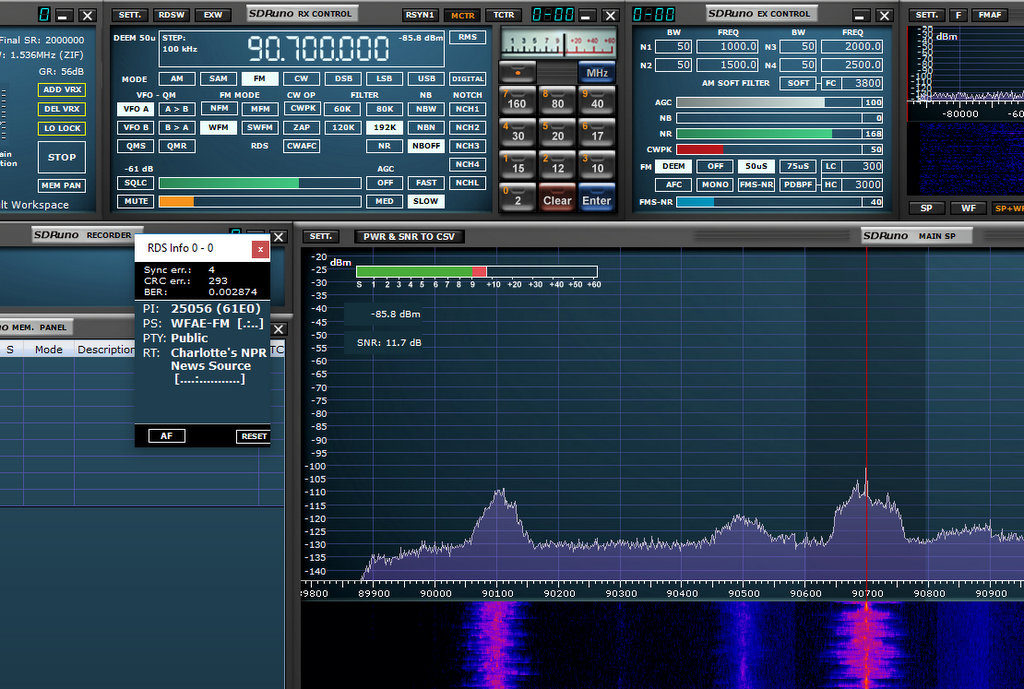
I haven’t spent any time above the aviation bands (higher than 140 MHz); I have, however, tested the RSP1A thoroughly on the FM broadcast bands and found it a solid FM performer. Note, too, that SDRuno’s built-in RDS decoder window provides quite a lot of data.
I’m also pleased that I haven’t noticed any front-end overloading––this, despite the fact that during travel, I’ve used it in the vicinity of some powerful broadcasters.

Comparing to benchmarks

I’ve compared the RSP1A to the Elad FDM-S2 ($500), WinRadio Excalibur ($900) and Microtelecom Perseus ($900).
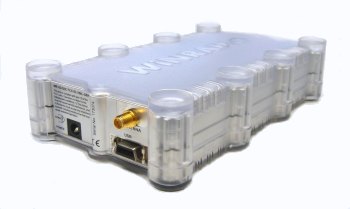
The WinRadio G31DDC “Excalibur”

But let’s be clear, here: this is not an “apples-to-apples” comparison since the RSP1A is a fraction of the cost of the others, and is also a wideband receiver (1 kHz to 2 GHz). The only other SDR I own that has VHF coverage is the FDM-S2, which tops out at 160 MHz.

Pricier HF-focused SDRs have distinct hardware advantages––especially in terms of filtering––that give them an edge over budget wideband SDRs. Still, in my comparisons, the RSP1A holds its own quite well.

Compared to the WinRadio Excalibur, for example, this SDR came fairly close in terms of sensitivity.  The WinRadio’s synchronous detector––which I consider to be the best in the business––was indeed more stable than that of the RSP1A. The RSP1A sync lock could falter a bit during a weak signal’s QSB dip compared with the Excalibur.

But again, HF SDRs in the league of the FDM-S2, Excalibur, and Perseus have the luxury of designing receiver architecture around a much smaller portion of the spectrum. If you are a hard-core DXer looking for uncompromised performance on the HF/MW bands, then you should invest in one of these benchmark SDRs. I have, and I’d never give one of them up.

With that said, even though I have these amazing benchmark SDRs at my disposal, I still purchased the original RSP1 (then at $159 US) years ago. Why?  For one thing, it’s more portable than the Excalibur or Perseus as it requires no external power supply (like the excellent FDM-S2, the RSP derives its power from the USB data cable). Additionally, I do like to play with frequencies above 50 MHz from time to time. The RSP offers up an all-in-one RF toolbox at a very affordable price. I don’t hesitate to throw the RSP in my pack and take it anywhere I’m travelling. If it gets damaged or lost, I’m only out $99––not $1,000.

Again, RSP1A’s bang-for-buck simply blows my mind.

Side note: I do wish someone would develop an accessory outboard filter box that could be implemented with budget wideband SDRs, thus providing, in a sense, a hardware “upgrade.” Something like the Elad SPF-08 preselector box designed for the FDM-S2

Any cons?

This review has been overwhelmingly positive because, frankly, the RSP1A is challenging to find fault with. Of course, if it carried a price tag of $600-900, I’d be much more critical of its performance as compared with my benchmark receivers in that same price class. I’d fully expect a robust preselector system, a bullet-proof front end, and performance that could match or surpass the benchmarks.

But for just $99? You simply can’t get that kind of hardware for that cost.  So SDRplay engineering cleverly pulls every bit of performance out of their receiver by focusing on their SDRuno application, which is optimized for this receiver.  And for that reason, it’s in a class by itself.

Admittedly, when SDRplay first introduced their application, SDRuno, I wasn’t the biggest fan. I found it rather quirky and a little cumbersome to use. SDRuno has come a long way, though; SDRplay has continuously improved it, and today, I prefer it to HDSDR and SDR console. SDRuno is much less cumbersome to use than it used to be, and the default window arrangement is pleasing (though I’d still like SDRuno windows to lock and act as one window as I flip through programs on my Win 10 PC). I even prefer SDRuno to Elad’s application in terms of ease of use.

If more AF/IQ recording features are added (virtual receivers, for example) it could even become my application of choice.

The great thing about the SDRplay RSP series, however, is that they’re supported by so many third-party SDR apps. If you don’t like the one you’re using, there are numerous others to chose from. SDRplay takes an affirmative stance that their hardware should be usable on as many platforms with as many applications as possible. Kudos to them.

Here’s a question I know I’ll be asked…

“I just purchased the RSP1. Should I upgrade?”

Good question! As you might guess, my answer is fairly simple and depends on your particular needs:

If you’re happy with the RSP1 and see no real benefit in the RSP1A upgrades above, don’t bother upgrading. Seriously…enjoy what you have! The RSP1 is still a sharp, capable, versatile little SDR and fully supported by SDRplay and its community. I’ve worked some incredible DX with mine over the past few years, and love it.

If you like the sound of the RSP1A and would appreciate the upgrades listed above, then go for it! After all, it’s only $99! Consider this: the price is less than that of my recently reviewed Digitech AR-1780 portable and less than the venerable Tecsun PL-660. Even with a modest external antenna, it will perform circles around these rigs.

If you need an excuse to justify the upgrade to the RSP1A, consider doing what I’m planning to do: give your RSP1 to a friend or someone interested in the hobby. Or, donate it to your radio club as a raffle prize. Then too, of course, you can snag a decent price for it by selling it on eBay or QTH.com.

Summary
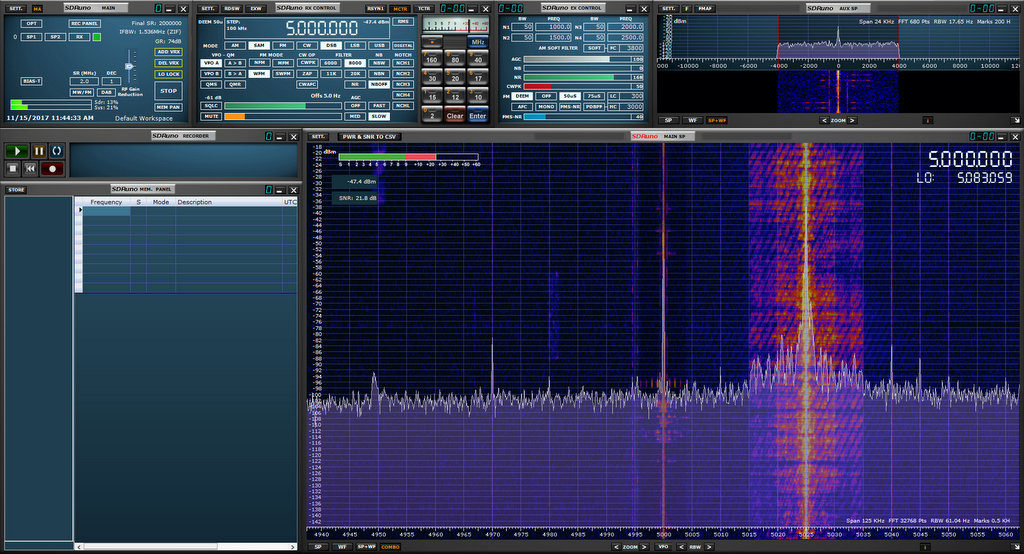
While a little busy, I do enjoy the combined spectrum display option on SDRuno.

If you can’t tell, I’m most impressed with this latest offering from SDRplay. I can recommend it with confidence because you simply can’t beat the performance and features for the price.

If you’re considering the RSP1A as your first SDR, you’ll be happy to know SDRplay’s Mike Ladd has also amassed a healthy number of SDRuno instructional videos on YouTube as well. If you start with the first video, by the end of the series you’ll be adept at using SDRuno. Couldn’t be easier.

Think of it this way: The RSP1A is the sporty-but-affordable compact car of the SDR world. It delivers performance well above its comparatively modest price and is fun to operate. In terms of DX, it gets you from point A to point B very comfortably––and quite affordably!

With just $99, there’s no reason you can’t join the world of SDR––the RSP1A is a very accessible, very intuitive SDR start your exploration of the radio spectrum.

Click here to view the RSP1A at SDRplay’s website.

SDRplay announces the RSP1A software defined radio

(Source: SDRplay Press Release)

15/November/2017, Wakefield UK:

SDRplay announces the RSP1A

SDRplay Limited has today announced the launch of a new Software Defined Radio product – the RSP1A.

The SDR-play RSP1A is a major upgrade to the popular RSP1 and is a powerful wideband full featured 14-bit SDR which covers the RF spectrum from 1 kHz to 2 GHz.

Due to its exceptional combination of performance and price, the RSP1 has proved to be a very popular choice as an “entry level” SDR receiver. Since launching the RSP1, we have learned a great deal about what people are looking for in SDR receivers, and where possible, we have incorporated these improvements and new features into the RSP1A.

The RSP1A therefore delivers a significant number of additional features which result in benefits to amateur radio enthusiasts as well as significant benefits for the scientific, educational and industrial SDR community.

Here are the main additional features of the RSP1A compared to the original RSP1:

  • ADC resolution increased to 14-bit native for sample rates below 6 MHz, increasing to 16 bits with decimation.
  • Enhanced RF pre-selection (greater filter selectivity plus 4 additional sub-bands compared to the original RSP1) for reduced levels of spurious responses
  • Improved LNA architecture with variable gain. The RSP1 had just a single gain step.
  • Improved intermodulation performance • Performance extended to cover 1kHz to 2 GHz with a single antenna port.
  • Bias-T facility • Improved frequency stability incorporating a 0.5ppm TCXO (software trimmable to 0.01ppm)
  • Selectable broadcast AM/FM/DAB notch filters
  • RF shielding within the robust plastic casing

When used together SDRplay’s own SDRuno software, the RSP1A becomes a high performance SDR platform. The benefits of using the RSP1A with SDRuno include:

  • Highly integrated native support for the RSP1A
  • Calibrated RF Power Meter with more than 100 dB of usable range
  • Calibrated S-Meter including support for IARU S-Meter Standard
  • The ability to save power (dBm) and SNR (dB) measurements over time, to a CSV file for future analysis
  • The IQ output wav files can be accessed for 3rd party applications

SDRplay has also worked with developers of the popular HDSDR, SDR-Console and Cubic SDR software packages to ensure compatibility. As with the RSP1, SDRplay provides multiplatform driver and API support which includes Windows, Linux, Mac, Android and Raspberry Pi 3. There is even a downloadable SD card image available for Raspberry Pi3 which includes Cubic SDR.

The RSP1A is expected to retail at approximately £76 (excluding taxes) or $100 (excluding taxes)

For more information visit our website on www.sdrplay.com

About SDRplay:

SDRplay limited is a UK company and consists of a small group of engineers with strong connections to the UK Wireless semiconductor industry. SDRplay announced its first product, the RSP1 in August 2014

Email: [email protected]

Introductory video:

Click here to view on YouTube.

Click here to check out the RSP1A at SDRplay.com.

Purchasing the Digitech AR-1780 directly from Jaycar

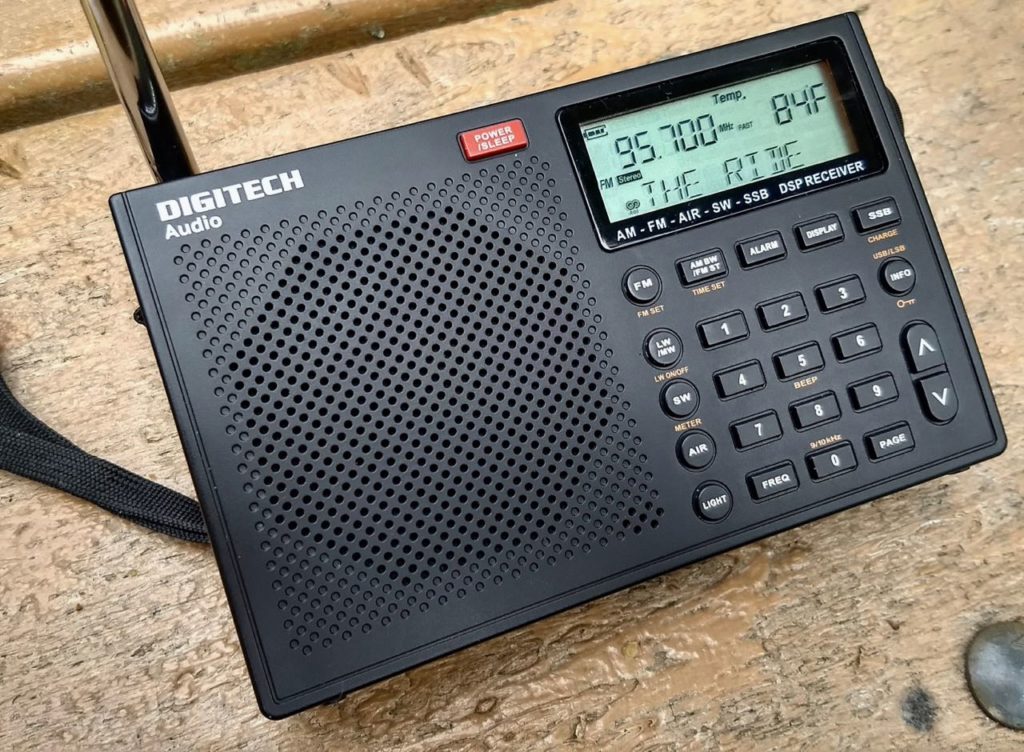
Last week, I posted a review of the Digitech AR-1780–a compact receiver that is only sold in Jaycar retail stores throughout Australia and New Zealand.

Since I live in the US, I purchased my AR-1780 via an Australian distributor on eBay.

Several SWLing Post readers discovered direct orders can be placed with Jaycar, thus taking advantage of Jaycar’s sales.

A couple weeks ago, Post reader, Paul, shared his correspondence with Jaycar where they implied an order could be placed via email directly with a Jaycar representative. I reached out to this representative for clarification because I felt uneasy about even suggesting that readers send credit card information over email. I asked if they had a secure order form. I never heard back from Jaycar and have been too busy to follow-up.

Turns out, SWLing Post contributor, Troy Riedel, just placed an order for the AR-1780 via Jaycar and shared the details–all it takes is a phone call. Troy writes:

I ordered the AR-1780 from Jaycar.

I contacted them through their web site, exchanged emails with a Customer Service Supervisor and she told me that they actually have a toll-free U.S. number that goes to their Australian call center (staffed during their business hours)! FYI, it’s:

1-800-784-0263

I got it for $134 AUD or $103.40 USD shipped!

Thanks for sharing, Troy! A great option for ordering Jaycar products in the US.

If any Post readers in Canada have also successfully placed an order through this toll free number, please comment!

Video: Dan’s RNZI reception

Many thanks to SWLing Post contributor, Dan Hawkins, who writes:

Thomas, this RNZI transmission is on the new schedule:

Click here to view on YouTube.

RNZI is exceedingly well received at my location. That may have something to do with the following factors.

1. The RNZI antennas were designed, built and are maintained by a contractor located in the San Francisco Bay Area.

2. This contractor has SW receiver locations in the SF Bay Area.

3. I am located about 50 miles away from the SF Bay Area receivers and in-line to the New Zealand signal path.

Then again, maybe not. LOL.

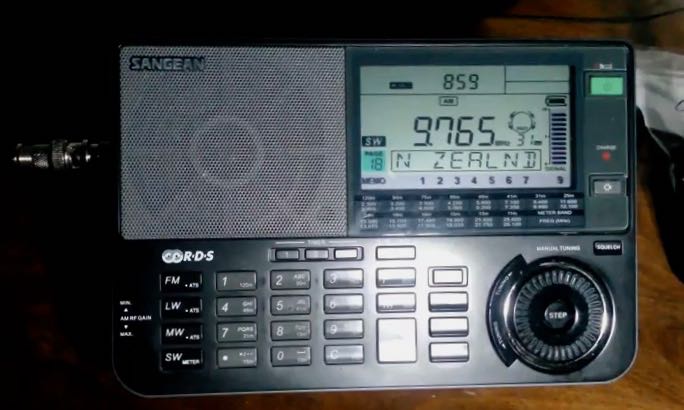
Time: 09:00 10-31-2107 UTC. Frequency: 9765 kHz. Receiver location: Davis, California, USA. Radio:Sangean ATS-909X. Antenna: 83m horizontal loop. Transmission distance: 6,600 miles.

I do love RNZI–thanks for sharing, Dan. Indeed, since the demise of Radio Australia on, RNZI has become the voice of the Pacific on shortwave. Amazing signal!

Review of the Digitech AR-1780 portable shortwave radio

The following review first appeared in the October 2017 issue of The Spectrum Monitor magazine.


Earlier this year one of my readers in Australia noted the addition of the Digitech AR-1780 to the product offerings of the Australia and New Zealand-based retailer Jaycar.

One thing I’ve learned over the years is that there are few in-country sources of shortwave radios in both Australia and (especially) New Zealand. Jaycar, in a sense, represents what RadioShack and The Source have offered in the US and Canada––a more accessible electronics retailer with some shortwave radio selection.

Jaycar sells radios badged with the name Digitech. Unfortunately, none of Jaycar’s recent additions––and there have been a few––have been enormous hits among serious radio enthusiasts. The company currently offers five Digitech models: the AR1736 ($18.95 AUD), AR1721 ($25.95 AUD), AR1748 ($129.00 AUD), AR1945 ($159.00 AUD), and now the AR1780 ($129.00 AUD).

The Jaycar models are either very cheap sub-$30AUD digital portables, or pricier large portables with a form factor similar to the Grundig S350DL and S450DLX, or the C.Crane CCRadio-SW. The new AR1780 fits somewhere between––a compact portable that promises a compliment of features tailored for the radio enthusiast.

In this review, we’ll take a close look at the AR1780, starting with its feature set.

Features

What appeals to me about the Digitech AR1780 is the amount of features provided by such a compact, traveller-friendly form factor.

Here’s a comprehensive list of the AR1780’s features and specs:

Frequency coverage:

  • FM 87.5 – 108 MHz
  • MW 522 – 1620 kHz or 520 – 1710 kHz
  • SW 1711 – 29,999 kHz
  • LW 150 – 450 kHz
  • AIR 118 – 137 MHz

Modes:

  • FM (including RDS)
  • AM
  • Single Sideband

Selectable Bandwidths:

  • AM mode: 6, 4, 3, 2.5, 2, & 1.81 kHz)
  • SSB mode: (4, 3, 2.2, 1.2, 1 & 0.5 kHz)

Convenient features:

  • Sleep timer
  • Clock/Alarm
  • Thermometer
  • Signal strength meter
  • Squelch control
  • Voice/Music selectable audio filter
  • Dedicated fine tune control
  • Headphone jack (3.5 mm)
  • Key lock button
  • Key beep on/off
  • Tuning knob and tuning step up/down buttons
  • Display button cycles through alarm, time, temperature, and signal strength
  • FM mono/stereo selection
  • Backlight button
  • Selectable 9/10 kHz regional MW tuning steps
  • Flip-out backstand

Power source: 7 VDC or 4 x AA cells (not included, can be internally charged if NiMH cells)

Antenna: Built-in telescopic and 3.5mm socket for external antenna

Weight: 253g/0.56 lbs (excluding batteries)

Dimensions: 150(W) x 95(H) x 30(D)mm

Operation Manual

The Digitech AR1780 ships with a small user manual. In fact, other than the hand strap, the user manual is the only additional item in the box besides the radio itself.

The manual is quite thin––slightly smaller in height and width than the AR1780––and only contains about eight front-and-back mini pages.  Although readable, it’s littered with grammatical and punctuation errors.  While a manual is certainly a welcome reference item with this feature-packed radio, this manual comes up short, lacking detailed explanations of features and even leaving some out altogether:  it does not, for example, offer any explanation on the use of the excellent squelch control, nor does it fully explain the station memory set on multiple memory pages––!  Rather unfortunate, as these features deserve a clear explanation.

First impressions

The Digitech AR-1780, like many DSP-based portables, includes a handy temperature display which can be toggled for Celsius or Fahrenheit.

I really appreciate the modest, portable form factor of the AR1780, so it had that going for it before I even opened the box. I travel with portable radios a lot, so the compact body of the AR1780 is very appealing. It’s not as compact as the C. Crane CC Skywave series, or the Grundig G6, but is much smaller than my Tecsun PL-660 and PL-880, or my Sony ICF-SW7600GR.

Comparing size: The Tecsun PL-680 (top), Digitech AR1780 (middle), and the C. Crane CC Skywave (bottom)

Unlike the radios mentioned above, the AR1780 does not include some sort of protective case or bag. I believe this is an omission for a radio aimed squarely at the traveler.

Fortunately, the plastic chassis of the AR1780 feels substantial enough. With the key lock engaged, the only likely problem that could arise from having no protective case is damage to the display, such as scratching.

The buttons all have a tactile feedback and seem to respond quickly enough, save powering up the radio, engaging the SSB mode, or changing bands, each of which takes a couple of seconds to engage.

I especially like the fact the AR1780 has, on the right, a dedicated multi-function tuning knob. One can turn the tuning knob to scan frequencies or press it to cycle through fast or slow tuning steps (or to turn off this knob’s function entirely).

The AR1780 also has a dedicated fine tune control––a tuning wheel just beneath the main tuning knob also on the right side of the radio (see image above).  The only odd quirk about this is that this is where most radios have a volume control. Being a creature of habit, many times I’ve inadvertently shifted frequencies when I simply wanted to turn up or down the volume! The volume control, meanwhile, is in the same position on the left side panel of the radio between the antenna and earphone jack.

Speaking of volume, the AR1780 can provide plenty of it-––almost room-filling audio––via the internal speaker. Best yet, I like its balanced fidelity: mellow, with notes of bass, but ample treble when listening at moderate volume. The audio response curve is almost ideal for such a small package.

Something else worth noting: the AR1780 fits nicely in the hand. In general, it’s a great size for portable listening.

Major bonus for a travel radio: the AR-1780 is powered by standard, accessible AA cells. Note that the frequency range information silk-screened on the back stand is incorrect–shortwave coverage extends up to 29,999 kHz.

On the downside, however, one negative I noted shortly after beginning use: muting between frequency steps. In AM mode, this is not as distracting as in SSB mode. Muting makes band scanning a more tedious and fatiguing experience. Unfortunately, in this era of DSP-chip-based receivers, it seems muting has resurfaced.

Also, as with many other DSP portables, you can often hear “input” noise when pressing buttons. In other words, if while listening to one frequency I decide to key in another, I’ll hear a little clicking or buzz in the audio as each button is pressed. This is a very minor annoyance since it only happens when buttons are pressed, nonetheless, I thought it worth mentioning. I often wonder if it’s a result of poor shielding, something from which similar models suffer.

Performance

Over the past two weeks, I’ve had the AR1780 on the air almost every day. I’ve compared it with a number of receivers, but mainly The C. Crane CC Skywave, The CountyComm GP5-SSB, and even the Grundig G6. Below, I break down my notes by band.

AIR band

Let’s start with the “bonus” band: the VHF aviation band.

I’m sure there a number of readers who’ll never use this band, but I am not one of them. Personally, I really enjoy listening to aviation traffic, especially when I travel by air. Since the advent of the AIR band on ultra-compact radios, I no longer feel like I have to lug an additional scanner or receiver just to listen to the local air traffic control; that’s a plus.

Performance-wise, the AR1780 seems to be equal with the CC Skywave on the AIR band. Like the CC Skywave, the AR1780 has a squelch control––a fantastic feature, indeed. Simply tune the radio to your favorite aviation frequency, press and hold in the tuning knob on the side, and then use the tuning knob to adjust the squelch level. I find level 3 or 4 works well.

Note that unlike the squelch on the CC Skywave, the squelch control on the AR1780 actually carries over to the shortwave band. If you have squelch set on the AIR band, then switch to another band where squelch isn’t needed, you will need to turn it off. I never use squelch on the shortwave or mediumwave/AM broadcast bands; normal fading (QSB) can trick the squelch to open and close while tuned to a frequency.

Another convenient feature: press and hold the AIR button to start an automatic scan of the entire band. It’ll run through the AIR band once, saving any active frequencies. This is an ATS feature, so only makes one pass.  I wish you could set it to continuously scan the aviation band in a loop, much as a traditional scanner would.

FM

The AR1780 does a fine job on the FM band. It easily received my benchmark FM stations and even decoded the RDS from one broadcaster about 110 miles from my home base.

When listening to marginal FM signals, the AR1780 can be set to mono mode instead of default stereo mode.

What’s more, the internal speaker is exceptional at handling music––reasonably full fidelity given the limitations of the speaker size.

Longwave/Mediumwave

I’ll be the first to admit that longwave is not an easy band for me to evaluate. Here in North America, there are so few opportunities in the summer to log trans-Atlantic longwave stations. Indeed, unless I’m travelling to New England or the Canadian Maritime provinces, I never try to do so on a portable. I leave TA longwave DXing to my SDRs and tabletops back home where I can listen with the assistance of a large antenna.

But when I travel to Europe, longwave is a must, so my travel radio needs this capability. Based on my ability to receive benchmark LW airport beacons, I’m going to assume the AR1780 will do a fine job receiving European longwave stations while in Europe.

Likewise, the AR1780 should serve you well for both daytime and nighttime reception on mediumwave. Fortunately, switching between 10 and 9 kHz steps is simple: with the radio powered off, simply press and hold the “0” button to toggle between these steps.

On longwave and mediumwave, you can also use SSB mode (both upper and lower sideband). This could come in handy to reject adjacent signal interference on MW.

Likely an oversight on the part of the manufacturer, you can even engage the squelch feature, though why you would on LW and MW, I’m not sure.

Of course, with the fine-tuning control, you can navigate both bands in 1 kHz steps should you desire.

In short: the AR1780 is adequately sensitive on mediumwave and likely on longwave, as well. I wouldn’t rely on it for any serious DXing, but for a travel radio, it will serve you well.

Shortwave

Being first and foremost an avid shortwave listener, I spent the bulk of my AR1780 evaluation time on the shortwave bands and I’m overall very pleased with its performance.

In almost all of my comparisons on the shortwave bands, the AR1780 had a slight edge over its competition, namely, the CountyComm GP5-SSB, the Grundig G6, and the C. Crane CC Skywave.

To be clear, though, it was a very slight performance edge which I think may be attributed to the fact the AR1780’s telescopic antenna is longer, giving it a bit of gain over its competitors. For example, the AR1780’s antenna is about 17.7 cm (7 inches) longer than that of the smaller CC Skywave.

Still, placed on a table and not held in the hand, the AR1780 was able to pull in weak signals better than its competitors. I also compared it with the the Tecsun PL-680––one of my most sensitive shortwave portables––and, not surprisingly, the PL-680 outperformed the AR1780.

Again, I should stress that the sound from the AR1780’s internal speaker is more pleasant to listen to for extended periods than that of its smaller competitors.

SSB

Single sideband reception on the AR1780 is pretty impressive for a radio in this price class. On my particular unit, I found that the fine-tuning control was almost always needed to budge the frequency a few tenths of a kilohertz, even when I knew a particular signal was exactly on frequency. My Grundig G6 always had the same problem––indeed, sometimes in SSB mode, I had to listen “up” as much as 2 kHz on the G6.

The fine-tuning control works very effectively in SSB mode, nonetheless. Audio is quite pleasant, although the noise floor is not quite as low as it is on my larger portables like the Tecsun PL-680, PL-880, and the new S-8800. In my comparison tests, the AR1780 was slightly more sensitive than the CountyComm GP5-SSB, and about equal to that of the Grundig G6.

Click here to watch a short video of the AR-1780 in SSB mode.

In short? SSB is a welcome, capable addition on this compact portable.

Summary

Every radio has its pros and cons, of course. When I begin a review of a radio, I take notes from the very beginning so that I don’t forget my initial impressions. Following is the list I’ve formed over the time I’ve been evaluating the Digitech AR1780:

Pros:

  • Display is clear and easy to read
    • Time is always present via display button
    • RDS info scrolls on lower line
    • Backlit display easy to read
    • Viewing angle good, save from top
  • Dedicated fine-tuning control (even on FM)
  • External antenna jack
  • 9/10 kHz selectable MW steps
  • Time set is simple
  • Adjustable bandwidth in AM and SSB
  • Decent battery life from four standard AA cells
  • Audio from the built-in speaker has better fidelity than other radios in this size

Cons:

  • No bag or carry case
  • DC input voltage is an odd 7V
  • Muting between frequency changes, especially annoying in SSB
  • Sometimes keylock activates backlit display permanently
  • Scan function on AIR band doesn’t loop, it’s an ATS pass only
  • My AR1780 had incorrect information silk-screened on the back regarding frequency coverage
  • Minor: sluggish response when switching bands or modes

Conclusion

Is the Digitech AR1780 worth the price?  I think so. For $129.00 AUD (roughly $103 USD), you’re getting a full-featured radio that is, by and large, a pleasure to operate. It has its quirks, but so do so many ultra-compact portables in this price bracket. It’s certainly worth considering if you live in Australia or New Zealand.

I’d like the AR1780 to be a little more refined:

  • No muting while band scanning in AM or SSB modes
  • A proper scan function to accompany squelch on the AIR band
  • Squelch that doesn’t carry over when bands are switched

What I do think is impressive for this price:

  • Overall smooth audio from the internal speaker
  • Dedicated external antenna port
  • Dedicated tuning and fine-tuning controls
  • Useful screen which displays time and even RDS information
  • Sturdy, relatively long telescoping whip antenna

These are features that make the AR1780 stand out among radios in its price class.

Is it a benchmark performer?  No. But it does the job rather well for the price, and frankly, I think I’ll use this during travel occasionally, even though I have several other smaller portables.

Why?  Well, for one thing, this radio has better audio fidelity from the internal speaker than most of my ultra-compact portables. When I’m in a hotel and listening to a local radio station or even a shortwave broadcaster that’s punching through typical hotel RFI, I’ll appreciate the richer, mellower audio. Many of my smaller portables are lacking in this respect, thus I usually end up listening through headphones.

In fact, the only thing this little receiver lacks for us here in North America is NOAA weather/Environment Canada radio frequencies––but it’s no wonder it’s not included, as it was never intended for this market. But I’m glad the step size on the AM broadcast band can be switched to our 10 kHz spacing, which makes it useful here in North America.

In short, the AR1780 has exceeded my expectations––though admittedly, it may be because it was my first experience with a Digitech radio and I had heard so many lukewarm reviews of previous models.

Regardless, I’m happy I paid a small premium to order this little rig from Down Under.

If you’re a radio enthusiast in Australia or New Zealand who wants the best performance in a portable, and doesn’t mind a larger radio, then do splurge for the Tecsun PL-660, PL-880, or Grundig Satellite. There is a dedicated Tecsun distributor in New South Wales and there are always, of course, retailers on eBay and one of my favorites, Anon-Co in Hong Kong.

And if you’d like to order a Digitech AR1780 outside of Australia or New Zealand, you can purchase from this eBay seller, as I did.

Tecsun PL-300 series modification: disabling soft mute

Many thanks to SWLing Post contributor, Troy Riedel, who shares the following tip. Troy writes:

While surfing the Net I found the following procedure that is said to “disable soft muting in Tecsun 300-series radios”.

I have a PL-390 and this has indeed seemed to work on it but I didn’t notice a difference with my PL-365.

Since I just found & tried this, I don’t know if this procedure must be repeated each time you use the radio? Maybe [Post readers] have heard of this before and/or have experience with it?

Here is the “reported” [supposed?] procedure that worked for the PL-390:

To disabling “Soft Mute” on Tecsun 300-series radios:

1. Select a shortwave frequency, preferably where there is no stations transmitting.
2. Tune down the frequency range with the dial, don’t tune up or it won’t work
3. Press the VF Scan button to let it automatically tune down
4. Tune down with the dial to stop the automatic scan. If the background noise is higher, then the “soft mute” / “dynamic squelch” has been disabled.

Thank you, Troy! I was unaware of this modification, but it seems easy enough to implement.

Post readers: Anyone have experience using this mod across the Tecsun 300-series receivers? Please comment!