Category Archives: Radios

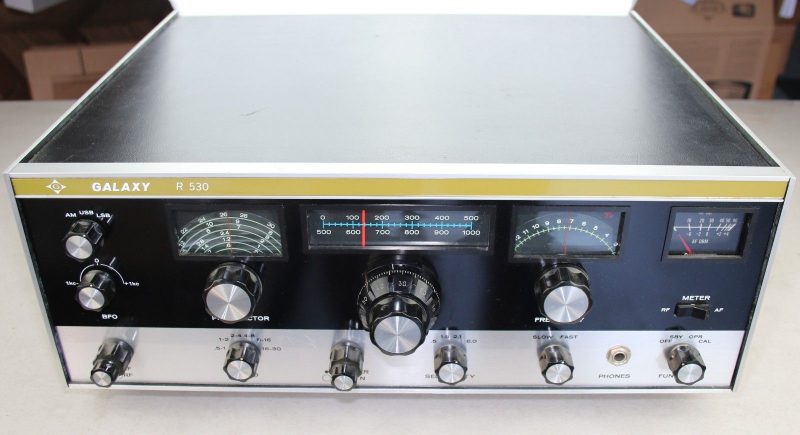
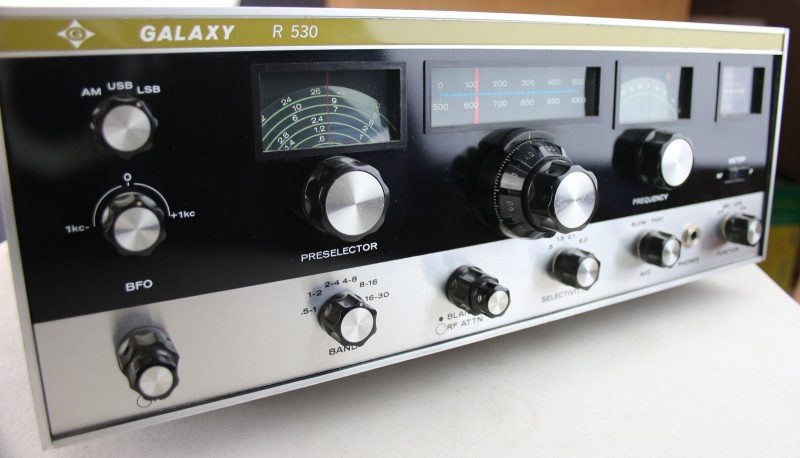
eBay: Galaxy R-530 Communications Receiver & Speaker

Many thanks to SWLing Post contributor, Rob G, who shares a link to this rare Galaxy R-530 receiver and speaker on eBay:

Click here to view on eBay.

The R-530 is certainly a handsome receiver. FYI: the last time we posted one of these from eBay, the final price was $470 shipped, but this particular listing also includes the SC-530 matching speaker.

Earlier this year, when an R-530 appeared on eBay, our resident rare receiver guru, Dan Robinson, chimed in with the following:

Some observations on this. The R-530, and military version R-1530, were considered fairly top of the line when they were made. They’re still among the rarer radios on the used market, though not the rarest. The R-1530 is not seen often.

On performance, these receivers were not on the same level as National HRO-500s, 51Js, and R-390s. This was made by Hy-Gain after all, which was not top of the heap in receiving design.

However, the R-530/1530s are great looking pieces. Anyone considering these should make absolutely sure that the PLL circuit functions on all bands. Poor cosmetic condition is a tipoff that the radio had a hard life.

Are there any Post readers own and use an R-530 of R-1530? Please comment!

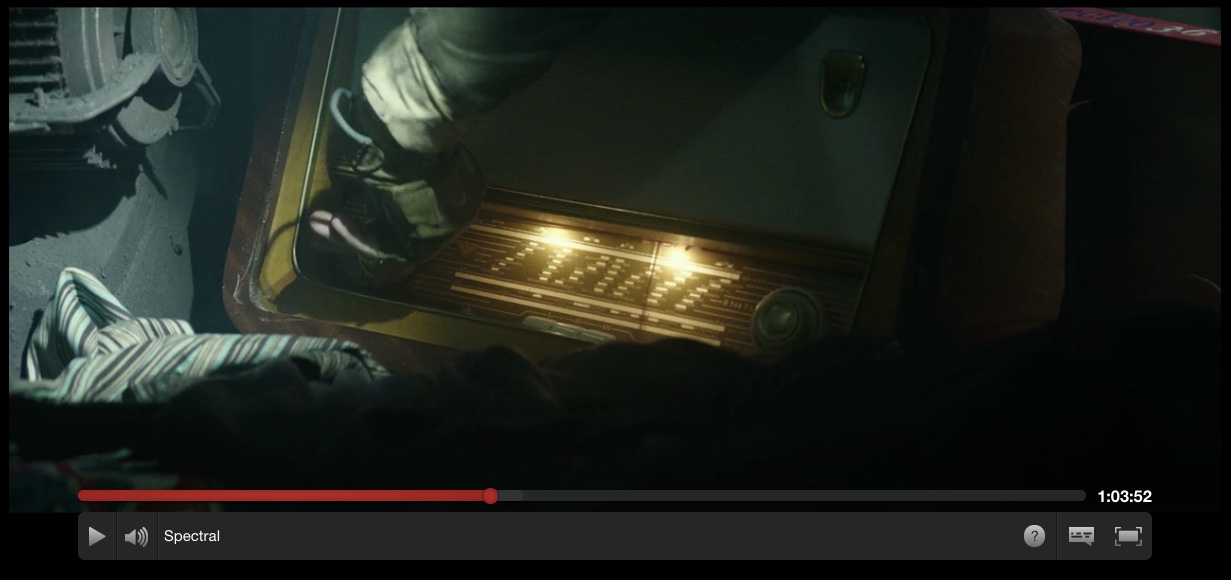
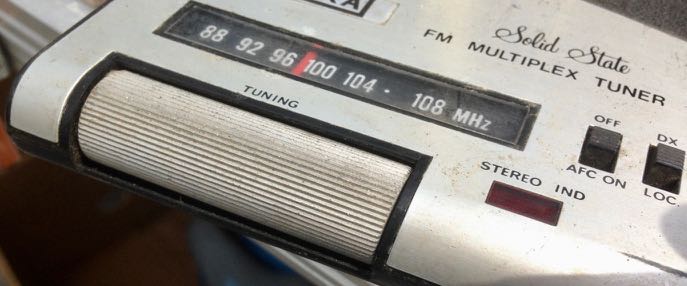
Can you identify this mystery radio?

Yesterday, at the marché aux puces de Sainte-Foy (Sainte-Foy flea market) in Québec City, I stumbled across the little receiver above in a box of junk under a vendor’s table.

I’ve actually worked up a short post about this radio and will publish it tomorrow, but first I’m curious if any Post readers can identify it based only on the photo above.

I’ve purposely cropped the image so it’s slightly more challenging. Still, there are so many radio enthusiasts here on the SWLing Post, no doubt someone will quickly ID this radio.

Please comment with the make/model and type of receiver if you think you’ve got the answer to this radio challenge!

Here’s a hint: I haven’t seen a receiver like this in decades. Good luck!

UPDATE: Click here to read our follow-up post.

David seeks a feature-packed “Swiss Army Knife” portable

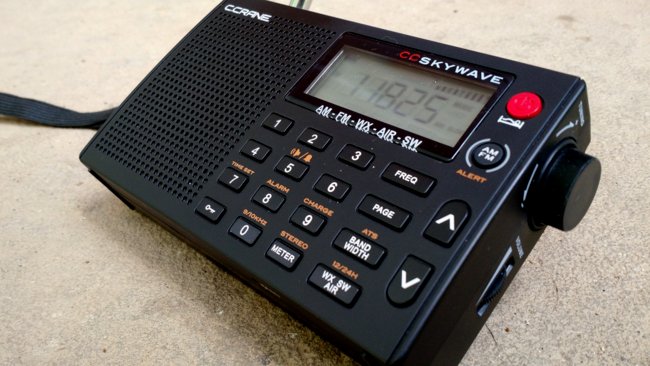
The CC Skywave

Many thanks to SWLing Post reader, David, who writes with the following inquiry:

I really enjoy the SWLing site. It’s great and you guys have such good reviews and information!

I’m looking for a radio and one thing I have not seen on the site is a “features” type breakdown when you could limit the radios by the features you’re looking for. Maybe I missed it???

I’m looking for a portable radio (option to run on batteries, rechargeable, etc.) that has SW/AM/FM and the NOAA bands (perk if it has SAME) and has an Aux In so I can play music from my phone/whatever on it.

This will be a radio that I can take camping, to parks, have in the car for trips, gatherings, etc. I’d like it to have enough speaker that music is enjoyable, but not such a large form factor that it’s impossible/silly to lug around when needed.

Does such a thing exist!? Any recommendations? Thanks so much.

Good questions, David! I like your suggestion about a master feature list for comparing portables. If I have the time someday, I might try to put something like this together (else, perhaps, a Post contributor can volunteer for the job?).

To answer your question…

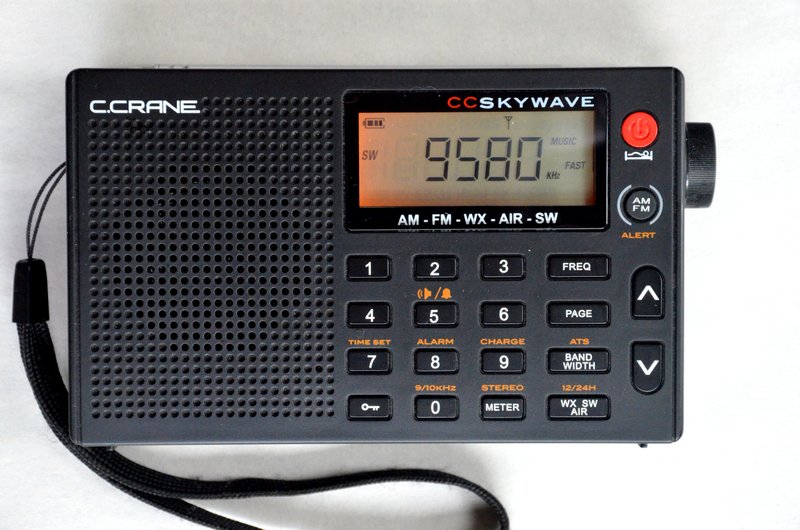
You’re certainly looking for a “Swiss Army Knife” of a radio. The only model that comes to mind is the C.Crane CC Skywave. I published a full review of the Skywave a couple years ago and can whole-heartedly recommend it. (Click here to browse our archive of Skywave posts.)

The C.Crane CC Skywave

The Skywave ticks every box on your feature list–it is even capable of SAME weather alerts! It’s also an excellent performer and my favorite compact travel radio that’s currently in production.

The only item missing on the Skywave is an audio AUX-in port, but I can’t think of any other radio on the market that comes closer to meeting your wish list than the Skywave.

SWLing Post readers: Perhaps you can help? Please comment if you can recommend a portable that meets all of David’s criteria. I may very well have overlooked a model. Obviously, the two features that make this search more challenging are weather radio and an an AUX-in port. Please comment with your suggestions!

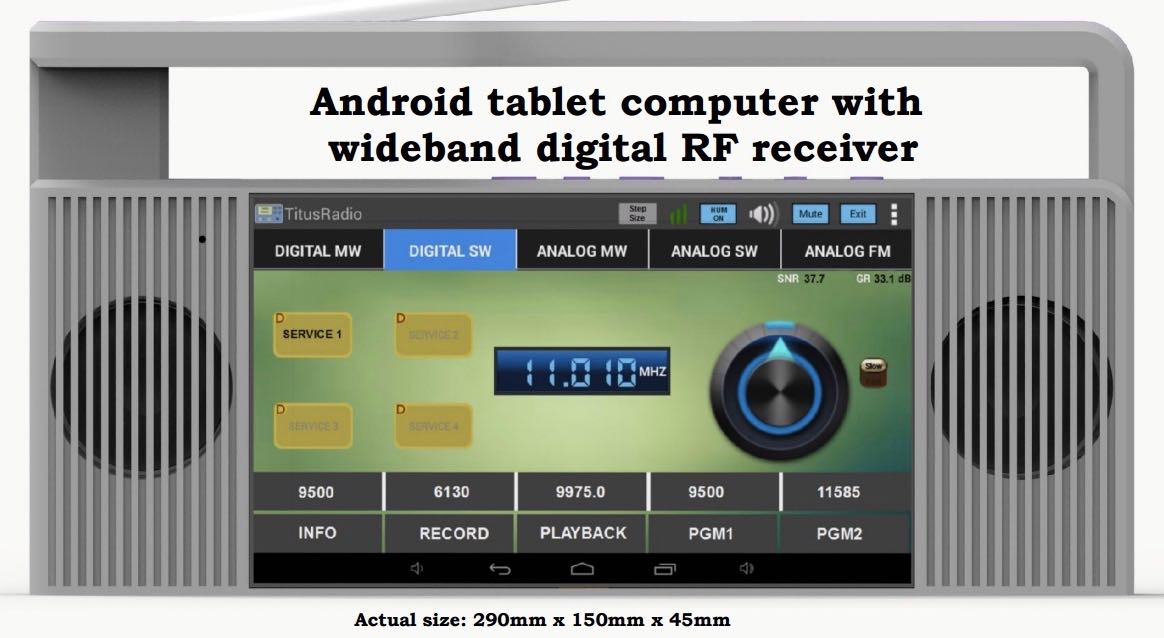
PantronX Titus II DRM receiver June 2017 update

Many thanks to SWLing Post contributor, Ed, who writes:

Here’s an update on the PantronX Titus II DRM boombox from Mike at PantronX:

“We are first fulfilling large orders from international broadcasters. Individual orders most likely are late fall.

If you preordered someone will contact you when the order comes up. Sorry for the delays but demand has been almost overwhelming.

Thanks for your continued support.”

Thanks fo sharing this update with us, Ed!

eBay: Dan discovers a Furuno RV-103SR marine receiver

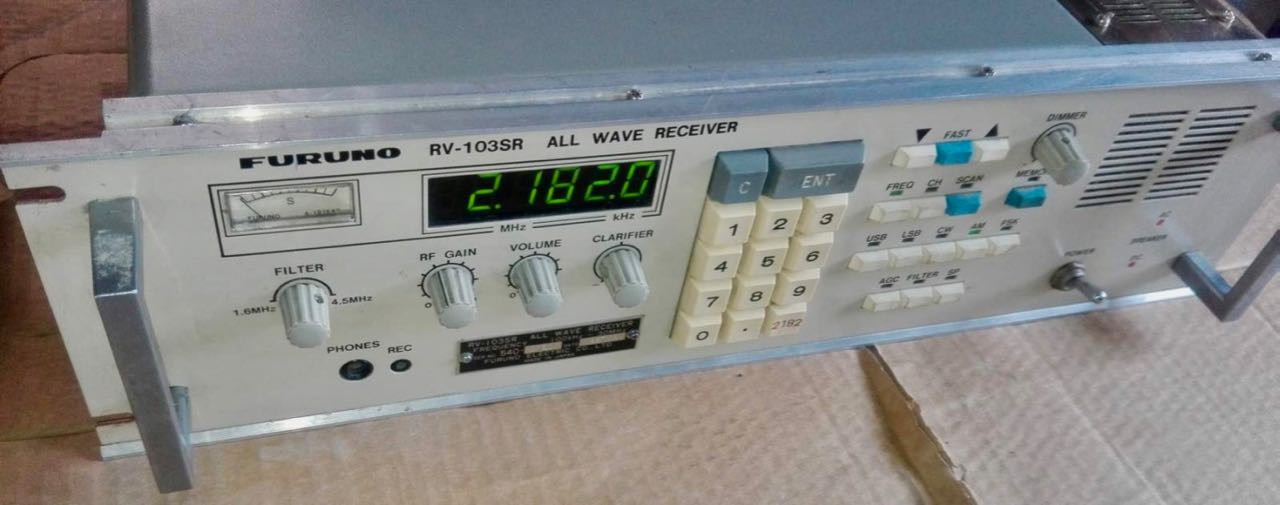
The Furuno RV-103SR

Many thanks to SWLing Post contributor, Dan Robinson, who shares the following regarding a Furuno RV-103SR marine receiver he discovered on eBay:

Recently, I came upon two great rarities in the world of receivers.

Furuno is a Japanese company known for maritime equipment, and is featured on one or two pages of the Osterman receiver directory. Two of these rare receivers came up on eBay, both located in an Asian location.

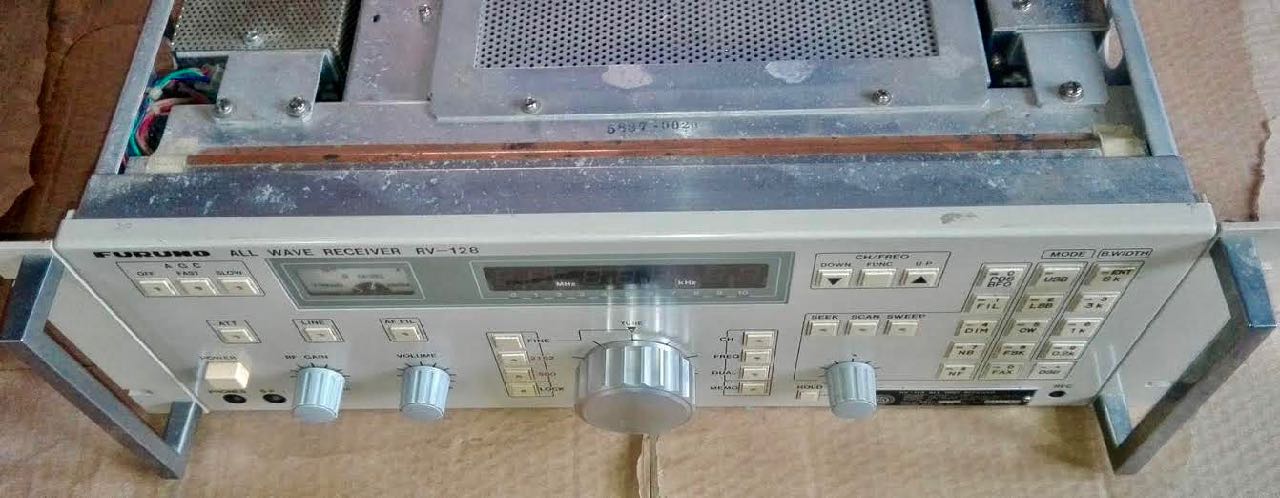
The Furuno RV-103SR and RV-128 are beautiful animals, and both receivers appear(ed) to be in good condition, obviously taken from ships, likely as part of tear downs in a shipyard.

There is very little information online about Furuno. One Japanese blogger did a review of the RV-128. And a guy in Republic of Srpska got to use the RV-128 which was installed on a giant oil tanker, during a trip he made as a navigator way back in 2002 (see the story at http://www.qsl.net/e78cb/mmstory.htm).

Here’s the link for the Japanese blogger (use Google translation to read it) http://blog.livedoor.jp/kerokeronyororo/archives/60986163.html).

In my correspondence with him, Fred Osterman notes that the RV-103SR variant was not known to him, and likely stands for rack mount. And Fred says he never saw these receivers in the flesh, and never saw one offered on the used market, “a rare bird” indeed. For those interested, Furuno equipment is on page 216 of Fred’s massive and excellent receiver book.

The appearance of these beautiful radios, and similar ones, again demonstrates the kind of equipment that is popping up in Ebay and other locations. We have seen numerous JRC marine receivers become available, many of them also former ship receivers. Anyone interested in these should ask the usual questions about condition, ask for photos and videos, to try to ensure that what eventually arrives is not DOA or suffering from various issues.

Click here to view on eBay.

More about Furuno

Furuno, it turns out, and as noted in the Osterman book, was behind the first fish finder ever produced. And the company had a range of transceivers for maritime use.

See the following links on YouTube:

Click here to view on YouTube.

Click here to view on YouTube.

Click here to view on YouTube.

Click here to view on YouTube.

Click here to view on YouTube.

Post Readers: this is what I love about Dan Robinson’s discoveries on eBay: he finds these rare treasures, then provides a little history about their origins, use and current availability. Thank you so much, Dan, for sharing!

eBay find: NOS Kenwood R-1000 Receiver

Many thanks to SWLing Post contributor, Dan Robinson, who discovered this like new Kenwood R-1000 on eBay. Dan notes:

This just went up on Ebay — a seemingly new and unused R-1000. Price is actually not high for one in this condition [$450 US]. I would jump on this if I didn’t already have one in this shape….

Click here to view on eBay.

The seller also has a “Make Offer” option. Perhaps they would even be more flexible? I’ve never owned an R-1000, but I do love the simple design and have used it enough to know it’s a great receiver with excellent audio. The fact that Dan Robinson and Dave Zantow give it such a good report speaks volumes.

Travelling and DXing with the Bonito MegActive MA305 antenna


Ok, so officially it wasn’t a DXpedition; it was a well needed vacation in the sun after several hectic months of work, some of which involved travel to slightly more exotic locations. However, these days, I view any travel, whether it be for business or pleasure as a ‘DXpedition’ opportunity! Some of you might remember that I purchased a Bonito Boni Whip at the beginning of 2017 because (a) I needed another antenna and (b) a second Wellbrook loop felt like too much of an extravagance. They’re excellent antennas for sure, but at around £300, I couldn’t justify buying another. Thus, for about a third of the price I bought the Boni Whip. It proved to be an excellent choice – very compact and so perfect for my regular DXpeditions, quick to set up and capable of really excellent DX. There are many videos on the Oxford Shortwave Log YouTube channel that are testament to this. I wrote a couple of articles, published here on the SWLing Post which were seen by Dennis Walter of Bonito, who subsequently contacted me and offered to send over their MegActive MA305 E-field antenna for testing. Dennis made it crystal-clear that I was to ‘do my own thing’…test the antenna in any way I saw fit and publish my findings so DXers/radio enthusiasts could learn more about the capabilities of the antenna – from another DXer. I was happy to agree to this arrangement and the MegActive MA305 duly arrived, complete with two lengths of (bayonet BNC terminated) high quality H-155 coaxial cable.

 My portable Dxing kit with MA305 antenna                 The MA305 power inserter and USB power ‘brick’

The specifications of the MegActive MA305 are very similar to the Boni Whip; they both offer a Gain of +3 dBs, second and third order intercept points of greater than +30 and +50 dB respectively and both tune to 300 MHz. The MA305 is supplied with a longer radiating element and tunes down to 9 KHz (versus the 20 kHz lower limit for the Boni Whip). Obviously this isn’t a specification that is going to concern most radio enthusiasts; both offer fantastically wide operating bandwidths. The way in which these antennas do differ quite significantly however, is in how they are powered. The Boni Whip operates from 12 to 15 V, whilst the MA305 operates from 5 to 15 V. Bonito’s design philosophy regarding this feature is based on the increasing difficulty in procuring reasonably priced analogue external plug-in power supplies (they are no longer allowed to be produced due to power consumption restrictions).

Interestingly, when the power supply for my Wellbrook ALA1530 packed up, I called them to purchase a replacement and was told they only have limited stocks remaining. Thus, a solution for powering active antennas with a suitable low-noise supply is an issue that needs resolving. The guys at Bonito figured a USB power source was suitably quiet and with USB ‘power bricks’ almost ubiquitous these days for charging mobile phones and other portable electronic devices on-the-go, the idea could be applied to their active antennas. The result is the MegActive MA305, designed to operate at 5 Volts with no loss of performance. As a DXer who probably spends more time listening on DXpeditions than I do in my shack at home, the USB power solution was perfect. I myself often carry a cheap Chromebook laptop to use as an additional power source for my camera phone when I’m DXing, so Bonito’s design approach resonated with me completely.


Travelling with the MegActive MA305

Ok, so the MA305 is very compact and very light indeed – perfect for a trip to Crete! However, I know from many conversations with my YouTube friends and followers that some of us feel a slight sense of trepidation carrying shortwave radios and antenna systems on board flights, be they national or international. I myself wasn’t really concerned other than if my bag got pulled from the X-ray machine, there’s often quite a long wait whilst the security staff work through the queue of luggage requiring er…human intervention! Predictably, my rucksack did get pulled and I waited patiently until it was my turn to explain the contents! Looking back on this retrospectively, it’s hardly surprising. Other than the usual holiday paraphernalia, my rucksack contained:

  • A 10.0 metre length of H-155 coaxial cable
  • A 1.0 metre length of H-155 coaxial cable
  • Eton Satellit receiver
  • MA305 Coaxial Power Inserter
  • MA305 Antenna Amplifier
  • Bonito USB ‘Power Brick’
  • Bonito USB Power Cable
  • NooElec RTL-SDR dongle
  • NooElect ‘Ham It Up’ upconverter
  • Various screened cables and connectors
  • 10 metres of equipment wire

I explained to the (friendly) security chap that I was a shortwave radio hobbyist and identified the various pieces of equipment for him, as he removed them from my rucksack. He confirmed my X-ray had ‘lit up’ (in blue as it happens) with metallic/electronic items and was even kind enough to swivel his monitor to show me the mess of items strewn across the screen – just as I had thrown them all into my rucksack! However, after quickly swabbing some of the items, he said all was fine and hoped that I enjoyed my holiday and listening. Service with a smile at Gatwick Airport – and I was on my way. My outbound experience got me thinking whether it would be possible to pack my DXing kit in such a way that it wouldn’t alarm airport security. Thus, for the trip home, I packed all of my cables into my (checked-in) suitcase. I figured it would be obvious there was no security risk associated with cables alone. I then packed my RTL-SDR, upconverter and all of the MS305 components very neatly into a single box and put that in my carry-on rucksack. Now, some might argue that security measures at Heraklion International Airport in Crete differ a little from London Gatwick, but I observed staff at the X-ray machine very carefully monitoring every piece of luggage passing through it – including my own and I passed straight through without a problem. All I did was take my laptop out as usual, and put it in a separate tray. Job done.

DXing with the MegActive MA305

                                      My listening post in Crete, with the brilliant Eton Satellit receiver

My apartment in Crete was on the second floor and a large balcony provided a decent outdoor location for DXing. As regards electrical noise, the location was much quieter than my shack at home, but it certainly wasn’t perfect, thus a good test of the MA305 in a real-world pseudo-urban environment. in an attempt to improve SNR, I bought a cheap ‘Selfie Stick’ and some tape and managed to construct a mount for the amplifier, increasing the overall height above ground by about 1.5 metres and displacing the radiating element an additional 2 metres thereabouts from the building. I’m not sure whether it made much difference, but it seemed like the sensible thing to do for less than 10 Euros.

During my week-long stay, I managed to fit in several listening sessions and copied some really excellent DX from this ultra-compact, USB-powered set up. In fact, the MA305 coupled to the Eton Satellit performed so well, I managed to copy a number of personal firsts, including CRI on 7295 kHz, via their relay in Bamako, Mali, The Voice of Beibu Radio on 5050 kHz, Nanning, XSL ‘Slot Machine’ on 6251 kHz USB, Ichihara, Japan, S32 ‘The Squeaky Wheel’ on 3828 kHz and NHK World Radio Japan, 11910 kHz. I also copied RTM Wai/Limbang FM on 11665 kHz from Kajang, Myanmar Radio on 5985 kHz and AIR Bhopal on 4810 kHz, amongst others – all of which I would certainly consider to be difficult catches in Europe. To hear them with an 18 cm antenna felt pretty special. African shortwave stations were also very well represented and I managed to copy a number of them including Radio Hargeysa on 7120 kHz, Voice of Tigray Revolution on 59150 kHz, Radio Oromiya on 6030 kHz, Radio Fana on 6110 kHz, Radio Ethiopia on 7235 kHz, Radio Sonder Grense on 3320 kHz and Radio Guinée on 9650 kHz. I expected to hear all of these stations, except for Radio Guinée, which is farther away from Crete than the UK. So, all-in-all an excellent result.

Despite hearing a lot of excellent DX whilst in Crete, there is one signal I copied, which more than any other, demonstrates the DXing credentials of the MA305 – and Eton Satellit for that matter. In the early hours of the morning (00:59 hrs UTC) I copied and recorded Radio Tarma from Peru on 4775 kHz. With a TX power of 1 kW, this is a very difficult station to hear in Western Europe, even with a longwire. To catch this station in Crete, at all, was incredible on an ultra-compact set-up. It was at this point during the trip that I realised E-field antennas really do work superbly well for hard-core DXers on the move. It inspired me to conduct further tests back home in the Oxfordshire countryside, where electrical noise is absent. This I did a few days ago, with some quite amazing results on the Tropical Band. More on that to come in my next post. In the meantime, please find text links and embedded videos for selected reception recordings, below. Many more recordings are available on the Oxford Shortwave Log YouTube channel and please don’t hesitate to contact me if you require further information on the MA305 or the Eton Satellit. Thanks for reading/watching/listening and I wish you all excellent DX.


Personal firsts

Click here to view on Oxford Shortwave Log


Click here to view on Oxford Shortwave Log


Click here to view on Oxford Shortwave Log


Click here to view on Oxford Shortwave Log


Click here to view on Oxford Shortwave Log


Radio Tarma, Peru, 4775 kHz

Click here to view on Oxford Shortwave Log


Other notable catches

Click here to watch on Oxford Shortwave Log

Click here to watch on Oxford Shortwave Log

Click here to watch on Oxford Shortwave Log

Click here to watch on Oxford Shortwave Log


Clint Gouveia is the author of this post and a regular contributor to the SWLing Post. Clint actively publishes videos of his shortwave radio excursions on his YouTube channel: Oxford Shortwave Log. Clint is based in Oxfordshire, England.