Category Archives: Schedules and Frequencies

Full Schedule of RTI Transmission Tests and Special QSL

Many thanks to SWLing Post contributor, Gerard Koopal, who writes:

Dear Thomas,

[Per the email message below] from Radio Taiwan International, they will bring a direct transmission from Tamsui, Taiwan in German and French.

For correct reception reports there is a special QSL card available.

Reports can be sent to: [email protected] or via the Online Form or by snailmail (Radio Taiwan International, German Service, PO Box 123-199, Taipei 11199, Taiwan).

Wishing everybody a good reception!

Gerard Koopal

Almere, The Netherlands


Onderwerp: RTI direct broadcasts from Tamsui July 2022

Dear RTI listeners,

This year, RTI will once again be broadcasting its German-language program directly from the Tamsui transmitter in Taiwan on several days.

Broadcast dates and frequencies July 2022:

Frequency 11995 kHz 1700-1800 UTC
Frequency 9545 kHz 1900-2000 UTC

1) 08.07. Friday
2) 09.07. Saturday
3) 10.07. Sunday
4) 15.07. Friday
5) 16.07. Saturday
6) 17.07. Sunday
7) 22.07. Friday
8) 23.07. Saturday
9) 24.07. Sunday
10) 29.07. Friday
11) 30.07. Saturday
12) 31.07. Sunday

We confirm receipt reports with a special QSL card.

You can send reception reports to [email protected] by email, using the online form, or by mail (Radio Taiwan International, German Service, PO Box 123-199, Taipei 11199, Taiwan).

We would also like to point out that this year in August RTI will also be broadcasting French-language programs directly from the Tamsui transmitter on Fridays, Saturdays and Sundays.

We look forward to your reception reports!

Your RTI editorial team

https://de.rti.org.tw/

[email protected]


Thank you for the tip, Gerard!

BBC Midwinter Broadcast Frequencies and Schedule: June 21, 2022

Many thanks to SWLing Post contributor, Richard Langley, who shares the following note from Alan Pennington via the WoR io group:

BBC Antarctic Midwinter broadcast – June 21 frequencies confirmed
From: Alan Pennington

Thanks to Dave Passey at Woofferton who has just confirmed to me the frequencies for the BBC Antarctic Midwinter broadcast tomorrow, Tuesday 21st June, at 2130-2200 UTC:

“Following the test transmissions, the 6035kHz from DHA has been closed out, leaving just the three:

7305 ASC
9505 WOF
12065 WOF

You are correct that there will only be one transmission on Shortwave at 2130UTC. “

(in the UK, the programme is also on BBC WS on DAB at 2130 UTC, 2230 BST. This is probably a slightly shorter edition though: 2132-2200, so best to listen on shortwave!)

This from BBC’s Media site:

The BBC’s unique annual broadcast to Antarctica, featuring music and messages.

The Antarctic Midwinter Broadcast is unlike anything else on the BBC World Service. Every year, we make this special programme for just 32 listeners: the team of scientists and support staff isolated at British research stations in the Antarctic midwinter.

Presented by Cerys Matthews, the programme features messages from family and friends at home as well as music requests from Antarctica. For decades it has been part of the traditional midwinter celebrations.

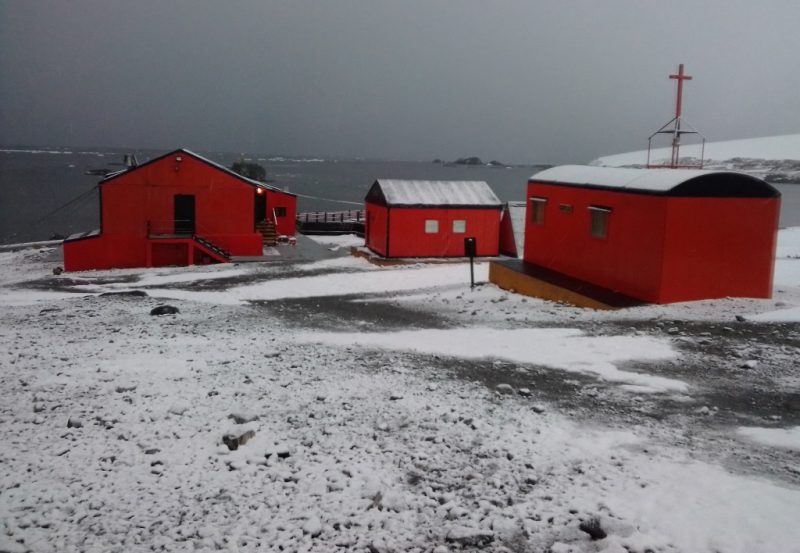
For the staff living at three British Antarctic Survey research stations (Rothera, Bird Island and South Georgia), and at other national bases across the frozen continent, midwinter is a special time. With no sunlight, Antarctica is at its coldest and those stationed on the frozen continent face months of total isolation.

Midwinter celebrations at the British research stations include a feast, exchange of presents, watching the 1982 horror film The Thing (where an alien monster terrorises an Antarctic base) and listening to the BBC’s Midwinter Broadcast.

As ever, this year’s programme includes recorded messages from family and friends of the winterers, music requests from the personnel in Antarctica, and appearances from special guests.

A Boffin Media production produced by Martin Redfern for the BBC World Service

https://www.bbc.com/mediacentre/proginfo/2022/25/antarctic-midwinter-broadcast

73, Alan Pennington

Many thanks for sharing this, Richard!

We will once again ask that listeners across the globe share their recordings here on the SWLing Post. We will post details in a separate post!

Today: Transmission tests for the 2022 BBC Antarctic Midwinter Broadcast

Halley VI Research Station on the Brunt Ice Shelf in Antarctica (Source: British Antarctic Survey)

Many thanks to SWLing Post contributor, Richard Langley, who writes:

Hi Thomas:

According to a posting on the WoR io group, the frequencies for the 21 June broadcast won’t be finalised until after the test transmissions, but the latter have now been scheduled.

They will be on air today Tuesday, 14.06.2022, at 2130-2145 UTC.

      • ASC: 7305 kHz
      • DHA: 6035 kHz
      • WOF: 9505 kHz and 12065 kHz

All the best
— Richard

Many thanks for sharing this Richard! As it has become a tradition, we will share recordings of the June 21 Midwinter Broadcast to Antarctica here on the SWLing Post once again. Always a highlight of my year!

Alan Roe’s A22 season guide to music on shortwave (version 2)

Many thanks to SWLing Post contributor, Alan Roe, who shares his A-22 (version 2) season guide to music on shortwave. Alan provides this amazing resource as a free PDF download:

Click here to download Music on Shortwave A-22 v2 (PDF)

Thank you for sharing your excellent guide, Alan!

This dedicated page will always have the latest version of Alan’s guide available for download.

Upcoming High Power Broadcast of VORW Radio International!

Hello shortwave listeners! I just wanted to make this short post as a reminder for an upcoming broadcast of mine – transmitted with high power for listeners in Europe and beyond!

Friday 1600 UTC (7 PM EEST/MSK) – 9670 kHz – Moosbrunn 100 kW – Europe, Russia, Central & East Asia

You can hear this airing every Friday, the program is 1 Hour in length and features miscellaneous discussion (sometimes about current events, other times about random subjects on my mind) at the start of the program and is then balanced out with listener requested music. I hope for it to be an enjoyable light entertainment program with good music and discussion.

For this airing exclusively, I verify reception reports with a special e-QSL! Listener reception feedback is much appreciated at [email protected]

Happy listening!

18th Edition of the Global Radio Guide (Summer 2022) Now Available

Many thanks to SWLing Post contributor, Gayle Van Horn (W4GVH), who shares the following announcement:


18th Edition of the Global Radio Guide (Summer 2022) Now Available

Familiar players and familiar places.  

Familiar fears pushed by familiar voices.

The world has held its breath during the Russian invasion of Ukraine as images of the human suffering of war have brought back old memories and old fears from years gone by.

Just like these events have brought up once buried feelings, it has also brought what many thought to be “old” technology back to the forefront.  While internet access is one of the first targets of invading regimes intent on controlling the narrative, the vast reach of shortwave radio transcends borders and other forms of connectivity.

It is déjà vu with a front row view.

For those who want to be on the front lines of the action, Gayle Van Horn’s (W4GVH) 18th Edition of her Amazon bestselling Global Radio Guide (Summer 2022) has all of the details you need to catch up with the latest from the front lines.

As one of the only remaining publications available with international broadcast frequencies and schedules, the Global Radio Guide (GRG) puts everything a radio enthusiast needs to navigate the action right in their hands.

In this completely updated edition, regular GRG contributors Ken Reitz, KS4ZR, and Fred Waterer (both also of The Spectrum Monitor) post features on monitoring the international broadcasters at the very forefront of the events.  Larry Van Horn, N5FPW, adds his detailed information on monitoring of utilities on the shortwave bands, including military communications.  

With the help of the GRG, you can tune in shortwave broadcast stations from additional hotspots such as China, Cuba, India, Iran, North/South Korea, Taiwan, and many other counties. If you have a shortwave radio receiver, SDR or Internet connection, pair it with this unique radio resource to know when and where to listen to the world.

This newest edition of the GRG carries on the tradition of those before it with an in-depth, 24-hour station/frequency guide with schedules for selected AM band, longwave, and shortwave radio stations. This unique resource is the only radio publication that lists by-hour schedules that include all language services, frequencies, and world target areas for over 500 stations worldwide. 

The GRG includes listings of DX radio programs and Internet website addresses for many of the stations in the book. There are also entries for time and frequency stations as well as some of the more “intriguing” transmissions one can find on the shortwave radio bands.

In addition to the global hotspots, the GRG brings the world to you from other places on the radio dial.

Gayle Van Horn brings us into the tropics with her regular stroll through the tropical bands – one of the most challenging and rewarding pursuits for the shortwave listener.

Not only are the bands heating up with world events, but the HF bands themselves are becoming more alive as our sun wakes up from its slumber.  What impact will this renewed solar activity have on listening?  Tad Cook, K7RA, shares his atmospheric expertise with a primer on radio propagation while maintaining an eye on the ever-evolving Solar Cycle 25.  

A bit lower on your radio dial, DX Central’s Loyd Van Horn, W4LVH, breaks down the basics of getting started with mediumwave DX and even gives us a fun summer project by diving into the powerful KAZ antenna that listeners can use to pull in elusive mediumwave signals from far beyond their home.

Whether you monitor shortwave radio broadcasts, mediumwave, amateur radio operators, or aeronautical, maritime, government, or military communications in the HF radio spectrum, this book has the information you need to help you to hear it all. Teak Publishing’s Global Radio Guide “brings the world to you.”

You can find this edition of the Global Radio Guide, along with all of our titles currently available for purchase, on the Teak Publishing Web site at www.teakpublishing.com.  Details will be available at www.teakpublishing.com

The 18th edition of the Global Radio Guide e-Book (electronic book only, no print edition available) is available worldwide from Amazon and their various international websites at 

https://amzn.to/3kXqjqw

The price for this latest edition is US$8.99. Since this book is being released internationally, Amazon customers in the United Kingdom, Germany, France Spain, Italy, Japan, India, Canada, Brazil, Mexico and Australia can order this e-Book from Amazon websites directly servicing these countries. Customers in all other countries can use the regular Amazon.com website to purchase this e-Book.

You can read any Kindle e-Book with Amazon’s ‘free’ reading apps on literally any electronic media platform. You do not have to own a Kindle reader from Amazon to read this e-book. There are Kindle apps available for iOS, Android, Mac and PC platforms. You can find additional details on these apps by checking out this link to the Amazon website at www.amazon.com/gp/feature.html?ie=UTF8&docId=1000493771. 

Teak Publishing Company
P.O. Box 297
Brasstown NC 28902
www.teakpublishing.com

2022 W9IMS Special Event Station Details!

W9IMS Special Event No. 1: The 2022 Certificate Chase Begins

By Brian D. Smith, W9IND

A journey of a thousand miles begins with a single step, as the proverb goes, and the road to a 2022 W9IMS Checkered Flag Award begins with a single QSO – or a single SWL reception.

W9IMS will stage special event stations commemorating each of the three major races at the Indianapolis Motor Speedway this year: the Grand Prix, the Indianapolis 500 and the NASCAR 200 at the Brickyard.

Your weeklong opportunity to complete the first of three required contacts with W9IMS starts Sunday, May 8, and ends at 11:59 p.m. Saturday, May 14 (0359 UTC Sunday, May 15). The special event schedule will resume only 8 days later with the Indy 500 operation (May 23-29), followed by the NASCAR 200 from July 25-31.

Individual QSL cards accompany each of the three events, and a Checkered Flag certificate awaits those who bag the trio. Hams and SWLs alike may apply for the cards and certificate; see www.w9ims.org for further information.

Where to find W9IMS? The station fires up on 20- and 40-meter General Class frequencies, usually on or near 14.245 and 7.245 MHz. But the easiest way to locate W9IMS is to check DX spots, especially on DX Summit at http://www.dxsummit.fi/

Type “W9IMS” in the search box at upper right and you’ll see which, if any, frequencies the station is currently occupying. Note that special event operations are not continuous throughout the week, but you’ll find scheduled times and operators on the W9IMS QRZ page – and there’s always the possibility of unscheduled appearances by operators with an hour or two to spare.

Any hour of the day or night is fair game, but the surest way to catch W9IMS is during prime time: weekdays from 6 to 10 p.m. Indy time or 2200 to 0200 UTC. And if all else fails, listen for happy hour – the last blast on Race Day (May 14 for the Grand Prix), usually starting at 11 p.m. Indy time or 0300 UTC. That’s when W9IMS ops traditionally switch to contest-style QSOs, exchanging only signal reports, to put as many stations in the log as possible.

Don’t stake your certificate on any announced schedule, however; W9IMS on-air times can be curtailed by adverse solar or weather conditions or a paucity of QSOs.

Likewise, the station has been known to activate an unannounced band, such as 80 meters, at the drop of a hat. Again, DX Summit and other DX spotting networks are your best friend in this regard.

Feel free to submit all of your 2022 QSL and certificate requests in the same envelope, and if you don’t have a QSL card, a printout of your W9IMS contacts or reception reports will suffice.