Category Archives: Shortwave Radio

Understanding decibels

Many thanks to SWLing Post contributor, Marty, who shares the following article from Nuts and Volts magazine–a primer on decibels:

The “dee-bee” is everywhere in ham radio, and is used for characterizing everything from antenna performance to nano-sized signals. Learn the decibel (abbreviated as lower-case ‘d’ followed by an upper-case ‘B’ or ‘dB’) and you and your signal will go a long way!

From the ARRL Ham Radio License Manual’s online math tutorials for beginning hams (arrl.org/chpt-2-radio-signal-fundamentals), we introduce the decibel. “You have probably recognized deci as the metric prefix that means one-tenth. The unit we are really talking about here is the bel (a ratio of sound levels named for Alexander Graham Bell), so a decibel is just 1/10th of a bel. We use a decibel instead of a whole bel because the bel represents a rather large change in levels. The dB is a just-perceptible change and more useful as a unit of measurement.” As used in wireless, the decibel is the ratio of two power levels:

dB = 10 log10 (P2/P1)

Note that the dB has no units because it is a ratio. The dB is just a number that describes how much bigger or smaller one quantity is compared to the other. Both quantities themselves must have the same base units, though — watts, for example. If P2 is larger than P1, the dB value is positive, such as for amplifier gain. If P2 is less, the value is negative and represents attenuation or loss. (Somewhat confusingly, it’s common to specify an amount of attenuation as a positive value of dB. For example, “This filter attenuates the signal by 20 dB.”)
Click here to read the full article at Nuts and Volts.

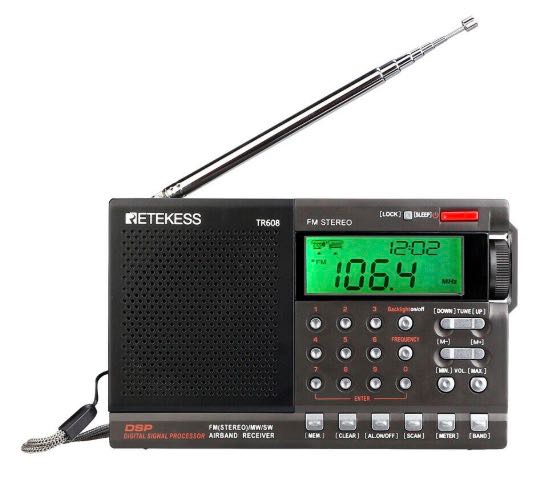
Mike reviews the Retekess TR608 AM/FM/AIR/SW receiver

Many thanks to SWLing Post contributor, Mike S, who shares his assessment of the Retekess TR608. Mike writes:

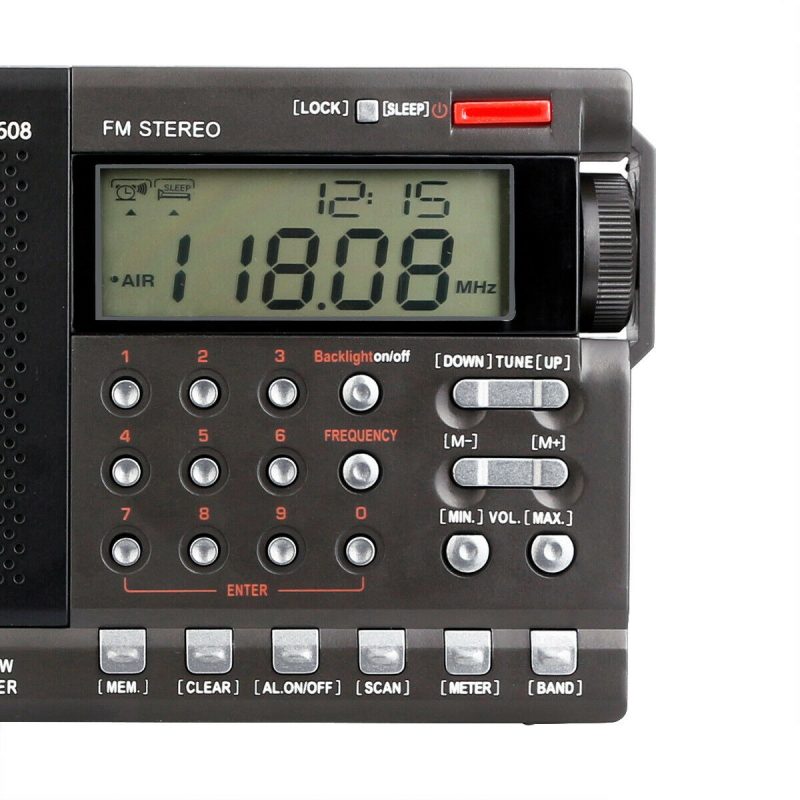
For this model, the company marketing electronics under the Retekess brand seems to be using a different supplier compared to the previous digital-radio-plus-memory—card-player products. The result is a more traditionally styled multiband DSP radio which runs on (gasp) traditional AA batteries. Its feature set takes inspiration from the Radiwow R108 and original CCrane Skywave, but with mixed results (albeit at a fraction of the price). It delivers decent performance for its price class but more serious listeners would be advised to spend a little more on a more established model.

Pros

    • Usual set of features: sleep timer, alarm, scanning, auto memory fill.
    • Uses replaceable alkaline or NiMH “AA” cells.
    • Decent sensitivity across the board.
    • Full shortwave coverage.
    • Frequency display is large and contrasty.
    • Dial light is effective and can be disabled. Display is readable without it, even in dim light.
    • No annoying keypad “beep”, so no mad rush to discover how it can be disabled.
    • Speaker can play reasonably loud without distortion.
    • FM reception is solid with good frequency response and stereo reception through headphones; this also activates a display indicator.
    • MW/SW reception is NOT plagued by digital hash bleeding through from the processor as with most other models in this price range!

Cons

    • Significantly larger than expected.
    • Unfortunately the added cabinet space is not utilized for a more wide-range speaker; audio is tinny.
    • Clumsy mounting of one spring in the battery compartment on my sample makes it almost impossible to insert the third AA battery without risking damage.
    • Many keypad buttons are so tiny and almost flush with the cabinet, that they are difficult to press.
    • Lens over LCD display is molded and unpolished with moiré distortion at some viewing angles.
    • Air band reception marred by birdies, bleed-through from other bands, and lack of squelch.
    • Volume control defaults back to level “10” under some circumstances (the manual warns about this).
    • Confusing 2-level LOCK function requires close attention to almost microscopic indicator on LCD.
    • No battery level indicator.
    • Although the manual advises that batteries can be charged using the 4.5V coaxial socket, no charging indicator is obvious.
    • Rotary knob, used for both tuning and volume adjustments, has no detents and so can easily spin off target.
    • Assigned function (no indication) depends on whether the tuning or volume buttons on the keypad were the last to be used.
    • No fine tuning outside of pre-programmed increments.
    • MW selectivity is a bit too wide for congested night reception.
    • MW reception occasionally exhibits weird artifacts; ghost images, sputtering audio on marginal signals, and “processed” sounding voice audio. Don’t know if these are DSP or AGC related, or a mixture of both. I have observed the same thing with the Eton Mini and other inexpensive portables using marginal DSP implementations.

SHOWSTOPPER ALERT: MW band channel assignments marred by 9kHz-centric firmware bug. Even after changing to 10kHz channel spacing (undocumented), the CPU still “thinks” in 9kHz assignments for direct input. Entering FREQ-1-0-1-0-FREQ should get you to 1010 kHz; but it actually lands on 1018 kHz because that is the nearest channel in the 9kHz band plan. You are now stuck in frequency step hell, as the up-down frequency keys still operate in 10KHz mode but do not know they are now off bandplan. UP/DOWN yield 1028/1008, not 1020/1000. The only way to recover is to enter a MW frequency that is the same in both bandplans, or to power off and double-reset the step rate resulting in all memories being lost.

Thank you so much for the review, Mike.  It sounds like this little receiver isn’t ready for prime time yet. The issues with frequency steps on the mediumwave band is certainly a show-stopper for anyone in North America. Indeed, it sounds like mediumwave reception, in general, is mediocre at best. At least the receiver isn’t plagued with internal noises.

With pricing around $29.99-$39.99 it’s certainly a bargain radio. But I’m sure you’re thinking what I’m thinking: you pay for what you get.

The Retekess TR608 can be purchased on eBay or Amazon.com (affiliate link).

KiwiSDR update brings integrated DRM reception!

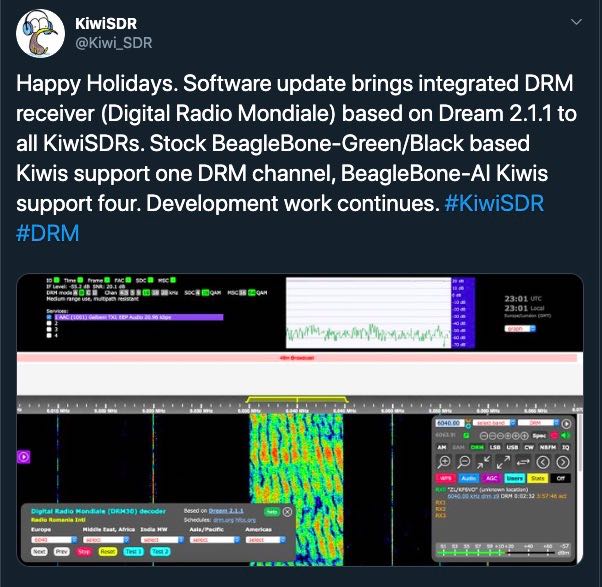
Many thanks to SWLing Post contributor, Mark Fahey, who shares the following tweet from KiwiSDR:

“Happy Holidays. Software update brings integrated DRM receiver (Digital Radio Mondiale) based on Dream 2.1.1 to all KiwiSDRs. Stock BeagleBone-Green/Black based Kiwis support one DRM channel, BeagleBone-AI Kiwis support four. Development work continues.”

Ironically, I had only recently published a post asking if anyone had ever attempted to decode DRM using a KiwiSDR. Turns out, several readers had by porting the IQ audio output into the DREAM application. Now that KiwiSDR will have a native DRM mode, this will no longer be necessary.

Many thanks, Mark, for sharing this tip! As you say, this is “mega news!”

A new sunspot emerges, breaking 40 day spotless streak

(Source: Spaceweather.com via Michael Bird)

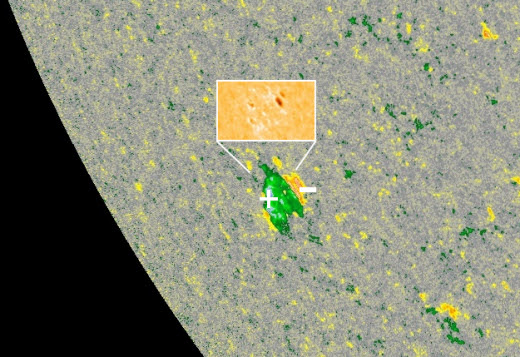
A SUNSPOT FROM THE NEXT SOLAR CYCLE: Breaking a string of 40 spotless days, a new sunspot is emerging in the sun’s southern hemisphere. It comes from the next solar cycle. The unnumbered spot is inset in this map of solar magnetic fields from NASA’s Solar Dynamics Observatory:

How do we know this is a new-cycle sunspot? Its magnetic polarity tells us so. Southern sunspots from old Solar Cycle 24 have a -/+ polarity. This sunspot is the opposite: +/-. According to Hale’s Law, sunspots switch polarities from one solar cycle to the next. This sunspot is therefore a member of new Solar Cycle 25.

Recently we reported that Solar Minimum has reached a century-class low. This sunspot, plus a few others like it earlier this year, affirm that Solar Minimum won’t last forever. Solar Cycle 25 is showing signs of life. Forecasters expect the next solar cycle to slowly gain strength in the years ahead and reach a peak in July 2025.

www.spaceweather.com

Reminder: Norddeutscher Rundfunk Christmas Eve Broadcast

Photo by Jens Rademacher on Unsplash

Many thanks to SWLing Post contributor, Harald Kuhl (DL1AX), who shares the following announcement from the NDR regarding the annual Gruss an Bord Christmas Eve broadcast. Harald notes:

This year on December 24 Norddeutscher Rundfunk (NDR) will again broadcast its program “Gruss an Bord” on shortwave.

They verify reception report by a detailed QSL card.

[email protected]

[email protected]

Press release below (translated via Google) with schedules and frequencies:


“Greetings on board”: How to receive the broadcast

It has tradition and exudes a very special pre-Christmas mood: On Christmas Eve greetings are sent to the seafarers around the world from 8:05 pm – 10:00 pm and from 11:15 pm – midnight on NDR Info. And on the most different channels and technical ways, so that the greetings and messages can be guaranteed to be received on all seven seas.

The ship’s crews have several options to receive the program “Greeting on board”. Also the shortwave belongs to it.
The livestreams of the program (20.05 to 22 clock and 23.15 clock to 24 clock MEZ) can be found here: NDR Info and NDR Info Special. In addition, there is the possibility to listen to the program via the NDR radio app. NDR Info can also be received via FM, DAB + and DVB-S radio, NDR Info special only via DAB + and DVB-S radio.

So that all crew members on board – on the seas or in the harbors – can receive the traditional program, the NDR radio has also rented shortwave frequencies:

From 19:00 to 21:00 UTC (20:00 to 22:00 CET), the shortwave transmits over the following frequencies (UTC is the abbreviation for Universal Time Coordinated):

“Greeting on board” via shortwave

Frequency target area
6.080 kHz Atlantic – North
11,650 kHz Atlantic – South
9,800 kHz Atlantic / Indian Ocean (South Africa)
9,740 kHz Indian Ocean – West
9,570 kHz Indian Ocean – East
6.030 kHz Europe

Between 21:00 and 23:00 UTC (22:00 – 24:00 CET) the shortwave transmits over the following frequencies:

“Greeting on board” via shortwave

Frequency target area
6.145 kHz Atlantic – North
9,830 kHz Atlantic – South
9,590 kHz Atlantic / Indian Ocean (South Africa)
9,740 kHz Indian Ocean – West
9,675 kHz Indian Ocean – East
6.155 kHz Europe

NDR Info sends the “Greeting on board” from 20:05 to 22:00 CET. This is followed by the transmission of the Christmas Mass from the church of St. Mary Magdalene in Bochum-Wattenscheid from 22 to 23.15 CET. Then you will hear the second part of “Greetings on Board” until midnight CET.

Reminder: Christmas on-air event to honor Radio Luxembourg

Many thanks to SWLing Post contributor, Alexander (DL4NO), who writes:

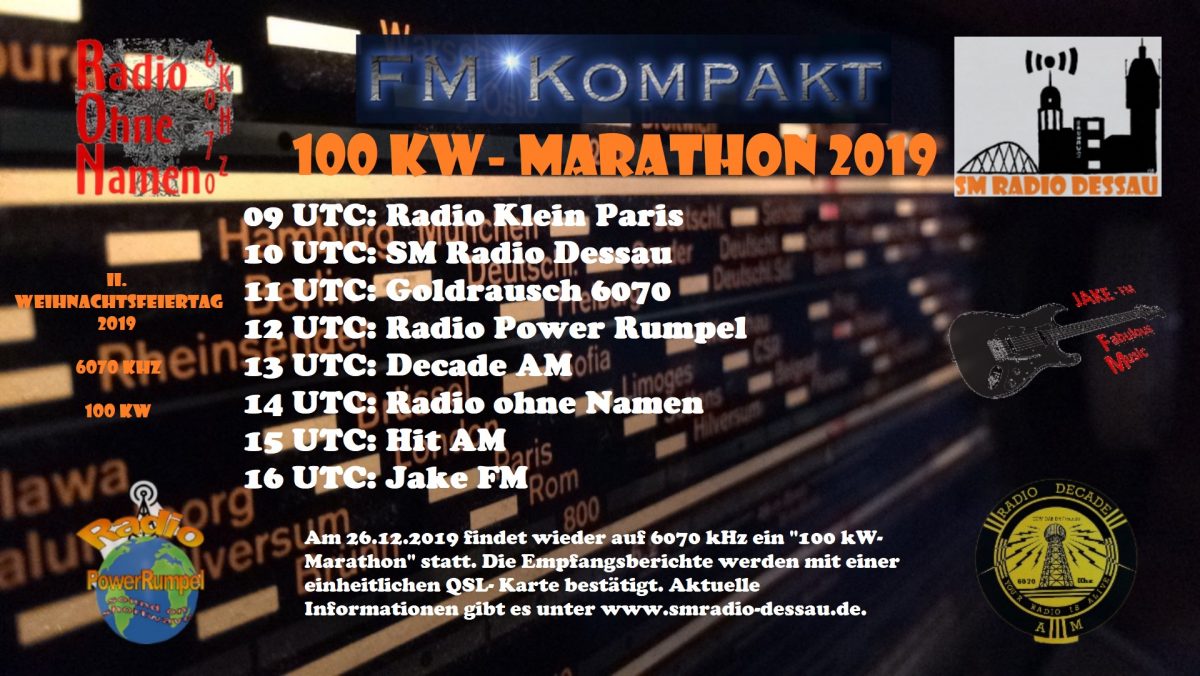
For a very long time Radio Luxembourg was *the* pop music radio in Europe, especially in Germany and GB. At a time when Germany only had its public radio system, the Radio Luxembourg was the one and only. But this is history.

At Christmas, several German shortwave broadcasters, organized by Radio DARC, will transmit on 6070 kHz in memoriam of Radio Luxembourg from Vienna. See the attached flyer [above].

Excellent! Thank you for the heads-up, Alexander!

Special VORW Radio International Holiday Broadcasts!


Hello readers! I am pleased to announce that there will be special broadcasts of VORW Radio International on Christmas Day!

This special program will feature an enjoyable mix of Christmas Music and Miscellaneous Discussion. There might be a few other songs added to the playlist as well – in short, I hope for this to be a fun show for listeners on Christmas Day.

This broadcast will be sent from radio station WWCR and a QSL will be given to any and all listeners who submit reception reports.

The show will be on 4 frequencies:

Wednesday 1500 UTC (10 AM Eastern / 9 AM Central) – 7490 kHz – WWCR 100 kW – North America

Wednesday 1500 UTC (10 AM Eastern / 9 AM Central) – 13845 kHz – WWCR 100 kW – North America and Europe

Wednesday 2200 UTC ( 5 PM Eastern / 4 PM Central) – 9350 kHz – WWCR 100 kW – North America and Africa

Thursday 0100 UTC (8 PM Eastern / 7 PM Central Wednesday) – 4840 kHz – WWCR 100 kW – North America

Reception reports and feedback are most appreciated at [email protected] and I hope you can tune in!