Category Archives: Shortwave Radio

WRTH 2020: A look inside

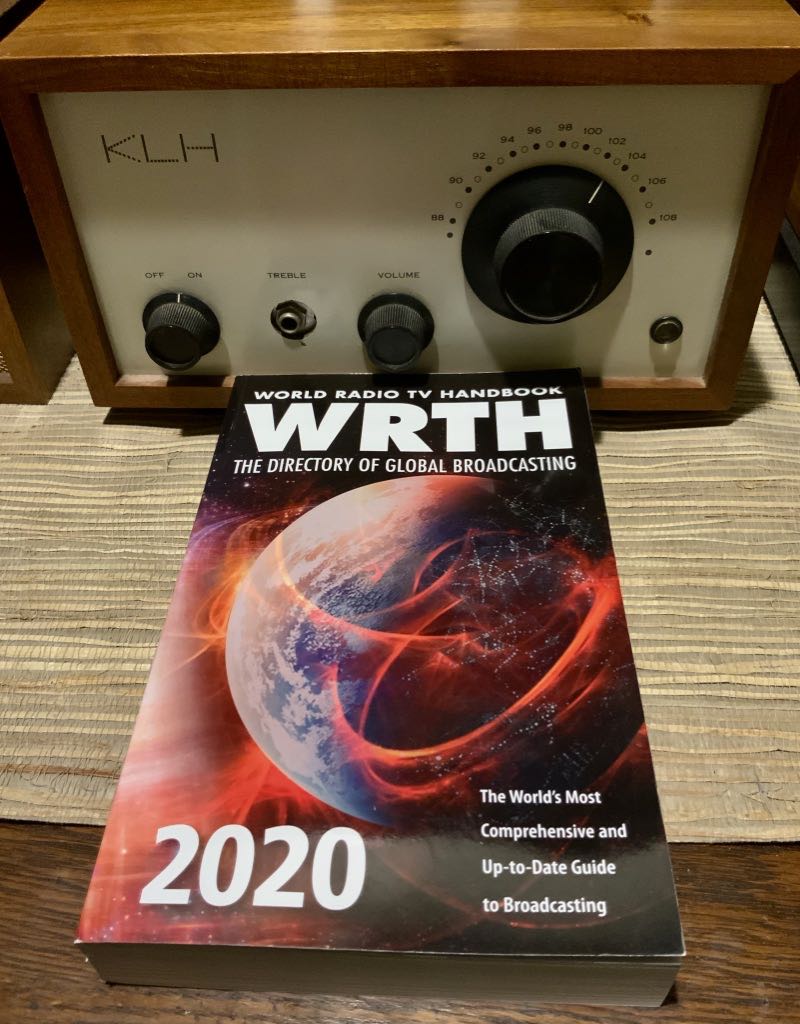
I received my review copy of the 2020 World Radio and TV Handbook (WRTH) shortly after returning from holiday travels last week. I always look forward to receiving this excellent staple radio reference guide–and this is their 74th edition! The WRTH has never disappointed, so my expectations are always quite high.

Once again, the WRTH lived up to my expectations.

WRTH’s team of noted DXers from around the world curate frequencies and broadcaster information by region; while I’m not sure how they orchestrate all of this, the end result is truly a symphony of radio information. In addition to broadcaster listings, WRTH’s radio reviews, feature articles, and annual HF report make for excellent reading.

But the WRTH isn’t just a frequency guide: the publication always devotes the first sixty or so pages to articles relating to various aspects of the radio hobby. Following, I offer a quick overview of these.

The first article always features a WRTH contributor:  this year, they feature Luis Cavalho who is their contributor for Portugal, the Azores and Madeira. His path to becoming a WRTH contributor began in his childhood snagging mediumwave DX with an array of portable radios. His love of radio lead him to the world of shortwave radio, WRTH and eventually his own radio website to serve Portuguese listeners.

WRTH Reviews

The second set of articles is always my favorite: WRTH receiver reviews.

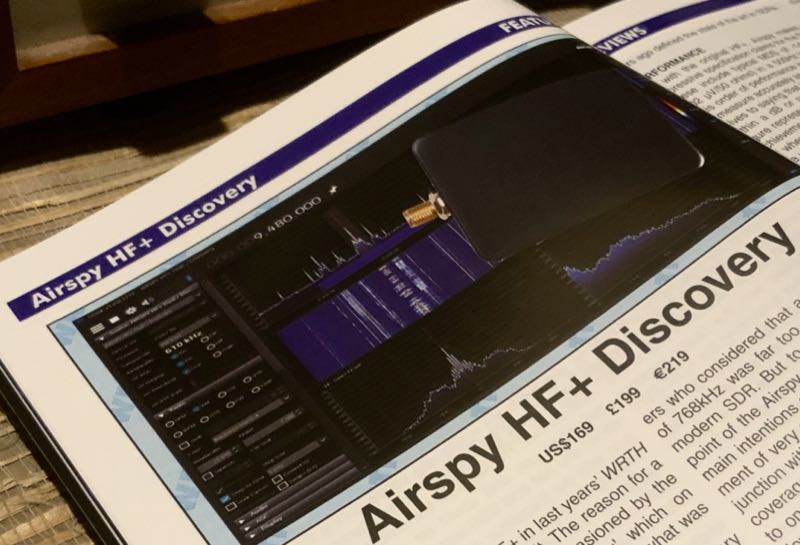
This year, WRTH begins with an in-depth review of the excellent ELAD FDM-DUOr tabletop SDR receiver.  Next they build on their 2019 review of the SDRplay RSPduo by exploring its unique diversity reception capabilities. They also review the AirSpy HF+ Discovery and were so impressed they awarded it the 2020 Best Value SDR.
This year, WRTH also reviewed two portable radios by Pure: the Pure Elan E3 DAB, DAB+, FM receiver and the Pure Elan IR5 WifI radio.

The final two reviews are of affordable products that offer incredible value for the radio listener: the venerable Tecsun PL-310ET ultralight radio and the Tecsun AN-200 MW Loop Antenna. I enjoyed reading a fresh review of each of these products as I’ve personally used both for nearly a decade.

WRTH Features

The first feature article, written by none other than Dave Porter, focuses on the development of HF broadcast antennas. His article serves as an excellent primer on the topic, covering Rhombic Antennas, Corner Quadrant Antennas, Log-Periodic Arrays and ALLISS /Rigid Curtain Arrays. A must-read for those who want to know more about the “business side” of a broadcast signal!

Hans Johnson’s feature, Sea Breeze and Wind from Japan, explores the story behind the broadcasts to Japanese citizens abducted by North Korea. Truly, an inspiring story of a determined and mission-dedicated broadcasters.

The following feature article was written by WRTH contributor and chief editor of the New Zealand DX Times, Stu Forsyth, who outlines the history of broadcasting from New Caledonia in the Pacific.

The next feature article focuses on the “finer points” of mediumwave propagation. I thought this was an informative and and timely article as so many shortwave DXers (including yours truly) spend time on the mediumwave bands especially during winter and times of rough HF propagation. A must-read!
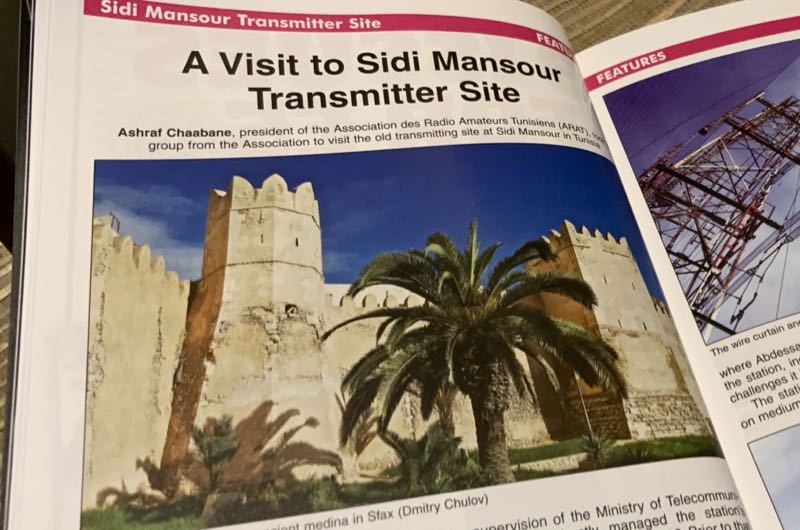
Ashraf Chaaban, president of the Association des Radio Amateurs Tunisiens, takes WRTH readers with him on a visit to the Sidi Manson Transmitter Site in Tunisia in the final feature article. Having an affinity for broadcast sites, I sincerely enjoyed the focus on Sidi Manson which fell silent on shortwave in 2014.

Next, WRTH spotlight the annual Digital Update which summarizes the dynamic state of digital broadcasting. I’ve found this feature to be incredibly informative as we see how digital broadcasting is penetrating both domestic and international services.

The final article–a tradition–is the WRTH  HF propagation report/forecast by Ulf-Peter Hoppe. Always an informative read especially as we work our way out of a log-term solar slump.

The 74th is another fantastic edition of the World Radio TV Handbook. As I say every year, I’ve never been disappointed with WRTH. Their publishing standards are such that the quality of their reviews, their writing, and (most importantly) their broadcast listings are simply unparalleled.

At the heart of any WRTH is an uncompromising and unparalleled amount of information regarding regional and international broadcasting.

For DXers who collect QSL cards, you’ll find that broadcaster contact information in WRTH is often more up-to-date than a broadcaster’s own website. When readers contact me asking for QSL information from an obscure broadcaster, the first place I search is the current WRTH. Remember: their information is based on volunteer contributors who specialize in specific regions of the world–the most knowledgeable regional DXers keep this publication accurate.
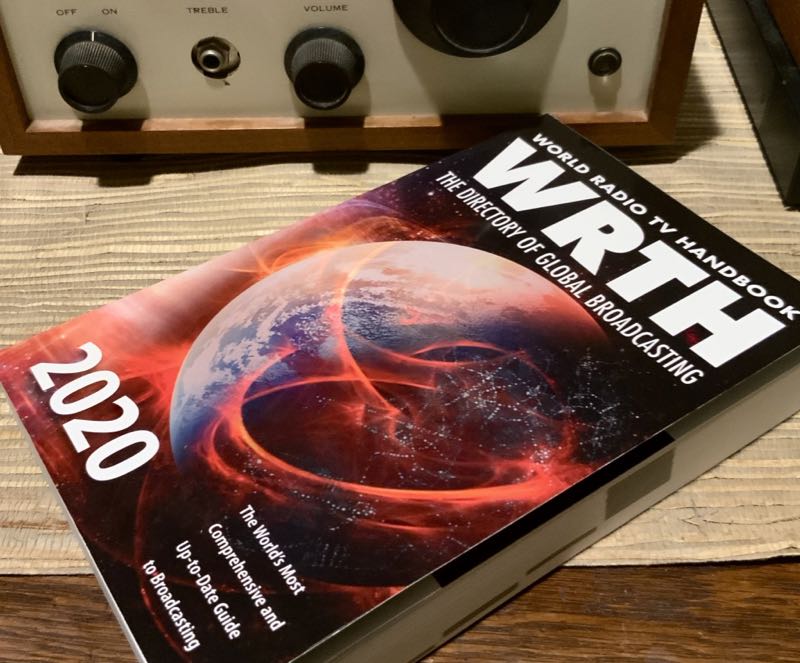
Purchase your copy of WRTH 2020 directly from WRTH’s publishers, or from a distributor like Universal Radio (US) , Amazon.com (US),  or the Book Depository (international).
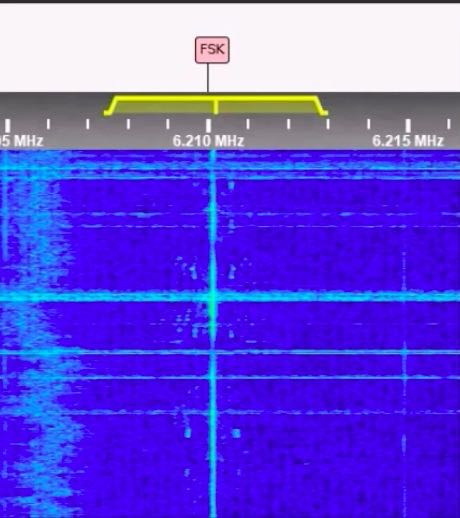
Radio Kahuzi Comparison Between Sweden and Switzerland KiwiSDRs

Many thanks to SWLing Post contributor, Dan Robinson, who recently took advantage of a rainy Sunday in Maryland to put together the following video.

Dan notes that the video/screencast demonstrates, “reception of the low power Radio Kahuzi, the religious station in Democratic Republic of Congo, via two of the best KIWI SDR sites, in Sweden and Switzerland. The video shows how the signal of Radio Kahuzi propagates the 9,000 + kilometers from DRC into Europe.”

Fascinating!  Thank you for sharing this, Dan!

The Worldwide Listening Guide: A deep dive into online and over-the-air listening

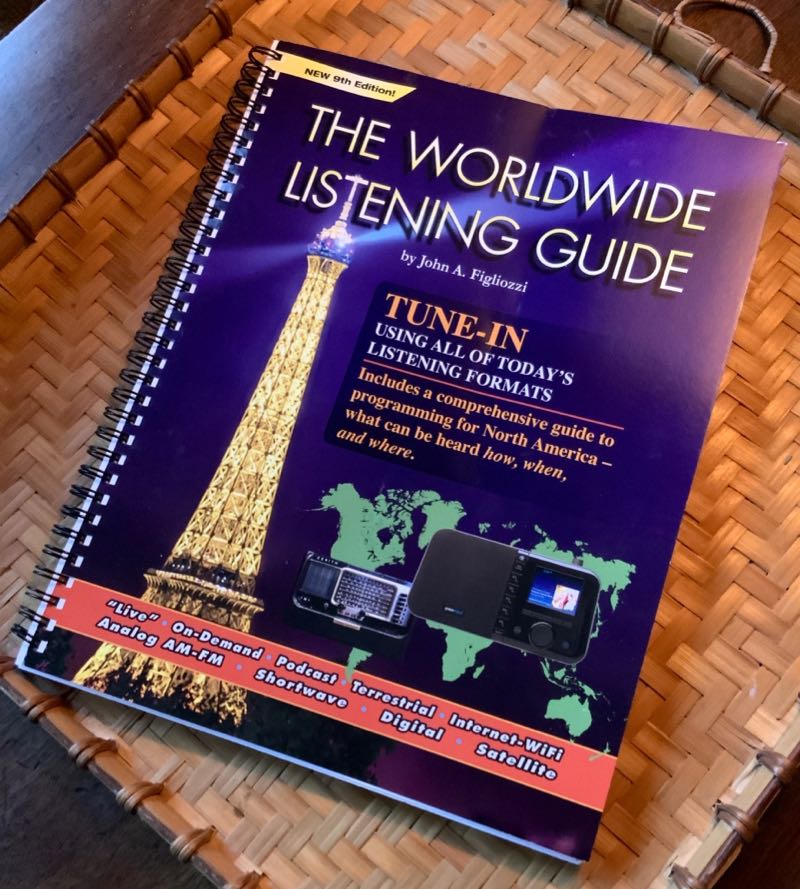
I recently received a review copy of the 9th Edition of the Worldwide Listening Guide by John Figliozzi:

While WRTH is my favorite guide for radio frequencies and schedules, Figliozzi’s Worldwide Listening Guide (WWLG) is my go-to for programming and content, not only helpful on the shortwaves, but especially handy when tracking online content.

The WWLG is a unique guide–there’s nothing quite like it on the market. I look forward to each edition because it truly takes a deep dive into the world of broadcasting, technology, and programming.

“Deep dive” almost feels like an understatement. I received the latest edition only a few days before Christmas travels, so packed it in my luggage and read it over the course of a week. Being the editor of the SWLing Post, I’m in the middle of a constant stream of news items and tips about the world of broadcasting and communications technology. When I read the WWLG, however, I discover so much information about the broadcasting industry as a whole, the health of various platforms, particular media companies, and even the history and technology behind content delivery systems.

Case in point: I always assumed SiriusXM satellite radio was delivered by a network of geostationary satellites. Turns out, they use a hybrid system of both “roving” satellites that orbit in a figure 8 pattern and geostationary satellites in the Clarke Belt. The WWLG is chock-full of details like this.

Each media delivery platform–AM, Shortwave, FM, Satellite Radio, Internet (WiFi Radio), and Podcasting–has a dedicated section in the book where Figliozzi explores each in detail. He also includes a “State of the Radio Platforms” chapter where he examines the health and potential direction of each.

SWLing Post contributor, Mark Fahey, recently summed up his love of the WWLG in the following comment: 

[I]t’s the best guide to digital streaming media I have ever found. An indispensable guide to the world’s public broadcasters and others broadcasters who appeal to us raised on decades of shortwave.

As shortwave transmitters close, don’t make the mistake of thinking your favourite broadcasters disappear – they in most cases continue and the Worldwide Listening Guide will guide you to them as live and on-demand programs.

I use the guide as a directory for online listening, but of course RF transmission broadcasts are comprehensively covered as well.

I agree 100%.

Like Mark and many SWLs, I’m something of a “Content DXer:” I love chasing obscure programming––news, documentaries, music, and variety shows, anything the broadcasting world has to offer.  For this, I often turn to Wi-Fi radio.  Wi-Fi radio offers the discerning listener the ability to track down fascinating regional content from every corner of the globe––content never actually intended for an international audience.

Digging into local content via a WiFi radio isn’t nearly as challenging or fun (for me, at least) as scanning the shortwave bands in search of elusive weak signal DX or a pop-up pirate radio station. Though my WiFi radio offers an easy and reliable way to “tune” to online content–both station streams and podcasts–the actual content discovery part is quite difficult.

Truth is, there’s so much content out there–tens of thousands of stations and shows–it’s hard to know where to start!

This is where the WWLG comes in: Figliozzi exhaustively curates thousands of programs, indexing their airing times, stations, days of broadcast, program types, frequencies, and web addresses. Additionally, he sorts the programs by genre:  arts, culture, history, music, sports, and more. And Figliozzi also includes a well-thought-out directory of at least forty genres. In my shack and office, the WWLG has been an invaluable tool for content discovery.

There’s a surprising amount of information packed into this slim, spiral-bound edition of the Worldwide Listening Guide…enough to keep even a seasoned content DXer happy for years.

The 9th edition of Worldwide Listening Guide can be purchased here:

Assembling the uBITX V6 QRP transceiver

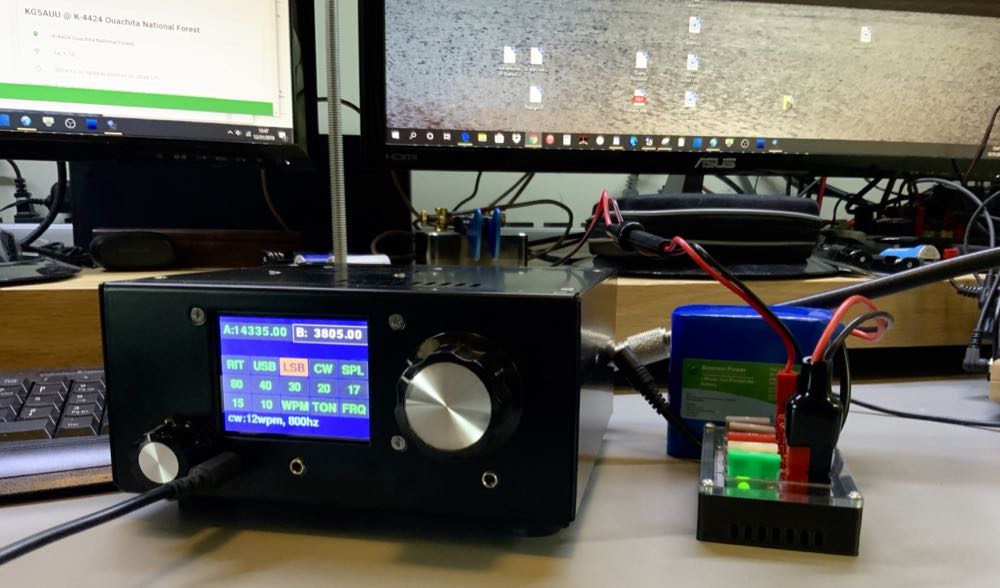
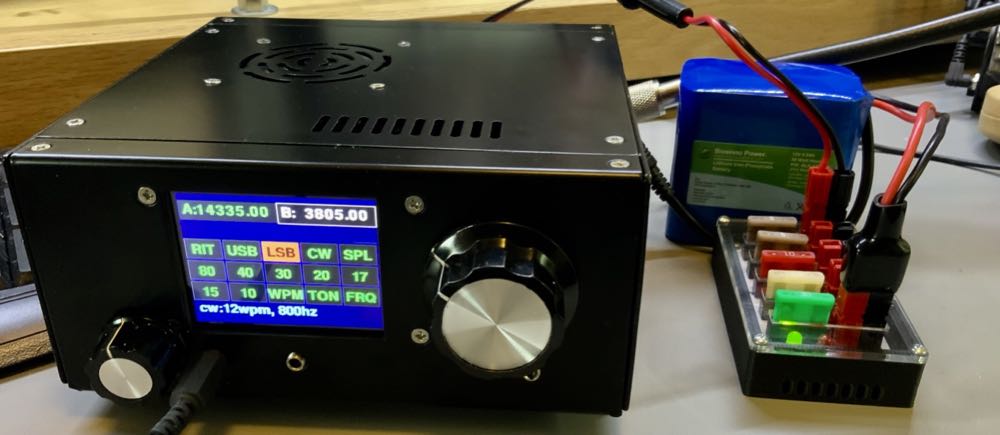
Last Friday, after returning from holiday travel, I found a belated Christmas gift on my doorstep: the new uBITX V6 QRP transceiver.

In the spirit of full disclosure, this package wasn’t delivered by Santa, rather by DHL in record time from India. As I mentioned in a previous post, I simply couldn’t resist purchasing such an affordable general coverage transceiver.

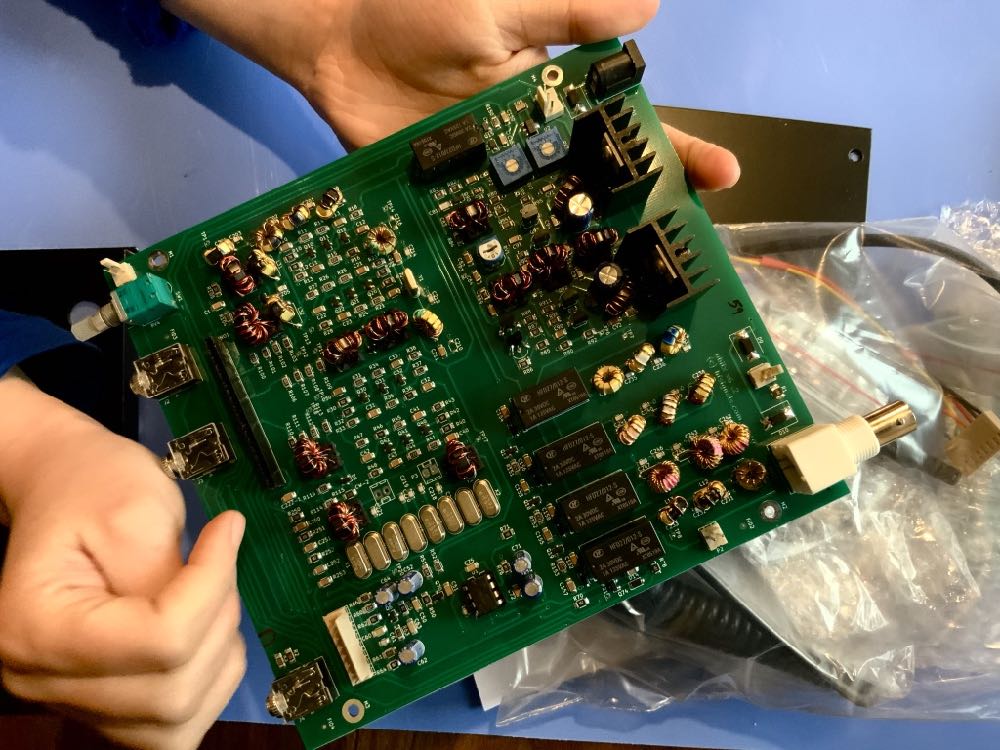
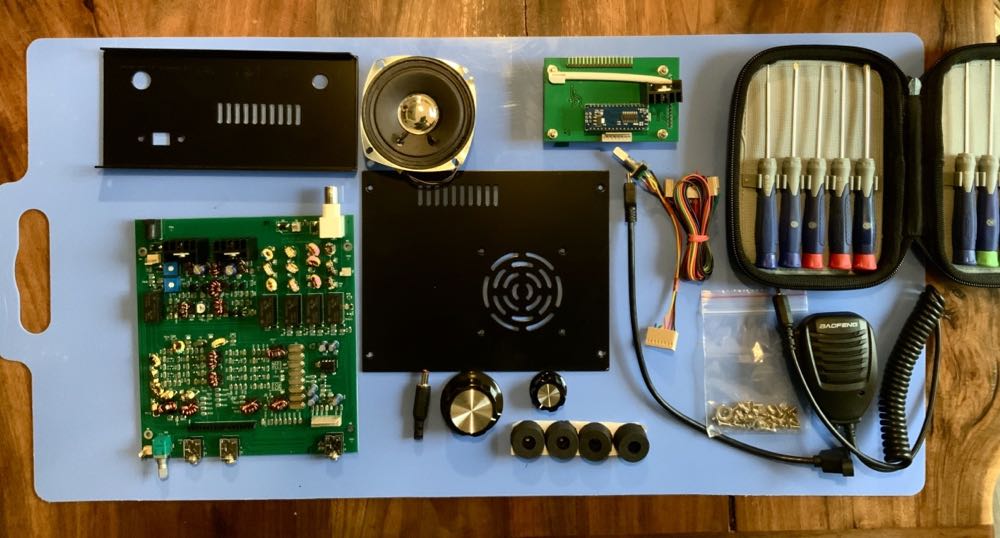
To be clear, the uBITX V6 isn’t really a kit. The boards are all fully populated by a women’s cooperative in India. You can purchase the uBITX V6 for $149 without a chassis and for $199 with a custom metal chassis. I purchased the latter.

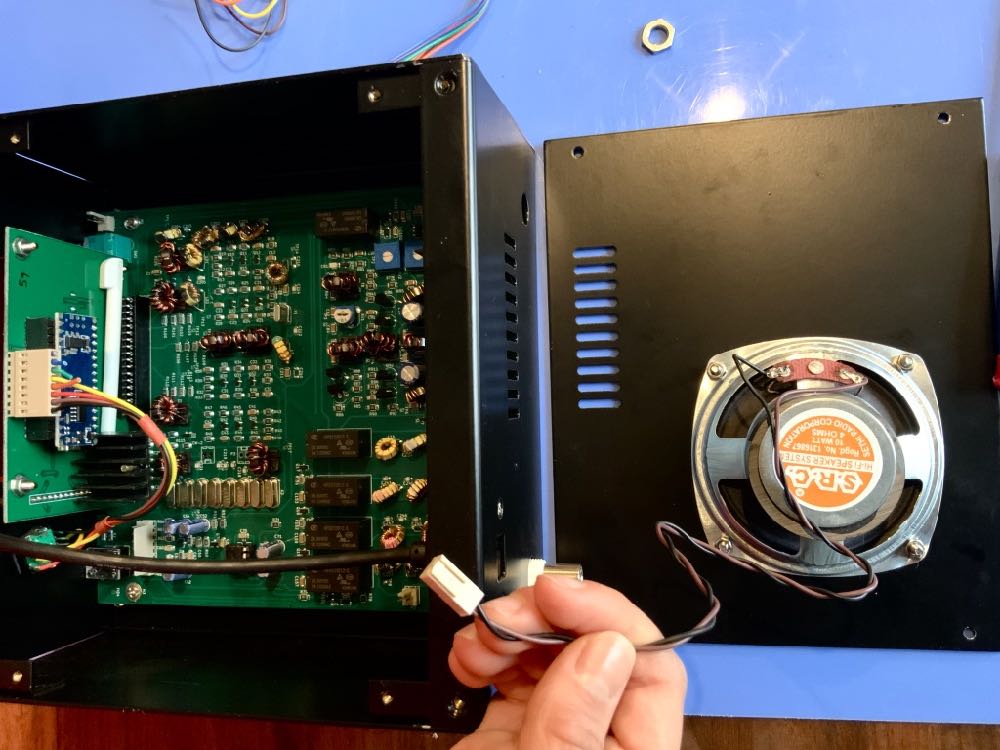
Assembly may take thirty to forty minutes following HF Signals’ online guide. I employed my twelve year old daughters who pretty much assembled the entire radio–I only helped seat the display to the main board.

There is no firmware or software to upload. Simply assemble the radio, solder a power cord to the supplied coaxial plug (hint: positive tip polarity), connect an antenna, connect a power supply, and turn it on.

You’re on the air!

So far, I’ve only scanned the bands and listened to QSOs and broadcasters (no AM mode, so I’ve been zero-beating stations in SSB). Today, I hope to chase a few parks via the Parks On The Air program.

I still need to calibrate the radio yet (although it does zero beat WWV perfectly).

If you purchase the uBITX V6, don’t expect a benchmark transceiver. This uBITX V6 feels more like a work-in-progress and I assume the pre-loaded firmware is simply a first iteration.

Since the radio is open source, I expect hams will soon hack this rig to go above and beyond its basic (understatement alert–!) feature set.

If you’re a CW operator, you might hold off on purchasing until someone has properly implemented the mode. I made some test CW CQs into a dummy load just to check out the keyer and I honestly don’t think I could manage a proper QSO at this point. Sending is sluggish and…well…awkward.

Note that I will be writing a full review of the uBITX V6 for a future issue of Radcom (the RSGB’s monthly publication). Check back here for uBITX V6 notes along the way.

Also check out the excellent blog of our friend, John Harper (AE5X), who has also recently put the uBITX V6 on the air!

Anyone else order a uBITX V6? Please comment!


Do you enjoy the SWLing Post?

Please consider supporting us via Patreon or our Coffee Fund!

Your support makes articles like this one possible. Thank you!

The Global Radio Guide: Winter 2019-2020

Many thanks to SWLing Post contributor, Dan Ervin (KB0RTQ), who writes:

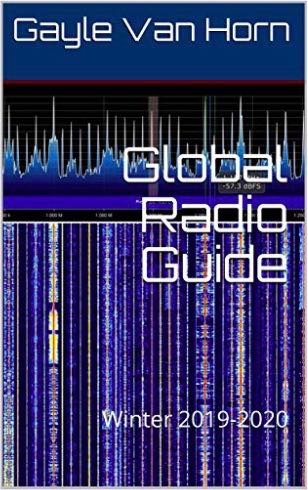
Just in time for the new year, the Winter 2019-2020 edition of the Global Radio Guide is available on Amazon in e-book form for $8.99.

Click here to view on Amazon.com (affiliate link supports the SWLing Post).

I first learned about this guide thanks to you and the SWLing Post, and their content and “Hour by Hour” listening guide reminds me of the old “Passport to World Band Radio” of days gone by.

73, and here’s to a wonderful 2020!

Thank you so much for the tip, Dan! I should mention that the guide also has a substantial introduction section with articles, propagation forecasts, and product reviews.


Videos from DXcamp Marajó Island, November 2019

Photo: Ivan Dias & Martin Butera, during the first Dx-Camp 15.61 Crew Radio Listeners’ Marajó Island – Amazon Rainforest, North of Brazil – November 2019

Many thanks to SWLing Post contributor Martin Butera, founding member of the 15.61 Crew, for the following guest post:


The 15.61 Crew Radio Listeners, Martin Butera and Ivan Dias, give us a small video preview made in the first Dx-Camp on Marajó Island in the Amazon Rainforest, North of Brazil on November 2019.

There are more than 11 hours of SDR recordings and videos of the Ultralight radios, which will take much additional time to process, of course.

Crew is working on the report with a complete story that includes videos and photos of everything experienced during the DX-Camp–this will be published in several languages and the first LOG, which we estimate will be the first months of the South American summer 2020.

We recommend not forgetting to periodically visit the official site of the DX-Camp, to find updated information: https://dxcamp-marajo2019.blogspot.com/

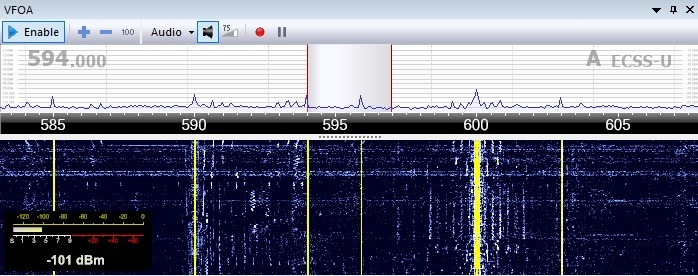
Above, you’ll see a short stretch of the medium wave band with plenty of interesting content: 585 kHz, alternating between National Radio of Spain (Madrid), BSKSA (Saudi Arabia), 590 kHz, alternating with Poty Radio (Crateús / CE), Radio Diffuser (Boa Vista / RR) and Radio Continental (Buenos Aires), 594 kHz BSKSA (Saudi Arabia), 595.9 kHz SNRT (Morocco – operating off-frequency for years), 600 kHz Mirante Radio (São Luís / MA), Vale Radio (Barreiras) / BA) and Radio Gaucha (Porto Alegre / RS) and 603 kHz National Radio of Spain (Sevilla).

Videos

All of the following videos were captured during the November 2019 Dx-Camp:


Brazil is a country with vast continental distances. The following three videos showcase Brazilian radio from across the country.

Radio Diffuser Boa Vista (1408 km distance)

Radio Itatiaia 2191 (km distance)

Radio Band B (2747 km distance)


Photo: Ivan Dias & Martin Butera, during the first Dx-Camp 15.61 Crew Radio Listeners’ Marajó Island – Amazon Rainforest, North of Brazil – November 2019

More photos of the DX-Camp from the official site:

https://dxcamp-marajo2019.blogspot.com/p/photos.html

Free Radio Skybird’s last flight of 2019

(Source: Pete Madtone)

OLYMPUS DIGITAL CAMERA

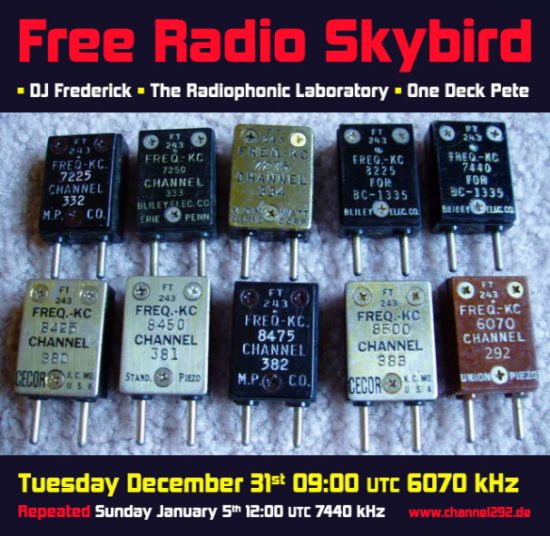
The last transmission of 2019 from DJ Frederick’s Free Radio Skybird will be on Tuesday December 31st at 0900 UTC on 6070 kHz shortwave via Channel 292. The show will be rebroadcast on Sunday 5th January at 1100 UTC/UK on 7440 kHz. If you haven’t got a suitable shortwave set it can also be heard on the SDR link on Channel 292’s site here.

The programme will feature Justin Patrick Moore’s Radiophonic Laboratory and One Deck Pete (from Weeds up to me knees) presenting the Skybird Mailbag. There’ll also be an airing of Pete’s “Nine and a half minutes at ninety BPM” that has new tunes from: FrappBlundettoLama’s Dream and Mario Pinosa Trio. Mixes from previous shows are available at our audio podcast page here.

The programme will be available on DJ Frederick’s Soundcloud page a day or so before transmission date if you want to hear it in true stereo but we here prefer the show via the ionosphere. Tune in and turn on! #shortwavesnotdead #madtone #freeradioskybird

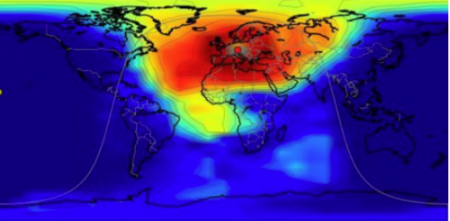
By the way we’re always looking for decent tunes to play on our spot on Free Radio Skybird. If you know of anything “up our street” so to speak, do contact us via the blog or at onedeckpete (at) gmail (dot) com and if we like it we’ll play it. Free Radio Skybird is now available via 5 FM stations in the USA WSCSWMNBKBOGKOWS and WEJP as well as good old shortwave via Channel 292 and the above is the transmission zone when the conditions are good.