Category Archives: Shortwave Radio

Krasne Antenna Array: Help Rick solve a 22 year old mysetery

The mystery array

Many thanks to SWLing Post contributor, Rick Slobodian, who seeks help solving a 22 year old mystery. Rick writes:

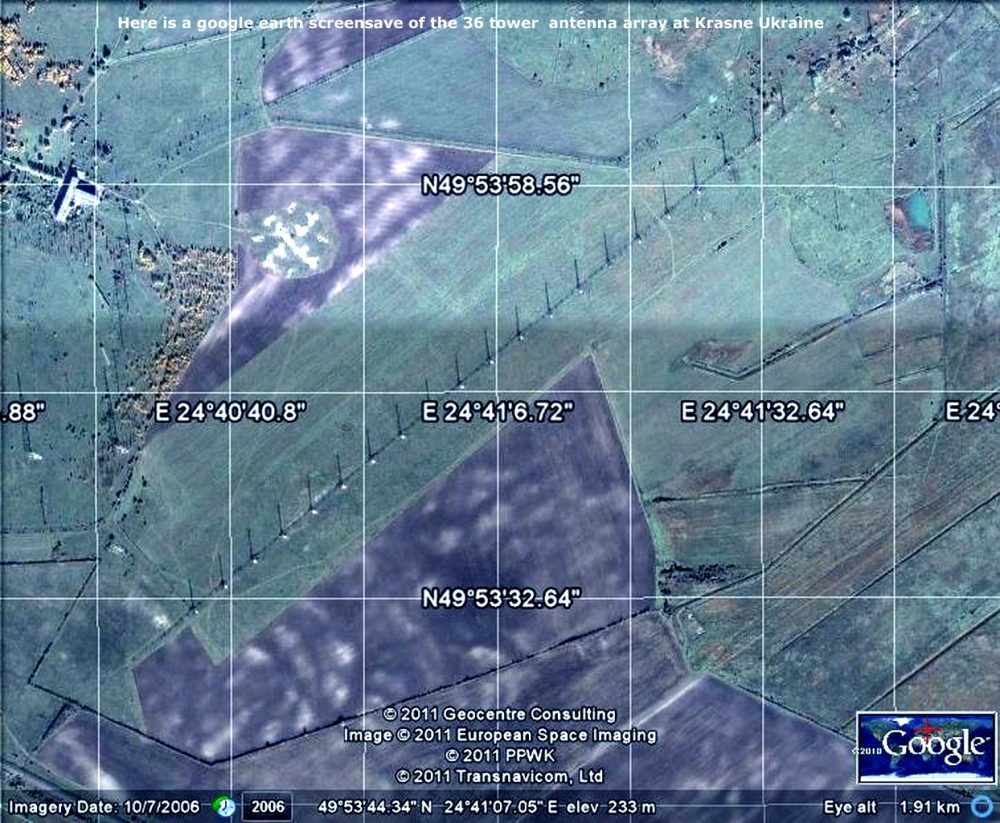
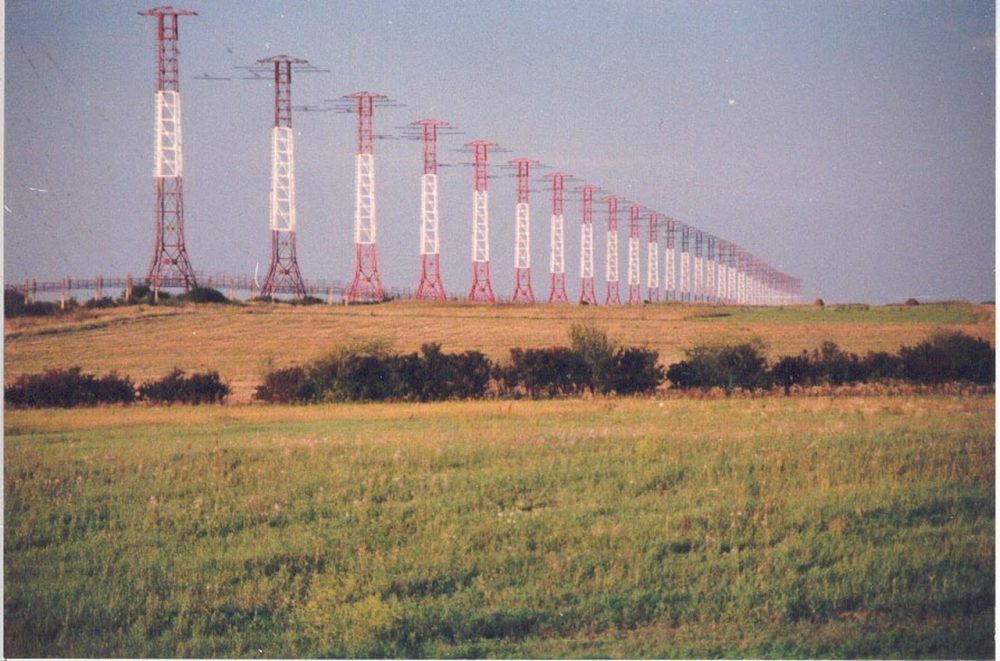
[Perhaps you can help me] explain this antenna….a 22 year old mystery antenna (see photo above)? What sort of antenna is this and how does it work? It’s at 49.8994 N 24.685 E near Krasne, Ukraine.

I was at this transmitter site in 1998.

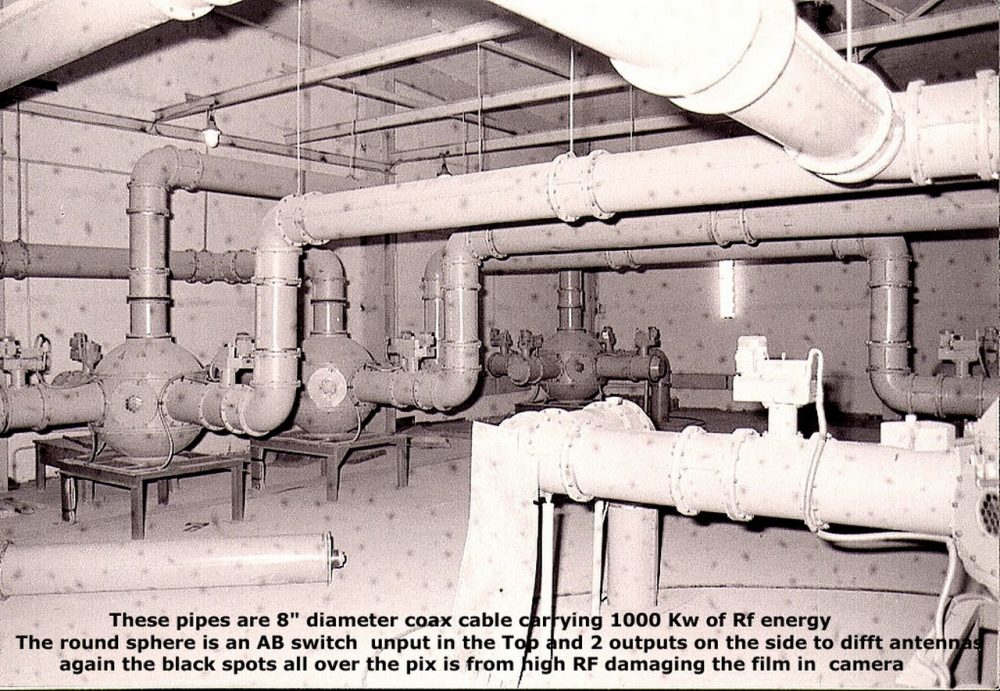
Antenna switch room

I was writing articles for a number of magazines hoping to find customers for airtime and to make this site viable.

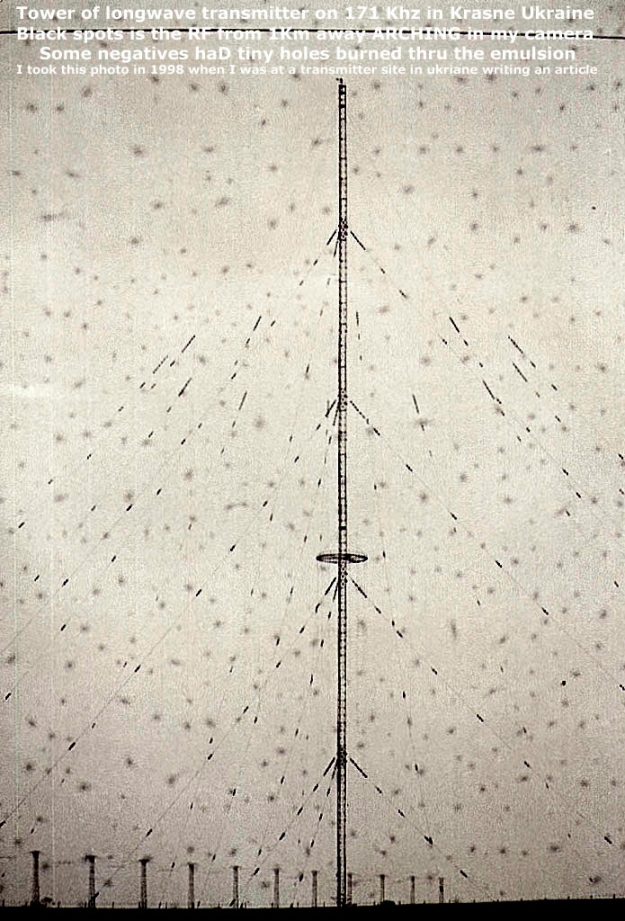
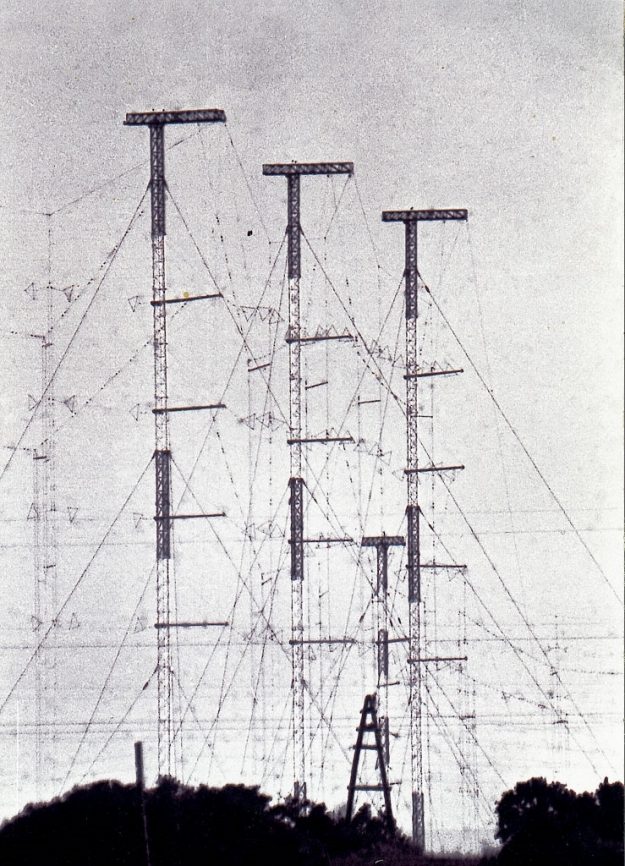
I spent all day at the site wrote extensively about EVERYTHING ELSE: the shortwave transmitters, the longwave transmitters, the shortwave antennas, the vertical long wave antennas, and the vertical MW antennas.

Longwave antenna at Krasne

HRS curtain array at Krasne

The transmitters were behemoths: Komintern Burans 500Kw 1000 Kw 1200 Kw

New 1200 Kw transmitter under construction

This antenna was over a km form the main building and they would let me go there:

I took this photo of the array as I traveled past it by train.

Its 36 towers strung in a NE SE line–over 2 km long and each tower is approximately 40 m tall.

[My hosts] were they so evasive about this antenna array yet not the rest of the site.

[There are some peculiarities:]

  1. Do you see a feed line running along the bottom of the towers near the ground?
  2. I do not see any tuning shacks.
  3. Is it fed from one end or the other end or is each tower fed?
  4. If each tower is fed, then where are the tuning shacks/phasors?
  5. iIf it is a beverage then why so may towers and such close spacing?
  6. Is it something completely different?

What do you think it is? How do you think it works and what would be its purpose?

Thanks for sharing, Rick!  My hope is that one of the members of the Post community may be able to shed a little light on this interesting antenna array.  Please comment!

Arcángel San Gabriel (LRA36) special broadcasts and LU1ZV activation

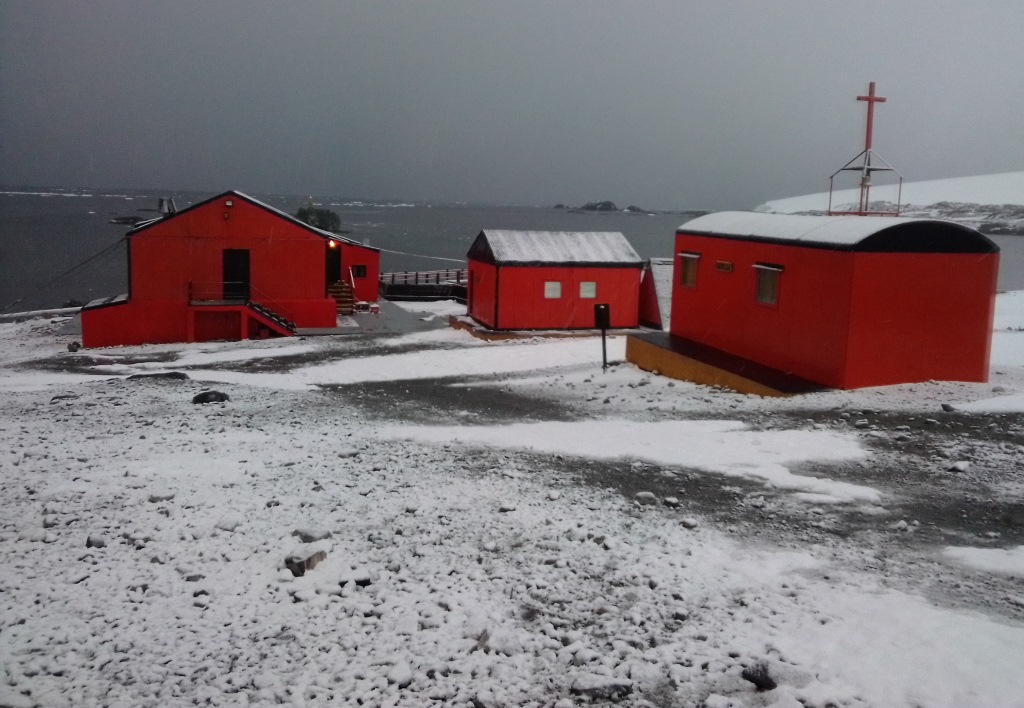
Source: Base Esperanza – Antártida

Many thanks to SWLing Post contributor, Tracy Wood, who writes:

I listened to LRA36 streaming this past Friday with their special show, including callouts to other Argentine scientific stations via satphone and lots of greetings by ham radio enthusiasts, both recorded and via live call-in.

Source: Base Esperanza – Antártida

…At the conclusion the announcer said they would be back this Monday at 1800 Buenos Aires time or 2100 UTC.

Details about last Friday’s broadcast:

http://www.radionacional.com.ar/continuan-las-emisiones-especiales-en-lra-36-arcangel-san-gabriel/

Source: Base Esperanza – Antártida

The audio stream is only up when LRA36 is on the air apparently but is at the Radio Nacional website under the audio streams listing:”

http://vmf.edge-apps.net/embed/live.php?streamname=sc_rad32-100131&autoplay=true

Thank you so much for sharing this, Tracy! It’s incredibly difficult for me to snag LRA36 broadcasts off the air, so it’ll be nice to have this stream link as well.

I also recently received a note about LU1ZV: the amateur radio station at the Esperanza Antarctic Base.  What follows is a rough English translation of the press release. Click here to download the original press release in Spanish (MS Word Doc).

Source: Base Esperanza – Antártida

THE HAM RADIO ACTIVATION OF ESPERANZA ANTARCTIC BASE

Started on December 8, the activation of the LU1ZV amateur radio station of the Antarctic Base Esperanza, after years of being inactive.

The radio activity of LU1ZV has as primary objective to remember the 40th anniversary of the beginning of the transmission of the radio station LRA 36 “Arcángel San Gabriel” of the Esperanza Base, the first shortwave station in AM across Antarctica, which began broadcasting on October 20,1979. In addition, this activity seeks to maintain the continuity of emission of stations of radio amateurs from Antarctica.

The LU1ZV activation has registered more than 900 contacts with amateur radio stations
nationally and abroad, and in addition to covering all regions of the country, they have already
Source: Base Esperanza – Antártida

contacted twenty-two Argentine provinces.

Among the most relevant data that LU1ZV activity exhibits so far are the distant radio contacts  (despite the low emission power) as in the case of Japan, Canada, Latvia, Ukraine and Finland among others. They have contacted most South American countries, several of Central American countries and all from North America.

Another outstanding contact was made with VP8HAL, the Halley VI scientific station of the British Antarctic Survey (BAS), located in the Brunt Ice Barrier, about 1,700 km SE of Hope.

The operation of LU1ZV is carried out from the study of LRA 36 and the rhombic antenna of the station, while the station isn’t operating. The amateur radio station activity adapts to the general schedule of the base and of LRA36, so activation times are reduced to a few hours during the evening – night.

The Head of Hope Base, Lieutenant Colonel Norman Walter Nahueltripay was present during some contacts and received greetings from radio correspondents.

This special activation also includes the project “Uniendo Voces” of the National University of Quilmes (UNQ) of the province of Buenos Aires, an initiative that included areas of interest to amateur radio and Antarctic activations, and which was presented to the
Antarctic Joint Command (COCOANTAR).

“Uniendo Voces” has participated in these radio activations since 2013 (in Marambio Base and Matienzo) to which the historical emission from Base Esperanza is now added, within the framework of a special initiative called “DX Radial Expedition Uniting Voices”.

The amateur Radio Claudio García (LU1VC) member of the LRA 57 Radio Nacional de El
Bolsón (province of Chubut) and Juan C. Benavente (LU8DBS) of COCOANTAR and UNQ, perform the activation for which they had to move equipment to that Antarctic base.
The radio activation of Esperanza has the support and collaboration of Adrián Korol,
director of the Argentine Broadcasting Abroad (RAE) who expressed his emotion and
satisfaction for “this joint achievement with the Antarctic Command and the National University of Quilmes. “

Antarctic bases are licensed by amateur radio stations, and like all the activity, is regulated by the National Communications Agency (ENACOM). These radio activations have a “high symbolic and real value”, as Korol says, and they contribute, in addition to remembering ephemeris, to the promotion of sovereignty in the Antarctic region from the radio spectrum.

Likewise, the amateur radio activity contributes to the study of communications – such as
radio wave propagation conditions- and keeps an alternative communication service active and effective.

Many Argentine radio amateurs from different parts of the country are attentive to the
calls from LU1ZV and collaborate with the initiative.”

Along with the photos and LU1ZV press release above, I also received press releases from two special broadcasts that happened earlier. Click here and here to download the MS Word documents in Spanish.

VOA Museum featured in Atlas Obscura

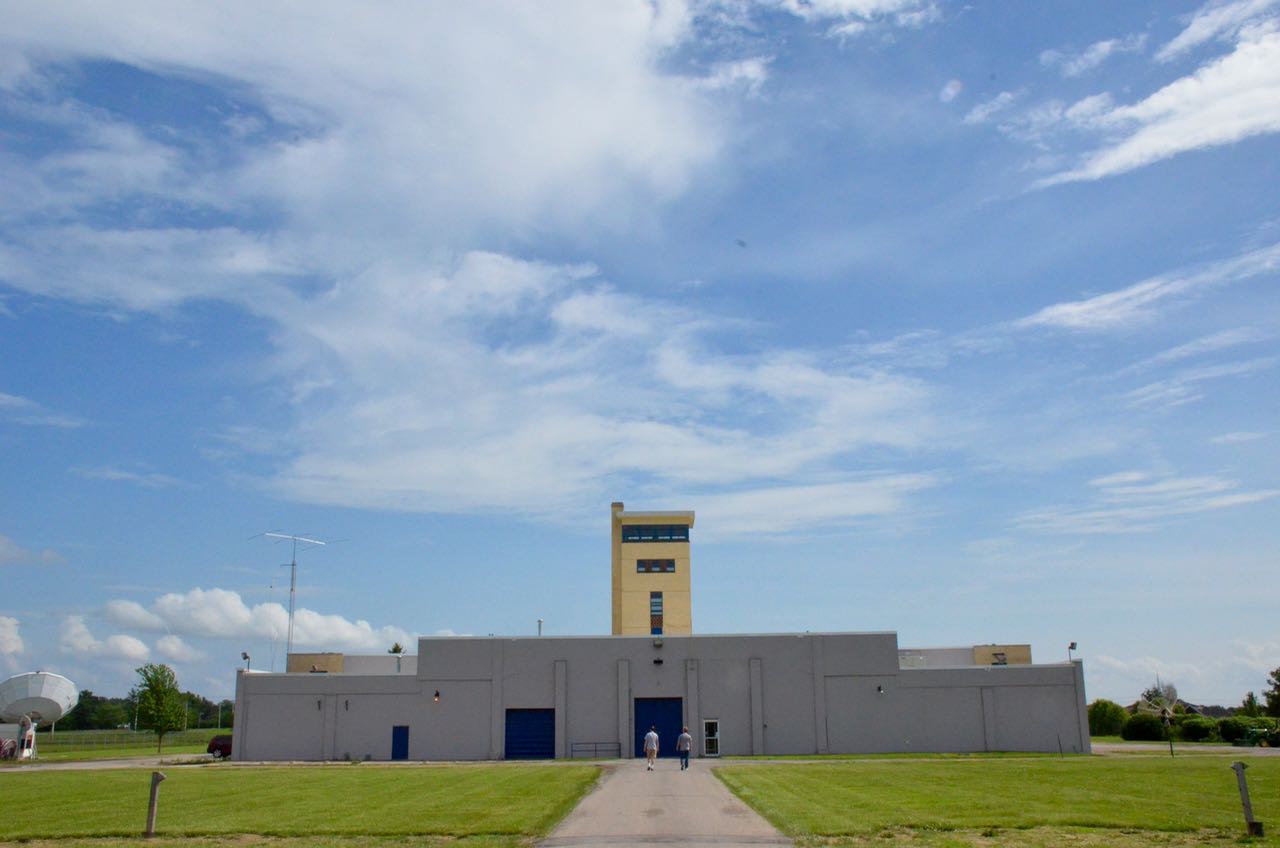
VOA Bethany

(Source Atlas Obscura via Paul Evans W4/VP9KF)

The former Voice of America broadcast site at Bethany Station is now a museum. It covers the history and role of Voice of America, as well as the history of broadcast and radio itself.

Tucked into the former equipment bays are row upon row of early radio examples. You’ll spot everything from early broadcast equipment to novelty radios from the ’70s.

From 1944 to 1994, the site was used to broadcast news and information to Europe and North Africa. It was originally run by the Office of War Information. Adolf Hitler complained after a Cincinnati broadcaster impersonated him.

In 1963, the Voice of America took direct control of the broadcast facility. Using the expertise of the local Crosley Broadcasting Corporation’s engineers, enormous 250-kilowatt transmitters were built.

Although the towers were torn down in 1998, the Art Deco broadcast building remains, and houses the Amateur Radio Association, Media Heritage, and the Gray History of Wireless collections call the facility home.[…]

Click here to read the full article in Atlas Obscura.

The WWII “Mosquito Network”

Many thanks to SWLing Post contributor, Marty, who shares this article by Mark Durenberger in Radio World:

Inside the U.S. effort in a battle of the airwaves during the Pacific campaign of World War II

We can’t fully appreciate the importance of news from home to those who served in World War II. In the Pacific campaigns, G.I.s, sailors and Marines fought bloody island-hopping battles; as each island was cleared, garrison troops and hospitals moved in and carried on their own war against mosquitoes, isolation and boredom. The island fighters were fortunate if dated mail caught up with them before they moved on to the next target. Timely personal-level communications were pretty much absent.

Radio programming from America was available but only on shortwave. And shortwave radios were not generally available. The fortunate few had been issued “Buddy Kits” that included a radio, a small PA system and a record player for discs sent by mail. But for most there was no way to receive short-lived information such as news and sports. They were left with enemy radio propaganda such as Japan’s “Orphan Ann/Annie” (aka one of several Tokyo Roses) and the “Zero Hour” program.

No wonder that the idea of having a local island radio station doing “live from home” was so fiercely supported. Enlightened commanders saw the idea as a terrific morale-builder. The only problem was how to pull it off.

A solution, not uniquely, came from within the ranks. It started with the work of some bored but talented soldiers in the Panama Canal Zone who in 1940 built a couple of 50 W transmitters and put them on the air without authorization, labeling them “PCAN” and “PCAC.”[…]

Click here to continue reading the full article at Radio World.

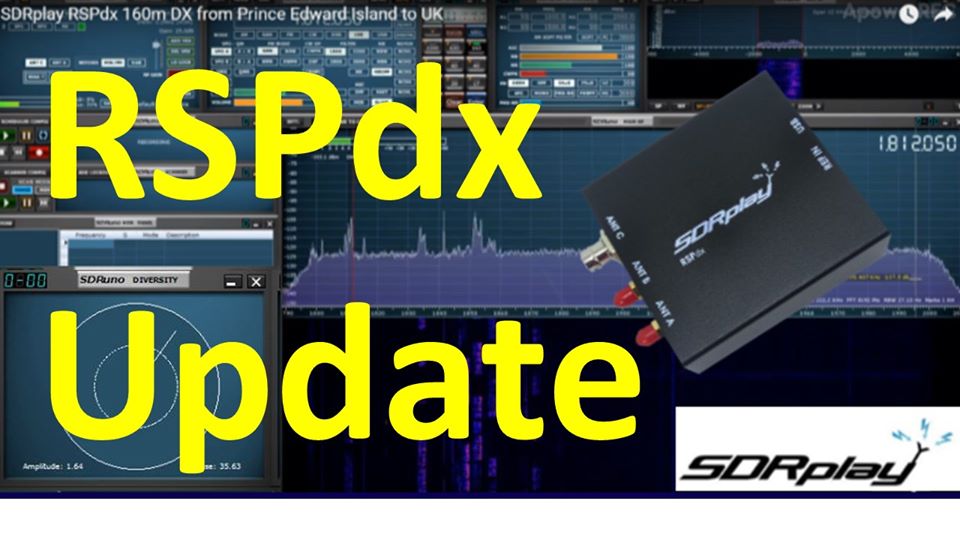
SDRplay RSPdx update

(Source: Jon Hudson with SDRplay)

Happy new Year from all of us at SDRplay.

Here’s an update on additional software for the RSPdx. SDRplay’s SDRuno fully supports the RSPdx but it takes several weeks for other software to catch up to the capabilities offered on the other RSP models.

Simon Brown has released his latest version of SDR Console V3 which supports the RSPdx (Version 3.0.18 dated January 1st) over on https://www.sdr-radio.com/ (make sure you download the latest API 3.x from our downloads page first)

We have released an EXTIO plugin for the RSPdx which will enable the RSPdx to work with any EXTIO-based software (e.g. HDSDR) although it doesn’t support HDR mode. HDR mode will not be added and the source code for the plugin can be found on our GitHub repository (https://github.com/SDRplay/ExtIO_SDRplay) we will not be supporting the plugin source code or extending the plugins capabilities. They are all free to be modified.

It is important to note that the RSPdx ExtIO plugin does NOT, AND WILL NOT, support HDR mode. If you need HDR mode, then SDRuno is the best option. HDR mode requires the end application to work in a certain way and this is not something that can be controlled via the ExtIO protocol.

Work has also begun on supporting RSPdx for SoapySDR based applications such as Cubic SDR (again this won’t include HDR mode). A Gnu Radio source block for the RSPdx will follow.

We are working with Steve Andrew, author of the Software Analyser software programme (see https://www.sdrplay.com/spectrum-analyser/ ) to help get compatibility for the RSPdx – this is a slightly longer process so this will take several more weeks.

Regarding stocks of the RSPs, SDRplay and most of our resellers on www.sdrplay.com/distributors/ have plenty of stock of RSP1A and the RSPduo. However there continues to be a shortage of the RSPdx whereby many of the resellers have sold out of their first deliveries. SDRplay is queuing up their replacement orders on a first come, first served basis. We also have our own quantity planned in there to allow us to sell direct from our website. We still hope that by the end of January we will have supplied this second wave of RSPdx demand.

For newcomers to SDR, see also, the glossary and links included in the news item on: https://www.sdrplay.com/happy-new-year-and-an-rspdx-update/

Popular KiwiSDR portal now requires ham radio license: alternatives

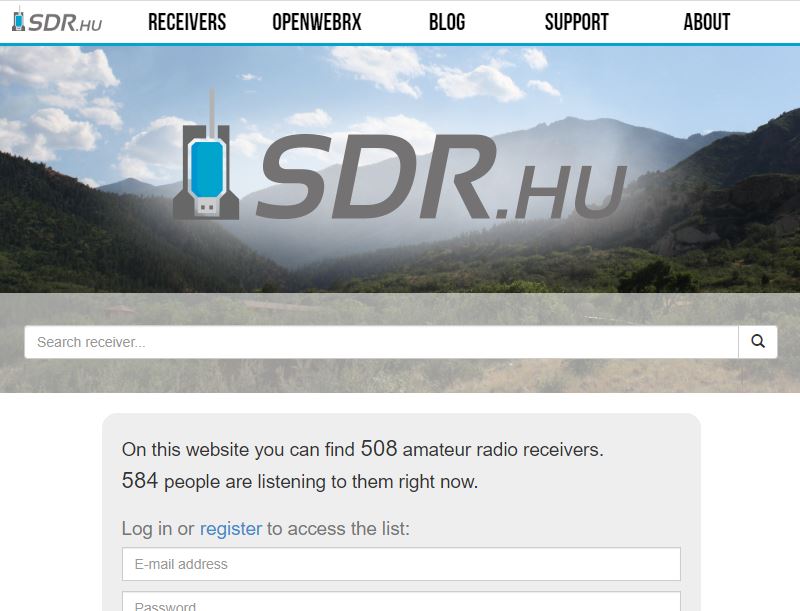
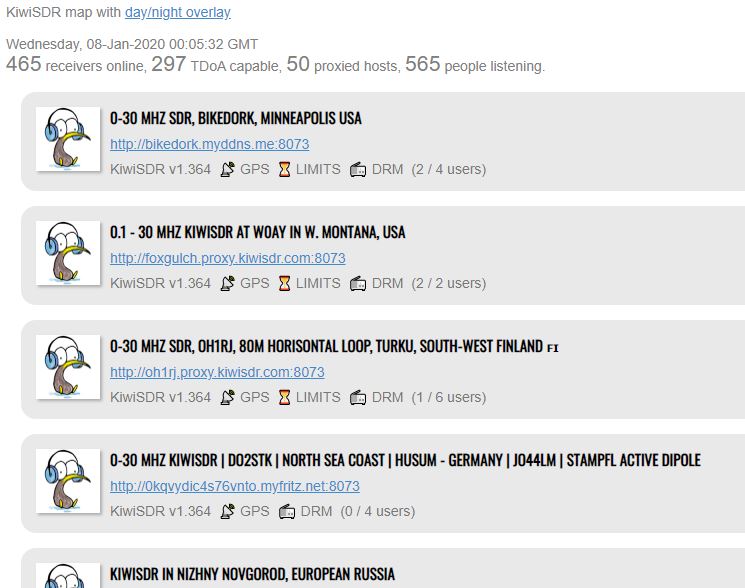
Many thanks to SWLing Post contributor, Dan Robinson, who discovered via Gilles Letourneau’s YouTube Channel that the popular SDR.hu KiwiSDR portal now requires registration and a ham radio callsign.

I almost didn’t believe this at first, but then checked on the SDR.hu FAQ page to find this message:

What is a callsign and how do I get one?

An amateur radio callsign is issued by the appropriate authority in your country (e.g. FCC in the US). The amateur radio callsign allows you to both transmit and receive with amateur radio equipment, and you need to pass an exam to get one. (If you are not familiar with this, please search Google about amateur radio.)

Can I access the receiver list if I do not have a callsign?

No.

Why do I need a callsign to access the receiver list?

The purpose of the site is to serve amateur radio. I decided to restrict access to the receiver list in order to protect the site and its purpose in the long term.

To be clear: this doesn’t imply you need a callsign to access the KiwiSDR network. This only applies to the SDR.hu KiwiSDR portal operated by András Retzler. I’m guessing he’s doing this to regulate his site’s resources. (See UPDATE below.)

Alternative KiwiSDR Portals

kiwisdr.com/public/ provides a list of all active KiwiSDRs.

As Dan points out, there are a number of other KiwiSDR portals that do not require registration or a call sign.

Here are a few:

If you prefer another KiwiSDR portal, please comment with a link.  I’ll try to update this post with any new additions.

UPDATE – Many thanks to Cristiano Amaral who shares this update sent by Andras to all of the OpenWebRX contributors:

Hello,

You are receiving this e-mail because you were listing a public OpenWebRX receiver on SDR.hu in the last 3 months.

I wanted to let you know that the OpenWebRX project is discontinued [1], which means that it will not receive any updates (including security fixes) from me. I hope that you will be able to run your receivers without problems in the next years, and hopefully the community will be able to help each other even if I’m not working on the project anymore.

It is also important to know that starting from next year, Python 2, a dependency of OpenWebRX is not maintained either, at least officially by the Python team [2], as it is deprecated in favour of Python 3.

If you want to keep running your public receivers securely, you should be looking for a Python 2 fork that is still patched against the latest security vulnerabilities. There is a possibility that Anaconda [3] or Red Hat [4] will keep patching Python 2.

As a note, you can also find unofficial Python 3 ports of OpenWebRX online, though I’m not involved with those either.

Thank you for participating in the project, and I wish you a Happy New Year!

VY 73!

Andras, HA7ILM

sdr.hu

The uBITX V6, winter weather and power outages

Yesterday, a weather front moved through the area that dropped temperatures from an unseasonably high of 50F to 25F in the space of a couple of hours.  Fronts like this always equate to high winds here at our altitude. This time, it packed a little snow as well.

Last night, around 22:00 local, our power went out due to a fallen tree further down the road.

Here at SWLing Post HQ, we don’t panic about power outages. As I’ve mentioned before, our refrigerator, freezer and some of our home lighting is solar-powered and off-grid–we also rely on passive solar heating and a good wood stove to keep us warm and cozy.

Without fail, I always use power outages as an excuse to play radio on battery power.

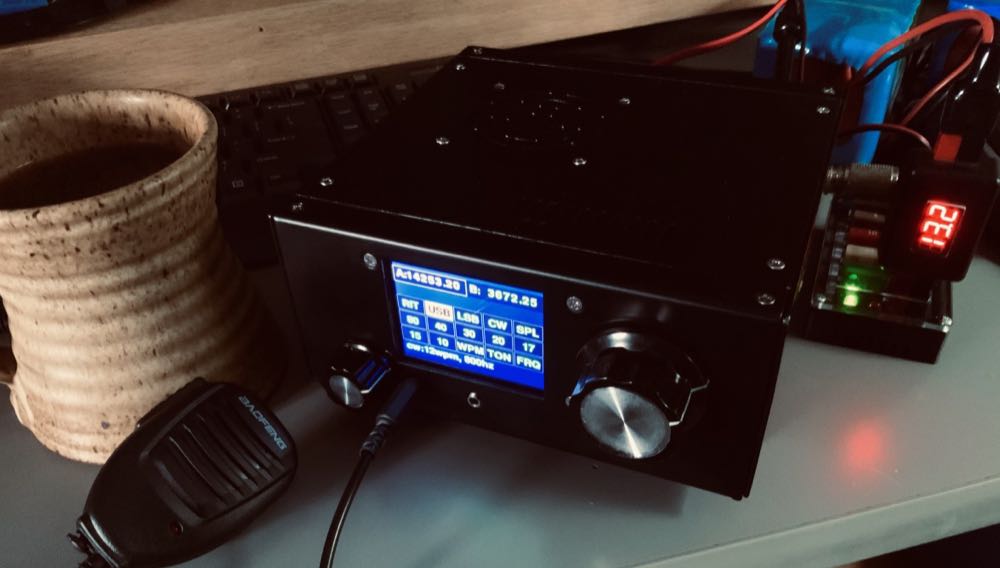
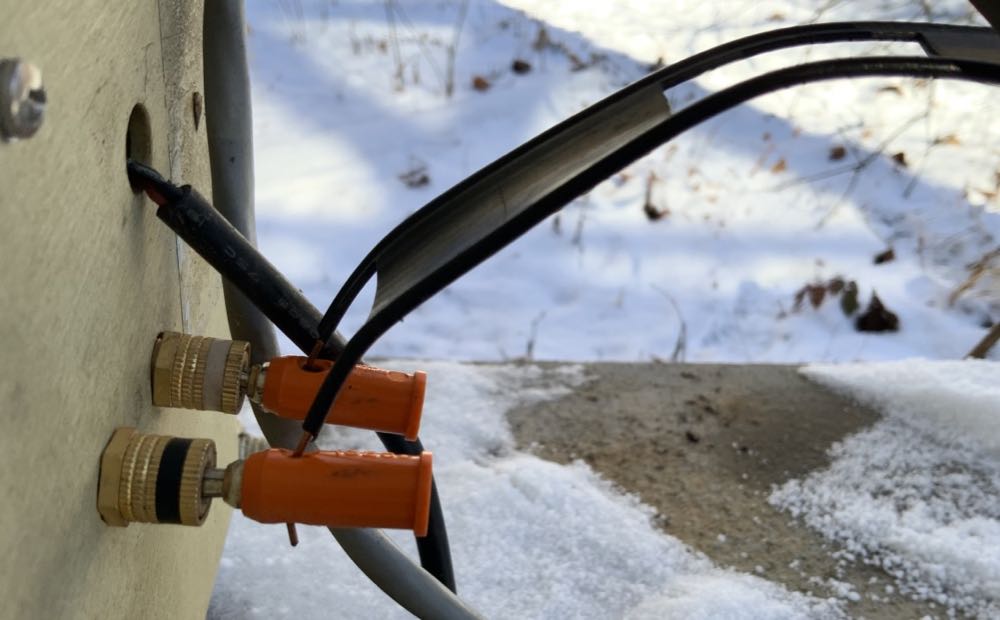
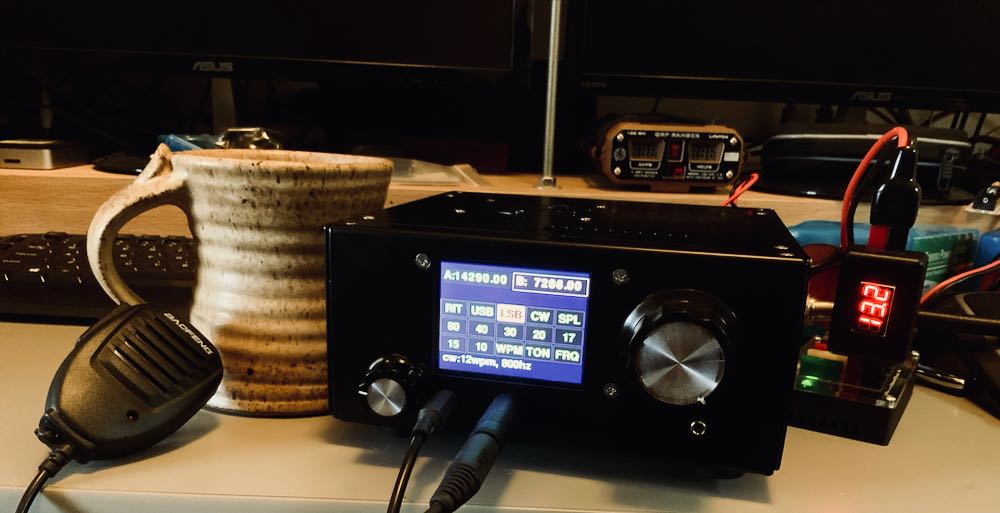
This morning, the uBITX V6 transceiver was already hooked up to a LiFePo battery on my desktop, so I simply turned it on and started tuning around the 40 meter band, where I had recently logged a few POTA contacts. Problem was, the band was absolutely dead, save a couple weak stations. After thinking about it a few seconds (keep in mind this was pre-coffee) I put on my boots and coat, walked outside and confirmed my suspicions: the antenna feedline had become detached from my external ATU box.

The winds were strong enough last night, that the ladder line pulled itself out of the banana connector jacks on the side of the ATU box. This happens quite often during periods of high winds and is a bit annoying. Of course, I could secure the feedline in such a way that it would easily survive high winds without disconnecting, but frankly this is an intentional design choice. You see, when a black bear walks into my feedline, it easily disconnects before the bear gets tangled, up, frustrated and yanks my antenna out of the tree!

Trust me on this: bears and antennas don’t mix. I speak from experience.

After re-connecting the antenna, I fired up my portable alcohol stove (the one you might have seen in this post), boiled water, and made a fresh cup of coffee to take back to the shack.

I turned on the uBITX once again and found that the 40 meter band was chock-full of strong signals.

It’s time to go chase a few more parks today and plot my next POTA activation.

Frankly, I’m in no hurry for the power to be restored.  It’s a wonderful excuse to play radio.

Readers: Anyone else enjoy radio time when the grid goes down? Please comment!


Do you enjoy the SWLing Post?

Please consider supporting us via Patreon or our Coffee Fund!

Your support makes articles like this one possible. Thank you!