Category Archives: Shortwave Radio

“When the world got its news from shortwave radio”

Many thanks to SWLing Post contributor, Dennis Dura, who shares the following article from SwissInfo.ch. Make sure you visit SwissInfo.ch to listen to their embedded recordings:

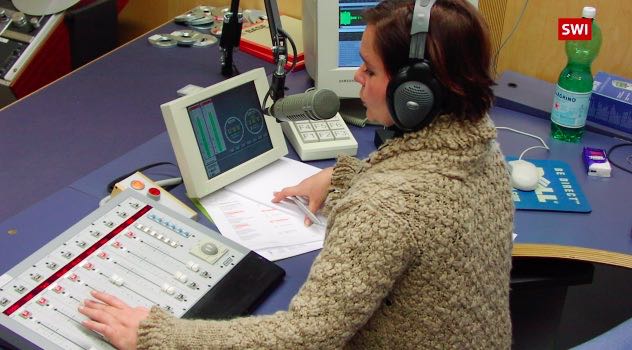
What did SWI swissinfo.ch sound like for the first seven decades of its existence? The short answer: a radio station. 

From the mid-1930s to 2004, Switzerland’s international service was Swiss Radio International (SRI). The first few decades of SRI’s existence were the heyday of shortwave – it was often the only way of getting news directly from other countries.

A brief history of SRI, the predecessor of swissinfo.ch, helps explain why you hear what you do in the video above.

What began as the Swiss Short Wave Service in 1935, would grow from broadcasting programmes in German, French, Italian and English to include other European languages and Arabic, and eventually change its name to Swiss Radio International.

The international service was considered a voice of neutrality during times of war, first during World War II, followed by the decades of the Cold War and up to and including the first war in the Gulf in the early 1990s.

This decade would mark the beginning of the end for Switzerland’s shortwave broadcasts. Shortwave transmitters gave way to relaying programmes via satellite, and this, in turn, would give way to the internet when the service went online in 1999 as SRI’s website.

In 2004, the plug was pulled for good on SRI as part of budget cuts, but not swissinfo.ch. Now producing exclusively online, the international service extended its linguistic reach by adding Russian, Japanese and Chinese, and publishing more video and audio reports.

Journalists working in swissinfo.ch’s current ten languages collaborate closely to set the editorial agenda, providing the necessary context in their stories so they are understood wherever they are read, seen, or heard in the world.

Project ‘The Sounds of…’

This article is part of the project “The Sounds of…” produced with our partner media organisations Polskie RadioRadio Canada InternationalRadio Romania International and Radio Prague International. Further videos have been produced by journalists at these outlets, to give an insight into their work in these countries.
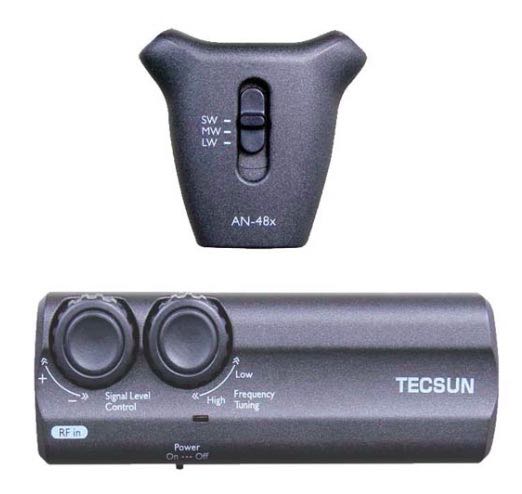
The new Tecsun AN-48x Active Loop Antenna

Many thanks to SWLing Post contributor, Troy Riedel, who shares a link to the new Tecsun AN-48x Active Loop Antenna at Anon-Co. Here’s the description from Anon-Co:

TECSUN AN-48x is an active loop antenna for enhancing shortwave (SW), medium wave (MW/AM) and longwave (LW) reception.

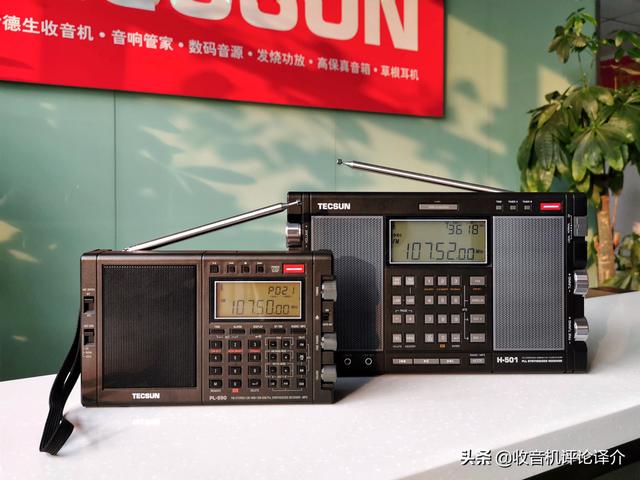
Unlike previous models (DE31MS, A38-LMS) available on anon-co.com, the AN-48x is supplied with adapters to connect the antenna to BNC and RCA sockets. This greatly simplifies hooking up the antenna to TECSUN receivers like S-2000 and S-8800, while it is just as easy to use with H-501, PL-990, PL-880 and the rest of the “PL”-family.

AN-48x also works with portable radios that do not have an external antenna jack!

Effective Frequency Range

Longwave: 120 ~ 400 kHz

Medium Wave (AM): 520 ~ 1700 kHz

Shortwave: 3500 ~ 20,000 kHz

[…]

Click here to view at Anon-Co.

Anon-Co notes that they expect to launch this product in December 2019. If you happen to grab one, consider sharing your review here on the SWLing Post!

Giuseppe catches the 40th Anniversary broadcast of LRA36

Many thanks to SWLing Post contributor, Giuseppe Morlè, who writes:

Ciao Thomas,
I’m Giuseppe Morlè, iz0gzw, from Formia, central Italy on the Tyrrhenian Sea … this is what I managed to hear about the 40 years of transmission of LRA 36 from the Antarctic Argentina to 15,476 …

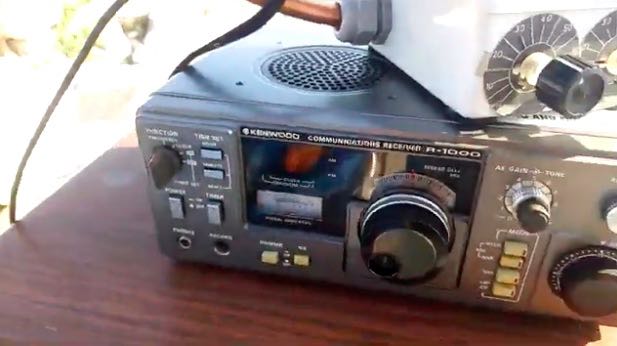
I took two receivers and two different antennas to the sea … the Kenwood R1000 was connected to my tested “Simil beverage on salt Ground” with salt water tip and the Tecsun PL-660 to my Loop Mea Casali self-built …

Both antennas are directed to SSW where we find the LRA36 station …

The main problem was the boring and tragic Chinese Jammer that strongly raged on 15.470 until 15.00 UTC and then calmed down a bit so I could hear the last part of the transmission with fading and spoken female and male in Spanish …

On the Tecsun and the loop I have not found the station …but on my Kenwood R1000 and my similar beverage on salt grond I listened to about 13 minutes of final transmission.
You can watch the video on my YouTube channel at the link:

Thanks to you and a warm greeting from Italy.
Giuseppe Morlè iz0gzw.

Wow! Great catch, Giuseppe!  I understand the Chinese jammer made it difficult, but obviously your antennas did the trick. I tried to catch the same broadcast from home, but only received a very faint signal. Most of the audio was lost in the noise.

Thank you for sharing.

Eton Executive Traveler hits all time low price on Amazon

Many thanks to SWLing Post contributor, Christian, who writes:

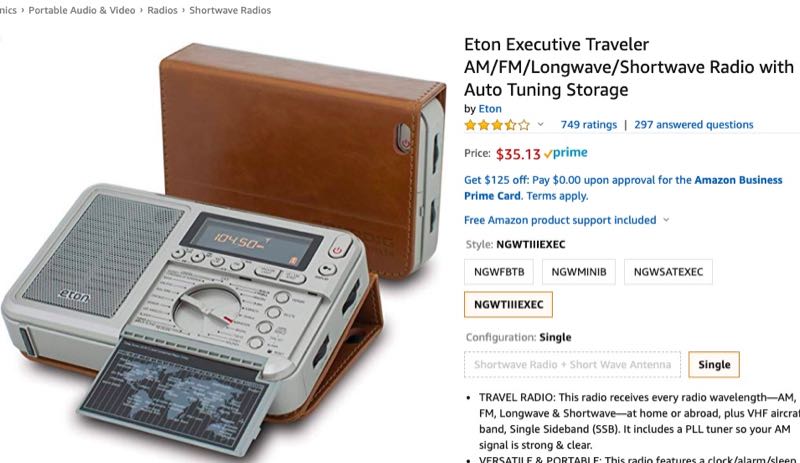
The price of the Eton Executive Traveler just hit an all time low on Amazon at $35.13. This is a lot of radio for the price which includes free shipping. If you’ve been following this thread over the past few months you’ll know that the price fluctuates almost daily. Maybe a good time to grab for the holidays! Just my two cents (plus $35.11). Hi hi.

Click here to view on Amazon.com (this affiliate link supports the SWLing Post).

Thank you for the tip, Christian!

Lennart’s Malaysia QSLs

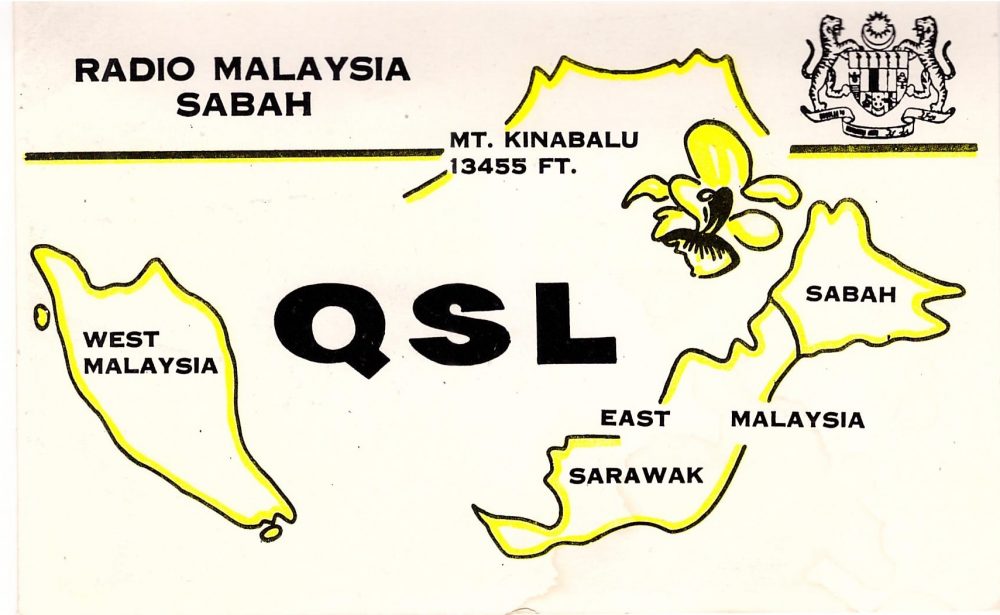
Radio Malaysia QSL

Many thanks to SWLing Post contributor, Lennart Weirell, who shares the following in reply to our recent posts regarding Radio Malaysia and Radio Sarawak:

Back in early 80-ies (1981-1984) I lived in Kuala Lumpur, Malaysia and I used my Panasonic DR-28 with a short indoor wire to listen.

RM Sabah QSL

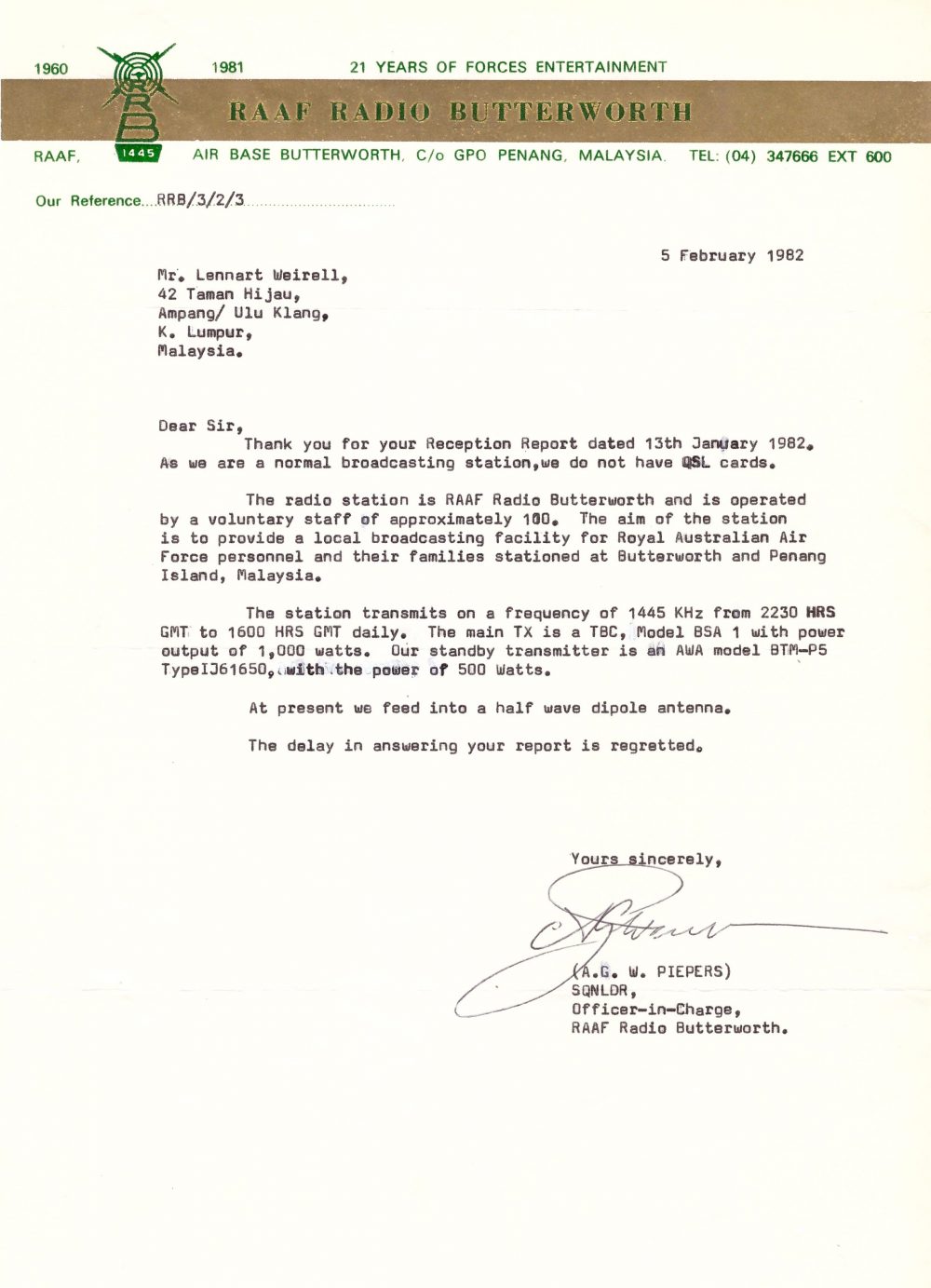
Of course some of the loggings were “local”, i.e. RAAF Butterworth, RM Sarawak and RM Sabah. RAAF Butterworth answered with a letter and RM Sarawak with card and RM Sabah with letter and card. All these 3 QSLs are from 1982.

RAAF Butterworth

Brilliant, Lennart! Thank you for sharing these QSLs.

I’m very curious how many listeners were able to snag the 1,000 watt Butterworth signal on 1,445 kHz from outside of Malaysia. Please comment!


Do you enjoy the SWLing Post?

Please consider supporting us via Patreon or our Coffee Fund!

Your support makes articles like this one possible. Thank you!

A radio museum…in a subway

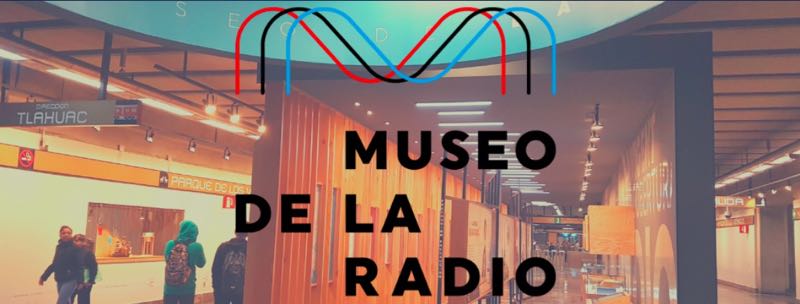
Many thanks to SWLing Post contributor, Paul Evans, who shares a link from Atlas Obscura featuring the Museo de la Radio in the Parque de los Venados station in Mexico City:

Upon entering the Parque de los Venados station of the Mexico City subway system, you may be surprised to find that you’ve also entered a museum. Here, the subterranean corridors double as the Museo de la Radio (Radio Museum), a small institution dedicated to the communication system’s history.

The museum’s exhibits display different radio-related devices such as lightbulbs, consoles, and microphones. The most prominent is the famous four-key xylophone with which the XEW—dubbed “the voice of Latin America”—announced its broadcasts during the golden age of the ’30s.

Other showcases contain collections of old radios, and still more highlight radio stars’ records. The display cards narrate some important events such as the first transmission, the birth of the digital radio, tidbits of curious data, and explain how the sound waves work.

The most interesting part of the museum is the radio booth, which actually broadcasts live shows. It was installed and opened in 2018, complete with the most advanced technology. One space is the speech booth, and another is the editing booth.[…]

Continue reading and view all photos at Atlas Obscura.